News & Stories

Related News
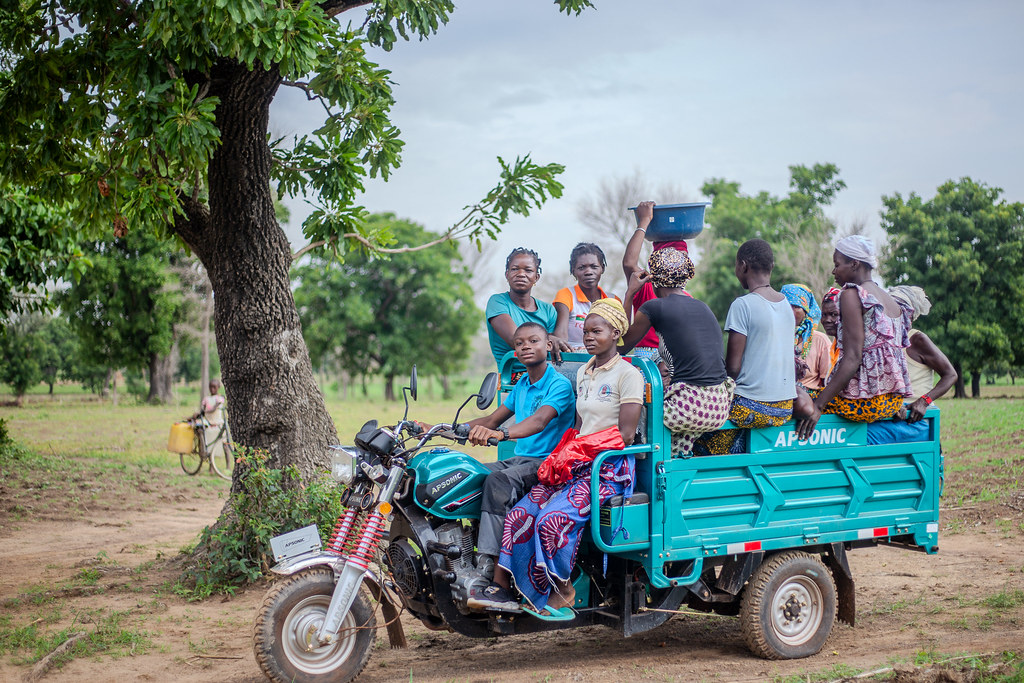



Dans la province de Houet, au centre du Burkina Faso, Sanou Fatimata, 43 ans, est une figure clé de l'Association Song Taab Yalgre, une coopérative de karité rassemblant quelque 500 femmes. Avec plus de trois décennies d'expérience dans l'industrie du karité, Fatimata associe parfaitement les méthodes traditionnelles à des pratiques modernes et respectueuses de l'environnement, améliorant ainsi le patrimoine culturel de sa communauté et sa durabilité future. Le groupe de Fatimata est membre de la Global Shea Alliance (GSA), une association industrielle fondée en 2011. Dans le cadre de ses actions en faveur de la durabilité, le GSA apporte son soutien aux coopératives féminines afin de renforcer leur capacité à générer des revenus et, plus important encore, leur résilience. Pour les coopératives de femmes comme Song Taab Yalgre, le karité, connu sous le nom de ‘shi bha’ qui signifie ‘vie’ dans la langue Dioula, joue un rôle essentiel dans l’amélioration des moyens de subsistance. Des membres de la coopérative collectent les fruits du karité Ces noix, qui sont transformées en beurre de karité utilisé dans la cuisine, la médecine et les cosmétiques, représentent une importante source de revenus dans la région du Sahel. Traditionnellement, les femmes comme Fatimata transforment les noix de karité manuellement. Cela implique de recueillir d’abord les noix, de les transporter chez soi pour les faire bouillir et les sécher, puis de les écraser et de les mouler manuellement. Les noix sont ensuite broyées pour extraire l'huile, qui à son tour est chauffée et bouillie afin d’obtenir le produit final, le beurre de karité. Le beurre de karité est principalement consommé à la maison, mais il est également commercialisé localement ou à l'international, ce qui génère des revenus pour le foyer. De nombreuses femmes choisissent également de vendre les noix bouillies et séchées directement aux acheteurs, qui se retrouvent ensuite en majorité dans des produits alimentaires ou cosmétiques à travers le monde. Il s’agit aussi d’une autre activité importante permettant de générer des revenus, surtout si les femmes collaborent dans une coopérative, où elles ont la possibilité de vendre des quantités importantes à un prix négocié. Les méthodes traditionnelles se mêlent à des pratiques respectueuses de l'environnement pour une production durable Ces dernières années, le nombre de karités a considérablement diminué, avec environ 8 millions de pertes chaque année. Différents éléments expliquent ce déclin, tels que la coupe d'arbres pour le bois de chauffe et l'agriculture mécanisée, ainsi que la baisse de la replantation en raison de facteurs culturels et de la longue période de croissance du karité. Cette diminution du nombre de karités a des conséquences sur le développement économique rural et l'autonomisation des femmes. La disponibilité du karité est menacée pour répondre à une demande croissante. Par ailleurs, le changement climatique affecte de manière disproportionnée les communautés vivant du karité, avec des températures extrêmes et des événements climatiques qui altèrent le paysage et impactent les rendements agricoles. En offrant une formation exhaustive sur la gestion durable du karité, en mettant l'accent sur la conservation, il est possible de garantir la disponibilité à long terme les ressources en karité, permettant de bénéficier non seulement aux récoltants actuels, mais également aux générations futures. Le groupe de Fatimata est membre de la Global Shea Alliance Début 2024, le GSA a lancé le projet « Inverser la dégradation des terres dans les communautés du karité » au Mali et au Burkina Faso, financé par la Coopération autrichienne pour le développement par l'intermédiaire de la Convention des Nations Unies sur la lutte contre la désertification (CNULCD). Le projet met l'accent sur la restauration des terres et l'amélioration des moyens de subsistance grâce à l'agroforesterie régénérative du karité pour accroître les revenus liés au karité. Le projet a pour objectif d'améliorer le revenu et la nutrition de 2 500 femmes récoltantes et de restaurer 150 hectares de terres agricoles et communautaires grâce à des pratiques agroforestières et à la plantation d'arbres à karité. Les femmes prévoient également de diversifier leurs activités au-delà de la production du beurre de karité pour inclure des cultures telles que le moringa, le baobab et le fonio. Pour aider à ces activités, le projet permettra l'accès à l'eau par le biais de l'installation de forages, et des tricycles seront fournis pour une plus grande efficacité. « Les activités du projet auront un grand impact sur la communauté. Ces forages profiteront à la fois à la coopérative et à la communauté et nous permettront de cultiver en dehors de la saison. Les légumes et le fonio récoltés seront en partie destinés à la consommation et en partie au marché local, ce qui augmentera nos revenus financiers. Nous pourrons aussi vendre les fruits du baobab et le moringa quand ils seront mûrs. J'attends avec impatience la mise en œuvre des activités et je suis déterminée à la réussite du projet", a déclaré Somda Leocadie, membre d'une des coopératives féminines du Burkina Faso. Malgré des défis tels que les conditions météorologiques de plus en plus difficiles et les fluctuations du marché, les coopératives, y compris l'association de Fatimata, montrent une résilience remarquable, renforcée par la formation continue en agriculture durable et en gestion financière. Ensemble, elles envisagent faire de leurs communautés des modèles de croissance durable et un avenir meilleur pour le Sahel. Fotos: ULPKS – YIRIWASSO Cooperative.

Le Burkina Faso et le Sénégal sont à l'avant-garde d'un changement significatif vers un avenir à la fois durable et inclusif, selon une nouvelle étude publiée par la Convention des Nations Unies sur la lutte contre la désertification (CNULCD) et ONU Femmes. Riche en informations précieuses pour les décideurs politiques, les ONG et le secteur privé, les notes techniques se concentrent sur les opportunités et les défis uniques auxquels sont confrontées les femmes entrepreneurs et les demandeurs d'emploi dans l'évolution de l'économie verte dans ces deux nations africaines. Cette transformation s'appuie sur l'initiative de la Grande Muraille verte, un projet ambitieux qui s'étend sur tout le Sahel et qui vise à restaurer 100 millions d'hectares de terres, à séquestrer 250 millions de tonnes de carbone et à créer 10 millions d'emplois d'ici à 2030. Ce projet de grande envergure n'est pas seulement une mission environnementale, mais aussi une voie de revitalisation économique, notamment par la promotion de l'égalité des sexes et de l'autonomisation des femmes. "La transition verte au Burkina Faso et au Sénégal est une lueur d'espoir pour l'égalité des sexes et l'autonomisation des femmes. Elle appelle à une approche intégrée associant les objectifs de l'économie verte à ceux de la parité hommes-femmes. L'initiative de la Grande Muraille verte illustre ces efforts en associant la restauration de l'environnement à l'autonomisation économique et sociale. En créant des emplois verts pour les femmes dans des secteurs clés et en préconisant des politiques tenant compte de la dimension de genre, ces pays ne se contentent pas de construire un avenir durable ; ils ouvrent la voie à un monde plus juste et plus équitable", a déclaré Ibrahim Thiaw, secrétaire exécutif de la Convention des Nations unies sur la lutte contre la désertification (CNULCD). En dépit de leur rôle important dans la population active des deux pays, les femmes du Burkina Faso et du Sénégal sont confrontées à de nombreux obstacles. Elles gagnent moins que les hommes, sont moins représentées aux postes de direction et se retrouvent principalement dans le secteur informel. La création d'entreprises formelles reste un défi en raison des ressources limitées telles que le capital et la technologie. Les femmes portent également le lourd fardeau du travail non rémunéré, en particulier dans les zones rurales, ce qui limite leurs possibilités de revenus et d'éducation. Une lueur d'espoir est toutefois perceptible. Les deux pays disposent d'un immense potentiel de création d'emplois verts dans des domaines tels que l'agriculture, la sylviculture, l'énergie et la gestion des déchets Il est estimé qu'environ un million d'emplois pourraient être créés dans ces secteurs, la majorité d'entre eux étant destinés aux femmes. Les opportunités sont nombreuses dans des domaines sous-exploités tels que les produits forestiers autres que le bois, la transformation des produits agricoles de base, l'énergie solaire et le compostage dans le cadre de la gestion des déchets. Ces secteurs offrent des opportunités valorisantes et durables, en particulier pour les femmes. Pour exploiter ce potentiel, des solutions intégrées sont indispensables. Il s'agit notamment d'améliorer l'accès des femmes à l'éducation et à la formation, en particulier dans les domaines des STIM (sciences, technologies, ingénierie et mathématiques), de développer des technologies adaptées au climat pour les coopératives de femmes, de faciliter l'accès à la finance verte et de réduire le fardeau du travail non rémunéré. En outre, la promotion des réseaux de femmes dans l'économie verte et la mise en place de chaînes de valeur novatrice axées sur les produits forestiers autres que le bois sont des étapes essentielles. Près de la moitié des petits exploitants agricoles du monde sont des femmes, mais elles possèdent moins de 20 % des terres de la planète. Au Sénégal, où les femmes rurales représentent environ 70 % de la main-d'œuvre et sont responsables de 80 % de la production alimentaire du pays, elles ne possèdent que 10 % des terres agricoles. De même, au Burkina Faso, où les femmes représentent 60 % de la main-d'œuvre et produisent environ 70 % des denrées alimentaires, mais leur propriété foncière est également limitée à 8 %. %. De plus, dans les deux pays, la plupart des femmes accèdent à la terre par l'intermédiaire de leurs maris et rencontrent des difficultés pour faire reconnaître et protéger efficacement leurs droits fonciers. Investir dans un accès égal des femmes à la terre et aux ressources qui y sont associées est un investissement direct dans leur avenir, ainsi que dans l'avenir de l'humanité et de la planète. Les femmes jouent un rôle essentiel dans la sécurité et la stabilité des communautés rurales et ont un grand potentiel pour contribuer aux activités de restauration des terres.

24 July 2023 – HEALV3RSE,a groundbreaking new game promoting real-world action for the planet, launches today on Metaverse. HEALV3RSE, which brings together the worlds of gaming and sustainability, invites players to become the heroes our planet desperately needs. It takes players on an epic journey through captivating realms, each representing a vital element of our planet's wellbeing. From the fiery depths of the Fire Kingdom to the enchanting expanses of the Oceanic Realm, players will face challenges, solve puzzles, and embark on missions to heal the planet. As the players advance through the game, they discover facts about drylands and the challenges of desertification, making educated choices to restore these unique and vulnerable ecosystems by planting trees. What sets HEALV3RSE apart is the unique integration of player avatars actually performing healing actions within the game, such as planting trees, conducting ocean cleanups, or installing solar panels. This interactive feature, which the creators call ‘Play to Heal’, brings a sense of empowerment to the gameplay experience. The Game, which launches with an accompanying digital Avatar collection, was created by Code Green in support of the United Nations Convention to Combat Desertification (UNCCD). It was developed in partnership with The Sandbox and , designed in collaboration with Interactive Studio. "HEALV3RSE's innovative approach is a game-changer. By merging gaming with sustainability, it amplifies the urgency of combating land loss and inspires action. This aligns with UNCCD's goals and proves that everyone can contribute to the health of our planet in their own unique ways," - said Ibrahim Thiaw, UNCCD Executive Secretary. "We are thrilled to present HEALV3RSE to the world," said Inna Modja, Code Green’s CEO and UNCCD Goodwill Ambassador. "Our goal is to inspire players to take action and make a positive impact on the planet. Through immersive gameplay and the captivating artworks, we aim to ignite a global movement of healers who understand the urgency of healing our Earth." The Sandbox said: ‘’The Sandbox is proud to announce its partnership with Code Green, a Web3 non-profit foundation supporting social, climate, and gender justice causes. Code Green’s origins go back to the worldʼs largest land restoration movement — Africa's Great Green Wall. ‘’ A portion of the proceeds from the digital avatar collection will be used to deliver free inspiration sessions with experts, activists and artists for anyone who wants to learn more about desertification, climate action and web3 technology. Those who support the new HEALV3RSE by purchasing special avatars will be also generating funds for one of the projects along the Great Green Wall — a game-changing African-led initiative to restore the continent’s degraded landscapes and transform millions of lives in the Sahel. HEALV3RSE is available to access via The Sandbox metaverse. Trailer for HEALV3RSE in The Sandbox For more information press@unccd.int About the UN Convention to Combat Desertification The United Nations Convention to Combat Desertification (UNCCD) is the global vision and voice for land. We unite governments, scientists, policymakers, private sector and communities around a shared vision and global action to restore and manage the world’s land for the sustainability of humanity and the planet. Much more than an international treaty signed by 197 parties, UNCCD is a multilateral commitment to mitigating today’s impacts of land degradation and advancing tomorrow’s land stewardship in order to provide food, water, shelter and economic opportunity to all people in an equitable and inclusive manner. Goodwill Ambassadors inspire the public and decision-makers to take practical actions and drive policies to achieve the Convention’s mission to promote sustainable land stewardship. They also help advance efforts to reduce poverty and promote gender equality, especially among climate-vulnerable, land-dependent populations About Code Green Code Green is a mission-driven web3 organization, harnessing the power of art and blockchain technology to spark a healing revolution for the planet. Inna Modja, CEO of Code Green, is a Malian actress, singer and environmental activist, and Goodwill Ambassador for the UNCCD. www.codegreen.earth @codegreen_nft About The Sandbox The Sandbox is a leading decentralized gaming platform where players can create, own, and monetize virtual worlds and gaming experiences. About Interactive Studio Interactive Studio offers comprehensive support to help brands establish themselves in the ever-changing world of Web3 and gaming.

All 16 countries in the Southern African Development Community (SADC) have committed to accelerating multi-sectoral transformation through a regional initiative inspired by the Great Green Wall in the Sahel, or SADC Great Green Wall Initiative (GGWI). The SADC Initiative aims to create productive landscapes in the Southern Africa region that contribute to regional socially inclusive economic prosperity and environmental sustainability. Together with countries and key partners the goal is to initiate multisectoral partnerships and to acquire pledges of an indicative US$ 27 billion by 2025. In a leap forward in the implementation of the SADC GGWI, the United Nations Convention to Combat Desertification (UNCCD), its Global Mechanism and the African Union Development Agency (AUDA-NEPAD), in collaboration with the SADC Secretariat, the African Union Commission (AUC) and the Commonwealth Secretariat brought together more than 50 key regional and international partners in Cape Town, South Africa in March 2023. The partners worked together to identify concrete next steps and recommendations to mobilize financing and coordinate action on the ground. Building on the momentum, the World Bank together with the SADC Secretariat, the UNCCD, the AUC, AUDA-NEPAD and the Commonwealth Secretariat convened the SADC Ministers of Finance on 12 April 2023, during the World Bank Spring Meetings in Washington DC. The SADC Ministers of Finance welcomed the progress made to date on the SADC GGWI and highlighted the importance of the initiative to address the challenges facing the region. They also stressed the need for an economic analysis of the cost of inaction and ‘business as usual’. Covering a total land area of 10 million km2, Southern Africa faces immediate effects of desertification, land degradation and drought, as well as challenges driven by climate change, biodiversity loss, and unsustainable development practices in agriculture, energy and infrastructure sectors. In his welcome remarks, Floribert Ngaruko, World Bank Group Executive Director Africa Group 1, said the Spring Meetings were identified as a critical gathering to engage and discuss the SADC Great Green Wall Initiative, noting it demonstrates Member States’ commitments toward deeper regional integration as articulated by the SADC Treaty, SADC Regional Indicative Strategic Development Plan (RISDP) 2020-2030 and other regional policies and strategies. “Our collective efforts should help us achieve a green and resilient future for the SADC region,” stated H.E. Elias M. Magosi, SADC Executive Secretary. He further reiterated the need for capacity building for resource mobilization, as well as for the implementation of the Initiative across the 16 SADC nations. Resource mobilization is key for the success of the SADC GGWI. The financing and development partners expressed their commitment to leverage opportunities and to work together to mobilize financing for the region, in line with the SADC GGWI Strategy. “The Great Green Wall is an initiative that brings different actors together and we are excited about the multisectoral nature of this initiative. This initiative is part of a broader economic and development plan – if we restore land but are not able to reap the benefits of that healthy and restored land due to lack of access to renewable energy and infrastructure, hindering access to markets and livelihoods, then we are only halfway there with our vision,” said Louise Baker, Managing Director of the UNCCD Global Mechanism. With support from countries and partners in the region, the scale and impact of the SADC GGWI is expected to grow exponentially in the next two years. While there is much work ahead, the message from the countries and the partners is clear: the political support is already there – embedded in existing structures and frameworks of the SADC – what is needed is better coordination and collaboration across sectors and actors.

Excellencies, Ladies and Gentlemen, Welcome to this non-statutory meeting of the Great Green Wall. And thank you for joining. Friends, The Great Green Wall is arguably one of the most inspiring Land Restoration Program in the world. By its ambition, its size, its institutional set up with a dedicated Heads of State Summit, Ministerial Conference and Agencies (national and regional). It is politically endorsed by the continental body and is therefore institutionally hooked to the African Union. The political support it has makes it unique and inspiring. Even more inspiring when one thinks that in the Sahara and the Sahel, we have one of the harshest ecological conditions, coupled with a very challenging socio-political and security situation. This makes it even more compelling. A new departure was given in 2021, at the One Planet Summit in Paris, with USD 19 Billion pledged by donors and technical support offered by Partners. This meeting will be an opportunity for us to get some updates as to what has worked; and what has not; what needs to be fixed? Both Governments, Donor Agencies and Partners? It is refreshing to know that much progress has already been made, while we still have a long way to go to achieve our ambitions. We will hear more in a short while from different speakers. It is equally encouraging to see, despite all the constructive criticism, that the Great GreenWall is inspiring action in other parts of Africa, and elsewhere in the world. The Southern Africa region (SADC) is busy preparing a similar program The Middle East Green Initiative (which also covers parts of Africa) has already received its first funding of USD 2.5 B from the Kingdom of Saudi Arabia An Eastern Africa corridor may be developed soon Other similar initiatives under the umbrella of the African Union’s NEPAD are also ongoing such as the AFR100, which we salute It seems the movement of large-scale land restoration is unstoppable, as these provide multiple benefits and respond to various Sustainable Development Goals. Before I go any further, let me recognize few leaders that are in the room and give them the floor for their opening remarks and their blessings: To officially open the meeting, please welcome the Nigerian rotating Presidency of the Great GreenWall. We have the honor of welcoming Minister Mohammed H. Abdullahi, Chair of the Council of Ministers of the Great GreenWall. We are also honored to have with us Her Excellency Ms. Josefa Leonel Correia Sacko, Commissioner for Rural Economy, and Agriculture of the AU Commission Ms. Inger Andersen J’aimerai maintenant partager avec vous quelques avis et recommandations générales qui découlent de nos observations et de nos interactions avec tous les acteurs au cours de deux dernières années. Ces commentaires n’altèrent en rien l’authenticité et la pertinence du programme de la Grande Muraille Verte, bien au contraire. 1. Financement : sur les USD 19 milliards annoncés il y a deux ans lors du One Planet Summit à Paris, 80% des fonds sont déjà programmés, répartis en 150 projets dans le pipeline. 4 milliards restent encore à programmer. Nous notons cependant un déphasage entre les attentes des acteurs nationaux de la Grande Muraille Verte et cette première liste de projets. En effet, la majorité de ces projets étaient déjà planifiés avant le One Planet Summit; par ailleurs, certains de ces projets ne sont pas situés dans les zones d’intervention prioritaires de la Grande Muraille Verte. Ce déphasage peut être corrigé s’il y a une meilleure coordination au niveau national par les ministères chargés de l’ordonnancement. C’est à cet effet que nous saluons la présence parmi nous de ministres de l’Economie. Nous saluons aussi la mise en place dans beaucoup de pays, de coalitions nationales, qui sont des structures intersectorielles de coordination. La coordination doit idéalement se faire depuis l’amont, c’est-à-dire la planification, et doit bien entendu se poursuivre au moment de la mise en œuvre. Par ailleurs, plusieurs agences nationales de la Grande Muraille Verte expriment leur volonté d’être mieux impliqués dans la mise en œuvre des projets portant le label de la Grande Muraille Verte afin de jouer leur rôle de coordination et de suivi, afin d’être en mesure de rendre compte à leurs autorités nationales. Il serait intéressant d’avoir des opinions sur ces questions et surtout de clarifier, dans chaque pays, les procédures de planification et d’exécution des projets. Les structures gouvernementales officielles, adéquatement recalibrés, doivent être aux commandes. 2. Renforcement des institutions : Tout en saluant encore une fois la volonté politique à haut niveau, nous recommandons fortement que les institutions de mise en œuvre et de suivi de la Grande Muraille Verte soient revues et renforcés. Dans la plupart des pays, les structures nationales de la Grande Muraille Verte -tout comme l’Agence régionale- manquent de personnels suffisant en qualification et en nombre, pour pleinement jouer leur rôle de planification, de développement, de suivi-évaluation et de coordination d’un programme d’une telle ampleur et d’une telle complexité. Nous encourageons les gouvernements et l’Agence panafricaine à exécuter la décision, prise en 2021, du Conseil des Ministres de la Grande Muraille Verte. La décision commandite un audit institutionnel de la Grande Muraille Verte, pour adapter les anciennes structures (régionale et nationales) à la nouvelle configuration post-One Planet Summit. Nous encourageons également les partenaires techniques et financiers à accompagner ce processus de renforcement institutionnel, condition essentielle pour la réussite de cet ambitieux programme. 3. Prochaines étapes : La préparation de la prochaine phase de la Grande Muraille Verte doit démarrer incessamment, pour assurer une continuité après 2025. Le budget total estimé de la Grande Muraille Verte à 2030 était de 33 milliards de dollars. Pour atteindre cet objectif, il serait judicieux de : (i) tirer des leçons de la phase actuelle (ii) procéder à la préparation de la prochaine phase et développer des projets bankables. Un tel exercice nécessite un effort conséquent dans chaque pays, mais aussi au niveau régional. Merci

Two years on since the One Planet Summit, 80 percent of the US$19 billion pledged towards the Great Green Wall Accelerator has been programmed across the 11 African nations that are part of the initiative. However, continued political leadership and country ownership, targeted action at all levels, and strengthened institutional arrangements are required to realize the vision of this Africa-led movement.

One year into the project, the collaboration between UNCCD, FAO, Aduna, Orgiis and GLOBHE already bears fruit: individual baobab trees can be now recognized from space and a computer system has been trained to plot them on a map. In the Sahel region, where trees play an important role in fixating soils, providing a barrier to land degradation and supporting food security, the baobab is particularly valued, as its fruit not only has a variety of local uses, but can also be a viable commercial export and a source of sustainable income. An icon of the African landscape revered as the tree of life, baobabs cannot be grown on plantations. Proudly standing big and wild, each one is unique and cherished by local communities, as it provides nourishment for people and their animals. Faced with the advance of the climate change, growing energy needs, rapid urbanization and a depleting stock of seedlings that grow to maturity, these green giants need to be carefully monitored and protected. Recent advances in the spatial resolution and availability of satellite imagery have enabled the detection of individual trees from space. Using FAO’s cloud computing platform SEPAL and dense time-series approaches helps identify individual tree species through phenology, or the seasonal foliage pattern, often unique to individual species. The next challenge was pinning down the actual locations of baobab trees and “training” a classification system to extrapolate and predict the tree species associated with each tree canopy. Drone data provided by GLOBHE at a very high spatial resolution allows identification of baobabs, and the tree locations are then combined with the phenology data to map individual baobabs over vast geographic regions. The resulting maps can be used to inform local communities of the location, number and condition of the baobabs, and enable them “to visualize and analyze high resolution satellite imagery from their mobile phones, allowing to actively monitor and protect this natural resource,” says Yelena Finegold, FAO Forestry Officer. This collaboration between global satellite data providers, drone operators, the private enterprise, the UN and local communities, including women and youth, is a major step toward improving monitoring, conservation and restoration methods in the Sahel. As the project advances toward mapping the baobabs over larger geographical areas, it can also support the implementation of the Great Green Wall Initiative. Better understanding of where to conserve and invest in long-term sustainable use of baobabs can promote value chain development and enable better land management decisions to monitor and safeguard these green powerhouses that provide sustenance, store water and enrich the land. image (c) MakeWaves Media

nnovators from the Great Green Wall countries are invited to apply for the DeserTech Innovation Leaders for the Great Green Wall, a new training scheme to find innovative solutions to tackle desert-related challenges.

Baobab fruit, moringa oil and shea butter are just some of the products from Africa’s Sahel region that may hold the key to improving livelihoods, restoring degraded lands and tackling climate change. To unlock this potential of the Sahel’s natural capital and give new momentum to the Great Green Wall’s land restoration ambition, a new sourcing challenge has been launched at UNCCD COP15 Green Business Forum in Abidjan, Côte d’Ivoire. The Sahel sourcing challenge calls on the global supply chain managers to upscale the use of sustainably produced Sahelian ingredients, such as bambara nut, baobab, moringa, gum Arabic and fonio, from the Sahel's small-scale producers as a way to create new economic opportunities for local populations. Sahel region is one of the most vulnerable places on Earth, where the temperatures are rising 1.5 times faster than the global average and where increasing desertification, drought and resource scarcity, leading to radicalization, conflict and migration. An African-led movement to inspire the world, the Great Green Wall is an epic vision to create a 8,000 km-long mosaic of projects across the continent that support land restoration, create 10 million jobs and promise a better future. UNCCD is a key partner of the Great Green Wall Initiative, working with businesses and major corporate partners to create green jobs and transform the Sahel through market-driven, sustainable ethical supply chains. “The Great Green Wall challenge has a huge potential to help combat land degradation. By creating demand for the Sahel’s underutilized ingredients, the private sector can play a pivotal role in the creation of local economic development and the subsequent environmental and social impact that new value chains will bring,” says Nick Salter, co-founder of Aduna. Aduna, together with WhatIf Foods, Unilever, Evonik, Doehler, the World Economic Forum and the Global Shea Alliance, is among the major businesses and platforms that are working on the challenge and calling on others to follow suit and work with UNCCD and Business Fights Poverty to make the challenge a world-class success. “We're looking to be not just buyers, but to support communities. Improving livelihoods and soil fertility are in everyone's best interests,” says Scott Poynton, CEO and Founder of The Pond Foundation and WhatIf Foods Partner. Follow the Great Green Wall progress on the Web, on Twitter, Facebook and Instagram.

Excellencies, The Great Green Wall is an historic opportunity. An opportunity for the Sahel - and for each of the GGW states - to deliver something truly remarkable. A renaissance for land and the natural world. And - just as important - true resilience and a renaissance for communities on the frontline of climate change and poverty. The GGW is an inspiration and a beacon of hope for humanity worldwide. At a time when people need inspiration and hope. For that Excellencies, you are to be congratulated. However, projects of this ambition and magnitude do not materialize on inspiration and hope alone. They need financial support. Good governance. And coordinated action. The pledges made at the One Planet Summit in January 2021 totaled USD19 billion for the period until 2025. So, while progress is there, we cannot congratulate ourselves. Hope is not yet turning into action at the scale or pace you aspire to. Because collectively, we are struggling to turn those pledges into projects and investments. Understandably, this is leading to frustrations. There are, indeed, lots of bottlenecks. To my mind though, two critical bottlenecks have emerged. Coordination at national level. The complexity of accessing financing – the donor system. Firstly, I am convinced genuine national ownership – led by you, your Excellencies - and a national coalition for action would make progress happen faster. In each country, the GGW is a massive undertaking. With the best will in the world, neither the national Agency of the GGW, as currently set up, nor a single line ministry can make all the necessary wheels turn. At national level, a more joined-up “all of government” response is needed. The Ministry of Planning and Development or Treasury have an important role to play. Along with the Ministry of Environment, Agriculture, Infrastructure or Energy as technical focal points. Concerned local authorities, the private sector, civil society and research should be fully engaged. But government – at all levels – can take steps to assume its responsibilities more effectively. In the case of Senegal, we noted the creation of Presidential Council, led by his Excellency President Macky Sall, that is guiding and accelerating this work in Senegal. Each country will need to establish their own institutional framework. We would however suggest you consider setting up a political oversight, close to you. Secondly though, we would all acknowledge that the current system for accessing the pledged financing is complex and cumbersome at best. International partners are better coordinated than ever around a common results framework. But to access the financing, currently, your officials must navigate the different processes and timelines of the ten international partners who have committed to support you. Accessing much of the funds will take a great deal of upfront investment of staff resources and a considerable time. With your bold and ambitious timeline, this business-as-usual approach will not work. As Heads of State and Government, you might consider requesting the simplification and streamlining of the way financing is channeled to you – potentially through a common window, joint assessment or more co-funding of projects. You may want to task your Ministries in charge of Planning or Economy to lead the Programmatic Coordination with donors. We may need to follow adequate, perhaps specific procedures. It is certainly recommended that each Government set up a robust programmatic team to unlock the financing. Excellencies, a Sahelian renaissance awaits. With the restoration of land and nature and the right investments for a resilient and vibrant future, we can capitalize on the inspiration and hope and the unique opportunity that the GGW offers. Thank you.
