News & stories

Latest

Side events organized within the sidelines of the official sessions of the Conference of the Parties (COP) and/or its subsidiary bodies convened by the UNCCD provide an informal opportunity for Parties and accredited observer organizations to exchange information and experiences on diverse issues related to the objectives of the Convention. Parties and accredited observers wishing to organize a side event during the conference are requested to apply using the following form and submitting it to: sideevent@unccd.int The application form can be downloaded from the Resources tab on this page and should be submitted by 6 September 2024. Participants are advised that the secretariat is responsible only for room allocation. Time slots and rooms will be accommodated according to availability on a first come, first serve basis. For more information, click here.

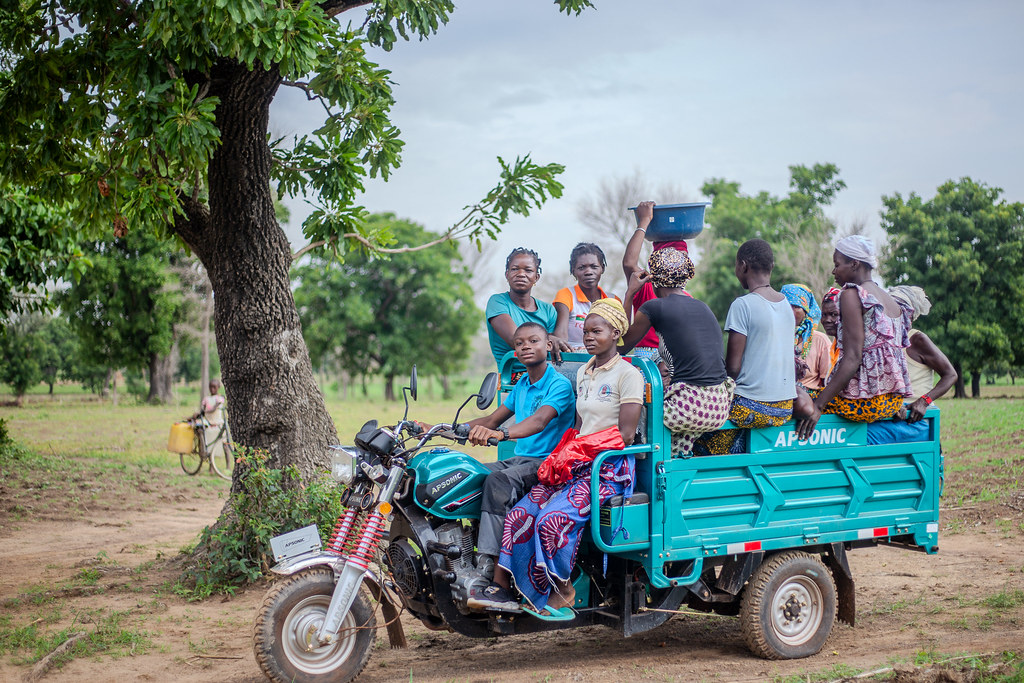
TUMU, Northern Ghana — As the sun rises over the dusty plains of northern Ghana, a quiet revolution is underway. In a region long ravaged by desertification and drought, communities are adopting innovative sustainable land management (SLM) practices and breathing new life into these once-parched lands. This is not just about restoring the environment but also about rejuvenating agriculture and creating a hopeful future. Women are at the forefront of this movement, whose leadership and innovation are paving the way for more sustainable lands and livelihoods. Women from the Nanchala community dancing and singingFor decades, the people of northern Ghana have battled against a harsh reality: their once fertile lands are turning to dust, their crops withering under the relentless sun. Traditional practices, such as cutting down trees for charcoal production, have only worsened the situation, leading to widespread deforestation and land degradation. “Especially this year, the sun has been too high,” laments Hillia Sulemana Joseph, the chairman of Sakalo’s community committee. “We are trying our best to help with the drought and all these problems.” Hillia Sulemana Joseph, chairman of Sakalo’s community committee.In response to these challenges, the community, with the support of organizations like Arusha Ghana, has begun to adopt sustainable practices that promise both environmental and economic benefits. One of the most notable innovations is the production of charcoal from grass — a resource that is abundant and renewable, unlike the rapidly disappearing trees. “Arusha Ghana has come to introduce the grass that we can use to make charcoal,” says Joseph, explaining how this shift could dramatically reduce deforestation. “This will reduce the cutting of trees that protect the vegetation and the ozone layer.”This sustainable approach is not just about preserving the environment; it’s about creating a new economy. By producing grass charcoal, the community not only protects its natural resources but also opens up new income streams for local families. The shift to grass charcoal has sparked a small-scale industry, providing jobs and fostering economic resilience in an area where opportunities are scarce. Charcoal made out of grass dryingThe community’s commitment to these practices is enforced by a newly established local police force, which ensures adherence to strict regulations against bush burning and illegal tree felling. “If we catch you burning bush or cutting trees for charcoal, you will go to jail,” Joseph warns, highlighting the seriousness of their mission.The economic benefits of sustainable land management are not limited to charcoal production. In July 2024, a team from the United Nations Convention to Combat Desertification (UNCCD) visited the Sakalu and Nachanla communities. They saw first-hand how innovative SLM practices are being used and witnessed the real results of the Land of Opportunities — Global Mechanism Project, commonly known as LogMe, which integrates environmental restoration with economic development, particularly for women. Women from the Nanchala communityThe LogMe project, funded by the Italian Ministry for Ecological Transitions and implemented by the International Union for Conservation of Nature (IUCN), is designed to create employment opportunities through sustainable land use. “We did not come with imposed technologies,” says Dr. Jacques Somda, head of the IUCN program in Burkina Faso. “We came to discuss with them and see together what we can do to change what they are doing that is not good for nature.”LogMe has facilitated the planting of over 60,000 tree seedlings to restore forests and farmlands. Four community nurseries with 40,000 seedling capacity were also established. 8 solar-powered boreholes were installed to improve access to clean drinking water. These interventions are helping to rebuild vegetation, store carbon and recharge groundwater. Dr. Jacques Somda, head of the IUCN program in Burkina FasoCentral to the project is the restoration of wetlands through reforestation and erosion control, practices that not only protect the environment but also enhance agricultural productivity. Somda explains, “By restoring the forest gallery, we reduce evapotranspiration and allow the watercourse to retain more water.” This restoration supports the creation of microclimates that can sustain crops even during dry seasons, boosting food security and providing farmers with more reliable incomes. Tree planting around water bodiesWomen, who have traditionally been marginalized in economic activities, are now becoming key players in this environmental and economic revival. Chambua Sahada, secretary of the women’s group Nanchala Community, describes the transformative effect of tree planting around water bodies: “With the trees, it was initially difficult to access water in December. But now, with the trees around, an ecosystem has been created. We can see crocodiles, hear birds, and there are even fish in the river.”This restoration not only brings environmental benefits but also empowers women economically. The LogMe project has introduced training programs that teach women to use energy-efficient cookstoves and produce charcoal briquettes from clay and dry grass. These new skills have opened up additional income streams for women, who are now able to sell these environmentally friendly products in local markets. Nanchala community women's group secretary Chambua Sahada with Gilles Amadou Ouedraogo, project manager at the Global Mechanism of the UN Convention to Combat Desertification (UNCCD).LogMe has promoted livelihood diversification activities like beekeeping, dry season gardening and soap making. Over 120 women’s groups received beehives and training in honey production.Women’s economic empowerment is central to the community’s sustainable development strategy. By involving women in decision-making and leadership roles, the community ensures that its initiatives are more inclusive and effective. Sahada’s group has even broken cultural taboos, with women now harvesting honey — an activity once reserved for men. “In the beginning, it was even taboo for a woman to harvest honey,” Sahada recalls. “But now we do it ourselves.” Rehabilitated forest area in northern Ghana dotted with bee hives, part of sustainable land management practices that not only restore the environment but also provide local communities with new sources of income through beekeepingIn just over two years, the LogMe project has sustainably transformed over 80,000 lives across 8 communities. Through integrated approaches, degraded sahelian landscapes have been restored, food security boosted, forests regenerated, and new livelihood options created. The project shows that even in the face of desertification and drought, coordinated action can turn lands of despair into lands of opportunity. Dr. Somda says: “We make sure that the restoration activities are based on benefits for the local people. As we restore the land, nature also benefits from these activities.” Two young girls share a joyful moment at a community water pump in northern Ghana, symbolizing the brighter future being built through sustainable land management and access to essential resourcesSustainable land management is critical to addressing the environmental challenges of northern Ghana. Through innovative approaches, community involvement and comprehensive projects like LogMe, significant progress is being made in restoring degraded land and improving agriculture. These efforts are protecting the environment and improving the lives of local communities, demonstrating the power of sustainable practices to build resilience and prosperity. As the sun sets over Sakalo, casting long shadows over the rejuvenated land, the women gather once more, their hands and hearts full of the day’s work. They are not just restoring the land; they are reclaiming their lives, their dignity, and their hope for a future where the earth is as resilient as the people who call it home.

The UNCCD Gender Action Plan (GAP) emphasizes the critical importance of gender equality and women’s empowerment in implementing the Convention. A key priority of the GAP is to increase women’s access to relevant knowledge and technologies. To fulfill these objectives, UNCCD and the World Overview of Conservation Approaches and Technologies (WOCAT) joined forces in 2020 to advance gender-responsive Sustainable Land Management (SLM). This collaboration between UNCCD and WOCAT focuses on documenting, analyzing and scaling gender-responsive SLM practices by gathering gender-disaggregated data. A specialized tool, co-designed with gender and SLM experts, identifies gender-based parameters as well as the technical and socio-cultural factors that enhance the adoption of SLM by both women and men. In the initial phase of the project in 2021, WOCAT network partners in 15 countries tested the tool, showing promising results. As the Pambadeniya Women Group from Sri Lanka noted, “Women and men debated on how to guarantee equal opportunities in decision making, participation and fair distribution of benefits.” The data demonstrated that equal access to SLM technologies and approaches is both context- and technology-specific. Five technology group profiles on gender-responsive SLM were developed to show the need for further action. Building on this success and following Decision 24/COP.15, UNCCD and WOCAT are now launching a call for expressions of interest to apply the gender-responsive SLM tool. This initiative aims to gather more country-specific gender-disaggregated data on SLM practices, which will be presented at the upcoming UNCCD COP16 in Ryiadh, Saudi Arabia, this December. We are inviting up to 40 stakeholders to implement the gender-responsive SLM tool in local contexts from September to November 2024. Applications are welcome from UNCCD Parties, civil society organizations, WeCaN members and others involved in sustainable land management. The application deadline is 4 August 2024. Submissions are accepted in English, French and Spanish. For more details on the call, application requirements, and the online application form, please see the side menu. * Please note: the questionnaire is currently being reviewed and updated. The final version of the questionnaire will be available in September 2024

The 25 members of the UNCCD’s Science-Policy Interface (SPI) have assembled at the UN Campus in Bonn, Germany for a critical scientific meeting in the run up to the 16th Session of the Conference of the Parties, which will be held in Riyadh, Saudi Arabia from the 2nd to the 13th of December 2024. The SPI is a unique combination of independent scientists from all corners of the globe, science delegates to the Convention representing the five regions of the world, and five practitioners from implementing agencies and civil society. Over the past year half of the SPI members have been assembling the evidence base for a much more systemic approach to land use, so that our impacts can be more strategic and, ideally, much greater than the sum of the parts. The other half have been conducting a comprehensive analysis of aridity trends, projections and anticipated impacts, which under the Convention translates into land and people affected by the combined effects of land degradation and water scarcity. Both assessments have led to draft technical reports which will undergo independent scientific review following the meeting so that they can be finalized and published in the autumn. The SPI is dedicated to building a bridge between science and policy. They are a global community of experts, united by a passion for understanding and safeguarding all life on land.

The rollout of the second phase of the Land Degradation Neutrality Target Setting Programme (LDN TSP 2.0) represents a key phase in combating land degradation worldwide, as 18 countries from several regions step up their land restoration commitments ahead of the 16th Conference of the Parties to the UNCCD (COP16). This significant advancement has become the focus of the recent workshop on "Strengthening land restoration targets and commitments" in Doha, Qatar, emphasizing the global community's renewed commitment to sustainable land management. Conducted on the sidelines of Expo 2023 Doha this February, the workshop saw the gathering of UNCCD National Focal Points, lead country consultants and key international organization representatives, such as the UN Convention on Biological Diversity, UN Framework Convention on Climate Change, UN Development Programme, Food and Agriculture Organization, World Wildlife Fund, Conservation International, German Development Cooperation and G20 Global Infrastructure. The workshop fostered the engagement of countries actively working on strengthening their LDN targets by introducing new tools and guidelines for integrated land use planning, and facilitating the identification of priority restoration areas that align with national policy objectives. The workshop also offered an opportunity to explore operational synergies with major environmental initiatives, putting a strong emphasis on the importance of enhancing LDN target monitoring and reporting mechanisms. “The LDN TSP 2.0 represents a unique opportunity for 18 champion countries to showcase in an innovative and bold way to bring UNCCD implementation efforts to the next level in direct response to the global land degradation crisis, paving the way for other countries to follow, ” remarked LDN TSP Team Lead Pedro Lara Almuedo. The goal of the LDN TSP 2.0's is to help countries refine their national targets towards actionable and measurable initiatives. The program stresses the importance of improving land governance by utilizing spatial mapping and monitoring to effectively combat land degradation. The progress and insights achieved through the programme will be shared at the UNCCD COP16 in Riyadh, Saudi Arabia, this December. With 131 countries engaged in the LDN TSP since 2016, over 450 million hectares committed to restoration and 106 countries having published their LDN targets, the workshop's impact sets the stage for significant contributions at COP16 to tackle regional challenges and propel the global efforts against desertification. Land Degradation Neutrality is essential for achieving SDG 15.3, offering co-benefits like poverty reduction, food security, women's empowerment, environmental protection, biodiversity conservation and sustainable management on natural resources. LDN also aids in climate change mitigation and adaptation by transforming degraded lands into carbon sinks. The LDN TSP 2.0, championed by the 18 countries – Argentina, Benin, Central African Republic, Georgia, Jordan, Kenya, Kyrgyzstan, Malawi, Namibia, Nigeria, Pakistan, Panama, Peru, Republic of Moldova, South Africa, Sri Lanka, St. Lucia and Türkiye – aims to demonstrate progress and guide further actions beyond COP16 in response to the urgent need for accelerated global efforts to restore productive land.

Riyad, 31 janvier 2024 - Le Royaume d'Arabie saoudite et la Convention des Nations Unies sur la lutte contre la désertification (UNCCD) ont signé un accord en vue de la 16ème session de la Conférence des Parties de la Convention (COP16) à Riyad du 2 au 13 décembre. La COP16 de Riyad sera la plus grande réunion jamais organisée par les 197 parties à la CNULCD, la première à se tenir dans la région du Moyen-Orient et la plus grande conférence multilatérale jamais accueillie par l'Arabie saoudite. L'année 2024 marque également le 30ème anniversaire de la CNULCD, l'un des trois grands traités environnementaux connus sous le nom de conventions de Rio, avec le changement climatique et la biodiversité. Lors de la cérémonie de signature qui s'est tenue aujourd'hui à Riyad, Abdulrahman Abdulmohsen AlFadley, ministre saoudien de l'Environnement, de l'eau et de l'agriculture et président de la COP16, a déclaré : « Accueillir la conférence (COP16) dans le Royaume d'Arabie saoudite témoigne de l'engagement de dirigeants éclairés en faveur de la protection de l'environnement aux niveaux national, régional et international. L'Arabie saoudite a par ailleurs lancé plusieurs projets environnementaux novateurs, tels que l'Initiative verte saoudienne et l'Initiative Moyen-Orient vert. » Le secrétaire exécutif de la CNULCD, Ibrahim Thiaw, a déclaré : « Aujourd'hui, nous perdons des terres fertiles à un rythme alarmant, ce qui met en péril la stabilité, la prospérité et la durabilité de la planète. La COP16 de Riyad doit marquer un tournant dans la manière dont nous traitons notre ressource la plus précieuse, la terre, et nous devons nous attaquer collectivement à l'urgence de la sécheresse dans le monde. » Selon les données de la CNULCD, jusqu'à 40 % des terres de la planète sont dégradées, ce qui affecte la moitié de l'humanité et a des conséquences désastreuses sur le climat, la biodiversité et les moyens de subsistance. Si les tendances actuelles se poursuivent, il faudra restaurer 1,5 milliard d'hectares de terres d'ici à 2030 pour parvenir à un monde neutre en matière de dégradation des terres. Les sécheresses frappent plus souvent et plus durement partout dans le monde - jusqu’à 29 % de plus depuis 2000 - en raison du changement climatique, mais aussi de la façon dont nous gérons nos terres. Un quart de la population mondiale est déjà touchée par les sécheresses, et trois personnes sur quatre dans le monde devraient être confrontées à une pénurie d'eau d'ici à 2050. La COP16 de Riyad s'attachera à mobiliser les gouvernements, les entreprises et les communautés du monde entier afin d'accélérer les actions de restauration des terres et de résilience à la sécheresse en tant que pierre angulaire de la sécurité alimentaire, hydrique et énergétique. Cet événement de deux semaines comprendra un segment de haut niveau, ainsi que des événements associés, notamment le Caucus sur le genre et le Forum des entreprises pour la terre. Se déroulant dans la région la plus pauvre en eau et la plus gravement touchée par la désertification et la dégradation des terres, la COP16 de Riyad présentera les efforts déployés en Arabie saoudite, dans la région du Moyen-Orient et au-delà, en vue d'une transition verte fondée sur une gestion durable des terres. Pour plus d'information, veuillez contacter Wael A Bushah, directeur général, sensibilisation à l'environnement et renforcement des capacités, ministère de l'environnement, de l'eau et de l'agriculture, Royaume d'Arabie saoudite, Wbushah@mewa.gov.sa Xenya Scanlon, chef de la communication, des relations extérieures et des partenariats, CNULCD, xscanlon@unccd.int Bureau de presse de la CNULCD, press@unccd.int, +49 228 815 2820, https://www.unccd.int/, @unccd #UNited4Land #COP16Riyadh #UNCCDCOP16 À propos de la CNULCD La Convention des Nations unies sur la lutte contre la désertification (CNULCD) est la vision et la voix mondiales pour les terres. Elle réunit les gouvernements, les scientifiques, les décideurs, le secteur privé et les communautés autour d'une vision commune et d'une action mondiale visant à restaurer et à gérer les terres du monde pour la durabilité de l'humanité et de la planète. Bien plus qu'un traité international signé par 197 parties, la CNULCD est un engagement multilatéral visant à atténuer les effets actuels de la dégradation des terres et à promouvoir la gestion des terres de demain afin de fournir de la nourriture, de l'eau, un abri et des opportunités économiques à toutes les personnes d'une manière équitable et inclusive.
