Stories
Latest
Central Asia is a region confronting complex challenges related to land degradation, heightened vulnerability to impacts of climate variability and change including natural hazards and issues related to jobs and fragility. Land degradation has vast economic costs for the region, where it costs, on average, five percent of Central Asia’s GDPInvesting in landscape restoration is critical to address the complex nexus of local livelihoods, land degradation, climate change, environmental security and economic growth. A regional program aligned with a shared vision is the most effective approach to making a sustainable difference in the Central Asia region. With border areas representing hotspots for land degradation and poverty, addressing regionality aspects and building resilience to fragility in border regions are crucial. This includes establishing peace parks, undertaking joint dialogue on regional policies, regional knowledge generation and sharing, and supporting youth with access to jobs.The World Bank's flagship $256 million Central Asia Resilient Landscapes Restoration Program RESILAND CA has supported the development of projects in Kazakhstan, the Kyrgyz Republic, Tajikistan, Uzbekistan and Turkmenistan. RESILAND CA aims to address land degradation and bolster resilience to climate change in targeted degraded transboundary landscapes across Central Asia by developing analytics, providing advisory services and supporting investment projects to restore the region's degraded landscapes investing in the resilience of ecosystems, infrastructure and people. RESILAND CA takes an integrated approach to sustainable land management, addressing common challenges across various land uses, including restoring degraded forests, pastures and mountain areas prone to mudflows. These actions are pursued through transboundary landscape restoration interventions in fragile border regions and regional policies to govern them.The $6 million RESILAND Kazakhstan, $52 million RESILAND Kyrgyz Republic, $45 million RESILAND Tajikistan and $153 million RESILAND Uzbekistan national projects work toward tangible and sustainable results on the ground especially in border areas as these are most impacted by land degradation, direct benefits to transboundary ecosystem, infrastructure and communities living in the border areas. They serve as effective and replicable models at a global level for addressing national and regional land degradation, building resilience to climate change and improving livelihoods. Specific interventions include:Implementing private sector, community- and farmer-centered landscape restoration using drought-resistant species of trees and shrubsMonitoring climate-change induced hazards and investing in nature-based, green and grey solutions to mitigate impacts of mudflows and floodsPromoting ecotourism and engaging communities in afforestation efforts, rehabilitating degraded natural habitats and protective infrastructureSupporting communities in diversifying economic activities to reduce pressure on pastures and forests.Developing skills with youth and creating jobsIn Turkmenistan, the World Bank is completing "Climate adaptation in Turkmenistan: Landscape restoration opportunities" study to identify hotspots of land degradation and declining productivity along with adaptation opportunities where landscape restoration can best reverse these trends under changing climate conditions. Calling for increased financing for landscape adaptation and restoration initiatives, the study confirms that it costs less to fund land restoration interventions rather than deal with the economic costs of inaction.Recognizing that nature, landscapes and ecosystems know no borders, RESILAND CA fosters regional collaboration across Central Asia's shared borders and ecosystems. This contributes to improved connectivity of natural resources and increased greenhouse gas mitigation and greater resilience to impacts of climate change. The program also contributes to establishing jointly managed transboundary protected areas and peace parks to preserve biodiversity across transboundary corridors and strengthen regional collaboration on landscape restoration.As part of the UNCCD Peace Forest Initiative PFI, RESILAND CA unites Central Asian countries and communities across national borders to restore degraded landscapes and ecosystems and to manage forests, lands, soil and water. Through strengthened transboundary cooperation in restoring landscapes and building climate resilience as a cornerstone of food, water and energy security, RESILAND CA aims to reduce fragility of border areas and improve livelihoods of border communities RESILAND CA supports technical assistance, funded by GEF, Korea-World Bank Group Partnership Facility and PROGREEN and an investment program that national governments implement with low-interest financing from the World Bank’s International Development Association (IDA) and recipient executed trust funds. Participating countries also support complementary regional activities to advance dialogue, knowledge generation and sharing and collaboration among Central Asian countries.The Peace Forest Initiative is a global flagship programme of the UNCCD, highlighting the nexus between land, peace and security Sustainable Development Goals 15 and 16. PFI brings together stakeholders and partners to catalyze transboundary cooperation on ecosystem restoration with a view to building confidence and peace. It unites communities across national borders to jointly manage their land resources and ecosystems for a peaceful future. PFI has been launched in 2019 with the support of Parties to the UNCCD to assist countries affected by fragility or conflict through cooperation with their neighbors to rehabilitate and restore degraded lands, soil, water, forests and other ecosystems.

How water harvesting and land restoration are bringing hope to the arid heart of the country. A little-known fact is that northeastern Brazil is home to the most populated dryland on the planet, made up of two biomes: the Cerrado, a regional water tower at the frontlines of agroindustrial expansion, and Caatinga, which is exclusive to the country and is inhabited by one in seven Brazilians. The Caatinga is naturally dry, but the combination of overgrazing, deforestation, and climate change are creating new challenges for traditional communities living off the land, increasing the risk of food insecurity, poverty, and migration. And the risks span beyond the Caatinga: around 38 million Brazilians are vulnerable to the impacts of desertification and drought, while arid lands are emerging for the first time and semiarid lands are projected to expand across much of the country in the coming years. The good news is that, even in the arid heart of Brazil, rural communities like Malhada da Areia, Bahia, are showing it is possible to halt and reverse land degradation and to prepare for, and adapt to, drought. That is, provided the right approaches and investments are in place. At the heart of their resilience are low-tech and nature-based solutions. For example, water harvesting roofs, deep excavation water storage, and water tanks, as well as sustainable land management practices to produce food, while reviving soils and restoring native vegetation. In Malhada da Areia, in the Brazilian region of Caatinga, community members show one of the water storage solutions at the center of their drought resilience. In June, a delegation led by the Minister of Environment of Brazil, Marina Silva, and the Executive Secretary of the United Nations Convention to Combat Desertification (UNCCD), Ibrahim Thiaw, visited Malhada da Areia and the nearby cities of Juazeiro and Petrolina as the country is boosting its efforts to tackle drought. For instance, by investing in 130.000 water tanks in 2023-2024; creating a network of more than 180 scientists specialized in land degradation and drought; and launching a national campaign to build awareness on these matters. Brazil, which now chairs the G20, is the latest country to join the International Drought Resilience Alliance (IDRA), the global coalition built on the notion that drought is a risk, but it needn’t be a disaster. “Brazil’s accession to IDRA demonstrates the government’s determination to combat drought and desertification, promote food and water security, and tackle inequalities,” said Minister Silva. “Successes here [in the Caatinga] demonstrate that, with the right strategies and collaborations, we can fight land degradation and build resilience to climate change.” The Executive Secretary of UNCCD, Ibrahim Thiaw, and the Minister of Environment of Brazil, Marina Silva, during a visit to the Caatinga with focus on drought resilience. Exportable solutions In Malhada da Areia, community members proudly showed visitors around, noting how they have transformed a land historically associated with famine and migration into a land of hope. “I am inspired by the innovative spirit of the communities in Caatinga,” said Thiaw during the visit to the area, where he noted that water capture, storage and reuse is essential to building resilience in arid environments. “These efforts in land restoration and sustainable water management are not just local solutions, but models for the world.” So far, the water tanks initiative has already reached 230,000 families as part of broader social packages, significantly reducing child mortality, increasing school attendance, improving water security, and enabling more varied and nutritious diets, thanks to the proximity of well-watered kitchen gardens. For the National Secretary for Food and Nutritional Security Lilian dos Santos Rahal the program goes beyond access to water: “It is a comprehensive approach to social development that integrates water security with food production and economic inclusion.” The traditional community of Malhada da Areia, who lives off the land, explain the role of land use planning in restoring their lands and building resilience to drought. From barren to bountiful Locals are also engaged in a long-term initiative to restore degraded lands and the ecosystems they support, known as ‘Recaatingamento.’ The initiative is supported by the Regional Institute for Appropriate Small-Scale Farming (IRPAA), a civil society organization that has been instrumental in helping dozens of communities coexist with drought across the state of Bahia in the past three decades. Malhada da Areia is a traditional ‘fundo de pasto’ (‘back pasture’) community, where a group of families share and collectively manage an area of native vegetation as pasture for goats and to gather wild fruits and leaves. To restore a once productive land, they have fenced off 50 of the 2,000 communal hectares so it can recover out of the reach of goats. Inside the protected area, people grow fruits and produce honey as alternative sources income, and jaguars and some plant species are making a comeback. To feed the goats, farmers grow fodder with reused water, bringing sustainable land and water management practices full circle. In the dryest months, aroeira trees drop their leaves to preserve moisture, standing like pale, denuded sentinels; hence the name Caatinga, meaning ‘white forest’ in Tupi language. Like Malhada da Areia, the aroeira is a testament to the ability of people and nature to thrive —if only given a chance — in the world’s drylands. ‘Restoring the Caatinga is necessary! The Caatinga is worth more standing than deforested,’ reads a sign of a landscape restoration initiative based on sustainable land management.

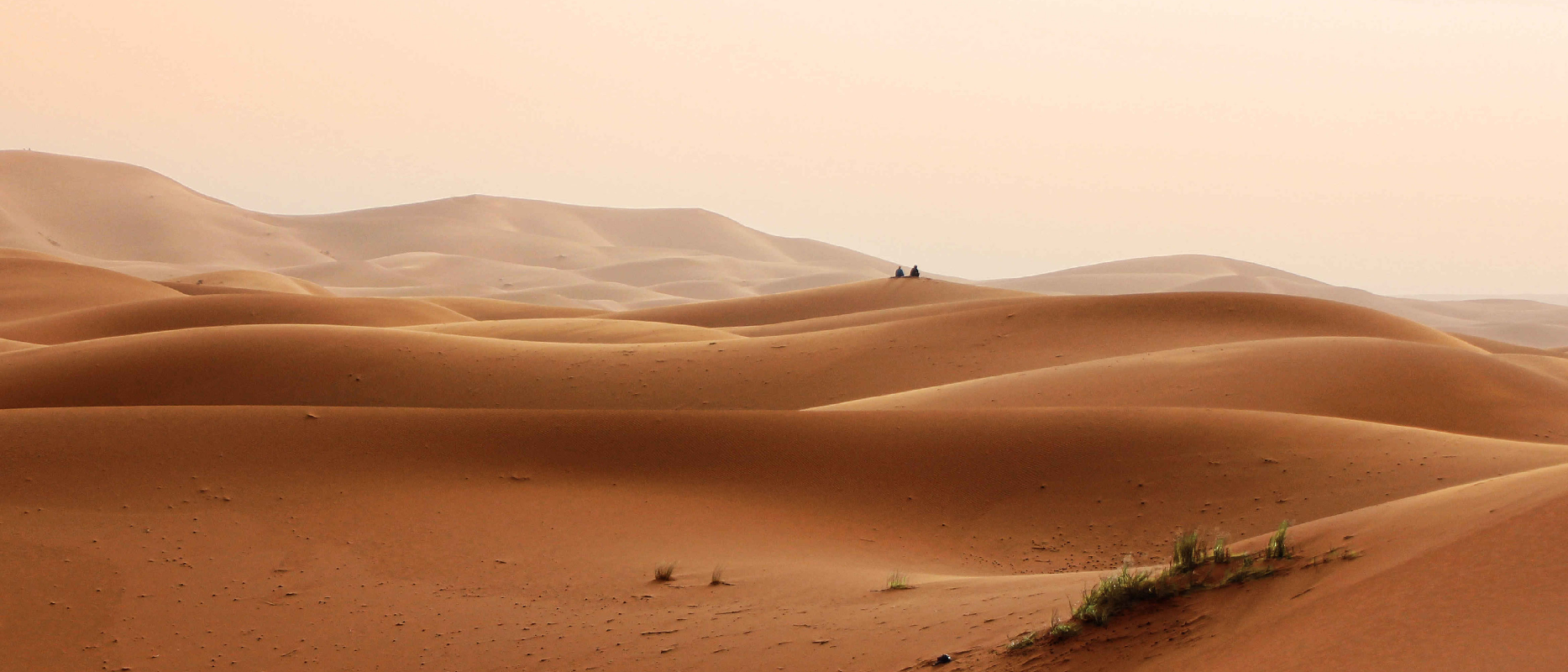
Crossing borders silently and impacting millions globally, sand and dust storms are the 'underappreciated' extreme weather events, yet they profoundly affect the environment and the lives of hundreds of millions worldwide, across all continents. According to the UN Convention to Combat Desertification (UNCCD), every year, an estimated 2 billion tonnes of sand and dust, an amount equal in weight to 350 Great Pyramids of Giza, enter the atmosphere. In recognition of these challenges, the General Assembly proclaimed 2025-2034 as the United Nations Decade on Combating Sand and Dust Storms. Introduced by Uganda on behalf of the Group of 77 developing countries and China, the initiative underscores international concern over sand and dust storms and promotes proactive measures through awareness and action. In the resolution (A/78/L.88), UN Member States emphasized that sand and dust storms currently threaten the realization of 11 out of 17 Sustainable Development Goals. The announcement comes on the eve of the annual observance of the International Day of Combating Sand and Dust Storms (SDS), 12 July, which aims to raise global awareness of the growing health and environmental challenges posed by SDS. “Sand and dust storms need to be addressed in a holistic manner. The UNCCD is working to address the negative impacts of sand and dust storms through several initiatives. We help countries set up monitoring and early warning systems and promote international partnerships to tackle the root causes,” said Ibrahim Thiaw, Executive Secretary of UNCCD. Sand dust storms cost economies hundreds of millions of dollars each year through damage to communications, energy, and transport infrastructure, increased healthcare costs, damage to farmland, and disruption to schooling, employment, and transport. Sand and dust storms have historically played a critical role in Earth's biogeochemical cycles, but human activities now contribute significantly to their increase. According to the SDS Compendium produced by UNCCD, at least 25 per cent of global dust emissions originate from human activities like unsustainable land management and water use. On the occasion of SDS Day, UNCCD and FAO are launching the “Policy guideline on the integration of sand and dust storm management into key policy areas”, helping governments and policymakers better adapt to SDS. The guidelines, aimed at policy makers globally, emphasize the need to integrate SDS management into national and regional strategies, enhancing resilience and mitigating the socioeconomic impacts of these increasingly frequent and intense events. “The Policy Guideline will support countries to develop and implement sand and dust storms-related initiatives, improve land use and management, enhance food security, and build resilience to climate change,” said Lifeng Li, Director of the Land and Water Division at FAO. Sand and dust storms will be on the agenda of the upcoming UNCCD COP16 to be held in Riyadh, Saudi Arabia from 2-13 December 2024. At UNCCD COP14, the United Nations Coalition on Combating Sand and Dust Storms was launched to promote and coordinate a collaborative UN-system response this phenomenon. Currently, 19 Members of the Coalition include UN agencies and non-UN agencies. Within the framework of this coalition the UNCCD leads the efforts on the SDS Toolbox, providing practical solutions to manage and mitigate SDS. The 2024 SDS Day will be celebrated with numerous events around the world. FAO and UNCCD will jointly organize a webinar, highlighting the launch of the Policy Guidelines.

Prior the 16th Conference of the Parties (COP16) to the UNCCD, the Convention Secretariat is organizing a training session for French-speaking journalists who cover the African continent on desertification and the role of the media in promoting sustainable land management practices. This training will take place during 2-6 September 2024, in Abidjan, Ivory Coast, on the sideline of the 20th African Ministerial Conference on the Environment (AMCEN). Journalists will have the opportunity to exchange with experts in sustainable land management and desertification, and to participate in a field visit. The workshop will address major concerns related to land degradation, desertification and drought, as well as the role of the media in this context and strategies specific to better address these subjects. Eligibility and selection criteria The call is open to French-speaking journalists interested in environmental issues. Each applicant must submit: A letter of recommendation from the editor-in-chief of the applicant's organization. Freelancers must provide a copy of the press card. A cover letter of one page maximum explaining the journalist's interest in participating in the workshop. Links or copies of the last three reports or publications on the subject. Complete application files can be sent to press@unccd.int by 11:59 pm Central European Time (CET) on 21 July 2024, indicating as subject: “Candidature pour l'atelier d’Abidjan”. Successful candidates will be informed in writing. See complete details in the attached document.

The UNCCD Gender Action Plan (GAP) emphasizes the critical importance of gender equality and women’s empowerment in implementing the Convention. A key priority of the GAP is to increase women’s access to relevant knowledge and technologies. To fulfill these objectives, UNCCD and the World Overview of Conservation Approaches and Technologies (WOCAT) joined forces in 2020 to advance gender-responsive Sustainable Land Management (SLM). This collaboration between UNCCD and WOCAT focuses on documenting, analyzing and scaling gender-responsive SLM practices by gathering gender-disaggregated data. A specialized tool, co-designed with gender and SLM experts, identifies gender-based parameters as well as the technical and socio-cultural factors that enhance the adoption of SLM by both women and men. In the initial phase of the project in 2021, WOCAT network partners in 15 countries tested the tool, showing promising results. As the Pambadeniya Women Group from Sri Lanka noted, “Women and men debated on how to guarantee equal opportunities in decision making, participation and fair distribution of benefits.” The data demonstrated that equal access to SLM technologies and approaches is both context- and technology-specific. Five technology group profiles on gender-responsive SLM were developed to show the need for further action. Building on this success and following Decision 24/COP.15, UNCCD and WOCAT are now launching a call for expressions of interest to apply the gender-responsive SLM tool. This initiative aims to gather more country-specific gender-disaggregated data on SLM practices, which will be presented at the upcoming UNCCD COP16 in Ryiadh, Saudi Arabia, this December. We are inviting up to 40 stakeholders to implement the gender-responsive SLM tool in local contexts from September to November 2024. Applications are welcome from UNCCD Parties, civil society organizations, WeCaN members and others involved in sustainable land management. The application deadline is 4 August 2024. Submissions are accepted in English, French and Spanish. For more details on the call, application requirements, and the online application form, please see the side menu. * Please note: the questionnaire is currently being reviewed and updated. The final version of the questionnaire will be available in September 2024

Gender equality is a key entry-point for Sustainable Land Management (SLM) and UNCCD together with WOCAT are working to improve gender-responsiveness of SLM practices. Direct and indirect gender-related barriers prevent women from adopting SLM practices. These barriers include land tenure insecurity; land availability; education or literacy levels; access to seeds, fertilizers, or extension services; and access to technologies and financing. As a result, women adopt SLM technologies at a rate that is typically lower and slower than that of men. In line with the UNCCD Gender Action Plan (GAP) and guided by the idea to build back better, the aim of this UNCCD-WOCAT project is to: Add a gender lens to SLM technologies and appraoches and assess their gender-responsiveness Evaluate how gender-responsiveness of SLM Technologies and Approaches can be improved, stepping up adoption and dissemination, making SLM beneficial for women and men alike. This will support project planners, designers and implementers to identify, realize and scale gender-responsive SLM Technologies and Approaches within the framework of LD/SLM and LDN projects and programmes as well as promote the implementation of gender-responsive SLM practices in the UN Decade of Ecosystem Restoration. Phase 1: Development of Gender-responsive SLM tool In the first phase, WOCAT and UNCCD designed a tool that helps to test the gender-responsiveness of SLM Technologies and Approaches and to identify areas of improvement to support project planners, designers, and implementers in their effort to scale up SLM Technologies and Approaches that are gender-responsive. The gender-responsive SLM tool was reviewed during a UNCCD-WOCAT consultation workshop with experts from different organizations and regions, resulting in the fine-tuning of the tool. Currently, the tool is being tested with WOCAT network partners in more than 10 countries around the globe, supporting it further refinement and facilitating a first round of data collection. Data will be analysed and presented in the form of SLM Gender Profiles, showcasing women and men's involvement in different SLM Technologies and providing insights and recommendations on the improvement of SLM Technologies and related Approaches in view of gender equality and women empowerment. Phase 2: New gender tool added to WOCAT Database (May 2024 – June 2025) The Global WOCAT SLM Database will be enhanced with a gender-responsive SLM tool, enabling: Online assessment of the gender-responsiveness of SLM practices Search for gender-responsive SLM solutions Collection of gender-disaggregated data through a harmonized system Possibility to analyse and share gender-disaggregated data to support informed decision-making for gender equality in land management, particularly in relation to drought resilience Platform to discuss gender and land management related issues within communities Interested partners and institutions, including UNCCD Parties and CSOs, will be trained in its application to gain country-specific gender-disaggregated data on SLM practices. Results will support the design and implementation of gender-responsive SLM projects and programmes and inform decision-makers. During the upcoming UNCCD COP16 in Riyadh, Saudi Arabia in December 2024, partners will present results and country insights.
