News & stories

Latest news & stories
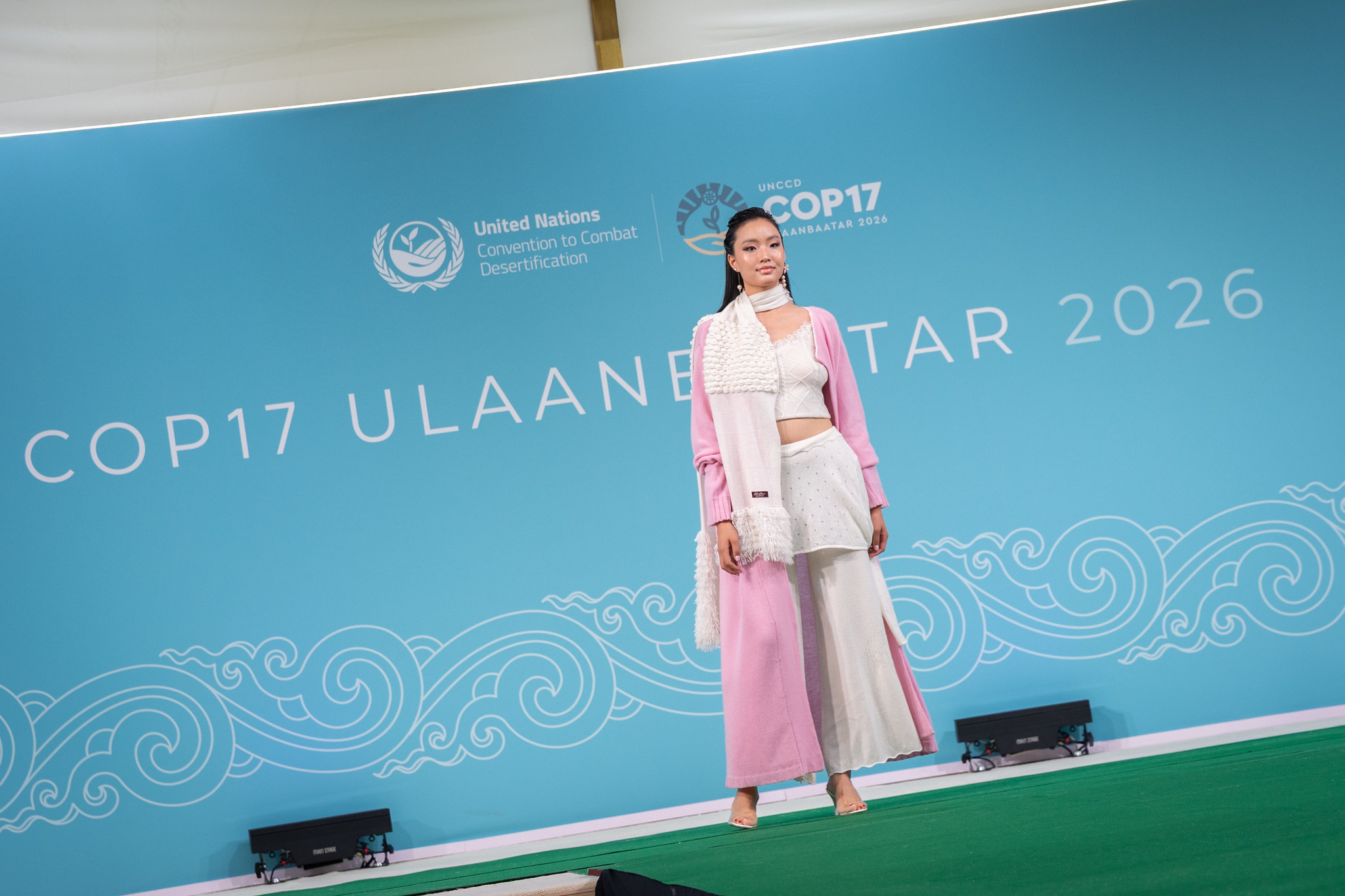
Cashmere can look weightless on a runway. Whether its footprint is equally light depends on the health of the rangelands that produce it. In Mongolia, around 190,000 herder households and 27 million goats are behind the fabled fiber that accounts for roughly 40 percent of the world’s raw cashmere. Its quality begins long before spinning or knitting, on vast rangelands that sustain animals and livelihoods but are also under growing pressure. Rangelands cover 54 per cent of the Earth’s terrestrial surface, and in Mongolia they make up more than 70 per cent of the country’s territory. Yet 81 per cent of Mongolia’s land is affected by degradation. This made Ulaanbaatar a fitting location for a new edition of Fashion4Land, which returned to UNCCD COP17 after its debut in Riyadh in 2024. What would it take to change the way clothes are designed, sourced, worn and regulated while retaining the talent, ingenuity and beauty that make people care about fashion in the first place? The forum brought together designers and manufacturers, global luxury brands and Mongolian producers, pastoralist advocates and policymakers around a simple premise: fashion begins on land. When discussing sustainable fashion, UNCCD Goodwill Ambassador Inna Modja sees an opportunity rather than a constraint. “Fashion has a unique ability to inspire, connect people and translate complex sustainability challenges into stories that everyone can understand,” she said. One such story is already famous. For Team Mongolia’s Milano Cortina 2026 Olympic wardrobe, GOYOL Cashmere’s Creative Director Munkhbayasgalan “Baysa” Delgerbat revisited clothing worn during the Mongol Empire, retaining details shaped by life on the steppe: a raised collar against the wind, an overlapping front for warmth and side slits designed for movement. “People don’t fall in love with a product because it is sustainable,” Baysa says. “People fall in love with story, with beauty, with craftsmanship.” A garment carrying cultural and material value, she argued, is more likely to be cared for, kept and eventually passed on. For Nan Hu of Nan Knits, the color of the fiber itself offers an exciting design opportunity. The brand leans toward the subtle shades of yak fiber — soft browns, dusky grays and creamy whites that become an irresistible palette rather than something to overwhelm with dye. For a designer known for experimental contemporary knitwear, the appeal lies in taking a well-known material somewhere unexpected. Sustainability, he argues, need not limit creativity – it can jump-start it. At LVMH, the raw material can mean something the industry has already made but was unable to sell. Alexandre Capelli described how designer Kevin Germanier gathers unsold products from the group’s boutiques, dismantles them and turns the material into new designs in which the initial object might be impossible to recognize. Other experiments with young designers involve regenerative flax, food-industry waste, discarded hotel linens and innovative materials for dyeing. The idea is not to make sustainability visible as an aesthetic. It is to make it part of how design happens. UNCCD Goodwill Ambassador Ricky Kej took that logic a step further. His #ReWear4Earth campaign began with a minor red-carpet heresy: wearing the same clothes to a next high-visibility event. Speaking at the COP17 Fashion4Land event, he challenged the disposable expectations encouraged by fast fashion and social media. “The Earth will not remember what we wore to our last party, but it will certainly remember how we treated it,” Kej said. “We do not need a different outfit for each Instagram photo.” But does a beautifully made garment worn for decades necessarily mean it is land-positive? Fashion4Land resists the convenient idea that “natural” automatically means sustainable. Cotton can place enormous demands on land and water. Wool and cashmere can contribute to overgrazing when production is poorly managed. Synthetic fibers depend heavily on fossil fuels and can shed microplastics. The question is: what is the impact of wearable beauty on the planet’s finite resources? For Battsetseg Batmunkh, Mongolia’s Minister of Foreign Affairs and COP17 President, that question reflects directly on livelihoods. New environmental requirements, she argued, should help producers improve rather than price herders and smaller businesses out of sustainable supply chains. “The future of sustainable fashion should be measured not only by the value of its products but also by how effectively it protects the land, ecosystem and communities upon which production depends,” she said. However, the more than 400 standards and certifications across textiles and fashion do not in themselves ensure that the industry’s environmental impacts are addressed. Mongolian producer Gantakhi Gantsetseg warned that repeated audits and certification fees can consume money without a cent reaching the rangelands they are intended to protect. The challenge is not weaker standards but smarter ones — compatible systems that reward measurable improvement in practice. UNCCD Executive Secretary Yasmine Fouad pointed to Mongolia’s ability to bring tradition into a modern industry while remaining “grounded at the land.” Fashion4Land’s next chapter, she said, should bring greater policy coherence, stronger partnerships and greater responsibility for “the people and the land together.” That evening, the COP17 Action Dome — a larger-than-life Mongolian ger — transformed into a runway. Each brand brought its own signature style to the catwalk: NOLUR spoke the language of quiet luxury in Mongolian cashmere; OYUNA wove nomadic heritage into contemporary design; Nan Knits took knitwear into new experimental territories; BODIOS brought the warmth, softness and comfort of Mongolian yak to the runway; TANGOLA traced yak fiber from high-altitude grasslands to the final stitch; GOYOL showcased the craftsmanship of a family-run Mongolian fashion house; GOBI celebrated cashmere’s natural colors and the traditional art of hand-combing; and Khanbogd turned Mongolian raw cashmere into finished fashion for the world, keeping the craftsmanship at home. Next time we are in the market for new clothes, let’s not forget: a stylish garment does not begin at the tailor’s table. Truly sustainable fashion helps keep the land healthy long after the runway season is over – and that is a pattern that never goes out of style. Photos : © UNCCD/Kiara Worth

At UNCCD COP17 in Ulaanbaatar, the Committee on Science and Technology examined how scientific evidence can help countries monitor land degradation, plan for drought and make informed choices about land management.

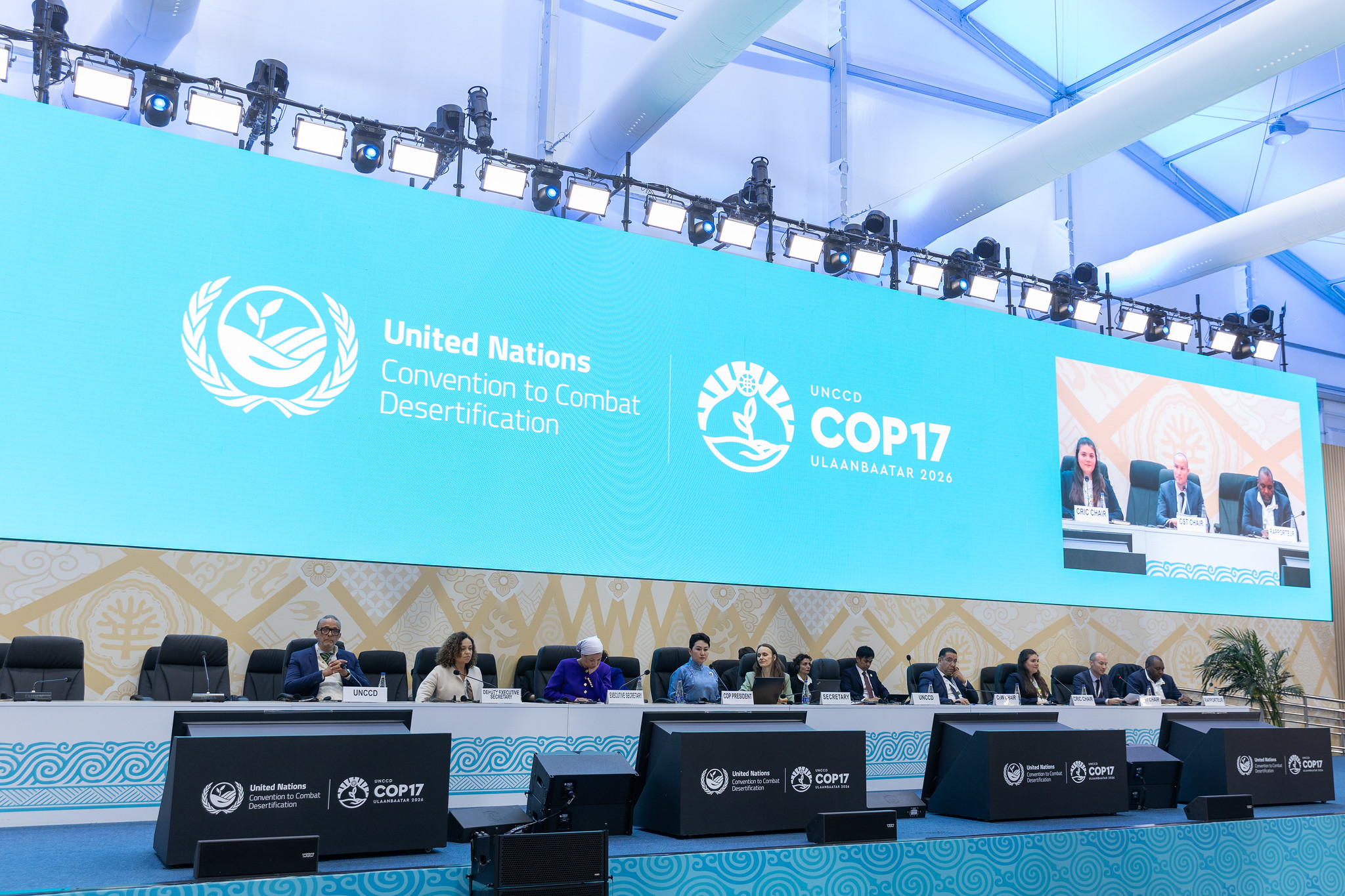
Drought resilience is not only about knowing when and where drought will occur. It is about understanding how well societies, economies, ecosystems and institutions can anticipate, prepare for and adapt to its impacts —and where action can make them better able to withstand the next shock.“We have become very good at observing drought. But we are still, in many ways, data-rich and decision-poor,” said UNCCD Chief Scientist Barron Orr at the launch. The challenge, he stressed, is to turn increasingly sophisticated drought information into actionable intelligence.”During the UNCCD COP17, the launch of Phase II (version Beta) of the International Drought Resilience Observatory (IDRO) brought together governments, scientists and international partners to address the challenge of how to turn growing knowledge about drought into stronger resilience.The launch introduced the Drought Resilience Index (DRI) to help countries assess their capacity to anticipate, prepare for and adapt to drought. By bringing together evidence across environmental, social, infrastructure and economic dimensions, the Index aims to show where resilience is weakest and where action and investment could make the greatest difference. The new tool has been developed under the International Drought Resilience Alliance (IDRA), with UNCCD and in collaboration with the Yale Center for Environment and Architecture and partner institutions from around the world. Now in beta, IDRO has been financed by Spain, which co-chairs IDRA with Senegal, and the European Union.From measuring drought to measuring resilience“As we are seeing from Europe to the Horn of Africa to the Panama Canal, drought does not stay where its starts,” said UNCCD Deputy Executive Secretary Andrea Meza, who noted that “its impacts cut across economies and ecosystems and persist over time. A drought affecting crops or water supplies in one place can disrupt energy, transport, supply chains and livelihoods far beyond where it began making it essential to manage drought risk in a cross-cutting manner and at all levels of governance”, she said.Meza added: “The same drought does not necessarily have the same impacts everywhere. Its consequences depend on the capacity of communities, economies and ecosystems to absorb the impact, adapt and recover. Resilience is about reducing that vulnerability, and IDRO can help us understand where it lies.”Meza placed IDRO within a broader global architecture for drought resilience, alongside IDRA, the Drought Resilience Investment Facility (DRIF) and the Riyadh Global Drought Resilience Partnership (RGDRP).Making resilience gaps visibleEdgar Gutiérrez, IDRO Senior Policy Advisor and former Minister of Environment and Energy of Costa Rica, described the Drought Resilience Index as “a practical decision compass —showing not only where drought risk exists, but where resilience is weakest, what dimension needs attention, and where action and investment can have the greatest preventive impact.”IDRO aids Users to explore how countries perform across three dimensions —Anticipate, Prepare and Adapt— and across four domains: the Natural Environment, Built Environment, People and Community, and Economy. Interactive maps, country profiles, underlying indicators and data sources, case studies and an AI-enabled function that helps interpret search results allow users to explore the evidence behind the Index.“A report is a snapshot, frozen at the time of publication”, said Anna Dyson, Founding Director of the Yale Center for Environment and Architecture (CEA). “IDRO turns the Drought Resilience Index into a practical tool, allowing users to go beyond a single score to understand what is driving resilience, identify priorities and support better-informed decisions.”María Jesús Rodríguez de Sancho, Director General for Forest Policy and Desertification Control at Spain’s Ministry for the Ecological Transition and the Demographic Challenge (MITECO), noted: “It is our hope that IDRO may contribute to bridge the gap between knowledge and action, by bringing together scientific evidence, local experience and policy-relevant information in a single platform.” Spain, which co-chairs IDRA with Senegal, has contributed one of IDRO’s in-depth case studies, alongside Australia, Brazil, Mongolia, Peru, Saudi Arabia, Senegal and the United States. Together, the case studies bring country experience into the platform, translating data and evidence into practical lessons that can be adapted to other contexts.Scientific and international partnersSenegal’s role as IDRA co-chair was also reflected in the launch, with Aliou Gory Diouf, Minister of Environment and Ecological Transition, highlighting the importance of international cooperation in strengthening drought resilience.The launch also brought together scientific and technical partners behind IDRO. Andrea Toreti, Senior Scientist and Head of the Copernicus EMS Drought Observatory at the European Commission’s Joint Research Centre,highlighted the need for drought intelligence to evolve alongside advances in science and technology. Valentin Aich, senior Water and Climate specialist with the Global Water Partnership and World Meteorological Organization, emphasized the importance of translating resilience assessments into practical support for decision-makers, while Hind Wildman, Co-founder of Yale CEA, highlighted the value of making complex information accessible to different audiences.Ina Marčiulionytė, Ambassador and Head of Delegation of the European Union to Mongolia, also underscored the importance of strengthening resilience through cooperation and better evidence. With Phase II, IDRO aims to support earlier, more targeted action, helping countries reduce the vulnerability for communities, economies and ecosystems.

Land is often discussed at global conferences in hectares, targets and indicators. For the people who live from the land, it is also home, livelihood, culture, memory and identity. At UNCCD COP17, held in Ulaanbaatar in August, that reality was evident in discussions on land tenure, rangelands, science and knowledge, finance and implementation. Across them, one practical issue kept surfacing: how to bring the knowledge of people who manage the land into decisions on its use, assessment and restoration. Throughout COP17, the role of Indigenous Peoples as well as local communities in restoring and sustainably managing land featured prominently in formal discussions. Parties and observers emphasized the value of bringing Indigenous knowledge together with science and of strengthening land rights and tenure security. Representative of civil society organizations and Indigenous Peoples also called for community-generated data to inform reporting and for communities to be engaged as partners in implementation and decision-making. Some of those priorities were reflected in the final decisions. On land tenure, Parties encouraged inclusive and participatory dialogue from local to national level, drawing on all forms of available knowledge, and recognized customary and communal rights of access to natural resources. The decision on rangelands recognized pastoralists as critical stewards, acknowledged mobility as an adaptation and resilience strategy and called for knowledge accumulated by pastoralists to inform efforts to close knowledge and data gaps. The specific agenda item on civil society participation, however, was not considered at COP17 and will return at COP18. Outside the negotiating rooms, practitioners and Indigenous participants brought these questions down to the level of everyday experience. Maedeh Salimi of Iran, a programme director at the Center for Sustainable Development and Environment (CENESTA), works with pastoralists, smallholder farmers and fishing communities. She described land as far more than a source of income. A community’s culture, food system, social structure and future are tied to its territory, she said. Indigenous Peoples as well as local communities therefore need a direct role in decisions affecting those territories as rights-holders. Several voices at COP17 stressed that useful evidence does not come from formal science alone. Ecologist Ermias Betemariam of the Nairobi-based Landscape Alliance says young scientists need to learn not only from books but also from communities, farmers and pastoralists — to “read landscapes and people” alongside scientific literature. Tai Pelli, a Borican Taíno from Puerto Rico with the United Confederation of Taíno Peoples, put the same point more directly. “We cannot make Indigenous knowledge secondary or inferior to what modern science has,” she said. “I think that if we work together, we can make a huge difference.” One example of that collaboration came from South Africa. At a DryNet event on community-driven rangeland management, participants presented restoration work where grazing plans are co-designed with communities rather than delivered to them. Farmers implement the plans with locally recruited eco-rangers, including young people and women, while restoration is linked to training, market access and livelihoods. The experience demonstrated that technical interventions are only part of the equation: restoration is more likely to last when communities have ownership, functioning local institutions and economic opportunities tied to the land. UNCCD Executive Secretary Yasmine Fouad speaks at the opening of the COP17 Indigenous Peoples' PavilionAt an event on Indigenous data and resilient territories, participants explored what people on the ground can add to information gathered from above. Satellite data can show that something has changed; communities can often explain what that change means and why it happened. Indigenous representatives and practitioners working in the Amazon, the Congo Basin and West Africa described monitoring systems that combine satellite imagery, GPS, drones and mapping with knowledge built up over generations. In the Peruvian Amazon, Indigenous monitors collect territorial data to identify threats and guide conservation and restoration. Pastoralist groups carried many of these priorities into a collective declaration. The Ulaanbaatar Declaration, adopted by pastoralist and Indigenous peoples at the Global Pastoralist Gathering ahead of COP17 and presented during the COP’s open dialogue, describes pastoralists as rights-holders, knowledge holders and solution providers. It calls for recognition of mobility and customary governance, free, prior and informed consent, meaningful participation, direct access to finance and the need to recognize pastoralist knowledge systems alongside scientific knowledge. For Erjen Khamaganova, a Buryat-Mongol representative of the World Union of Indigenous Spiritual Practitioners at COP17 and a founding member of its Elders Council, knowledge of the land is also inseparable from responsibility. Frameworks and finance cannot deliver implementation without real engagement at community level, she said. Her own vision of land is rooted in ancestral ideas of two-way responsibility between people and Mother Earth — a relationship in which caring for land is an obligation upheld across generations. The question of knowledge and stewardship ultimately leads to another: who has a voice in the work of the Convention. During COP17, the UNCCD Indigenous Peoples Caucus, the Local Communities Caucus, Civil Society Organizations Panel, Youth Caucus and Gender Caucus came together to call for meaningful participation in UNCCD decision-making and for their role to be fully reflected in the Convention’s work. “We are here to offer solutions that are born from our close relationship with nature and with the land,” said Jennifer Tauli Corpuz of the Indigenous Peoples' Caucus. While COP17 did not resolve every question around participation, it marked the first formal meetings of the Indigenous Peoples Caucus and Local Communities Caucus and brought together the largest representation of Indigenous Peoples in the history of a UNCCD COP. Parties took note with appreciation of the declarations of Indigenous Peoples, the youth the local communities and the Mayors and included them in the COP17 proceedings. They did the same with the declaration by civil society organizations and summaries of the two civil society open dialogues. The land tenure decision also asks the secretariat to support the convening of all four UNCCD caucuses as a way to enrich discussions on land tenure and implementation. The participation debate remains unfinished, but the programme for COP18 puts civil society participation back on the agenda and provides for the caucuses to convene again when Parties meet in Egypt in 2028. Photo : © UNCCD/Kiara Worth

Портфель финансирования восстановления земель и повышения устойчивости к засухе в 23 странах достиг 1,3 млрд долларов США. В его центре — пастбищные земли: 45 проектов общей стоимостью 1,2 млрд долларов СШАПродвижение к нейтральному балансу деградации земель (НБДЗ): Бразилия представила новую добровольную цель НБДЗ на 2030 год, включающую 17 подцелей, а Центральная Азия уже выполнила половину своих целей НБДЗГлобальное партнёрство Эр-Рияда по устойчивости к засухе, созданное Саудовской Аравией на КС-16, в Улан-Баторе приблизилось к практической реализации: продвинулась работа над объединённым фондом для поддержки примерно 70 уязвимых странКБО ООН и Люксембург запустили Инвестиционный механизм по повышению устойчивости к засухе (DRIF), призванный мобилизовать до 400 млн долларов США государственного и частного капиталаУЛАН-БАТОР, МОНГОЛИЯ, 28 августа 2026 года — После двух недель переговоров о путях борьбы с деградацией земель, опустыниванием и засухой сегодня в Улан-Баторе завершилась семнадцатая сессия Конференции Сторон Конвенции ООН по борьбе с опустыниванием (КС-17 КБО ООН).В рамках переговоров и Программы действий Улан-Батор объединил ключевые составляющие практической реализации: политические ориентиры, науку, финансирование, проекты, готовые к инвестициям, партнёрства и более активное участие людей, непосредственно управляющих земельными ресурсами.На встрече 197 Сторон КБО ООН в центр глобальной повестки в области земельных ресурсов вышли пастбищные земли, которые занимают 54 процента поверхности суши Земли, обеспечивают средствами к существованию около двух миллиардов человек и находятся под управлением примерно 500 миллионов пастбищных животноводов.В Международный год пастбищных земель и животноводов в Улан-Баторе была запущена Флагманская инициатива по пастбищным землям, объединяющая 45 проектов общей стоимостью 1,2 млрд долларов США. Это крупнейшая в истории Конвенции единая инициатива по мобилизации ресурсов в поддержку пастбищных земель.Параллельно с переговорами КС-17 дала старт целому ряду инициатив и финансовых обязательств, направленных на ускорение восстановления земель и повышение устойчивости к засухе.Правительства, банки развития, фонды и компании объявили о портфеле финансирования на 1,3 млрд долларов США для 23 стран на пяти континентах, включающем проекты на разных стадиях подготовки. Из этой суммы 644,5 млн долларов США относится к новому финансированию, из которого 216,4 млн долларов уже подтверждены и переходят к этапу реализации.Исполнительный секретарь КБО ООН Ясмин Фуад заявила:«Мы приехали в Улан-Батор нацеленными на то, что КС-17 должна стать конференцией практических действий. А уезжаем, имея гораздо больше элементов той системы, которая позволит этого добиться: политические решения, более прочную научную основу, инновационные финансовые механизмы, инвестиционные портфели и партнёрства, способные масштабировать решения.Но об Улан-Баторе будут судить не по тому, что было объявлено в стенах этой конференции. Его наследие определит то, что произойдёт дальше: станут ли страны лучше подготовлены к засухе, будут ли восстановлены деградированные и пастбищные земли, дойдёт ли финансирование до жизнеспособных проектов и почувствуют ли люди, управляющие землёй, реальные изменения в своей жизни».Батцэцэг Батмунх, министр иностранных дел Монголии и Председатель КС-17 КБО ООН, заявила:«Как принимающая страна и страна, председательствующая на 17-й сессии Конференции Сторон Конвенции ООН по борьбе с опустыниванием, Монголия стремилась обеспечить открытую, прозрачную и инклюзивную атмосферу для диалога на основе консенсуса, сблизить позиции Сторон и добиться ощутимых результатов.В Международный год пастбищных земель и животноводов Монголия продемонстрировала миру, что пастбищные земли представляют собой стратегически важную экосистему, связывающую продовольствие, окружающую среду, экономику, биоразнообразие и источники средств к существованию пастбищных животноводов.Председательствуя на 17-й сессии Конференции Сторон Конвенции ООН по борьбе с опустыниванием, Монголия руководствовалась принципом: „от обещаний к реализации, от обсуждений к реальной работе“».Сандаг-Очир Цэнд, министр окружающей среды и изменения климата Монголии и председатель Национального комитета по организации КС-17 КБО ООН, заявил:«Монголия успешно провела 17-ю сессию Конференции Сторон Конвенции ООН по борьбе с опустыниванием (КС-17 КБО ООН), объединив страны мира для продвижения практических решений в борьбе с опустыниванием, деградацией земель и засухой. Одним из наиболее значимых итогов конференции для Монголии стала поддержка Сторонами, международными организациями, частным сектором и гражданским обществом „Степного плана“, который станет одним из ключевых долгосрочных результатов КС-17.В рамках „Степного плана“ правительство Монголии официально запустило три международные инициативы: Флагманскую инициативу по пастбищным землям, Инициативу по взаимосвязи водных и земельных ресурсов и Инициативу по природным решениям для устойчивой инфраструктуры. Они открыли новые возможности для разработки проектов, укрепления международного сотрудничества и мобилизации инвестиций в этих приоритетных областях.Хотя КС-17 завершается сегодня, наша работа на этом не заканчивается. Следующая задача — воплотить принятые решения, созданные партнёрства и полученные на конференции инвестиционные обязательства в конкретные действия и добиться, чтобы инициативы, стартовавшие в монгольских степях, принесли измеримые результаты».От обязательств к практической реализацииКонференция проходила на фоне сложной международной ситуации в области земельных ресурсов. До 40 процентов земель деградировано, при этом страны обязались восстановить более одного миллиарда гектаров к 2030 году. Сегодня национальные планы по борьбе с засухой есть более чем у 70 стран — в 2013 году их было всего три, — однако масштабы финансирования и практических действий по-прежнему не соответствуют масштабу и темпам нарастания проблемы. На этом фоне Стороны призвали активнее мобилизовывать финансовые ресурсы, укреплять потенциал и расширять техническое сотрудничество в целях заблаговременного управления рисками засухи, прежде всего в странах Африки, не оставляя без внимания и другие затронутые развивающиеся страны.Большой массив новых данных, представленных в Улан-Баторе, продемонстрировал как цену бездействия, так и выгоды от инвестиций в здоровые земли. Новые доклады были посвящены экономике восстановления пастбищных земель, растущим человеческим и экономическим последствиям засухи, особым проблемам малых островных развивающихся государств и Центральной Азии, а также экономической ценности инвестиций в здоровье почв.Согласно представленным данным, в малых островных развивающихся государствах деградировано 18,8 млн гектаров земель, а в Центральной Азии — более 80 млн гектаров, то есть свыше четверти территории региона, что затрагивает 24 миллиона человек. При этом все пять стран Центральной Азии приняли добровольные цели по достижению нейтрального баланса деградации земель, половина которых уже выполнена.В совокупности эти доклады показали, как деградация земель и засуха влияют на продовольственную и водную безопасность, источники средств к существованию и экономику в самых разных регионах мира, одновременно подтверждая экономическую целесообразность профилактических мер, устойчивого управления земельными ресурсами и восстановления земель.Наряду с новыми данными Бразилия представила крупное национальное обязательство — добровольную цель по достижению нейтрального баланса деградации земель (НБДЗ) к 2030 году, включающую 17 подцелей, связанных с национальной политикой, планами и программами.В их числе — реабилитация или восстановление более 163 000 км², в том числе за счёт восстановления естественной растительности и агролесоводческих систем. Ещё 3,51 млн км² охвачены мерами по предотвращению деградации посредством сохранения и устойчивого управления земельными ресурсами. В общей сложности 17 подцелей охватывают около 3,67 млн км².Это обязательство способствует достижению Бразилией Цели устойчивого развития 15.3 за счёт предотвращения, сокращения и обращения вспять деградации земель, одновременно укрепляя продовольственную и водную безопасность, биоразнообразие и устойчивость к изменению климата.Новая глобальная система повышения устойчивости к засухеПо итогам продолжительных переговоров Стороны решили продолжить обсуждения на КС-18, опираясь на прогресс, достигнутый на КС-16 и КС-17, с тем чтобы принять решение по заблаговременному управлению рисками засухи на всех уровнях. Стороны также постановили, что засуха останется самостоятельным пунктом повестки дня КС-18 и всех последующих очередных сессий.Глобальное партнёрство Эр-Рияда по устойчивости к засухе, созданное на КС-16, в Улан-Баторе приблизилось к практической реализации. На первой Ассамблее партнёров продвинулась работа над предлагаемым объединённым фондом, который должен помочь примерно 70 странам с низким уровнем дохода и доходом ниже среднего за счёт укрепления потенциала, разработки программ, готовых к инвестициям, и финансирования мер по повышению устойчивости к засухе.На КС-17 также был запущен Инвестиционный механизм по повышению устойчивости к засухе (DRIF) — первый глобальный финансовый механизм, специально предназначенный для привлечения инвестиций в повышение устойчивости к засухе. Созданный КБО ООН и Люксембургом при поддержке Международного альянса по устойчивости к засухе, DRIF ставит целью мобилизовать до 400 млн долларов США государственного и частного капитала для инвестиций в водную безопасность, устойчивое сельское хозяйство, решения, основанные на природных механизмах, и восстановление земель. В рамках первого стратегического партнёрства с Глобальным экологическим фондом будут изучены возможности привлечения частного и благотворительного капитала.На втором этапе работы Международной обсерватории устойчивости к засухе был также представлен первый в мире Индекс устойчивости к засухе — новый инструмент, который позволит странам оценивать свою способность прогнозировать засуху, готовиться к ней и адаптироваться к её последствиям, а также точнее направлять политические меры и инвестиции.Финансирование земельных ресурсов выходит на первый планКС-17 также была направлена на сокращение разрыва между глобальными обязательствами по земельным ресурсам и финансированием, доступным для их выполнения.По оценкам, для выполнения глобальных обязательств по восстановлению земель до 2030 года требуется 355 млрд долларов США ежегодно, тогда как нынешний объём инвестиций составляет около 77 млрд долларов США, оставляя ежегодный дефицит в размере 278 млрд долларов США. На частное финансирование приходится лишь около шести процентов общемировых инвестиций в восстановление земель.Правительства, банки развития, фонды и компании объявили о портфеле финансирования восстановления земель и повышения устойчивости к засухе в 23 странах на пяти континентах на сумму 1,3 млрд долларов США, включающем проекты на разных стадиях подготовки. Из этой суммы 644,5 млн долларов США относится к новому финансированию, при этом 216,4 млн долларов уже подтверждены и переходят к этапу реализации. Портфель охватывает восстановление пастбищных земель и ландшафтов, повышение устойчивости к засухе и меры адаптации, инициируемые и реализуемые на местном уровне.В Улан-Баторе также обсуждались препятствия, из-за которых инвестиции в земельные ресурсы остаются низкими. В частности, речь шла о том, как сделать инвестиции в земельные ресурсы, здоровье почв и повышение устойчивости к засухе более заметными и доступными для отслеживания в рамках существующих категорий природоохранного финансирования. Участники также рассмотрели более широкое применение гарантий, капитала для покрытия первых убытков, страхования и механизмов подготовки проектов, чтобы превращать планы восстановления земель в проекты, готовые к инвестициям.Принимающая страна Монголия запустила первый национальный центр Business4Land (B4L), а также представила принципы устойчивого финансирования, национальную зелёную таксономию и цель довести долю зелёного кредитования до 10 процентов к 2030 году. Вслед за Монголией собственный национальный центр создала Россия, Люксембург приступил к созданию Фонда B4L, а Германия поддержала экспертную группу B4L по вопросам финансирования.Пастбищные земли: от недооценённых экосистем к признанию их экономической ценностиКС-17, которую Монголия принимала в Международный год пастбищных земель и животноводов, уделила особое внимание пастбищным землям и людям, которые ими управляют. Стороны признали ключевую роль пастбищных животноводов в сохранении и управлении пастбищными экосистемами, подчеркнув важность трансграничного передвижения и ценность их знаний и опыта.Несмотря на глобальное значение, пастбищные земли по-прежнему во многом остаются вне поля зрения политики и инвестиций. На них приходится около трети ключевых районов биоразнообразия мира, однако пастбищные земли отражены в национальных климатических планах лишь 24 стран, тогда как леса — 181 страны.Новый экономический анализ, представленный в Улан-Баторе, оценивает ежегодную стоимость экосистемных услуг пастбищных земель в 21–47 трлн долларов США — до почти половины мирового ВВП. Эти выгоды включают производство продовольствия, водные ресурсы, накопление углерода и биоразнообразие. Восстановление пастбищных земель обычно приносит 4–6 долларов отдачи на каждый вложенный доллар, а с учётом более широких общественных выгод, таких как водоснабжение, — до 36 долларов.Объявленная на КС-17 Флагманская инициатива по пастбищным землям призвана превратить эти экономические аргументы в реальные инвестиции, объединив проекты в области устойчивого управления пастбищными землями, их восстановления и поддержки источников средств к существованию пастбищных животноводов.Глобальный экологический фонд поддерживает координацию инициативы, инвестировав 3,3 млн долларов США в проект КБО ООН «Наследие КС-17». За последние четыре года Фонд также одобрил более 50 проектов общей стоимостью свыше 300 млн долларов США в поддержку пастбищных земель и пастбищных сообществ.На КС-17 впервые официально собрались Форум коренных народов КБО ООН и Форум местных сообществКонференция ознаменовалась первыми официальными заседаниями Форума коренных народов КБО ООН и Форума местных сообществ. Решение об их создании и выделении в рамках Конвенции отдельных площадок для выражения их позиций и приоритетов Стороны приняли на КС-16 в Эр-Рияде.На КС-17 также было представлено самое большое число представителей коренных народов за всю историю Конференций Сторон КБО ООН. На специальном мероприятии высокого уровня в тематический день «Земля и люди» коренные народы были представлены как носители прав, хранители знаний и партнёры по практической реализации решений. В центре обсуждения были системы знаний коренных народов, традиционные формы управления, устойчивое пастбищное животноводство, ответственное управление земельными ресурсами и прямой доступ к финансированию инициатив самих коренных народов.На протяжении КС-17 коренные народы, пастбищные животноводы и местные сообщества призывали укреплять права на землю и передвижение, расширять прямой доступ к финансированию, обеспечивать полноценное участие в принятии решений и признавать знания коренных народов и традиционные знания при восстановлении земель и повышении устойчивости к засухе.В ходе дискуссий также подчёркивалась лидерская роль женщин и молодёжи, в том числе необходимость инвестировать в молодых людей как будущих лидеров восстановления земель и расширять их участие в действиях по земельным ресурсам и борьбе с засухой.От Монголии к ЕгиптуСледующая сессия Конференции Сторон КБО ООН — КС-18 — как ожидается, пройдёт в Египте в 2028 году, продолжив импульс, заданный в Улан-Баторе.В преддверии КС-18 Египет подчеркнул важность укрепления сотрудничества и продвижения комплексных подходов к деградации земель, изменению климата и утрате биоразнообразия, способствующих укреплению продовольственной и водной безопасности и повышению устойчивости.КС-18 станет следующим ключевым этапом, в ходе которого страны смогут оценить прогресс в восстановлении земельных ресурсов и повышении устойчивости к засухе, а также продолжить работу на основе решений и договорённостей, достигнутых в Улан-Баторе.ПРИМЕЧАНИЕ ДЛЯ РЕДАКТОРОВДля запросов СМИ и организации интервью:Пресс-служба КБО ООН: press@unccd.intРешения КС-17 доступны по ссылке:https://www.unccd.int/cop17/official-documentsО Конвенции ООН по борьбе с опустыниваниемКонвенция ООН по борьбе с опустыниванием (КБО ООН) — это глобальное видение и голос в защиту земли. Она объединяет правительства, учёных, политиков, частный сектор и сообщества вокруг общего видения и глобальных действий по восстановлению земельных ресурсов и управлению ими ради устойчивого будущего человечества и планеты.КБО ООН — это гораздо больше, чем международный договор, подписанный 197 Сторонами. Это многостороннее обязательство смягчать нынешние последствия деградации земель и закладывать основы ответственного управления земельными ресурсами в будущем, чтобы все люди имели доступ к продовольствию, воде, жилью и экономическим возможностям на справедливой и инклюзивной основе.

Closing DayOn Friday, 28 August, delegates gather as the seventeenth session of the Conference of the Parties (COP17) to the United Nations Convention to Combat Desertification concludes with the adoption of final decisions and reports, bringing the two-week conference to a close.KEY EVENTS FOR MEDIACOP17 Closing Press ConferenceWhen: 17:00Where: Press Conference RoomSpeakers:Yasmine Fouad (UNCCD Executive Secretary)Battsetseg Batmunkh (COP17 President and Minister of Foreign Affairs of Mongolia)Journalists are invited to attend the final press conference, where leadership present the main outcomes and reflections on COP17, outlining key decisions adopted by the Parties at the close of the session.Side EventsSide events throughout the day will cover rangelands and pastoralism, finance, drought resilience, land tenure, healthy soils and the land-water nexus.Journalists are encouraged to consult the official COP17 programme for the full schedule and latest updates : https://www.unccd.int/cop17/programmeMEDIA RESOURCESCOP17 programmeUNCCD COP17 websiteHost country websiteUNCCD Action Dome websiteUN WebTV – Live broadcast of key plenary sessions with live interpretation in all six UN languagesUNCCD COP17 Visual Assets and Branding ResourcesEarth Negotiations Bulletin – daily coverage, photographs and analysisFor media enquiries and interview requests: UNCCD Press Office: press@unccd.int
