Stories
Latest

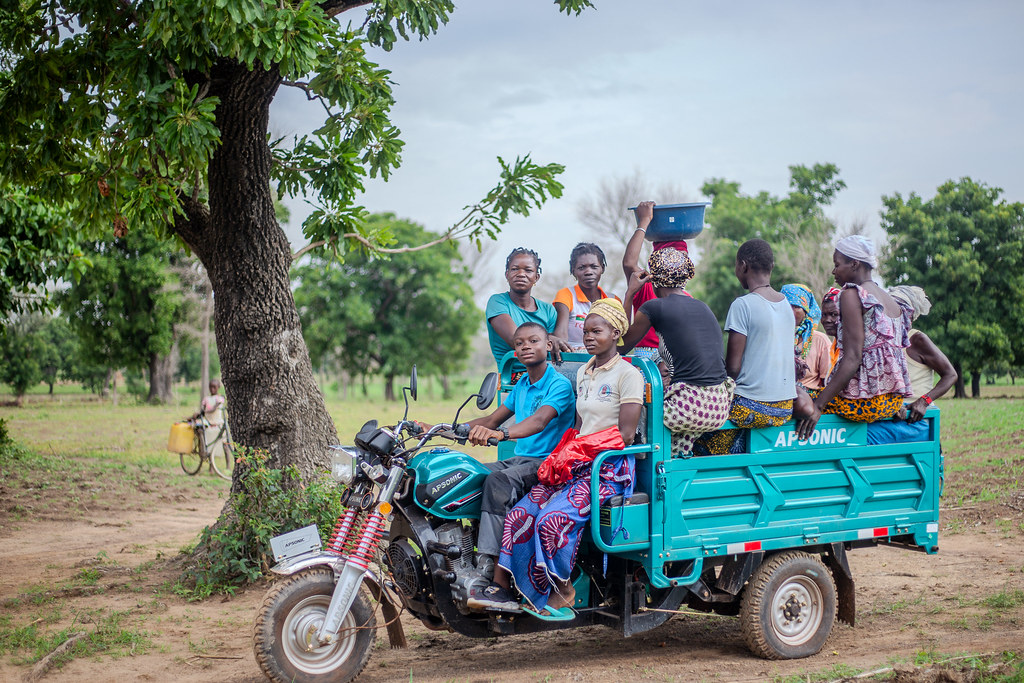


Burkina Faso and Senegal are leading a significant shift towards a future that's both sustainable and inclusive, according to new research released by the UN Convention to Combat Desertification (UNCCD) and UN Women. Filled with valuable insights for policymakers, NGOs and the private sector, the technical briefs focus on the unique opportunities and challenges facing women entrepreneurs and job seekers in the evolving green economy in these two African nations. At the heart of this transformation is the Great Green Wall Initiative, an ambitious project spanning the Sahel that aims to restore 100 million hectares of land, sequester 250 million tons of carbon, and create 10 million jobs by 2030. This massive undertaking is not only an environmental mission, but a pathway to economic revitalization, particularly in promoting gender equality and women's empowerment. “The green transition in Burkina Faso and Senegal is a beacon of hope for gender equality and women's empowerment. It calls for an integrated approach that links green economy goals with gender equality objectives. The Great Green Wall Initiative is a testament to these efforts, combining environmental restoration with economic and social empowerment. By unlocking green jobs for women in key sectors and advocating for gender-responsive policies, these countries aren’t just building a sustainable future; they’re paving the way for a more just and equitable world,” said UNCCD Executive Secretary Ibrahim Thiaw. Despite being a significant part of the workforce in both countries, women in Burkina and Senegal face many obstacles. They earn less than men, are less represented in leadership positions, and are mostly found in the informal sector. Starting formal businesses remains a challenge due to limited resources, such as capital and technology. Women also bear the heavy burden of unpaid care work, particularly in rural areas, which limits their opportunities for income and education. But there's a silver lining. Both countries have immense potential to create green jobs in areas such as agriculture, forestry, energy and waste management. It is estimated that around one million jobs can be created in these sectors, the majority of which will be for women. Opportunities abound in under-exploited areas such as non-timber forest products, the transformation of subsistence agriculture, solar energy and composting in waste management. These sectors offer rewarding and sustainable opportunities, especially for women. To unlock this potential, comprehensive strategies are essential. These include improving women's access to education and training, especially in STEM fields (science, technology, engineering and mathematics); developing climate-resilient technologies for women's cooperatives; facilitating access to green finance; and addressing the burden of unpaid care work. In addition, promoting women's networks in the green economy and establishing innovative value chains centered on non-timber forest products are critical steps. Nearly half of the world's smallholder farmers are women, but they own less than 20 per cent of the world's land. In Senegal, where rural women make up about 70 per cent of the labour force and are responsible for 80 per cent of the country's food production, they own a disproportionately low 10 per cent of agricultural land. Similarly, in Burkina Faso, women make up 60 per cent of the labour force and produce about 70 per cent of the food, but their land ownership is also limited to 8 per cent. Moreover, in both countries, most women access land through their husbands and face difficulties in having their tenure rights recognised and effectively protected. Investing in women’s equal access to, use of and control over land and associated assets is a direct investment in their future and the future of humanity and the planet. Women are instrumental in providing security and stability in rural communities with great potential to contribute to land restoration activities. For more information, contact Mr. Gilles Amadou Ouédraogo gouedraogo@unccd.int

United Nations Under-Secretary-General and Executive Secretary of the UN Convention to Combat Desertification (UNCCD) Ibrahim Thiaw concluded his two-day visit to Japan to strengthen cooperation with key government and international partners ahead of the UNCCD Conference of the Parties (COP16) in Riyadh, Saudi Arabia this December. During the visit, he signed cooperation agreements with two key international partners – United Nations University (UNU) and the International Tropical Timber Organization (ITTO). He also had meetings with Ambassador Takeshi Akahori from the Foreign Ministry and senior officials at the Japan International Cooperation Agency (JICA). Japan has been a signatory to UNCCD since 1998. On 20 February, UNCCD Executive Secretary also joined UNU Rector Professor Tshilidzi Marwala for a public conversation exploring the relationship between land degradation and human security such as famine, conflicts and environmental crises, as well as the role of international cooperation and the UNCCD in combating desertification, land degradation and drought. "The collaboration with UNU and ITTO to strengthen the delivery of scientific knowledge and improve the resilience of the vulnerable populations and ecosystems will be important to support UNCCD Parties in addressing desertification, land degradation and drought,” Mr. Thiaw said. “These issues will be front and centre at the upcoming UNCCD COP16. We look forward to working together on the road to Riyadh and beyond." United Nations University (UNU), which unites 13 scientific institutes in 12 countries around the world works on collaborative research and education, aiming to contribute, to efforts to resolve the pressing global problems of human survival, development, and welfare that are the concern of the United Nations, its Peoples, and Member States. UNU and the UNCCD have jointly worked on publications around topics of sustainable land management, ecosystem restoration and disaster risk reduction. Future cooperation will focus on aligning approaches on sustainable land and water management, as well as financial inclusion and social protection in the context of ecological restoration. “Desertification is an urgent, complex issue that negatively impacts the lives and livelihoods of 3.2 billion people worldwide. Combating desertification requires partnerships and shared expertise. Working in collaboration, UNU and UNCCD will be able to strengthen research, advocacy and capacity building to further support the United Nations, its Peoples and Member States as we work to reverse desertification and confront related critical issues,” Professor Marwala concluded. Also in Tokyo, the UNCCD and International Tropical Timber Organization (ITTO) committed to another four years of joint work on the sustainable management of tropical forests under a memorandum of understanding (MOU) signed by ITTO Executive Director Sheam Satkuru and UNCCD Executive Secretary Thiaw. The overall objective of the new MOU is to support ITTO member countries and Parties to the UNCCD in restoring and maintaining tropical forest landscapes while promoting the sustainable production of timber and other products and ecosystem services. ITTO is an intergovernmental organization promoting the sustainable management and conservation of tropical forests and the expansion and diversification of international trade in tropical timber from sustainably managed and legally harvested forests. ITTO’s membership represents about 90% of the global tropical timber trade and more than 80% of the world’s tropical forests.

About UNCCD Land Heroes The UNCCD Land Heroes campaign recognizes and supports young individuals and youth-led/based organizations making positive impacts against desertification, land degradation, and drought. Through online engagement, we raise awareness, share success stories, and empower youth as change agents in sustainable land management, engaging them in implementing the convention. Building on the success of the inaugural 2020 cohort, the second cohort of Land Heroes continues to inspire and mobilize youth to promote the UNCCD's objectives. About the Land Heroes campaign Part of the Land for Life Programme, #LandHeroes showcases youth's dedication to sustainable land management. These organizations and individuals share transformative journeys through social media, videos, blogs, and our dedicated website, amplifying their contributions and recognizing both young men and women as critical forces for positive change. Join us in celebrating these remarkable land champions. Objective The Land Heroes campaign aims to identify, celebrate, and support youth aged 18-35 engaged in sustainable land management, raising awareness of land's link to biodiversity and climate. By sharing stories, we inspire change, unite youth, provide mentorship, and showcase the transformative power of collective efforts. Campaign goals Raise awareness of land's connection to biodiversity and climate Spotlight diverse ways youth positively impact the land Share inspiring stories showcasing collective progress Empower youth to spread campaign messages and take action Provide mentorship in sustainable land management Share success stories to foster understanding and awareness Categories of Land Heroes Drought resilience: Early warning systems: Implementing proactive measures to anticipate and respond to drought conditions effectively. Mitigating the effects of drought: Innovative strategies for drought impact mitigation and ensure water availability. Adopting scalable and inclusive approaches: Promoting strategies that can be expanded to larger scales and inclusive of vulnerable populations to enhance drought resilience. Land restoration: Large-scale land restoration: Leadership in restoring degraded land on a large scale, contributing to ecosystem restoration and biodiversity conservation. Community-level land restoration: Impactful initiatives restoring degraded land at the community level, enhancing livelihoods and resilience. Inclusivity and equality: Gender equality and women's empowerment: Initiatives promoting gender equality in land ownership, decision-making, and conservation efforts Social equity: Initiatives promoting poverty eradication, social cohesion, etc. Indigenous knowledge: Amplifying indigenous knowledge and practices, recognizing their vital role in sustainable land management Science and innovation: Innovation: Innovative approaches in sustainable land management Technology: Harnessing technology for land monitoring, data analysis, and knowledge-sharing on sustainable practices Science and research: Contributions to scientific research and evidence-based decision-making in land management Key features of Land Heroes Youth engagement (18-35) in addressing land challenges Role models inspiring peers through dedication Inspirational leadership mobilizing youth for collective responsibility Passionate and dedicated to combating desertification and degradation Vision for change: Clear understanding and innovative strategies Collaboration with stakeholders for effective partnerships Strong communication: Effective online presence to inspire action Benefits for Land Heroes Grant of US$1,000 for top finalists in each category Attendance at high-level UNCCD meetings Publicity and recognition through interviews, media, and social platforms Mentorship for leadership, communication, and project management Opportunities to support UNCCD through advocacy, workshops, and content creation Participation in challenges and innovation forums Coordination with other Land Heroes for workshops and collaborative projects Identification of Land Heroes Ten Land Heroes are selected over two years based on criteria aligned with categories. Timeline Deadline extended: 29 February 2024 June 2024: Desertification and Drought Day December 2024: Participation in COP16 Meet the current cohort: Land Heroes Follow Us on social media: Twitter X | Facebook | Instagram | LinkedIn

UNCCD and FAO are collaborating in a joint initiative to identify the most innovative and effective women-led initiatives.

Open from 18 May to 15 August 2023, a call for requests to support national multi-stakeholder consultations on integrating tenure security into LDN and land restoration initiatives elicited over 30 applications. Global, regional, and national staff from the UNCCD and FAO conducted an assessment and evaluation of all applications. Based on the established selection criteria and taking into consideration regional balance and current availability of funds, the following were selected as part of the first group of countries to receive support to undertake national consultations on land tenure: Kazakhstan, Kenya, Mexico, Senegal, and Sri Lanka. The UNCCD, FAO, and partners in the joint initiative look forward to working closely with the 5 selected countries in 2024 and supporting their efforts to enhance tenure security as both a means and outcome of LDN activities and a broad range of regenerative land-based projects and programmes. UNCCD-FAO staff are developing a longer-term plan to support additional national consultations to countries that have applied as resources become available. In parallel, the UNCCD and FAO are engaging with partners and ongoing projects and programmes to identify opportunities for co-funding and leveraging synergies to support additional national consultations in 2024.
Bonn/Samarkand, 10 October 2023 – Today the United Nations Convention to Combat Desertification (UNCCD) entered into a landmark agreement with the government of the Republic of Uzbekistan. The Host Country Agreement marks the culminating chapter in the preparations for the upcoming 21st session of the UNCCD Committee on the Review of the Implementation of the Convention (CRIC21), to be held from 13-17 November 2023 in Samarkand. For the first time since its inception, UNCCD is convening one of its most important meetings in the heart of Central Asia. The highly anticipated CRIC21 will serve as a global platform for cutting-edge insights into land degradation and drought while assessing the progress the countries are making in restoring productive land. Welcoming the UNCCD delegation to the historic crossroads of culture and civilization in the city of Samarkand, Uzbekistan's Minister of Ecology, Aziz Abdukhakimov emphasized the upcoming UN conference's role in bolstering global partnerships and environmental innovation. Among the inspiring examples of the successful project in land restoration he shared is the ongoing tree-planting efforts on 2 million hectares to combat the Aral Sea environmental crisis. UNCCD Executive Secretary Ibrahim Thiaw noted that CRIC21 meets at a time of increasing environmental turbulence: cataclysmic heatwaves in Europe and North America, devastating droughts in the Horn of Africa, torrential monsoons and cyclones across Asia. The significance of land degradation as both a contributor to and a consequence of these phenomena cannot be overstated. Recent UN data paints a sobering picture, demonstrating that 420 million hectares of fertile and productive land between have been degraded between 2015 and 2019 – an area exceeding the combined landscapes of Kazakhstan, Kyrgyzstan, Tajikistan, Turkmenistan and Uzbekistan. CRIC21 – a global symposium of delegates from 196 nations and the European Union, leaders of the civil society, academia, and international organizations – will delve into progress on the Convention's strategic objectives. These range from sustainable land management and drought resilience to ensuring fair land rights for women and tackling the sand and dust storms and wildfires exacerbated by the climate change and environmental degradation. The UNCCD secretariat wishes to express its sincere gratitude to the Republic of Uzbekistan for graciously assuming the role of the host for this pivotal event. Like an intricate carpet weaved by expert hands unfurls to reveal its detailed patterns, CRIC21 will roll out at the Silk Road Samarkand Congress Centre in Uzbekistan this November.
