Latest
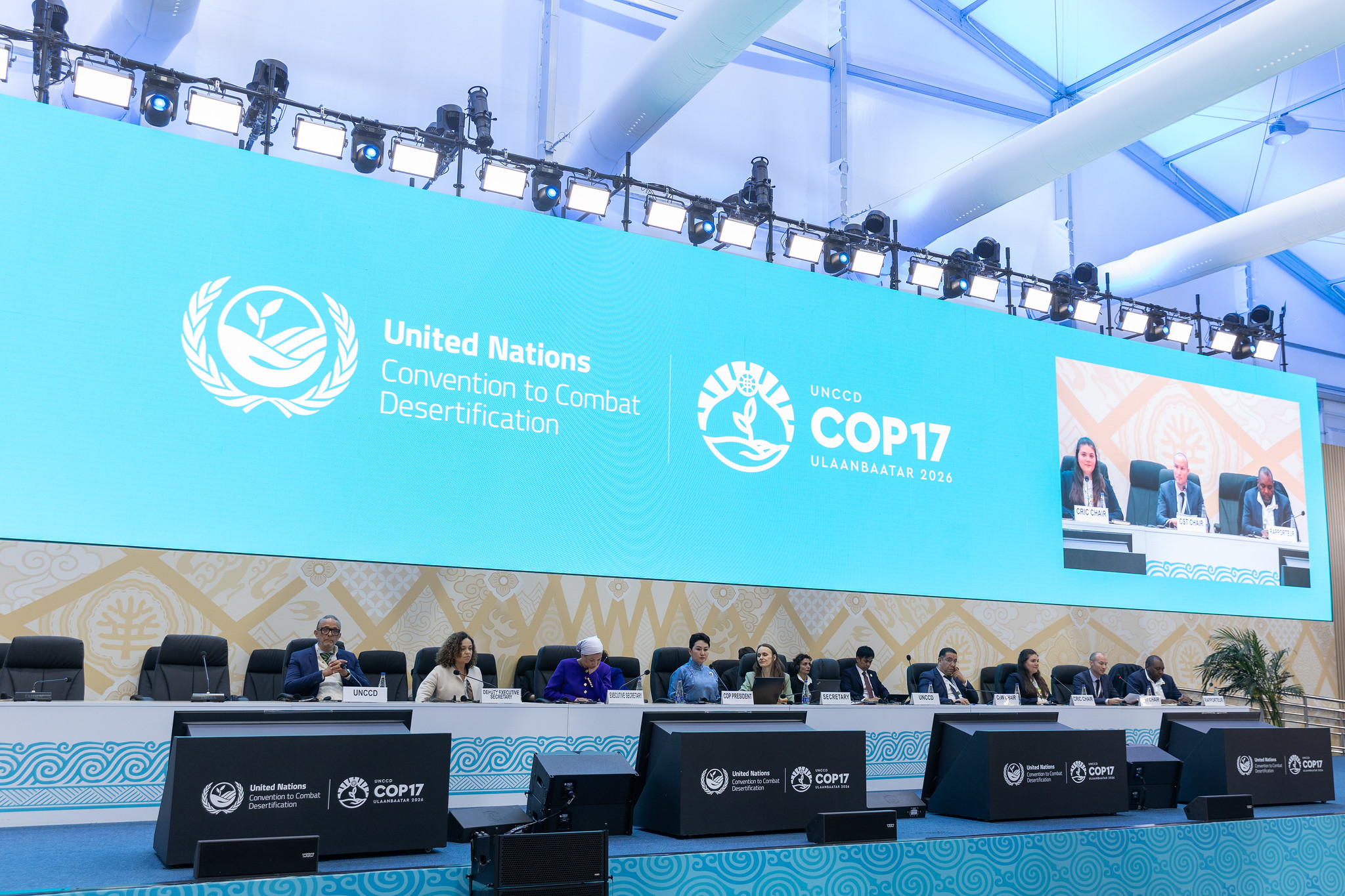


The Science-Policy Interface (SPI) of the UNCCD has just published three important technical reports.

A major practical dimension of land restoration for many countries of Central and Eastern Europe (CEE) is the importance of peatlands for multilateral benefits, such as carbon sequestration and biodiversity conservation. As part of a global assessment made in 2018, peatlands in CEE have been rated as the largest CO2 reservoir. At the same time, measures for restoration of peat bogs to increase carbon storage capacity can be 14 times cheaper than new technological developments for capturing CO2 from the atmosphere.
UN organizations based in the city that proudly calls itself the Global Sustainability Hub came together on 20 August to welcome the new Head of UN Environment Ms. Inger Andersen and discuss priorities for 2019-2020. Addressing the gathering, heads of UNCCD, UN Volunteers, UNFCCC and UN Environment were unanimous in their conviction that building a safe and equitable future for all will require collective and connected efforts from all agencies that work on issues of climate, biodiversity, land and human well-being.
The development of measures to protect and restore forests and peatlands as key resources in the fight against climate change, loss of biodiversity and land degradation will be of major importance for Belarus at UNCCD COP14, BELTA news agency reports.
The ongoing dramatic shift from rural towards urban life has considerably affected global land resources and food security. Every year, 19.5 million hectares of agricultural land are converted to accommodate expanding urban centres and industrial developments. With the most rapid rates of urban expansion, Africa and Asia are projected to experience 80 per cent of the global cropland loss due to urban expansion. Today, 88 per cent of the extreme poor live in rural areas, where poverty rates are four times higher than in urban areas and the deficit of decent work is severe. Rural outmigration, climate and environmental change, rising inequality and insecurity in rural areas has led to unplanned urban growth and an increasing number of people living in slums and informal settlements. About 58 per cent of forcibly displaced end up in cities, and migration from rural to urban areas often leads to a large proportion of new migrants living in informal settlements. Rapid urbanization is linked to several primary drivers of land degradation such as unsustainable resource consumption, decreasing green cover and ground water levels, migration and poverty. At the same time, local and regional governments are emerging as key actors in combating land degradation and restoring affected land areas. Across the globe, various urban development policies and programmes focusing on integrated land use planning, increasing green cover and resource efficiency in urban services are implemented with strong links to combating land degradation. The Local and Regional Governments Day at UNCCD COP14 on 7 September will provide a platform for key stakeholders to interact with global peers, present good practices by local and regional governments and highlight policy measures necessary to enable local action. The event is co-organized by UNCCD in partnership with the ICLEI – Local Governments for Sustainability to support the discussions during the High Level Segment “Rural and urban communities: failing or flourishing together." Read more: The event flyer UNCCD COP14 ICLEI-UNCCD Briefing Sheet Global Land Outlook: Urbanization Rural-urban dynamics policy recommendations Urban-Rural Linkages: Guiding Principles and Framework for Action (URL-GP)
The Desertification Youth Forum will bring together young people and youth NGOs from around the world to discuss issues of desertification, forests, land and climate. The Forum, which will take just prior to the high-level segment of the UNCCD COP14, will feature heads of national ministries and UN agencies. If you are a youth activist under the age of 35 or represent a youth organization working in related areas, you can participate or host an event at the Forum on 7-8 September 2019. Fully-funded and self-funded spots are still open. You can submit your application by 16 August 2019 through this link. Read more: UNCCD COP14