News & stories

Latest news & stories
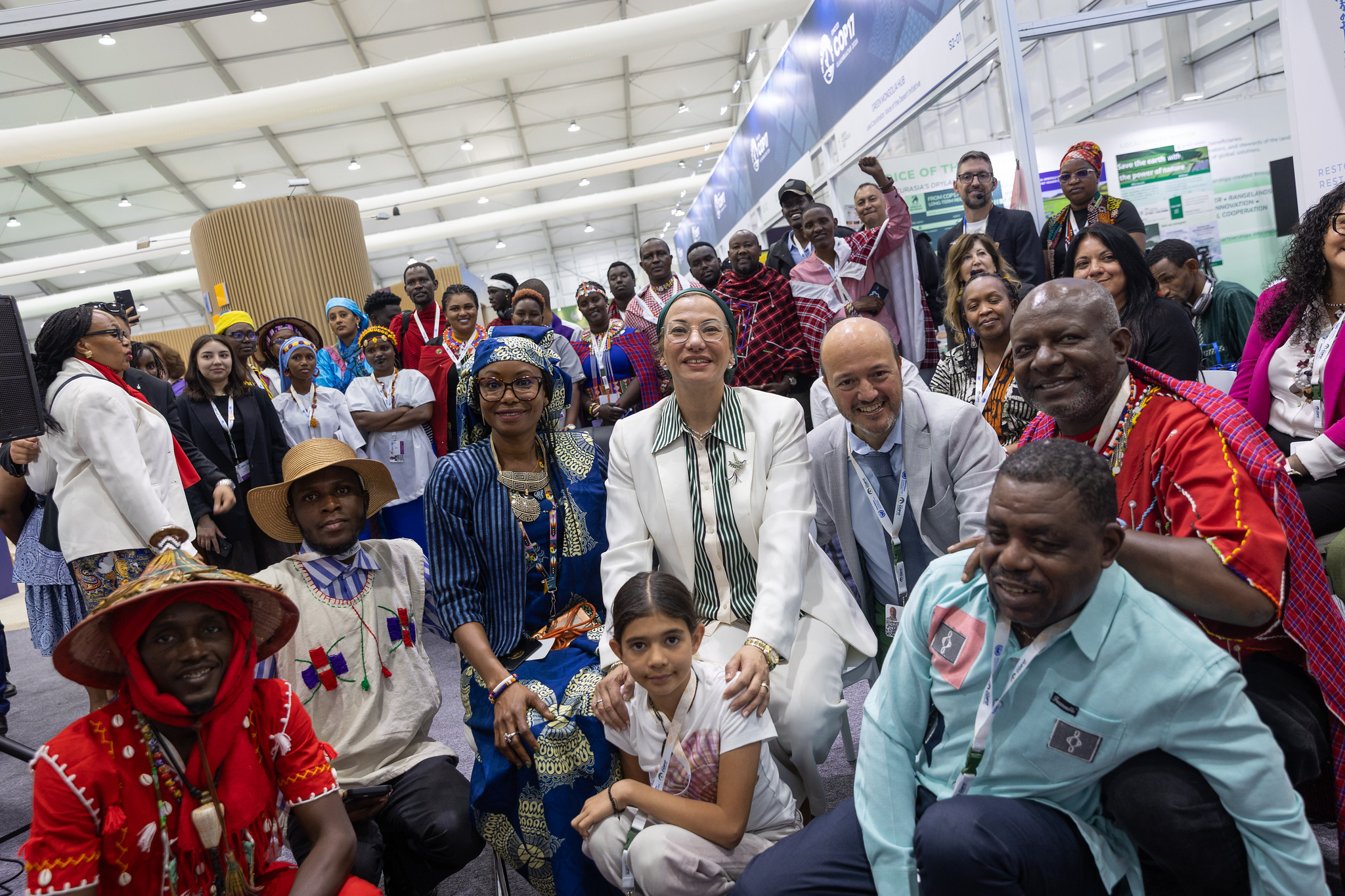
Nairobi, 1 March 2024 – Healthy land’s contribution to addressing global challenges of climate change, biodiversity loss and sustainable development was the focus of the sixth session of the United Nations Environment Assembly (UNEA 6), which concluded today in Nairobi. The week-long meeting saw the adoption of the first-ever UNEA resolution on land degradation as well as the announcement of the logo and slogan for the 16th Conference of the Parties to the United Nations Convention to Combat Desertification (UNCCD COP16), to be held in Riyadh, Saudi Arabia from 2 to13 December 2024. Speaking at the high-level event on combating land degradation for climate and biodiversity, UNEA 6 President and Minister of Energy Transition and Sustainable Development for the Kingdom of Morocco, Leila Benali, noted: “Land is the only common denominator among the three Rio conventions, and it is only through land restoration that we can achieve their objectives. We need to build on what unites us rather than what divides us and start with working and credible solutions when it comes to land and soil health”. Announcing the slogan for COP16, “Our Land. Our Future.”, UNCCD Executive Secretary Ibrahim Thiaw said: “COP16 will be a moonshot moment for land, the Paris equivalent for UNCCD. It is crucial that there is convergence and synergy among the three COPs – biodiversity, climate change, and desertification, all taking place this year". For the first time, UNEA adopted a resolution calling for strengthening international efforts to combat desertification and land degradation, restore degraded lands, promote land conservation and sustainable land management, contribute to land degradation neutrality and enhance drought resilience. These issues will be front and center at UNCCD COP16. On behalf of the COP16 Presidency, Osama Ibrahim Faqeeha, Deputy Minister of Environment, Water and Agriculture of Saudi Arabia, said: "Land is not only important for human life but also crucial for biodiversity and maintaining the delicate balance of our environment. We have to recognize the importance of land and other natural elements of our planet, as 24 per cent of greenhouse gas emissions are associated with various land use schemes." Through the Saudi Green Initiative, the Saudi government aims to plant 10 billion trees and protect 30 per cent of the Kingdom’s land. Additional quotes: Aziz Abdukhakimov, Minister of Ecology, Environmental Protection and Climate Change of the Republic of Uzbekistan, which hosted the meeting to review progress in UNCCD implementation last November, said: "Every minute Uzbekistan loses nine square meters of fertile land, and this is a big problem for any country facing land degradation. It is important to bring together political will, science, and finance to address the challenges of climate change, land degradation, and biodiversity loss". Maria Helena Semedo, Deputy Director-General of the Food and Agriculture Organization of the United Nations (FAO) said: “Land is where food begins, and without land, we cannot produce food or feed the planet. We need a holistic approach, avoiding fragmentation, and investing in sustainable transformations of our agri-food systems to ensure food security and address climate change and biodiversity loss”. Hindou Oumarou Ibrahim, President of the Association for Indigenous Women and Peoples of Chad (AFPAT), said: “Indigenous peoples, who make up 5 per cent of the world's population, protect 80 per cent of the world's biodiversity. They are the guardians of ecosystems and masters of restoring land using traditional knowledge. Direct access to finance, policy coordination, and inclusive decision-making are essential to empowering communities and implementing successful land restoration projects”. UNCCD Land Hero Patricia Kombo from Kenya, who moderated the high-level event at UNEA 6, concluded: “Land degradation is a global challenge that requires concerted action at all levels. It is only by working together that we can restore our land ecosystems, ensure food security, and mitigate the effects of climate change”. For more information: UNCCD Press Office, press@unccd.int, +49 228 815 2820, https://www.unccd.int/, @unccd Recording and photos available: https://www.youtube.com/watch?v=S_oSZoVZJF8 https://drive.google.com/drive/u/1/folders/1QhHqfX_pOFWBuot0ET5hGTogyrWDsq6Q For more information about UNEA 6 and UNCCD COP16 visit: https://www.unep.org/environmentassembly/unea6 and https://www.unccd.int/cop16 About UNCCD The United Nations Convention to Combat Desertification (UNCCD) is the global vision and voice for land. We unite governments, scientists, policymakers, private sector and communities around a shared vision and global action to restore and manage the world’s land for the sustainability of humanity and the planet. Much more than an international treaty signed by 197 parties, UNCCD is a multilateral commitment to mitigating today’s impacts of land degradation and advancing tomorrow’s land stewardship in order to provide food, water, shelter and economic opportunity to all people in an equitable and inclusive manner.

Madame President, Dear UNEP Executive Director, Excellencies, Presidents and chairs of COPs Ministers, Dear colleagues Executive Secretaries of MEAs, Honorable Delegates, Ladies and Gentlemen, I would like to start by thanking the President of UNEA (my sister Leila Ben Ali) and the Executive Director of UNEP (my other sister Inger Andersen) for dedicating an entire day of UNEA6 to the Multilateral Environmental Agreements (MEAs). This is a real credit to UNEP. UNEA is one of the important platforms to discuss these issues. Thirty years after the signing of the Rio conventions, and more than fifty years after the creation of some of the MEAs represented here, we must face the facts: the implementation of these treaties cannot be done in silos. We cannot be effective if the left hand does not know what the right hand is doing. Even less so if all the work done by the national focal point for one convention is ignored, or worse, brushed aside by another focal point. Putting things in order therefore begins at home, at the national level. International partners and development agencies, where appropriate, should play their part. MEA secretariats should help engineer cooperation and technical support. In this respect, institutions such as UNEP and Assemblies such as UNEA have a historic responsibility and a critical role to play in harmonizing the work and focus of the various MEAs as we face a multitude of interconnected crises. About the triple planetary crisis, indeed we face a climate crisis, a pollution crisis and a nature crisis. I would be remiss, as head of the UNCCD, not to insist that the nature crisis includes the immense crisis of land and drought, which is currently affecting more than 3 billion people, causing food insecurity, water scarcity and forced displacements. Action on the land is a powerful force for unity. The health of the land determines the food we eat, the water we drink, the quality of the air we breathe, the clothes we wear and many other services that contribute to our well-being. But the damage we inflict on our land poses a serious threat to world peace, and to the global economy. Similarly, the links between land and pollution are obvious. Air pollution is amplified by sand and dust storms. While plastic pollution affects rivers, lakes and oceans, the bulk of the stock stays in land affecting food production, people and the earth system as a whole. The good news is that there are solutions to these serious problems. They are well within our reach and this is literally in our hands. Make no mistake: the best solutions are those that tackle several challenges at once. We must slow down and adapt to climate change, protect and restore nature and biodiversity, reverse land degradation and desertification, and end pollution and waste. We don’t have the luxury of dedicating Monday to climate or pollution, Tuesday to biodiversity and only think that we can wait until Wednesday to tackle Land degradation. These issues are like communicating vessels and we have to address all these challenges at once! The scientific community is increasingly moving from sounding the alarm to signposting solutions that require concerted efforts. However, progress on turning commitments into transformative action must accelerate. Rapidly. Coherently. Consistently. Excellencies, Ladies and gentlemen, 2024 represents a new opportunity for us all: The three Rio conventions will hold their COPs consecutively at the end of this year. We already had a successful CMS COP a few days ago. At the UNCCD COP16 in Saudi Arabia - in December – we will embark on a unique journey – one that brings all communities of policy and practice to join forces towards a common goal: that of making land healthy again. Parties assembled in Riyadh at UNCCD COP16 will present a groundbreaking action agenda for all MEAs to reverse degradation and to accelerate efforts to restore 1.5 billion hectares of land by 2030. Healthy and productive land is the operational link between climate action and biodiversity conservation. Linking up action on land will allow us to take advantage of the synergies that build resilience, mitigate the impacts of climate change, safeguard biodiversity, provide food security for billions around the world, and transform the way we manage the environment and consume its bounty. And this is everyone’s effort. We must ensure that the work on each MEA commitment dovetails with and amplifies the work of the others. By forging synergies with UN entities and conventions, we can amplify our impact, leverage resources, and foster greater coherence in our collective response to global environmental challenges. For example: aligning land degradation neutrality targets with nationally determined contributions and the new biodiversity targets can maximize the impact of nature-positive investments and significantly diminish the huge gap between commitment and action. After all, we are facing one single global challenge – the sustainability of the planet and striving for an environment of peace and prosperity. Martin Luther King Jr once said: “We may have all come on different ships, but we're in the same boat now”. So, while MEAs have individual mandates, they ultimately have the same ambition: protecting the people and the planet. Let us make 2024 a pivotal year for environmental multilateralism. The science is clear and sobering. Long-term planning and cooperation are of the essence. But urgent action is needed. Recent years have proven that environmental multilateralism is working. It remains our best shot at tackling the complex and interconnected environmental challenges. Let’s take it! Thank you.

United Nations Under-Secretary-General and Executive Secretary of the UN Convention to Combat Desertification (UNCCD) Ibrahim Thiaw concluded his two-day visit to Japan to strengthen cooperation with key government and international partners ahead of the UNCCD Conference of the Parties (COP16) in Riyadh, Saudi Arabia this December. During the visit, he signed cooperation agreements with two key international partners – United Nations University (UNU) and the International Tropical Timber Organization (ITTO). He also had meetings with Ambassador Takeshi Akahori from the Foreign Ministry and senior officials at the Japan International Cooperation Agency (JICA). Japan has been a signatory to UNCCD since 1998. On 20 February, UNCCD Executive Secretary also joined UNU Rector Professor Tshilidzi Marwala for a public conversation exploring the relationship between land degradation and human security such as famine, conflicts and environmental crises, as well as the role of international cooperation and the UNCCD in combating desertification, land degradation and drought. "The collaboration with UNU and ITTO to strengthen the delivery of scientific knowledge and improve the resilience of the vulnerable populations and ecosystems will be important to support UNCCD Parties in addressing desertification, land degradation and drought,” Mr. Thiaw said. “These issues will be front and centre at the upcoming UNCCD COP16. We look forward to working together on the road to Riyadh and beyond." United Nations University (UNU), which unites 13 scientific institutes in 12 countries around the world works on collaborative research and education, aiming to contribute, to efforts to resolve the pressing global problems of human survival, development, and welfare that are the concern of the United Nations, its Peoples, and Member States. UNU and the UNCCD have jointly worked on publications around topics of sustainable land management, ecosystem restoration and disaster risk reduction. Future cooperation will focus on aligning approaches on sustainable land and water management, as well as financial inclusion and social protection in the context of ecological restoration. “Desertification is an urgent, complex issue that negatively impacts the lives and livelihoods of 3.2 billion people worldwide. Combating desertification requires partnerships and shared expertise. Working in collaboration, UNU and UNCCD will be able to strengthen research, advocacy and capacity building to further support the United Nations, its Peoples and Member States as we work to reverse desertification and confront related critical issues,” Professor Marwala concluded. Also in Tokyo, the UNCCD and International Tropical Timber Organization (ITTO) committed to another four years of joint work on the sustainable management of tropical forests under a memorandum of understanding (MOU) signed by ITTO Executive Director Sheam Satkuru and UNCCD Executive Secretary Thiaw. The overall objective of the new MOU is to support ITTO member countries and Parties to the UNCCD in restoring and maintaining tropical forest landscapes while promoting the sustainable production of timber and other products and ecosystem services. ITTO is an intergovernmental organization promoting the sustainable management and conservation of tropical forests and the expansion and diversification of international trade in tropical timber from sustainably managed and legally harvested forests. ITTO’s membership represents about 90% of the global tropical timber trade and more than 80% of the world’s tropical forests.

Bonn, Deutschland, 21. Februar 2024 – Auf Einladung der deutschen Bundesregierung findet der zentrale Festakt am Welttag gegen Wüstenbildung und Dürre am 17. Juni 2024 in Bonn statt. Er steht unter dem Motto „United for Land: Unsere Erde. Unsere Zukunft.“. Denn weltweit verlieren wir in jeder einzelnen Sekunde wertvollen gesunden Boden in der Größe von vier Fußballfeldern. Das ergibt im Jahr insgesamt 100 Millionen Hektar pro Jahr - eine Fläche fast dreimal so groß wie Deutschland. Angesichts dieser alarmierenden Entwicklungen ist es wichtiger denn je, heutige und künftige Generationen für einen nachhaltigen Umgang mit Boden und Landflächen zu gewinnen. Genau das ist das Ziel des Welttags gegen Wüstenbildung und Dürre, für den in diesem Jahr Deutschland die Gastgeberschaft übernommen hat. Der 17. Juni 2024 ist zugleich auch das 30. Jubiläum des Übereinkommens der Vereinten Nationen zur Bekämpfung der Wüstenbildung (UNCCD) mit Sitz in Bonn. UNCCD ist das einzige rechtsverbindliche internationale Abkommen für Bodenschutz und Dürremanagement und neben der UN-Klimarahmenkonvention (UNFCCC) und Biodiversitätskonvention (CBD) eine der drei sogenannten Rio-Konventionen, die 1992 beim Erdgipfel in Rio de Janeiro beschlossen wurden. UNCCD-Exekutivsekretär Ibrahim Thiaw: „Weltweit sind bereits bis zu 40 Prozent des Bodens degradiert. Davon ist etwa die Hälfte der Menschheit betroffen ist. Maßnahmen zum Schutz von Böden sind weltweit bekannt. Die Sanierung von Böden hilft betroffenen Bevölkerungen auch, Armut zu minimieren und stärkt sie in ihrer Widerstandsfähigkeit gegenüber dem Klimawandel. Es ist an der Zeit, sich für fruchtbares Land und Böden einzusetzen und dem weltweiten Verlust von Landflächen und der Degradierung von Böden die rote Karte zu zeigen." Die Bundesrepublik Deutschland, unter der Schirmherrschaft des Bundesministeriums für wirtschaftliche Zusammenarbeit und Entwicklung (BMZ), ist der diesjährige Gastgeber des zentralen Festakts zum Welttag gegen Wüstenbildung und Dürre am 17. Juni 2024, der in der Bundeskunsthalle in Bonn stattfindet. BMZ-Staatssekretär, Jochen Flasbarth: „Rund ein Viertel der Menschen weltweit sind von Dürre betroffen. Auch in Europa verschlechtert sich der Zustand unserer Böden rasant. Der Schutz von Boden und Land ist eine globale Herausforderung. Wir müssen heute gemeinsam handeln, damit die Generationen von Morgen eine Lebensgrundlage haben – nur mit gesunden Böden können wir die Menschheit ernähren und uns gegen die Klima- und Biodiversitätskrise wappnen." An den Feierlichkeiten werden international prominente Gäste aus Politik, Wissenschaft, Zivilgesellschaft, Sport und Unterhaltung teilnehmen. Der Welttag findet im Vorfeld der bisher größten Vertragsstaatenkonferenz (COP) der Vereinten Nationen zum Thema Land und Dürre statt, die für Dezember 2024 in Riad, Saudi-Arabien (UNCCD COP16) geplant ist. Rund um den Welttag gegen Wüstenbildung und Dürre wird UNCCD im Mai und Juni gemeinsam mit den deutschen Partnern - dem Bundesministerium für wirtschaftliche Zusammenarbeit und Entwicklung und der Stadt Bonn - mit einer Kampagne unter dem Motto #UNited4Land für den Schutz gesunder Böden und Flächen werben, unter anderem im Rahmen von Veranstaltungen in und um Bonn. Katja Dörner, Oberbürgermeisterin der Stadt Bonn: „Als Sitz von UNCCD und als Stadt auf dem Weg zur Klimaneutralität 2035, kann Bonn Klima, Natur und Land nur gemeinsam denken und schützen. Land ist alles – und so viel mehr als die Fläche, auf der unsere Stadt steht. Land ist der Boden, auf dem Nahrung wächst, Lebensraum für Pflanzen und Tiere, Schwamm für Wasser, Freiraum und Kühlkorridor … und ein Erbe, das wir an die nächsten Generationen weitergeben.“ Seien auch Sie dabei – für unsere Erde und unsere Zukunft und feiern Sie gemeinsam mit UNCCD 30 Jahre Engagement für gesunde Böden und Landflächen: Für Materialien zur #UNited4Land-Kampagne, klicken Sie hier: https://trello.com/b/VdJGolcp/desertification-and-drought-day-2024 Um mehr über die Aktivitäten zum Tag gegen Wüstenbildung und Dürre auf der ganzen Welt zu erfahren, klicken Sie hier: https://www.unccd.int/events/desertification-drought-day/2024 Für eine Online-Teilnahme an der Jubiläumsveranstaltung in Bonn wenden Sie sich bitte an: communications@unccd.int Länder auf der ganzen Welt feiern den Tag gegen Wüstenbildung und Dürre mit einer Reihe von Bildungs-, Kultur- und Sportveranstaltungen - von Filmvorführungen bis zu Fußballturnieren und von Baumpflanzungen bis zu Gartenbauwettbewerben. Ein vollständiges Programm wird in Kürze online verfügbar sein unter: https://www.unccd.int/events/desertification-drought-day. Über den Welttag gegen Wüstenbildung und Dürre: Der von der Generalversammlung der Vereinten Nationen 1994 offiziell verkündete Tag gegen Wüstenbildung und Dürre (A/RES/49/115), der jährlich am 17. Juni begangen wird, hat folgende Ziele: Öffentliche Sensibilisierung für die Herausforderungen im Zusammenhang mit Wüstenbildung, Bodendegradierung und Dürre Aufzeigen von Lösungen zur Verhinderung der Wüstenbildung und zur Umkehrung von zunehmender menschenverursachter Dürre Stärkung der Umsetzung der Ziele des Übereinkommens der Vereinten Nationen zur Bekämpfung der Wüstenbildung Für mehr Informationen kontaktieren Sie bitte: UNCCD: Xenya Scanlon, +49 152 5454 0492, xscanlon@unccd.int oder Yannis Umlauf, Tel: +49 178 285 8629 E-Mail: yumlauf@unccd.int mit press@unccd.int in cc. BMZ: Presseabteilung, Bundesministerium für wirtschaftliche Zusammenarbeit und Entwicklung Tel: +49 (0)30 18 535-2451, E-Mail: presse@bmz.bunddotde www.bmz.de

About UNCCD Land Heroes The UNCCD Land Heroes campaign recognizes and supports young individuals and youth-led/based organizations making positive impacts against desertification, land degradation, and drought. Through online engagement, we raise awareness, share success stories, and empower youth as change agents in sustainable land management, engaging them in implementing the convention. Building on the success of the inaugural 2020 cohort, the second cohort of Land Heroes continues to inspire and mobilize youth to promote the UNCCD's objectives. About the Land Heroes campaign Part of the Land for Life Programme, #LandHeroes showcases youth's dedication to sustainable land management. These organizations and individuals share transformative journeys through social media, videos, blogs, and our dedicated website, amplifying their contributions and recognizing both young men and women as critical forces for positive change. Join us in celebrating these remarkable land champions. Objective The Land Heroes campaign aims to identify, celebrate, and support youth aged 18-35 engaged in sustainable land management, raising awareness of land's link to biodiversity and climate. By sharing stories, we inspire change, unite youth, provide mentorship, and showcase the transformative power of collective efforts. Campaign goals Raise awareness of land's connection to biodiversity and climate Spotlight diverse ways youth positively impact the land Share inspiring stories showcasing collective progress Empower youth to spread campaign messages and take action Provide mentorship in sustainable land management Share success stories to foster understanding and awareness Categories of Land Heroes Drought resilience: Early warning systems: Implementing proactive measures to anticipate and respond to drought conditions effectively. Mitigating the effects of drought: Innovative strategies for drought impact mitigation and ensure water availability. Adopting scalable and inclusive approaches: Promoting strategies that can be expanded to larger scales and inclusive of vulnerable populations to enhance drought resilience. Land restoration: Large-scale land restoration: Leadership in restoring degraded land on a large scale, contributing to ecosystem restoration and biodiversity conservation. Community-level land restoration: Impactful initiatives restoring degraded land at the community level, enhancing livelihoods and resilience. Inclusivity and equality: Gender equality and women's empowerment: Initiatives promoting gender equality in land ownership, decision-making, and conservation efforts Social equity: Initiatives promoting poverty eradication, social cohesion, etc. Indigenous knowledge: Amplifying indigenous knowledge and practices, recognizing their vital role in sustainable land management Science and innovation: Innovation: Innovative approaches in sustainable land management Technology: Harnessing technology for land monitoring, data analysis, and knowledge-sharing on sustainable practices Science and research: Contributions to scientific research and evidence-based decision-making in land management Key features of Land Heroes Youth engagement (18-35) in addressing land challenges Role models inspiring peers through dedication Inspirational leadership mobilizing youth for collective responsibility Passionate and dedicated to combating desertification and degradation Vision for change: Clear understanding and innovative strategies Collaboration with stakeholders for effective partnerships Strong communication: Effective online presence to inspire action Benefits for Land Heroes Grant of US$1,000 for top finalists in each category Attendance at high-level UNCCD meetings Publicity and recognition through interviews, media, and social platforms Mentorship for leadership, communication, and project management Opportunities to support UNCCD through advocacy, workshops, and content creation Participation in challenges and innovation forums Coordination with other Land Heroes for workshops and collaborative projects Identification of Land Heroes Ten Land Heroes are selected over two years based on criteria aligned with categories. Timeline Deadline extended: 29 February 2024 June 2024: Desertification and Drought Day December 2024: Participation in COP16 Meet the current cohort: Land Heroes Follow Us on social media: Twitter X | Facebook | Instagram | LinkedIn

UNCCD and FAO are collaborating in a joint initiative to identify the most innovative and effective women-led initiatives.
