Drought resilience: Turning early warning into early action
-
13 juillet 2026
-
Story
-
Drought
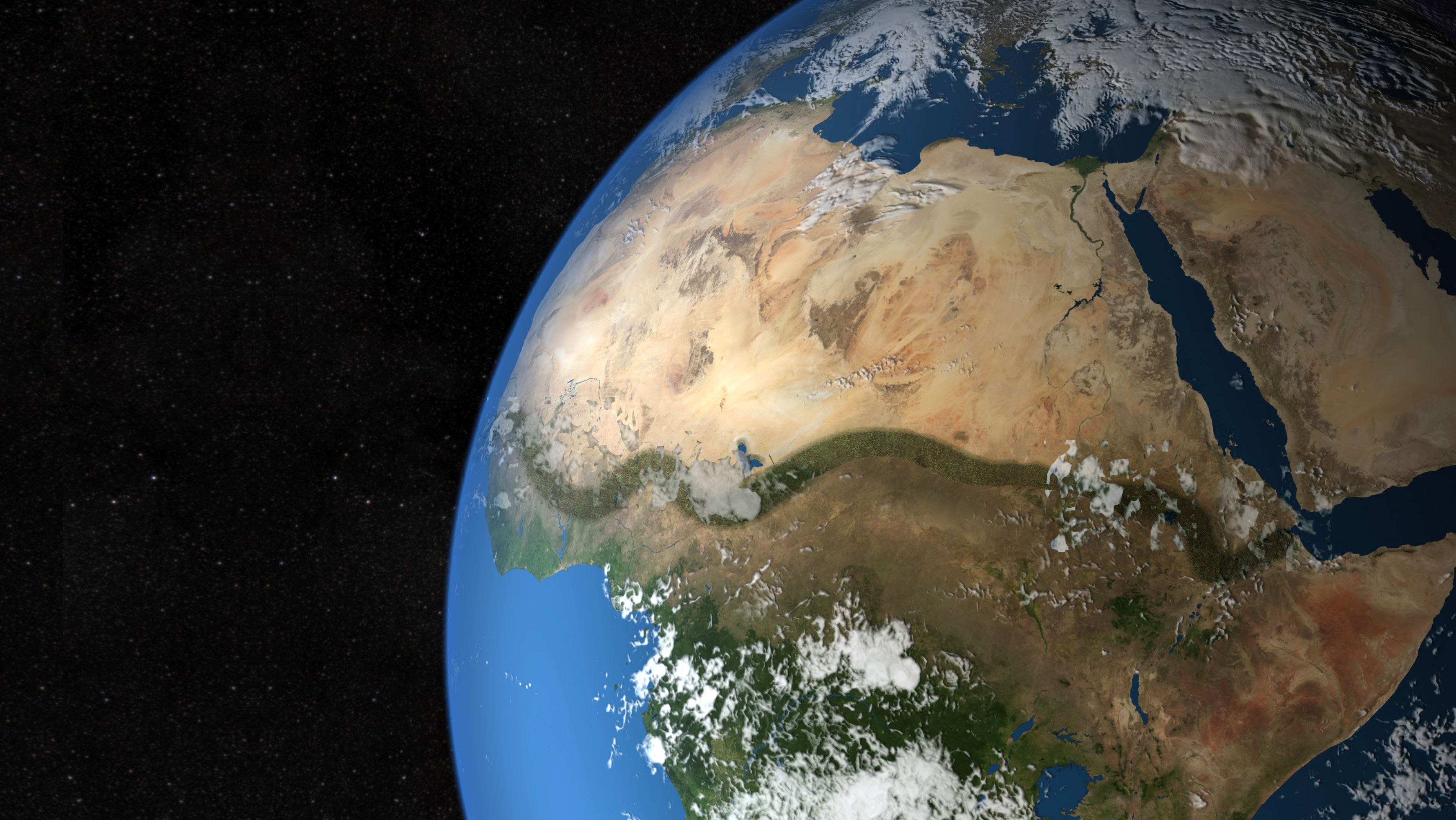
As drought risks intensify, experts urge governments to turn Earth observation data into life-saving decisions
Over the past few decades, Earth observation has transformed the way we understand our planet. By complementing field observations with consistent and large-scale monitoring, satellite technologies can track changes in forests and rangelands, monitor water resources and detect vegetation under stress across entire regions, helping identify dangerous trends long before they develop into full-blown crises.
This capability has become increasingly important as droughts are becoming more frequent and severe, while 75 per cent of the Earth's land has become drier over the past three decades, making proactive drought risk management more urgent than ever. Yet, as Earth observation becomes increasingly sophisticated, the challenge is no longer the lack of data, but turning environmental intelligence into early action that protects lives, livelihoods and ecosystems.
This priority was at the heart of discussions during the 2026 Copernicus Land Monitoring Service (CLMS) General Assembly, held in Valencia, Spain, from 23 to 25 June. Bringing together policymakers, scientists and Earth observation experts, the event explored how advances in land monitoring can better support decision-making.
Delivering the keynote on drought resilience, Daniel Tsegai, Programme Officer at the United Nations Convention to Combat Desertification (UNCCD outlined a roadmap for better connecting scientific knowledge with action.
"Earth observation has transformed our ability to observe environmental change, yet observation alone does not reduce vulnerability,” said Tsegai. “Today, we are data-rich but decision-poor. The next frontier is embedding drought intelligence into planning, investment and governance systems."
Beyond warning signals
Drought is no longer a distant hazard. Since 2000, the number and duration of droughts have increased by nearly 30 per cent, driven by unsustainable land and water use and climate change. By 2050, up to three in four people worldwide could be affected by drought, while global water demand is projected to exceed supply by as much as 40 per cent by 2030. Meanwhile, drought already costs the global economy more than US$300 billion every year, with losses projected to rise by a further 35 per cent by 2035.
"We have an abundance of evidence: from increasing burned areas, sand and dust storms and record-breaking heat to growing impacts on food security, energy production and supply chains," said Tsegai. "We don't need more warning signs. We need action."
Building drought resilience begins with recognizing that the impacts of drought do not end when the rain returns. What starts as a shortage of water can leave lasting scars on people, economies and ecosystems. Children exposed to severe drought before birth or during early childhood, for example,may experience poorer cognitive development, lower educational attainment and reduced lifetime earnings.
Over time, drought impacts ripple through sectors and compound with other risks, leaving serious environmental damage, increasing vulnerability to future droughts and extremes, and making each successive drought more costly than the last.
From monitoring to action
Preventing these cascading impacts requires more than accurate forecasts. According to Tsegai, advances in drought monitoring have outpaced the governance arrangements needed to consistently translate early warning into action. Early warning, he noted, extends well beyond predicting drought. It requires identifying who and what is most vulnerable, assessing potential social, economic and environmental impacts, and ensuring that warnings reach end users in a timely manner.
Until it reaches that point, it is not good enough," he said. "What we are doing is not an academic exercise —it is about helping people act.”
Helping people act, however, requires coordinating decisions across multiple sectors. Water allocation for agriculture, for example, may conflict with drinking water supplies or ecosystem protection. Balancing these competing priorities therefore requires coherent planning and clear accountability.
The future of Earth observation
The next challenge is deciding when governments should intervene. For Tsegai, this means linking Earth observation to clear thresholds for action before impacts escalate.
Rather than waiting for visible damage, governments should establish in advance on science-based thresholds that trigger preparedness measures, anticipatory financing and other actions. In this way, Earth observation becomes not only a monitoring tool, but an enabler of prevention.
This vision is also shaping the evolution of the Copernicus Land Monitoring Service, part of the European Union's Earth observation programme, which provides environmental data to support policymaking.
"Today the service is becoming a mature policy toolbox that enables Earth Intelligence, combining different datasets and even socioeconomic information to support more informed planning and decision-making," said Andreas Brink, Project Leader for the Copernicus Land Monitoring Service at the European Commission's Joint Research Centre.
Looking ahead, he sees the service evolving beyond data provision towards end products and practical applications that help policymakers answer questions such as: "What happens if I take this action —or if I don't?"
For Tsegai, every drought, tests not only water availability, but also the effectiveness of institutions, investments and decision-making systems:
"The success of Earth observation should ultimately be measured not by the data it generates, but by the impacts it helps prevent."
Publications

Global climate patterns in 2023 and 2024 set the stage for severe drought impacts worldwide that are continuing into 2025. This report identifies the regions of the world that…