Why the future of land resilience lives in the classroom
-
13 April 2026
-
Story
-
Sustainable land management & restoration
By Dr. Yasmine Fouad, UNCCD Executive Secretary
When I arrived in Bonn to lead the UN Convention to Combat Desertification, I was struck by an interesting observation. The United Nations Campus, where our offices are located, is a prominent part of the city's landscape, yet many of our neighbors who walk past our gates daily could not tell you what we are doing within our offices. On the other hand, we were working every day on topics which matters to the future of humanity, be it climate change, biodiversity, or sustainable land management.
For too long, the global conversation on land has been kept behind fence and closed conference rooms. We have historically framed desertification and drought as someone else's problem, a development issue confined to the Sahel or distant parts of the global south. But the reality of the 21st century has shattered that illusion. When the Rhine River ran dry in 2018 and again in 2022, disrupting shipping and industry across Europe's heartland, the narrative shifted. We are one interconnected land system. What happens to the soil in one part of the world eventually affects the economies of another. To meet this challenge, we must move beyond diplomatic silos. We need to mainstream land restoration into the places where the next generation of decision-makers is being formed: our universities. It is with this conviction that I decided to visit universities and interact with students whenever there are opportunities.
On 9 April, I visited TH Köln, the Cologne University of Applied Sciences to continue building this bridge. My message was simple: land belongs to all of us.
The numbers are stark. Nearly 40 per cent of the world's land is already degraded. That affects more than 3 billion people, with the poorest and most vulnerable hit hardest. Land degradation costs an estimated 10 per cent of global GDP in lost ecosystem services each year. Yet the global response remains fragmented and underfunded.

Dr. Fouad addresses the TH Köln students
Why? Because the decisions that determine what happens to land are not made by scientists alone. They are made by lawyers drafting regulations, by financiers allocating capital, by communicators shaping public understanding, by engineers designing systems. If those people do not understand what land degradation costs or what its restoration requires, they will keep making decisions that undermine everything else we are trying to achieve.
That is why it’s important to take land into academic disciplines where it has rarely appeared. At TH Köln, I found a partner already practicing this kind of thinking. President Sylvia Heuchemer spoke about the university's mission to shape social innovation, to prepare students not just with technical skills, but with the capacity to work across disciplines and engage with the real world. Prof. Dr. Lars Ribbe, who has been collaborating with UNCCD colleagues for over fifteen years, leads a research group on integrated land and water management and sits on the scientific advisory board of Germany's national committee for UNESCO and WMO.
Perhaps the most exciting concrete opportunity to emerge from the visit is TH Köln's Centre for Innovation with Nature. Funded by the state government of North Rhine-Westphalia with 175 million euros, the center is being built in Erftstadt, in the heart of the Rhenish lignite mining area. It is designed as a large-scale living laboratory for nature-based solutions integrated with AI, digital technologies, and the Internet of Things (IoT). RWE, which is carrying out the largest land recultivation programme in Europe on the former mining landscape, is already a partner.
The Rhenish experience, transitioning one of Europe's most heavily mined landscapes into restored habitat and productive land, is exactly the kind of reference case rest of the world needs to see. Not as a model to be copied, but as evidence that transition is possible, and as a space for learning what works under real-world conditions.
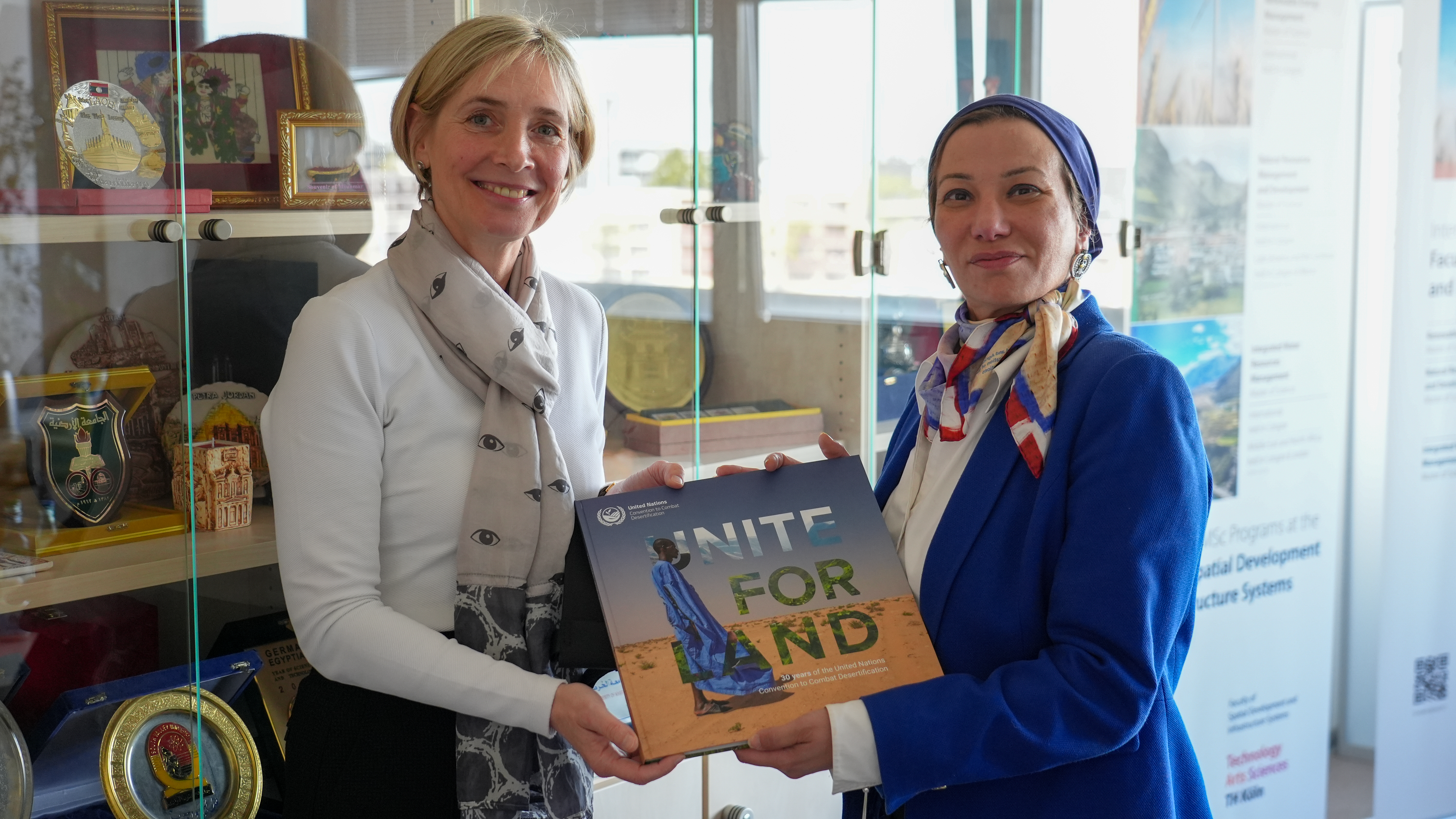
Dr. Fouad shares the 30 years of UNCCD history with TH Köln President Sylvia Heuchemer
I see three concrete things we can build together around this center. First, a global curriculum on the land-drought nexus that can be taught and adapted across universities worldwide. A demonstration project on the ground in Germany that shows those synergies working in practice with data and methodologies that can be shared. And lastly, an annual land conference in Bonn, anchored in food security, that connects the UNCCD policy process to the city and the public around it, breaking down the fence both literally and figuratively.
The part of the visit I keep returning to is the time with the students. Their questions were direct, serious, and grounded in lived experience.
A student from Zimbabwe asked how you restore the identity of a community whose land has been so degraded that younger generations have no memory of what it once was. This brought in the linkages to the question of cultural survival, governance, and justice.
A student from Ghana described watching his own community members turn to artisanal mining because mining precious metals outcompetes farming. He asked what opportunities exist for people who want to work on restoration but cannot afford to wait for long-term returns. That is a question of business models, access to finance, and just transition.
A student from Pakistan asked about the link between land management and extreme weather. Another asked about long-term monitoring after restoration projects close: who pays for it, who enforces it, who holds whom accountable.
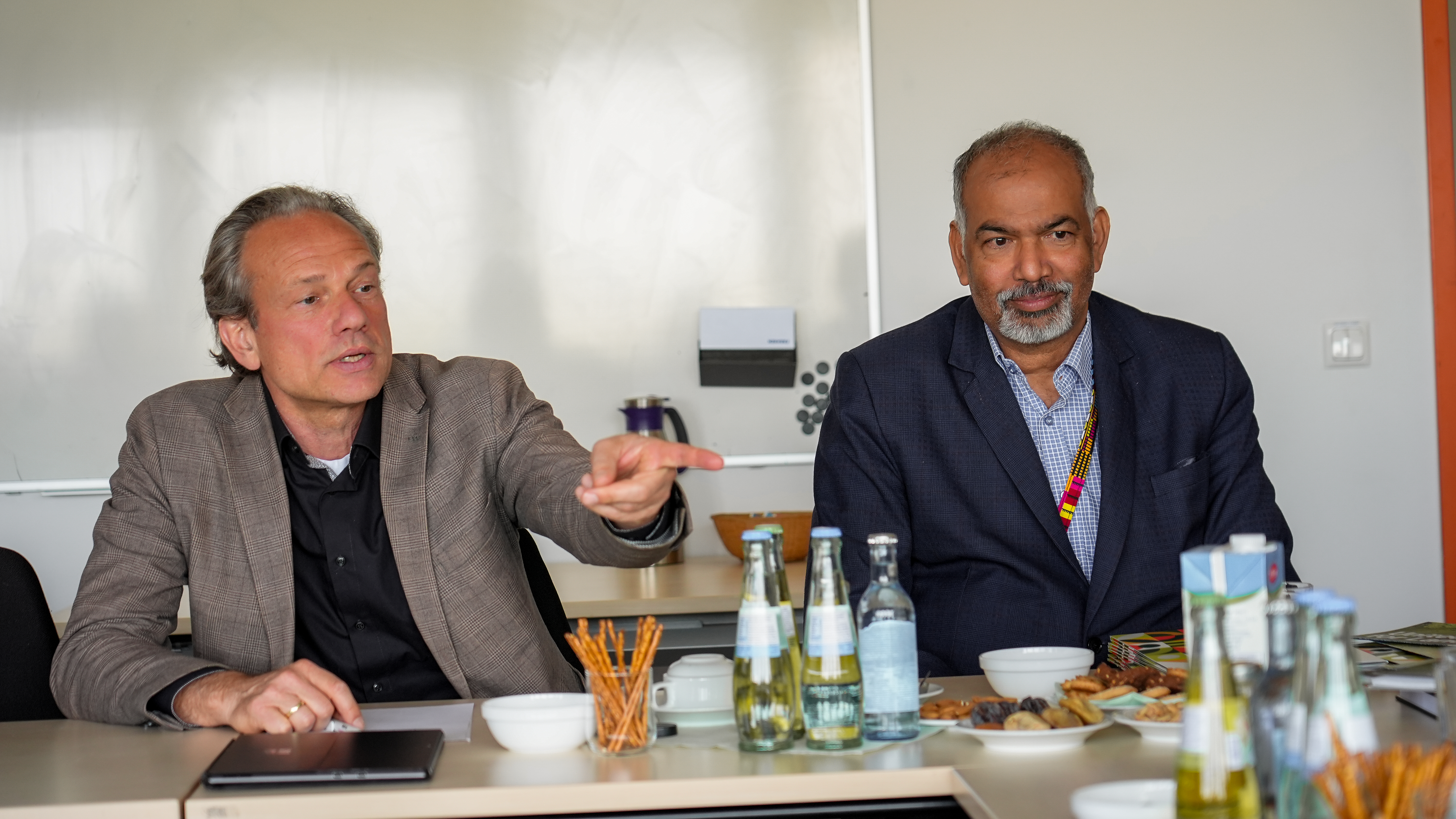
Prof. Dr. Lars Ribbe and Dr. Muralee Thummarukudy, Director of the UNCCD Coordination Office of the G20 Initiative on Land (left to right)
These are the real governance, economic, and cultural problems that we deal with every day inside the convention. And these students from around the world are already thinking about them in exactly the interdisciplinary way that we need more of.
That is why mainstreaming land across non-conventional disciplines matters so much. The global course on land that we are developing at UNCCD is designed for students like the ones I met that afternoon. For the lawyers, financiers, communicators, and engineers who will make the decisions that determine what kind of planet we leave behind.
As we look toward UNCCD COP17 in Ulaanbaatar this August, our goal is to fundamentally change the narrative. Land is not a niche environmental issue. It is the foundation of everything, from the food on our plates to the stability of our borders. When land fails, migration and conflict follow. When land thrives, it provides the conditions for people to stay, to build, and to prosper.
The economics are clear. Investments in land restoration generate significant returns across ecological, social, and economic dimensions, yet global finance for restoration is not to the level of ambitions. That leads to market failure, and market failures require regulatory, financial, and educational solutions, not just scientific ones.
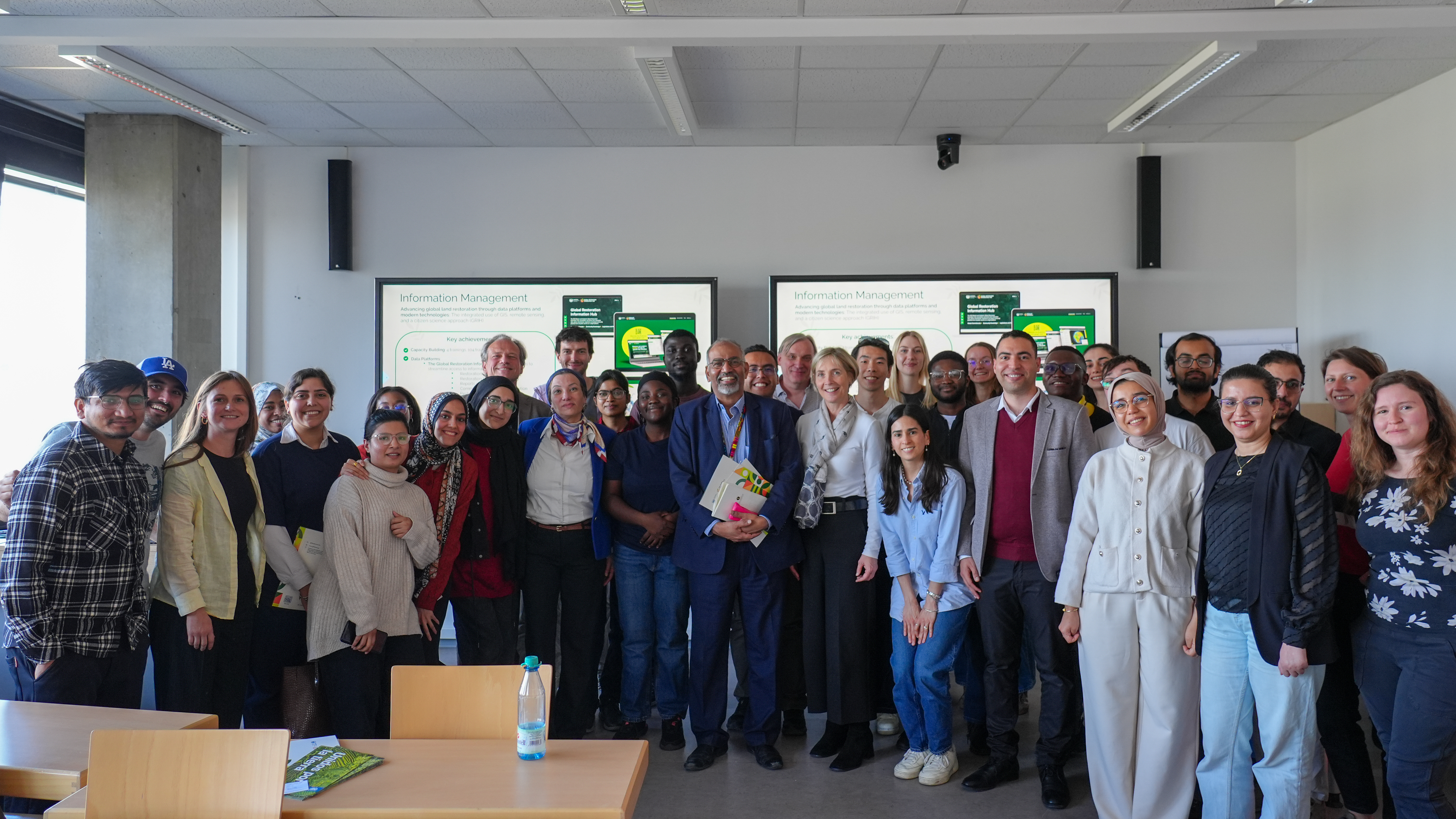
Dr, Fouad with the TH Köln students
That is why I am asking universities, development partners, and donors to join us: through curriculum partnerships, through joint research, drought monitoring, and restoration finance; through internship pathways that bring students from the global south directly into UNCCD policy processes; and through a growing network of living laboratories, starting with the Rhenish mining area that can test and scale nature-based solutions in real conditions.
The visit to TH Köln was one afternoon. But the conversations it opened are ones I intend to continue. We have already agreed on a first concrete step: UNCCD will give the university a real policy challenge every semester, drawn directly from our negotiation process, and the students will earn an internship at the Secretariat in Bonn.
That is a small start. But it is a start.
I have committed to getting UNCCD out from behind its fence. Now I am asking the global development community to do the same. Open your classrooms. Challenge your students. Build the bridges that should have been built years ago.
The connections are there. The need is urgent. And the next generation, the one that will inherit whatever we leave behind, is already waiting.

Publications

For 30 years, the UNCCD has raised awareness and driven action to restore degraded land, enhance drought resilience, and promote sustainable development by producing more without…