Stories
Latest

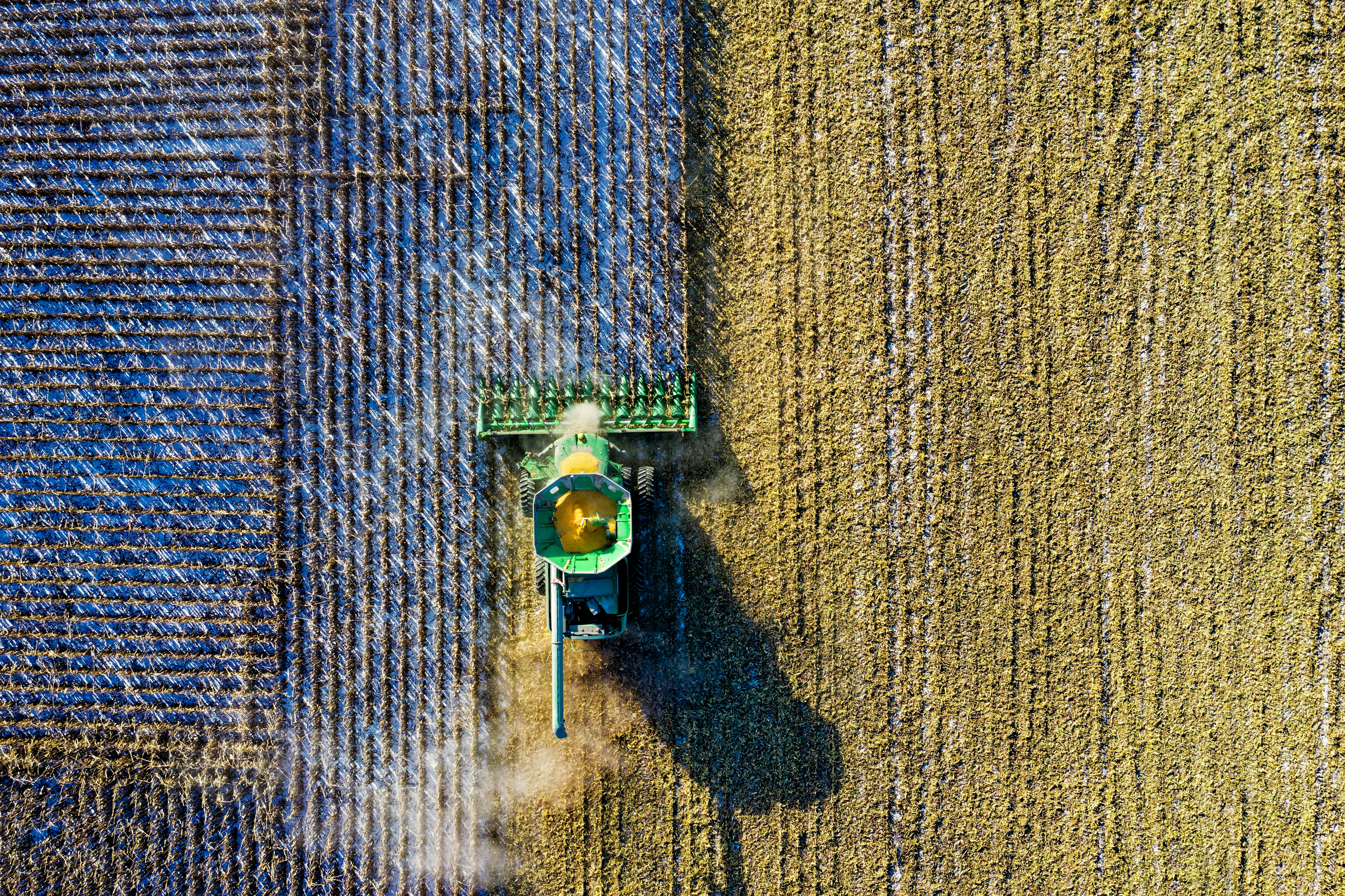
Bonn, Germany – Over the past hundred years, the increase in human populations has been three times greater than during the entire previous history of mankind. More natural resources have been extracted from the earth and more land converted for cities, agriculture and industry than ever before. On this warming planet, droughts seem to have changed their nature as well, increasing in spatial extent, duration, frequency and severity. The new film "When skies ran dry," produced by Dr. Patrick Augenstein, attempts to answer the following questions: How can we more actively prepare for drought on a planet more radically altered by humans than ever before? What’s causing drought in the anthropocene and how we can confront the risks and challenges it brings? The filmmakers visit some of the world’s regions affected and altered by drought, speaking to farmers, water managers, scientists and policy makers. The project is a joint effort of UNCCD, United Nations University Institute for Environment and Human Security, German Federal Ministry for Economic Affairs and Energy, University of Bonn, Embassy of the Earth foundation and Greening Africa project. See more: Full 40-minute version of the film Two-minute version of the film Eleven-minute version of the film UNCCD Drought Initiative

Georgetown, Guyana – Momentum to repair degraded lands and to manage droughts more effectively has picked up, according to reports released for review by an inter-governmental meeting that opened today in Georgetown, Guyana. An assessment of land degradation in 127 countries revealed that close to 20 percent of healthy land was degraded in the first 15 years of this Millennium. Globally, 169 countries are affected by land degradation, desertification or drought. In the last four years, 82 countries have set targets aiming to halt land degradation by 2030 and 44 of the 70 countries regularly hit by drought are setting up drought management plans to ensure droughts do not turn into disasters. The findings are the most comprehensive to date, with data submitted by 135 countries and an assessment of degradation monitored using Earth observations. The Seventeenth Session of the Committee for the Review of the Implementation of the UN’s Convention to Combat Desertification (CRIC17) taking place in Guyana will review the reports over the next three days. Their recommendations on further actions to ramp up this momentum will be tabled at the fourteenth session of the Conference of the Parties to the UN Convention to Combat Desertification (UNCCD) to be held on 7-18 October 2019 in New Delhi, India. Read more...
Bonn, Germany – The Executive Secretary of UNCCD Ms. Monique Barbut and the Executive Secretary of the Intergovernmental Science-Policy Platform on Biodiversity and Ecosystem Services (IPBES) Ms. Anne Larigauderie have signed a Memorandum of Cooperation between the two organizations. The productive collaboration between UNCCD and IPBES has already resulted in such landmark products as the Global Land Outlook and the assessment on land degradation and restoration. The new memorandum will formalize this partnership, helping to coordinate the science and action that address the full spectrum of environmental issues behind climate change. "In this memorandum, we are witnessing the start of real alignment between land, climate and biodiversity as we move toward 2030," Ms. Barbut said. See more: Full text of agreement Signing ceremony and complete remarks Global Land Outlook UNCCD welcomes IPBES assessment on land degradation and restoration
In a positive environmental turn, a record 120 countries are in the process of setting voluntary land degradation neutrality (LDN) targets that could reduce the loss of productive land dramatically by 2030. At least 80 countries have already set targets, whose implementation could reverse land degradation globally, contribute to the achievement of Sustainable Development Goal (SDG) 15, Life on Land, and build the resilience of communities threatened by extreme and erratic weather events such as droughts, flashfloods and dust and sand storms. Achieving LDN is vital to maintaining healthy lands and the sustainability of the ecosystem services the land provides. LDN is a key element of SDG target 15.3, and is recognized as an accelerator for achieving several other SDGs by 2030, including those on reducing hunger and poverty and tackling climate change. By 2015, more than a third of the land available globally was degraded, and a recent report found that 20 per cent of the Earth’s vegetated land surface showed persistent declining trends from 1998 to 2013. By setting a voluntary target to achieve LDN by 2030, a government declares its willingness to ensure that the amount of productive land that was available in 2015 stays stable going forward. The setting of voluntary LDN targets has received a high level of interest and political commitment in many countries. National and international stakeholders and experts on land degradation, from government, the public and private sectors and civil society, jointly analysed the drivers of land degradation in their respective countries and defined the LDN targets and associated measures. The process was participatory and consultative. It was coordinated through LDN working groups, which created opportunities for the stakeholders to engage in a national dialogue on land degradation and to find measures to integrate LDN into national policies and development strategies. A majority of the countries also applied the latest geospatial and technical data on land degradation for the first time, which is strengthening national capacities to address the issue. The target setting process also created an opportunity for countries to leverage current actions to avoid, reduce, or reverse land degradation and to mobilise finance from national and international partners to scale up LDN implementation. The Global Mechanism (GM) of the UN Convention to Combat Desertification supported countries under the Target Setting Programme to set the voluntary LDN targets. The Programme, established in 2015 by the GM and the UNCCD secretariat with the support of 18 international partners, was a response to a request from country Parties to the Convention to provide guidance to interested countries on formulating targets to achieve LDN. The GM is still supporting many countries involved in the Target Setting Programme to access financing opportunities, such as the GEF-7 cycle, and to develop transformative projects and programmes that will help them to achieve the LDN targets and advance the achievement of other SDGs. Details of the LDN targets, as well as country reports on the target setting process and the country commitments to achieve LDN, are now available on the UNCCD Knowledge Hub. Further reports will be added once they become available. Read More: LDN Target Setting Programme LDN Target Setting Building Blocks Official Document ICCD/CRIC(17)/3 on “Progress made in setting voluntary national targets in support of land degradation neutrality implementation. Report by the Global Mechanism” Land and SDGs Photo: Þjórsárver, by Hugi Ólafsson
In the latest installment of the UNCCD science to policy weblog, Prime Minister of Iceland Katrín Jakobsdóttir writes about Iceland's goal to reach carbon neutrality before the year 2040. We are taking actions that tackle the three major global environmental challenges – on biological diversity, climate change and desertification – simultaneously. Read more
Please join us to mark some of this year's achievements, all of which have been made possible thanks to cooperation and support of all UNCCD stakeholders: 120 countries are now part of the Land Degradation Neutrality Target Setting Programme (LDN TSP) 60 countries have established LDN targets 46 countries have mapped LDN transformative projects and programmes (TPP) GM has pledged its support to ten countries developing the LDN TPP and another three countries under the 3S Initiative Thirteen countries have submitted project ideas under the 3S Initiative, with five major projects already under development 44 countries have joined the Drought Initiative The financing needed to develop Great Green Wall TPP portfolio has been secured Almost 3 000 new subscribers joined the UNCCD News Alert Nearly 4 000 new followers joined us on social media: Facebook, Twitter, instagram, Weibo e-learning videos on the new UNCCD reporting process received close to 3 000 views on the UNCCD YouTube channel Over 80 countries reported their WDCD events, and the #2018WDCD social media campaign received over 460 000 impressions. The campaign hashtag #2018WDCD received 4 772 704 impressions UNCCD published three new titles this year The UNCCD Library twitter activity increased five fold thanks to daily updates of the library catalogue and the library section of the Knowledge Hub that feature publications related to the UNCCD focus areas The new World Atlas of Desertification was the most accessed entry in the UNCCD e-library this year Other popular titles included the Scientific Conceptual Framework fo LDN, Global Land Outlook and Gender Action Plan