
Latest news & stories
On World Football Day, theUNCCDis proud to announce William Troost-Ekong, captain of Nigeria’s national football team and professional player for the Saudi Pro League Al-Kholood FC, as the latest Sport4Land Champion.

The United Nations Secretary-General, following consultation with the Bureau of the Conference of the Parties to the United Nations Convention to Combat Desertification (UNCCD), announced the appointment of Yasmine Fouad of Egypt as the next Executive Secretary of the UNCCD. Serving as Minister of Environment of Egypt since 2018, Yasmine Fouad is an expert in environmental diplomacy with over 25 years of experience in environmental governance, global environmental themes and international climate diplomacy. She has a proven track record in designing and implementing institutional and systemic reforms for sustainable development. She holds a Ph.D. in Euro-Mediterranean Studies, Cairo University, and an M.Sc. in Environmental Science, Ain Shams University. She is fluent in English and Arabic.Welcoming the announcement made yesterday in New York, UNCCD Executive Secretary Ibrahim Thiaw said: “Yasmine Fouad brings with her a wealth of experience and deep commitment to the environment and sustainable development. I warmly congratulate her on her appointment and have full confidence that she will bring new energy and vision to the role.”Ms. Fouad will be the fifth UNCCD Executive Secretary, succeeding Mr. Ibrahim Thiaw of Mauritania, Ms. Monique Barbut of France, Mr. Luc Gnacadja of Benin and Mr. Hama Arba Diallo of Burkina Faso. The Secretary-General expressed his deep gratitude to Mr. Thiaw "for his dedicated service and outstanding commitment to the Organization".Ms. Fouad will commence her first three-year term in office later this year.

Land degradation is a global crisis—one that is reshaping landscapes, livelihoods and futures. Each year, vast areas of productive lands are lost, affecting nearly half of humanity and costing the global economy an estimated US$878 billion. In Latin America, over 20 per cent of arable land is already degraded due to deforestation, overgrazing and other types of unsustainable land use. At the heart of the UNCCD is the belief that land is not only a natural resource—it is a source of life, identity and resilience. But while policies and data help define the challenge, it is the stories from the ground that bring its true scale and urgency into focus. Here is where ReVerde plays a crucial role. The documentary-style television programme gives voice to the people behind the headlines—those living with and responding to the impacts of land degradation. From Indigenous communities to small-scale farmers, from urban collectives to rural cooperatives, the programme captures the diverse efforts underway to restore ecosystems, protect local resources and create sustainable alternatives. Aligned with the UNCCD’s vision for sustainable land stewardship, ReVerde explores both the challenges and the solutions. It highlights community-led restoration, the importance of ancestral knowledge and the risks posed by unregulated development. Ahead of this year's Desertification and Drought Day on 17 June 2025, hosted in Bogotá, Colombia, with the theme— “Restore the Land. Unlock the Opportunities.”— ReVerde stories remind us that restoration is not an abstract goal, but a daily effort being led by communities on the ground. The benefits are clear: land restoration can reverse more than US$1 trillion in agricultural productivity losses, strengthen food security for over a billion people and create millions of sustainable jobs. But to meet global targets, a significant funding gap—currently US$278 billion per year—must be closed. In telling the stories of land and those who care for it, ReVerde does more than inform—it inspires, builds understanding, sparks dialogue and brings us closer to a future where land is restored, protected and valued for generations to come. In its next chapter, ReVerde turns its lens to the global observance of Desertification and Drought Day—continuing its mission to spotlight the people and places at the heart of our planet’s most pressing challenges.

The Great Green Wall, an African-led initiative to grow an 8,000km belt of restored land across the Sahel, is now featured in Google Arts & Culture’s Trees Project. More than a reforestation effort, the Wall is a symbol of resilience—tackling land degradation, poverty, hunger, and climate change while empowering communities.Since its launch in 2007, the initiative has revitalized landscapes, improved food security, and created jobs. Women, often most affected by climate change, play a crucial role in its success, especially in land regeneration and food systems. By ensuring inclusive, gender-sensitive approaches, the Great Green Wall is shaping a greener, more equitable future.Once completed, it will be the largest living structure on Earth—three times the size of the Great Barrier Reef. Learn more.

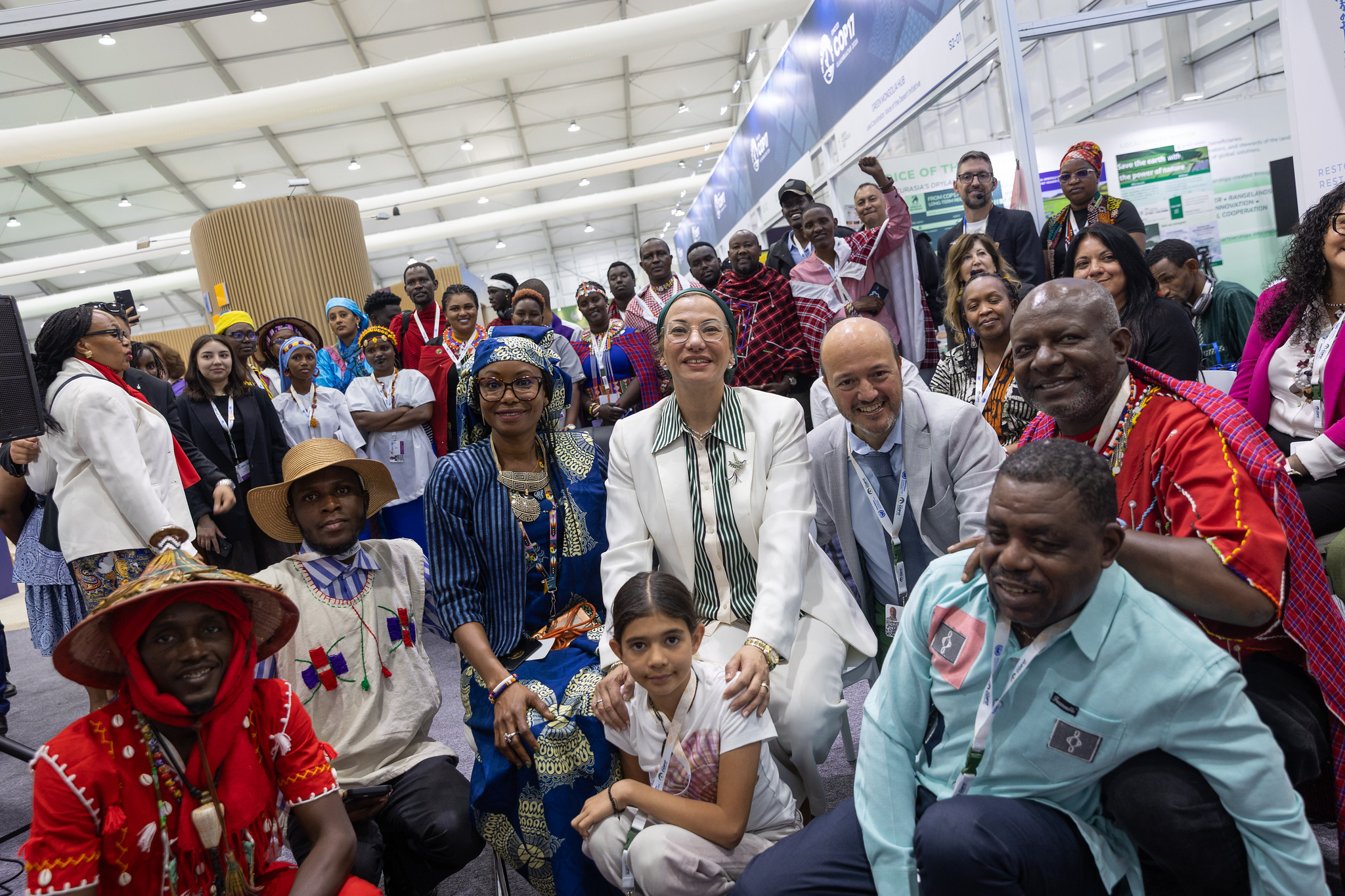
The UNCCD is forming an Intergovernmental Working Group on the Future Strategic Framework (IWG-FSF), as mandated by Decision 4/COP.16. This group will develop proposals for a post-2030 strategy, including potential goals and targets, and will review existing indicators to enhance national reporting on progress. In line with the Convention’s commitment to inclusive decision-making, civil society organizations (CSOs) will play a vital role in this process. The IWG-FSF will bring together three representatives from each regional group and five technical experts, one of whom will be a CSO representative. The UNCCD Secretariat, in collaboration with the CSO Panel, will oversee the selection of the CSO representative through a call for expressions of interest, ensuring compliance with the Terms of Reference and representativity criteria established by the Conference of the Parties. CSOs have long been integral to the work of the Convention, contributing to policy development, implementation and monitoring. At the recent UNCCD COP16 in Riyadh, CSOs actively engaged in discussions on land tenure, sustainable land stewardship and drought resilience, highlighting the importance of grassroots engagement in combating desertification and land degradation. The CSO Panel, elected by accredited organizations, serves as a liaison between civil society and the UNCCD, ensuring that diverse voices inform decision-making processes. The IWG-FSF is expected to present an interim report on its progress at the 23rd session of the Committee for the Review of the Implementation of the Convention (CRIC 23) in December 2025. This initiative underscores the UNCCD commitment to collaborative and inclusive approaches in addressing desertification, land degradation and drought. Photo: (c) IISD ENB/Anastasia Rodopoulou

Bonn/Bogotá, 14 May 2025 –The Republic of Colombia will host this year’s global observance of Desertification and Drought Day on 17 June, highlighting the country’s commitment to tackling land degradation through nature-based solutions. Taking place in Bogotá, the event will draw global attention to the urgent need to scale up land restoration as a catalyst for sustainability, peace, and inclusive development. The global observance will be part of the Global Land Forum, hosted by the Government of Colombia. Under the theme “Restore the Land. Unlock the Opportunities,” the 2025 observance will emphasize the critical role of healthy land in providing food, water, jobs, and security. Colombia’s decision to host the global event reflects its determination to restore land at scale and ensure that restoration efforts directly improve livelihoods and ecosystems. Ibrahim Thiaw, Executive Secretary of the United Nations Convention to Combat Desertification (UNCCD), said: “Land degradation is more than just an environmental issue — it is a direct threat to our health, food and water security, and the stability of societies. When we lose healthy land, we weaken nutrition, increase the risk of disease, and expose communities to climate and economic shocks. I thank the Republic of Colombia for its invitation to host this year’s observance, which will shine a light on how restoring land can protect nature, improve well-being, and build a more resilient future for all.” Highlighting the urgent need for sustainable land use and the vital connection between soil and peace, Martha Viviana Carvajalino Villegas, Minister of Agriculture and Rural Development of Colombia, stated: “The protection of agricultural soils and land is an urgent imperative in the face of interconnected crises threatening our survival: biodiversity loss, ecosystem degradation, hunger, poverty, and displacement. In response, we commemorate Desertification and Drought Day to reaffirm that protecting the soil is protecting life. This struggle rests on three pillars: soil conservation and restoration, sustainable, fair and resilient agri-food systems, and improved quality of life in rural and urban areas. Without fertile soil, there is no food; without food, there is no peace.” “We implement comprehensive policies: equitable land redistribution, restitution of rights to historically marginalized communities, and guarantees for sustainable resource management. In this way, we transform the soil into a shield against hunger, a bridge towards reconciliation, and a legacy of dignity for future generations. Land is not just a resource: it is the foundation of peace”, she added. Faced with the serious challenge of land degradation — affecting nearly 30 per cent of its territory, or 34.39 million hectares — Colombia is stepping up with bold action. By 2030, it aims to restore 100,000 hectares of degraded land, conserve 22,000 hectares of dry forest, expand sustainable agroforestry systems, and support rural communities through targeted restoration and planning initiatives across priority regions. In hosting the observance, the country is also opening a platform for youth, Indigenous peoples, farmers, scientists and civil society to share local solutions that contribute to global goals. Colombia’s efforts reflect a broader global imperative: restoring land is essential to meeting today’s urgent challenges — from climate change and biodiversity loss to food insecurity and forced migration. Despite increasing momentum, including at UNCCD COP16, the true value of healthy land remains underestimated. Land degradation, drought and desertification cost the global economy an estimated US$878 billion each year. Meanwhile, restoring over one billion hectares of degraded land could generate up to US$1.8 trillion annually, with each dollar invested returning between US$7-US$30 in economic benefits. Yet the pace and scale of restoration remain far below what is needed. The economic case for restoration is clear,” Thiaw added. “Each dollar invested can yield up to thirty in returns. But beyond the numbers, restoring land is about protecting the dignity of communities, ensuring long-term access to food and water, and building a more stable and equitable world. Colombia’s leadership underscores what is possible when restoration becomes a national priority.” About Desertification and Drought Day Officially declared by the United Nations General Assembly in 1994 (A/RES/49/115), Desertification and Drought Day, marked annually on 17 June, is a unique occasion to highlight practical solutions to combating desertification, land degradation and drought. In 2025, Colombia will welcome global leaders, experts, youth, and representatives from across society for the official celebration in Bogotá. Countries around the world are mobilizing to mark Desertification and Drought Day with an array of educational, cultural and sporting activities. For more information, please contact: UNCCD Press Office press@unccd.int; https://www.unccd.int/events/desertification-drought-day About UNCCD The United Nations Convention to Combat Desertification (UNCCD) is the global vision and voice for land. We unite governments, scientists, policymakers, private sector and communities around a shared vision and global action to restore and manage the world’s land for the sustainability of humanity and the planet. Much more than an international treaty signed by 197 parties, UNCCD is a multilateral commitment to mitigating today’s impacts of land degradation and advancing tomorrow’s land stewardship in order to provide food, water, shelter and economic opportunity to all people in an equitable and inclusive manner. The Global Land Forum is hosted by the Ministry of Agriculture and Rural Development of Colombia, CINEP (Center for Research and Popular Education/Peace Program), the European Union and the International Land Coalition
