News & stories

Latest news & stories
UNCCD and FAO are collaborating in a joint initiative to identify the most innovative and effective women-led initiatives.

Your Excellency Minister Abdulrahman Al-Fadley, Honorable Ministers and Deputy ministers, Dear Colleagues and friends, It’s an honor for me to sign this agreement, on behalf of the United Nations, with the Kingdom of Saudi Arabia, as host to the Conference of the Parties (COP16) of the UN Convention to Combat Desertification (UNCCD). I would like to thank Minister Al-Fadley, and through you, the Government and people of the Kingdom of Saudi Arabia. The moment could not be more solemn: today we have signed more than a Host Country Agreement. We are sealing the commitment between two Parties, the Kingdom of Saudi Arabia and the United Nations, to join forces, to forge daily relationships, to build bridges across oceans and continents in order to make Riyadh, from 2 to 13 December 2024, the Multilateral Capital of the World, as far as our relations with the land are concerned. We are building an umbrella under which vulnerable populations around the world will find protective shelter to build their resilience in the face of severe and destructive droughts. Indeed, Saudi Arabia, its people and its Leadership will welcome tens of thousands of participants to the sixteenth session (COP16) of the United Nations Convention to Combat Land Degradation and Mitigate the Effects of Drought. Between the time we sign this agreement and the time we actually hold the Conference of the Parties, humanity will have degraded some 100 million hectares of fertile land. Over the same period, it is feared that hundreds of millions of people will be hit by severe droughts, with no safety valve or protective cushion. During the same period, women, children and other vulnerable groups will find themselves forced to flee from poverty, often venturing on extraordinarily perilous odysseys. Unless exceptional measures are taken, the loss of soil and productive land will lead to further conflicts over access to land and water, further food insecurity and, in some cases, a total loss of food sovereignty. Ladies and Gentlemen, COP16 will put a human face on these so-called natural or ecological phenomena. Coinciding with the 30th anniversary of this global treaty, COP16 will take place at a pivotal moment for our Convention. It is the time to move from strategies, plans and other methodological visions to action. It is the time to transform pledges into operations on the ground. Having realized how much we have scarred the face of the earth, we need to heal the wounds, not only to make the earth more beautiful, but to enable it to provide us with more vital services. We need the land. Land does not need us. We live off the land, it feeds us, clothes us and waters us. COP 16 gives humanity the opportunity not only to review its relationship with nature, but also to save itself from the perils it is inflicting on itself. Riyadh, in December, will be this nurturing and refreshing oasis in the middle of the desert. The Kingdom of Saudi Arabia will be offering the representatives of the 197 Contracting Parties to the UNCCD and many other stakeholders not only its legendary hospitality but also a strong sense of solidarity and shared commitment. We hope the world will heed our urgent call and this generous invitation from our hosts to come together in Riyadh for COP16 and secure our land's future. Thank you. Shukran.

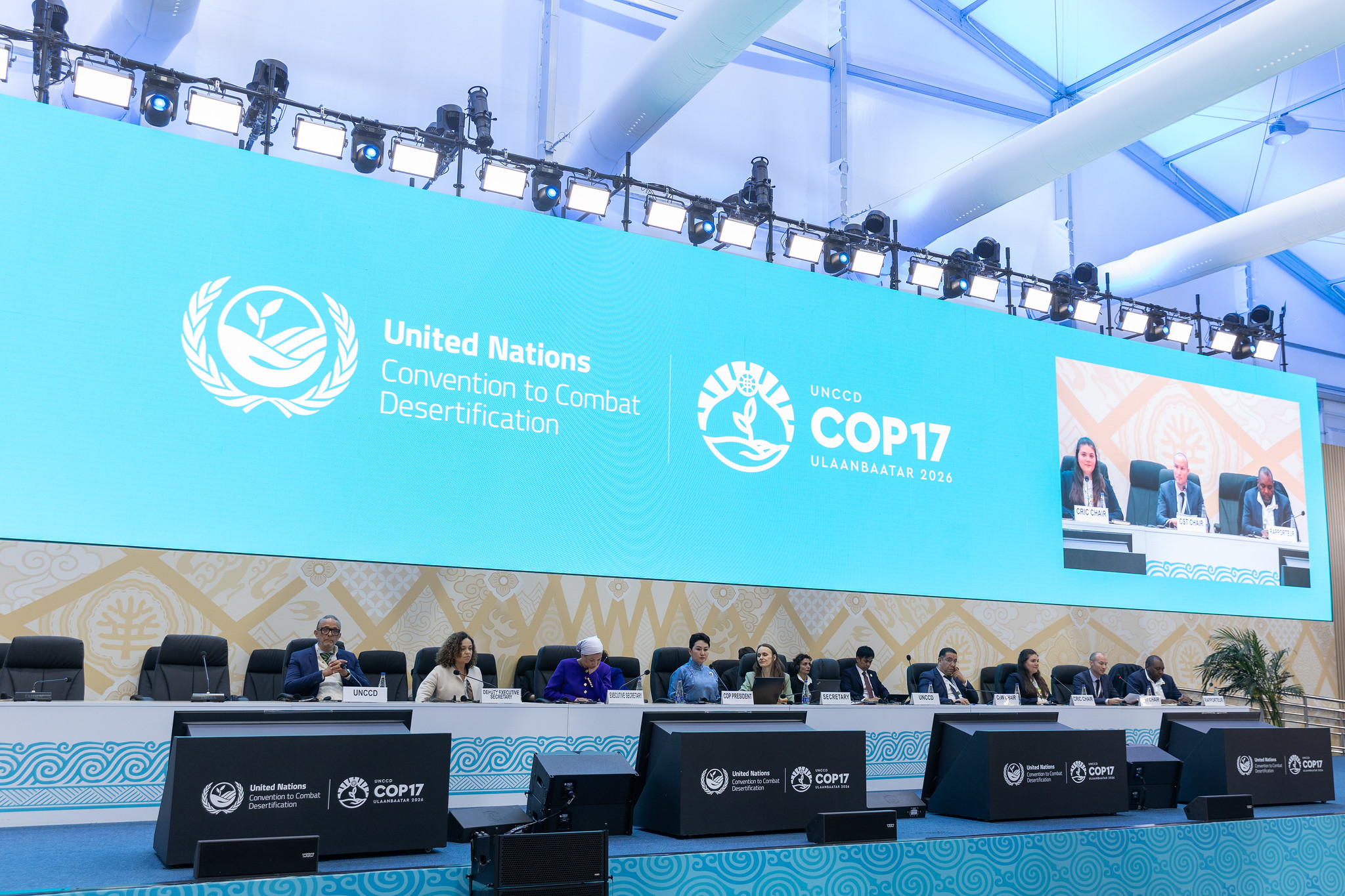
Riyadh, 31 January 2024 – The Kingdom of Saudi Arabia and the United Nations Convention to Combat Desertification (UNCCD) signed an agreement paving the way for the 16th session of the Convention’s Conference of the Parties (COP16) in Riyadh from 2-13 December 2024. The Riyadh COP16 will be the largest-ever meeting of UNCCD’s 197 Parties, the first to be held in the Middle East region and the largest multilateral conference ever hosted by Saudi Arabia. 2024 also marks the 30th anniversary of the UNCCD, one of the three major environmental treaties known as the Rio Conventions, alongside climate change and biodiversity. At the signing ceremony in Riyadh today, Eng. Abdulrahman Abdulmohsen AlFadley, Saudi Minister of Environment, Water and Agriculture and COP16 President, said: “The hosting of the conference (COP16) in the Kingdom of Saudi Arabia reflects the commitment of the wise leadership to environmental protection at the national, regional, and international levels. Additionally, Saudi Arabia launched several groundbreaking environmental projects, such as the Saudi Green Initiative and the Middle East Green Initiative.” UNCCD Executive Secretary Ibrahim Thiaw said: “Today, we are losing fertile lands at an alarming rate, jeopardizing global stability, prosperity and sustainability. The Riyadh COP16 must mark a turning point in the way we treat our most precious resource—land—and collectively tackle the global drought emergency.” According to UNCCD data, up to 40 per cent of the world’s land is degraded, affecting half of humanity and with dire consequences for our climate, biodiversity and livelihoods. If current trends continue, restoring 1.5 billion hectares of land by 2030 will be necessary to achieve a land-degradation-neutral world. Droughts are hitting more often and harder all over the world—up by 29 per cent since 2000—driven by climate change but also the way we manage our land. One-quarter of the world’s population is already affected by droughts, with every three out of four people around the world projected to face water scarcity by 2050. The Riyadh COP16 will focus on mobilizing governments, businesses and communities worldwide to accelerate action on land restoration and drought resilience as a cornerstone of food, water and energy security. The two-week event will feature a high-level segment, as well as associated events including the Gender Caucus and the Business for Land Forum. Taking place in the most water-scarce region and one that is severely affected by desertification and land degradation, the Riyadh COP16 will showcase efforts underway in Saudi Arabia, the Middle East region and beyond towards a green transition based on sustainable land stewardship. For more information, please contact: Wael A Bushah, Managing Director, Environmental Awareness and Capabilities Enhancement, Ministry of Environment, Water and Agriculture, Kingdom of Saudi Arabia, Wbushah@mewa.gov.sa. Xenya Scanlon, Chief, Communications, External Relations and Partnerships, UNCCD, xscanlon@unccd.int UNCCD Press Office, press@unccd.int, +49 228 815 2820, https://www.unccd.int/, @unccd #UNited4Land #COP16Riyadh #UNCCDCOP16 About UNCCD The United Nations Convention to Combat Desertification (UNCCD) is the global vision and voice for land. We unite governments, scientists, policymakers, private sector and communities around a shared vision and global action to restore and manage the world’s land for the sustainability of humanity and the planet. Much more than an international treaty signed by 197 parties, UNCCD is a multilateral commitment to mitigating today’s impacts of land degradation and advancing tomorrow’s land stewardship in order to provide food, water, shelter and economic opportunity to all people in an equitable and inclusive manner.

Together KenGrow, Flux, Hiveonline and CYNK will deliver digital infrastructure alongside new regenerative agriculture techniques to increase climate finance inclusion for Kenyan women in rural communities. Dubai, December 2023. CYNK, a leading climate finance platform founded in Nairobi, Kenya, announces a new partnership with KenGrow and the United Nations Convention to Combat Desertification (UNCCD) to provide funding and expertise to women smallholder farmers in emerging economies. The first climate smart regenerative agriculture project, based in Kisumu, Kenya, will see CYNK teaming up with KenGrow, a foundation that builds bridges between communities within Kenya and Flux, an organisation specialised in Enhanced Rock Weathering (ERW), headquartered in Nairobi. Leveraging Hiveonline’s digital community finance platform KenGrow members will have access to financial inclusion tools that give women greater control of their finances. CYNK's cutting-edge technology is set to empower women members of the KenGrow group in rural communities through a groundbreaking UNCCD Climate Smart Agriculture project. This partnership unlocks a triple win: increased income, climate resilience, and digital inclusion. Women farmers will generate additional income by sequestering carbon on their farms and earning carbon credit revenue streams via CYNK's platform. This reduces their reliance on expensive synthetic fertilizers, further boosting their profits and yields. Additionally, CYNK's virtual training empowers them to adopt innovative, nature-positive farming techniques, specifically tailored to the cyclical nature and seasonality of agriculture. This builds resilience and paves the way for long-term success. The Kisumu-based project will combine Flux’s pioneering regenerative agriculture technique, with KenGrow’s networking and training opportunities. Flux reduces the overreliance on synthetic fertilizers by providing a natural soil health improver in the form of volcanic rock powders. This technique has the potential to sequester up to 5 gigatons of CO2 per year globally. It will support the socio-economic development of 2,000 Kenyan women in grassroots rural and peri-urban communities. Sudhu Arumugam, CEO at CYNK, commented: “We are proud to partner with these prestigious organisations to provide female smallholder farmers an opportunity to enhance their farming expertise and generate additional revenue streams via our carbon credit platform. It is critical to deploy scalable technology like regenerative agriculture to promote women’s financial resilience, protect soils relied upon by local communities and contribute to global climate goals.” Louise Baker, Managing Director of the Global Mechanism at UNCCD, added: “We are excited to launch our Climate Smart Agriculture project in partnership with KenGrow and CYNK. It is clear that female smallholder farmers need to be at the forefront of climate action - this program will strengthen their capacity to apply positive agricultural and climate resilient practices. Investing in women’s access to funding and expertise is not only a question of justice but a commitment to the prosperity of our lands.” For media inquiries contact London Tristan Peniston-Bird, Portland Communications +44 7772 031 886, Tristan.Peniston-Bird@Portland-Communications.com Pauline Guenot, Portland Communications +44 7379 068 832, Pauline.Guenot@Portland-Communications.com Nairobi Joel Chacha, Portland Communications +254 722 909 251, Joel.Chacha@Portland-Communications.com About CYNK CYNK is an end-to-end platform that covers the lifecycle of a carbon or biodiversity credit. From origination, financing and secondary trading of carbon, CYNK is a one-stop platform for the origination of high-integrity credits with fully immutable audit trails of digital Monitoring Reporting and Verification (dMRV) via blockchains. https://www.CYNK.io

Bonn/Dubai, 9 December 2023 – Germany will host the next Desertification and Drought Day on 17 June 2024, which will also mark the 30th anniversary of the United Nations Convention to Combat Desertification (UNCCD), one of the three Rio Conventions alongside climate and biodiversity. The announcement was made today on the margins of UNFCCC COP28 underway in Dubai, UAE by Mr. Jochen Flasbarth, State Secretary of the German Federal Ministry for Economic Cooperation and Development (BMZ), Mr. Ibrahim Thiaw, UNCCD Executive Secretary, and Ms. Katja Dörner, Lord Mayor of Bonn and member of the Local Government for Sustainability (ICLEI) Global Executive Committee on Climate Action and Low Emission Development Portfolio. Land is the foundation of human wellbeing and plays a key role in regulating the planet’s climate. Yet up to 40 per cent of the planet’s land is degraded, affecting nearly half of the world's population. Since 2000, the number and duration of droughts has increased by 29 per cent, representing a severe risk to ecosystems and peoples’ livelihoods. The 2024 Desertification and Drought Day will focus on the transformative power of healthy land for addressing today’s most pressing and interconnected challenges, including climate change, biodiversity loss, food and water security—a blueprint for providing future generations with a healthy planet. The Day will amplify a renewed global commitment to sustainable land management and drought resilience in the run-up to UNCCD COP16, scheduled for 2-13 December 2024 in Riyadh, Saudi Arabia. Mr. Ibrahim Thiaw, UNCCD Executive Secretary, said: “Desertification and Drought Day 2024 will mark the 30th anniversary of the United Nations Convention to Combat Desertification. In 1994, the world community sent a clear signal by ratifying the only legally binding treaty promoting good land stewardship. Restoring degraded land and soil provides the most fertile ground to take immediate and concerted action for our planet's health. Now, it is time to reaffirm this global commitment by unleashing land’s potential—for present and future generations.” The Federal Republic of Germany, through the Ministry for Economic Cooperation and Development (BMZ), will host the global observance on 17 June 2024. The event will engage prominent international and German personalities and the public at large to raise awareness about desertification, land degradation and drought. Mr. Jochen Flasbarth, State Secretary of the German Federal Ministry for Economic Development, said: “No matter whether we are talking about climate change, biodiversity loss, pandemics, or food crises – soil quality plays a central role for meeting these global challenges. Soils retain water and allow trees and plants to grow. We will only be able to feed humankind and deal with the climate crisis and its impacts if we have healthy soils. In 2024, when the UN Convention to Combat Desertification celebrates its 30th anniversary, the German government will be hosting Desertification and Drought Day thus sending a signal for strong international efforts against the loss of fertile soils.” The City of Bonn, which has hosted the UNCCD Secretariat since 1999, will organize a series of events around 2024 Desertification and Drought Day. The City will play its part in highlighting the role of local governments in land restoration efforts, by displaying examples of sustainable land use practices linked to urban policies. “As Mayor of Bonn, home to the United Nations Convention to Combat Desertification, I am thrilled that Germany is hosting the Desertification and Drought Day 2024. Here in Germany’s United Nations City is the place where the debates on climate, nature and land come together – and from where cross-cutting actions for implementing the 2030 Agenda are advanced. I full heartedly welcome the Desertification and Drought Day here in Bonn! Together with the Federal Government of Germany and under the leadership of the Federal Minister for Economic Cooperation and Development, Ms. Svenja Schulze, I will be delighted to host a meaningful event engaging political leaders, the land community, cultural stakeholders and a broader public alike”, Katja Dörner, Lady Mayor of Bonn, said via video statement. Officially declared by the United Nations General Assembly in 1994 (A/RES/49/115), Desertification and Drought Day, marked annually on 17 June, is a unique occasion to highlight human-led solutions to prevent desertification and reverse intensifying droughts by investing in sustainable land use practices. 2024 will mark the 30th anniversary since the adoption of UNCCD, one of the three Rio Conventions. Desertification, along with climate change and the loss of biodiversity, were identified as the greatest challenges to sustainable development during the 1992 Rio Earth Summit. With its 197 Parties, UNCCD is the sole legally binding international agreement linking environment and development to sustainable land management. The Convention seeks to support countries to address desertification, land degradation, and drought. A remarkable journey from milestone initiatives such as Africa’s Great Green Wall, the largest living structure on the planet, to the establishment of Land Degradation Neutrality targets – a pledge by 130 countries to end land degradation by 2030. Germany has been a strong supporter of the convention throughout its history. During the past 30 years, Germany has contributed politically and financially as one of the most active partners acknowledging the importance of healthy land and soil - both as a cause of and a solution to some of the most critical challenges for humanity these days. For more information, please contact: UNCCD: Xenya Scanlon, +49 152 54540492, xscanlon@unccd.int or Yannis Umlauf, +55 21 979820903, yumlauf@unccd.int with copy to press@unccd.int and/or unccd@portland-communications.com Federal Ministry for Economic Cooperation and Development (BMZ): Press Office, +49 30 18 535 – 2158, presse@bmz.bund.de, www.bmz.de City of Bonn: Department of Press, Protocol and Public Relations, +49 228 77-3000, presseamt@bonn.de, www.bonn.de About UNCCD The United Nations Convention to Combat Desertification (UNCCD) is the global vision and voice for land. We unite governments, scientists, policymakers, private sector and communities around a shared vision and global action to restore and manage the world’s land for the sustainability of humanity and the planet. Much more than an international treaty signed by 197 parties, UNCCD is a multilateral commitment to mitigating today’s impacts of land degradation and advancing tomorrow’s land stewardship in order to provide food, water, shelter and economic opportunity to all people in an equitable and inclusive manner.

Open from 18 May to 15 August 2023, a call for requests to support national multi-stakeholder consultations on integrating tenure security into LDN and land restoration initiatives elicited over 30 applications. Global, regional, and national staff from the UNCCD and FAO conducted an assessment and evaluation of all applications. Based on the established selection criteria and taking into consideration regional balance and current availability of funds, the following were selected as part of the first group of countries to receive support to undertake national consultations on land tenure: Kazakhstan, Kenya, Mexico, Senegal, and Sri Lanka. The UNCCD, FAO, and partners in the joint initiative look forward to working closely with the 5 selected countries in 2024 and supporting their efforts to enhance tenure security as both a means and outcome of LDN activities and a broad range of regenerative land-based projects and programmes. UNCCD-FAO staff are developing a longer-term plan to support additional national consultations to countries that have applied as resources become available. In parallel, the UNCCD and FAO are engaging with partners and ongoing projects and programmes to identify opportunities for co-funding and leveraging synergies to support additional national consultations in 2024.