News & stories

Latest news & stories
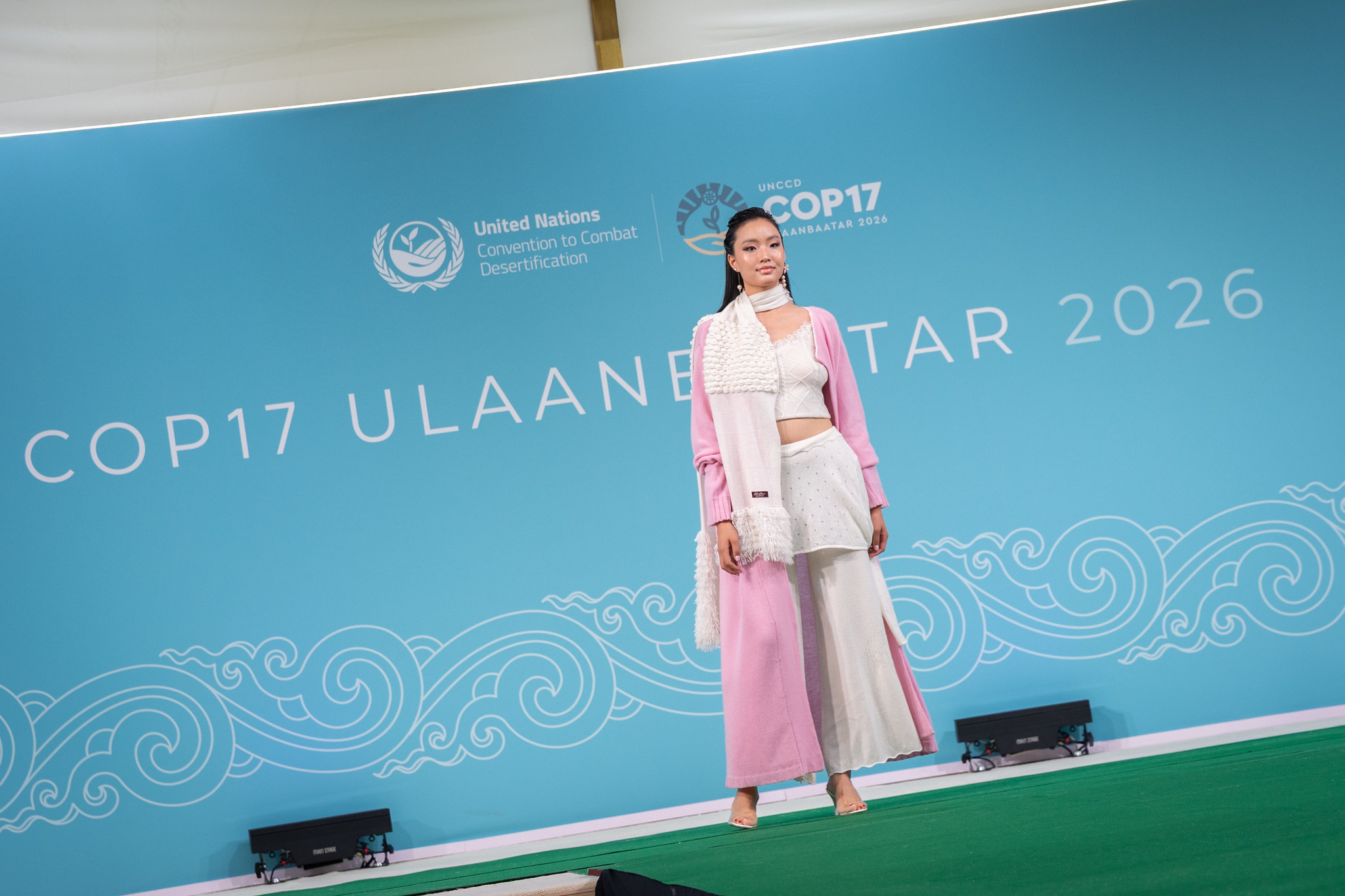
Cashmere can look weightless on a runway. Whether its footprint is equally light depends on the health of the rangelands that produce it. In Mongolia, around 190,000 herder households and 27 million goats are behind the fabled fiber that accounts for roughly 40 percent of the world’s raw cashmere. Its quality begins long before spinning or knitting, on vast rangelands that sustain animals and livelihoods but are also under growing pressure. Rangelands cover 54 per cent of the Earth’s terrestrial surface, and in Mongolia they make up more than 70 per cent of the country’s territory. Yet 81 per cent of Mongolia’s land is affected by degradation. This made Ulaanbaatar a fitting location for a new edition of Fashion4Land, which returned to UNCCD COP17 after its debut in Riyadh in 2024. What would it take to change the way clothes are designed, sourced, worn and regulated while retaining the talent, ingenuity and beauty that make people care about fashion in the first place? The forum brought together designers and manufacturers, global luxury brands and Mongolian producers, pastoralist advocates and policymakers around a simple premise: fashion begins on land. When discussing sustainable fashion, UNCCD Goodwill Ambassador Inna Modja sees an opportunity rather than a constraint. “Fashion has a unique ability to inspire, connect people and translate complex sustainability challenges into stories that everyone can understand,” she said. One such story is already famous. For Team Mongolia’s Milano Cortina 2026 Olympic wardrobe, GOYOL Cashmere’s Creative Director Munkhbayasgalan “Baysa” Delgerbat revisited clothing worn during the Mongol Empire, retaining details shaped by life on the steppe: a raised collar against the wind, an overlapping front for warmth and side slits designed for movement. “People don’t fall in love with a product because it is sustainable,” Baysa says. “People fall in love with story, with beauty, with craftsmanship.” A garment carrying cultural and material value, she argued, is more likely to be cared for, kept and eventually passed on. For Nan Hu of Nan Knits, the color of the fiber itself offers an exciting design opportunity. The brand leans toward the subtle shades of yak fiber — soft browns, dusky grays and creamy whites that become an irresistible palette rather than something to overwhelm with dye. For a designer known for experimental contemporary knitwear, the appeal lies in taking a well-known material somewhere unexpected. Sustainability, he argues, need not limit creativity – it can jump-start it. At LVMH, the raw material can mean something the industry has already made but was unable to sell. Alexandre Capelli described how designer Kevin Germanier gathers unsold products from the group’s boutiques, dismantles them and turns the material into new designs in which the initial object might be impossible to recognize. Other experiments with young designers involve regenerative flax, food-industry waste, discarded hotel linens and innovative materials for dyeing. The idea is not to make sustainability visible as an aesthetic. It is to make it part of how design happens. UNCCD Goodwill Ambassador Ricky Kej took that logic a step further. His #ReWear4Earth campaign began with a minor red-carpet heresy: wearing the same clothes to a next high-visibility event. Speaking at the COP17 Fashion4Land event, he challenged the disposable expectations encouraged by fast fashion and social media. “The Earth will not remember what we wore to our last party, but it will certainly remember how we treated it,” Kej said. “We do not need a different outfit for each Instagram photo.” But does a beautifully made garment worn for decades necessarily mean it is land-positive? Fashion4Land resists the convenient idea that “natural” automatically means sustainable. Cotton can place enormous demands on land and water. Wool and cashmere can contribute to overgrazing when production is poorly managed. Synthetic fibers depend heavily on fossil fuels and can shed microplastics. The question is: what is the impact of wearable beauty on the planet’s finite resources? For Battsetseg Batmunkh, Mongolia’s Minister of Foreign Affairs and COP17 President, that question reflects directly on livelihoods. New environmental requirements, she argued, should help producers improve rather than price herders and smaller businesses out of sustainable supply chains. “The future of sustainable fashion should be measured not only by the value of its products but also by how effectively it protects the land, ecosystem and communities upon which production depends,” she said. However, the more than 400 standards and certifications across textiles and fashion do not in themselves ensure that the industry’s environmental impacts are addressed. Mongolian producer Gantakhi Gantsetseg warned that repeated audits and certification fees can consume money without a cent reaching the rangelands they are intended to protect. The challenge is not weaker standards but smarter ones — compatible systems that reward measurable improvement in practice. UNCCD Executive Secretary Yasmine Fouad pointed to Mongolia’s ability to bring tradition into a modern industry while remaining “grounded at the land.” Fashion4Land’s next chapter, she said, should bring greater policy coherence, stronger partnerships and greater responsibility for “the people and the land together.” That evening, the COP17 Action Dome — a larger-than-life Mongolian ger — transformed into a runway. Each brand brought its own signature style to the catwalk: NOLUR spoke the language of quiet luxury in Mongolian cashmere; OYUNA wove nomadic heritage into contemporary design; Nan Knits took knitwear into new experimental territories; BODIOS brought the warmth, softness and comfort of Mongolian yak to the runway; TANGOLA traced yak fiber from high-altitude grasslands to the final stitch; GOYOL showcased the craftsmanship of a family-run Mongolian fashion house; GOBI celebrated cashmere’s natural colors and the traditional art of hand-combing; and Khanbogd turned Mongolian raw cashmere into finished fashion for the world, keeping the craftsmanship at home. Next time we are in the market for new clothes, let’s not forget: a stylish garment does not begin at the tailor’s table. Truly sustainable fashion helps keep the land healthy long after the runway season is over – and that is a pattern that never goes out of style. Photos : © UNCCD/Kiara Worth

At UNCCD COP17 in Ulaanbaatar, the Committee on Science and Technology examined how scientific evidence can help countries monitor land degradation, plan for drought and make informed choices about land management.

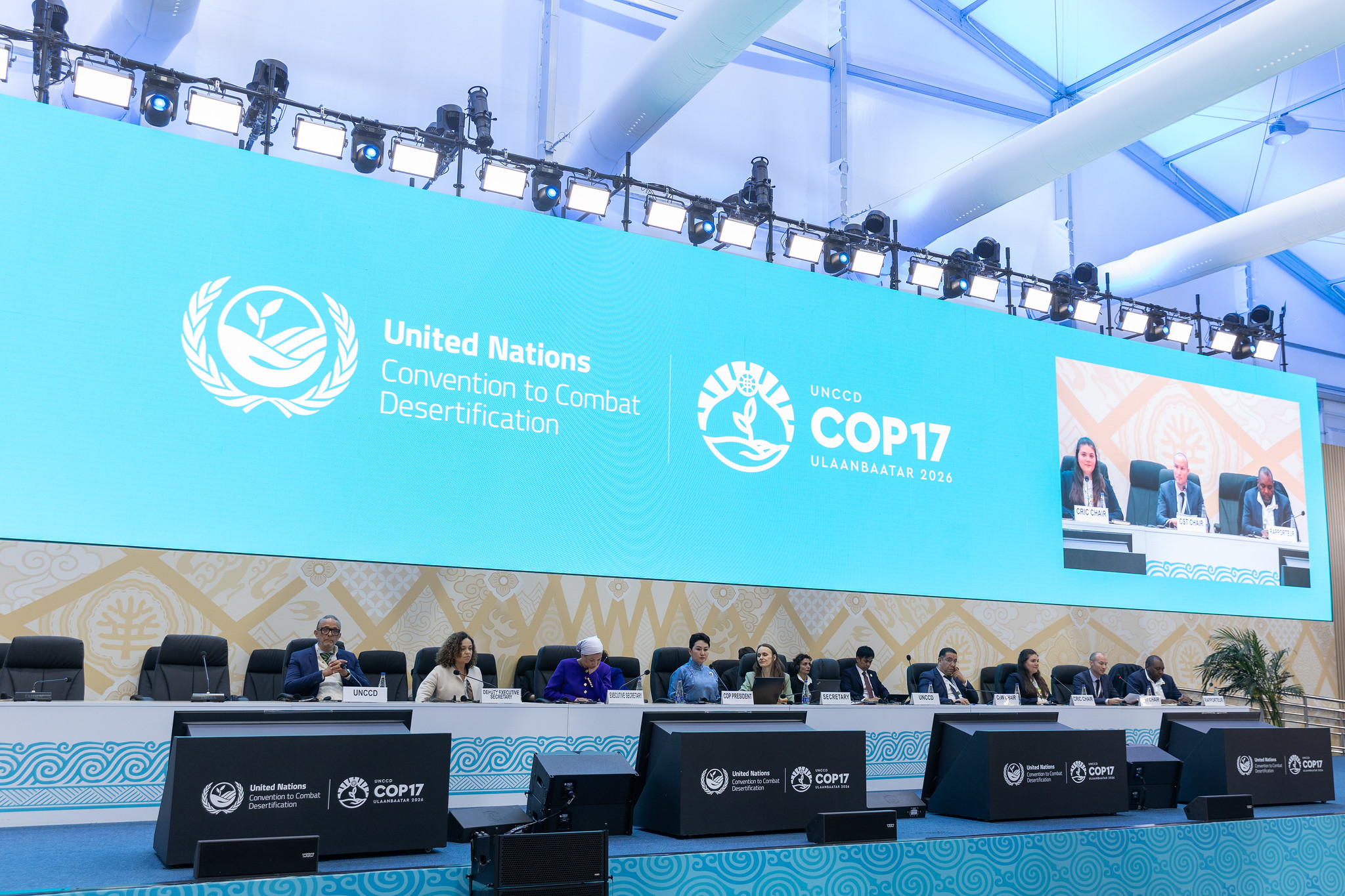
Drought resilience is not only about knowing when and where drought will occur. It is about understanding how well societies, economies, ecosystems and institutions can anticipate, prepare for and adapt to its impacts —and where action can make them better able to withstand the next shock.“We have become very good at observing drought. But we are still, in many ways, data-rich and decision-poor,” said UNCCD Chief Scientist Barron Orr at the launch. The challenge, he stressed, is to turn increasingly sophisticated drought information into actionable intelligence.”During the UNCCD COP17, the launch of Phase II (version Beta) of the International Drought Resilience Observatory (IDRO) brought together governments, scientists and international partners to address the challenge of how to turn growing knowledge about drought into stronger resilience.The launch introduced the Drought Resilience Index (DRI) to help countries assess their capacity to anticipate, prepare for and adapt to drought. By bringing together evidence across environmental, social, infrastructure and economic dimensions, the Index aims to show where resilience is weakest and where action and investment could make the greatest difference. The new tool has been developed under the International Drought Resilience Alliance (IDRA), with UNCCD and in collaboration with the Yale Center for Environment and Architecture and partner institutions from around the world. Now in beta, IDRO has been financed by Spain, which co-chairs IDRA with Senegal, and the European Union.From measuring drought to measuring resilience“As we are seeing from Europe to the Horn of Africa to the Panama Canal, drought does not stay where its starts,” said UNCCD Deputy Executive Secretary Andrea Meza, who noted that “its impacts cut across economies and ecosystems and persist over time. A drought affecting crops or water supplies in one place can disrupt energy, transport, supply chains and livelihoods far beyond where it began making it essential to manage drought risk in a cross-cutting manner and at all levels of governance”, she said.Meza added: “The same drought does not necessarily have the same impacts everywhere. Its consequences depend on the capacity of communities, economies and ecosystems to absorb the impact, adapt and recover. Resilience is about reducing that vulnerability, and IDRO can help us understand where it lies.”Meza placed IDRO within a broader global architecture for drought resilience, alongside IDRA, the Drought Resilience Investment Facility (DRIF) and the Riyadh Global Drought Resilience Partnership (RGDRP).Making resilience gaps visibleEdgar Gutiérrez, IDRO Senior Policy Advisor and former Minister of Environment and Energy of Costa Rica, described the Drought Resilience Index as “a practical decision compass —showing not only where drought risk exists, but where resilience is weakest, what dimension needs attention, and where action and investment can have the greatest preventive impact.”IDRO aids Users to explore how countries perform across three dimensions —Anticipate, Prepare and Adapt— and across four domains: the Natural Environment, Built Environment, People and Community, and Economy. Interactive maps, country profiles, underlying indicators and data sources, case studies and an AI-enabled function that helps interpret search results allow users to explore the evidence behind the Index.“A report is a snapshot, frozen at the time of publication”, said Anna Dyson, Founding Director of the Yale Center for Environment and Architecture (CEA). “IDRO turns the Drought Resilience Index into a practical tool, allowing users to go beyond a single score to understand what is driving resilience, identify priorities and support better-informed decisions.”María Jesús Rodríguez de Sancho, Director General for Forest Policy and Desertification Control at Spain’s Ministry for the Ecological Transition and the Demographic Challenge (MITECO), noted: “It is our hope that IDRO may contribute to bridge the gap between knowledge and action, by bringing together scientific evidence, local experience and policy-relevant information in a single platform.” Spain, which co-chairs IDRA with Senegal, has contributed one of IDRO’s in-depth case studies, alongside Australia, Brazil, Mongolia, Peru, Saudi Arabia, Senegal and the United States. Together, the case studies bring country experience into the platform, translating data and evidence into practical lessons that can be adapted to other contexts.Scientific and international partnersSenegal’s role as IDRA co-chair was also reflected in the launch, with Aliou Gory Diouf, Minister of Environment and Ecological Transition, highlighting the importance of international cooperation in strengthening drought resilience.The launch also brought together scientific and technical partners behind IDRO. Andrea Toreti, Senior Scientist and Head of the Copernicus EMS Drought Observatory at the European Commission’s Joint Research Centre,highlighted the need for drought intelligence to evolve alongside advances in science and technology. Valentin Aich, senior Water and Climate specialist with the Global Water Partnership and World Meteorological Organization, emphasized the importance of translating resilience assessments into practical support for decision-makers, while Hind Wildman, Co-founder of Yale CEA, highlighted the value of making complex information accessible to different audiences.Ina Marčiulionytė, Ambassador and Head of Delegation of the European Union to Mongolia, also underscored the importance of strengthening resilience through cooperation and better evidence. With Phase II, IDRO aims to support earlier, more targeted action, helping countries reduce the vulnerability for communities, economies and ecosystems.

Land is often discussed at global conferences in hectares, targets and indicators. For the people who live from the land, it is also home, livelihood, culture, memory and identity. At UNCCD COP17, held in Ulaanbaatar in August, that reality was evident in discussions on land tenure, rangelands, science and knowledge, finance and implementation. Across them, one practical issue kept surfacing: how to bring the knowledge of people who manage the land into decisions on its use, assessment and restoration. Throughout COP17, the role of Indigenous Peoples as well as local communities in restoring and sustainably managing land featured prominently in formal discussions. Parties and observers emphasized the value of bringing Indigenous knowledge together with science and of strengthening land rights and tenure security. Representative of civil society organizations and Indigenous Peoples also called for community-generated data to inform reporting and for communities to be engaged as partners in implementation and decision-making. Some of those priorities were reflected in the final decisions. On land tenure, Parties encouraged inclusive and participatory dialogue from local to national level, drawing on all forms of available knowledge, and recognized customary and communal rights of access to natural resources. The decision on rangelands recognized pastoralists as critical stewards, acknowledged mobility as an adaptation and resilience strategy and called for knowledge accumulated by pastoralists to inform efforts to close knowledge and data gaps. The specific agenda item on civil society participation, however, was not considered at COP17 and will return at COP18. Outside the negotiating rooms, practitioners and Indigenous participants brought these questions down to the level of everyday experience. Maedeh Salimi of Iran, a programme director at the Center for Sustainable Development and Environment (CENESTA), works with pastoralists, smallholder farmers and fishing communities. She described land as far more than a source of income. A community’s culture, food system, social structure and future are tied to its territory, she said. Indigenous Peoples as well as local communities therefore need a direct role in decisions affecting those territories as rights-holders. Several voices at COP17 stressed that useful evidence does not come from formal science alone. Ecologist Ermias Betemariam of the Nairobi-based Landscape Alliance says young scientists need to learn not only from books but also from communities, farmers and pastoralists — to “read landscapes and people” alongside scientific literature. Tai Pelli, a Borican Taíno from Puerto Rico with the United Confederation of Taíno Peoples, put the same point more directly. “We cannot make Indigenous knowledge secondary or inferior to what modern science has,” she said. “I think that if we work together, we can make a huge difference.” One example of that collaboration came from South Africa. At a DryNet event on community-driven rangeland management, participants presented restoration work where grazing plans are co-designed with communities rather than delivered to them. Farmers implement the plans with locally recruited eco-rangers, including young people and women, while restoration is linked to training, market access and livelihoods. The experience demonstrated that technical interventions are only part of the equation: restoration is more likely to last when communities have ownership, functioning local institutions and economic opportunities tied to the land. UNCCD Executive Secretary Yasmine Fouad speaks at the opening of the COP17 Indigenous Peoples' PavilionAt an event on Indigenous data and resilient territories, participants explored what people on the ground can add to information gathered from above. Satellite data can show that something has changed; communities can often explain what that change means and why it happened. Indigenous representatives and practitioners working in the Amazon, the Congo Basin and West Africa described monitoring systems that combine satellite imagery, GPS, drones and mapping with knowledge built up over generations. In the Peruvian Amazon, Indigenous monitors collect territorial data to identify threats and guide conservation and restoration. Pastoralist groups carried many of these priorities into a collective declaration. The Ulaanbaatar Declaration, adopted by pastoralist and Indigenous peoples at the Global Pastoralist Gathering ahead of COP17 and presented during the COP’s open dialogue, describes pastoralists as rights-holders, knowledge holders and solution providers. It calls for recognition of mobility and customary governance, free, prior and informed consent, meaningful participation, direct access to finance and the need to recognize pastoralist knowledge systems alongside scientific knowledge. For Erjen Khamaganova, a Buryat-Mongol representative of the World Union of Indigenous Spiritual Practitioners at COP17 and a founding member of its Elders Council, knowledge of the land is also inseparable from responsibility. Frameworks and finance cannot deliver implementation without real engagement at community level, she said. Her own vision of land is rooted in ancestral ideas of two-way responsibility between people and Mother Earth — a relationship in which caring for land is an obligation upheld across generations. The question of knowledge and stewardship ultimately leads to another: who has a voice in the work of the Convention. During COP17, the UNCCD Indigenous Peoples Caucus, the Local Communities Caucus, Civil Society Organizations Panel, Youth Caucus and Gender Caucus came together to call for meaningful participation in UNCCD decision-making and for their role to be fully reflected in the Convention’s work. “We are here to offer solutions that are born from our close relationship with nature and with the land,” said Jennifer Tauli Corpuz of the Indigenous Peoples' Caucus. While COP17 did not resolve every question around participation, it marked the first formal meetings of the Indigenous Peoples Caucus and Local Communities Caucus and brought together the largest representation of Indigenous Peoples in the history of a UNCCD COP. Parties took note with appreciation of the declarations of Indigenous Peoples, the youth the local communities and the Mayors and included them in the COP17 proceedings. They did the same with the declaration by civil society organizations and summaries of the two civil society open dialogues. The land tenure decision also asks the secretariat to support the convening of all four UNCCD caucuses as a way to enrich discussions on land tenure and implementation. The participation debate remains unfinished, but the programme for COP18 puts civil society participation back on the agenda and provides for the caucuses to convene again when Parties meet in Egypt in 2028. Photo : © UNCCD/Kiara Worth

Presentada una cartera de financiación de 1.300 millones de dólares destinada a restaurar tierras y aumentar la resiliencia ante la sequía en 23 países, incluyendo 1.200 millones de dólares para 45 proyectos sobre pastizales. Avances hacia la neutralidad en materia de degradación de tierras (LDN): Brasil ha presentado un nuevo objetivo voluntario de LDN para 2030 que incluye 17 subobjetivos, mientras que Asia Central ya ha alcanzado la mitad de sus objetivos de LDN. La Alianza Global de Riad para la Resiliencia ante la Sequía, puesta en marcha por Arabia Saudí en la COP16, avanza en una una propuesta de fondo común para apoyar a unos 70 países vulnerables. La CNULD y Luxemburgo ponen en marcha el Fondo de Inversión para la Resiliencia ante la Sequía, cuyo objetivo es movilizar hasta 400 millones de dólares en capital público y privado para la resiliencia ante la sequía. ULÁN BÁTOR, MONGOLIA, 28 de agosto de 2026 — Tras dos semanas de negociaciones sobre cómo abordar la degradación de las tierras y la sequía, la decimoséptima sesión de la Conferencia de las Partes de la Convención de las Naciones Unidas de Lucha contra la Desertificación (COP17 de la CNULD) concluyó hoy en Ulán Bator, Mongolia. Tanto en el ámbito de las negociaciones como en el de la Agenda de Acción, la conferencia de Ulán Bator ha reunido elementos clave para la aplicación de la Convención: orientación política, ciencia, financiación, proyectos listos para la inversión, alianzas y una mayor participación de las personas que gestionan las tierras del mundo. La reunión bianual de las 197 Partes de la CNULD situó los pastizales del mundo en el centro de la agenda mundial sobre la tierra. Los pastizales, cubren el 54 % de la superficie terrestre del planeta, sustentan a unos 2.000 millones de personas y son gestionados por unos 500 millones de pastores. Puesta en marcha en Ulán Bator durante el Año Internacional de los Pastizales y los Pastores, la Iniciativa Emblemática sobre los Pastizales reúne 1.200 millones de dólares repartidos entre 45 proyectos, lo que supone la mayor movilización de fondos para los pastizales en la historia de la Convención. Paralelamente a las negociaciones, la COP17 dio lugar a una serie de iniciativas y compromisos financieros destinados a acelerar las medidas de restauración de tierras y resiliencia frente a la sequía. Los gobiernos, los bancos de desarrollo, los fondos y las empresas anunciaron una cartera de financiación de 1.300 millones de dólares en 23 países de los cinco continentes, en diferentes fases de desarrollo. Esto incluye 644,5 millones de dólares identificados como financiación nueva, de los cuales 216,4 millones ya están confirmados y en vías de ejecución. La secretaria ejecutiva de la CNULD, Yasmine Fouad, declaró: “Llegamos a Ulán Bator diciendo que la COP17 debía ser una COP de la aplicación. Nos marchamos con más elementos de la estructura necesaria para que eso sea posible: decisiones políticas, una base científica más sólida, mecanismos de financiación innovadores, canales de inversión y alianzas que ayuden a llevar las soluciones a gran escala. Pero Ulán Bátor no será juzgada por lo que se anunció en el seno de esta conferencia. Su legado se medirá por lo que suceda a continuación: si los países están mejor preparados para la sequía, si se restauran las tierras degradadas y los pastizales, si la financiación llega a proyectos viables y si las personas que gestionan la tierra perciben un cambio real en sus vidas”. Su Excelencia Battsetseg Batmunkh, ministra de Asuntos Exteriores de Mongolia y presidenta de la COP17 de la CNULD, declaró: “Como país anfitrión y presidente de la COP17 de la CNULD, Mongolia ha trabajado con el espíritu de garantizar un ambiente abierto, transparente, inclusivo y basado en el consenso para los debates, y se ha esforzado por acercar las posiciones de las Partes con el fin de lograr resultados tangibles. En el marco del Año Internacional de los Pastizales y los Pastores, Mongolia ha demostrado al mundo que los pastizales constituyen un ecosistema de importancia estratégica que conecta la alimentación, el medio ambiente, la economía, la biodiversidad y los medios de vida de los pastores. En el ejercicio de la Presidencia de la COP17 de la CNULD, Mongolia se ha guiado por el principio de ‘de las promesas a la puesta en práctica y de los debates a la concreción sobre el terreno”. Su Excelencia Sandag-Ochir Tsend, ministro de Medio Ambiente y Cambio Climático de Mongolia y presidente del Comité Nacional para la Organización de la COP17 de la CNULD, declaró: “Mongolia ha acogido con éxito la COP 17 de la CNULD, reuniendo a países de todo el mundo para impulsar soluciones prácticas contra la desertificación, la degradación del suelo y la sequía. Uno de los resultados más significativos de la conferencia para Mongolia fue conseguir el apoyo de las Partes, las organizaciones internacionales, el sector privado y la sociedad civil para el ‘Plan de las Estepas’, un legado político clave de la COP17. En el marco del Plan de las Estepas, el Gobierno de Mongolia puso en marcha oficialmente tres iniciativas internacionales: la Iniciativa Emblemática sobre Pastizales, la Iniciativa sobre el Nexo Agua-Tierra y la Iniciativa sobre Soluciones Basadas en la Naturaleza para una Infraestructura Sostenible. Estas iniciativas han creado nuevas oportunidades para desarrollar proyectos, reforzar la cooperación internacional y movilizar inversiones en estas áreas prioritarias. Aunque la COP17 concluye hoy, nuestro trabajo no termina aquí. Nuestra próxima prioridad es traducir en acciones tangibles las decisiones adoptadas, las alianzas establecidas y los compromisos de inversión conseguidos en la conferencia, y garantizar que las iniciativas puestas en marcha desde las estepas de Mongolia ofrezcan resultados cuantificables.” De los compromisos a la aplicación La conferencia se celebró en un contexto mundial preocupante. Hasta un 40 % de la superficie terrestre mundial está degradada, mientras que los países se han comprometido a restaurar más de mil millones de hectáreas para 2030. Más de 70 países cuentan ahora con planes nacionales contra la sequía, frente a solo un puñado en 2013, pero la financiación y la aplicación siguen sin estar a la altura de la magnitud y la rapidez del desafío. En este contexto, las Partes hicieron un llamamiento a una mayor movilización de recursos financieros, al desarrollo de capacidades y a la cooperación técnica para reforzar la gestión proactiva de la sequía, especialmente en los países africanos, sin descuidar a otros países en desarrollo afectados. Un importante conjunto de nuevos datos presentados en Ulán Bator puso de relieve tanto los costes de la inacción como los beneficios de invertir en una tierra sana. Nuevos informes examinaron los aspectos económicos de la restauración de los pastizales del mundo, los crecientes impactos humanos y económicos de la sequía, los retos específicos a los que se enfrentan los pequeños Estados insulares en desarrollo y Asia Central, y el valor de invertir en la salud del suelo. Los resultados revelaron que 18,8 millones de hectáreas de tierra están degradadas en los pequeños Estados insulares en desarrollo (PEID), mientras que en Asia Central más de 80 millones de hectáreas —más de una cuarta parte de la región— ya están degradadas, lo que afecta a 24 millones de personas. Al mismo tiempo, los cinco países de Asia Central han adoptado objetivos voluntarios de neutralidad en la degradación de la tierra, la mitad de los cuales ya se han cumplido. En conjunto, los informes pusieron de manifiesto cómo la degradación del suelo y la sequía están afectando a la seguridad alimentaria e hídrica, a los medios de vida y a las economías de diversas regiones, al tiempo que justificaban desde el punto de vista económico la importancia de la prevención, la gestión sostenible del suelo y la restauración. Junto a estos nuevos datos, Brasil presentó un importante compromiso nacional a través de su objetivo voluntario de neutralidad en la degradación del suelo (LDN) para 2030, que comprende 17 subobjetivos vinculados a políticas, planes y programas nacionales. El objetivo incluye la recuperación o restauración de más de 163.000 km², entre otras cosas mediante la recuperación de la vegetación autóctona y los sistemas agroforestales, mientras que otros 3,51 millones de km² están cubiertos por medidas destinadas a prevenir la degradación mediante la conservación y la gestión sostenible de la tierra. En conjunto, los 17 subobjetivos abarcan aproximadamente 3,67 millones de km². Este compromiso respalda los esfuerzos de Brasil por alcanzar el Objetivo de Desarrollo Sostenible 15.3, evitando, reduciendo y revirtiendo la degradación de las tierras, al tiempo que se refuerza la seguridad alimentaria e hídrica, la biodiversidad y la resiliencia climática. Una nueva arquitectura global para la resiliencia ante la sequía Tras unas negociaciones prolongadas, las Partes decidieron continuar los debates en la COP18, partiendo de los avances logrados en la COP16 y la COP17, con vistas a adoptar una decisión sobre la gestión proactiva de la sequía a todos los niveles. Las Partes también decidieron que la sequía seguirá siendo un punto independiente del orden del día en la COP18 y en cada sesión ordinaria posterior. La Alianza Global de Riad para la Resiliencia ante la Sequía, creada en la COP16, avanzó hacia su puesta en marcha en Ulán Bator. Su primera Asamblea de Socios impulsó los trabajos sobre una propuesta de fondo común, destinado a ayudar a unos 70 países de ingresos bajos y medios-bajos mediante el desarrollo de capacidades, programas listos para la inversión y financiación para la resiliencia ante la sequía. La COP17 también fue testigo del lanzamiento del Fondo de Inversión para la Resiliencia ante la Sequía (DRIF), la primera plataforma global de financiación catalítica dedicada a la resiliencia ante la sequía. Creado conjuntamente por la CNULD y Luxemburgo con el apoyo de la Alianza Internacional para la Resiliencia ante la Sequía (IDRA), el Fondo tiene como objetivo movilizar hasta 400 millones de dólares estadounidenses en capital público y privado para inversiones en seguridad hídrica, agricultura sostenible, soluciones basadas en la naturaleza y restauración de tierras. Su primera alianza estratégica con el Fondo para el Medio Ambiente Mundial explorará oportunidades para movilizar financiación privada y filantrópica. La fase II del Observatorio Internacional de Resiliencia ante la Sequía, elaborado en el marco de IDRA, también presentó el primer Índice de Resiliencia ante la Sequía del mundo, que proporciona a los países una nueva herramienta para evaluar su capacidad de anticiparse a la sequía, prepararse para ella y adaptarse a ella, así como para orientar mejor las políticas y las inversiones. La financiación para la tierra cobra mayor relevancia La COP17 también trató de reducir la brecha entre los compromisos mundiales en materia de tierras y la financiación disponible para cumplirlos. Se estima que se necesitan 355.000 millones de dólares al año hasta 2030 para cumplir los compromisos mundiales de restauración de tierras, frente a los aproximadamente 77.000 millones de dólares que se invierten actualmente, lo que deja un déficit de financiación anual de 278.000 millones de dólares. La financiación privada representa solo alrededor del seis por ciento de la inversión mundial en restauración de tierras. Los gobiernos, los bancos de desarrollo, los fondos y las empresas anunciaron una cartera de financiación de 1.300 millones de dólares estadounidenses destinada a la restauración de los terrenos y la resiliencia ante la sequía en 23 países de los cinco continentes, en diferentes etapas de desarrollo. De esta cantidad, 644,5 millones de dólares estadounidenses se consideran financiación nueva, mientras que 216,4 millones de dólares estadounidenses ya están confirmados y en vías de ejecución. La cartera abarca la restauración de pastizales y paisajes, la resiliencia ante la sequía y la adaptación impulsada a nivel local. Los debates en Ulán Bator también se centraron en abordar las barreras que han mantenido baja la inversión en tierras, incluyendo cómo hacer que la tierras, la salud del suelo y la resiliencia ante la sequía sean más visibles y rastreables dentro de las categorías existentes de financiación de la naturaleza. Los participantes también exploraron un mayor uso de garantías, capital de primera pérdida, seguros y mecanismos de preparación de proyectos para convertir los planes de restauración en proyectos listos para la inversión. Mongolia, el país anfitrión, puso en marcha el primer centro nacional de Business 4 Land (B4L), junto con principios de financiación sostenible, una taxonomía verde nacional y un objetivo del 10 % de préstamos verdes para 2030. Rusia siguió sus pasos con su propio centro nacional, mientras que Luxemburgo dio un paso adelante para crear una Fundación B4L y Alemania apoyó un Grupo de Expertos en Finanzas de B4L. Pastizales: de ecosistemas ignorados a activos económicos Organizada por Mongolia durante el Año Internacional de los Pastizales y los Pastores de las Naciones Unidas, la COP17 concedió especial relevancia a los pastizales y a las personas que los gestionan. Las Partes reconocieron a los pastores como guardianes esenciales de los ecosistemas de pastizales, destacando la importancia de la movilidad transfronteriza y el valor de los conocimientos y la experiencia de los pastores. A pesar de su importancia mundial, los pastizales siguen siendo en gran medida ignorados en las políticas y las inversiones: contienen aproximadamente un tercio de las áreas clave para la biodiversidad del mundo, pero solo figuran en los planes nacionales sobre el clima de 24 países, frente a los 181 en los que se incluyen los bosques. Un nuevo análisis económico presentado en Ulán Bator estimó que los pastizales generan entre 21 y 47 billones de dólares estadounidenses en servicios ecosistémicos cada año —hasta casi la mitad del PIB mundial— a través de beneficios que incluyen la producción de alimentos, el agua, el almacenamiento de carbono y la biodiversidad. La restauración de los pastizales suele reportar entre 4 y 6 dólares estadounidenses por cada dólar invertido, cifra que asciende hasta 36 dólares estadounidenses cuando se incluyen beneficios públicos más amplios, como el suministro de agua. La Iniciativa Emblemática sobre Pastizales, anunciada en la COP17, pretende traducir esos argumentos económicos en inversiones, reuniendo proyectos que apoyan la gestión sostenible de los pastizales, su restauración y los medios de vida de los pastores. El Fondo para el Medio Ambiente Mundial (FMAM) está apoyando la coordinación de la iniciativa mediante una inversión de 3,3 millones de dólares estadounidenses en el Proyecto Legado de la COP17 de la CNULD. En los últimos cuatro años, el Fondo también ha aprobado más de 50 proyectos valorados en más de 300 millones de dólares para apoyar a pastizales y a las comunidades de pastores. Los pueblos indígenas y las comunidades locales convocan nuevos grupos de trabajo en la COP17 La conferencia supuso las primeras reuniones formales del Grupo de Trabajo de los Pueblos Indígenas y del Grupo de Trabajo de las Comunidades Locales de la CNULD, tras la decisión de las Partes en la COP16 de Riad de establecer ambos órganos y proporcionar espacios específicos para sus perspectivas y prioridades en el marco de la Convención. Asimismo, reunió a la mayor representación de pueblos indígenas en la historia de una Conferencia de las Partes de la CNULD. Un acto especial de alto nivel celebrado con motivo del Día de la Tierra y los Pueblos destacó a los pueblos indígenas como titulares de derechos, depositarios de conocimientos y socios en la aplicación, centrándose en los sistemas de conocimiento indígenas, la gobernanza consuetudinaria, el pastoreo sostenible, la gestión responsable de tierras y el acceso directo a la financiación para las acciones lideradas por los pueblos indígenas. A lo largo de la COP17, los pueblos indígenas, los pastores y las comunidades locales reclamaron derechos más sólidos sobre la tierra y la movilidad, un mayor acceso directo a la financiación, una participación significativa en la toma de decisiones y el reconocimiento de los conocimientos indígenas y tradicionales en la restauración de tierras y la resiliencia ante la sequía. Los debates también pusieron de relieve el liderazgo de las mujeres y los jóvenes, incluyendo llamamientos a invertir en los jóvenes como líderes de la restauración de tierras y a reforzar su participación en las acciones relacionadas con la tierras y la sequía. De Mongolia a Egipto Se prevé que la próxima sesión de la Conferencia de las Partes de la CNULD, la COP18, tenga lugar en Egipto, en 2028, dando continuidad al impulso generado en Ulán Bator. De cara al futuro, Egipto ha hecho hincapié en la importancia de reforzar la cooperación y promover enfoques integrados frente a la degradación de tierras, el cambio climático y la pérdida de biodiversidad que refuercen la seguridad alimentaria e hídrica y la resiliencia. La COP18 supondrá el próximo hito importante para que los países evalúen los avances en materia de restauración de tierras y resiliencia frente a la sequía, y aprovechen los resultados alcanzados en Ulán Bator. Notas para los editores Para consultas de los medios de comunicación y solicitudes de entrevista: Oficina de Prensa de la CNULD: press@unccd.int Las decisiones de la COP17 están disponibles aquí: https://www.unccd.int/cop17/official-documents Acerca de la CNULD La Convención de las Naciones Unidas de Lucha contra la Desertificación (CNULD) es la visión y la voz global en materia de tierras. Unimos a gobiernos, científicos, responsables políticos, el sector privado y las comunidades en torno a una visión compartida y una acción global para restaurar y gestionar las tierras del mundo en pro de la sostenibilidad de la humanidad y del planeta. Mucho más que un tratado internacional firmado por 197 Partes, la CNULD es un compromiso multilateral para mitigar los efectos actuales de la degradación del suelo y promover su gestión responsable de cara al futuro, con el fin de proporcionar alimentos, agua, vivienda y oportunidades económicas a todas las personas de manera equitativa e inclusiva.

Closing DayOn Friday, 28 August, delegates gather as the seventeenth session of the Conference of the Parties (COP17) to the United Nations Convention to Combat Desertification concludes with the adoption of final decisions and reports, bringing the two-week conference to a close.KEY EVENTS FOR MEDIACOP17 Closing Press ConferenceWhen: 17:00Where: Press Conference RoomSpeakers:Yasmine Fouad (UNCCD Executive Secretary)Battsetseg Batmunkh (COP17 President and Minister of Foreign Affairs of Mongolia)Journalists are invited to attend the final press conference, where leadership present the main outcomes and reflections on COP17, outlining key decisions adopted by the Parties at the close of the session.Side EventsSide events throughout the day will cover rangelands and pastoralism, finance, drought resilience, land tenure, healthy soils and the land-water nexus.Journalists are encouraged to consult the official COP17 programme for the full schedule and latest updates : https://www.unccd.int/cop17/programmeMEDIA RESOURCESCOP17 programmeUNCCD COP17 websiteHost country websiteUNCCD Action Dome websiteUN WebTV – Live broadcast of key plenary sessions with live interpretation in all six UN languagesUNCCD COP17 Visual Assets and Branding ResourcesEarth Negotiations Bulletin – daily coverage, photographs and analysisFor media enquiries and interview requests: UNCCD Press Office: press@unccd.int
