Stories
Latest
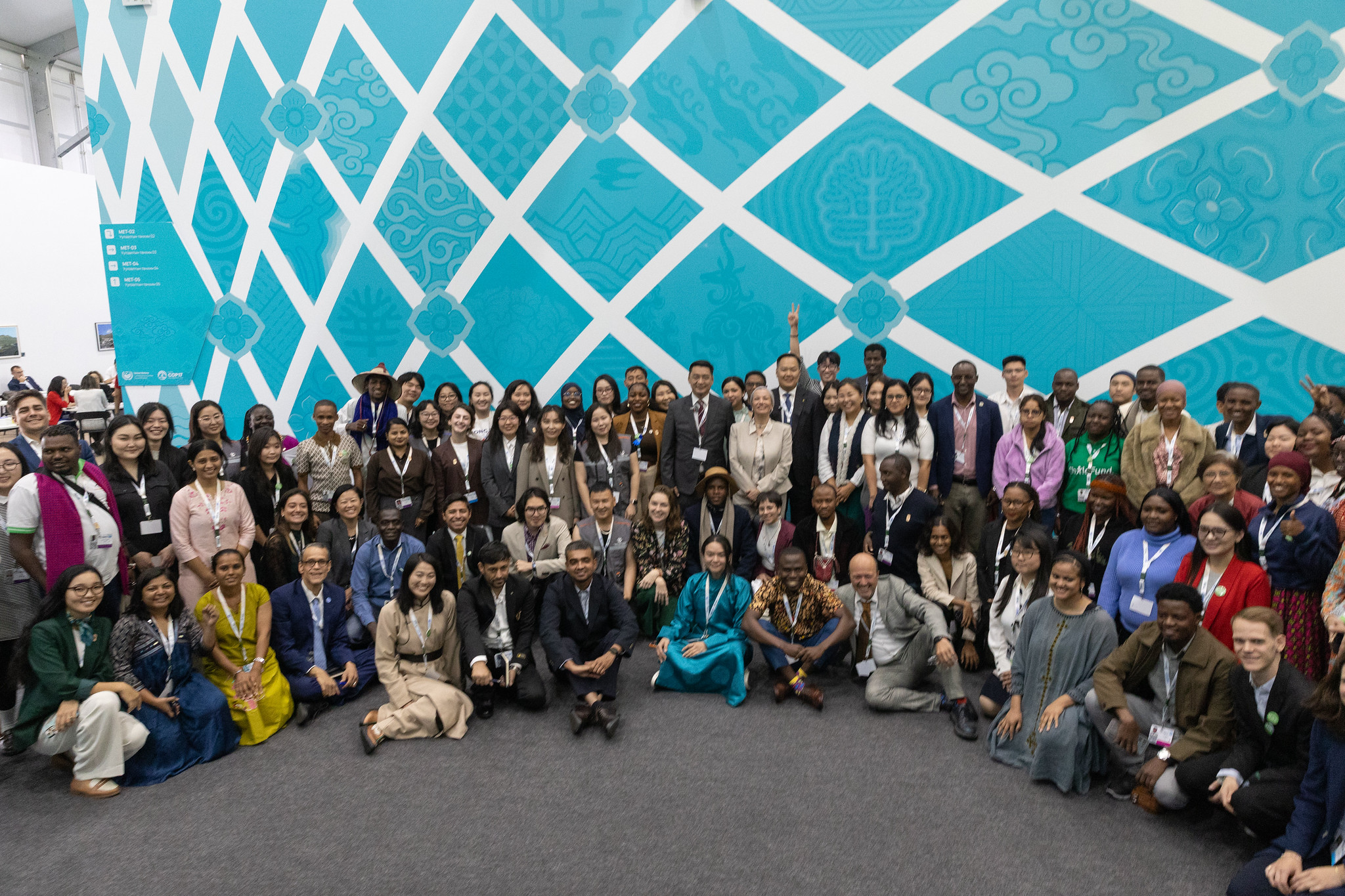
The United Nations Convention to Combat Desertification (UNCCD) is proud to celebrate a historic moment as its Executive Secretary, Dr. Yasmine Fouad, has been awarded the 2025 Nobel Sustainability Medal by the Nobel Sustainability Trust, one of the world’s most distinguished recognitions for leadership in sustainability.This honor reflects more than two decades of Dr. Fouad’s contributions to environmental governance, climate resilience, and community-centered development across Africa, the Arab region, and the world. It also underscores the growing international appreciation for the work of the UNCCD, as land restoration, drought resilience, and sustainable livelihoods become increasingly central to global environmental and development agendas.From the beginning of her career, Dr. Fouad has been driven by a simple but powerful belief: sustainability must begin with people. Her journey has taken her from scientific research in Egypt’s most vulnerable communities, to leading global negotiations, to shaping national environmental policy as Egypt’s Minister of Environment. Throughout this path, she has consistently emphasized that land is not only an ecological asset, but the foundation of human dignity, stability, and opportunity.Her leadership has always been shaped by her human story as much as her professional achievements. She often recalls a moment at the 2018 UN Biodiversity Conference when one of her sons walked into the negotiation hall, approached the podium, and placed his hands on the gavel as delegates applauded. It was, she says, a reminder that while leaders negotiate for agreements, children negotiate for their future. This intergenerational sense of responsibility continues to define her approach to sustainability and diplomacy.Today, the world faces unprecedented pressures on land and water. A quarter of the planet’s land is degraded, droughts are intensifying, and millions of people are losing the resources they depend on. Under Dr. Fouad’s leadership, UNCCD has strengthened its efforts to reverse these trends by elevating land restoration as a pathway to resilience, by advancing more inclusive approaches to drought preparedness, and by ensuring that the voices of women, youth, Indigenous Peoples, and rural communities shape global action.Her tenure has also ushered in renewed momentum toward key global milestones. The Tafa’ul Process, inspired by the spirit of constructive optimism, is guiding a fresh dialogue on drought resilience. The upcoming COP17 in Mongolia is expected to deepen commitments to land stewardship, particularly as the world observes the International Year of Rangelands and Pastoralists in 2026.As she accepted the award, Dr. Fouad dedicated it to the women who rebuild their communities in silence, to the young people who refuse to inherit despair, to the workers who transform scarcity into creativity, and to the families who choose hope every day. Her words capture the heart of the UNCCD’s mission: that sustainability is not purely technical work, but work grounded in humanity, in livelihoods, in cultural heritage, and in the right of every person to thrive on healthy, productive land.Her recognition arrives at a pivotal moment for global environmental action. As the world seeks solutions that are equitable, resilient, and just, Dr. Fouad’s leadership offers a model of diplomacy that is principled, compassionate, and grounded in real-world experience. Her story is a reminder that environmental stewardship is not solely about restoring ecosystems, but about restoring hope and opportunity for communities everywhere.UNCCD extends its warmest congratulations to Dr. Yasmine Fouad for this extraordinary achievement. The Convention looks forward to continuing its work under her guidance as it supports countries and communities in building a more resilient, humane, and sustainable future.

Jimmy Mariscal creció en las colinas de la cuenca del Canal de Panamá, donde los cafetales formaban parte de la vida cotidiana. Sus abuelos cuidaban sus cafetos de la variedad caracolillo para uso doméstico, secando los granos al sol y preparando café solo para la familia. El café era una tradición, no un medio de vida. Era una práctica que se transmitía silenciosamente de generación en generación. Hoy en día, Jimmy es uno de los miles de pequeños productores que se han beneficiado de una colaboración a largo plazo entre las comunidades de la cuenca y la Autoridad del Canal de Panamá (ACP). Durante dos décadas, esta colaboración ha ayudado a los agricultores a pasar de las parcelas tradicionales a sistemas agroforestales que, además de ser resilientes a los cambios en el clima, protegen la biodiversidad, estabilizan el suelo y conservan los recursos hídricos.La cuenca actual es el resultado de décadas de gestión comunitaria y del apoyo de la ACP: un paisaje más resiliente y gestionado de forma sostenible.Esta asociación a largo plazo llevó a Yasmine Fouad, secretaria ejecutiva de la Convención de las Naciones Unidas de Lucha contra la Desertificación (CNULD), al Centro de Visitantes de Miraflores del Canal de Panamá el 3 de diciembre, durante una visita de campo organizada por la ACP y el Ministerio de Medio Ambiente de Panamá. Allí se reunió con Jimmy y los miembros de Cuencafé, un colectivo de pequeños productores que cultivan y procesan café de alta calidad y adaptado a las nuevas condiciones climáticas.La visita permitió observar de cerca cómo la gestión comunitaria apoya los medios de vida rurales al tiempo que protege el sistema de agua dulce que sustenta el Canal.Los productores describieron cómo comenzó la transformación. La ACP comprendió desde el principio que la protección del agua del Canal dependía de la salud de las tierras circundantes y de las personas que las cuidaban. Sin autoridad para hacer cumplir la conservación, la institución creó un modelo centrado en el apoyo y los incentivos. Inspirándose en la experiencia de Costa Rica de recompensar a los agricultores que protegen los bosques, la ACP adaptó la idea a la cuenca, ofreciendo a los productores apoyo práctico, desde plántulas y asesoramiento técnico hasta títulos de propiedad y consejos comunitarios que dan forma a las decisiones.Esta asociación estable y basada en la confianza se fortaleció con el tiempo. Como explicó Raúl Martínez, gerente de Sostenibilidad Socioambiental de la fACP: “Cuando la restauración ayuda a las familias a mejorar sus medios de vida, se convierte en una responsabilidad que todos comparten y la tierra permanece protegida”.Gracias a este modelo basado en incentivos, y especialmente a la introducción del café como un cultivo viable y de alto valor, los agricultores obtuvieron una razón para mantener los árboles en pie e invertir en sistemas agroforestales que conservan el suelo y el agua.Estas decisiones hicieron que, en última instancia, la cuenca del Canal de Panamá sea hoy uno de los paisajes menos deforestados del país.La finca de Jimmy refleja ese cambio. Con el apoyo de actividades de desarrollo comunitario y asistencia técnica, introdujo variedades mejoradas de café, plantó árboles de sombra, cuidó su suelo y perfeccionó las técnicas de secado y procesamiento. Lo que antes solo servía para satisfacer las necesidades de la familia se ha convertido en un sistema climáticamente inteligente que favorece tanto la generación de ingresos como la salud del ecosistema.A medida que más familias se sumaron a la iniciativa, formaron Cuencafé, cuyo café ahora llega a los mercados de la ciudad de Panamá. Sus sistemas agroforestales ayudan a regular el agua y protegen la cuenca contra la intensificación de la sequía, una contribución importante en un país donde el 32 % de la tierra —2,37 millones de hectáreas— ya está degradada.Durante la visita, la Secretaria Ejecutiva escuchó a los productores describir cómo los cambios en las precipitaciones y el aumento de las temperaturas han alterado su trabajo. Les preguntó en detalle sobre los retos a los que se enfrentan ahora: cómo ha cambiado la lluvia, cómo afecta la escasez de agua a la siembra y cómo están cambiando los suelos.Los agricultores explicaron que los años de restauración de la tierra —ampliación de la cobertura forestal, diversificación de los cultivos y protección de los suelos— les han permitido retener el agua y mantener la producción, incluso cuando las sequías son cada vez más frecuentes.“Lo que veo aquí es una restauración que funciona porque comienza con las personas”, dijo la secretaria ejecutiva de la CNULD, Yasmine Fouad. “Cuando se confía en las comunidades y se las apoya como guardianas de sus tierras, protegen los suelos que sostienen las laderas, las aguas que alimentan el canal y la dignidad de las familias que dependen de ambos. El impacto se extiende mucho más allá de las granjas individuales: fortalece toda la cuenca y las generaciones que la heredarán”.Hoy en día, esa transformación es visible en toda la cuenca. Una práctica que antes alimentaba el consumo doméstico, ahora ayuda a conservar el agua, sostener las economías rurales y proteger uno de los paisajes más estratégicos del país. Lo que comenzó como pequeñas parcelas de café cultivado a la sombra se ha convertido en un modelo de resiliencia climática impulsado por la comunidad.Mientras Panamá acoge la CRIC23, el Comité de Examen de la Aplicación de la Convención, un momento en el que los países se reúnen para reflexionar sobre cómo cuidan su tierra, la cuenca muestra cómo la restauración basada en una colaboración a largo plazo, la confianza y el liderazgo comunitario pueden restaurar mucho más que la tierra.

Bonn/Ciudad de Panamá, 3 de diciembre de 2025- Las mujeres de todo el mundo ya se están adaptando a un panorama cambiante. Reorganizan los ciclos de siembra, caminan más lejos para buscar agua, protegen los cultivos contra la sequía, cuidan a los ancianos y a los niños durante las crisis climáticas y mantienen sistemas alimentarios arraigados en suelos cada vez más frágiles. Su trabajo diario refleja una realidad global: el 40 % de la tierra del planeta está ahora degradada y las sequías son un 30 % más frecuentes que hace 25 años. Estas experiencias dieron forma a los debates del Comité de Examen de la Aplicación de la Convención (CRIC), la reunión anual en la que los países evalúan los progresos realizados en el marco de la Convención de las Naciones Unidas de Lucha contra la Desertificación (CNULD). En el marco de este proceso, el Caucus de Género —creado en la decimoquinta sesión de la Conferencia de las Partes (COP15) en Abiyán e incluido en la agenda oficial por primera vez este año— se ha convertido en uno de los espacios más influyentes en cuestión de políticas territoriales sensibles al género. En el CRIC23, celebrado en Panamá, el Caucus llamó la atención sobre dos cuestiones urgentes: el liderazgo y la cosmovisión de las mujeres indígenas en la gestión sostenible de la tierra, y los efectos de género de las tormentas de arena y polvo, un peligro medioambiental intensificado por la degradación de los suelos, la desecación de los lechos lacustres y los cambios en los patrones climáticos. Tierra, conocimiento y continuidad Ponentes de Panamá, el Ártico, África, América Latina y Mongolia destacaron cómo la conexión de las mujeres con la tierra va más allá de las responsabilidades cotidianas. Da forma a la continuidad cultural, la seguridad alimentaria y la estabilidad de la comunidad. Sin embargo, a pesar de ello, los conocimientos de las mujeres rara vez orientan las estrategias nacionales sobre conservación del suelo o resiliencia a la sequía. La jefa nacional wounaan de Panamá, Aulina Ismare Opua, describió las consecuencias directas del cambio medioambiental en la vida de la comunidad. “Las mujeres de nuestras comunidades se enfrentan cada día a los efectos del cambio del suelo, los bosques y el agua. Estamos gestionando los impactos, pero no se nos incluye adecuadamente en el diseño de las políticas. Esa brecha perjudica a todo el mundo”, afirmó. También subrayó que el acceso limitado a la tierra, la educación y la financiación socava la capacidad de las mujeres indígenas para contribuir plenamente a las estrategias nacionales. “Cuando las mujeres sanan la tierra, la tierra sana el mundo”, señaló, y pidió que se las incluyera en las agendas nacionales e internacionales. Hindou Oumarou Ibrahim, coordinadora de la Asociación de Mujeres y Pueblos Indígenas del Chad (AFPAT), destacó que la comprensión que tienen las mujeres indígenas del cambio ambiental se basa en generaciones de observación y práctica. “Cada mapa de nuestras tierras lleva consigo la memoria de nuestras madres y abuelas. En todos los pueblos indígenas, las mujeres poseen generaciones de conocimientos ecológicos, pero con demasiada frecuencia esa sabiduría se considera invisible. A medida que se aceleran el cambio climático y la degradación de la tierra, nuestros conocimientos no son una tradición del pasado, sino una herramienta de resiliencia para el presente y de supervivencia para el futuro, que protege tanto a nuestras comunidades como a la Tierra que todos compartimos”, señaló. Sus intervenciones se hacen eco de una constatación global: los pueblos indígenas administran aproximadamente una cuarta parte de la tierra del mundo, gran parte de la cual es altamente biodiversa. Las mujeres desempeñan un papel central en esta administración, pero siguen estando infrarrepresentadas en los ministerios de medio ambiente, los organismos de gobernanza de la tierra y las negociaciones multilaterales. En el Caucus de Género, esta experiencia se incorporó directamente al debate sobre políticas, desde la protección de los derechos sobre la tierra bajo presión hasta la combinación de los conocimientos ancestrales con enfoques científicos y la restauración de paisajes degradados por la erosión, la sequía o la deforestación. Las ponentes de Mongolia subrayaron las realidades a las que se enfrentan las mujeres pastoras rurales, incluida la pérdida de ganado debido a fenómenos climáticos extremos y la ausencia de tenencia de la tierra o de acceso al crédito, lo que limita su independencia económica. El mensaje de una pastora resonó con fuerza: “El suelo es vida, y nuestra vida es el suelo”. Se espera que estas contribuciones den forma a las recomendaciones con perspectiva de género que surjan de la reunión. Una amenaza creciente con consecuencias de género A medida que los debates se fueron centrando en los riesgos relacionados con el clima, otra realidad cobró especial relevancia: el impacto desigual de las tormentas de arena y polvo. Las tormentas de arena y polvo se están intensificando en muchas regiones, afectando a comunidades desde el norte de África y Oriente Medio hasta Asia, Oceanía y partes de Europa. Estas tormentas elevan ahora cerca de 2.000 millones de toneladas de polvo a la atmósfera cada año, y al menos una cuarta parte de estos fenómenos se ven intensificados por el uso insostenible de la tierra. Sus efectos afectan a todos los sectores —agricultura, seguridad hídrica, transporte, salud—, pero no de manera uniforme. En las comunidades rurales y de bajos ingresos, las mujeres suelen estar expuestas durante períodos más prolongados debido a las tareas agrícolas, la recogida de agua y las actividades del mercado. En el interior de las viviendas, el polvo se deposita en las zonas de cocina y de estar, lo que aumenta los riesgos respiratorios. Y cuando las tormentas cierran las escuelas, los mercados o las cosechas, la carga asistencial y la pérdida de ingresos resultantes recaen principalmente sobre las mujeres. A lo largo de la reunión del Grupo de Género, las participantes señalaron una brecha persistente: la falta de datos desglosados por sexo. Sin ellos, los sistemas de alerta temprana y los planes de preparación pasan por alto las vulnerabilidades de las mujeres y las estrategias que ya utilizan. Se espera que el fortalecimiento de estos sistemas de datos figure entre las recomendaciones que surjan de la CRIC23. Un cambio en la representación Este año también supuso un importante paso adelante para la participación de las mujeres en los procesos de la Convención. A través del Fondo para Mujeres Delegadas (WDF), respaldado por el programa global de la GIZ ‘Empoderamiento de las mujeres para zonas rurales resilientes’ (WE4R) en nombre del Ministerio Federal de Cooperación Económica y Desarrollo, las mujeres de países afectados por la sequía y en desarrollo pudieron participar plenamente en las sesiones del CRIC23 y recibir formación específica en materia de negociación como preparación para la COP17. Los datos de la CNULD muestran lo mucho que aún queda por avanzar: las mujeres solo representaron el 27 % de los delegados en la COP15 y el 33 % en la última sesión del CRIC. El grupo del WDF aportó conocimientos especializados que abarcaban desde la hidrología, la silvicultura y la agronomía hasta la política medioambiental y el liderazgo comunitario, lo que enriqueció tanto el Caucus de Género como las deliberaciones en general. “Invertir en las negociadoras es invertir en decisiones más inclusivas, eficaces y duraderas sobre el uso de la tierra. Su liderazgo refuerza no solo las salas de negociación, sino también las soluciones que se aplican en sus países”, afirmó Andreas Lange, director del programa de la GIZ. Hacia la COP17: basar las políticas en la experiencia vivida Mientras los países se preparan para la COP17 en Mongolia, los debates en el CRIC23 apuntan a una conclusión clara: la degradación de la tierra y la sequía no pueden abordarse de manera eficaz sin las perspectivas de las mujeres que gestionan la tierra a diario. Los conocimientos de las mujeres —científicos, tradicionales y empíricos— son esenciales para restaurar los pastizales, mejorar la salud del suelo, prepararse para el las tormentas de arena y polvo y mantener la continuidad cultural en condiciones de estrés medioambiental. Los ponentes también pidieron un mayor apoyo a la educación de las niñas indígenas, el acceso a la tecnología y al crédito, y el reconocimiento del trabajo doméstico, agrícola y artesanal no remunerado de las mujeres, todos ellos elementos fundamentales para mantener la gestión de la tierra a lo largo de las generaciones. El Caucus de Género subrayó un mensaje sencillo pero decisivo: las políticas de protección de la tierra deben reflejar la experiencia de las personas que más dependen de ella; de lo contrario, corren el riesgo de abordar la crisis en teoría, pero no en la práctica.

As negotiators meet in Panama City for the 23rd session of the UNCCD Committee for the Review of the Implementation of the Convention (CRIC 23), they gather in a country that treats climate change, biodiversity loss and land degradation as interlinked challenges. The new Panama’s Nature Pledge is set to bring the next-generation climate promise, updated biodiversity strategy and Land Degradation Neutrality (LDN) strategy into a single national framework, also covering oceans and plastics. It shows how one country can align all three Rio Conventions and unlock finance to accelerate action. That same logic has been at the heart of the LDN Target Setting Programme (LDN TSP) for almost a decade. Since 2016, the programme has helped 131 countries commit to voluntary LDN targets, with 124 reporting their baselines and targets through the UNCCD, and collectively aiming to restore close to 600 million hectares of degraded lands. Restoration work done in the field by a volunteer groupA global shift from pledges to plans LDN stems from a simple idea: the world’s productive land base should at least remain stable and grow where possible. In less than ten years, the LDN TSP has given governments a common language and toolkit to map where degradation is happening, agree on measurable, time bound targets and identify measures that fit national realities. LDN TSP 2.0: More ambitious, more bankable If the first eight years of LDN TSP were about enabling countries to set and validate LDN targets based on best- available data, the second phase of this programme (LDN TSP 2.0) is about making those targets sharper and more actionable. Eighteen countries from every region are refining their voluntary commitments to achieve land degradation neutrality so they are more specific, time-bound, quantitative, spatially explicit, gender responsive and tied to land-use planning following a COP15 mandate. These priorities were clearly reflected in a recent global knowledge exchange webinar on LDN TSP 2.0, where 100 representatives of countries and partner agencies reviewed progress to date ahead of CRIC23. Integrated land use planning inception workshop May 2025 South Africa Photo : © Dr. Ernest Daemane, South African National ParksIn Sri Lanka, for example, updated LDN work is being used to align land-use decisions with national climate and biodiversity strategies and to prioritize the most vulnerable landscapes for action. In Central Asia, countries are using LDN targets to connect land restoration with drought resilience and more sustainable management of rangelands and drylands. In Argentina, new LDN targets seek to improve the sustainable management of their wetlands. This second phase also pushes governments to think like investors, by helping them identify priority landscapes, estimate costs and benefits and structure projects and programmes that can attract climate and development finance. Negotiations training for national focal points and a write-shop on development of large-scale investment programme for Pacific SIDS, Seoul, Korea 2023Why this matters for everyone, not just negotiators Up to 40 per cent of the planet’s land is already degraded, affecting billions of people. When land is degraded, harvests decline, food becomes more expensive, rural livelihoods weaken and people are forced to move. LDN helps reverse this pattern by restoring land, strengthening ecosystems and generating economic benefits that far outweigh the initial investments. The Rio synergies dividend Panama’s reference to its Nature Pledge during CRIC23 reinforces a clear message: climate, biodiversity and land are not three separate problems. Land is the common thread that allows us to materialize synergies. Country stories on the new Rio Conventions platform show how land restoration is becoming a practical link between climate, biodiversity and land agendas. Examples range from national work in Sri Lanka to regional initiatives in Central Asia, where managing land degradation is central to climate resilience and food security. In Uzbekistan, hectares of sturdy saxaul shrubs are planted as the first line of defense against desertification and sand and dust storms originating from the dried-up Aral seabedNigeria is updating its land targets in parallel with its National Net Zero Nature Positive plan (NZNP) ensuring that both processes reinforce each other. By aligning these efforts, countries can stretch limited public finance further and create stronger cases for private investment. From targets to transformative projects Ambitious targets need equally ambitious implementation plans. That is where Land Degradation Neutrality Transformative Projects and Programmes (LDN TPPs) come in. These are large-scale, country driven programmes that bundle individual projects into coherent packages aligned with national LDN priorities. Under the second phase of the programme, participating countries are defining TPPs through the Global Mechanism’s Partnership for Project Preparation to turn revised targets into concrete funding proposals. In Benin and the Central African Republic, work supported by the Sahara and Sahel Observatory is helping to define priority landscapes, integrate gender analysis and structure programmes for submission to climate and development funds. In Argentina, two strategic projects are being developed to strengthen integrated land-use planning and create synergies between the country’s updated land targets and its wetlands conservation goals under RAMSAR. At CRIC23 in Panama, the new phase of the LDN work is moving from technical workshops into the political spotlight. The Global Mechanism is presenting progress on revised targets, new tools and emerging project pipelines in plenary, while land degradation neutrality features throughout the week’s programme, from interactive discussions on resource mobilization to country-led side events. Landscape view of lush, green hills and farmland in Jimma, Ethiopia, highlighting the positive impact of sustainable agriculture and land restorationTracking progress – and the remaining gap Transparent data is essential to convince citizens, partners and investors that LDN commitments are a sound investment. Key UNCCD knowledge tools – notably the LDN targets tracking tool and the UNCCD Data Dashboard – allow users to see how much land is degrading or being restored and to follow progress towards voluntary LDN targets. New tools are also being developed to support the integration of LDN as a guiding principle for smarter and better-informed land use planning decisions that avoid future land degradation. “A decade of LDN target setting has proved that restoring land is not a luxury, it is basic infrastructure for our economies,” says Louise Baker, Managing Director of the UNCCD Global Mechanism. “If we invest now in LDN TSP 2.0, we are not just planting trees, we are stabilizing food systems, protecting biodiversity and creating new jobs where they are needed most.” In Panama this integrated vision becomes the highlight of the side event “Restoring Land, Building Sustainable Futures: Success Stories from the Changwon Initiative,” hosted by the Republic of Korea. It gives participants a front-row insight into how the Changwon Initiative has supported the development of the LDN Target Setting Programme and its second phase, strengthened science–policy linkages through the UNCCD Science-Policy Interface and invested in capacity building that helps countries move from pilot projects to nationwide implementation. Success stories – from local pilot sites to national-scale programmes – demonstrate how long-term, strategic donor engagement is enabling countries to translate land targets into concrete action on the ground. As Barron Orr, Chief Scientist of the UNCCD, put it: “Land Degradation Neutrality is about doing the right things in the right places at the right scale. The scientific guidance produced by the UNCCD Science-Policy Interface has helped countries pursue all of their economic, social and environmental objectives in an inclusive and integrated way — so that biodiversity is protected where it is highest, food is grown where soils are most productive and new development does not harm either. This approach places a strong foundation of healthy land underneath global efforts to achieve all the SDGs.” Amina, leader of a women’s collective in Jimma, Ethiopia, proudly standing in front of her community members engaged in agroforestry and land restoration activitiesWith the right support from development banks, climate and biodiversity funds, impact investors and philanthropy, LDN TSP 2.0 can enable countries to turn degraded hectares into thriving landscapes and resilient communities. As countries gear up for next year’s UNCCD COP17 that will mark ten years of this global effort, the focus shifts from targets agreed to real results delivered on the ground.

How Communities of Learning and Practice are speeding action in the face of a new drought era

This week at COP30 in Belém, Brazil – birthplace of the three Rio Conventions – land, climate and nature took center stage as governments and partners looked at how action on all three can move forward together for stronger impact and lasting results. A lineup of high-level events on ecosystem restoration, climate resilience and sustainable agriculture confirmed UNCCD as a key player in advancing Rio synergies, placing land at the cornerstone of humanity’s response to the triple planetary crisis. Synergies in the spotlight Participants stressed that climate change, biodiversity loss and land degradation are not separate challenges, but different symptoms of a single planetary crisis that needs to be tackled in an integrated way. By linking their mandates, the Rio Conventions aim to turn shared challenges into new opportunities and deliver solutions that benefit people, economies and ecosystems alike. UN Climate Change Executive Secretary Simon Stiell emphasized this shared direction, noting: “Climate change, biodiversity loss and land degradation are one interconnected crisis – and integrated action delivers the fastest, most durable results. New national climate and adaptation plans reflect this. They include biodiversity, ecosystems and nature-based solutions. Throughout this COP, the message has been clear: the Paris Agreement is working – but we must make it work faster, fairer, and at far greater scale.” UNCCD Deputy Executive Secretary Andrea Meza, CBD Executive Secretary Astrid Schomaker and UNFCCC Executive Secretary Simon Stiell at the COP30 venueThe Rio Conventions Presidencies, Parties and partners underlined how more coherent land and sea use planning, better aligned finance and shared monitoring systems can reduce duplication and increase impact on the ground. A joint statement by the Rio Convention Presidencies issued at Belém marks a key moment in aligning Rio Presidency initiatives on land restoration, sustainable resource management and ecosystem resilience. Land at the center At the high-level roundtable “Bridging Action Agenda from COP16 to COP30: Strengthening synergies across land, climate and nature”, the UNCCD COP16 and COP17 Presidencies warned that efforts to address climate change and biodiversity loss will fall short if land continues to be treated in isolation. The UNCCD COP16 Presidency highlighted the Riyadh Action Agenda as a practical attempt to bring land, the ocean and the atmosphere together in national planning and finance. Looking ahead to UNCCD COP17, Mongolia underscored that pathways to tackle climate change, biodiversity loss and land degradation are indivisible and must be embedded in national policies and plans. From Rio to Belém At the joint Rio Conventions’ side event “From Rio to Belém: Synergistic action for ecosystem restoration and climate resilience”, COP Presidencies, government, private sector and civil society leaders illustrated how this agenda is being translated into practice. UNCCD Deputy Executive Secretary Andrea Meza stressed that this is not about choosing between individual priorities, noting: “We are talking about a new development pathway that could operate within the planetary boundaries, and generating a model that can guarantee that we live in a prosperous society while at the same time protecting our most valuable asset — the living Earth.” UNCCD Deputy Executive Secretary Andrea MezaReflecting on the outcomes of COP30, CBD Executive Secretary Astrid Schomaker highlighted the joint resolve of the three conventions, noting: “At COP30 the Presidencies and Secretariats of the Rio Conventions joined forces to promote integrated action on climate, biodiversity and land. Synergies are the only way forward. The world needs to take bold steps for progress across the Rio Conventions’ interlinked objectives.” Finance for farmland Finance for land-based action was another prominent theme. COP30 saw the ministerial launch of the Resilient Agriculture Investment for net-Zero land degradation (RAIZ) accelerator, a Brazil-led initiative to mobilize public and private finance for restoring degraded farmland at scale. With over one billion hectares of farmland degraded worldwide, speakers stressed the urgency of investing in soil health, productivity and resilience. RAIZ offers a pathway to align climate action, food security and biodiversity protection, with countries in the lead and finance flowing to where it matters most. Building on Brazil’s experience in blending public and private capital for restoration through initiatives such as Green Way and EcoInvest, the accelerator will support governments to map degraded landscapes, identify investable solutions and design co-investment vehicles that de risk private finance and lower the cost of capital for farmers and rural communities. Hindou Oumaru Ibrahim, President and Coordinator, Association of Indigenous Women and Peoples of ChadSynergies from the ground up Peer learning on concrete national approaches to linking NDC targets on land degradation and desertification was the focus of an event organized by Türkiye in the margins of COP30. Brazil shared a three- pillar approach of aligning planning tools across sectors, mobilizing integrated financing and advancing nature based solutions with strong community involvement, while Panama shared plans to streamline work under multiple conventions through joint reporting mechanisms and its Nature Pledge – a roadmap that unifies national efforts to tackle land degradation, biodiversity loss and climate change. Azerbaijan emphasized science based, integrated work on water management, forest restoration and land rehabilitation, Colombia showed how outcomes from the Kunming–Montreal Global Biodiversity Framework are being implemented through community-driven projects that advance biodiversity, climate resilience and sustainable land use together and Mongolia presented priorities on desertification, land degradation, water–land interactions and nature based infrastructural solutions. Dialogues at Belém also brought to the forefront the importance of human rights-based approaches, Indigenous Peoples’ leadership and inclusive engagement with vulnerable communities, civil society and the private sector in maximizing synergies among multilateral environmental agreements. H.E .Osama Faqeeha, Deputy Minister of the Environment, Water and Agriculture of the Kingdom of Saudi Arabia, COP16 PresidencyNext stops on the journey The COP30 outcomes help anchor land at the heart of the Rio Conventions’ action agendas. The next stop will be UNCCD CRIC23 in Panama this December, where Parties will review progress on land-based solutions ahead of UNCCD COP17 in Mongolia in 2026. 2026 will be the next “Triple COP” year, and an opportunity for all three Rio conventions to align national commitments, showcase joint solutions and build the political momentum needed to turn Rio synergies into coordinated action on the ground. We invite you to visit rioconventions.org to learn more about current initiatives, integrated approaches and case studies on land, climate and nature synergies.
