Stories
Latest
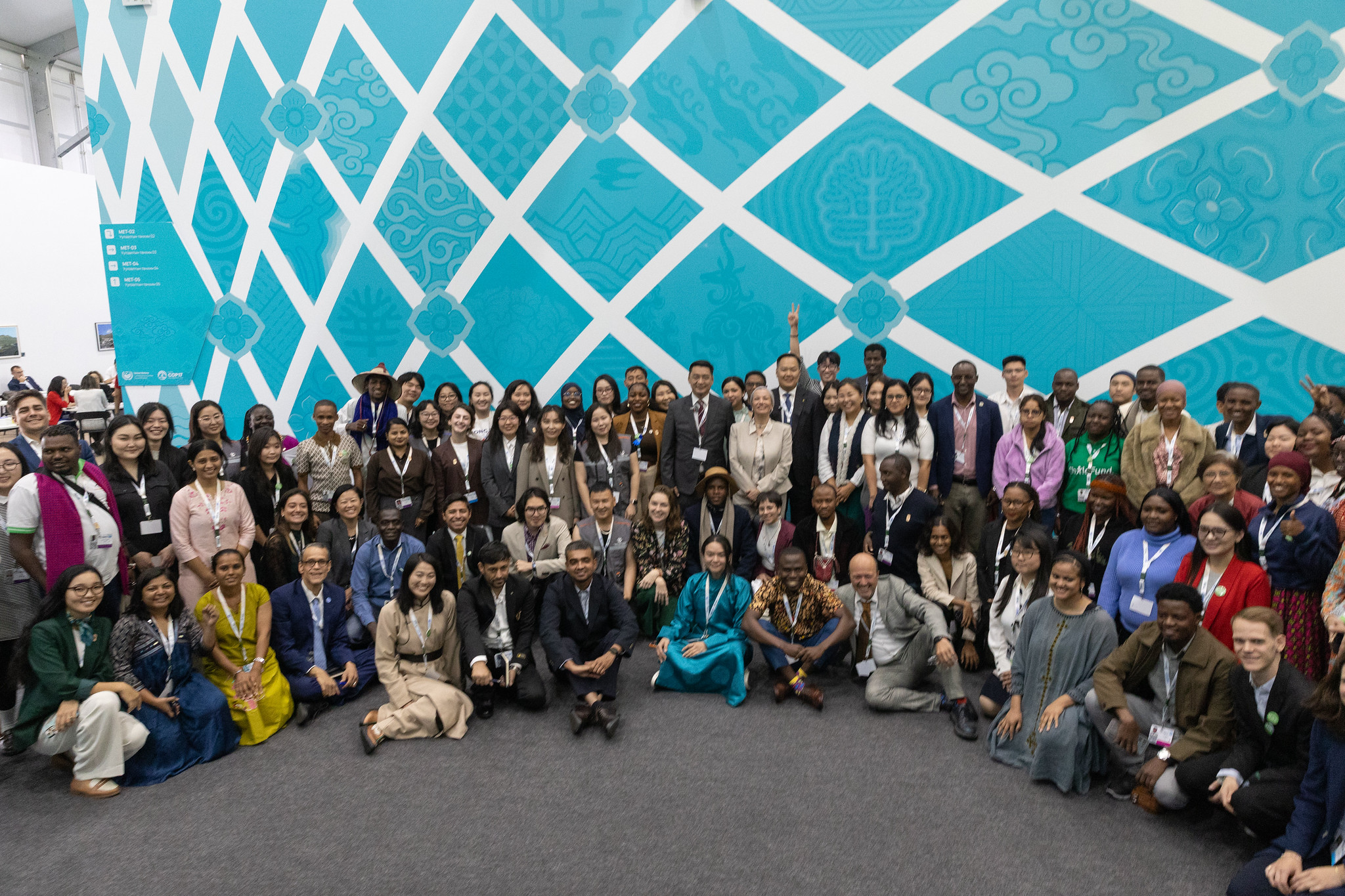
As women’s rights are under increasing pressure worldwide and climate-related crises deepen existing inequalities, UN Women, UNCCD and UN Climate launched the Bonn Hub of the International Gender Champions.

Bonn, Germany, 8 June 2026 – The United Nations Convention to Combat Desertification (UNCCD) and the German Agency for International Cooperation (GIZ) signed a Memorandum of Understanding (MoU) today in Bonn, reinforcing their cooperation on land restoration, drought resilience and sustainable rural development at a time when land degradation and water stress are increasingly affecting communities and economies worldwide. The agreement was signed by UNCCD Executive Secretary Yasmine Fouad and GIZ Executive Board Member Ingrid-Gabriela Hoven during a ceremony attended by representatives of UNCCD, GIZ and the German Federal Ministry for Economic Cooperation and Development (BMZ). Building on longstanding cooperation between UNCCD, GIZ and BMZ, the agreement aims to expand joint work on land restoration, drought resilience and sustainable rural development through technical cooperation, joint initiatives and knowledge exchange. The partnership comes at a time of growing international recognition that desertification, land degradation and drought are not only environmental challenges, but also major risks to food security, water resources, livelihoods, economic stability and resilience. Current estimates indicate that around USD 355 billion per year is needed globally to combat desertification, land degradation and drought, while investment remains significantly below that level. At the same time, experience from many regions shows that sustainable land management can generate strong environmental and economic returns, with studies estimating benefits ranging from USD 7 to 30 for every dollar invested. “Land degradation and drought are increasingly affecting ecosystems, food systems and communities around the world, with impacts that go far beyond the environment,” said UNCCD Executive Secretary Yasmine Fouad. “No single institution can address these challenges alone. Strengthening partnerships and accelerating implementation on the ground will be essential to build resilience, restore productive landscapes and support sustainable development. The scale of the challenge requires the same scale of ambition and cooperation. This agreement reflects our shared commitment to turning cooperation into practical action.” Through the agreement, UNCCD and GIZ will work together to help scale up practical solutions on land restoration and drought resilience, while promoting knowledge exchange, technical cooperation and new investment opportunities. "Land degradation, climate change and biodiversity loss are interconnected challenges that require integrated solutions. Stopping desertification helps the climate, because farmland and forests store significantly more carbon dioxide than deserts. Our deepened partnership can really make a difference,” said GIZ's Ingrid Gabriela Hoven.“As Germany’s National Focal Point to the UNCCD, BMZ strongly supports land- and nature-based solutions and underlines the central role of land for synergies between the Rio Conventions,” said BMZ's Kerstin Henke. “Today’s agreement further strengthens collaboration between UNCCD, BMZ and GIZ in securing land, strengthening resilience and building strong partnerships for sustainable development. Ahead of the seventeenth session of the Conference of the Parties (COP17) to UNCCD , which will take place in Ulaanbaatar, Mongolia, from 17 to 28 August 2026, the agreement reflects growing international attention to land restoration and drought resilience as essential to food security, climate resilience and long-term stability. Under the theme “Restoring Land, Restoring Hope,” UNCCD COP17 will provide an important opportunity to accelerate partnerships, mobilize investment and advance practical solutions at the scale required to address global land degradation and drought challenges. GIZ has long supported sustainable development and international cooperation efforts worldwide, including initiatives related to land restoration, rural development and climate resilience. The agreement will help strengthen collaboration between GIZ and UNCCD in support of the Sustainable Development Goals and global efforts to address desertification, land degradation and drought.

By Yasmine Fouad, Executive Secretary, UNCCD Antalya – Türkiye

The UNCCD secretariat is launching the second round of the UNCCD Women Delegates Fund (WDF) training ahead of COP17 to support the participation and effective engagement of women delegates in the UNCCD process and negotiations. Building on the successful first WDF training implemented at CRIC23 in Panama City, the programme aims to strengthen women’s leadership, negotiation capacities and meaningful participation in multilateral environmental processes.UNCCD COP17 will convene in Ulaanbaatar from 17–28 August 2026 under the theme “Restoring Land, Restoring Hope.” As the global conference of the only legally binding international treaty addressing land degradation and drought, COP17 is expected to bring together governments, civil society, Indigenous Peoples, scientists, youth, women’s organizations and the private sector to advance solutions for land restoration, drought resilience and sustainable land management.The Women Delegates Fund contributes to the implementation of the UNCCD Gender Action Plan (GAP), including its Roadmap which aims to strengthen women’s participation and leadership across all levels of UNCCD decision-making and implementation. Through targeted support and capacity-building activities, the WDF seeks to enhance women delegates’ ability to engage effectively in negotiations and contribute meaningfully to the COP17 process.The initiative is open to women delegates from developing country Parties eligible under the UNCCD Special Trust Fund for Participation, with priority given to Least Developed Countries (LDCs). Governments from all Regional Implementation Annexes are invited to nominate one eligible woman delegate from their official COP17 delegation.Selected participants will benefit from:Participation support for COP17Capacity-building and negotiation support activitiesPre-COP briefings and networking opportunities with fellow women delegatesApplications must be submitted by National Focal Points through an official nomination letter, including the CV or short biography of the proposed delegate. Detailed information is available in the right-hand menu

The Government of Türkiye, under the umbrella of the G20 Global Land Initiative at the United Nations Convention to Combat Desertification (UNCCD), convened G20 members, current and incoming COP presidencies, partner agencies, relevant initiatives and UN entities for the Antalya Dialogue.

Drought does not arrive with sirens. It builds quietly—through drying soils, shrinking water supplies and wilting crops—until its impacts ripple across farms, cities and entire economies. By the time it is fully visible, the damage is often already widespread and costly, affecting everything from food and energy production to transportation and health.With droughts projected to affect three in four people worldwide by 2050, and three quarters of the world’s land already permanently drier due to unsustainable land management and climate change, how should countries act to prevent drought from escalating into crisis?Much like the Human Development Index reshaped how countries understand progress, the new Drought Resilience Index aims to provide a clear, shared benchmark to help governments manage drought risk and prevent irreversible impacts—including lost lives and shattered livelihoods.Now under development through the United Nations Convention to Combat Desertification (UNCCD), the International Drought Resilience Alliance (IDRA) and partners, the index is designed to give decision-makers a clearer picture of where vulnerabilities lie —helping them assess preparedness, create policies and act before drought turns into disaster.A three-day workshop recently hosted by the European Commission Joint Research Centre in Italy brought together a wide range of international partners—spanning multilateral, scientific, academic, technical, and government institutions—to fine-tune the tool, which is expected to launch as part of a broader AI-powered data visualization platform.We spoke with Edgar Gutiérrez-Espeleta, senior policy consultant at UNCCD advising on the development of the tool, to understand how the Drought Resilience Index works—and why it could reshape how countries prepare for a new drought era. From data overload to clarityThe Drought Resilience Index, part of the broader International Drought Resilience Observatory (IDRO), is designed to turn complex and fragmented data into simple scores that policymakers can use to make decisions. “Drought is one thing. Resilience to drought is another,” says Gutiérrez-Espeleta. “The aim is to help countries assess their capacity to anticipate, prepare for and adapt to drought, and to highlight where action is most needed so they can use limited resources effectively.”To capture this, the Drought Resilience Index is built around three dimensions: anticipation, preparation and adaptation. These reflect the full lifecycle of drought risk. Each dimension is assessed across four areas that shape resilience: the built environment; the natural environment, including soils, forests and wetlands; communities; and the economy —together offering a multidimensional picture of how well countries manage drought risk.Across each of these areas, experts identify one or two indicators to capture the most critical aspects of resilience, drawing on available, UN-vetted global datasets. These indicators are then standardised and combined into a composite score, enabling countries to assess their capacity to manage drought risk.For example, in anticipation, the health of ecosystems—such as forest cover or watershed integrity—can indicate how well the natural environment buffers drought impacts. In preparation, the efficiency and reach of water supply systems reflect the capacity of the built environment to conserve and distribute scarce resources. In adaptation, the share of livelihoods diversified beyond water-intensive activities shows how well the economy can withstand recurring drought conditions.“Low scores act as warning signals, pointing decision-makers to areas that require urgent attention,” explains Gutiérrez-Espeleta.Built through collaborationThe index is not being developed in isolation. It builds on years of work within the UNCCD’s Science-Policy Interface and has been shaped through consultations with top drought resilience experts from different regions, including the European Union’s Joint Research Centre, the US National Drought Monitor, the World Meteorological Organization and Yale Center for Ecosystems and Architecture.In the lead up to the 17th session of the Conference of the Parties to the UNCCD (UNCCD COP17), specialists are refining the selection of indicators, assessing available datasets and ensuring that the index is both scientifically robust and practical for policymakers.One of the key challenges is data availability. Not all countries have the same level of information, and some indicators may only exist for some parts of the world.“We are starting with the best data currently available and building from there,” Gutiérrez-Espeleta says. “As the index evolves, it will also help drive stronger and more comprehensive data collection, as has been the case with the Human Development Index.”A tool shaped by experienceThe idea for the Drought Resilience Index is rooted in experience. In 2015, as Costa Rica’s Minister of Environment, Gutiérrez-Espeleta faced a severe drought that demanded urgent, cross-sector decisions—but without a clear overview, it was difficult to prioritize action. That gap is what the Index is designed to fill. By bringing diverse data into a single framework that everybody can understand, it helps policymakers identify where systems are weakest and where action is most needed—offering, in his words, “a way to quickly see the big picture.”Rather than prescribing solutions, the Index works as a signal, highlighting where problems are most acute and pointing decision-makers towards the areas that require attention.The ambition is simple. When ministers see it at COP17, Gutiérrez-Espeleta hopes their reaction will be immediate: “This is what we needed.” From there, governments can mobilize resources and act—because while drought cannot be prevented, the vulnerability of people, economies and ecosystems can be greatly reduced.Photo : Participants at the IDRO Drought Resilience Index workshop hosted in Italy by the European Commission Joint Research Centre, including representatives of: Yale Center for Ecosystems and Architecture, National Center for Meteorology of the Kingdom of Saudi Arabia, World Meteorological Organization, United Nations Environment Programme, United Nations University Institute for Water, Environment and Health, Global Water Partnership, US National Drought Mitigation Center, NASA Goddard Space Flight Center, CIMA Research Foundation, Sahara and Sahel Observatory, CSIC-CEBAS, Ministry of Ecological Transition and Demographic Challenge of Spain, Ministry of Environment and Sustainable Development of Senegal, Center for Hydrometeorology and Remote Sensing, UK Centre for Ecology & Hydrology, Deltares, International Rice Research Institute, IGAD Climate Prediction and Applications Centre, University of Southern Queensland, UNEP-DHI Partnership, Tree Aid.
