News & stories

Latest news & stories
Bonn/Bogotá, 14 May 2025 –The Republic of Colombia will host this year’s global observance of Desertification and Drought Day on 17 June, highlighting the country’s commitment to tackling land degradation through nature-based solutions. Taking place in Bogotá, the event will draw global attention to the urgent need to scale up land restoration as a catalyst for sustainability, peace, and inclusive development. The global observance will be part of the Global Land Forum, hosted by the Government of Colombia. Under the theme “Restore the Land. Unlock the Opportunities,” the 2025 observance will emphasize the critical role of healthy land in providing food, water, jobs, and security. Colombia’s decision to host the global event reflects its determination to restore land at scale and ensure that restoration efforts directly improve livelihoods and ecosystems. Ibrahim Thiaw, Executive Secretary of the United Nations Convention to Combat Desertification (UNCCD), said: “Land degradation is more than just an environmental issue — it is a direct threat to our health, food and water security, and the stability of societies. When we lose healthy land, we weaken nutrition, increase the risk of disease, and expose communities to climate and economic shocks. I thank the Republic of Colombia for its invitation to host this year’s observance, which will shine a light on how restoring land can protect nature, improve well-being, and build a more resilient future for all.” Highlighting the urgent need for sustainable land use and the vital connection between soil and peace, Martha Viviana Carvajalino Villegas, Minister of Agriculture and Rural Development of Colombia, stated: “The protection of agricultural soils and land is an urgent imperative in the face of interconnected crises threatening our survival: biodiversity loss, ecosystem degradation, hunger, poverty, and displacement. In response, we commemorate Desertification and Drought Day to reaffirm that protecting the soil is protecting life. This struggle rests on three pillars: soil conservation and restoration, sustainable, fair and resilient agri-food systems, and improved quality of life in rural and urban areas. Without fertile soil, there is no food; without food, there is no peace.” “We implement comprehensive policies: equitable land redistribution, restitution of rights to historically marginalized communities, and guarantees for sustainable resource management. In this way, we transform the soil into a shield against hunger, a bridge towards reconciliation, and a legacy of dignity for future generations. Land is not just a resource: it is the foundation of peace”, she added. Faced with the serious challenge of land degradation — affecting nearly 30 per cent of its territory, or 34.39 million hectares — Colombia is stepping up with bold action. By 2030, it aims to restore 100,000 hectares of degraded land, conserve 22,000 hectares of dry forest, expand sustainable agroforestry systems, and support rural communities through targeted restoration and planning initiatives across priority regions. In hosting the observance, the country is also opening a platform for youth, Indigenous peoples, farmers, scientists and civil society to share local solutions that contribute to global goals. Colombia’s efforts reflect a broader global imperative: restoring land is essential to meeting today’s urgent challenges — from climate change and biodiversity loss to food insecurity and forced migration. Despite increasing momentum, including at UNCCD COP16, the true value of healthy land remains underestimated. Land degradation, drought and desertification cost the global economy an estimated US$878 billion each year. Meanwhile, restoring over one billion hectares of degraded land could generate up to US$1.8 trillion annually, with each dollar invested returning between US$7-US$30 in economic benefits. Yet the pace and scale of restoration remain far below what is needed. The economic case for restoration is clear,” Thiaw added. “Each dollar invested can yield up to thirty in returns. But beyond the numbers, restoring land is about protecting the dignity of communities, ensuring long-term access to food and water, and building a more stable and equitable world. Colombia’s leadership underscores what is possible when restoration becomes a national priority.” About Desertification and Drought Day Officially declared by the United Nations General Assembly in 1994 (A/RES/49/115), Desertification and Drought Day, marked annually on 17 June, is a unique occasion to highlight practical solutions to combating desertification, land degradation and drought. In 2025, Colombia will welcome global leaders, experts, youth, and representatives from across society for the official celebration in Bogotá. Countries around the world are mobilizing to mark Desertification and Drought Day with an array of educational, cultural and sporting activities. For more information, please contact: UNCCD Press Office press@unccd.int; https://www.unccd.int/events/desertification-drought-day About UNCCD The United Nations Convention to Combat Desertification (UNCCD) is the global vision and voice for land. We unite governments, scientists, policymakers, private sector and communities around a shared vision and global action to restore and manage the world’s land for the sustainability of humanity and the planet. Much more than an international treaty signed by 197 parties, UNCCD is a multilateral commitment to mitigating today’s impacts of land degradation and advancing tomorrow’s land stewardship in order to provide food, water, shelter and economic opportunity to all people in an equitable and inclusive manner. The Global Land Forum is hosted by the Ministry of Agriculture and Rural Development of Colombia, CINEP (Center for Research and Popular Education/Peace Program), the European Union and the International Land Coalition

Update to the nomination process for regional representatives to the IWG FSFDuring the recent meeting of the COP Bureau held on 26 June 2025 in Bonn, Germany, Bureau members decided to grant a 7-day extension for Regional Chairs to submit their nominations of regional representatives to the Intergovernmental Working Group on the Future Strategic Framework (IWG FSF).This decision follows interventions by three Bureau members who requested such an extension.As per the approved Terms of Reference for the IWG FSF, each Regional Chair is to nominate three regional representatives from their respective region. This will result in a total of 15 regional representatives, out of the 20 members that constitute the IWG FSF.In place of the original deadline of 27 June 2025, Regional Chairs are kindly requested to submit their nominations no later than 4 July 2025 following the COP Bureau decision, if they have not done so yet. This notification serves as an update to the previous message published 13 May 2025.Thank you for your continued cooperation. The sixteenth session of the UNCCD Conference of the Parties (COP 16) decided in decision 4/COP.16 to establish through the Bureau of the COP an Intergovernmental Working Group on the Future Strategic Framework of the Convention (IWG FSF), within the scope and mandate of the Convention. In line with this decision, the Bureau of the COP endorsed during its meeting held 28 April 2025, the Terms of Reference of this group and entrusted the secretariat in consultation with the CRIC and CST Bureaux to ensure that the nomination process be completed by the end of June 2025. This notification is to inform all Parties to the UNCCD of the nomination process related to the IWG FSF, as presented below, and the need for the nomination of three members within each regional group. Interested Parties may communicate their desire to participate in the IWG FSF to the chair of their regional group, copy to the respective UNCCD liaison officer (contact information is contained in the attachment) by Monday 16 June 2025. In line with the TOR attached to this notification, the respective chairs are then called upon to select the final three IWG members from their regional group on the basis of the criteria listed in the TOR i.e. adhering to the request to ensure gender balance and have the policy, scientific and technical aspects of the Convention reflected as part of the expertise provided to the IWG from each region. Their submission should be sent to the secretariat no later than 27 June 2025. Upon receiving the names and contact details of the selected representatives from each regional group chair, the secretariat will contact the IWG members and post their names on the IWG FSF webpage. IWG members will then also be briefed on the next steps and timeline of the work of the IWG FSF. Please note that the IWG FSF will work in English only (documents and meetings). In line with the TOR of the IWG FSF as attached to this notification, IWG FSF will be composed as follows: Three representatives from each regional group (Three representatives from each the Africa, Asia and the Pacific, Latin America and the Caribbean, Central and Eastern Europe, Western European and Other Countries group)One representative from civil society organizationsOne representative from international organizationsThree independent expertsPlease also note that this notification only deals with the nomination process of the regional representatives while the members from the civil society organizations, international organizations and the independent experts will be selected inter alia through an open call that will be published on the UNCCD website. Unless otherwise agreed by the IWG FSF, and depending on the availability of resources, the group will have three in-person meetings: one at the beginning of its work, another one immediately after the intersessional CRIC session, and one at the end for finalizing its report. The first meeting is tentatively planned to take place during the third quarter of 2025. Since the TOR specifies that membership of the IWG is done on the basis of UN regional groups, a list of membership of individual countries that belong to each group can be obtained through the website of the United Nations for ease of reference. Please also find attached the TOR as approved by the COP Bureau on 28 April 2025. In order to facilitate the nomination process, the regional chairs of the corresponding Convention’s implementation annexes, as listed below, will be requested to forward the final list of nominated members to the secretariat. Where we do not have an annex that corresponds with the composition of the UN regional group, the respective COP Bureau members/representatives, as listed below, will be approached, for providing the same service.

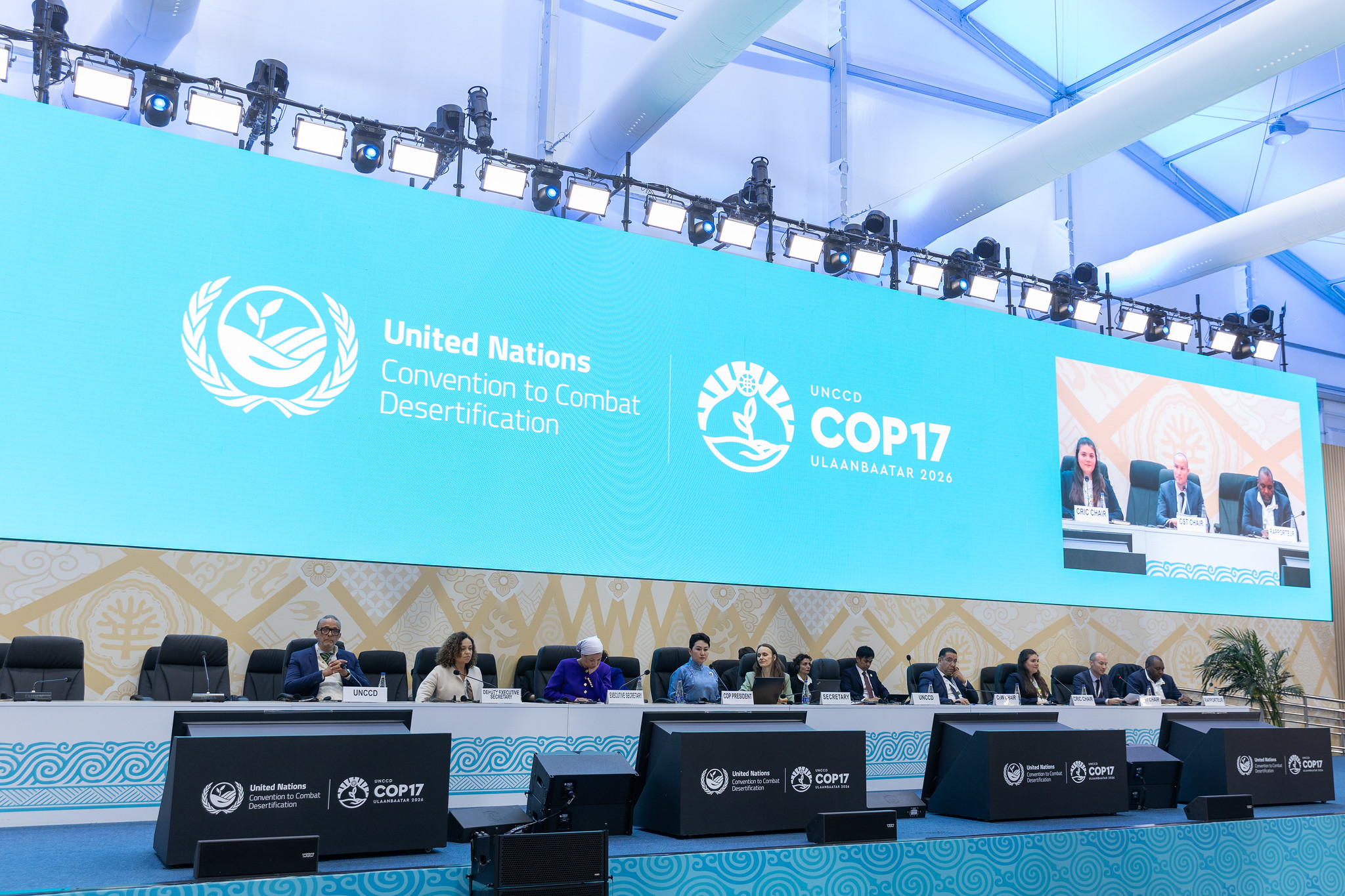
Following a key decision at COP16 in Riyadh in December 2024, the process to shape the future direction of the UN Convention to Combat Desertification (UNCCD) is now officially underway. The COP Bureau has approved the Terms of Reference for the Intergovernmental Working Group on the Future Strategic Framework (IWG-FSF), paving the way for nominations. The IWG-FSF will lead the development of a post-2030 strategy for the Convention. Its mandate includes identifying key elements, including possible goals and targets, for the future strategic framework, and conducting a thorough analysis of the current indicators used in national reporting. Building on the milestones of the 2018–2030 Strategic Framework, the IWG-FSF will also consider lessons from its midterm evaluation, insights from the IWG on Drought and broader UN indicators, such as the Sustainable Development Goals. Each regional annex will nominate three representatives. In addition, the group will include five technical experts: one each from civil society and international organizations and three independent experts. The deadline to nominate civil society representatives is 26 May 2025The deadline to nominate independent science experts is 13 June 2025The deadline to nominate regional representatives is 4 July 2025 Final appointments will be made within two months of the Terms of Reference approval. The approved Terms of Reference will be shared with Parties through the UNCCD national focal points and science and technology correspondents. The IWG-FSF is expected to deliver an interim progress report at the 23rd session of the Committee for the Review of the Implementation of the Convention (CRIC 23) in December 2025.

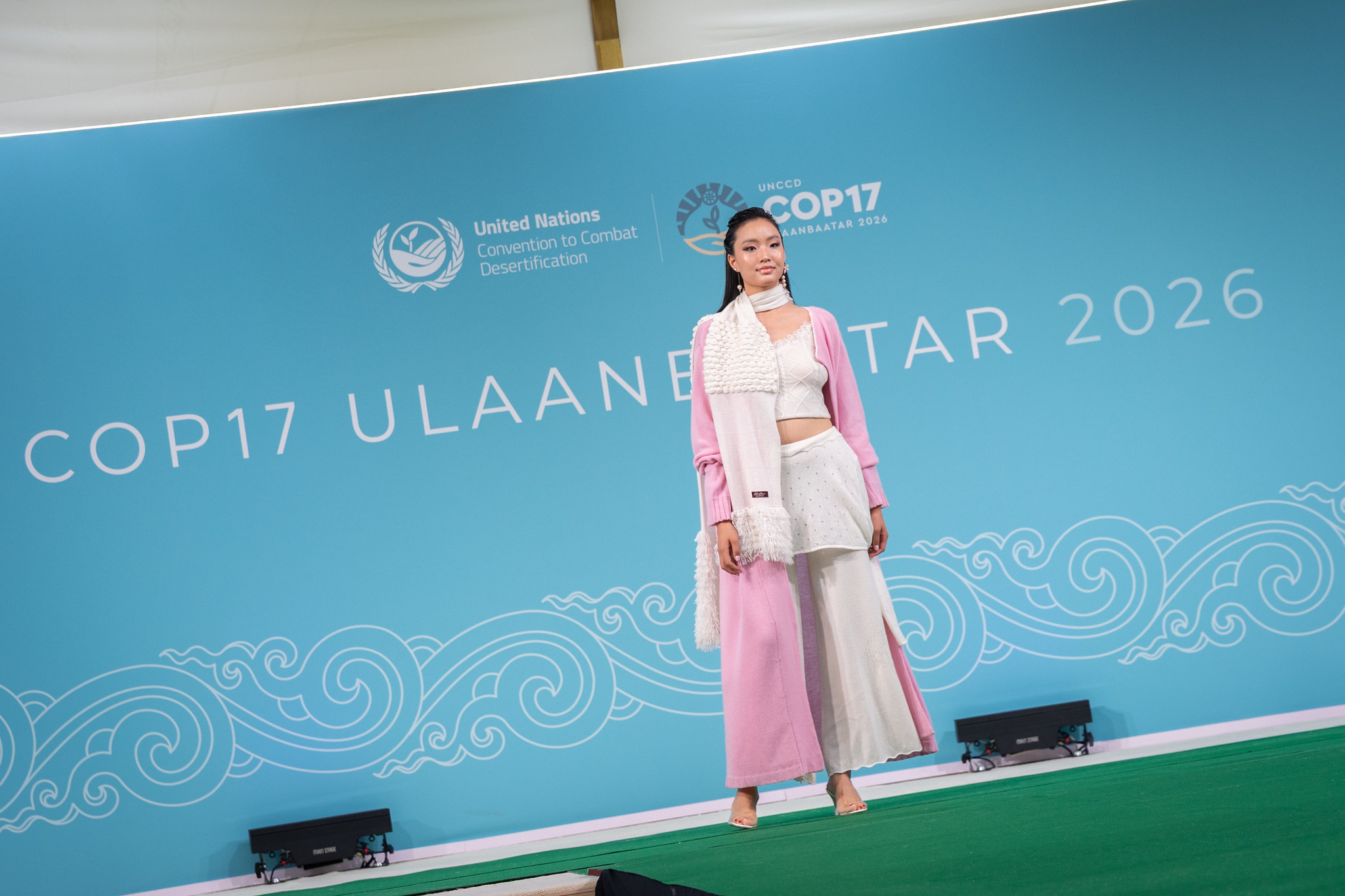
Each year, the fashion industry produces over 60 million tonnes of clothing, making it a major contributor to global pollution and climate change—and deeply intertwined with the land it relies on. From fibre production to garment disposal, its impact on land, water and biodiversity is undeniable. Yet few realize that the very fibres in our clothing have profound effects on the land they come from. Over 40 per cent of textiles come from cotton and cellulosic fibres—crops that require intensive land and chemical use.Without intervention, the fashion industry is projected to use 35 per cent more land by 2030—an area equivalent to 115 million hectares—roughly the size of Ethiopia—highlighting the urgent need for sustainable land management practices.Beyond the connection between fashion and land, issues of land tenure and gender are crucial to driving meaningful change. Of the approximately 300 million people employed in fashion, women make up over 65 per cent of the industry’s workforce, particularly in the production stages. In rural areas, they play a vital role in growing, harvesting and processing the natural fibres that fuel the sector. Yet despite their contributions, only one in five landowners is a woman. Without secure land rights, women are often excluded from key decisions on how land is used and managed. Research shows, however, that when women do own the land they work on, they are more likely to invest in sustainable practices—helping to combat land degradation and adapt to climate challenges."Women comprise nearly half of the world’s agricultural workforce, producing 60–80 per cent of the food grown in developing countries, so are poised to lead on sustainable land management practices while keeping their families and communities fed. Despite their vital role, it is alarming to note that fewer than one in five landowners is female. Without land rights, women are not fully engaged in decisions on land use and management. However, studies show that when women own the land they work on, this encourages their dedication to land stewardship to fight land degradation and cope with climate shocks.” — UNCCD Her Land publicationIndigenous peoples, local communities and smallholder farmers are also disproportionately affected by land-use changes driven by fashion supply chains. These communities often lose access to ancestral lands and livelihoods to make way for cash crops and grazing pastures. As climate impacts and social inequalities deepen, a new narrative is emerging—one where gender equality, sustainable land management and circular production patterns intersect.Women-led initiatives are already at the forefront of this shift—advocating for responsible fibre production, promoting sustainable alternatives, improving labour conditions and empowering women, especially in rural and marginalized communities.One such initiative is Tujikuze—a women-led Kenyan enterprise focused on sustainable, circular fashion. By using locally sourced, biodegradable materials and empowering young women through training and employment, Tujikuze exemplifies how fashion can serve both people and the planet. Their model promotes community resilience, environmental stewardship and economic opportunity—showing that ethical fashion is not only possible but already in motion.Tujikuze was among the inspiring examples shared at the recent event “Women leading change: Shaping a sustainable future in fashion,” held on the margins of the Regional Forum for Sustainable Development. Organized by the UN Alliance for Sustainable Fashion, UNECE, ITC Ethical Fashion Initiative, ILO, UNIDO, UNCCD and the UN Office for Partnerships, the event brought together global advocates and entrepreneurs to spotlight the transformative role of women in shaping a more equitable and sustainable fashion sector—and to highlight the industry’s deep connection to the land and natural resources.One central message was underscored: land degradation, gender injustice and unsustainable fashion are interconnected. A people-centered, land-conscious and gender-equal approach is essential to reversing the industry’s harm. Fashion can no longer be separated from the land that sustains it.To heal our relationship with nature, we must redesign our wardrobes from the ground up.

Bonn, 7 April 2025 – Accelerating progress to restore 1.5 billion hectares of degraded land around the world and jumpstarting a trillion-dollar land restoration economy will be the focus of this year’s Desertification and Drought Day on 17 June. The theme of Desertification and Drought Day 2025 is “Restore the land. Unlock the opportunities”, underscoring multiple benefits linked to land restoration. Ibrahim Thiaw, Executive Secretary of the United Nations Convention to Combat Desertification (UNCCD), said: “Land degradation and drought are major disruptors of our economy, stability, food production, water and quality of life. They amplify climate change, biodiversity loss, poverty, forced migration and conflicts over access to fertile land and water. Land restoration is an opportunity to turn the tide on these alarming trends. A restored land is a land of endless opportunities. It’s time to unlock them now.” Healthy land underpins thriving economies, with over half of global GDP dependent on nature. Yet we are depleting this natural capital at an alarming rate—some 1 million km2 of healthy and productive lands, equivalent to the size of Egypt, are becoming degraded every year. As the United Nations Decade on Ecosystem Restoration 2021-2030 marks its halfway point, we must accelerate efforts to turn the tide of land degradation into large-scale restoration. If current trends continue, we will need to restore 1.5 billion hectares of land by 2030 to achieve a land-degradation neutral world. To date, one billion hectares of degraded land has been pledged for restoration through voluntary commitments, such as the G20 Global Land Restoration Initiative hosted by UNCCD. Breathing life back into land yields multiple benefits for people and nature. Every dollar invested in restoring degraded lands brings between US$ 7-30 in economic returns. But despite a strong investment case, land restoration is not happening at the scale and pace that are so urgently needed. According to the latest financial needs assessment by UNCCD’s Global Mechanism, the world needs US$ 1 billion daily to combat desertification, land degradation and drought between 2025 and 2030. Current investments in land restoration and drought resilience stand at US$ 66 billion annually, with the private sector contributing just six per cent. “We need to scale up ambition and investment by both governments and businesses. While the benefits of restoration far outweigh the costs, initial investments in the magnitude of billions are needed. We need to unlock new sources of finance, create decent land-based jobs and fast-track innovations while making the most of traditional knowledge,” UNCCD Executive Secretary Ibrahim Thiaw concluded. About Desertification and Drought Day Officially declared by the United Nations General Assembly in 1994 (A/RES/49/115), Desertification and Drought Day, marked annually on 17 June, is a unique occasion to highlight practical solutions to combating desertification, land degradation and drought. The theme of Desertification and Drought Day 2025 is “Restore the land. Unlock the opportunities”, underscoring multiple benefits linked to land restoration. Countries and communities around the world organize activities to mark the Day. Previous global Desertification and Drought Day celebrations took place in Germany (2024), USA (2023), Spain (2022), Costa Rica (2021), Republic of Korea (2020), Türkiye (2019), Ecuador (2018) , Burkina Faso (2017) and China (2016). For more information, please contact: UNCCD Press Office press@unccd.int; https://www.unccd.int/events/desertification-drought-day About UNCCD The United Nations Convention to Combat Desertification (UNCCD) is the global vision and voice for land. We unite governments, scientists, policymakers, private sector and communities around a shared vision and global action to restore and manage the world’s land for the sustainability of humanity and the planet. Much more than an international treaty signed by 197 parties, UNCCD is a multilateral commitment to mitigating today’s impacts of land degradation and advancing tomorrow’s land stewardship in order to provide food, water, shelter and economic opportunity to all people in an equitable and inclusive manner.

In Morocco’s rural communities, women are on the front lines of a growing crisis. As desertification advances, their daily lives become harder, fields produce less, water becomes scarcer and work grows more distant.
