
Latest news & stories
Terms of Reference (ToR) for the establishment of an Indigenous Peoples Caucus and a Local Communities Caucus under the Convention

By Yasmine Fouad, Executive Secretary, UNCCD Antalya – Türkiye

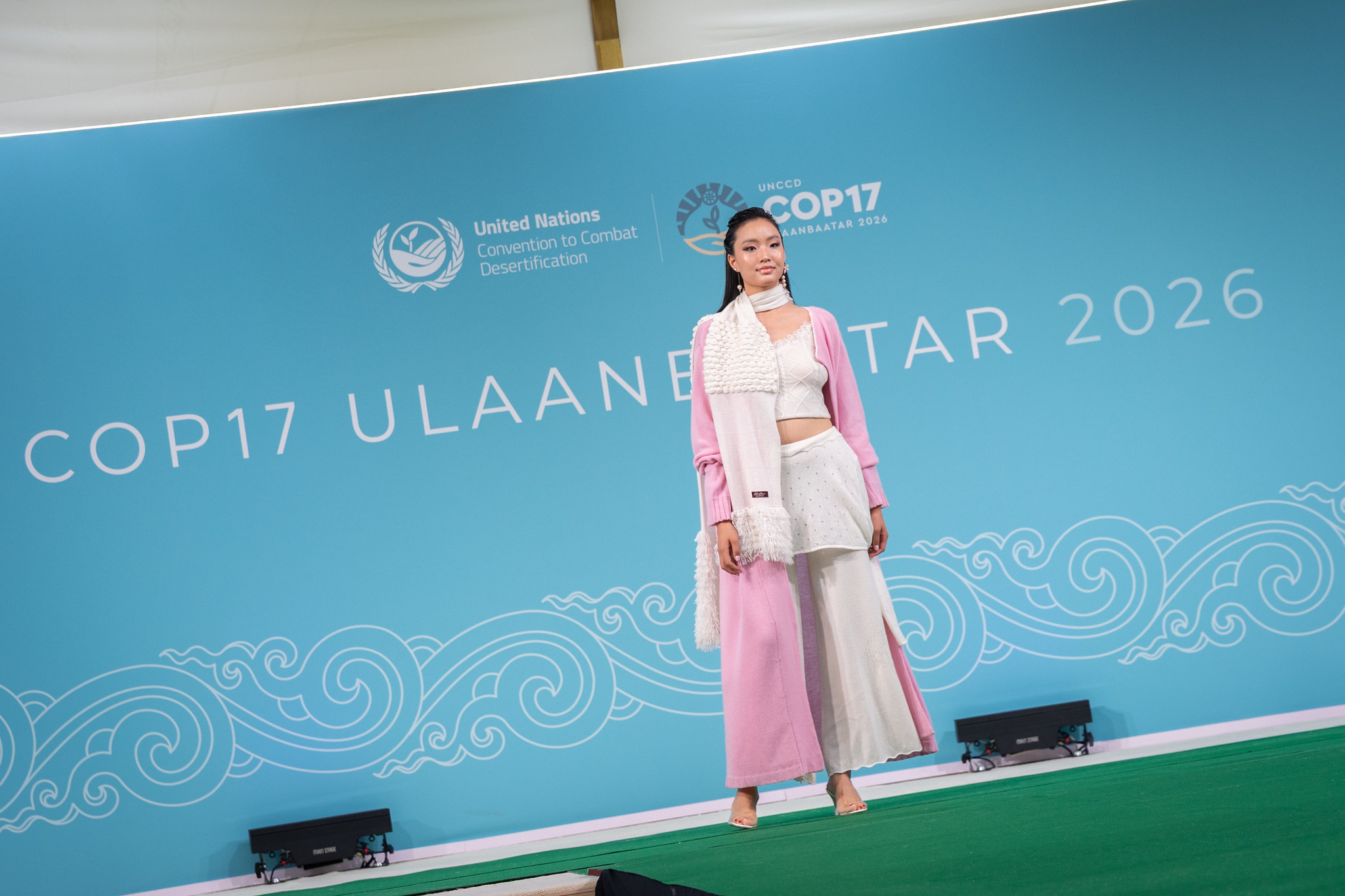
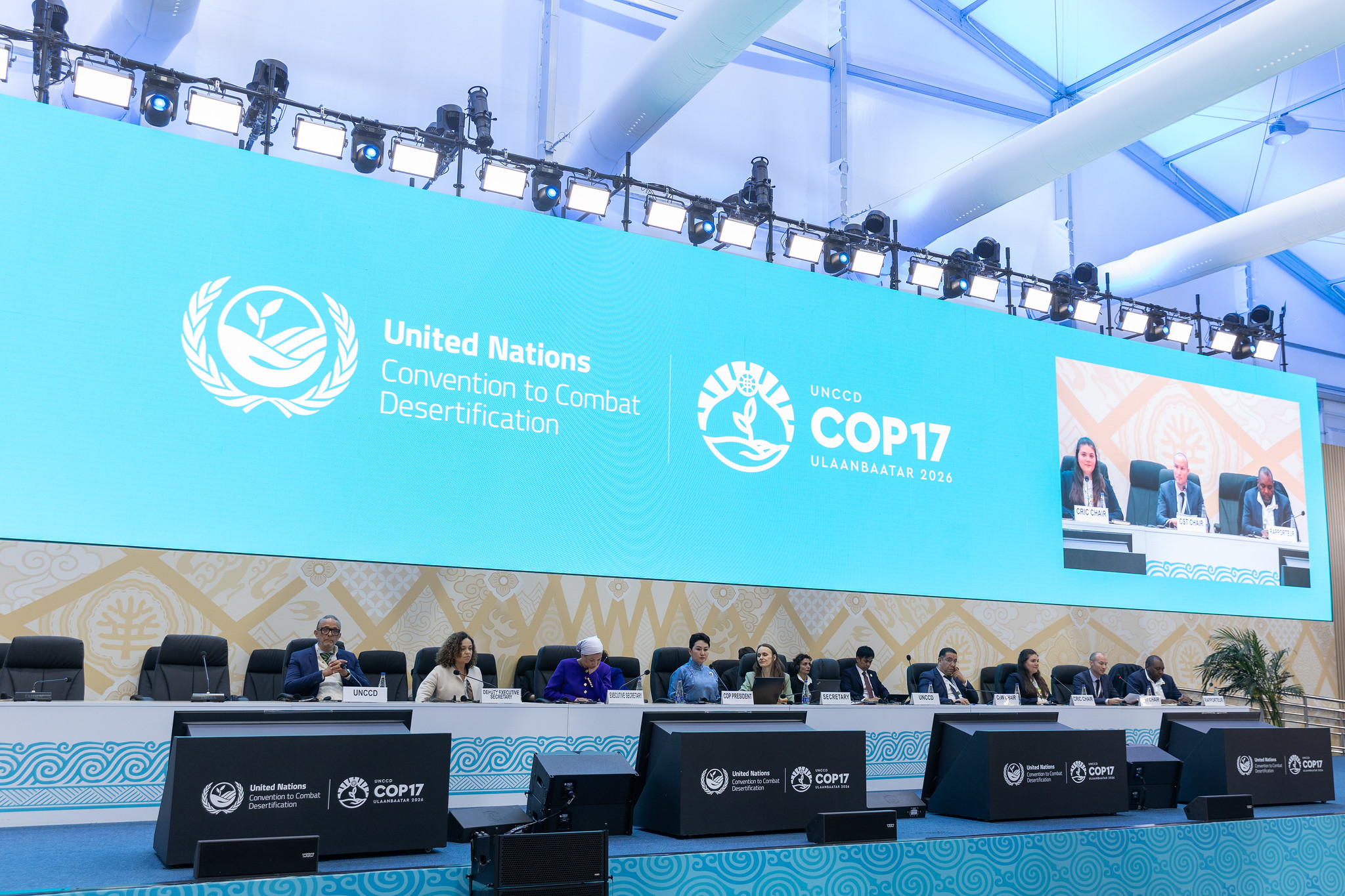
The UNCCD secretariat is launching the second round of the UNCCD Women Delegates Fund (WDF) training ahead of COP17 to support the participation and effective engagement of women delegates in the UNCCD process and negotiations. Building on the successful first WDF training implemented at CRIC23 in Panama City, the programme aims to strengthen women’s leadership, negotiation capacities and meaningful participation in multilateral environmental processes.UNCCD COP17 will convene in Ulaanbaatar from 17–28 August 2026 under the theme “Restoring Land, Restoring Hope.” As the global conference of the only legally binding international treaty addressing land degradation and drought, COP17 is expected to bring together governments, civil society, Indigenous Peoples, scientists, youth, women’s organizations and the private sector to advance solutions for land restoration, drought resilience and sustainable land management.The Women Delegates Fund contributes to the implementation of the UNCCD Gender Action Plan (GAP), including its Roadmap which aims to strengthen women’s participation and leadership across all levels of UNCCD decision-making and implementation. Through targeted support and capacity-building activities, the WDF seeks to enhance women delegates’ ability to engage effectively in negotiations and contribute meaningfully to the COP17 process.The initiative is open to women delegates from developing country Parties eligible under the UNCCD Special Trust Fund for Participation, with priority given to Least Developed Countries (LDCs). Governments from all Regional Implementation Annexes are invited to nominate one eligible woman delegate from their official COP17 delegation.Selected participants will benefit from:Participation support for COP17Capacity-building and negotiation support activitiesPre-COP briefings and networking opportunities with fellow women delegatesApplications must be submitted by National Focal Points through an official nomination letter, including the CV or short biography of the proposed delegate. Detailed information is available in the right-hand menu

The Government of Türkiye, under the umbrella of the G20 Global Land Initiative at the United Nations Convention to Combat Desertification (UNCCD), convened G20 members, current and incoming COP presidencies, partner agencies, relevant initiatives and UN entities for the Antalya Dialogue.

Ministers urge stronger action on land restoration, drought resilience and investment UNCCD Executive Secretary calls for increased financing to turn commitments into action Paris/Bonn, 25 April 2026 — Ministers at the Group of Seven (G7) Environment Ministerial meeting, held in Paris from 23 to 24 April, formally recognized desertification, land degradation and drought as systemic global challenges and security risk multipliers, committing to strengthen action on land restoration, drought resilience and sustainable land management. These interlinked crises are already affecting ecosystems, livelihoods and food and water security, with growing implications for economic stability and peace, particularly in fragile and conflict-affected regions. In their joint declaration, ministers stressed the strategic importance of addressing the land degradation–security nexus, highlighting how environmental pressures are intensifying competition over resources, contributing to displacement and heightening risks of instability. In the past six decades, over 40 per cent of intrastate conflicts have been linked to disputes over natural resources, particularly land and water, underscoring the growing security implications of land degradation and drought. Land degradation already affects a significant share of the world’s land—up to 40 per cent—and costs an estimated US$ 900 billion annually, with cascading impacts across food systems, water availability, economies and livelihoods. Welcoming the declaration, the Executive Secretary of the United Nations Convention to Combat Desertification (UNCCD), Yasmine Fouad, said this political recognition must now translate into action, highlighting the gap between commitments and implementation. “Land degradation and drought are no longer marginal issues. They are already shaping the daily lives of millions of people, affecting what they can grow, what they can eat and whether they can remain on their land,” Fouad said. “Restoring land is therefore an investment in peace, resilience and long-term stability. What is needed now is to match political attention with the financing and partnerships required to deliver results.” “We are not facing a knowledge gap. We are facing an implementation gap,” she added. “Countries have already identified their priorities and targets. The challenge now is real progress on the ground.” This urgency is underscored by the scale of the challenge. An estimated 3.2 billion people already live in areas affected by land degradation, placing increasing pressure on food systems, livelihoods and social stability. Ministers highlighted that investment in land restoration and drought resilience remains insufficient and fragmented, calling for stronger alignment of public and private finance and greater coordination across international financial institutions. In support of these commitments, the French Presidency announced initiatives such as the Nature & People Finance Alliance, aimed at scaling up public and private investment in nature and ecosystems. These efforts are anchored in the declaration, which reaffirms the central role of the UNCCD in addressing desertification, land degradation and drought globally, and identifies the 17th session of the Conference of the Parties (COP17) to the UNCCD, to be held in Mongolia in August 2026, as a key opportunity to deliver concrete outcomes. Looking ahead, Executive Secretary Fouad stressed that COP17 must now deliver tangible progress on land restoration and drought resilience. “COP17 must be the moment where commitments on land restoration and drought resilience translate into visible progress, particularly in the most vulnerable regions,” she said. “It is an opportunity to bring land to the center of global economic and security discussions and ensure it is treated as a strategic priority.” Notes to editors: The G7 Environment Ministers adopted a declaration recognizing desertification, land degradation and drought as systemic global challenges and security risk multipliers and reaffirming the central role of the UNCCD in advancing land restoration and drought resilience globally. More information, including the G7 declaration on desertification, land degradation and drought: https://www.ecologie.gouv.fr/en/press/g7-environment-ministers-meeting-progress-6-areas-boosting-collective-action For media enquiries UNCCD Press Office: press@unccd.int About UNCCD The United Nations Convention to Combat Desertification (UNCCD) is the global vision and voice for land. We unite governments, scientists, policymakers, private sector and communities around a shared vision and global action to restore and manage the world’s land for the sustainability of humanity and the planet. Much more than an international treaty signed by 197 Parties, UNCCD is a multilateral commitment to mitigating today’s impacts of land degradation and advancing tomorrow’s land stewardship to provide food, water, shelter and economic opportunity to all people in an equitable and inclusive manner.

Nairobi/Bonn, 21 April 2026 – Kenya will host this year’s Desertification and Drought Day two months from now, on 17 June, as droughts and land degradation intensify worldwide, increasing pressure on rangelands and communities that depend on them. Held under the theme “Rangelands: Recognize. Respect. Restore,” Desertification and Drought Day 2026 will focus on the role of rangelands in sustaining livelihoods, strengthening resilience to drought and supporting food systems.Activities will unfold across Kenya in the week leading up to 17 June, culminating at Vipingo Central Primary School in Kilifi County. The day will see participation from high-level officials, community leaders, youth, pastoralists and partners, beginning with a ceremonial tree planting and a tour of exhibitions showcasing land restoration initiatives, followed by cultural performances led by local schools and community groups.As host, Kenya is placing a spotlight on both the realities facing dryland communities and the solutions already taking shape on the ground. Rangelands cover around 80 per cent of the country and sustain millions of people, supporting livelihoods largely through pastoralism and livestock. Their productivity is increasingly affected by climate variability and land degradation.Kenya's Cabinet Secretary for Environment, Climate Change and Forestry Deborah M. Barasa said: “Kenya is honored to host the global Desertification and Drought Day 2026. This is an opportunity to bring the world’s attention to the realities facing dryland communities, but also to the solutions that are already taking shape on the ground. We look forward to welcoming partners from across the world to advance a shared agenda on land restoration and drought resilience.” United Nations Convention to Combat Desertification (UNCCD) Executive Secretary Yasmine Fouad added that the event reflects a broader shift in how land and drought are being addressed: “Rangelands are often treated as marginal land, but they are central to how economies, food systems and communities function under pressure. They are central to global stability yet in some places they are degrading faster than rainforests. This year we are shifting into practical solutions on the ground where rangelands would be at the heart of land, biodiversity and climatediscussion with the new angle of investment for the people and by the people". Why rangelands matterRangelands cover more than half of the Earth’s land surface and support around two billion people worldwide. They also provide almost 70 per cent of livestock feed globally, making them critical to food systems.Up to half of the world's rangelands are degraded or at risk, with direct consequences for food security, water availability and livelihoods.The economic impact is already substantial. Land degradation is costing the global economy close to USD 900 billion each year, while droughts are becoming more frequent and more costly, with losses of at least USD 300 billion annually.Yet viable pathways for action already exist. Investing in land restoration and drought resilience reduces long-term risk and brings strong returns, making it one of the most effective ways to support sustainable development.This year’s Desertification and Drought Day puts rangelands at the centre of efforts to strengthen resilience and sustain livelihoods, highlighting their role in scaling solutions on the ground.Taking place during the International Year of Rangelands and Pastoralists, the observance will also highlight the role of pastoralist communities and local knowledge in managing and restoring these landscapes.These priorities will continue at the seventeenth session of the Conference of the Parties (COP17), to be held in Ulaanbaatar from 17 to 28 August 2026, where governments and partners will advance efforts to address desertification, land degradation and drought. For more information, please contact: UNCCD Press Office press@unccd.int; https://www.unccd.int/events/desertification-drought-day/2026 About Desertification and Drought Day Officially declared by the United Nations General Assembly in 1994 (A/RES/49/115), Desertification and Drought Day, marked annually on 17 June, is a unique occasion to highlight practical solutions to combating desertification, land degradation and drought. Countries around the world are mobilizing to mark Desertification and Drought Day with an array of educational, cultural and sporting activities. About UNCCD The United Nations Convention to Combat Desertification (UNCCD) is the global vision and voice for land. We unite governments, scientists, policymakers, private sector and communities around a shared vision and global action to restore and manage the world’s land for the sustainability of humanity and the planet. Much more than an international treaty signed by 197 parties, UNCCD is a multilateral commitment to mitigating today’s impacts of land degradation and advancing tomorrow’s land stewardship in order to provide food, water, shelter and economic opportunity to all people in an equitable and inclusive manner.
