Stories
Latest
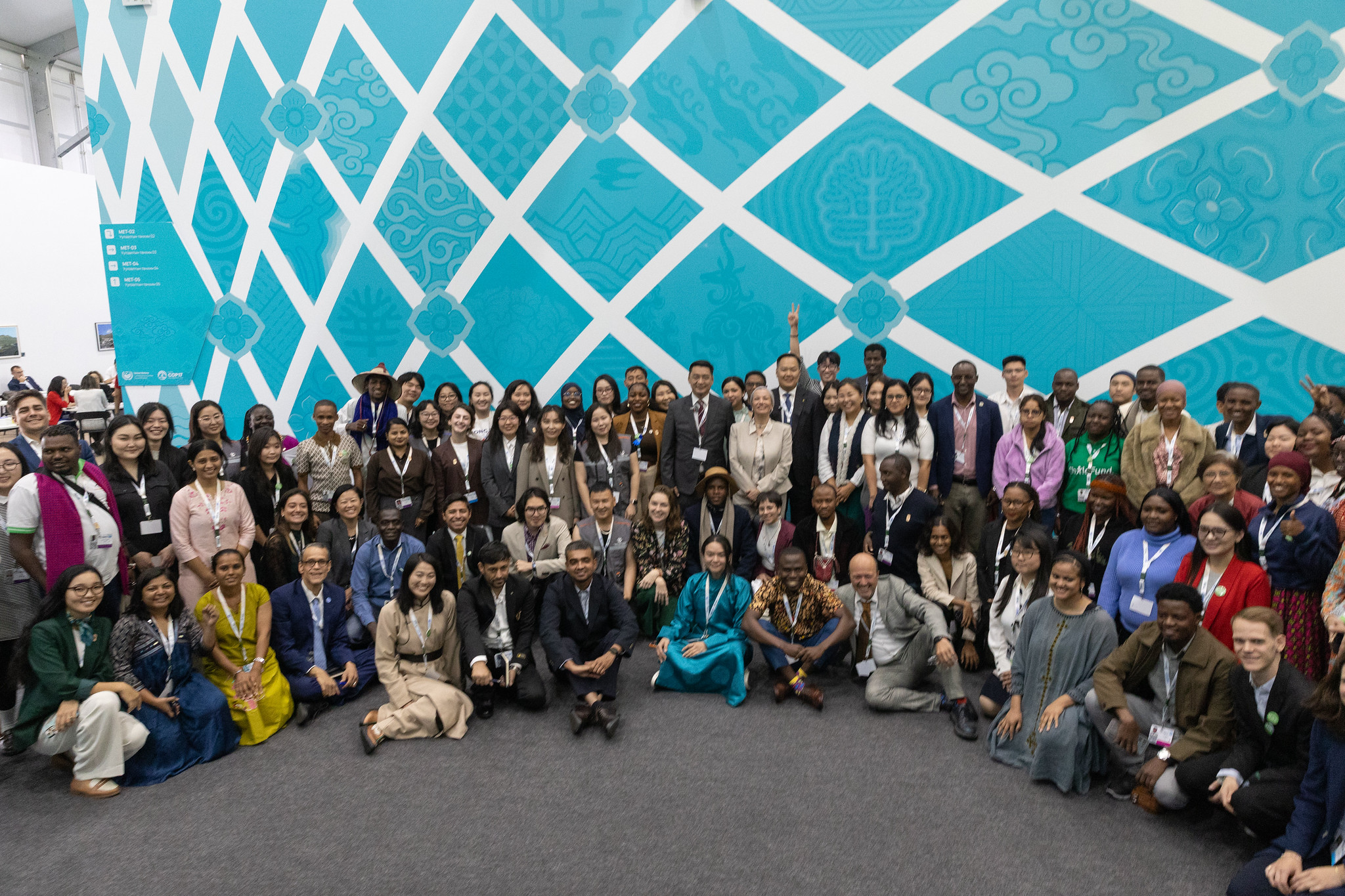
The United Nations Convention to Combat Desertification (UNCCD) is proud to celebrate a historic moment as its Executive Secretary, Dr. Yasmine Fouad, has been awarded the 2025 Nobel Sustainability Medal by the Nobel Sustainability Trust, one of the world’s most distinguished recognitions for leadership in sustainability.This honor reflects more than two decades of Dr. Fouad’s contributions to environmental governance, climate resilience, and community-centered development across Africa, the Arab region, and the world. It also underscores the growing international appreciation for the work of the UNCCD, as land restoration, drought resilience, and sustainable livelihoods become increasingly central to global environmental and development agendas.From the beginning of her career, Dr. Fouad has been driven by a simple but powerful belief: sustainability must begin with people. Her journey has taken her from scientific research in Egypt’s most vulnerable communities, to leading global negotiations, to shaping national environmental policy as Egypt’s Minister of Environment. Throughout this path, she has consistently emphasized that land is not only an ecological asset, but the foundation of human dignity, stability, and opportunity.Her leadership has always been shaped by her human story as much as her professional achievements. She often recalls a moment at the 2018 UN Biodiversity Conference when one of her sons walked into the negotiation hall, approached the podium, and placed his hands on the gavel as delegates applauded. It was, she says, a reminder that while leaders negotiate for agreements, children negotiate for their future. This intergenerational sense of responsibility continues to define her approach to sustainability and diplomacy.Today, the world faces unprecedented pressures on land and water. A quarter of the planet’s land is degraded, droughts are intensifying, and millions of people are losing the resources they depend on. Under Dr. Fouad’s leadership, UNCCD has strengthened its efforts to reverse these trends by elevating land restoration as a pathway to resilience, by advancing more inclusive approaches to drought preparedness, and by ensuring that the voices of women, youth, Indigenous Peoples, and rural communities shape global action.Her tenure has also ushered in renewed momentum toward key global milestones. The Tafa’ul Process, inspired by the spirit of constructive optimism, is guiding a fresh dialogue on drought resilience. The upcoming COP17 in Mongolia is expected to deepen commitments to land stewardship, particularly as the world observes the International Year of Rangelands and Pastoralists in 2026.As she accepted the award, Dr. Fouad dedicated it to the women who rebuild their communities in silence, to the young people who refuse to inherit despair, to the workers who transform scarcity into creativity, and to the families who choose hope every day. Her words capture the heart of the UNCCD’s mission: that sustainability is not purely technical work, but work grounded in humanity, in livelihoods, in cultural heritage, and in the right of every person to thrive on healthy, productive land.Her recognition arrives at a pivotal moment for global environmental action. As the world seeks solutions that are equitable, resilient, and just, Dr. Fouad’s leadership offers a model of diplomacy that is principled, compassionate, and grounded in real-world experience. Her story is a reminder that environmental stewardship is not solely about restoring ecosystems, but about restoring hope and opportunity for communities everywhere.UNCCD extends its warmest congratulations to Dr. Yasmine Fouad for this extraordinary achievement. The Convention looks forward to continuing its work under her guidance as it supports countries and communities in building a more resilient, humane, and sustainable future.

Jimmy Mariscal grew up in the hills of the Panama Canal Basin, where coffee bushes were simply part of daily life. His grandparents tended their caracolillo plants for home use, drying the cherries in the sun and brewing just enough for the family. Coffee was tradition, not livelihood ---a practice handed down quietly through generations. Today, Jimmy is one of thousands of small producers who have benefited from a long-term partnership between Basin communities and the Panama Canal Authority (ACP). Over two decades, this collaboration has helped farmers shift from traditional plots to climate-resilient agroforestry systems that protect biodiversity, stabilize soil, and conserve water resources. The Basin today is the result of decades of community-led stewardship and ACP support --a more resilient and sustainably managed landscape. This long-term partnership led Yasmine Fouad, Executive Secretary of the United Nations Convention to Combat Desertification (UNCCD), to the Panama Canal’s Miraflores Visitors Center on 3 December, during a field visit organized by ACP and the Ministry of Environment of Panama. There, she met Jimmy and the members of Cuencafé, a collective of small producers who grow and process high-quality, climate-resilient coffee. The visit provided a close look at how community-led stewardship supports rural livelihoods while protecting the freshwater system that sustains the Canal. Producers described how the transformation began. ACP understood early on that protecting the Canal’s water depended on the health of the surrounding land —and on the people who care for it. Without authority to enforce conservation, the institution built a model centered on support and incentives. Drawing inspiration from Costa Rica’s experience in rewarding farmers who protect forests, ACP adapted the idea to the Basin, offering producers practical support — from seedlings and technical advice to land titles and community councils that shape decisions. This steady, trust-based partnership strengthened over time. As Raúl Martínez, ACP’s Manager for Socio-Environmental Sustainability, explained: “When restoration helps families improve their livelihoods, it becomes a responsibility everyone shares — and the land stays protected.” Thanks to this incentive-based model - and especially to the introduction of coffee as a viable, high-value crop - farmers gained a reason to keep trees standing and invest in agroforestry systems that conserve soil and water. These choices ultimately made the Panama Canal Basin one of the least-deforested landscapes in the country today. Jimmy’s farm reflects that shift. Supported by community development activities and technical assistance, he introduced improved coffee varieties, planted shade trees, cared for his soil and refined drying and processing techniques. What once served only family needs has become a climate-smart system that supports both income generation and ecosystem health. As more families joined the effort, they formed Cuencafé, whose coffee now reaches Panama City markets. Their agroforestry systems help regulate water and buffer the Basin against intensifying drought — a contribution that matters in a country where 32 per cent of the land — 2.37 million hectares — is already degraded. During the visit, the Executive Secretary listened as producers described how shifting rainfall and rising temperatures have altered their work. She asked in detail about the challenges they now face - how rain has moved, how water scarcity affects planting, and how soils are changing. Farmers explained that years of land restoration -expanding forest cover, diversifying crops and protecting soils - have allowed them to retain water and maintain production, even as drought becomes more common. “What I see here is restoration that works because it begins with people,” said UNCCD Executive Secretary Yasmine Fouad. “When communities are trusted and supported as stewards of their land, they protect the soils that anchor the hillsides, the waters that feed the Canal, and the dignity of the families who rely on both. The impact extends far beyond individual farms — it strengthens the entire Basin and the generations that will inherit it.” Today, that transformation is visible across the basin. A practice once kept alive for household consumption now helps conserve water, sustain rural economies, and protect one of the most strategic landscapes in the country. What began as small plots of shade-grown coffee has grown into a model of community-driven climate resilience. As Panama hosts UNCCD CRIC23 — the Committee for the Review of the Implementation of the Convention, a moment when countries come together to reflect on how they care for their land — the Basin shows how restoration grounded in a long-term partnership, trust, and community leadership endures, restoring far more than land alone.

Бонн / Панама-Сити, 3 декабря 2025 года – Женщины по всему миру уже приспосабливаются к меняющемуся ландшафту. Они перестраивают посевные циклы, ходят всё дальше за водой, защищают урожай от засухи, ухаживают за пожилыми и детьми во время климатических потрясений и поддерживают продовольственные системы, опирающиеся на всё более хрупкие почвы. Их повседневная работа отражает глобальную реальность: сегодня 40 процентов суши планеты подвержено деградации, а засухи случаются на 30 процентов чаще, чем двадцать лет назад.Именно эти истории и опыт легли в основу обсуждений на Комитете по рассмотрению осуществления Конвенции (КРОК), ежегодном совещании, где страны оценивают прогресс по выполнению Конвенции ООН по борьбе с опустыниванием (КБО ООН). В рамках этого процесса Гендерный форум, созданный на пятнадцатой сессии Конференции Сторон (КС-15) в Абиджане и впервые включённый в официальную повестку в этом году, превратился в одну из самых влиятельных площадок для формирования земельной политики, учитывающей гендерное измерение.На КРОК-23 в Панаме форум сосредоточил внимание на двух неотложных темах: лидерстве и взглядах женщин из числа коренных народов в устойчивом управлении землями, а также гендерных последствиях пыльных и песчаных бурь – экологической угрозы, усиливающейся из-за деградированных почв, пересохших водоемов и меняющегося климата.Земля, знания и преемственностьВыступающие из Панамы, Арктики, Африки, Латинской Америки и Монголии подчеркнули, что связь женщин с землёй выходит далеко за рамки их повседневных забот. Она формирует культурную преемственность, продовольственную безопасность и устойчивость местных сообществ. Тем не менее знания женщин редко становятся ориентиром при выработке национальных стратегий по сохранению почв или улучшению устойчивости к засухам.Вонаанская национальная Cтарейшина Панамы Аулина Исмаре Опуа рассказала о прямых последствиях изменений окружающей среды для жизни общин. «Женщины в наших общинах ежедневно сталкиваются с изменением почв, лесов и водных ресурсов. Мы принимаем на себя основные последствия, но нас недостаточно привлекают к разработке законодательства. Этот диссонанс во вред всем», – отметила она. Ограниченный доступ к земле, образованию и финансированию, подчеркнула Аулина Исмаре Опуа, ставит под угрозу вклад коренных женщин в национальные стратегии. «Когда женщины исцеляют землю, земля исцеляет мир», – добавила она, призвав включать коренных женщин в национальные и международные повестки.Координатор Ассоциации коренных женщин и народов Чада Хинду Умару Ибрагим подчеркнула, что понимание коренными женщинами изменений окружающей среды основано на поколениях наблюдений и практики. «Каждая карта наших земель хранит память наших матерей и бабушек. У женщин из числа коренных народов за плечами многие поколения экологических знаний, но слишком часто эта мудрость остаётся невидимой. По мере того, как изменяется климат и ускоряется деградация земель, наши знания перестают быть лишь традицией прошлого – это инструмент устойчивости в настоящем и вопрос выживания в будущем, позволяющий защищать и наши общины, и Землю, которую мы разделяем», – отметила она.Эти заявления выступления созвучны глобальным данным: коренные народы являются хранителями примерно четверти земель мира, значительная часть которых отличается высоким уровнем биоразнообразия. Женщины играют ключевую роль в природоохранном управлении, однако остаются недопредставленными в министерствах окружающей среды, органах управления земельными ресурсами и многосторонних переговорных процессах.На Гендерном форуме этот опыт напрямую вошёл в дискуссию по вопросам законодательной политики – от защиты прав на землю в условиях растущего давления до объединения традиционных знаний с научными подходами и восстановления ландшафтов, деградированных в результате эрозии, засух или обезлесения. Выступающие из Монголии рассказали о повседневной реальности пастбищных животноводов из числа женщин: потере поголовья из-за экстремальных климатических явлений, отсутствии гарантированных прав на землю и доступа к кредитам, что ограничивает их экономическую самостоятельность. Слова одной из них прозвучали особенно значительно: «Почва – это жизнь, а наша жизнь – это почва».Ожидается, что эти перспективы лягут в основу рекомендаций по формированию законодательной политики в области земельных ресурсов, более полноценно учитывающей потребности и права женщин.Растущая угроза с гендерным измерениемПо мере перехода обсуждений к климатическим рискам всё отчётливее проявлялась ещё одна реальность: неравномерное воздействие пыльных и песчаных бурь.Пыльные и песчаные бури усиливаются во многих регионах – от Северной Африки и Ближнего Востока до Азии, Океании и отдельных частей Европы. Ежегодно такие бури поднимают в атмосферу почти два миллиарда тонн пыли, и как минимум четверть подобных инцидентов усугубляется из-за неустойчивого землепользования.Последствия пыльных и песчаных бурь затрагивают самые разные сферы – сельское хозяйство, водную безопасность, транспорт, здоровье – но распределяются неравномерно. В сельских и малообеспеченных районах женщины часто дольше находятся на открытом воздухе, работая в полях, занимаясь сбором воды или продажей продукции на рынках. В домах пыль оседает в местах приготовления пищи и общих жилых пространствах, усиливая риски для дыхательной системы. А когда из-за бурь закрываются школы, рынки или срывается уборка урожая, дополнительная нагрузка по уходу за семьёй и потеря дохода в первую очередь ложатся на женщин.Участники Гендерного форума раз за разом указывали на один ключевой пробел: нехватку данных, разделенных по гендеру. Без них системы раннего оповещения и планы готовности просто не видят специфических уязвимостей женщин и стратегий, которые они уже используют. Усиление такой гендерно-разделённой статистики ожидается среди рекомендаций, которые будут сформированы по итогам КРОК-23.Сдвиг в представительствеЭтот год также стал важным шагом вперёд с точки зрения участия женщин в процессах Конвенции. Благодаря Фонду женщин-делегатов, поддерживаемому глобальной программой международного сотрудничества Германии «Расширение прав и возможностей женщин для устойчивых сельских территорий» по поручению Федерального министерства экономического сотрудничества и развития Германии, женщины из стран, пострадавших от засухи, и развивающихся государств смогли полноценно участвовать в заседаниях КРОК-23 и пройти целевую подготовку по ведению переговоров в преддверии КС-17.Данные КБО ООН показывают, насколько масштабной остаётся задача: женщины составляли лишь 27 процентов делегатов на КС-15 и 33 процента на последней сессии КРОК. Участницы программы для женщин-делегатов предоставили экспертизу в области гидрологии, лесного хозяйства, агрономии, экологической политики и развития общин, обогатив как Гендерный форум, так и общий ход дискуссий.«Инвестиции в женщин-участниц переговоро – это инвестиции в более инклюзивные, эффективные и долгосрочные решения по использованию земель. Их лидерство укрепляет не только переговорные площадки, но и те решения, которые затем реализуются на местах», – отметил руководитель программы Андреас Ланге.К КС-17: законодательная политика, основанная на реальном опытеПо мере подготовки стран к КС-17 в Монголии обсуждения на КРОК-23 подводят к очевидному выводу: бороться с деградацией земель и засухой невозможно, игнорируя взгляд женщин, которые каждый день управляют земельными ресурсами. Знания женщин – научные, традиционные и основанные на личном опыте – имеют решающее значение для восстановления пастбищных угодий, улучшения состояния почв, подготовки к пыльным и песчаным бурям и сохранения культурной преемственности в условиях экологического стресса. Выступающие также призвали расширять поддержку образования девочек из числа коренных народов, доступа женщин к технологиям и кредитам, а также признавать невидимый труд женщин – в быту, сельском хозяйстве и ремёслах – который является неотъемлемой частью системы бережного отношения к земле от поколения к поколению.Гендерный форум сформулировал простую, но значимую мысль: законодательная политика в области защиты земельных ресурсов должна отражать опыт тех, кто сильнее всего зависит от них. Иначе она рискует остаться ответом на кризис лишь на бумаге, а не в реальной жизни.

As negotiators meet in Panama City for the 23rd session of the UNCCD Committee for the Review of the Implementation of the Convention (CRIC 23), they gather in a country that treats climate change, biodiversity loss and land degradation as interlinked challenges. The new Panama’s Nature Pledge is set to bring the next-generation climate promise, updated biodiversity strategy and Land Degradation Neutrality (LDN) strategy into a single national framework, also covering oceans and plastics. It shows how one country can align all three Rio Conventions and unlock finance to accelerate action. That same logic has been at the heart of the LDN Target Setting Programme (LDN TSP) for almost a decade. Since 2016, the programme has helped 131 countries commit to voluntary LDN targets, with 124 reporting their baselines and targets through the UNCCD, and collectively aiming to restore close to 600 million hectares of degraded lands. Restoration work done in the field by a volunteer groupA global shift from pledges to plans LDN stems from a simple idea: the world’s productive land base should at least remain stable and grow where possible. In less than ten years, the LDN TSP has given governments a common language and toolkit to map where degradation is happening, agree on measurable, time bound targets and identify measures that fit national realities. LDN TSP 2.0: More ambitious, more bankable If the first eight years of LDN TSP were about enabling countries to set and validate LDN targets based on best- available data, the second phase of this programme (LDN TSP 2.0) is about making those targets sharper and more actionable. Eighteen countries from every region are refining their voluntary commitments to achieve land degradation neutrality so they are more specific, time-bound, quantitative, spatially explicit, gender responsive and tied to land-use planning following a COP15 mandate. These priorities were clearly reflected in a recent global knowledge exchange webinar on LDN TSP 2.0, where 100 representatives of countries and partner agencies reviewed progress to date ahead of CRIC23. Integrated land use planning inception workshop May 2025 South Africa Photo : © Dr. Ernest Daemane, South African National ParksIn Sri Lanka, for example, updated LDN work is being used to align land-use decisions with national climate and biodiversity strategies and to prioritize the most vulnerable landscapes for action. In Central Asia, countries are using LDN targets to connect land restoration with drought resilience and more sustainable management of rangelands and drylands. In Argentina, new LDN targets seek to improve the sustainable management of their wetlands. This second phase also pushes governments to think like investors, by helping them identify priority landscapes, estimate costs and benefits and structure projects and programmes that can attract climate and development finance. Negotiations training for national focal points and a write-shop on development of large-scale investment programme for Pacific SIDS, Seoul, Korea 2023Why this matters for everyone, not just negotiators Up to 40 per cent of the planet’s land is already degraded, affecting billions of people. When land is degraded, harvests decline, food becomes more expensive, rural livelihoods weaken and people are forced to move. LDN helps reverse this pattern by restoring land, strengthening ecosystems and generating economic benefits that far outweigh the initial investments. The Rio synergies dividend Panama’s reference to its Nature Pledge during CRIC23 reinforces a clear message: climate, biodiversity and land are not three separate problems. Land is the common thread that allows us to materialize synergies. Country stories on the new Rio Conventions platform show how land restoration is becoming a practical link between climate, biodiversity and land agendas. Examples range from national work in Sri Lanka to regional initiatives in Central Asia, where managing land degradation is central to climate resilience and food security. In Uzbekistan, hectares of sturdy saxaul shrubs are planted as the first line of defense against desertification and sand and dust storms originating from the dried-up Aral seabedNigeria is updating its land targets in parallel with its National Net Zero Nature Positive plan (NZNP) ensuring that both processes reinforce each other. By aligning these efforts, countries can stretch limited public finance further and create stronger cases for private investment. From targets to transformative projects Ambitious targets need equally ambitious implementation plans. That is where Land Degradation Neutrality Transformative Projects and Programmes (LDN TPPs) come in. These are large-scale, country driven programmes that bundle individual projects into coherent packages aligned with national LDN priorities. Under the second phase of the programme, participating countries are defining TPPs through the Global Mechanism’s Partnership for Project Preparation to turn revised targets into concrete funding proposals. In Benin and the Central African Republic, work supported by the Sahara and Sahel Observatory is helping to define priority landscapes, integrate gender analysis and structure programmes for submission to climate and development funds. In Argentina, two strategic projects are being developed to strengthen integrated land-use planning and create synergies between the country’s updated land targets and its wetlands conservation goals under RAMSAR. At CRIC23 in Panama, the new phase of the LDN work is moving from technical workshops into the political spotlight. The Global Mechanism is presenting progress on revised targets, new tools and emerging project pipelines in plenary, while land degradation neutrality features throughout the week’s programme, from interactive discussions on resource mobilization to country-led side events. Landscape view of lush, green hills and farmland in Jimma, Ethiopia, highlighting the positive impact of sustainable agriculture and land restorationTracking progress – and the remaining gap Transparent data is essential to convince citizens, partners and investors that LDN commitments are a sound investment. Key UNCCD knowledge tools – notably the LDN targets tracking tool and the UNCCD Data Dashboard – allow users to see how much land is degrading or being restored and to follow progress towards voluntary LDN targets. New tools are also being developed to support the integration of LDN as a guiding principle for smarter and better-informed land use planning decisions that avoid future land degradation. “A decade of LDN target setting has proved that restoring land is not a luxury, it is basic infrastructure for our economies,” says Louise Baker, Managing Director of the UNCCD Global Mechanism. “If we invest now in LDN TSP 2.0, we are not just planting trees, we are stabilizing food systems, protecting biodiversity and creating new jobs where they are needed most.” In Panama this integrated vision becomes the highlight of the side event “Restoring Land, Building Sustainable Futures: Success Stories from the Changwon Initiative,” hosted by the Republic of Korea. It gives participants a front-row insight into how the Changwon Initiative has supported the development of the LDN Target Setting Programme and its second phase, strengthened science–policy linkages through the UNCCD Science-Policy Interface and invested in capacity building that helps countries move from pilot projects to nationwide implementation. Success stories – from local pilot sites to national-scale programmes – demonstrate how long-term, strategic donor engagement is enabling countries to translate land targets into concrete action on the ground. As Barron Orr, Chief Scientist of the UNCCD, put it: “Land Degradation Neutrality is about doing the right things in the right places at the right scale. The scientific guidance produced by the UNCCD Science-Policy Interface has helped countries pursue all of their economic, social and environmental objectives in an inclusive and integrated way — so that biodiversity is protected where it is highest, food is grown where soils are most productive and new development does not harm either. This approach places a strong foundation of healthy land underneath global efforts to achieve all the SDGs.” Amina, leader of a women’s collective in Jimma, Ethiopia, proudly standing in front of her community members engaged in agroforestry and land restoration activitiesWith the right support from development banks, climate and biodiversity funds, impact investors and philanthropy, LDN TSP 2.0 can enable countries to turn degraded hectares into thriving landscapes and resilient communities. As countries gear up for next year’s UNCCD COP17 that will mark ten years of this global effort, the focus shifts from targets agreed to real results delivered on the ground.

How Communities of Learning and Practice are speeding action in the face of a new drought era

This week at COP30 in Belém, Brazil – birthplace of the three Rio Conventions – land, climate and nature took center stage as governments and partners looked at how action on all three can move forward together for stronger impact and lasting results. A lineup of high-level events on ecosystem restoration, climate resilience and sustainable agriculture confirmed UNCCD as a key player in advancing Rio synergies, placing land at the cornerstone of humanity’s response to the triple planetary crisis. Synergies in the spotlight Participants stressed that climate change, biodiversity loss and land degradation are not separate challenges, but different symptoms of a single planetary crisis that needs to be tackled in an integrated way. By linking their mandates, the Rio Conventions aim to turn shared challenges into new opportunities and deliver solutions that benefit people, economies and ecosystems alike. UN Climate Change Executive Secretary Simon Stiell emphasized this shared direction, noting: “Climate change, biodiversity loss and land degradation are one interconnected crisis – and integrated action delivers the fastest, most durable results. New national climate and adaptation plans reflect this. They include biodiversity, ecosystems and nature-based solutions. Throughout this COP, the message has been clear: the Paris Agreement is working – but we must make it work faster, fairer, and at far greater scale.” UNCCD Deputy Executive Secretary Andrea Meza, CBD Executive Secretary Astrid Schomaker and UNFCCC Executive Secretary Simon Stiell at the COP30 venueThe Rio Conventions Presidencies, Parties and partners underlined how more coherent land and sea use planning, better aligned finance and shared monitoring systems can reduce duplication and increase impact on the ground. A joint statement by the Rio Convention Presidencies issued at Belém marks a key moment in aligning Rio Presidency initiatives on land restoration, sustainable resource management and ecosystem resilience. Land at the center At the high-level roundtable “Bridging Action Agenda from COP16 to COP30: Strengthening synergies across land, climate and nature”, the UNCCD COP16 and COP17 Presidencies warned that efforts to address climate change and biodiversity loss will fall short if land continues to be treated in isolation. The UNCCD COP16 Presidency highlighted the Riyadh Action Agenda as a practical attempt to bring land, the ocean and the atmosphere together in national planning and finance. Looking ahead to UNCCD COP17, Mongolia underscored that pathways to tackle climate change, biodiversity loss and land degradation are indivisible and must be embedded in national policies and plans. From Rio to Belém At the joint Rio Conventions’ side event “From Rio to Belém: Synergistic action for ecosystem restoration and climate resilience”, COP Presidencies, government, private sector and civil society leaders illustrated how this agenda is being translated into practice. UNCCD Deputy Executive Secretary Andrea Meza stressed that this is not about choosing between individual priorities, noting: “We are talking about a new development pathway that could operate within the planetary boundaries, and generating a model that can guarantee that we live in a prosperous society while at the same time protecting our most valuable asset — the living Earth.” UNCCD Deputy Executive Secretary Andrea MezaReflecting on the outcomes of COP30, CBD Executive Secretary Astrid Schomaker highlighted the joint resolve of the three conventions, noting: “At COP30 the Presidencies and Secretariats of the Rio Conventions joined forces to promote integrated action on climate, biodiversity and land. Synergies are the only way forward. The world needs to take bold steps for progress across the Rio Conventions’ interlinked objectives.” Finance for farmland Finance for land-based action was another prominent theme. COP30 saw the ministerial launch of the Resilient Agriculture Investment for net-Zero land degradation (RAIZ) accelerator, a Brazil-led initiative to mobilize public and private finance for restoring degraded farmland at scale. With over one billion hectares of farmland degraded worldwide, speakers stressed the urgency of investing in soil health, productivity and resilience. RAIZ offers a pathway to align climate action, food security and biodiversity protection, with countries in the lead and finance flowing to where it matters most. Building on Brazil’s experience in blending public and private capital for restoration through initiatives such as Green Way and EcoInvest, the accelerator will support governments to map degraded landscapes, identify investable solutions and design co-investment vehicles that de risk private finance and lower the cost of capital for farmers and rural communities. Hindou Oumaru Ibrahim, President and Coordinator, Association of Indigenous Women and Peoples of ChadSynergies from the ground up Peer learning on concrete national approaches to linking NDC targets on land degradation and desertification was the focus of an event organized by Türkiye in the margins of COP30. Brazil shared a three- pillar approach of aligning planning tools across sectors, mobilizing integrated financing and advancing nature based solutions with strong community involvement, while Panama shared plans to streamline work under multiple conventions through joint reporting mechanisms and its Nature Pledge – a roadmap that unifies national efforts to tackle land degradation, biodiversity loss and climate change. Azerbaijan emphasized science based, integrated work on water management, forest restoration and land rehabilitation, Colombia showed how outcomes from the Kunming–Montreal Global Biodiversity Framework are being implemented through community-driven projects that advance biodiversity, climate resilience and sustainable land use together and Mongolia presented priorities on desertification, land degradation, water–land interactions and nature based infrastructural solutions. Dialogues at Belém also brought to the forefront the importance of human rights-based approaches, Indigenous Peoples’ leadership and inclusive engagement with vulnerable communities, civil society and the private sector in maximizing synergies among multilateral environmental agreements. H.E .Osama Faqeeha, Deputy Minister of the Environment, Water and Agriculture of the Kingdom of Saudi Arabia, COP16 PresidencyNext stops on the journey The COP30 outcomes help anchor land at the heart of the Rio Conventions’ action agendas. The next stop will be UNCCD CRIC23 in Panama this December, where Parties will review progress on land-based solutions ahead of UNCCD COP17 in Mongolia in 2026. 2026 will be the next “Triple COP” year, and an opportunity for all three Rio conventions to align national commitments, showcase joint solutions and build the political momentum needed to turn Rio synergies into coordinated action on the ground. We invite you to visit rioconventions.org to learn more about current initiatives, integrated approaches and case studies on land, climate and nature synergies.
