News & stories

Latest news & stories
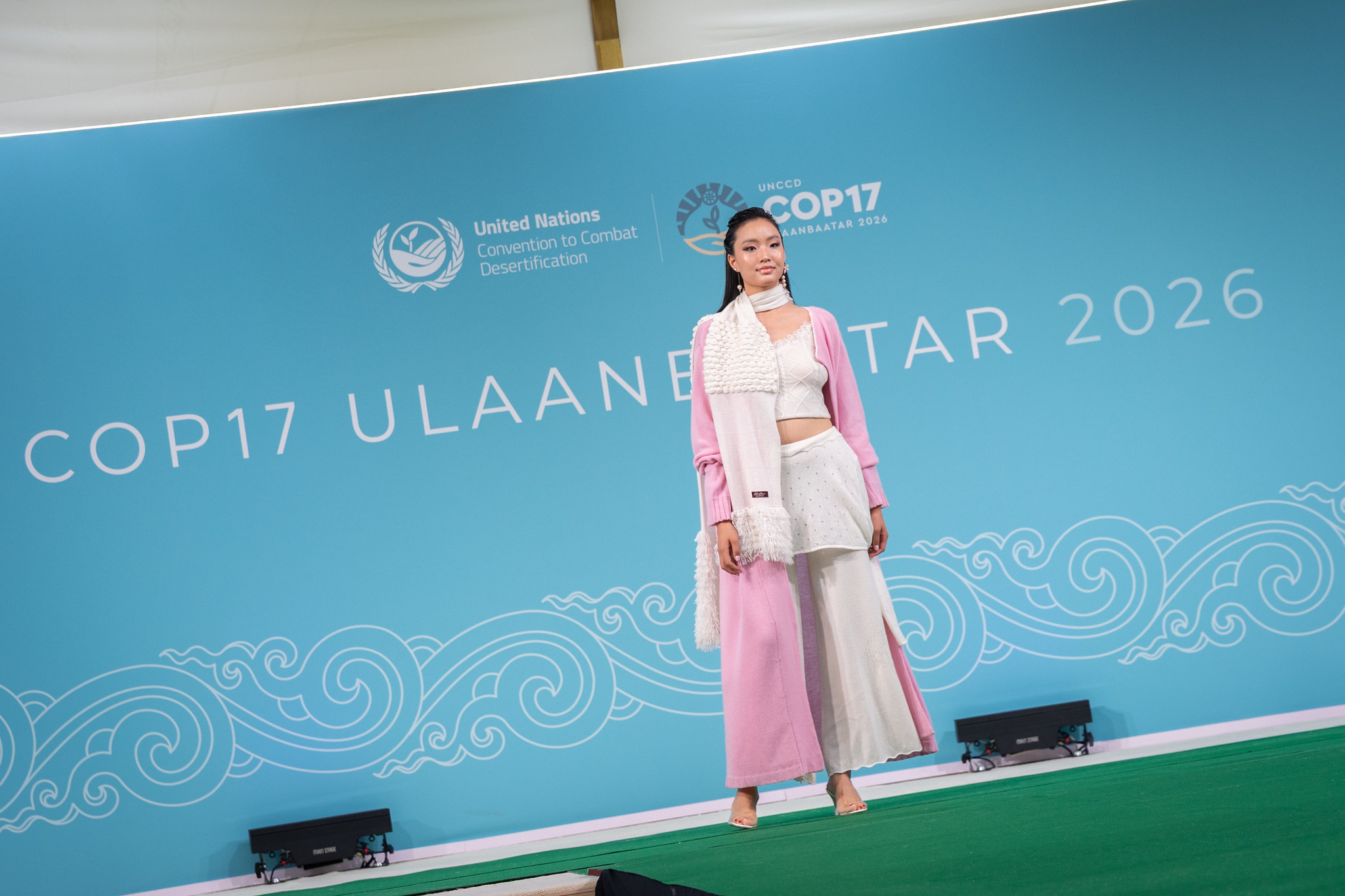
Cashmere can look weightless on a runway. Whether its footprint is equally light depends on the health of the rangelands that produce it. In Mongolia, around 190,000 herder households and 27 million goats are behind the fabled fiber that accounts for roughly 40 percent of the world’s raw cashmere. Its quality begins long before spinning or knitting, on vast rangelands that sustain animals and livelihoods but are also under growing pressure. Rangelands cover 54 per cent of the Earth’s terrestrial surface, and in Mongolia they make up more than 70 per cent of the country’s territory. Yet 81 per cent of Mongolia’s land is affected by degradation. This made Ulaanbaatar a fitting location for a new edition of Fashion4Land, which returned to UNCCD COP17 after its debut in Riyadh in 2024. What would it take to change the way clothes are designed, sourced, worn and regulated while retaining the talent, ingenuity and beauty that make people care about fashion in the first place? The forum brought together designers and manufacturers, global luxury brands and Mongolian producers, pastoralist advocates and policymakers around a simple premise: fashion begins on land. When discussing sustainable fashion, UNCCD Goodwill Ambassador Inna Modja sees an opportunity rather than a constraint. “Fashion has a unique ability to inspire, connect people and translate complex sustainability challenges into stories that everyone can understand,” she said. One such story is already famous. For Team Mongolia’s Milano Cortina 2026 Olympic wardrobe, GOYOL Cashmere’s Creative Director Munkhbayasgalan “Baysa” Delgerbat revisited clothing worn during the Mongol Empire, retaining details shaped by life on the steppe: a raised collar against the wind, an overlapping front for warmth and side slits designed for movement. “People don’t fall in love with a product because it is sustainable,” Baysa says. “People fall in love with story, with beauty, with craftsmanship.” A garment carrying cultural and material value, she argued, is more likely to be cared for, kept and eventually passed on. For Nan Hu of Nan Knits, the color of the fiber itself offers an exciting design opportunity. The brand leans toward the subtle shades of yak fiber — soft browns, dusky grays and creamy whites that become an irresistible palette rather than something to overwhelm with dye. For a designer known for experimental contemporary knitwear, the appeal lies in taking a well-known material somewhere unexpected. Sustainability, he argues, need not limit creativity – it can jump-start it. At LVMH, the raw material can mean something the industry has already made but was unable to sell. Alexandre Capelli described how designer Kevin Germanier gathers unsold products from the group’s boutiques, dismantles them and turns the material into new designs in which the initial object might be impossible to recognize. Other experiments with young designers involve regenerative flax, food-industry waste, discarded hotel linens and innovative materials for dyeing. The idea is not to make sustainability visible as an aesthetic. It is to make it part of how design happens. UNCCD Goodwill Ambassador Ricky Kej took that logic a step further. His #ReWear4Earth campaign began with a minor red-carpet heresy: wearing the same clothes to a next high-visibility event. Speaking at the COP17 Fashion4Land event, he challenged the disposable expectations encouraged by fast fashion and social media. “The Earth will not remember what we wore to our last party, but it will certainly remember how we treated it,” Kej said. “We do not need a different outfit for each Instagram photo.” But does a beautifully made garment worn for decades necessarily mean it is land-positive? Fashion4Land resists the convenient idea that “natural” automatically means sustainable. Cotton can place enormous demands on land and water. Wool and cashmere can contribute to overgrazing when production is poorly managed. Synthetic fibers depend heavily on fossil fuels and can shed microplastics. The question is: what is the impact of wearable beauty on the planet’s finite resources? For Battsetseg Batmunkh, Mongolia’s Minister of Foreign Affairs and COP17 President, that question reflects directly on livelihoods. New environmental requirements, she argued, should help producers improve rather than price herders and smaller businesses out of sustainable supply chains. “The future of sustainable fashion should be measured not only by the value of its products but also by how effectively it protects the land, ecosystem and communities upon which production depends,” she said. However, the more than 400 standards and certifications across textiles and fashion do not in themselves ensure that the industry’s environmental impacts are addressed. Mongolian producer Gantakhi Gantsetseg warned that repeated audits and certification fees can consume money without a cent reaching the rangelands they are intended to protect. The challenge is not weaker standards but smarter ones — compatible systems that reward measurable improvement in practice. UNCCD Executive Secretary Yasmine Fouad pointed to Mongolia’s ability to bring tradition into a modern industry while remaining “grounded at the land.” Fashion4Land’s next chapter, she said, should bring greater policy coherence, stronger partnerships and greater responsibility for “the people and the land together.” That evening, the COP17 Action Dome — a larger-than-life Mongolian ger — transformed into a runway. Each brand brought its own signature style to the catwalk: NOLUR spoke the language of quiet luxury in Mongolian cashmere; OYUNA wove nomadic heritage into contemporary design; Nan Knits took knitwear into new experimental territories; BODIOS brought the warmth, softness and comfort of Mongolian yak to the runway; TANGOLA traced yak fiber from high-altitude grasslands to the final stitch; GOYOL showcased the craftsmanship of a family-run Mongolian fashion house; GOBI celebrated cashmere’s natural colors and the traditional art of hand-combing; and Khanbogd turned Mongolian raw cashmere into finished fashion for the world, keeping the craftsmanship at home. Next time we are in the market for new clothes, let’s not forget: a stylish garment does not begin at the tailor’s table. Truly sustainable fashion helps keep the land healthy long after the runway season is over – and that is a pattern that never goes out of style. Photos : © UNCCD/Kiara Worth

At UNCCD COP17 in Ulaanbaatar, the Committee on Science and Technology examined how scientific evidence can help countries monitor land degradation, plan for drought and make informed choices about land management.

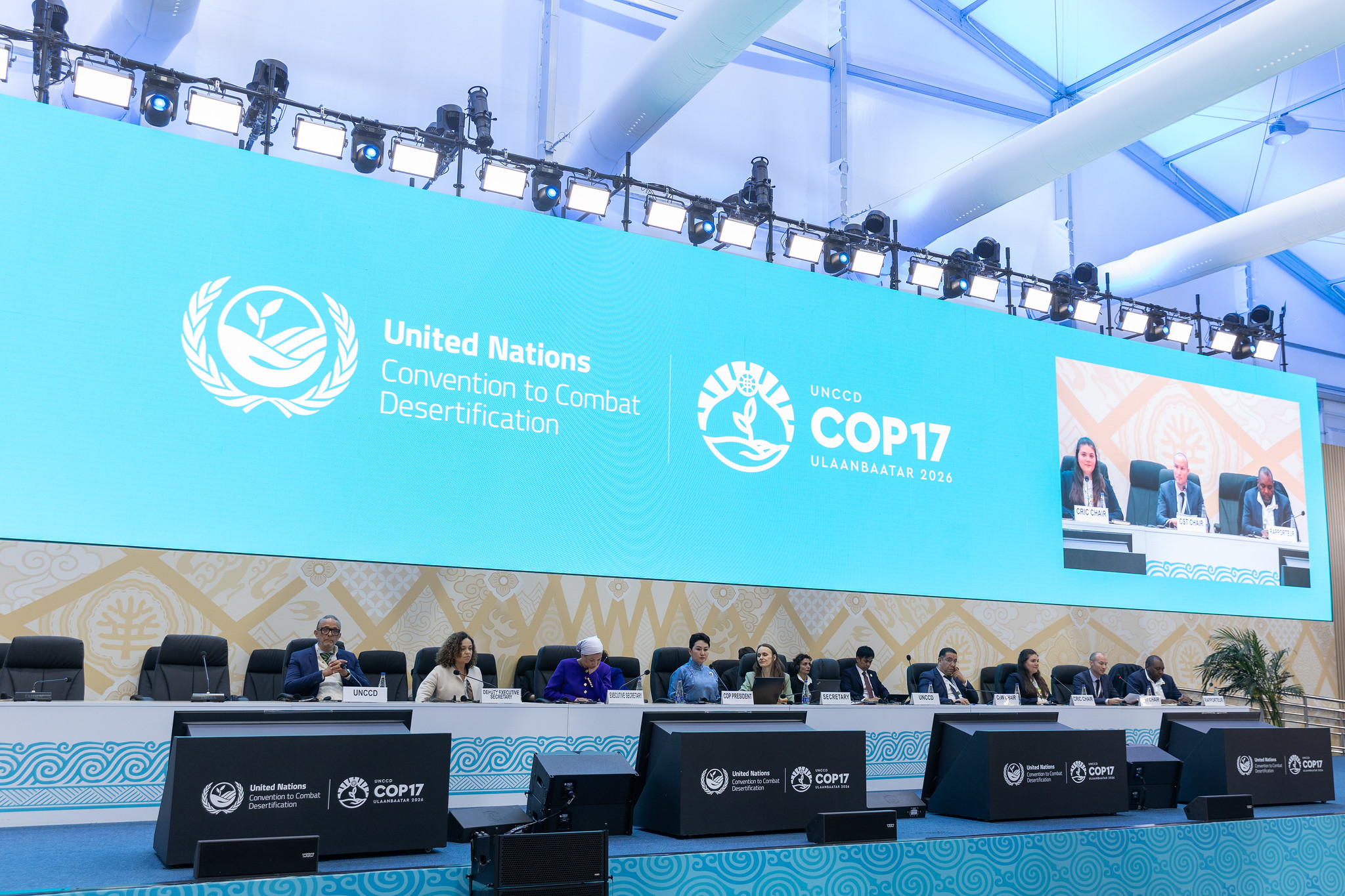
Drought resilience is not only about knowing when and where drought will occur. It is about understanding how well societies, economies, ecosystems and institutions can anticipate, prepare for and adapt to its impacts —and where action can make them better able to withstand the next shock.“We have become very good at observing drought. But we are still, in many ways, data-rich and decision-poor,” said UNCCD Chief Scientist Barron Orr at the launch. The challenge, he stressed, is to turn increasingly sophisticated drought information into actionable intelligence.”During the UNCCD COP17, the launch of Phase II (version Beta) of the International Drought Resilience Observatory (IDRO) brought together governments, scientists and international partners to address the challenge of how to turn growing knowledge about drought into stronger resilience.The launch introduced the Drought Resilience Index (DRI) to help countries assess their capacity to anticipate, prepare for and adapt to drought. By bringing together evidence across environmental, social, infrastructure and economic dimensions, the Index aims to show where resilience is weakest and where action and investment could make the greatest difference. The new tool has been developed under the International Drought Resilience Alliance (IDRA), with UNCCD and in collaboration with the Yale Center for Environment and Architecture and partner institutions from around the world. Now in beta, IDRO has been financed by Spain, which co-chairs IDRA with Senegal, and the European Union.From measuring drought to measuring resilience“As we are seeing from Europe to the Horn of Africa to the Panama Canal, drought does not stay where its starts,” said UNCCD Deputy Executive Secretary Andrea Meza, who noted that “its impacts cut across economies and ecosystems and persist over time. A drought affecting crops or water supplies in one place can disrupt energy, transport, supply chains and livelihoods far beyond where it began making it essential to manage drought risk in a cross-cutting manner and at all levels of governance”, she said.Meza added: “The same drought does not necessarily have the same impacts everywhere. Its consequences depend on the capacity of communities, economies and ecosystems to absorb the impact, adapt and recover. Resilience is about reducing that vulnerability, and IDRO can help us understand where it lies.”Meza placed IDRO within a broader global architecture for drought resilience, alongside IDRA, the Drought Resilience Investment Facility (DRIF) and the Riyadh Global Drought Resilience Partnership (RGDRP).Making resilience gaps visibleEdgar Gutiérrez, IDRO Senior Policy Advisor and former Minister of Environment and Energy of Costa Rica, described the Drought Resilience Index as “a practical decision compass —showing not only where drought risk exists, but where resilience is weakest, what dimension needs attention, and where action and investment can have the greatest preventive impact.”IDRO aids Users to explore how countries perform across three dimensions —Anticipate, Prepare and Adapt— and across four domains: the Natural Environment, Built Environment, People and Community, and Economy. Interactive maps, country profiles, underlying indicators and data sources, case studies and an AI-enabled function that helps interpret search results allow users to explore the evidence behind the Index.“A report is a snapshot, frozen at the time of publication”, said Anna Dyson, Founding Director of the Yale Center for Environment and Architecture (CEA). “IDRO turns the Drought Resilience Index into a practical tool, allowing users to go beyond a single score to understand what is driving resilience, identify priorities and support better-informed decisions.”María Jesús Rodríguez de Sancho, Director General for Forest Policy and Desertification Control at Spain’s Ministry for the Ecological Transition and the Demographic Challenge (MITECO), noted: “It is our hope that IDRO may contribute to bridge the gap between knowledge and action, by bringing together scientific evidence, local experience and policy-relevant information in a single platform.” Spain, which co-chairs IDRA with Senegal, has contributed one of IDRO’s in-depth case studies, alongside Australia, Brazil, Mongolia, Peru, Saudi Arabia, Senegal and the United States. Together, the case studies bring country experience into the platform, translating data and evidence into practical lessons that can be adapted to other contexts.Scientific and international partnersSenegal’s role as IDRA co-chair was also reflected in the launch, with Aliou Gory Diouf, Minister of Environment and Ecological Transition, highlighting the importance of international cooperation in strengthening drought resilience.The launch also brought together scientific and technical partners behind IDRO. Andrea Toreti, Senior Scientist and Head of the Copernicus EMS Drought Observatory at the European Commission’s Joint Research Centre,highlighted the need for drought intelligence to evolve alongside advances in science and technology. Valentin Aich, senior Water and Climate specialist with the Global Water Partnership and World Meteorological Organization, emphasized the importance of translating resilience assessments into practical support for decision-makers, while Hind Wildman, Co-founder of Yale CEA, highlighted the value of making complex information accessible to different audiences.Ina Marčiulionytė, Ambassador and Head of Delegation of the European Union to Mongolia, also underscored the importance of strengthening resilience through cooperation and better evidence. With Phase II, IDRO aims to support earlier, more targeted action, helping countries reduce the vulnerability for communities, economies and ecosystems.

Land is often discussed at global conferences in hectares, targets and indicators. For the people who live from the land, it is also home, livelihood, culture, memory and identity. At UNCCD COP17, held in Ulaanbaatar in August, that reality was evident in discussions on land tenure, rangelands, science and knowledge, finance and implementation. Across them, one practical issue kept surfacing: how to bring the knowledge of people who manage the land into decisions on its use, assessment and restoration. Throughout COP17, the role of Indigenous Peoples as well as local communities in restoring and sustainably managing land featured prominently in formal discussions. Parties and observers emphasized the value of bringing Indigenous knowledge together with science and of strengthening land rights and tenure security. Representative of civil society organizations and Indigenous Peoples also called for community-generated data to inform reporting and for communities to be engaged as partners in implementation and decision-making. Some of those priorities were reflected in the final decisions. On land tenure, Parties encouraged inclusive and participatory dialogue from local to national level, drawing on all forms of available knowledge, and recognized customary and communal rights of access to natural resources. The decision on rangelands recognized pastoralists as critical stewards, acknowledged mobility as an adaptation and resilience strategy and called for knowledge accumulated by pastoralists to inform efforts to close knowledge and data gaps. The specific agenda item on civil society participation, however, was not considered at COP17 and will return at COP18. Outside the negotiating rooms, practitioners and Indigenous participants brought these questions down to the level of everyday experience. Maedeh Salimi of Iran, a programme director at the Center for Sustainable Development and Environment (CENESTA), works with pastoralists, smallholder farmers and fishing communities. She described land as far more than a source of income. A community’s culture, food system, social structure and future are tied to its territory, she said. Indigenous Peoples as well as local communities therefore need a direct role in decisions affecting those territories as rights-holders. Several voices at COP17 stressed that useful evidence does not come from formal science alone. Ecologist Ermias Betemariam of the Nairobi-based Landscape Alliance says young scientists need to learn not only from books but also from communities, farmers and pastoralists — to “read landscapes and people” alongside scientific literature. Tai Pelli, a Borican Taíno from Puerto Rico with the United Confederation of Taíno Peoples, put the same point more directly. “We cannot make Indigenous knowledge secondary or inferior to what modern science has,” she said. “I think that if we work together, we can make a huge difference.” One example of that collaboration came from South Africa. At a DryNet event on community-driven rangeland management, participants presented restoration work where grazing plans are co-designed with communities rather than delivered to them. Farmers implement the plans with locally recruited eco-rangers, including young people and women, while restoration is linked to training, market access and livelihoods. The experience demonstrated that technical interventions are only part of the equation: restoration is more likely to last when communities have ownership, functioning local institutions and economic opportunities tied to the land. UNCCD Executive Secretary Yasmine Fouad speaks at the opening of the COP17 Indigenous Peoples' PavilionAt an event on Indigenous data and resilient territories, participants explored what people on the ground can add to information gathered from above. Satellite data can show that something has changed; communities can often explain what that change means and why it happened. Indigenous representatives and practitioners working in the Amazon, the Congo Basin and West Africa described monitoring systems that combine satellite imagery, GPS, drones and mapping with knowledge built up over generations. In the Peruvian Amazon, Indigenous monitors collect territorial data to identify threats and guide conservation and restoration. Pastoralist groups carried many of these priorities into a collective declaration. The Ulaanbaatar Declaration, adopted by pastoralist and Indigenous peoples at the Global Pastoralist Gathering ahead of COP17 and presented during the COP’s open dialogue, describes pastoralists as rights-holders, knowledge holders and solution providers. It calls for recognition of mobility and customary governance, free, prior and informed consent, meaningful participation, direct access to finance and the need to recognize pastoralist knowledge systems alongside scientific knowledge. For Erjen Khamaganova, a Buryat-Mongol representative of the World Union of Indigenous Spiritual Practitioners at COP17 and a founding member of its Elders Council, knowledge of the land is also inseparable from responsibility. Frameworks and finance cannot deliver implementation without real engagement at community level, she said. Her own vision of land is rooted in ancestral ideas of two-way responsibility between people and Mother Earth — a relationship in which caring for land is an obligation upheld across generations. The question of knowledge and stewardship ultimately leads to another: who has a voice in the work of the Convention. During COP17, the UNCCD Indigenous Peoples Caucus, the Local Communities Caucus, Civil Society Organizations Panel, Youth Caucus and Gender Caucus came together to call for meaningful participation in UNCCD decision-making and for their role to be fully reflected in the Convention’s work. “We are here to offer solutions that are born from our close relationship with nature and with the land,” said Jennifer Tauli Corpuz of the Indigenous Peoples' Caucus. While COP17 did not resolve every question around participation, it marked the first formal meetings of the Indigenous Peoples Caucus and Local Communities Caucus and brought together the largest representation of Indigenous Peoples in the history of a UNCCD COP. Parties took note with appreciation of the declarations of Indigenous Peoples, the youth the local communities and the Mayors and included them in the COP17 proceedings. They did the same with the declaration by civil society organizations and summaries of the two civil society open dialogues. The land tenure decision also asks the secretariat to support the convening of all four UNCCD caucuses as a way to enrich discussions on land tenure and implementation. The participation debate remains unfinished, but the programme for COP18 puts civil society participation back on the agenda and provides for the caucuses to convene again when Parties meet in Egypt in 2028. Photo : © UNCCD/Kiara Worth

23个国家形成总额13亿美元的土地恢复和抗旱韧性融资组合,其中以草原为重点,45个项目共获得12亿美元融资支持。 在土地退化零增长(LDN)方面取得进展:巴西提出了由17项子目标构成的2030年自愿性土地退化零增长目标,与此同时,中亚地区已有一半的土地退化零增长目标得以实现。 沙特阿拉伯在COP16上发起的“利雅得全球抗旱韧性伙伴关系(The Riyadh Global Drought Resilience Partnership)”进一步迈向落实,在乌兰巴托推进建立资金池,以支持约70个脆弱国家。 联合国防治荒漠化公约(UNCCD)与卢森堡共同启动“抗旱韧性投资机制(the Drought Resilience Investment Facility)”,以撬动最高4亿美元的公共和私营资本,用于增强抗旱韧性。 蒙古乌兰巴托,2026年8月28日— 经过为期两周,围绕如何应对土地退化、荒漠化和干旱问题展开的谈判,《联合国防治荒漠化公约》第十七次缔约方大会(UNCCD COP17)今日在蒙古国乌兰巴托闭幕 在谈判进程和行动议程两条主线上,乌兰巴托大会汇聚了推动落实所需的关键要素,包括政治指引、科学依据、资金、具备投资条件的项目、伙伴关系,以及世界各地土地管理者更广泛的参与。 UNCCD 197个缔约方每两年举行一次缔约方大会,本次大会将全球草原置于土地议程的核心位置。草原覆盖地球陆地面积的54%,为约20亿人提供支持,并由约5亿名牧民守护和管理。 在“国际草原与牧民年”期间,“牧场旗舰倡议” 于乌兰巴托启动,汇集了45个项目、总额12亿美元的资金,是《联合国防治荒漠化公约》历史上针对草原领域规模最大的一次资金动员。 除谈判进程外,COP17还推出了一系列旨在加快土地恢复和增强抗旱韧性行动的倡议和资金承诺。 各国政府、开发银行、基金和企业宣布,在五大洲23个国家形成一个总额13亿美元的融资组合,涵盖处于不同发展阶段的项目。其中,6.445亿美元被确认为新增融资,2.164亿美元已经得到确认并正在迈向实施。 UNCCD执行秘书亚斯敏·福阿德表示: “我们来到乌兰巴托时就明确表示,COP17必须成为一次落实行动的缔约方大会。如今即将离开,我们已推动落实所需的架构更加完善:政治决策、更有力的科学支撑、创新融资机制、投资项目储备以及能够推动解决方案扩大规模的伙伴关系,这些都取得了进展。 但乌兰巴托大会的成效不是由会议期间宣布了什么来评判,而将由接下来发生什么来衡量:各国是否能够更好地应对干旱,退化土地和草原是否得到恢复,资金是否真正流向具有可行性的项目,以及土地管理者的生活是否因此发生切实改变。” 蒙古国外交部长、UNCCD COP17主席巴特蒙赫·巴特策策格阁下(H.E. Battsetseg Batmunkh)表示: “作为东道国以及《联合国防治荒漠化公约》第十七次缔约方大会主席国,蒙古国本着开放、透明、包容和协商一致的精神,为各方讨论营造良好氛围,并努力缩小各方立场差距,以实现切实成果。 在‘国际草原和牧民年’之际,蒙古国向世界展示了草原这一具有重要战略意义的生态系统,如何连接粮食、环境、经济、生物多样性以及牧民生计。 在履行第十七次缔约方大会主席职责过程中,蒙古国始终坚持‘从承诺走向落实,从讨论走向实干’的原则。” 蒙古国环境与气候变化部长、UNCCD COP17国家组委会主席桑达格-奥奇尔·曾德阁下(H.E. Sandag-Ochir Tsend)表示: “蒙古国成功主办《联合国防治荒漠化公约》第十七次缔约方大会(UNCCD COP17),汇聚世界各国,共同推动荒漠化、土地退化和干旱问题的务实解决方案。对蒙古国而言,本次大会最重要的成果之一,是获得缔约方、国际组织、私营部门和民间社会对‘草原计划(Steppe Plan)’的支持,使其成为COP17的重要政策遗产。 在‘草原计划’框架下,蒙古国政府正式启动三项国际倡议:‘草原旗舰倡议’、‘水—土地纽带倡议’以及‘可持续基础设施自然解决方案倡议’。这些倡议为开发项目、加强国际合作以及在这些重点领域动员投资创造了新的机遇。 尽管COP17今天闭幕,但我们的工作并未就此结束。下一步的重点,是将大会通过的决定、建立的伙伴关系以及投资承诺转化为切实行动,并确保从蒙古草原发起的各项倡议取得可衡量的成果。” 从承诺走向落实 本次大会是在严峻的全球背景下举行的。目前全球多达40%的土地处于退化状态,而各国已承诺到2030年恢复超过10亿公顷土地。如今已有70多个国家制定了国家干旱计划,而2013年这一数字仅为3个。然而,资金和行动落实仍落后于这一挑战的规模和速度。在此背景下,缔约方呼吁进一步动员财政资源、加强能力建设和技术合作,以强化主动型干旱管理,特别是在非洲国家,同时也不能忽视其他受到影响的发展中国家。 乌兰巴托大会期间公布的大量新证据,进一步凸显了不采取行动的代价,以及投资于健康土地所能带来的收益。新报告分别研究了恢复全球草原的经济效益、日益加剧的干旱对人类和经济的影响、小岛屿发展中国家和中亚面临的特殊挑战,以及投资于土壤健康的价值。 研究显示,小岛屿发展中国家共有1880万公顷土地发生退化;与此同时,中亚地区已有超过8000万公顷土地退化,占该地区土地面积的四分之一以上,并已影响2400万人。与此同时,中亚五国均已制定自愿性土地退化零增长目标,其中一半目标已经实现。 这些报告共同表明,土地退化和干旱正在不同地区影响粮食和水安全、生计以及经济,同时也进一步说明了开展预防、可持续土地管理和土地恢复的经济必要性。 在这些新证据的基础上,巴西提出了一项重要的国家承诺,即制定2030年自愿性土地退化零增长(LDN)目标,包含17项与国家政策、规划和项目相衔接的子目标。 该目标包括恢复或修复超过16.3万平方公里土地,其中包括恢复原生植被和发展农林复合经营系统;另有351万平方公里土地将通过保护和可持续土地管理措施得到覆盖,以防止土地退化。17项子目标合计覆盖约367万平方公里土地。 这一承诺将支持巴西通过避免、减少和逆转土地退化,实现可持续发展目标15.3,同时加强粮食和水安全、生物多样性以及气候韧性。 构建全球抗旱韧性新架构 经过持续谈判,缔约方决定在COP18继续相关讨论,在COP16和COP17取得进展的基础上,来推动就各层级主动型干旱管理作出决定。缔约方还决定,干旱问题将在COP18以及此后的每届常会中继续作为独立议程项目。“利雅得全球抗旱韧性伙伴关系(The Riyadh Global Drought Resilience Partnership)”于COP16期间建立,并在乌兰巴托进一步迈向落实。其首次伙伴大会推进了拟议资金池的相关工作,该资金池旨在通过能力建设、具备投资条件的项目以及抗旱韧性融资,帮助约70个低收入和中低收入国家。 COP17期间还启动了 “抗旱韧性投资机制(Drought Resilience Investment Facility, DRIF)”,这是全球首个专门致力于抗旱韧性的催化型融资平台。该机制由UNCCD与卢森堡共同创建,并得到“国际抗旱韧性联盟(theInternational Drought Resilience Alliance)”的支持,旨在为水安全、可持续农业、自然解决方案和土地恢复领域的投资,撬动高达4亿美元的公共和私人资本。该机制与全球环境基金建立的首个战略伙伴关系,将探索释放私营和慈善资金的机遇。 “国际干旱韧性观测站(International Drought Resilience Observatory)”第二阶段也推出了全球首个“干旱韧性指数”,为各国提供新的工具,用于评估自身预测、准备和适应干旱的能力,并更有针对性地制定政策和配置投资。 土地融资进一步提升议程地位 COP17还致力于缩小全球土地承诺与落实这些承诺所需资金之间的差距。 预计到2030年,为实现全球土地恢复承诺,每年需要约3550亿美元,而目前每年实际投入约770亿美元,由此形成每年约2780亿美元的融资缺口。私人融资目前仅占全球土地恢复投资的约6%。 各国政府、开发银行、基金和企业宣布,在五大洲23个国家形成一个总额13亿美元、用于土地恢复和抗旱韧性的融资组合,涵盖处于不同发展阶段的项目。其中,6.445亿美元为新增融资,2.164亿美元已经确认并正在迈向实施。该融资组合涵盖草原和景观恢复、抗旱韧性以及地方主导的适应行动。 乌兰巴托的讨论还聚焦于如何解决长期制约土地投资的障碍,包括如何让土地、土壤健康和抗旱韧性在现有自然融资分类体系中得到更加明确和可追踪的体现。与会者还探讨了进一步利用担保、优先损失资本、保险以及项目准备机制,将土地恢复计划转化为具备投资条件的项目。 东道国蒙古国启动了首个国家级“企业促土地(Business 4 Land,B4L)”中心,同时推出可持续金融原则、国家绿色分类目录,并提出到2030年实现绿色贷款占比10%的目标。俄罗斯随后启动了本国B4L中心,卢森堡则推进建立B4L基金会,德国支持成立B4L金融专家组。 草原:从被忽视的生态系统走向经济资产 在联合国“国际草原与牧民年”期间,蒙古国作为东道国,通过COP17特别强调了草原以及管理和守护这些土地的人们的重要作用。缔约方承认牧民是草原生态系统不可或缺的守护者,强调跨地区迁徙的重要性,以及牧民知识和经验的价值。尽管草原具有全球重要性,但其在政策和投资中仍长期被忽视:全球约三分之一的重要生物多样性区域位于草原,而目前仅有24个国家在其国家气候计划中纳入草原,相比之下,将森林纳入国家气候计划的国家达到181个。 乌兰巴托发布的新经济分析估算,草原每年产生价值21万亿至47万亿美元的生态系统服务,最高相当于全球GDP的近一半。这些生态系统服务包括粮食生产、水资源、碳储存和生物多样性等方面的收益。草原恢复通常可以实现每投入1美元获得4至6美元回报;如果将供水等更广泛的公共收益计算在内,回报最高可达到36美元。 COP17宣布的“草原旗舰倡议”旨在将这一经济论证转化为投资行动,汇集支持可持续草原管理、草原恢复和牧民生计的项目。 全球环境基金将通过向UNCCD COP17后续项目投资330万美元,支持该倡议的协调工作。在过去四年中,该基金还批准了50多个项目,总价值超过3亿美元,惠及草原和牧民社区。 土著人民和地方社区在COP17成立新的核心小组 本次大会举行了UNCCD土著人民核心小组和地方社区核心小组的首次正式会议。这是继COP16在利雅得作出决定、建立这两个机制,并在《公约》框架内为其观点和优先事项提供专门参与空间之后取得的重要进展。 COP17还迎来了UNCCD缔约方大会历史上规模最大的土著人民代表参与。“土地与人民日”期间举行的高级别特别活动强调,土著人民既是权利主体、知识持有者,也是行动落实伙伴。活动重点讨论了土著人民知识体系、传统治理、可持续牧业、土地守护,以及土著人民主导行动直接获得融资等问题。 在COP17期间,土著人民、牧民和地方社区呼吁进一步加强土地权利和流动迁徙权,扩大直接获得资金的渠道,确保其有意义地参与决策,并在土地恢复和抗旱韧性行动中认可土著人民和传统知识的价值。 会议还强调了妇女和青年发挥领导作用的重要性,包括呼吁投资青年群体,使其成为土地恢复行动的领导者,并提升他们在土地和干旱行动领域的参与度。 从蒙古走向埃及 下一次《联合国防治荒漠化公约》缔约方大会,即COP18,预计将于2028年在埃及举行,继续推进乌兰巴托大会形成的成果。 展望未来,埃及强调加强合作的重要性,并推动采取整合路径应对土地退化、气候变化和生物多样性丧失,以增强粮食和水安全以及韧性。 COP18将成为各国评估土地恢复和抗旱韧性进展、并在乌兰巴托大会成果基础上进一步推进的重要节点。 编者按 媒体垂询及采访请求: UNCCD 新闻办公室:press@unccd.int COP17 决议可在此查询: https://www.unccd.int/cop17/official-documents 关于《联合国防治荒漠化公约》 《联合国防治荒漠化公约》(UNCCD)是全球土地的共同愿景与声音。我们联合各国政府、科学家、政策制定者、私营部门和社区,共同推动全球行动,恢复和管理地球土地,以实现人类与地球的可持续发展。UNCCD不仅仅是一份由197个缔约方签署的国际条约,更是减缓当今土地退化影响、推进未来土地治理的多边承诺,旨在为所有人公平和包容地提供食物、水、住所和生计机会。

Closing DayOn Friday, 28 August, delegates gather as the seventeenth session of the Conference of the Parties (COP17) to the United Nations Convention to Combat Desertification concludes with the adoption of final decisions and reports, bringing the two-week conference to a close.KEY EVENTS FOR MEDIACOP17 Closing Press ConferenceWhen: 17:00Where: Press Conference RoomSpeakers:Yasmine Fouad (UNCCD Executive Secretary)Battsetseg Batmunkh (COP17 President and Minister of Foreign Affairs of Mongolia)Journalists are invited to attend the final press conference, where leadership present the main outcomes and reflections on COP17, outlining key decisions adopted by the Parties at the close of the session.Side EventsSide events throughout the day will cover rangelands and pastoralism, finance, drought resilience, land tenure, healthy soils and the land-water nexus.Journalists are encouraged to consult the official COP17 programme for the full schedule and latest updates : https://www.unccd.int/cop17/programmeMEDIA RESOURCESCOP17 programmeUNCCD COP17 websiteHost country websiteUNCCD Action Dome websiteUN WebTV – Live broadcast of key plenary sessions with live interpretation in all six UN languagesUNCCD COP17 Visual Assets and Branding ResourcesEarth Negotiations Bulletin – daily coverage, photographs and analysisFor media enquiries and interview requests: UNCCD Press Office: press@unccd.int
