Stories
Latest

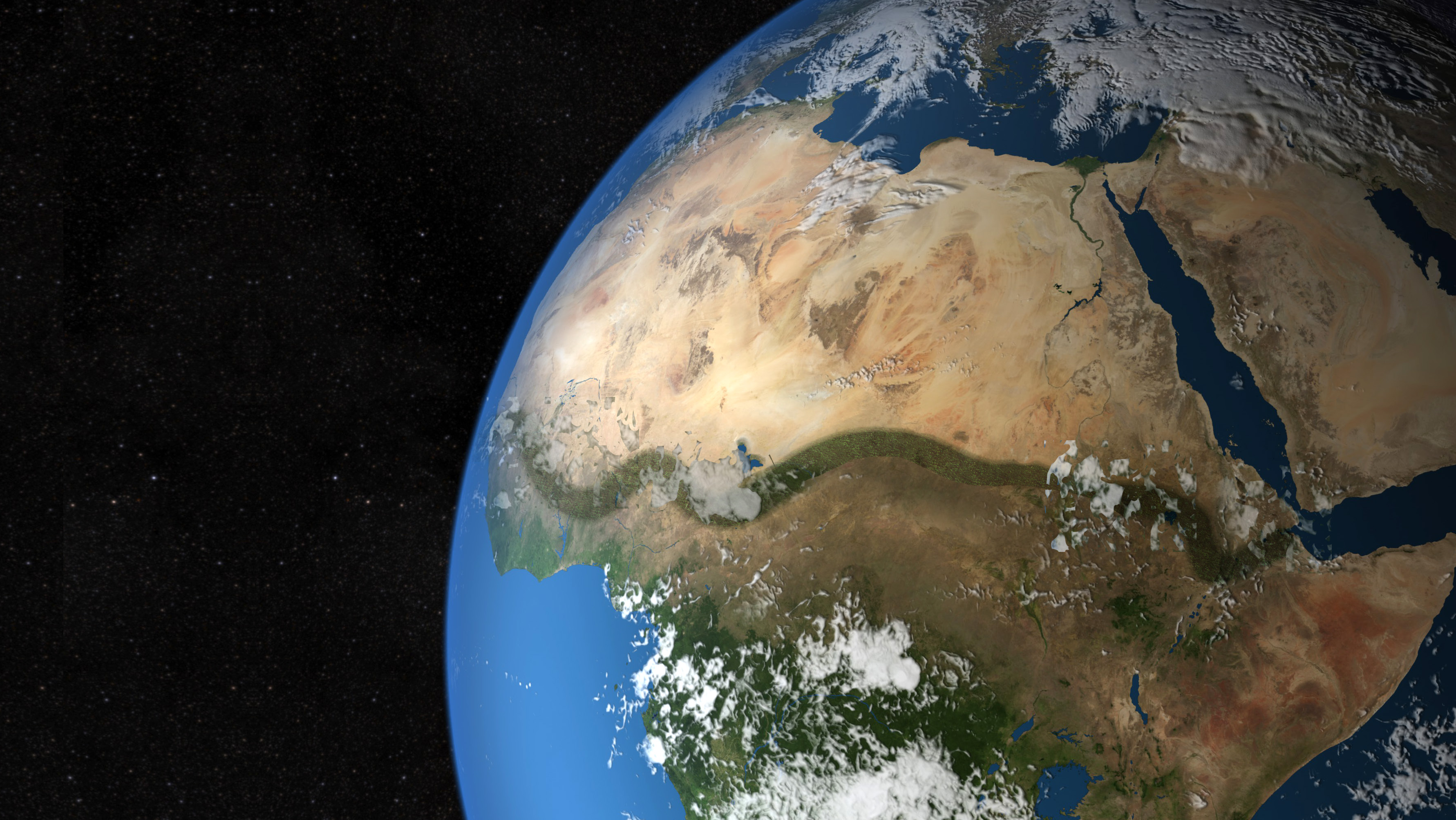
Bonn, Germany, 18 February 18, 2025 – A landmark collaboration is taking shape in the global fight against land degradation. The United Nations Convention to Combat Desertification (UNCCD) and the Global Green Growth Institute (GGGI) have signed a Memorandum of Understanding (MoU) to accelerate efforts in sustainable land and water management, biodiversity conservation and climate resilience in support of the sustainable development agenda. A partnership for sustainable growth Land degradation, desertification and drought pose critical challenges worldwide, affecting ecosystems, economies and communities. Recognizing the urgency of these issues, UNCCD and GGGI are joining forces to create innovative solutions that integrate environmental sustainability with economic growth. This collaboration is firmly rooted in the 2030 Agenda for Sustainable Development and the objectives of the Rio Conventions, ensuring a holistic approach to sustainable land management. Under the MoU, UNCCD and GGGI will leverage their expertise to: Develop and implement joint programs focused on sustainable land and water management, biodiversity conservation and climate resilience. Enhance resource mobilization efforts to secure funding and technical support for land restoration initiatives. Engage the private sector to drive investment and technical innovation in sustainable land management projects. Promote knowledge-sharing and capacity-building through training programs, policy dialogues and best practice exchanges. Design green investment strategies to support countries in achieving Land Degradation Neutrality (LDN) and drought resilience targets. A shared vision for impactful action By working together, UNCCD and GGGI aim to unlock new opportunities for land restoration and ecosystem conservation. Their collaboration will also extend to joint advisory services, feasibility studies and publications that inform and inspire action on the ground. “I am pleased to announce this strategic partnership between UNCCD and GGGI, which marks a significant step in our collective efforts to combat land degradation, enhance biodiversity conservation and build resilience against climate change," stated Ibrahim Thiaw, UNCCD Executive Secretary. "This MoU is a testament to our shared commitment to a future where land is valued, protected and restored for the benefit of people and the planet.” GGGI Director-General Sang-Hyup Kim echoed this sentiment: 'The collaboration with UNCCD reflects GGGI’s strong commitment to land restoration and biodiversity conservation. This partnership will not only shed light on the financial and policy elements. GGGI looks forward to a powerful collaboration with UNCCD to tackle climate challenges related to land degradation, water management and drought.'" Looking ahead: Turning ambition into action As the world faces escalating environmental challenges, the partnership between UNCCD and GGGI represents a critical step forward. With a shared mission to create sustainable, climate-resilient landscapes, their collaboration will support countries in transforming policies into tangible action, ensuring that economic development is both environmentally sustainable and socially inclusive. Media contact: press@unccd.int About UNCCD The United Nations Convention to Combat Desertification (UNCCD) is an international agreement on good land stewardship. It helps people, communities and countries create wealth, grow economies and secure enough food, clean water and energy by ensuring land users an enabling environment for sustainable land management. Through partnerships, the Convention’s 197 parties set up robust systems to manage drought promptly and effectively. Good land stewardship based on sound policy and science helps integrate and accelerate achievement of the Sustainable Development Goals, builds resilience to climate change and prevents biodiversity loss. About GGGI The Global Green Growth Institute (GGGI) was established in 2012 as a treaty-based intergovernmental organization at the UN Conference on Sustainable Development. It supports its 49 Member States and 29 Partner countries in transitioning to a green growth model that integrates poverty reduction, social inclusion, environmental sustainability and economic growth. Operating in over 51 countries, GGGI helps nations meet their Sustainable Development Goals (SDGs) and Paris Agreement commitments. Currently, GGGI is implementing 10+ projects funded by AFD across Africa, Asia, the Caribbean and the Pacific, focusing on green investment, climate-resilient agriculture, the circular economy and sustainable solutions in forestry, mobility, energy and industry — all aligned with GGGI’s Programmatic Solutions.

For centuries, rangelands and pastoralist communities have been the backbone of cultures, economies and ecosystems around the world. Covering more than half of the Earth's land surface, these vast landscapes support two billion people and contribute significantly to global food security and climate resilience. Yet they have remained largely invisible in international policy discussions, slowly degrading under the pressures of climate change, unsustainable land use and economic expansion. At UNCCD COP16 in Riyadh, nations took a decisive step by adopting a decision on rangelands and pastoralists, marking an unprecedented commitment to protect these critical ecosystems and the people who depend on them. This commitment represents a fundamental shift, placing rangelands alongside forests and wetlands in global conservation efforts and ensuring that their role in climate resilience, biodiversity conservation and food security is fully recognized. Why rangelands are more important than ever Rangelands and grasslands provide one-sixth of the world's food supply and store nearly one-third of the planet's carbon stocks in their deep-rooted soils. They are vital to smallholder herders, farmers and indigenous communities, yet more than 50 per cent of these ecosystems are now degraded. As Ibrahim Thiaw, Executive Secretary of the United Nations Convention to Combat Desertification (UNCCD), warns, their decline is often overlooked: "When a forest is destroyed, the loss is visible and causes immediate concern. But rangeland degradation is silent, often unnoticed and undervalued." He emphasizes the urgent need for global action to protect these landscapes before it is too late. Beyond their economic significance, healthy rangelands stabilize soil, prevent erosion, regulate water cycles, enhance biodiversity, and store carbon – essential functions in the fight against climate change. Yet, despite their immense ecological value, these landscapes have historically received far less attention and funding than forests and wetlands. Recognizing this oversight, the United Nations General Assembly has declared 2026 as the International Year of Rangelands and Pastoralists (IYRP), a global initiative designed to highlight the indispensable contributions of rangelands and pastoralist communities to our planet’s health and economies. A landmark decision at COP16 For the first time, UNCCD Parties adopted a decision to promote the sustainable management, restoration and conservation of rangelands – vast ecosystems used for grazing – ahead of COP17, which will be hosted by Mongolia in 2026. Countries have pledged to improve pastoralists' land rights by aligning with international guidelines, strengthening legal protections and ensuring access to rangelands. The decision also emphasizes the value of Indigenous and local knowledge in sustainable land management, recognizing the role of traditional pastoral practices in conserving these ecosystems for future generations. Commitments were made to mobilize public-private partnerships, establish biodiversity credits and develop innovative financing models to ensure long-term investment. This pivotal shift ends decades of neglect and places rangelands at the centre of global sustainability efforts. It aligns with the Kunming-Montreal Global Biodiversity Framework and the UN Decade of Ecosystem Restoration and strengthens their integration into national biodiversity and climate strategies and action plans. With Mongolia set to host UNCCD COP17 in 2026, the global community has a unique opportunity to cement rangelands as a key focus of environmental policy. Plans are already underway to develop a UNCCD Flagship Initiative on Rangelands, which will foster international cooperation, secure large-scale funding for restoration, and facilitate knowledge sharing between scientists and pastoral communities. However, systemic challenges remain. Conflicting land use policies, economic pressures and a lack of formal recognition of pastoralists' rights continue to threaten rangeland sustainability. Many pastoralist communities face displacement due to land conversion, mining and large-scale agricultural projects that prioritize short-term economic gains over long-term ecosystem health. Addressing these issues requires an integrated approach that combines scientific research, policy reform and traditional land management. Translating commitments into action “The commitments at UNCCD COP16 mark a turning point, but success depends on sustained collaboration. Governments must work closely with pastoralists and livestock value chain agents, conservation groups and financial institutions, to scale up investment through sustainable financing and innovative tools.” said Enrique Michaud co-chair of the IYRP Global Alliance. "Securing pastoralists' land rights is crucial to prevent displacement and conflict, to ensure access to their traditional rangelands and to fortify the ecosystem services they provide." Sustainable rangeland and land-use planning must balance conservation efforts with the economic realities of pastoral livelihoods, promoting land management strategies that maintain ecosystem health while supporting local economies. Rangeland conservation must also be fully integrated into national and global climate adaptation strategies to ensure that these landscapes contribute to long-term resilience to climate change and desertification. Ensuring rangeland sustainability is not just an environmental imperative – it is a necessity for climate security, food sovereignty and cultural preservation. As UNCCD Parties and partners prepare for COP17, the momentum generated at COP16 must be translated into real action. About UNCCD The United Nations Convention to Combat Desertification (UNCCD) is an international agreement on good land stewardship. It helps people, communities and countries create wealth, grow economies and secure enough food, clean water and energy by ensuring land users an enabling environment for sustainable land management. Through partnerships, the Convention’s 197 parties set up robust systems to manage drought promptly and effectively. Good land stewardship based on sound policy and science helps integrate and accelerate achievement of the Sustainable Development Goals, builds resilience to climate change and prevents biodiversity loss. https://unccd.int About the International Year of Rangelands and Pastoralists On the initiative of Mongolia, the United Nations General Assembly has designated 2026 the International Year of Rangelands and Pastoralists (IYRP 2026) to enhance rangeland management and the lives of pastoralists. With this declaration, UN Member States are called upon to invest in sustainable rangeland management, to restore degraded lands, to improve market access by pastoralists, to enhance livestock extension services, and to fill knowledge gaps on rangelands and pastoralism. The IYRP 2026 will coincide with the UNCCD COP17 to be hosted by Mongolia. https://iyrp.info

To what extent are a country’s economy, people, and infrastructure able to cope with drought and how can they do better? That is what the latest initiative of IDRA looks to answer, as 75 per cent of Earth’s land has become permanently drier in the last three decades and drought is driving forced displacement, disrupting shipping and hampering food and energy production around the world.The International Drought Resilience Observatory (IDRO), the first global AI-driven platform for proactive drought management, unveiled its prototype at the 16th Conference of the Parties (COP16) of the UN Convention to Combat Desertification (UNCCD) in Riyadh, which laid the groundwork for a future global drought regime.As the tool enters its final development phase ahead of the next UN land conference, which will take place in Mongolia in 2026, IDRO developers and partners break down what sets the Observatory apart, how it fits with existing drought-related initiatives, and why it matters for climate change adaptation.What kind of insights does IDRO provide?IDRO sheds light on the capacity of territories to anticipate, prepare for, and adapt to drought from various perspectives —built environments, natural environments, communities, and the economy. By selecting different variables, users from the global to the local level can generate visualizations to understand where the pain points are and set priorities for action.“With IDRO, authorities and land and water managers will be able to analyze and visualize key drought resilience indicators as the basis for better decisions,” says UNCCD Senior Advisor Edgar Gutiérrez-Espeleta.Importantly, users needn’t be specialists to use, and draw value from, the tool, which can support interventions across global, regional, country, and local scales.Why do we need an International Drought Resilience Observatory?“We must move from merely assessing drought risks towards building resilience,” says Andrea Toreti, senior scientist at the European Commission’s Joint Research Centre (EC- JRC), who coordinates the Copernicus European and Global Drought Observatories. “This is precisely IDRO’s added value: helping to quantify and evaluate the drought resilience status of a place to inform action on the ground.”The confirmation of 2024 as the warmest year on record highlights the growing urgency to turn science and data into policies and policies into action.“Simply put, we cannot adapt to climate change without building drought resilience,” says Roger Pulwarty, Senior Scientist at the Physical Sciences Laboratory of the US National Oceanic and Atmospheric Administration (NOAA). State Secretary of Environment of Spain Hugo Morán, UNCCD Executive Secretary Ibrahim Thiaw, Deputy Minister for Environment of Saudi Arabia Osama Faqeeha, Minister of Environment and Ecological Transition of Senegal Daouda Ngom, and European Commissioner for Environment, Water Resilience and a Competitive Circular Economy Jessika Roswall, during the IDRO presentation at COP16 in December 2024.What unique value does IDRO add to existing drought databases and tools?In the past decade, experts have produced a wealth of data, indicators and metrics on drought and have advocated for a shift in emphasis from response to preparedness. However, the breadth and complexity of this information and the fact that it is scattered means it can be hard for busy decision-makers to use it.IDRO will draw on the best available data globally —including NASA’s and Copernicus’— to answer queries in a format that non-specialists can easily assimilate.“IDRO will package complex drought resilience information into accessible, customizable, and highly actionable formats, unlocking a world of possibilities in terms of assessing priorities, targeting investments, and monitoring progress,” says Hugo Morán, State Secretary of Environment of Spain, which co-chairs IDRA.Who is leading the development of IDRO?IDRO is an initiative of the International Drought Resilience Alliance (IDRA), a global coalition of more than 70 countries and organizations hosted by the UNCCD.The creation of the Observatory is overseen by the IDRA secretariat in collaboration with the Yale Center for Ecosystems + Architecture, which acts as a developer, and top experts from governmental, non-governmental, multilateral, and research organizations from around the world.At a COP16 event on IDRO, Executive Secretary of UNCCD Ibrahim Thiaw pointed out the systemic nature of drought and the need to tackle it together: “We can only achieve meaningful results by joining forces; IDRO is a perfect example of the collaborative mindset we require to protect people from impending and future droughts.”The Minister of Environment and Ecological Transition of Senegal Daouda Ngom, who co-chairs IDRA, also welcomed the development of the Observatory: “It reaffirms our joint commitment to making drought resilience a cornerstone of sustainable development and international cooperation.”What initiatives does IDRO build on?The Drought Initiative, launched by UNCCD in 2018, has already supported more than 70 countries in creating national drought plans and improving the technical and institutional capacity to enhance drought management. Additionally, it put together a toolbox that stakeholders can use to boost the resilience of people and ecosystems to drought.How does IDRO relate to initiatives like the Riyadh Drought Partnership?Unveiled at UNCCD COP16, the Riyadh Global Drought Resilience Partnership is a financial facility launched by Saudi Arabia —an IDRA member since 2024— to support 80 of the world’s most vulnerable countries in preparing for drought.IDRA, which is currently focused on mobilizing political will and developing innovative tools like IDRO, is proud to have inspired the Partnership and the Arab Coordination Group to raise USD 12.15 billion for the land and drought agenda, as announced during COP16.“IDRO will provide critical information to vulnerable communities and synergize with the Riyadh Partnership,” said Deputy Minister for Environment of Saudi Arabia Osama Faqeeha at an IDRO event at the UN conference.What is next for IDRO?IDRA is convening leading drought experts and allies to fine tune suitable environmental and social indicators for drought resilience; further develop the functionalities of the Observatory, which harnesses remote-sensing data and AI; and enhance data collection and visualization. The final version of IDRO, with all its functionalities, is expected to launch at UNCCD COP17 in Mongolia in 2026.

Sand and dust storms (SDS) are a normal part of the global environment. Like flooding, SDS provide a range of benefits as well as having the potential for triggering damages. Human action can increase the frequency or severity of SDS, causing unnecessary and avoidable harm to society, the economy and the environment. Recognizing that the risks and harm done by SDS can be mitigated or even prevented, the United Nations Convention to Combat Desertification (UNCCD) has been actively involved in improving capacities to manage this hazard. In 2022, the UNCCD, in collaboration with WMO, FAO and the World Overview of Conservation Approaches and Technologies (WOCAT) developed the SDS Toolbox to support stakeholders in accessing information to better manage the risks posed by SDS. The SDS Toolbox built upon the SDS Compendium, a collaborative effort among multiple UN partners, to provide practical guidance on how to use the contents of the SDS Compendium and other technical resources to more effectively manage SDS. Over the last two years, there has been a notable expansion of knowledge and lessons learned on how to effectively manage SDS sources and impacts. This Technical Update of the SDS Toolbox, released during Resilience Day at UNCCD COP16, includes the following upgrades: Links to networks of experts working to understand and manage SDS, intended to improve knowledge sharing and collaboration. Access to the WMO Airborne Dust Bulletins. New case studies on SDS source management in Canada (Saskatchewan), Iceland and the United States (California and New Mexico). Detailed guidance on the use of the SDS Visualization Tool. An update on the WMO SDS-WAS monitoring and warning system. Access to public information documents about SDS.Additional examples of SDS impact management plans. An upgrade and expansion of guidance on managing SDS Sources. This includes an increase in the number of SDS source management options, accompanied by additional sustainable land use technologies. There are new search functions with more detailed descriptions for each option, including links to additional resources, providing a single source of SDS management options not previously assembled in one place. This technical upgrade of the SDS Toolbox involved experts from FAO, WMO, US Department of Agriculture, ICARDA, WOCAT, University of Saskatchewan, George Mason University, New Mexico Department of Transportation and the Great Basin Unified Air Pollution Control District, California, USA.

Mayors' Forum at COP16 highlights urban-rural synergies for sustainable land managementEngineer Waleed Al-Akrich, Deputy for Projects of the Riyadh Municipality, represented Dr. Faisal Al-Hadlaziz Al-Hayyar, Mayor of Riyadh. In his opening remarks, Al-Akrich emphasized the critical role of local and regional governments in combating desertification, land degradation, and drought. Speaking under the theme "Our Land, Our Future," he highlighted the transformative potential of multilevel governance frameworks, urging collaboration across governments, NGOs, and international entities."To secure our land and ensure our future, we need transformative policies, knowledge sharing, and partnerships that transcend borders," he declared.Moderated by Carlos Correa, former Mayor of Montevideo, the forum showcased diverse perspectives from mayors and local leaders worldwide. Uğur İbrahim Altay, Mayor of Konya and President of UCLG, shared innovative efforts in Turkey, such as restoring the dried Meke Lake and advancing water conservation. Noraini Roslan, representing Selangor State, Malaysia, highlighted strategies balancing urbanization with sustainability, including mangrove rehabilitation and wetland protection. Mohamed Sefiani, Mayor of Chefchaouen, Morocco, illustrated the importance of urban-rural linkages in local reforestation and ecosystem restoration efforts to combat climate change.The panel emphasized the need for collaborative governance, knowledge sharing, and sustainable solutions like nature-based projects, urban nature components, and integrated land-use planning. Participants stressed the importance of local governments as first responders to challenges such as land degradation, food security, and climate change, urging institutionalized roles for local authorities within the UNCCD framework.Rethinking urban-rural connections: A path to sustainable land useBuilding on the discussions from the Mayor's Forum, the release of the Primer on Urban-Rural Linkages and Land highlights how these connections are pivotal for sustainable development. Developed by UNCCD and UN-Habitat, the Primer offers a roadmap to foster equitable and sustainable interactions between urban and rural communities.Urban-rural linkages—flows of people, goods, services and ideas—are essential to sustain both vibrant urban centers and thriving rural communities. However, they also bring unique challenges, as detailed in the Primer. These include fragmented governance, resource exploitation, peri-urban expansion, and the interconnected challenges of land degradation and climate change. The Primer outlines solutions that prioritize multilevel governance, integrated land-use planning and nature-based approaches like investing in green infrastructure to support ecosystem health.Over 4.4 billion people live in urban areas today, a number expected to rise to 68% by 2050. Despite occupying less than 3% of the Earth's surface, cities consume nearly 70% of natural resources and generate over 70% of global emissions. Meanwhile, rural areas—providing essential resources like food, water, and energy—face increasing pressures from urban demand, deforestation, and land degradation. Strengthening urban-rural linkages is critical to address these disparities and build resilience against future challenges."We convene today as stewards of our communities, championing a future that aligns the social and ecological functions of land with the new urban agenda," stated Anacláudia Rossbach, Executive Director of UN-Habitat, who announced the Primer via video during the forum. She underscored the need for inclusive solutions to address migration pressures, food security, and water scarcity while ensuring no one is left behind.Setting the benchmark for collaborationThe discussions at COP16 and the launch of the Primer reaffirmed the commitment to stronger urban-rural linkages and sustainable land management. By aligning policies and actions across scales, the forum highlighted the critical role of local governments in shaping a resilient future.

Riyadh, Saudi Arabia – December 2024The United Nations Convention to Combat Desertification (UNCCD) and Shenyang University of China have signed a Letter of Intent (LOI) on the sidelines of the 16th Conference of the Parties (UNCCD COP16) in Riyadh, Saudi Arabia. This landmark step underscores a shared commitment to advancing research, capacity building, and technology transfer in the critical areas of black soil carbon and sustainable land management (SLM).The collaboration aims to address the global challenge of black soil degradation, which has significant implications for food security, climate change mitigation, and combating desertification. Both parties recognize the pressing need to fill knowledge gaps and promote sustainable practices that enhance land resilience and productivity.Key objectives of the collaboration:Promotion of south-south cooperation on combating Desertification, Land Degradation and Drought (DLDD) in general and black soil carbon management in particular.Joint research initiatives: Focusing on black soil carbon dynamics and innovative land management strategies.Knowledge management: Facilitating knowledge sharing and exchange of technologies, experiences and best practices and building capacity among practitioners and researchers to implement sustainable land practices.Technology transfer: Facilitating the exchange of cutting-edge technologies and best practices in combating desertification and land degradation.The LOI also outlines plans to explore the establishment of an International Black Soil Carbon and Sustainable Land Management Research Center. This center will serve as a hub for knowledge sharing and scientific collaboration, driving progress toward achieving Land Degradation Neutrality (LDN).Andrea Meza Murillo, Deputy Executive Secretary of the UNCCD, and Zhao Yanzhi, President of Shenyang University, emphasized the importance of this partnership in addressing global land degradation challenges.This collaboration marks a significant step forward in the fight against desertification, contributing to the broader goals of the UNCCD Strategic Framework 2018-2030 and the 2030 Sustainable Development Goals (SDGs).
