Stories
Latest
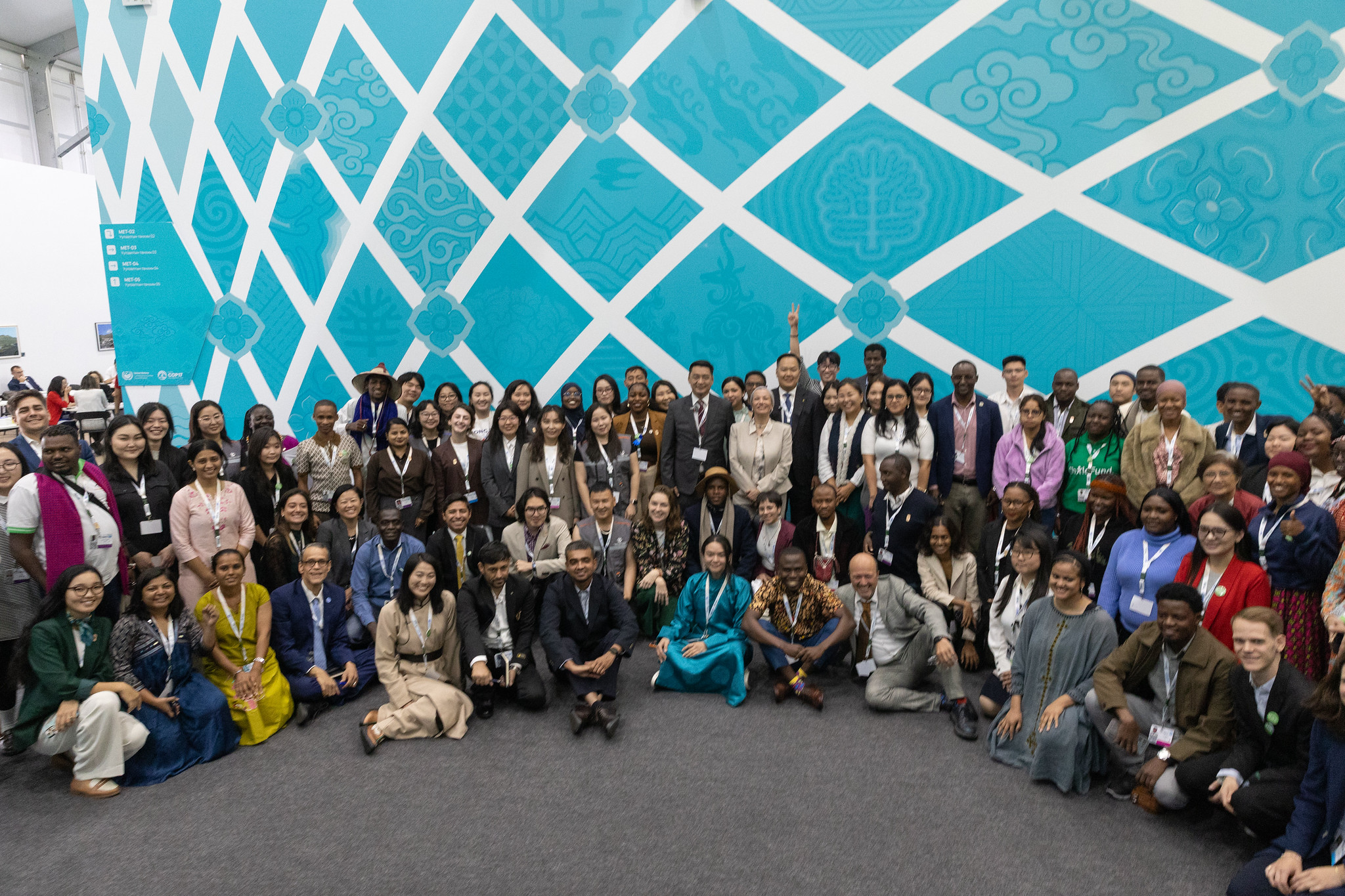


From the Arctic tundra to the steppe, signs of soil fatigue, erosion and degradation are emerging — and with them, a warning: no region is immune. Land degradation is no longer a remote concern confined to arid zones — it has become a shared, urgent global crisis. Countries with vastly different climates, geographies and land use systems are now grappling with its impacts. The evolving understanding that land degradation transcends climate zones, with implications for food security, climate resilience and economic stability across continents, has placed the issue firmly on the global agenda. Recognizing this, the UNCCD — the only legally binding international agreement focused on land and soil — is prioritizing collaboration across regions and sectors to successfully address these challenges. Russia, once perceived as largely outside the desertification-prone zones, is now facing land degradation on multiple fronts. Although deserts make up only a small fraction of its vast territory, 85 per cent of the country’s primary agricultural production relies on just 7 per cent of the land — land that is now showing signs of vulnerability. In 2023 alone, 1.1 million hectares were officially recognized as disturbed, with the area expanding by 42,000 hectares each year. Industrial activity is the dominant factor, with agriculture contributing 18 per cent of the degradation. These realities were the backdrop to a recent roundtable at the UN House in Moscow, convened to reflect on the outcomes of UNCCD’s 16th Conference of the Parties (COP16) and their relevance for Russia. Organized by the Nature and People Foundation — the first and only accredited Russian observer to the Convention — the meeting brought together stakeholders from government, academia, civil society and international organizations. One of the roundtable’s core messages echoed a major takeaway from COP16: land degradation must be addressed across all ecosystems, including boreal and Arctic regions. Russian scientists noted that methodologies initially designed to assess desertification in drylands are now being effectively adapted to northern environments. This evolving approach reflects the latest science, which connects soil health, climate resilience, biodiversity and food security in a synergetic framework. Representing the UNCCD, the Chief of Science, Technology and Innovation Mr. Johns Muleso Kharika noted that “the shift from dealing exclusively with desertification and drought to addressing the silent crisis that is land degradation in all ecosystems demonstrates a strategic evolution in addressing the problem. The Convention engages a wide range of countries who face land degradation caused by deforestation, urban sprawl, soil erosion and other polluting factors,” he added, emphasizing the role of science as a key factor in shaping future-facing solutions. Nikolay Doronin, First Deputy Chairman of Russia’s Public Chamber Commission on Ecology, highlighted that in 2023, 1.1 million hectares of land were classified as damaged— 0.06 per cent of Russia’s area, exceeding the size of Cyprus or Lebanon and comparable to Qatar. This area is growing by 42,000 hectares annually, with 18 per cent located in agricultural zones. New technologies — including satellite monitoring, advanced planting materials and biotech-based restoration techniques — are becoming essential tools. Russia’s scientific institutions are contributing to emerging approaches in land monitoring, classification and adaptive restoration. But the impact of these efforts depends on national coordination, investment and political will. Private sector engagement was another theme, with businesses urged to take greater responsibility for the lands they affect — particularly given that many degraded areas fall within or near industrial zones. The message was clear: land degradation is not someone else’s problem — and reversing it demands responsibility and action from all sectors. Looking ahead to COP17 in Mongolia, Russian organizations are already preparing new inputs — including scientific findings and policy recommendations — drawing on their experience in land monitoring, scientific exchange and cross-sectoral planning. The roundtable made it clear that land degradation is no longer seen as a fringe issue. As the Convention’s agenda continues to evolve and as land degradation increasingly transcends national and ecological boundaries, one conclusion stands out: desertification is no longer a localized issue — and Russia is bringing both long-standing commitment and fresh scientific insight to the table. Land degradation knows no borders. And neither should the solutions. For more about the meeting, follow this link. Photo (c): naturepeople.org

Three independent scientists will soon have the opportunity to contribute to shaping the future direction of the UNCCD through participation in the Intergovernmental Working Group on the Future Strategic Framework (IWG-FSF).This expert group, established by Decision 4/COP.16, will support the development of key elements for a post-2030 strategic framework. Its work will include a review of the current UNCCD goals and indicators, ensuring future efforts to combat desertification, land degradation and drought (DLDD) are informed by robust, science-based evidence and aligned with global sustainability processes.The IWG-FSF will comprise regional representatives and technical experts, including three independent scientists selected through an open call launched on 5 June 2025, following the approval of the group’s terms of reference. The selection will be based on criteria outlined in the approved terms. Please note that the earlier call issued on 19 May 2025 has been withdrawn. Interested applicants are requested to resubmit their applications.An interim report on the group’s progress is expected at CRIC 23 in December 2025.

The 17th session of the Conference of the Parties (COP17) to the United Nations Convention to Combat Desertification (UNCCD) will be hosted by Mongolia in its capital city, Ulaanbaatar, from 17 to 28 August 2026. This landmark global event will bring together delegates from 197 Parties, heads of state, ministers, representatives from international organizations, scientific communities, civil society and the private sector to forge solutions to the interconnected challenges of desertification, land degradation and drought. Mongolia, with a vast territory of 1.56 million square kilometers, is experiencing land degradation across approximately 76.9 per cent of its land. Recognizing the critical role of land management in addressing the triple environmental crisis, the country has become a key voice in global efforts to combat desertification and enhance land resilience. Mongolia's ambitious development agendas—particularly its interconnected national movements on environment and agriculture—position the country as a strategic host for COP17 of the UNCCD. COP17 will be convened in alignment with the United Nations International Year of Rangelands and Pastoralists (IYRP 2026), offering a crucial global opportunity to highlight sustainable rangeland management and the needs of more than one billion people who directly depend on these vital ecosystems for their livelihoods. During the two-week conference, participants will engage in a high-level segment that includes ministerial dialogues, along with multi-stakeholder forums and thematic discussions on science–policy integration, innovation, solutions, technology and financing. The event is expected to foster impactful collaboration and action across sectors, advancing the goals of sustainable land management, ecosystem and land restoration and the implementation of Land Degradation Neutrality (LDN) targets. To build momentum toward COP17 and increase public awareness and youth engagement, Mongolia has already launched a series of national initiatives. One key upcoming event is the “Youth4Land” national forum, scheduled for 16–17 June 2025 in Mandalgovi city, Dundgovi Province, in observance of Desertification and Drought Day. This forum will bring together over 100 young herders, researchers and policymakers to co-develop sustainable land solutions rooted in traditional knowledge and scientific evidence. This national initiative is part of the country’s efforts to implement outcomes from previous UNCCD COPs and promote inclusive participation. Mongolia's strong development and environmental agenda — including the national 'Billions of Trees' movement, the 'White Gold' community-based rural development initiative and the 'Food Revolution' agri-soil initiative — positions the country as a regional and global model of action. Hosting COP17 will provide a historic opportunity to elevate international cooperation on land, climate and biodiversity to a new level. This pivotal conference will mark a significant step forward in uniting the world around solutions to land degradation and climate challenges, solidifying Mongolia’s contribution to building a sustainable and resilient future for all. For more information, please contact: UNCCD Press Office: press@unccd.int, https://www.unccd.int, @unccd Ministry of Environment and Climate Change of Mongolia: https://www.mecc.gov.mn About UNCCD The United Nations Convention to Combat Desertification (UNCCD) is an international agreement on good land stewardship. It helps people, communities and countries create wealth, grow economies and secure enough food, clean water and energy by ensuring land users an enabling environment for sustainable land management. Through partnerships, the Convention’s 197 parties set up robust systems to manage drought promptly and effectively. Good land stewardship based on sound policy and science helps integrate and accelerate achievement of the Sustainable Development Goals, builds resilience to climate change and prevents biodiversity loss. https://unccd.int About the International Year of Rangelands and Pastoralists On the initiative of Mongolia, the United Nations General Assembly has designated 2026 the International Year of Rangelands and Pastoralists (IYRP 2026) to enhance rangeland management and the lives of pastoralists. With this declaration, UN Member States are called upon to invest in sustainable rangeland management, to restore degraded lands, to improve market access by pastoralists, to enhance livestock extension services and to fill knowledge gaps on rangelands and pastoralism. The IYRP 2026 will coincide with the UNCCD COP17 to be hosted by Mongolia. https://iyrp.info

The United Nations Secretary-General, following consultation with the Bureau of the Conference of the Parties to the United Nations Convention to Combat Desertification (UNCCD), announced the appointment of Yasmine Fouad of Egypt as the next Executive Secretary of the UNCCD. Serving as Minister of Environment of Egypt since 2018, Yasmine Fouad is an expert in environmental diplomacy with over 25 years of experience in environmental governance, global environmental themes and international climate diplomacy. She has a proven track record in designing and implementing institutional and systemic reforms for sustainable development. She holds a Ph.D. in Euro-Mediterranean Studies, Cairo University, and an M.Sc. in Environmental Science, Ain Shams University. She is fluent in English and Arabic.Welcoming the announcement made yesterday in New York, UNCCD Executive Secretary Ibrahim Thiaw said: “Yasmine Fouad brings with her a wealth of experience and deep commitment to the environment and sustainable development. I warmly congratulate her on her appointment and have full confidence that she will bring new energy and vision to the role.”Ms. Fouad will be the fifth UNCCD Executive Secretary, succeeding Mr. Ibrahim Thiaw of Mauritania, Ms. Monique Barbut of France, Mr. Luc Gnacadja of Benin and Mr. Hama Arba Diallo of Burkina Faso. The Secretary-General expressed his deep gratitude to Mr. Thiaw "for his dedicated service and outstanding commitment to the Organization".Ms. Fouad will commence her first three-year term in office later this year.

Land degradation is a global crisis—one that is reshaping landscapes, livelihoods and futures. Each year, vast areas of productive lands are lost, affecting nearly half of humanity and costing the global economy an estimated US$878 billion. In Latin America, over 20 per cent of arable land is already degraded due to deforestation, overgrazing and other types of unsustainable land use. At the heart of the UNCCD is the belief that land is not only a natural resource—it is a source of life, identity and resilience. But while policies and data help define the challenge, it is the stories from the ground that bring its true scale and urgency into focus. Here is where ReVerde plays a crucial role. The documentary-style television programme gives voice to the people behind the headlines—those living with and responding to the impacts of land degradation. From Indigenous communities to small-scale farmers, from urban collectives to rural cooperatives, the programme captures the diverse efforts underway to restore ecosystems, protect local resources and create sustainable alternatives. Aligned with the UNCCD’s vision for sustainable land stewardship, ReVerde explores both the challenges and the solutions. It highlights community-led restoration, the importance of ancestral knowledge and the risks posed by unregulated development. Ahead of this year's Desertification and Drought Day on 17 June 2025, hosted in Bogotá, Colombia, with the theme— “Restore the Land. Unlock the Opportunities.”— ReVerde stories remind us that restoration is not an abstract goal, but a daily effort being led by communities on the ground. The benefits are clear: land restoration can reverse more than US$1 trillion in agricultural productivity losses, strengthen food security for over a billion people and create millions of sustainable jobs. But to meet global targets, a significant funding gap—currently US$278 billion per year—must be closed. In telling the stories of land and those who care for it, ReVerde does more than inform—it inspires, builds understanding, sparks dialogue and brings us closer to a future where land is restored, protected and valued for generations to come. In its next chapter, ReVerde turns its lens to the global observance of Desertification and Drought Day—continuing its mission to spotlight the people and places at the heart of our planet’s most pressing challenges.

The UNCCD is forming an Intergovernmental Working Group on the Future Strategic Framework (IWG-FSF), as mandated by Decision 4/COP.16. This group will develop proposals for a post-2030 strategy, including potential goals and targets, and will review existing indicators to enhance national reporting on progress. In line with the Convention’s commitment to inclusive decision-making, civil society organizations (CSOs) will play a vital role in this process. The IWG-FSF will bring together three representatives from each regional group and five technical experts, one of whom will be a CSO representative. The UNCCD Secretariat, in collaboration with the CSO Panel, will oversee the selection of the CSO representative through a call for expressions of interest, ensuring compliance with the Terms of Reference and representativity criteria established by the Conference of the Parties. CSOs have long been integral to the work of the Convention, contributing to policy development, implementation and monitoring. At the recent UNCCD COP16 in Riyadh, CSOs actively engaged in discussions on land tenure, sustainable land stewardship and drought resilience, highlighting the importance of grassroots engagement in combating desertification and land degradation. The CSO Panel, elected by accredited organizations, serves as a liaison between civil society and the UNCCD, ensuring that diverse voices inform decision-making processes. The IWG-FSF is expected to present an interim report on its progress at the 23rd session of the Committee for the Review of the Implementation of the Convention (CRIC 23) in December 2025. This initiative underscores the UNCCD commitment to collaborative and inclusive approaches in addressing desertification, land degradation and drought. Photo: (c) IISD ENB/Anastasia Rodopoulou
