Stories
Latest

Fertile soil is a vital resource of livelihoods, prosperity and human well-being for millions across the Central Asia region. At the same time, desertification, land degradation and drought (DLDD), spurred on by climate change, pose a growing threat to soil health across the region. Around 1/3 of the region's land area is degraded, one of the highest rates in the world, according to UNCCD data. In his World Soil Day message Executive Secretary Ibrahim Thiaw remarked that “soil is literally the foundation of human wellbeing on this planet. That’s why on World Soil Day we celebrate this precious and precarious layer of life-giving substance.” To highlight the urgency of preserving and restoring soil for a food-secure future, Kazakhstan, with the support of the FAO country office, marked this year’s World Soil Day by holding a yearly scientific conference with government representatives, scientists, journalists and industry on key issues of sustainable soil management. In his opening remarks, Baglhan Bekbauov, Vice Minister of Agriculture of the Republic of Kazakhstan, reflected that “Land resources are of exceptional importance for the livelihood, prosperity, well-being (…) and the way of life of both our contemporaries and our future generations.” In her presentation, the UNCCD RLO for CEE Nadezda Dementieva underscored the urgent need to combat land degradation, raising political momentum to activate the land restoration agenda at global, regional and national levels. She also presented the UNCCD´s flagship publication, the 2nd edition of the Global Land Outlook, which focuses on diverse pathways that countries and communities can adopt to reverse land degradation through fit-to-purpose land restoration agendas. Kazakhstan´s active engagement in the World Soil Day activities reflects the importance UNCCD places on combatting desertification across the entire region. Recognizing the key role of achieving a neutral balance of land degradation to slow down DLDD, five Central Asian countries – Kazakhstan, Kyrgyzstan, Tajikistan, Turkmenistan and Uzbekistan – have already joined the UNCCD Land Degradation Neutrality Programme, striving to reach no net loss of healthy and productive land. Uzbekistan also holds the distinction of being the first Central Asian country to host an official UNCCD conference, the 21st session of the UNCCD Committee for the Review of the Implementation of the Convention (CRIC21) in Samarkand from 9 to 13 October 2023.

Bonn, 23 November 2022 - Commitments made at the Sharm el-Sheikh Climate Change Conference (COP27), which concluded on Sunday, 20 November in Egypt, provide new impetus for working together to recover degraded land, build resilience to drought, tackle climate change and reduce the loss of biodiversity. “This COP27, held on the African continent, underlined the importance of sustainable land management in addressing the climate crisis and multiple global challenges of our time. The announcement of new initiatives such as the International Drought Resilience Alliance, the ENACT partnership to promote nature-based solutions, and the progress on the Great Green Wall have mobilized decision-makers around concrete proposals to address both the climate emergency and the land degradation crisis that threaten billions of people around the world,” says Ibrahim Thiaw, Executive Secretary, United Nations Convention to Combat Desertification (UNCCD). Droughts are natural disasters, but have become more widespread, frequent and severe due to the combined impacts of climate change and land degradation. The international community’s traditional emergency response is no longer enough. Considering that preparing for droughts in advance is far cheaper than reacting and responding to impacts after droughts hit, 30 countries and over 20 organizations supported Senegal and Spain at COP27 to launch the International Drought Resilience Alliance (IDRA). The Alliance is a global collaborative platform to help communities, cities and countries to build resilience to drought. Nature-based solutions can provide 37% of cost-effective CO2 mitigation needed by 2030 to limit climate change. At COP27, Egypt and International Union for Conservation of Nature (IUCN) launched a global initiative to solve the need for an integrated global approach to nature-based solutions. Known as Enhancing Nature-based Solutions for an accelerated Climate Transformation or ENACT, the initiative links climate change to biodiversity. Two of its eight areas of focus linked to UNCCD’s work are Food Security and Land Productivity and Adaptation and Disaster Risk Reduction. Land restoration is a critical pillar in the nature-based solutions to climate change, drought and biodiversity loss. Nations have pledged to restore one billion degraded hectares – an area the size of the USA or China — by 2030. Nearly half of these voluntary commitments are under the UNCCD. Large scale land restoration initiatives such as Africa’s Great Green Wall and the Middle East Green Initiative offer hope in global efforts to build resilience, create jobs and livelihoods. New financial analysis of the Great Green Wall Accelerator presented at COP27 shows more than 150 projects are under implementation. Over USD15 billion of the of USD 19 billion pledged since the 2021 One Planet Summit was allocated to these projects. The African Development Bank, Agence Française de Development and the European Investment Bank were requested to work on developing a funding mechanism for non-governmental actors and a new pipeline of projects to scale up impact. Somali and Cote d’Ivoire also announced they will join the Great Green Wall countries. The DeserTech community in Negev region of Israel and UNCCD's Global Mechanism also announced a partnership in a new training scheme to find innovative solutions to tackle desert-related challenges. Innovators from 11 Great Green Wall countries are invited to apply for the training that will field trips to acquire skills and knowledge to identify challenges, assess potential technologies and write concrete project proposals that are ready for implementation. The G20 Global Land Initiative held its COP27 event titled, Towards 50 percent reduction in degraded land by 2040, to showcase land restoration initiatives at different levels: the Global Peatland Initiative; the Saudi Green Initiative; and soil conservation at the local level driven by Isha Foundation’s Save the Soil Movement. The discussion focused on collaboration and coordinated action, the contribution of the Coordination Office of the G20 Global Land Initiative in these efforts and how countries and organizations could join and associate with the G20 Global Land Initiative. The event coincided with the release of the G20 Bali Declaration, in which leaders reiterated their shared ambition to halve land degradation by 2040. As part of ongoing collaboration among the secretariats of CBD, UNCCD and UNFCCC, the Rio Conventions Pavilion (RCP) programme of events was hosted at the GEF-GCF Pavilion at COP27. The RCP@COP27 emphasized the importance of integrated approaches at global and national levels in the implementation of the Rio Conventions towards their common objectives. For the first time, the food and agriculture themes featured prominently at COP27 and at the UNCCD’s most recent COP15 held in May in Abidjan, Cote d’Ivoire. The upcoming CBD COP15, taking place from 7-19 December in Montreal, Canada, will be the final of the three Rio Conventions to hold its meeting in 2022. It is expected to deliver a new global framework to tackle biodiversity loss. COP27 took place from 6 to 20 November 2022 in Sharm el-Sheikh, Egypt. Among the COP27 outcomes, the decision to establish a dedicated fund to assist vulnerable developing countries in responding to “loss and damage,” is considered ground-breaking. Details about the fund and how it will operate will be developed before the next Conference at the end of next year.

nnovators from the Great Green Wall countries are invited to apply for the DeserTech Innovation Leaders for the Great Green Wall, a new training scheme to find innovative solutions to tackle desert-related challenges.

A new study by the United Nations Convention to Combat Desertification (UNCCD) reveals that gender inequalities are pervasive when it comes to land, and that securing women’s rights is imperative to achieve the intertwined global goals on gender equality and land degradation neutrality by the 2030 deadline. As emphasized by UNCCD Executive Secretary Ibrahim Thiaw, “Women are major actors in the global efforts to reduce and reverse land degradation. They restore land, they protect land, they cherish, nourish and care for the land, while also caring for others. However, in the vast majority of countries, women have unequal and limited access to and control over land. We cannot achieve land degradation neutrality without gender equality, and we cannot exclude half the population from land management decisions because of their gender." The new study titled “The Differentiated Impacts of Desertification, Land Degradation and Drought on Women and Men” showcases how and to what extent desertification, land degradation, and drought raze the life and livelihoods of women and girls. The study advocates that gender inequalities should be addressed as part of biodiversity conservation, land restoration, adaptation, and mitigation of climate change. It also emphasizes the importance of efforts to transition to an inclusive and regenerative green economy, especially in the post-pandemic world. “Gender continues to be one of the world’s strongest markers of disadvantage. Like all crises, the ongoing environmental crisis caused by land degradation, desertification, and drought has a more severe impact on women than men. Women and girls are doubly affected—first by the crisis itself and further by enduring repercussions specific to women’s lives, which we should tackle as an equal priority,” says the study lead author Lorena Aguilar. The study shows that land degradation, desertification, and drought have a more severe impact on women than men and offers lessons on the changes needed to address gender inequalities in land access and tenure. Based on extensive literature research, expert interviews, data analysis and case studies from 55 countries, the study provides compelling evidence that without swift action, legal systems that promote equal land ownership might fail to harness the most needed transformative power of half of the global population. Gender equality remains unfinished business The study clearly shows that gender equality remains an unfinished business in every region of the world. The non-recognition of women as farmers, lack of land ownership, the restricted access to resources, technology, education, and training, as well as limited participation in decision making continue to be main barriers preventing women and girls to thrive and prosper. In many countries, women have unequal and limited opportunities to access or own or inherit land in their name. For instance, discrimination against women’s rights to own, use and control land and non-land assets was found in over two-thirds of the countries in the East Asia and the Pacific region. In the Middle East and North Africa only 4% of women hold land titles. In sub-Saharan Africa, women represent half of the agricultural workforce but only 18% of agricultural holders. Even in countries where women have the same legal rights as men to own and access land – as is the case in Costa Rica – only 15.6% of farm ownership is in the hands of women. While strengthening women’s land rights enables better protection of ecosystems and benefits household incomes, food security, children’s education and health, women’s rights to inherit their husband’s property continue to be denied in 102 countries under customary, religious, or traditional laws and practices, and disinheritance of the surviving spouse still occurs in 96 countries. The fact that it doesn't have to be that way and that change is possible is demonstrated by the advocacy campaign called “I want my inheritance” in Egypt. The campaign aimed to promote women’s rights to inheritance through raising the community’s awareness and mobilizing local relevant actors in Sohag. At the end of the advocacy campaign, 100 Christian and Muslim public figures and community leaders had promoted women’s rights to inheritance. In addition, 87 conflicts were settled amicably, 26 cases were referred to the courts and 10 women obtained their inheritance (they became role models encouraging other women to claim their rights). Furthermore, 17 Members of Parliament representing Sohag Governorate advocated a reform of the law to increase sanctions against those who deprive women of their inheritance rights. “I am the last one to eat” Women and other disadvantaged groups are more susceptible to climate shocks due to the lack of diversification of their assets, as well as less access to resources to cope with and recover from the damages. Once again, not having land titles that can be used as collateral, or the lack of secure tenure, hinder women’s access to loans and credit and limit their access to extension services and technology rendering drought preparedness to a real steeplechase for women and their families. Globally, women already spend a collective 200 million hours every day collecting water. Droughts tend to increase the burden of unpaid care and domestic work shouldered by women and girls. When droughts become full-fledged disasters, women bear the primary responsibility for the family’s daily survival, even during natural disasters. Not only, that the result of “caring for others” is expressed partly by standing in line and waiting for water, walking, and carrying water long distances, women often tent to eat less or adjusting portions of food. In rural Latin America, women use the expression “I am the last one to eat” highlighting the dire common practice in many societies to distribute food according to sex, age and status. Under this system, males usually get served first, followed by boys, then girls, and lastly, the women. Despite these stark realities, women continue to push the needle for change. Bhungroo a women-led irrigation system developed by Indian women farmers that relies on rainwater harvesting. A water management system injects and stores excess rainfall underground and lifts it out for use during dry spells. The system serves more than 18,000 impoverished farmers (with over 96,000 dependent family members) and is a fully women-driven process. Advancing global gender and land restoration goals “Effectively facing the interconnected challenges of land degradation, biodiversity loss and climate change requires profound structural changes. It is crucial to recognize that resolving gender inequalities is not only a matter of righting a wrong but also a significant opportunity to use previously underused and under-recognized abilities, knowledge, and talents,” UNCCD Executive Secretary Thiaw adds. UNCCD has a long track record in placing gender equality firmly at the core of its mandate as a vital catalyst of progress. By adopting the Gender Action Plan back in 2017, Parties to the Convention already acknowledged the specific role of women in land restoration and sustainable land management, as well as the importance of gender equality as a guiding principle in all policies and decisions associated to the fulfillment of the objectives of the Convention. At the UNCCD COP15 in Abidjan, Côte d’Ivoire, in May 2022, the Convention’s 197 Parties called for improving women’s involvement in land management as important enablers for effective land restoration, by addressing commonly encountered land tenure challenges by people in vulnerable situations, and collecting gender-disaggregated data on the impacts of desertification, land degradation and drought.

UNCCD, the global vision and voice for land, welcomes the announcement made Monday, 7 November 2022, at the Sharm el-Sheikh Climate Change Conference that Saudi Arabia will contribute USD 2.5 billion over the course of 10 years to support the Middle East Green Initiative projects.

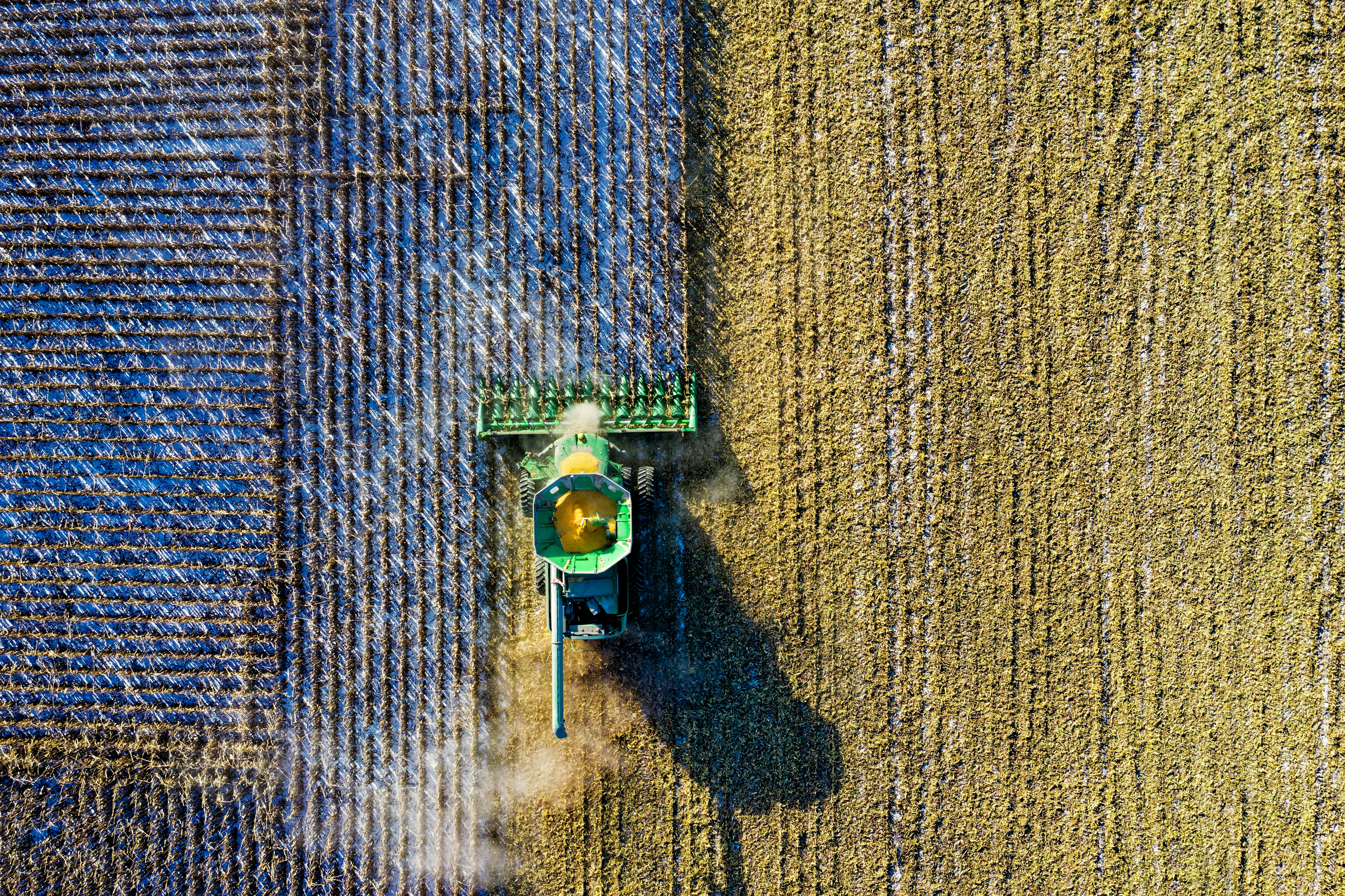
For most of us, food goes beyond simple nutrition and sustenance: it shapes our traditions, brings us together and creates lasting memories. World Food Day is an occasion to celebrate the diversity of our foods and to ponder the future: which foods will feature on our communal table as the world population continues to grow and the planet’s climate continues to change? With 99 per cent of all the calories we consume coming from land, protecting its lasting productivity equals safeguarding our future food supply. World Food Day 2022 is taking place amidst multiple global challenges that put the world off track to secure good food for all by 2030. One of the obstacles is the growing number of droughts that affect countries in all parts of the world – up 29 per cent since 2000, with more frequent and more severe droughts on the horizon. Securing the future of our food and those who produce it against drought is a key priority for UNCCD. No country or region is immune to drought, but all countries can work together to better prepare and respond to this urgent and global challenge. When speaking of drought resilience, it is important to recognize that drought is not just the absence of rain: it is often the result of poor land management. We cannot hope to have enough resources to feed the world’s population that’s set to reach 10 billion by 2050 without changing the way we produce, distribute and consume our food. The current food systems have already taken up 40 per cent of the world’s land surface — an area the size of Asia — and caused 80 per cent of all deforestation. The future of our food depends on reshaping our food systems toward sustainable agricultural practices – such as agroforestry, agro-pastoralism and use of drought-tolerant crops. For example, maize is a staple food for more than 300 million people in Africa, but by the 2030s drought and rising temperatures could render 40 per cent of the continent’s maize-growing area unsuitable for current varieties. In response, researchers have developed more than 160 maize varieties for sub-Saharan Africa that yield 25-30 per cent more than farmers’ standard varieties under drought. More than two million smallholder farmers in sub-Saharan Africa are now growing drought-tolerant maize varieties that build resilience and increase yields and productivity. Many successful approaches proven to keep land fertile and protected from drought are also centered on empowering rural women, who produce 60–80 per cent of our food, to emoloy the ancestral knowledge of nurturing their land with secure tenure and modern technology. This World Food Day is an opportunity to remind ourselves that no matter where we are along the food production and supply chain, we all depend on the secure future of our food. As we sit down to dinner, let’s commit to improving our relationship with food by making smart consumer choices, supporting sustainable agricultural producers and choosing plant-based diets focused on resource-efficient crops. We invite you to explore the Dry Delights content featured in our Droughland campaign: (re)discover some drought-resilient foodstuffs and pick your favorite! Making smart choices starts on our plates and supports better production, better nutrition, better drought resilience and a better life on land.
