Stories
Latest
On the sidelines of the 77th session of the United Nations General Assembly in New York, the UNCCD took part in a high-level event at the opening night of Goals House held at the iconic Tavern on the Green in Central Park on 18 September 2022. The roundtable discussion titled "The Metaverse: A Technological Revolution for People and Planet", showcased key challenges and opportunities of Web3, which could open new frontiers to spark progress and how this technology could be harnessed for the SDGs. The panelists included Ms. Inna Modja, CEO of Code Green and UNCCD Land Ambassador, Ms. Marina Ponti, Executive Director of the UN's SDG Action Campaign, Ms. Shannon Campaign, the COO of World of Women, and Ms. Andrea Meza Murillo, UNCCD Deputy Executive Secretary. The event closed with a moving musical performance of Ms. Modja. The Web3 — a term for a reimagined Internet powered by decentralized technologies — transforms how we interact online and offers access to the Metaverse. This collective virtual space enhances the physical and digital reality and provides a rich array of experiences for gaming, social media, education and art. It also shows different pathways that could be a force for good and lead to inspiring action on desertification and climate change. UNCCD Deputy Executive Secretary Andrea Meza Murillo emphasized that the "Metaverse paves new pathways for visions of the future on what each of us can do to restore the land. By working together and changing our hearts and minds, we make the most of all opportunities to raise awareness of the importance of tackling urgent and interlinked challenges such as land degradation and drought, nature loss and climate change." Earlier this year, UNCCD unveiled Droughtland, a fictional drought-stricken nation, to spark a global conversation on the urgent issue of drought. The campaign features what life in Droughtland might feel like, highlighting the central message that no nation or community has to face such a crisis. While using the new social media filter on Instagram and #NoDroughtland hashtag, the campaign invites the audience to become citizens of Droughtland, having a first-hand experience on how drought impacts different dimensions of life and calling for solidarity to boost drought resilience. Earlier in the day, Droughtland campaign was present in Central Park to raise awareness and encourage New Yorkers and city visitors to join the campaign's call to action.

At the start of the new academic year, the United Nations Regional Information Centre in Bonn together with UNCCD, hosted a group of graduate students from Côte d’Ivoire, Germany and Kenya to discuss the Convention’s work on combating drought and desertification and the role of science in supporting good land stewardship. Two dozen students who visited UN Bonn are a part of the programme launched by the German Center for Development Research (ZEF) in 2021, together with the Universities of Cologne, Abidjan and Nairobi as part of the new DAAD Global Environment and Climate Center Initiative. The African Climate and Environment Center – Future African Savannas (AFAS), research programme focuses on nature-based solutions for climate change adaptation and biodiversity conservation in African savannas. Addressing the students, UNCCD Lead Scientist Dr. Barron Joseph Orr stressed the urgency of bringing degraded lands back to health at a time when humanity has already exceeded four of the nine planetary boundaries which define our “safe operating space” – climate change, biodiversity loss, land use change and geochemical cycles, according to the recently published 2nd edition of UNCCD Global Land Outlook. Integrated land use planning that helps anticipate potential land degradation, navigate trade-offs and deliver on multiple Sustainable Development Goals is at the core of the Land Degradation Neutrality (LDN) concept. Developed by the UNCCD Science-Policy Interface (SPI), it provides a strong scientific foundation that supports UNCCD Parties’ work in land restoration. UNCCD Knowledge Management Officer Mr. Jeroen van Dalen explained the structure of the SPI that brings together scientists from various regions, policy makers, practitioners and civil society leaders to research a specific topic such as LDN and provide informed policy recommendations for the country Parties of the convention. Some of the visiting students who come from farming communities in Africa have witnessed firsthand the devastating effects of drought and land degradation on the rangelands and their inhabitants. Many questions from the students have been focused on UNCCD support for land restoration initiatives that benefit local communities. The students also wanted to know how youth can be engaged in UNCCD’s work. The UNCCD Communications Chief Ms. Xenya Scanlon highlighted the Convention’s work with Land Heroes and other young activists, as well as youth-led civil society organizations, inviting the students to get involved in the UNCCD Youth Caucus.

The Global Youth Caucus on Desertification and Land is inviting new membership applications. The UNCCD Youth Caucus is a formal mechanism for youth engagement, set up under the Convention to facilitate the active involvement of children and young people in the UNCCD activities and processes that address desertification, land degradation, drought, sustainable development and climate change. Learn more about our work and help us grow – submit your application using this link.

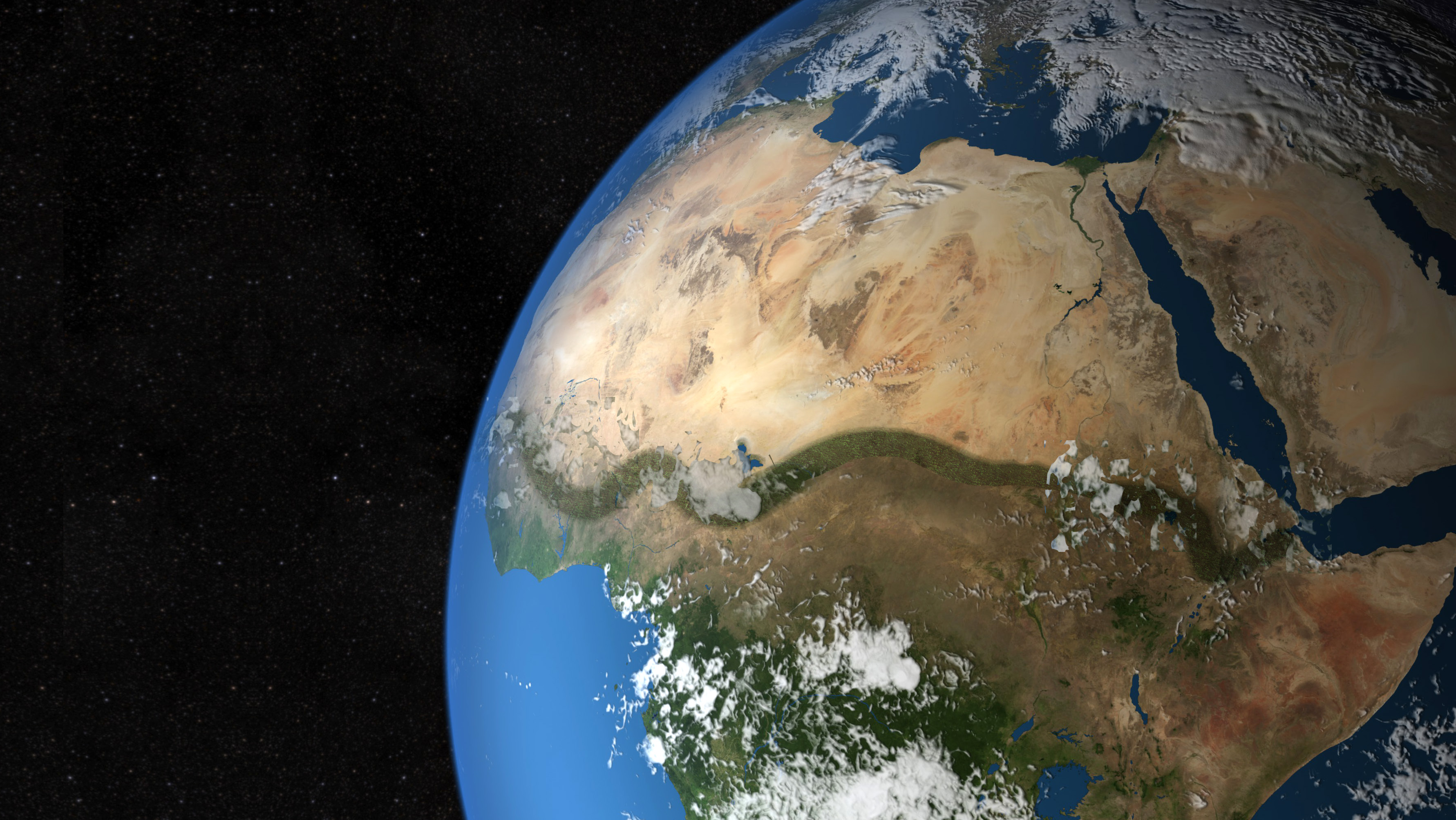
A region covering a total land area of 10 million km,2 of which 84% is drylands, Southern Africa is acutely affected by land degradation driven by both natural and human-induced processes. These include soil erosion which accounts for 15% of degraded land, as well as unsustainable agricultural practices, tree harvesting for charcoal production, contamination, pollution and biodiversity loss. Multiplied by climate change and intensified periods of drought, these hazards negatively impact the health, prosperity and livelihoods of millions dependent on agriculture, as evident from the recently launched Global Land Outlook Thematic Report on Southern Africa. To address these challenges in line with the Regional Strategic Development Plan 2020-2030, all sixteen of the Southern African Development Community (SADC) countries have committed to accelerating land, water and energy transformation. Leveraging the land, water and energy nexus for economic and business development became the focus of the recent stakeholder engagement and capacity building workshop in Pretoria, South Africa. The workshop focused on key investment pillars for future land restoration efforts in the region: water security for all, access to renewable energy, productive and resilient ecosystems, climate-smart infrastructure, strengthened agricultural productivity and sustainable food systems. The workshop, organized by the Global Mechanism of the UNCCD in collaboration with the African Union Development Agency (AUDA NEPAD), Commonwealth Secretariat, SADC secretariat and the African Union Commission, brought together representatives of the environment, land, climate change and finance sectors, as well as technical and development partners. It provided an opportunity to pinpoint key environmental, social and economic challenges that face each of the 16 SADC countries and identify the key areas of action, with the specific focus on launching technical and financial partnerships for implementation of the regional strategy for the Great Green Wall Initiative. The workshop, which marked a significant milestone under the tripartite partnership between the UNCCD, Commonwealth Secretariat and AUDA-NEPAD, also allowed country representatives to explore innovative project ideas to match each country’s challenges with the technical and financial support from key partners and institutions. Potential projects include floating solar photovoltaic farms, improvement of agricultural value chains to reduce post-harvest loss and increase job creation, as well as improvement of water harvesting technologies to enhance drought resilience. As the next step, the SADC countries will take stock of current initiatives to ensure coordination, avoid duplication, identify gaps and build on and upscale best practices and successful investments. National action and investment plans outline the ambitions of the SADC countries at national, transboundary, multi-country and regional scales.

The UNCCD Land Anthem “Born from the Land’, performed by the Land Ambassador Ricky Kej, became an emotional curtain-raiser for the high-level thematic debate "Moment for Nature" that took place on 19 July 2022 in the General Assembly Hall of the UN Headquarters in New York. The debate focused on ways to achieve the Paris Agreement's 1.5-degree target and ensure humanity's future by promoting greater coordination of the global efforts to reduce greenhouse gas emissions, protect biodiversity on land and sea, restore life to degraded land and soils, combat pollution and enable circular economies. Somewhere along our journey as humans, we have forgotten that we are not the only species, we need to live in absolute peace and absolute harmony with every single entity of nature, co-existing with the land we walk on and the air we breathe" – Ricky Kej The two-time Grammy Award winner and a long-standing UNCCD Land Ambassador, Ricky Kej embodies and inspires positive change through the emotional language of art and music. The UNCCD Land Anthem that he created together with another Land Ambassador Baaba Maal and other musicians from Canada, India, the USA, Senegal, South Africa and Vietnam has already been produced in eight languages. The song that celebrates Life on Land has been performed at key international events, such as the UNCCD COPs and the Desertification and Drought Day global observances. You can download the lyrics in Arabic, Chinese, English, French, Spanish and Russian, and watch the original release on our YouTube channel.

In recent yeas, water scarcity and drought have been seriously affecting the Northern Mediterranean and Central and Eastern Europe, with major impacts on the economy and welfare of people. To address the growing concern over the negative impacts of water scarcity, national focal points, country representatives and scientists gathered for an online Drought Dialogue on 13 July 2022. Representatives of Armenia, Azerbaijan, Belarus, Bosnia and Herzegovina, Georgia, Hungary, Italy, Macedonia, Malta, Moldova, Portugal, Serbia, Slovakia and Slovenia joined the dialogue to discuss the development of national drought plans and facilitate the exchange of effective approaches to drought preparedness and drought impact monitoring. Following the UNCCD COP mandate, the secretariat of the convention and the Global Mechanism are implementing a Drought Initiative, with the input from the Science-Policy Interface. The initiative aims to support UNCCD country Parties in their efforts to establish effective national drought action plans and improve the resilience of ecosystem and people to drought. To date, more than 70 countries are engaged in the process of designing national plans of action, including five countries from Central and Eastern Europe. Contributing to these efforts, the outcomes of the Drought Dialogue will support the production of a technical brief that will aim to address the gaps and needs of the region to building drought resilience with available knowledge and solutions. It will also include a number of case studies, initiatives and good practices on drought risk mitigation from a broad range of stakeholders: governmental, non-governmental, private sector, civil society and international organizations. The technical brief will follow the path laid out by the recent Global Land Outlook 2 Central and Eastern Europe thematic report “Ecosystem restoration for green recovery and a sustainable future,” which offers a comprehensive analysis of commitments under international and national initiatives promoting land and ecosystem restoration to address the impacts of drought.
