Stories
Latest
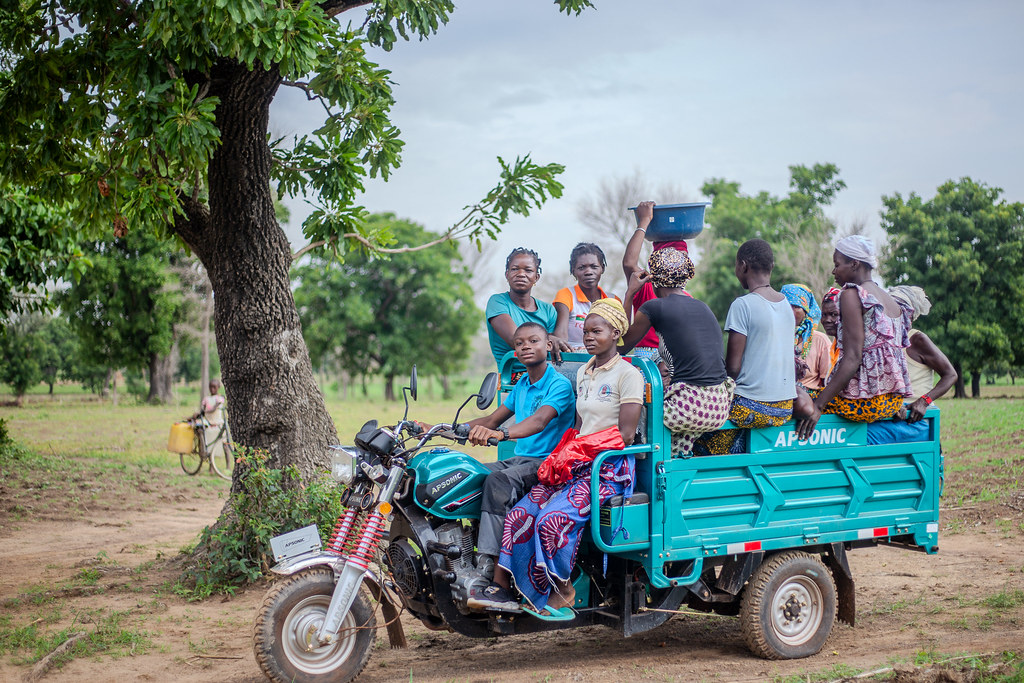
On 14-15 September 2021, the World Overview of Conservation Approaches and Technologies (WOCAT) and UNCCD conducted an expert review workshop to fine-tune the jointly developed methodology used to assess gender-responsiveness of the sustainable land management (SLM) technologies. The event facilitated an exchange between experts and practitioners from a variety of regions and organizations who addressed a number of technical and practical questions including the regional relevance of the methodology as well as the challenges and benefits of its application. Considering the tool’s potential impact on the ground, participants also discussed how it can contribute to tackling the wider gender-related issues as well as what data it could generate to support policy decisions. The UNCCD Gender Action Plan (GAP) emphasises that gender equality and women’s empowerment are key to the implementation of the Convention. The joint project on gender-responsive SLM technologies and approaches launched by UNCCD and WOCAT in 2020 focuses on one of the four priority areas for action outlined in the GAP – enhancing women’s access to leading SLM technologies that effectively support UNCCD implementation.

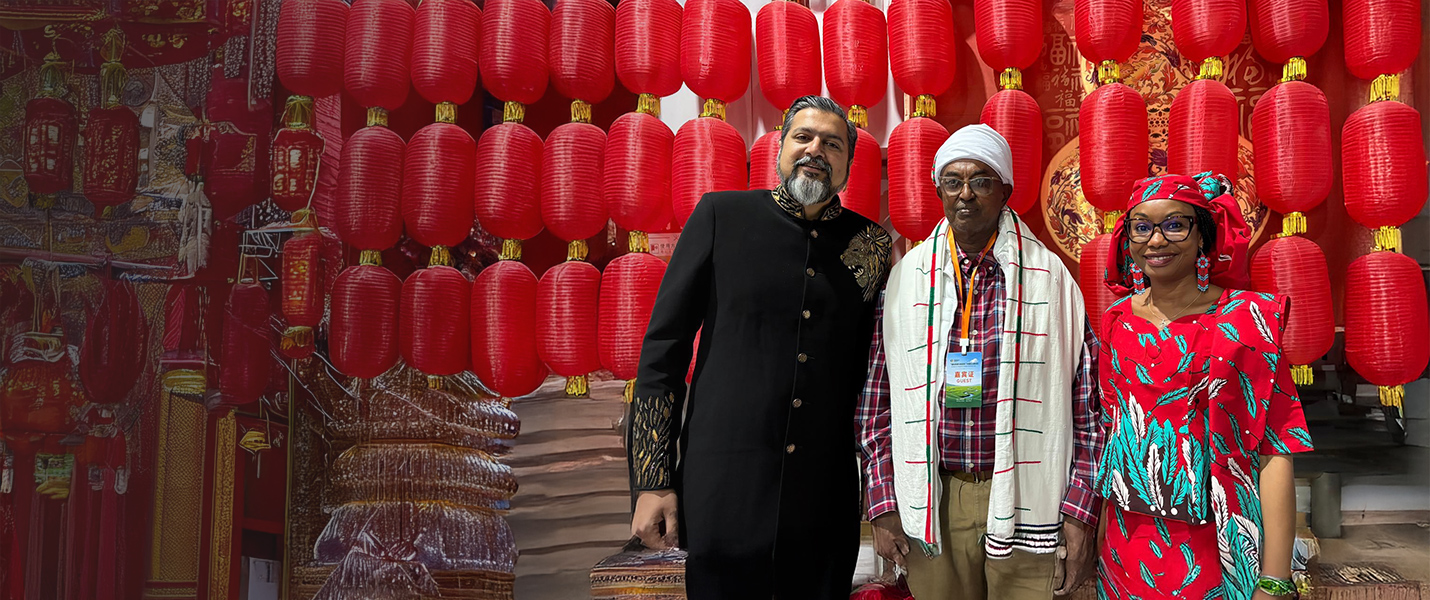
12 September is the UN Day for South-South cooperation. Collaboration among peoples and countries of the global South that contributes to their national well-being, their national and collective self-reliance and the achievement of Sustainable Development Goals is a key aspect of UNCCD-enabled projects such as the Ningxia International Knowledge Management Center for Combating Desertification in China. The center is the result of cooperation between UNCCD and China under the Memorandum of Understanding (MOU) signed with Ningxia Forestry Grassland Administration as one of the projects to implement the Ordos Declaration adopted at UNCCD COP13. Under the MoU, the center commits to offer from 2019 to 2023 training including in-person lectures, field exercises, study trips and online webinars to developing countries on policies and technologies related to land degradation, rehabilitation and mitigation of drought effects. In December 2019, the center co-organized together the UNCCD the first international seminar in Ningxia Yinchuan, China. 15 participants from Africa and Asia participated in lectures, community interviews, business visits and university workshops. Due to COVDI-19, since 2021 the center has been developing a series of online training courses to include virtual seminars and field trips that showcase policy measures, technologies and business models of dryland ecosystem restoration, water saving afforestation and ecological resources-based green economy development under south-south cooperation program of China to support capacity development for countries affected by desertification. Photo above: Visit to straw grid sand fixation site.

The UNCCD CSO Panel has released the latest issue of its newsletter. This issue introduces the recent news from the CSO network from May to August 2021, summary report of the CSOs meeting with the LDN Fund and TAF, report on the 2021 World Desertification and Drought Day, GGW Accelerator and upcoming events. Read more...

This year marks the fiftieth anniversary of the Ramsar Convention, the intergovernmental treaty which unites 171 countries to protect and use wisely the wetlands and the resources they provide. The Ramsar Convention is the oldest of the modern global intergovernmental environmental agreements. In the fifty years since it was founded, a lot more became known about the importance of wetlands for water security, disaster risk reduction, mitigating climate change, supporting biodiversity and providing livelihoods. Across the world, wetlands are of great importance to humanity. All agricultural production depends on water which is transported and provided to humankind through wetlands. More than half of the world relies on wetland-grown produce for their staple diet, for example from rice paddies. Wetlands also provide more than a billion livelihoods across the world in an array of activities that also deliver food, water supplies, transport, and leisure. Wetlands loss contributes to poverty and food insecurity. During the months of August and September 2021, the anniversary website is featuring stories and messages on why wetlands are important and what can be done to ensure they are better protected and used. On October 7, the Ramsar secretariat will host an intergenerational dialogue between leaders past and future to create connections across generations to elevate the urgency to protect, conserve and restore wetlands. This anniversary-themed video presents the many benefits of wetlands and gives the overview of the convention's work.

The Convention on Biological Diversity has issued the programme for its next Conference and Meetings of the Parties to be held in Kunming, China. It also opened the registration for media. The conferences (COP15/COP-MOP10/COP-MOP4) are organized in two parts. Part 1 will take place on 11-15 October2021 as a virtual event. It will include an online high-level segment. The in-person meetings and Part 2 of the conference will resume on 25 April - 8 May 2022. The Parties will conclude negotiations and decide on the new Post-2020 Global Biodiversity Framework. A high-level segment will also take place. The Open-Ended Working Group on the Post-2020 Global Biodiversity Framework will meet online starting next week, 23 August - 3 September 2021, to prepare the advance draft text. A high-level segment is also planned during this session. Decisive in-person meetings that were planned for October in China were paused for a few more months due to the coronavirus pandemic. Online accreditation of media for the events taking place now is available immediately. Accreditation for next years' meeting will open at a future date. For more information, click here.

Accelerating land restoration in the Sahel through media Media practitioners, broadcasters, representatives from print media and multimedia producers from the eleven Great Green Wall countries participated in a two-day virtual capacity building workshop with the theme "Media as agents of change to accelerate land restoration in the Sahel" on 12 – 13 August 2021. Facilitated by a team of technical experts from UNCCD, the African Union and the Pan-African Agency for the Great Green Wall, the training was held as part of capacity building activities in line with pillar five of the Great Green Wall Accelerator, announced by the President of France, Emmanuel Macron and other world leaders in January 2021 at the One Planet Summit on Biodiversity. The training also sought to form a coalition of Sahelian journalists to commence continuous engagements with the media for increased advocacy about the Great Green Wall Initiative, Africa’s epic ambition to restore degraded lands and grow an 8000 km natural wonder of the world across the entire width of Africa and project the Sahel as a land of opportunities to spur investments and improve the economy of communities in the Sahel. While declaring the media workshop open, Dr. Birguy Lamizana, Senior Programme Officer for the Sahel at UNCCD stressed the important role of the media in raising awareness and advocating for land and the environment. Earlier in her remarks, Dr. Lamizana informed journalists that the Great Green Wall has been borne out of an urgent need for concerted efforts and urgent response to the challenges faced by the region like the impact of desertification, climate change, land and water resources degradation, loss of biodiversity, loss of livelihoods due to poverty, food insecurity, malnutrition and the recent conflicts by armed groups which has led to irregular migration. She noted that these challenges not only affect Africa as climate issues have no barriers, sighting the recent wildfires in Greece, Italy and the sand dust in Europe near the north of Africa – all results of climate change. A call to the media to use their tools to advocate for land and the environment even in local languages was made by Dr. Lamizana, while urging the media to be active participants in the newly launched media network for the Sahel, to advocate and lobby government to commit budgets to the National Agencies for the Great Green Wall in the 11 Great Green Wall countries, for the implementation of the Great Green Wall Initiative’s activities to meet the targets of the initiative as set out by the year 2030. Similarly, Mr Elvis Paul Tangem, the African Union Coordinator for the Great Green Wall highlighted the importance of the Great Green Wall in providing peace, jobs and stability in the Sahel region. He noted that concerted efforts by all stakeholders such as the media will be required for success to be achieved. Journalists during their group and plenary sessions highlighted and presented challenges of land degradation in their communities and identified story ideas they would be working on in coming weeks to raise awareness and bring attention to issues of land degradation and drought as well as efforts of countries signing up to reverse, avoid and restore degraded land to achieve Land Degradation Neutrality (LDN) Targets set out by the 11 Great Green Wall countries for the LDN programme of UNCCD. Land degradation is a crisis affecting communities in the Sahel where people and communities live off the land – in a literal sense - and depend on its productivity for their everyday survival. About 80% of the population in Africa still rely on rain-fed agriculture for work but 65% of African land is degraded. In the last 30 years, the Sahel has been devastated by severe droughts and massive loss of fertile land due to climate change and unsustainable land management practices. The Great Green Wall Initiative is regreening the Sahel, restoring degraded lands and providing decent livelihoods for its people, snaking the Sahel all the way from Senegal in the West to Djibouti in the East, restoring degraded lands and providing jobs and opportunities for millions of people in Africa. The Great Green Wall is an African-led movement launched in 2007 by leaders from the Sahelian countries, with an epic ambition to grow an 8,000 km natural wonder of the world across the entire width of Africa, involving at least 11 countries and to achieve the Sustainable Development Goals by 2030. It is estimated that around 33 billion US dollars of investment – from private, national and international sources will be needed to achieve the targets/goals of the Great Green Wall Initiative by 2030 – restore 100 Million hectares of degraded land, create 10 million jobs and sequester 250 Million tones of carbon. In a post-COVID context where Sahelian countries are struggling with budgets and funding, the Great Green Wall Accelerator announced at the One Planet Summit in January 2021 will help meet financial requirements and turbocharge the achievement of its goals.
