Stories
Latest

Six weeks after the launch of UNCCD Land Anthem, composed and performed by award-winning musicians and UNCCD Land Ambassadors Ricky Kej and Baaba Maal, more than 300 000 people enjoyed the official music video released on World Soil Day.

Nominations are now open for the 41st Right Livelihood Award, widely known as the ‘Alternative Nobel Prize’. The Swedish Foundation behind the Award is inviting people from across the globe to propose candidates who are working in a visionary and exemplary way to solve global problems. The deadline for nominations is March 4, 2020. The Award is set to be presented in December 2020. Besides the search for this year’s Laureates, the Right Livelihood Foundation is also carrying out a range of initiatives to highlight the work of previous Laureates. In 2020, this includes a series of anniversary conferences with the participation of more than 30 previous Laureates. The conferences will take place with the following themes: February 20-22 in Bangkok, Thailand: “Education for Right Livelihood to Inspire Change – Connecting Activism and Academia” March 24-26 in Addis Ababa, Ethiopia: “Women, Peace and Security” June 14-17 in Medellín, Colombia: “Inspiring Change through Culture” The Right Livelihood Award is annually presented to four Laureates. Unlike most other international prizes, it has no categories. The Award recognises that, in striving to meet the human challenges of today’s world, the most inspiring and remarkable work often defies any standard classification. Human rights, environment, education, culture and democracy-building are some examples of issues addressed by the Award’s 178 previous Laureates hailing from 70 countries. Previous Laureates include Dr Denis Mukwege (DR Congo), Edward Snowden (USA), Svetlana Gannushkina (Russia) and Greta Thunberg (Sweden). For more information, please visit https://rightlivelihood.org/get-involved/support-us/nominate/

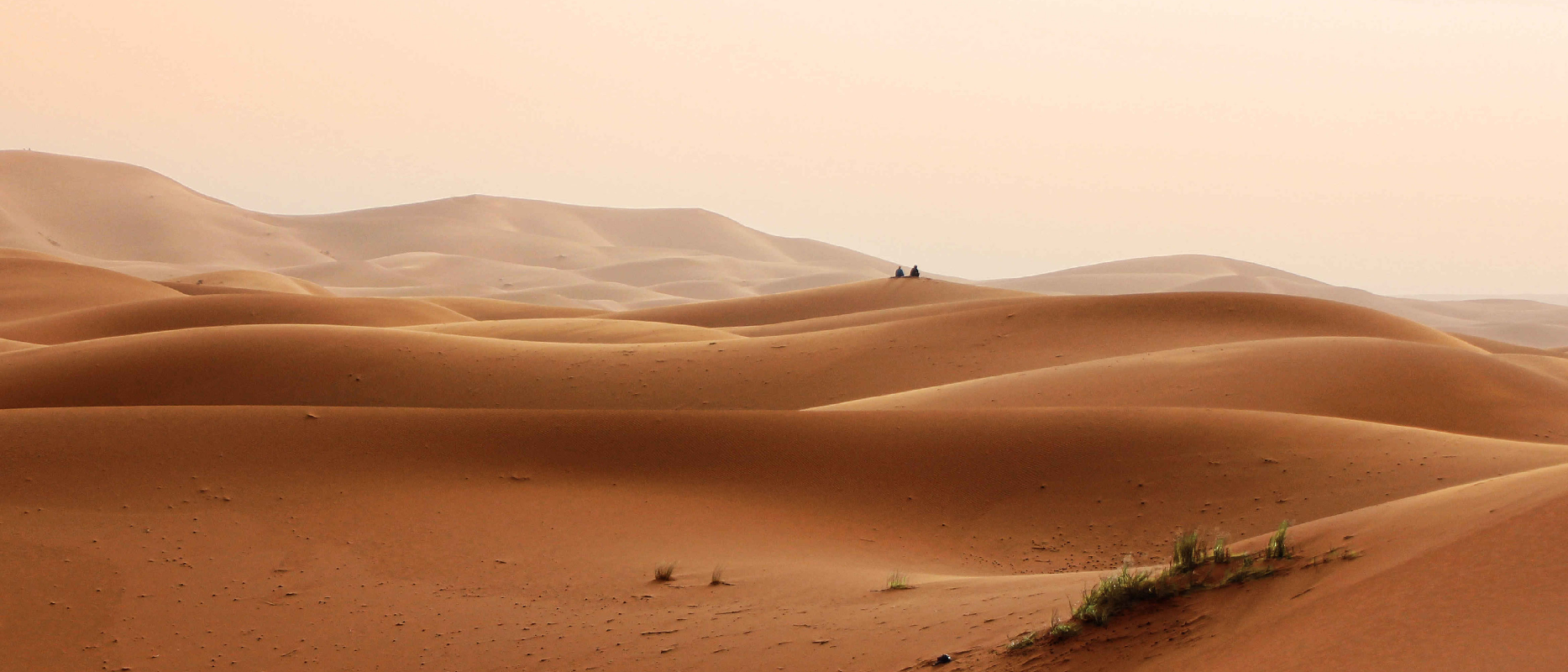
Nouakchott hosted an important conference on Environment and Sustainable Development on Thursday, 26 December 2019. The conference was organized by the “Collectif des Cadres Mauritaniens Expatriés” (CCME) under the theme "Environment and Sustainable Development in Mauritania: Challenges and Opportunities". Government officials, the ambassadors and high-level officials from the Nouakchott-based diplomatic corps, researchers, members of the civil society, and the general public took part in the conference. The UNCCD Executive Secretary Ibrahim Thiaw spoke at the conference as the keynote speaker after the opening remarks delivered by Mr. Mamadou Baro, President in office of the CCME and the intervention of the Minister of Environment and Sustainable Development, Ms. Marieme Bekaye. By using an allegory of an emulsifier, Mr. Thiaw explained the relationship between development and environmental preservation in Mauritania - a desertification and climate change-prone country where 50% of child mortality under-5 is related to the environment. “Balancing the need for development with the necessity to protect the environment is a delicate exercise of compromise,” said Mr. Thiaw. He then spoke about the environment sector in the country which is more diverse and has more significant potential than currently valued. To illustrate such potential, he gave six examples, including green jobs and agro-pastoralism, that would turn the challenges into opportunities. He concluded the speech by emphasizing that Mauritania’s sustainable development must be everyone's business. Read the full statement in French. A short summary of his statement can be found below. Desertification, the loss of natural habitats and water shortages are naturally at the core of Mauritania's environmental challenges. Evidence that climate change has already had its effects, droughts are becoming more frequent and more intense, each time causing economic damage to the country. Years of severe droughts thus correspond to periods of economic shrinkage, as the primary sector is the mainstay of the economy (more than 60% of Mauritanians derive their livelihood from agriculture and livestock farming). The citizens, not only those living in rural areas, are devastated by droughts. The land is affected as much as marine and coastal areas. Environmental issues are among the root causes of Sahelian cancer. Properly diagnosed and treated, they are also part of the solutions. Opportunities exist and they must be found. Dunes, the extreme heat of the Saharan sun and sand winds are often disruptive. However, in the era of the fourth industrial revolution, artificial intelligence and blockchains, these challenges can be transformed into a source of wealth and comfort. Biodegradable, decarbonated, cheap, desert sand is potentially a new currency. A Chinese company (Rechsand Technologies), with thirty years of specialization and research on desert sands, has built its multistory headquarters from sand. The wind and especially the sun are the other good news for Mauritania. The initial investments to produce renewable energy have been positive. The cost per kilowatt-hour of solar energy continues to fall, while the efficiency of the installations is increasing every year. The environment is also a sector that provides green jobs. Not only in the energy sector mentioned above but also in the restoration of degraded environments. The Great Green Wall is labour-intensive, and millions of jobs will be created in the short term, generating long-term income. Mauritania could also benefit greatly from environmental tourism, agro-pastoralism or fishing. Nature conservation is, in fact, the fundamental pillar of the national economy. The solution to turning our challenges into opportunities must be found. Mauritania can achieve its aspirations for prosperity while protecting its environment. Photo credit: Mozaikrim/MLK
Land Degradation Neutrality (LDN) can directly support the achievement of more than three-quarters of the Aichi Biodiversity Targets, according to a new report published by the Global Mechanism of the UNCCD, in collaboration with the Convention on Biological Diversity (CBD) and the Global Environment Facility (GEF). The report “Land Degradation Neutrality for Biodiversity Conservation: How Healthy Land Safeguards Nature” highlights how LDN can address the priorities of both the CBD and the UNCCD in an effective and complementary manner. According to the report, LDN and the CBD’s 2011-2020 Strategic Plan for Biodiversity have multiple mutual objectives aimed at promoting the sustainable use of natural resources, ecosystems and biodiversity and can therefore strongly reinforce each other. Both also include a commitment to socio-economic goals, including contributing to health, livelihoods and well-being and ensuring that the benefits from the sustainable use of land and biodiversity accrue to all, especially women, indigenous communities and the poor and vulnerable. The report provides concrete examples of how LDN can support the achievement of each of the Strategic Goals of the CBD’s Strategic Plan and suggests how synergies can be further exploited by countries in their efforts to achieve both LDN, through their voluntary national LDN targets, and their National Biodiversity Strategies And Action Plans (NBSAPs), by promoting actions to address the drivers of land degradation and biodiversity loss, protect ecosystems and support climate action. Good practices from around the world which are highlighted in the report include: The Philippines’ approach to integrating the three Rio Conventions with its national development strategies on agriculture, natural resources management and climate, and actions to prevent and reverse conversion and degradation in over 6 million hectares by 2030; Benin’s new Mono Transboundary Biosphere Reserve, recognized by UNESCO, protecting some 345,000 hectares of forests, savannas, wetlands and mangroves; Chile’s target to afforest 140,000 hectares primarily using native species and to improve the management of livestock grazing near protected areas; Moldova’s focus on conserving and improving the fertility of its soils, by expanding forest cover and establishing greenbelts and buffer strips. As the process of defining the post-2020 global biodiversity framework moves forward and the 2021-2030 UN Decade on Ecosystem Restoration unfolds, the report notes that there is strong potential to step up joint action on these agendas. In this context, the international community has an unique opportunity to better reflect the synergies between LDN, biodiversity conservation and ecosystem restoration targets in the and alto to scale up joint UNCCD and CBD implementation to raise both awareness and financial support for action on biodiversity loss and land degradation and make a pivotal contribution to achieving national and international objectives. The full technical report and the accompanying briefing note are both available to download from the UNCCD library: Technical Report onLDN for Biodiversity Conservation: How Healthy Land Safeguards Nature Briefing Note on LDN for Biodiversity Conservation
Land Degradation Neutrality (LDN) can directly support the achievement of more than three-quarters of the Aichi Biodiversity Targets, according to a new report published by the Global Mechanism of the UNCCD, in collaboration with the Convention on Biological Diversity (CBD) and the Global Environment Facility (GEF). The report “Land Degradation Neutrality for Biodiversity Conservation: How Healthy Land Safeguards Nature” highlights how LDN can address the priorities of both the CBD and the UNCCD in an effective and complementary manner. According to the report, LDN and the CBD’s 2011-2020 Strategic Plan for Biodiversity have multiple mutual objectives aimed at promoting the sustainable use of natural resources, ecosystems and biodiversity and can therefore strongly reinforce each other. Both also include a commitment to socio-economic goals, including contributing to health, livelihoods and well-being and ensuring that the benefits from the sustainable use of land and biodiversity accrue to all, especially women, indigenous communities and the poor and vulnerable. The report provides concrete examples of how LDN can support the achievement of each of the Strategic Goals of the CBD’s Strategic Plan and suggests how synergies can be further exploited by countries in their efforts to achieve both LDN, through their voluntary national LDN targets, and their National Biodiversity Strategies And Action Plans (NBSAPs), by promoting actions to address the drivers of land degradation and biodiversity loss, protect ecosystems and support climate action. Good practices from around the world which are highlighted in the report include: The Philippines’ approach to integrating the three Rio Conventions with its national development strategies on agriculture, natural resources management and climate, and actions to prevent and reverse conversion and degradation in over 6 million hectares by 2030; Benin’s new Mono Transboundary Biosphere Reserve, recognized by UNESCO, protecting some 345,000 hectares of forests, savannas, wetlands and mangroves; Chile’s target to afforest 140,000 hectares primarily using native species and to improve the management of livestock grazing near protected areas; Moldova’s focus on conserving and improving the fertility of its soils, by expanding forest cover and establishing greenbelts and buffer strips. As the process of defining the post-2020 global biodiversity framework moves forward and the 2021-2030 UN Decade on Ecosystem Restoration unfolds, the report notes that there is strong potential to step up joint action on these agendas. In this context, the international community has an unique opportunity to better reflect the synergies between LDN, biodiversity conservation and ecosystem restoration targets in the and also to scale up joint UNCCD and CBD implementation to raise both awareness and financial support for action on biodiversity loss and land degradation and make a pivotal contribution to achieving national and international objectives. The full technical report and the accompanying briefing note are both available to download.
UN General Assembly proposed a high-level dialogue to assess the progress in the fight against desertification, land degradation and drought and to map the way beyond the UN Decade for Deserts and the Fight Against Desertification which ends next year.