Stories
Latest



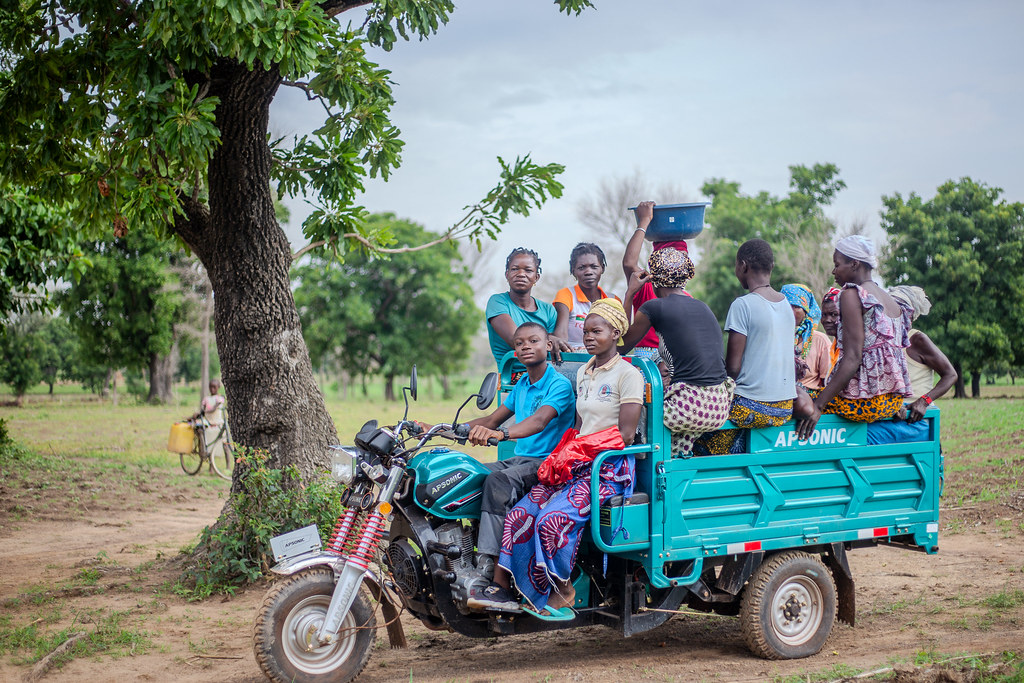
Video "Ma terre, héritage pour mes enfants" ("My land, a heritage for my children") has been produced by the Ministry of the Environment, Ecology and Forests, Madagascar, and the Global Mechanism of the UNCCD. Madagascar, known as the Green Island, committed to achieve Land Degradation Neutrality (LDN) by 2030. In order to stop soil erosion and water shortage, the Government and the people of Madagascar have put efforts in reforestation. Watch the video to learn more.

Unveiling the theme of the 2018 World Day to Combat Desertification, Monique Barbut, Under-Secretary General of the United Nations and Executive Secretary of the UNCCD, said “the campaign slogan, ‘Land has true value. Invest in it’, reminds us that land is a tangible asset with measurable value beyond just cash. That value is lost through degradation. But we can encourage land users to use land management practices that keep the land productive by the decisions we make every day in what we buy to eat, drink and wear.” Read full article from Africa Science News.
1-2 February 2018 − Rome, Italy − UNCCD has presented its new Drought Initiative to the UN-Water members and partners who gathered for the 28th UN-Water meeting at the IFAD Headquarters in Rome to discuss global water challenges. The preparations for the first phase of the Drought Initiative are in full swing with the focus on helping countries develop national drought preparedness plans. The initiative has been adopted by the recent UNCCD COP13 in Ordos, China in response to the growing need to assist countries, communities, agriculture, businesses and individuals threatened by drought − a disaster that has a negative effect on a broad spectrum of social and economic aspects, from food production to public health. The UNCCD secretariat aims to implement the Initiative in the biennium 2018−2019 by taking action on: • national drought preparedness plans • regional efforts to reduce drought vulnerability and risk, and • a toolbox to boost the resilience of people and ecosystems to drought By being prepared and acting early, people and communities can develop resilience against drought and minimize its risks. UNCCD experts can help country Parties review or validate existing drought measures and prepare a national drought plan to put all the pieces together, identify gaps and ensure that necessary steps are taken as soon as the possibility of drought is signaled by meteorological services. It is envisaged that such a plan would be endorsed and eventual action triggered at the highest political level. Read more: Advocacy Policy Framework on Drought (pp. 9-13) COP Decision on drought
30-31 January 2018 – Tehran, Islamic Republic of Iran – The High-level regional conference on information management for disaster risk reduction (DRR) and resilience took place on 30-31 January 2018 in Tehran, with a strong focus on regional cooperation for combating sand and dust storms (SDS) in Asia and the Pacific. SDS along with drought, land degradation and desertification, as well as wind and soil erosion, present a formidable challenge to sustainable development. Approximately two trillion tons of dust are emitted into the atmosphere each year, creating SDS threat that negatively impacts agriculture and livelihoods in many areas and regions in Asia and the Pacific. Today, disaster risks are outpacing disaster resilience, and the gap is growing in the countries with the least capacity to prepare for or respond to disasters. Opening the conference, the Under Secretary-General and Executive Secretary of United Nations Economic and Social Commission for Asia and the Pacific (UNESCAP), Dr. Shamshad Akhtar emphasized that disasters impede the social and economic development of nations and communities at a global scale. She also underlined the importance of finding sustainable solutions to address the SDS risks in the highly vulnerable Asia-Pacific region. UNESCAP together with the Government of the Islamic Republic of Iran has established the Asian and the Pacific Centre for the Development of Disaster Information Management (APDIM) in Tehran with the focus on strengthening regional cooperation in DRR and promoting effective policies for inclusive, sustainable and resilient development in the region. Dr. Akhtar emphasized that establishing APDIM and the regional conference in Tehran is just one example of support that countries receive to increase their resilience through targeted capacity development for disaster information management and knowledge sharing. The significant and increasing impacts of sand and dust storms affect a number of Sustainable Development Goals (SDGs) related to human health, productivity, agriculture, land, infrastructure and transport. Reducing the harmful impacts of sand and dust storms is essential to making progress on achieving the SDGs. UNESCAP put forth a four track-strategy to create a regional cooperation mechanism for SDS mitigation and adaptation. The strategy proposes addressing the disaster drivers through a multiple-hazard approach, developing a sand and dust storms alert system. establishing an Asia-Pacific sand and dust storm network, and leveraging the APDIM for enhanced technical support. Further information is available on UNESCAP website.
The Thematic Scientific Conference of the International Geographic Union (IGU) “Practical Geography and XXI Century Challenges” dedicated to the Centennial of the Institute of Geography of Russian Academy of Sciences will take place on 4-6 June 2018 in Moscow, Russian Federation. The conference will respond to the recommendations of the Conference of the Parties of the United Nation Convention to Combat Desertification (UNCCD) (decision 19/COP.12) which guides the provision of scientific advice to the decision-making process. Over the past few decades, the Institute of Geography has remainedone of the world-renowned scientific centres working on the problems of desertification, land degradation and drought. Following this tradition, this IGU Thematic Conference will pay special attention to land related issues, including the development of the modern concept of Land Degradation Neutrality (LDN) and the implementation of the new UNCCD 2018-2030 Strategic Framework. It is expected that the conference will gather about 1000 scientists, experts, practitioners and the international organizations from around the world. The outcomes of the conference will contribute to the priority areas of the UNCCD Committee on Science and Technology as well as the Science-Policy Interface. The occasion of the conference provides an opportunity to place sustainable land management (SLM), land tenure, LDN, and the Sustainable Development Goals (SDGs) in a regional and global context, providing the means to enhance or adapted underlying theoretical paradigms, encourage the radical renewal of research methods and the validity of environmental change predictions, as well as to strengthen the integration between social and environmental branches of geography. Topics to be addressed by the papers and sessions at the conference will cover a broad spectrum of research questions, but with a specific emphasis on land-based issues: Sustainable land management and the pursuit of land degradation neutrality: Loop of desertification, land degradation and drought Sustainable land management practices: experiences and evaluation Land use and land cover change: challenges of globalization Climate – vegetation interaction under present and future climate conditions Dangerous geomorphologic processes: regional and global trends, human impact, current methods of study assessment and forecast Monitoring atmospheric composition and environmental pollution Global environmental changes and people in changing environment Geopolitical dimension of population: the demographic revolution as challenge of XXI Century Geographical challenges in extreme environments of recent and past epochs Historical geography and climate change: new directions Local governance for local development in the XXI Century: opportunities and limitations Evolution of the world economy under globalization and regionalization processes Land-based solutions in regional context: Northern Eurasia in a telecoupled world: agricultural potential and ecosystem tradeoffs Migration, mobility and climate change: an overview with a specific focus on Russia and neighboring countries From water to dust: environmental problems in Central Asia China Belt and Road Initiative and Eurasia: risks and challenges Under the auspices of the UNCCD, the IGU Thematic Conference will serve as one of the important mechanisms for providing expert and scientific support for the implementation of the UNCCD strategic goals and related Sustainable Development Goals. The Conference will also provide an opportunity to strengthen the network of the UNCCD national scientific and technical correspondents for the dissemination of knowledge and national experience in combating desertification, land degradation and drought. The IGU Organizing Committee invites UNCCD to take an active part in the conference and present the UNCCD priorities regarding land degradation neutrality, sustainable land management and land-based climate change adaptation. Additional information about the event can be found at the IGU Thematic Conference website https://100igras.ru/en/index.php, available in Russian, English and French. The deadline for abstract submission and registration is 1 March, 2018! For any further questions, please do not hesitate to contact: Dr. German Kust, the UNCCD CST Vice-chair: e-mail kust@igras.ru, copy to gkust@yandex.com Mr. Alexander Sebentsov, PhD, Scientific Secretary of the IGU Conference: igras100@igras.ru
The SPI is an innovative platform that facilitates dialogue between scientists and policy-makers and ensures delivery of policy-relevant information to the UNCCD.