Stories
Latest
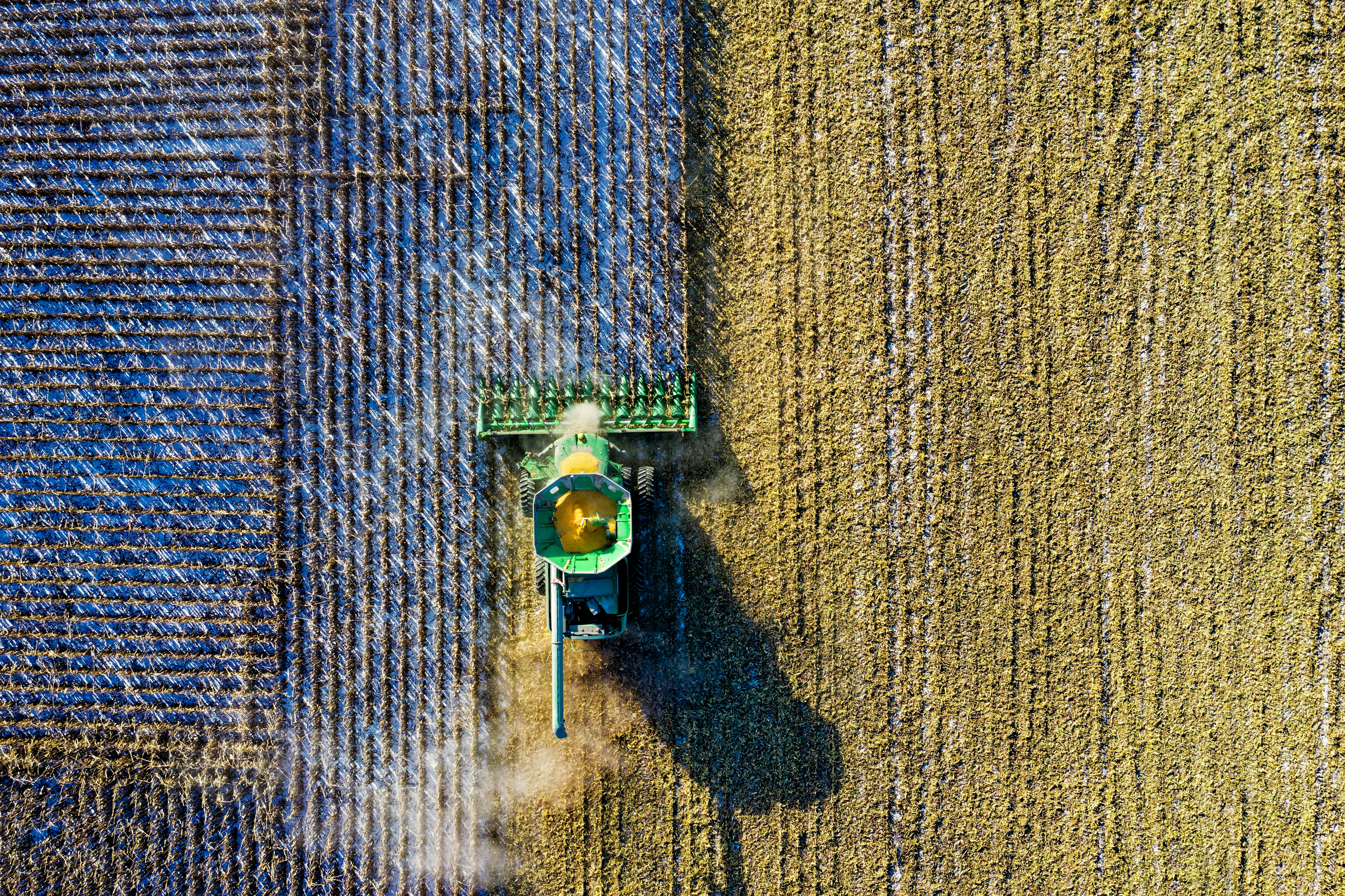

Ratchaburi Province, Thailand – 5 December 2017 – The World Soil Day ceremony took place at the Khao Cha-Ngum Royal Study Centre for Land Degradation Development under the theme “Caring for the Planet Starts from the Ground.” The event drew more than 2 000 participants, including the representatives of the national and local government, teachers, researchers, farmers, students from neighboring provinces and representatives from UN agencies, international institutions and the private sector. The ceremony commemorated the memory of King Bhumibol Adulyadej of Thailand, who earlier this year was honored as the first recipient of the Humanitarian Soil Scientist Award for his dedication to soil resource management. The organizations and individual farmers who employ best practices in sustainable soil management have also received recognition during the ceremony. The participants also visited the experimental plots, soil pits and natural forest at the Centre. The event, organized by the national Land Development Department, Ministry of Agriculture and Cooperatives, Government of Thailand and the Asia-Pacific Regional Office of the Food and Agriculture Organization (FAO) was featured in a nation TV report with the focus on approaches to land degradation and the role of organic soil carbon in sustainable land management.

Santiago de Chile – 5 December 2017 – The seminar “Caring for the planet begins with the soil” at San Sebastian University gathered representatives of academia, government agents, producers, researchers, international organizations, civil society members and students to discuss the protection and management of soils in sustainable agriculture. The event was organized by the UNCCD Coordination Unit for Latin America and the Caribbean in association with FAO and the NGO "Sustainable soil" (Suelos Sustentables) with the support from the Ministry of Agriculture, the Chilean society of Soil Sciences, La Frontera University and San Sebastian University. The topics presented for discussion included land degradation neutrality in the framework of sustainable development goals, incentives for the recovery of degraded soils and the science behind soil care. Participants have agreed to make soil contamination a central topic for the next year’s World Soil Day events in Chile, since this is a very relevant theme for the country due to the soil degradation caused by the mining practices and the excessive use of chemicals in agriculture. The presenters also highlighted the need to broaden the scope of discussion to include the farmers and private associations.
The UNCCD CSO panel has strengthen its communication and outreach capacity with the launching of a new website that will be used for sharing information, experiences and knowledge among the nearly 500 civil society organizations accredited to the Conference of the Parties to the UNCCD.Visitors can find all the relevant information on the thirteenth session of the Conference of the Parties, the latest publications issued by the CSO panel and the links to the work undertaken in the last biennium by the panel members.The website offers a great opportunity to get to know what CSOs are doing in the implementation of the UNCCD not only at the national level but also during the negotiations. To visit the website click https://www.csopanel.com.
The UNCCD Capacity Building Marketplace congratulates the Winners and thanks all the participants for their valuable contribution in making this competition a grand success ! Thank you for Voting !!! As per the public voting, we have 2 winners in each category. Category - "Projects, Actions and Activities" (for actions and achievements, as well as new and innovative ideas and projects) First prize winner: Mr. David Alonso Mesa Montaña for the video "Terrazas para la Vida" Mi recorrido en los temas ambientales empezó desde mis años en el colegio, en ríos y páramos de las montañas de los Andes, en Colombia, y mas adelante con mis estudios en ingeniería y una maestría en sostenibilidad global, donde investigué parte de los impactos socio-ambientales de algunas industrias extractivas en Boyacá, Colombia. Ahora, quiero continuar con el arte audiovisual para mostrar el patrimonio natural y los servicios ecosistémicos de la región, para buscar su protección. Agradezco a Agrosolidaria Colombia, por permitirnos participar en la construcción de terrazas de cultivo, para apoyar la Agricultura Familiar Campesina y a la UNCCD por fomentar el desarrollo de las artes audiovisuales, para documentar los esfuerzos que se realizan a nivel internacional, en la prevención de la desertificación. Second prize winner: Mr. Davou William Gilbert for the video "Gyero Tree Planting Project" Driven by the desire to see a sustainable, cleaner environment, Davou Williams recreates his vision through graphic designs for his community and the world to see and embrace. Davou is a graduate of Mass Communication from the prestigious University of Jos, Plateau State Nigera. And the Communication officer of Centre for Earth Works (CFEW). Category - "Awareness Raising" (to sensitize people and raise public awareness on environmental issues) First prize winner: Mr. Ghaamid Abdulbasat for the video "We are in Need of Nature" I've been so motivated regarding the environmental issues going on all over the world and so brought me to the Movement(To combat desertification) especially the issue of Climate Change and its effects, which obviously so many people all over the world are not aware of. I wish one day people will get a clear understanding on the issue of Climate change and desertification and ways to combat it for the current and the future generation as well. Second prize winner: Ms. Joy Ogoma Abraham & Mr. Kenneth Mek for the video "World water day CMP" Joy Ogoma Abraham is a multi-talented lady who combines her long years of experience as a mathematician and writer to advocate in the course of environmental challenge for a greener world. Passion drove her into participation in the enlightenment of over 200 teenagers and the planting of trees across Plateau State-Nigeria, on the platform of 'Centre for Earth Works' (CFEW). Kenneth Mek is a graduate of mass communication from the Amadu Bello University Zaria, Nigeria. He loves travelling and exploring nature. Hiking happens to be one of the most outstanding ways he connects with nature. Access to Water, sanitation and hygiene has been a major societal challenge. Over 57 million people in Nigeria do not have access to safe water. I envision a clean and healthy environment where young people sustainably achieve their full potential, this led to his involvement with 'Centre for earth Works' (CFEW), a youth led organization passionate about securing the earth.
UNCCD Stakeholders participated at the 6th International Conference on Drylands, Deserts and Desertification (DDD) that took place at the Sede Boqer campus of Ben-Gurion University of the Negev in Israel from 6-9 November 2017 that attracted participants from over 60 countries. The focus was the theory and practice of combatting desertification and environmental degradation, and related issues on living sustainably in the drylands, the means to address desertification and achieving the Sustainable Development Goals target of land degradation neutrality. Dr. Barron Joseph Orr, Lead Scientist, UNCCD, and Dr. Pamela Chasek, Professor of International Relations at Manhattan College, convened a panel on “Land Degradation Neutrality: From Concept to Implementation.” The session elicited interest because it links theoretical concepts to practice. The Scientific Conceptual Framework on Land Degradation Neutrality, a showcase of how practitioners have used scientific theories, was particularly well-received. The panel explained the history of the concept of land degradation neutrality (LDN) and the development of an LDN Scientific Conceptual Framework, which was endorsed by the country parties of the UNCCD at COP 13 in September 2017. The panelists also communicated both the scientific basis for LDN and the practical realities encountered as LDN is being implemented. Professor Uriel Safriel, Hebrew University of Jerusalem and former Chair of the UNCCD Committee on Science and Technology and former Chair of the UNCCD Science-Policy Interface (SPI), discussed the emergence of the LDC paradigm. Orr discussed the elaboration of the LDN Scientific Conceptual Framework. Chasek presented on the opportunities for new and innovative funding for LDN implementation. Dr. Mariam Akhtar-Schuster, UNCCD SPI Co-Chair, discussed the challenges and opportunities in creating an enabling policy environment for implementing LDN. The final two presentations focused on the challenges and opportunities for implementing LDN on the ground. Harifidy Rakoto Ratsimba, Dr Eng., Lecturer, University of Antananarivo, Madagascar and Madagascar Scientific and Technical Correspondent to the UNCCD, demonstrated how the sustainable management of land through the LDN approach in Madagascar will create multiple benefits in a way that the land can meet the clear needs in terms of food security and water management, the mitigation and the adaptation of the effects of climate change and the promotion of responsible consumption of natural resources. Dr. Anna Luise, Italian National Institute for Environmental Protection and Research and Italy Scientific and Technical Correspondent to the UNCCD, described the work of the Italian Ministry of the Environment in order to define and adopt specific LDN targets to be reached by 2030, noting Italy is the only developed country participating in this project. Up to 114 parties to the Convention have – to varying degrees – initiated steps to pursue the preparation and analysis of baseline assessment data necessary for integrated land use planning and LDN target setting and the initial monitoring of LDN indicators. Some countries have begun to implement LDN and donor countries and the private sector are developing innovative blending financing approaches. The Conference on Drylands, Deserts and Desertification emerged as an important forum for various stakeholders – scientists, practitioners, industry and government representatives and decision-makers, members of civil society organizations, non-governmental organizations, international development aid agencies – concerned about land and environmental degradation in drylands and living conditions in and around them, as well as their sustainable use and development. For more information contact: Barron Orr, BJorr@unccd.int. With thanks to Pamela Chasek and Barron Orr for this report. Above Panelists, from left to right: Barron Orr, Pamela Chasek, Mariam Akhtar-Schuster, Uriel Safriel, Anna Luise, And Harifidy Rakoto Ratsimba
Power capacity from renewables increased by 9% from 2015 to 2016. 3 billion people will be using unsustainably produced biomass energy by 2030. Recovering the more than 500 million hectares of degraded land to meet growing demand for renewables is urgently need and possible