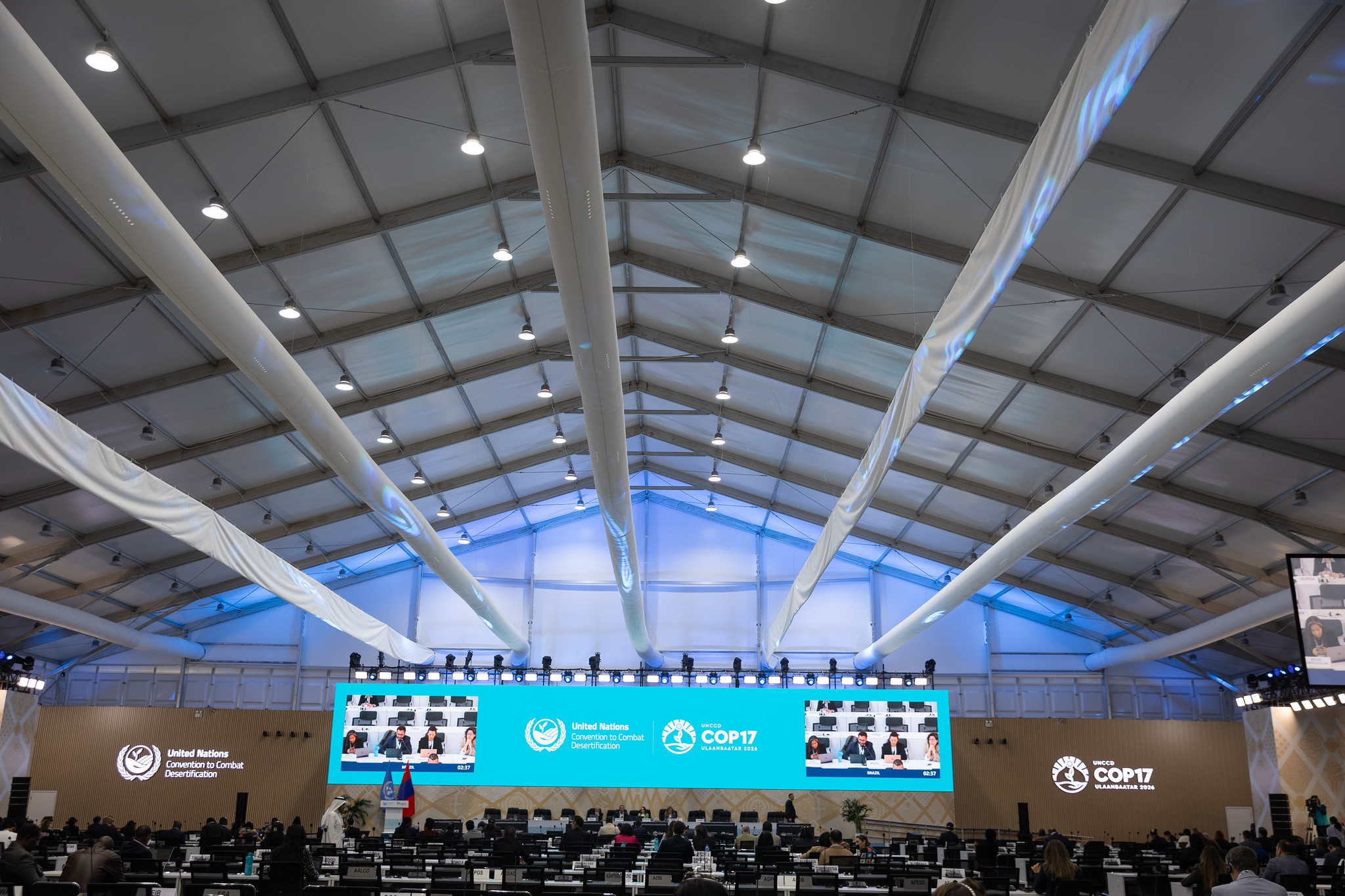
Restoring land, recognizing local knowledge: Community voices at COP17
-
15 Septiembre 2026
-
Story
Land is often discussed at global conferences in hectares, targets and indicators. For the people who live from the land, it is also home, livelihood, culture, memory and identity. At UNCCD COP17, held in Ulaanbaatar in August, that reality was evident in discussions on land tenure, rangelands, science and knowledge, finance and implementation. Across them, one practical issue kept surfacing: how to bring the knowledge of people who manage the land into decisions on its use, assessment and restoration.
Throughout COP17, the role of Indigenous Peoples as well as local communities in restoring and sustainably managing land featured prominently in formal discussions. Parties and observers emphasized the value of bringing Indigenous knowledge together with science and of strengthening land rights and tenure security. Representative of civil society organizations and Indigenous Peoples also called for community-generated data to inform reporting and for communities to be engaged as partners in implementation and decision-making.
Some of those priorities were reflected in the final decisions. On land tenure, Parties encouraged inclusive and participatory dialogue from local to national level, drawing on all forms of available knowledge, and recognized customary and communal rights of access to natural resources. The decision on rangelands recognized pastoralists as critical stewards, acknowledged mobility as an adaptation and resilience strategy and called for knowledge accumulated by pastoralists to inform efforts to close knowledge and data gaps. The specific agenda item on civil society participation, however, was not considered at COP17 and will return at COP18.
Outside the negotiating rooms, practitioners and Indigenous participants brought these questions down to the level of everyday experience. Maedeh Salimi of Iran, a programme director at the Center for Sustainable Development and Environment (CENESTA), works with pastoralists, smallholder farmers and fishing communities. She described land as far more than a source of income. A community’s culture, food system, social structure and future are tied to its territory, she said. Indigenous Peoples as well as local communities therefore need a direct role in decisions affecting those territories as rights-holders.
Several voices at COP17 stressed that useful evidence does not come from formal science alone. Ecologist Ermias Betemariam of the Nairobi-based Landscape Alliance says young scientists need to learn not only from books but also from communities, farmers and pastoralists — to “read landscapes and people” alongside scientific literature. Tai Pelli, a Borican Taíno from Puerto Rico with the United Confederation of Taíno Peoples, put the same point more directly. “We cannot make Indigenous knowledge secondary or inferior to what modern science has,” she said. “I think that if we work together, we can make a huge difference.”
One example of that collaboration came from South Africa. At a DryNet event on community-driven rangeland management, participants presented restoration work where grazing plans are co-designed with communities rather than delivered to them. Farmers implement the plans with locally recruited eco-rangers, including young people and women, while restoration is linked to training, market access and livelihoods. The experience demonstrated that technical interventions are only part of the equation: restoration is more likely to last when communities have ownership, functioning local institutions and economic opportunities tied to the land.
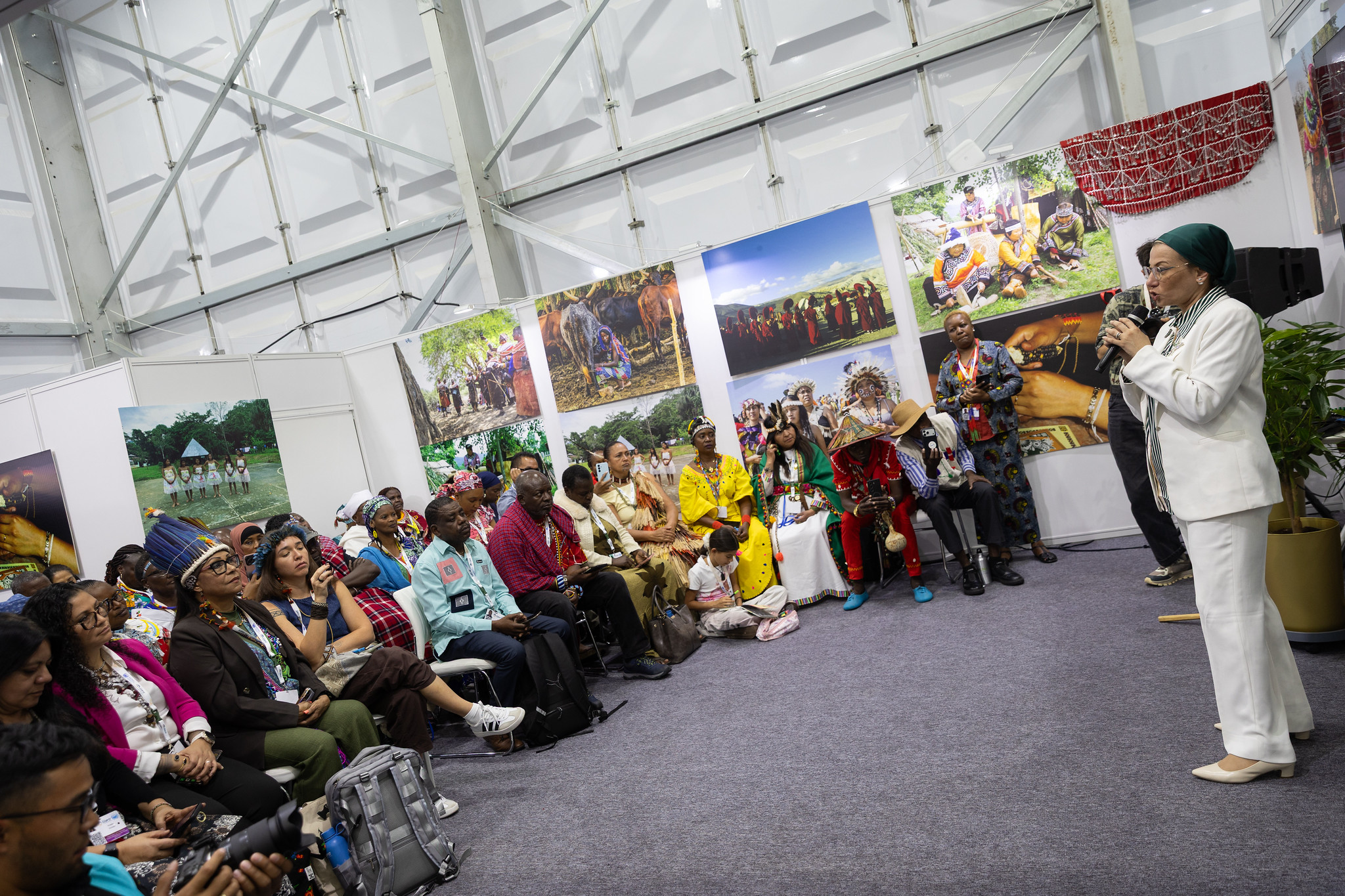
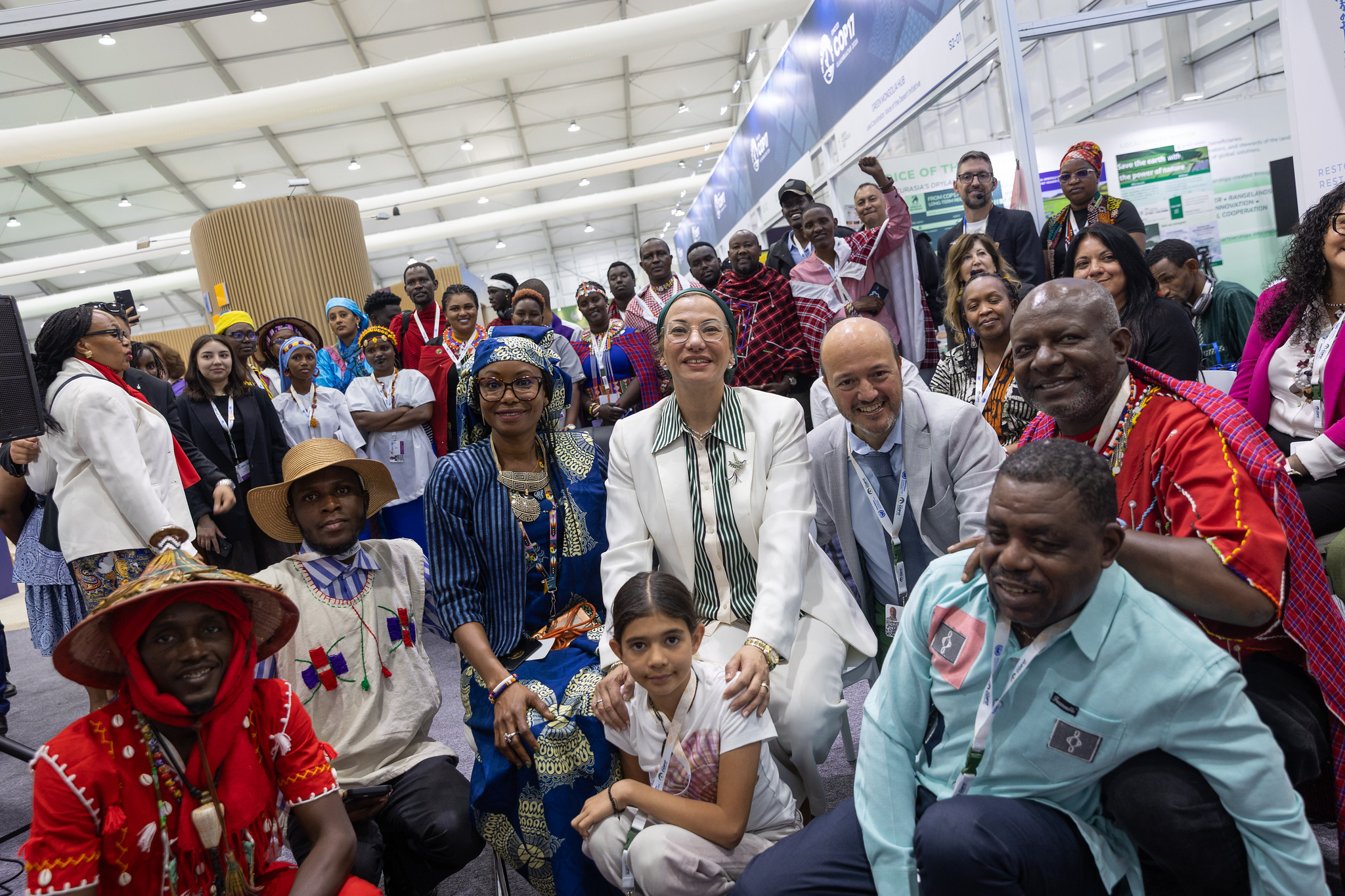
UNCCD Executive Secretary Yasmine Fouad speaks at the opening of the COP17 Indigenous Peoples' Pavilion
At an event on Indigenous data and resilient territories, participants explored what people on the ground can add to information gathered from above. Satellite data can show that something has changed; communities can often explain what that change means and why it happened. Indigenous representatives and practitioners working in the Amazon, the Congo Basin and West Africa described monitoring systems that combine satellite imagery, GPS, drones and mapping with knowledge built up over generations. In the Peruvian Amazon, Indigenous monitors collect territorial data to identify threats and guide conservation and restoration.
Pastoralist groups carried many of these priorities into a collective declaration. The Ulaanbaatar Declaration, adopted by pastoralist and Indigenous peoples at the Global Pastoralist Gathering ahead of COP17 and presented during the COP’s open dialogue, describes pastoralists as rights-holders, knowledge holders and solution providers. It calls for recognition of mobility and customary governance, free, prior and informed consent, meaningful participation, direct access to finance and the need to recognize pastoralist knowledge systems alongside scientific knowledge.
For Erjen Khamaganova, a Buryat-Mongol representative of the World Union of Indigenous Spiritual Practitioners at COP17 and a founding member of its Elders Council, knowledge of the land is also inseparable from responsibility. Frameworks and finance cannot deliver implementation without real engagement at community level, she said. Her own vision of land is rooted in ancestral ideas of two-way responsibility between people and Mother Earth — a relationship in which caring for land is an obligation upheld across generations.
The question of knowledge and stewardship ultimately leads to another: who has a voice in the work of the Convention. During COP17, the UNCCD Indigenous Peoples Caucus, the Local Communities Caucus, Civil Society Organizations Panel, Youth Caucus and Gender Caucus came together to call for meaningful participation in UNCCD decision-making and for their role to be fully reflected in the Convention’s work. “We are here to offer solutions that are born from our close relationship with nature and with the land,” said Jennifer Tauli Corpuz of the Indigenous Peoples' Caucus.
While COP17 did not resolve every question around participation, it marked the first formal meetings of the Indigenous Peoples Caucus and Local Communities Caucus and brought together the largest representation of Indigenous Peoples in the history of a UNCCD COP. Parties took note with appreciation of the declarations of Indigenous Peoples, the youth the local communities and the Mayors and included them in the COP17 proceedings. They did the same with the declaration by civil society organizations and summaries of the two civil society open dialogues. The land tenure decision also asks the secretariat to support the convening of all four UNCCD caucuses as a way to enrich discussions on land tenure and implementation. The participation debate remains unfinished, but the programme for COP18 puts civil society participation back on the agenda and provides for the caucuses to convene again when Parties meet in Egypt in 2028.
Photo : © UNCCD/Kiara Worth
Publications

Strong, sustainable, and resilient urban-rural linkages are central to efforts to combat land degradation, reduce out-migration, and achieve other sustainable development…