News & stories

Latest
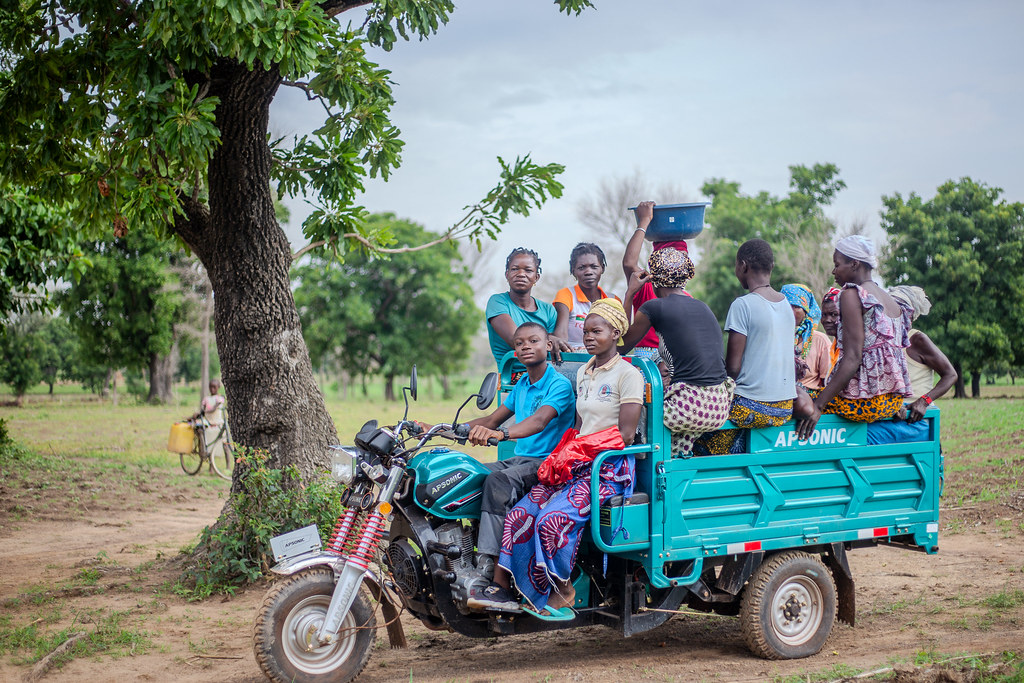


By Tina (35) Egypt via UNICEF Middle East and North Africa Regional Office My name is Tina from Egypt, and if you're reading this, you're probably as eco-curious as I am! Let me take you on a journey from my humble abode in Upper Egypt, where the golden sands meet green fields, and stories of climate change get a little twist! Imagine a farming village with chirping birds and vast green stretches. That's my home. Everyone I know is deep into agriculture. We don’t just live here; we vibe with nature! But, and here's the big BUT – most people are in the dark about climate change. The delicate dance between us and Mother Earth? It's missing a few steps. A few of us eco-warriors decided to stir things up. Composting? Check. Recycling agricultural waste? Double-check. Organic fertilizers? Oh, you bet. We’re talking about sustainable living at its finest. The best part? 300 farmers (yes, you read that right) joined the green brigade. Our baby project even landed us in the top 10 of a national competition with 150 organizations! We wanted to do more than just catch people's attention. We wanted to change our mindsets. So, we brainstormed and launched "Us and Climate Change." The plan was to equip teachers to be climate mentors, giving them the low-down on the climate crisis so they can inspire the next gen. At our recent gallery event, we showcased not just the beauty of recycling, from chic recycled outfits to innovative school tools, but also the power of performance. The spotlight was undeniably on “Al-Barsha Panorama”, our very own theatre group. In Upper Egypt, street theatre isn't just entertainment; it's an educational tool and a heartbeat that resonates deeply with our community. Our ultimate dream? A world where we can freely drink clean water, savor healthy food and take in pure, unadulterated air. With every performance, with every piece of art we create, we're advocating for that pristine environment. And while the goal is clear – an untouched landscape with unblemished access to essentials – we're also proving that blending this mission with art, special forms that connect so deeply with our people, can be both impactful and soul-stirring. Our art is our voice against climate change, and it’s making waves in our community.

I am Mona, a Jordanian residing in the Shouneh region of southern Jordan, near the Dead Sea. I am a young climate advocate specializing in environmental justice and gender equality. I collaborate with UNICEF as a youth skills empowerment trainer. I aim to raise awareness about climate change and the gendered impacts it has on my community.

La conférence des Nations Unies pour lutter contre la dégradation rapide des terres et l'aggravation de la sécheresse se tiendra à Samarcande, en Ouzbékistan, du 13 au 17 novembre 2023. Bonn/Samarcande, 13 septembre 2023 - Pour la première fois depuis son entrée en vigueur, la Convention des Nations Unies sur la lutte contre la désertification (CNULCD) organisera l'une de ses réunions officielles en Asie centrale. La vingt et unième session du Comité chargé de l'examen de la mise en œuvre de la convention (CRIC 21) dévoilera les dernières tendances mondiales en matière de dégradation des terres et de sécheresse, et passera en revue les progrès réalisés par les pays en matière de restauration des terres. Cette réunion intervient à un moment critique, alors que le monde est témoin d'une recrudescence des phénomènes météorologiques extrêmes, tels que des vagues de chaleur et des incendies de forêt historiques en Europe et en Amérique du Nord, plusieurs saisons des pluies sans précipitations dans la Corne de l'Afrique et des inondations, et des moussons et des cyclones dévastateurs en Asie. La dégradation des terres contribue à ces changements et événements climatiques, tout en étant simultanément aggravée par ces derniers. Ibrahim Thiaw, secrétaire exécutif de la CNULCD, a déclaré : « Nous nous trouvons à un stade crucial dans nos efforts pour maintenir la vie sur terre. Les sécheresses, les incendies de forêt et les vagues de chaleur dont nous avons été témoins dans le monde sont les symptômes de crises climatique et de la nature de plus en plus graves et interdépendantes, et les terres sont au cœur de ces deux crises. Depuis 2015, quelque 4 millions de kilomètres carrés de terres saines et productives ont été perdus, soit une superficie équivalente à celle de l'Asie centrale. Nous devons de toute urgence mettre un terme à la dégradation des terres et restaurer au moins 1 milliard d'hectares pour atteindre les objectifs mondiaux en matière de terres d'ici à 2030. » La réunion se tiendra au Centre des Congrès Silk Road Samarkand à Samarcande, en Ouzbékistan, du 13 au 17 novembre 2023. Le 15 novembre, un événement de haut niveau sera organisé sur les tempêtes de sable et de poussière, dont beaucoup se sont produites en Ouzbékistan ainsi que dans les pays et régions avoisinants avec une fréquence et une gravité croissantes ces dernières années. En outre, le 14 novembre, le Caucus sur le Genre de la CNULCD réunira des experts internationaux pour discuter des droits fonciers des femmes en tant que condition préalable au succès des efforts mondiaux de restauration des terres et de résilience face à la sécheresse. Selon les dernières données de l’ONU, entre 2015 et 2019, au moins 100 millions d'hectares de terres saines et productives ont été dégradés chaque année, affectant la sécurité alimentaire et hydrique au niveau mondial et impactant directement la vie de 1,3 milliard de personnes. Cela revient en tout à 420 millions d'hectares, ou 4,2 millions de kilomètres carrés, soit un peu plus que la superficie combinée de cinq pays d'Asie centrale : Kazakhstan, Kirghizstan, Tadjikistan, Turkménistan et Ouzbékistan. Si la tendance actuelle se poursuit, il faudra restaurer 1,5 milliard d'hectares de terres d'ici à 2030 pour parvenir à un monde neutre en matière de dégradation des terres. En revanche, l'arrêt de toute nouvelle dégradation des terres et l'accélération des engagements existants en vue de restaurer 1 milliard d'hectares pourraient permettre de dépasser l'objectif de neutralité. La réunion CRIC21 passera en revue les progrès accomplis dans la mise en œuvre des objectifs stratégiques de la convention en matière de promotion de la gestion durable des terres, de renforcement de la résilience face à la sécheresse, de soutien au leadership des femmes dans l'agriculture durable et de la lutte contre les migrations forcées dues à la dégradation des terres et aux changements climatiques. FIN Notes aux rédacteurs Les représentants des médias accrédités sont invités à assister au CRIC21 ainsi qu’aux événements associés et à en rendre compte. Des visites de terrain permettant aux journalistes de voir des projets de restauration des terres et de résistance à la sécheresse auront lieu juste avant le CRIC21. L'inscription en ligne pour les médias est disponible au lien suivant : www.unccd.int/cric-21-online-registration. Pour vous inscrire, veuillez fournir les documents suivants : Une photo d'identité récente Une carte de presse valide Une copie (photo et pages de signature) de votre passeport (pour les journalistes étrangers) ou de votre carte d'identité nationale (pour les demandeurs locaux) Une lettre d'introduction du chef de bureau ou de l'entreprise qui sponsorise votre voyage à la session. Pour les journalistes indépendants, une lettre de l'organe de presse qui vous confie la couverture de la conférence est nécessaire Un formulaire d'accréditation dûment complété Les journalistes enregistrés en ligne pourront retirer leur accréditation au Silk Road Samarkand Congress Center sur présentation d'une carte de presse valide et d'une pièce d'identité. Pour plus d'information sur les réglementations relatives aux demandes de visa et à l'introduction de matériel de reportage en Ouzbékistan, veuillez consulter le lien suivant : https://e-visa.gov.uz/main_ Pour toute question concernant l'accréditation des médias ou la couverture de l'événement, veuillez contacter : press@unccd.int Des informations supplémentaires et des mises à jour médiatiques sur la Convention et le CRIC 21 seront disponibles sur le site web du CRIC 21 du pays hôte et sur le site web de la CNULCD. À propos de la CNULCD La Convention des Nations Unies sur la lutte contre la désertification (CNULCD) est la vision et la voix mondiale pour la terre. Elle rassemble les gouvernements, les scientifiques, les décideurs, le secteur privé et les communautés autour d'une vision commune et d'une action mondiale visant à restaurer et à gérer les terres du monde pour la durabilité de l'humanité et de la planète. Bien plus qu'un traité international signé par 197 parties, la CNULCD est un engagement multilatéral visant à atténuer les effets actuels de la dégradation des terres et à promouvoir la gestion des terres de demain afin de fournir de la nourriture, de l'eau, un abri et des opportunités économiques à toutes les personnes d'une manière équitable et inclusive.

Bonn/Vancouver, 28 August 2023 -- The United Nations Convention to Combat Desertification (UNCCD) is launching a new virtual exhibition titled Her Land to showcase the transformative power of women’s leadership in sustainable land management. The exhibition was unveiled at the 7th Assembly of the Global Environment Facility in Vancouver, Canada. Through immersive experiences and rich imagery in the digital realm, Her Land campaign harnesses the creative power of visual artists and musicians who support UNCCD to put the spotlight on the struggles and successes of women living on the frontlines of desertification, drought and climate change. The campaign calls on governments to deliver policies that guarantee secure land tenure, motivates businesses to invest in gender-focused land restoration projects and invites the public to share stories that illustrate the bond that women share with the land they nurture. The virtual exhibition in support of Her Land campaign is spearheaded and curated by Malian artist and UNCCD Goodwill Ambassador Inna Modja. UNCCD Executive Secretary, Mr. Ibrahim Thiaw, commented on the campaign's ethos, "Her Land initiative transcends being merely a message. It embodies a movement, urging us to venerate the women, the land's true guardians." In the words of Inna Modja: “We must dare to invent the future. I saw that dare come to life in the resilience and bravery of communities, and within them, the fierce strength of women, relentlessly fighting to protect their land, their homes, their communities. The empowerment of women is absolutely necessary in our fight against land degradation and desertification.” Through the creative efforts of Inna Modja and Marco Conti Sikic, the campaign brings together immersive digital experiences, poignant photography and artful videos to engage and unite participants in support of a future in which women's rights to land are recognized and their contributions are celebrated. Her Land campaign has been made possible through the generous support of the Canadian Government, the European Commission, and the Republic of Korea through the Changwon Initiative. Canada's transformative contribution of $6 million CAD is part of the country’s pioneering International Feminist International Assistance Policy that aims to advance gender equality as the cornerstone of a progressive and harmonious society. Canada’s contribution supports the implementation of projects under UNCCD Gender Action Plan as well as meetings of the Gender Caucus during the biennial Conferences of the Parties to UNCCD. The European Commission’s contribution aims to raise awareness on responsible land governance among all stakeholders and to promote more equal access to land and land tenure security for men and women as well as other vulnerable populations, including indigenous peoples and local communities. For its part, the Changwon Initiative, named after the UNCCD COP10 venue and coordinated by the Korea Forest Service, enables the UNCCD to be the global voice for land. The Initiative supports the Land Degradation Neutrality Target Setting Programme, through which over 100 countries have set voluntary national targets to restore degraded lands.

24 July 2023 – HEALV3RSE,a groundbreaking new game promoting real-world action for the planet, launches today on Metaverse. HEALV3RSE, which brings together the worlds of gaming and sustainability, invites players to become the heroes our planet desperately needs. It takes players on an epic journey through captivating realms, each representing a vital element of our planet's wellbeing. From the fiery depths of the Fire Kingdom to the enchanting expanses of the Oceanic Realm, players will face challenges, solve puzzles, and embark on missions to heal the planet. As the players advance through the game, they discover facts about drylands and the challenges of desertification, making educated choices to restore these unique and vulnerable ecosystems by planting trees. What sets HEALV3RSE apart is the unique integration of player avatars actually performing healing actions within the game, such as planting trees, conducting ocean cleanups, or installing solar panels. This interactive feature, which the creators call ‘Play to Heal’, brings a sense of empowerment to the gameplay experience. The Game, which launches with an accompanying digital Avatar collection, was created by Code Green in support of the United Nations Convention to Combat Desertification (UNCCD). It was developed in partnership with The Sandbox and , designed in collaboration with Interactive Studio. "HEALV3RSE's innovative approach is a game-changer. By merging gaming with sustainability, it amplifies the urgency of combating land loss and inspires action. This aligns with UNCCD's goals and proves that everyone can contribute to the health of our planet in their own unique ways," - said Ibrahim Thiaw, UNCCD Executive Secretary. "We are thrilled to present HEALV3RSE to the world," said Inna Modja, Code Green’s CEO and UNCCD Goodwill Ambassador. "Our goal is to inspire players to take action and make a positive impact on the planet. Through immersive gameplay and the captivating artworks, we aim to ignite a global movement of healers who understand the urgency of healing our Earth." The Sandbox said: ‘’The Sandbox is proud to announce its partnership with Code Green, a Web3 non-profit foundation supporting social, climate, and gender justice causes. Code Green’s origins go back to the worldʼs largest land restoration movement — Africa's Great Green Wall. ‘’ A portion of the proceeds from the digital avatar collection will be used to deliver free inspiration sessions with experts, activists and artists for anyone who wants to learn more about desertification, climate action and web3 technology. Those who support the new HEALV3RSE by purchasing special avatars will be also generating funds for one of the projects along the Great Green Wall — a game-changing African-led initiative to restore the continent’s degraded landscapes and transform millions of lives in the Sahel. HEALV3RSE is available to access via The Sandbox metaverse. Trailer for HEALV3RSE in The Sandbox For more information press@unccd.int About the UN Convention to Combat Desertification The United Nations Convention to Combat Desertification (UNCCD) is the global vision and voice for land. We unite governments, scientists, policymakers, private sector and communities around a shared vision and global action to restore and manage the world’s land for the sustainability of humanity and the planet. Much more than an international treaty signed by 197 parties, UNCCD is a multilateral commitment to mitigating today’s impacts of land degradation and advancing tomorrow’s land stewardship in order to provide food, water, shelter and economic opportunity to all people in an equitable and inclusive manner. Goodwill Ambassadors inspire the public and decision-makers to take practical actions and drive policies to achieve the Convention’s mission to promote sustainable land stewardship. They also help advance efforts to reduce poverty and promote gender equality, especially among climate-vulnerable, land-dependent populations About Code Green Code Green is a mission-driven web3 organization, harnessing the power of art and blockchain technology to spark a healing revolution for the planet. Inna Modja, CEO of Code Green, is a Malian actress, singer and environmental activist, and Goodwill Ambassador for the UNCCD. www.codegreen.earth @codegreen_nft About The Sandbox The Sandbox is a leading decentralized gaming platform where players can create, own, and monetize virtual worlds and gaming experiences. About Interactive Studio Interactive Studio offers comprehensive support to help brands establish themselves in the ever-changing world of Web3 and gaming.

From potatoes grown in recycled sacks to “more crop per drop” fruit tree varieties, climate-smart and women-led agriculture initiatives became the center of discussions at a recent interregional conference convened by the United Nations Convention to Combat Desertification (UNCCD) in Dushanbe, Tajikistan. Fertile land is a precious commodity in Tajikistan, where 90% of the country's territory is covered by mountains and 60% of the population directly depend on agriculture for livelihood. Agriculture is a major part of Tajikistan’s economy. Can you spot the colors of one of its best-loved crops in the stripes of the national flag? As heatwaves, droughts and other extreme climate events become more frequent and severe across the globe, regional cooperation and knowledge sharing are becoming a priority in building drought resilience and fighting land degradation. In response to these growing challenges, representatives of Belarus, Georgia, Kazakhstan, Moldova, the Russian Federation, Tajikistan and Turkmenistan met in Dushanbe, Tajikistan from 1-2 July 2023 to discuss upscaling and coordinating legislative, educational, scientific and technical cooperation aimed at achieving Land Degradation Neutrality. Water is so precious in Central Asia, some say it’s worth more than gold. Burrowing deep into the soil, this well in the Gissar Valley carries water that contains trace amounts of the precious metal “Though we come from different climates and landscapes, we are united in the face of climate-induced drought and land degradation. Women who develop and test climate-smart and cost-effective solutions locally should be the ones spearheading regional and global efforts to grow and protect our food in the times of climactic stress,” participants stated. Reflecting the theme of this year's Desertification and Drought Day “Her Land. Her Rights”, discussions centered on the key role of civil society organizations, particularly those led by women, in harnessing donor financing and advancing legislative action in support of gender-responsive land restoration projects that provide sustainable rural livelihoods. Apples are the most popular fruit worldwide, and so are new ways to grow them more efficiently After attending a training series at the Youth Ecological Center in Dushanbe, Mavluda Akhmedova is using the technology of growing potatoes directly in recycled sacks on her homestead in the Dekhanabod village. This approach has proven particularly effective as more frequent and sudden heatwaves and droughts in Tajikistan raise the risk of harvest loss. Growing potatoes in sacks lets the farmers control the temperature and humidity better and is of particular use on small plots where growing space is at a premium. Greenhouses at the Agricultural University in Dushanbe use the latest technology, encouraging the students to test new approaches to efficient and sustainable crop production During a visit to an experimental farm in the Gissar District, participants learned how students from Agricultural University in Dushanbe test classroom knowledge to implement the “more crop per drop” approach on their 800 hectares under tillage, including a fruit orchard, a vineyard and pasture. Nothing tastes better than bread fresh from the oven! Farm-to-table is the way of life at the experimental farm of the Agricultural University of Dushanbe The university hopes that new investments and focus on research, smart tech and innovation will bring more female students to the classrooms and labs. Using compact varieties of fruit trees combined with drip irrigation means less water, less labour and less land are needed to produce comparable crop yields By the end of 2023, Tajikistan intends to complete the process of joining the Land Degradation Neutrality (LDN) Target-setting programme, bringing the number of countries who set voluntary LDN targets to 130, including all Central Asian nations. Furthermore, participation in the World Bank’s RESILAND CA+ Initiative will allow Tajikistan to access the knowledge base of other engaged countries – Kazakhstan, Uzbekistan and Kyrgyzstan – and train forest management and rangelands biodiversity specialists. Women are expected to become the majority of RESILAND CA+ projects’ participants and beneficiaries. Photography by Didor Sadulloev via UNDP Tajikistan
