Stories
Latest



The Asia and Pacific Land Degradation Neutrality (LDN) target setting inception workshop - the third in a series of four workshops (Konya, Batumi, Bangkok and Buenos Aires) - was successfully held in Bangkok. These workshops have been organized in the framework of a global initiative of the UNCCD Secretariat and the Global Mechanism to support a growing number of countries that have committed to set national LDN targets – as of today, 95 countries. The LDN Target Setting Programme (TSP) supports countries to define LDN baselines, targets and associated measures to achieve LDN by 2030 as called upon by the Sustainable Development Goals. It furthermore helps countries to create leverage at country level by making the country specific LDN business case, implanting LDN in selected high profile national policies and commitments, ensuring stakeholder engagement at the highest possible level as well as identifying opportunities for the development of transformative LDN projects and programmes. The workshop was attended by representatives of sixteen countries in Asia and the Pacific. Country representatives, representatives of ADB, GEF, IUCN, and UNDP and the LDN TSP project team discussed the approach and steps towards setting voluntary targets aiming at achieving LDN by 2030. It was facilitated by the Global Mechanism and the Secretariat of the UNCCD, co-hosted by the Land Development Department of the Government of Thailand, and supported by a multitude of bilateral and multilateral partners. This event enabled participants to understand the key building blocks to defining national voluntary LDN targets and identifying transformative LDN projects and programmes. Participants acknowledged that the LDN-TSP provides a versatile platform for raising national capacity and increasing investments in order to avoid, minimize and revert all forms of land degradation. The LDN approach is recognized to offer participating countries opportunities to mainstream sustainable land management issues on a new and higher political level, both nationally and globally. “For implementation of the LDN , we need two ingredients: finance & technical capacity. But more than that we need leadership! We need individual leadership at country level - from the national focal points up to the most senior levels of government. And we need collective action at all levels - country, regional, and global”, declared Dr. Pitayakon Limtong, Advisor to Land Development Department, the National Focal Point Agency of the Royal Thailand Government to UNCCD. Participants recommended that LDN should be addressed not only at the highest in-country government levels but also at the regional policy-making level. Moreover, they alluded to the critical need to create synergies between UNCCD’s LDN approach and the other two Rio Conventions (CBD and UNFCCC) and explore options for co-operation and financing. Related links: Workshop Report (701.36 KB)

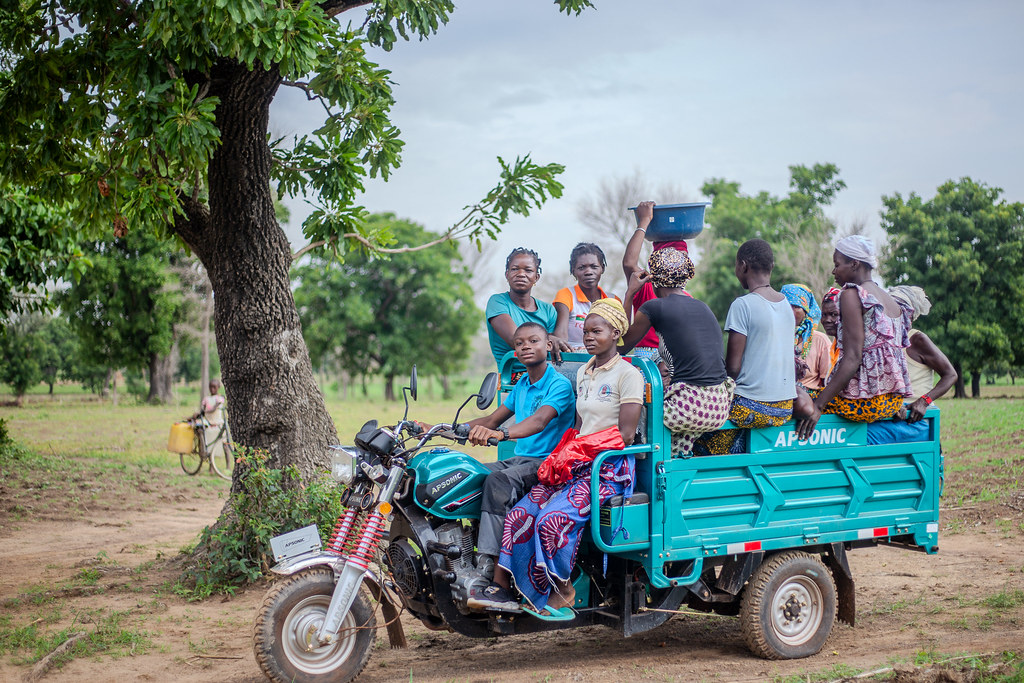
Rural communities in West Africa have historically used migration as a seasonal coping mechanism in times of poor harvests or extreme drought. Yet, in recent decades, seasonal migrations have been replaced by more permanent relocations, as devastating droughts, changes in the seasons, reduced rainfall and flashfloods have all taken a toll on local community livelihoods. No longer able to live off what the land produces due to the increased unpredictability of the weather, local communities in rural areas – particularly young men – are left with little other choice than to search for work in urban centres to support their families. The Global Mechanism is working with the International Organization for Migration, to explore in more depth the complex linkages between land degradation and migration through the Italian-funded project, ‘West Africa: Promoting Sustainable Land Management (SLM) in migration prone areas through innovative financing mechanisms”. The objective is to provide policy recommendations to upscale best practices and boost long-term investments into land restoration as part of the solution to stemming migration from rural areas. On 18-19 May in Ouagadougou, Burkina Faso, the Global Mechanism organized a regional workshop together with the Konrad Adenauer Foundation (KAS) and the International Organization for Migration (IOM), to advance the dialogue on this topic in 3 main areas: How to use migration as a resilience strategy to tackle the intertwined challenges of desertification, land degradation, drought, climate change and migration Promoting investments in sustainable land management and adaptation to climate change to build resilience in migration-prone areas in West Africa, including through the direct investments of migrants through remittances Reducing vulnerability and insecurity caused by land degradation, in particular the negative effects of land degradation on population growth, migration and poverty and the increased risks of radicalization of young vulnerable people that might become a target for extremists groups The event, which took place under the auspices of the Economic Community of West African States (ECOWAS) and the Government of Burkina Faso, was attended by more than 60 government officials from Burkina Faso, Niger and Senegal, as well as high-level representatives of ECOWAS and international experts specialized on environment, migration and security. Experts at the event agreed that land-based green jobs are a crucial part of the solution to stemming the migration exodus of rural communities in West Africa. The Global Mechanism looks forward to publishing the results of its on-going project in the near future, paving the way for further action in this area.
On 17 June, the Land Degradation Neutrality Fund Project was presented in Beijing on the occasion of the official celebration of the World Day to Combat Desertification. The event was organized by the government of the People’s Republic of China, hosted by the State Forestry Administration (SFA). Mr. Wang Yang, Vice Premier of China chaired the opening of the ceremony at the People’s Congress Hall. Ms. Monique Barbut, Executive Secretary of the United Nations Convention to Combat Desertification (UNCCD) emphasized the importance of China in spearheading work to achieve land degradation neutrality and ensuring that it becomes humanity’s defining achievement of the 21st Century. The keynote addresses and dialogue sessions were held by high-level speakers and attended by nine Ministers and Vice Ministers from seven countries, along with 400 participants. The event also included an afternoon session which addressed thematic dialogues such as the launch of the Joint Action Initiative, the report titled “Unlocking the Sustainable Potential of Land Resources: Evaluation Systems, Strategies and Tools”, which was produced by the International Resource Panel of UNEP, and an award ceremony. This year’s event theme emphasized the importance of coordination and cooperation to restore and rehabilitate land, while significantly contributing to the achievement of the Sustainable Development Goals. Land Degradation Neutrality became a global headline in 2015. The same year, the achievement of LDN by year 2030 was officially set under target 15.3 of the United Nations Sustainable Development Goals. The LDN Fund project was presented by Mr. Simone Quatrini, Coordinator and Team Leader of the UNCCD Global Mechanism, as an introduction to Thematic Dialogue 2, entitled “Role of Innovative Investment for Technical Cooperation”. The session was moderated by Mr. Wu Zhimin, Director General of International Forestry Cooperation Center, State Forestry Administration (SFA). The session panelists included Mr. Byong Hyon Kwon, UNCCD Drylands Ambassador and Founder of Korea Future Forest, Mr.Chen Peng, Deputy Director General, China Green Foundation (CGF), Mr. Frank Radstake, Principle Environment Specialist, Asian Development Bank, Mr. Xi Shusen, Director, Inner Mongolia Society of Ecology and Entrepreneurs, Mr. Romano De Vivo, Head Environmental Policy Representative, Syngenta, and Mr. Zhao Yong, Executive Secretary of Kubuqi Desert Forum, Elion Group. Mr. Quatrini presented the emerging features of the LDN Fund, including the investment strategy and investment opportunities identified to date. This stimulated a rich debate on the potential of blended finance to scale up successful business cases in land restoration and sustainable land management in China and the whole Asian region. A number of promising initiatives that contribute to LDN and could potentially attract foreign investments were showcased in the ensuing session, entitled “Unlocking the Sustainable Potential of Land Resources: Evaluation Systems, Strategies and Tools”. For more information: Nevena Bakalar Rakocija The Global Mechanism Tel. +49 228 815 2841 nrakocija (at) unccd.int
The Global Mechanism is seeking ways to identify, explore and promote sources of funding that are most relevant and innovative for the rehabilitation of land through the Great Green Wall, and contribute significantly to the restoration of 12 million hectares of land globally that are degraded each year. The opening of ‘BASE’ the Support Office for Senegalese citizens Abroad, in Milan, Italy, on 30 May 2016, is a potential contribution towards investments in sustainable land management. The establishment of the office is an important step for the Senegalese government in supporting its citizens living in Italy. It is also a good example of international cooperation between Italy and Senegal, involving all the following stakeholders: the diaspora associations, international organizations, local authorities, civil society and the private sector. The objectives of 'BASE' are: Inform Senegalese citizens in Italy on the investment opportunities in their countries of origin, with a particular focus on sustainable agriculture and land rehabilitation; Assess the economic integration problems of the Diaspora and point them to the relevant structures to facilitate the administrative procedures for the creation of enterprises in Senegal The opening of ‘BASE’ is supported by the International Organization for Migration (IOM) and the United Nations Convention to Combat Desertification (UNCCD), through the Italian Cooperation project: "Promoting sustainable land management in areas prone to migration through innovative financing mechanisms ", as well by the municipal council of Milan and the Government of Senegal. On 29 May, the day before the inauguration of 'BASE', the Diaspora met all government structures that support initiatives for Senegalese citizens abroad to discuss current opportunities. This platform has provided important information to Senegalese citizens abroad, indicating the most productive investments and presenting the services available to them (financial or otherwise) to implement their investment projects. It is estimated that there are between two and three million Senegalese citizens living abroad worldwide, nearly a quarter of the population of Senegal. Because of their number and involvement in the development of the country, they have an important economic and social role to play in the stability of Senegal. The diaspora is particularly important in Italy, where 26.2% of the Senegalese diaspora lives, according to a survey "Migration and Remittances to Senegal by the World Bank" conducted by the Consortium for the Economic and Social Research of Senegal in 2009. According to the same source, Senegalese households received nearly 588.4 billion FCFA in 2011, making remittances one of the most promising innovative sources of finance, with a potentially crucial role in promoting sustainable land management and land rehabilitation. Read more about the Great Green Wall
The Great Green Wall is a long-held African dream, currently taking root on the edge of the world’s largest hot desert: the Sahara. Dubbed the "next wonder of the world", the ongoing project will eventually see the growth of an 8,000km ‘green wall’ made from trees and plants across the entire African continent, from Senegal in the West to Djibouti in the East. The aim? To transform the lives of some of the planet’s poorest people. Refinery29 - the youth-oriented lifestyle website - has created a powerful photo series, which shows how this modern wonder of the world is taking shape across the African Continent.
“I am pleased to see that shortly after political decisions taken at the twelfth session of the Conference of the Parties, the UNCCD Secretariat and the Global Mechanism of the UNCCD together with various key partners such as GEF, IUCN, UNDP and the governments of Korea, Türkiye, Luxemburg, and Trinidad and Tobago have initiated a support programme for countries to set national LDN targets” declared Mr. Teimuraz Murgulia, First Deputy Minister of the Ministry of Environment and Natural Resources Protection of Georgia, addressing the Regional inception workshop of the Land Degradation Neutrality Target Setting Programme (LDN-TSP) in Batumi, Georgia, on 6-7 June 2016. This is the second regional event organized, following the regional inception workshop for African Countries in the framework of a global initiative of the UNCCD Secretariat and Global Mechanism to support a growing number of countries that have committed to set national Land Degradation Neutrality targets – as of now 95 countries. The workshop was attended by representatives of nine countries in Central and Eastern Europe and Central Asia. Country representatives, representatives of IUCN, UNEP, UNDP, Regional Environmental Center for Southern Caucasus (REC Caucasus), GIZ and the LDN TSP project team discussed the approach and steps towards setting voluntary targets aiming at achieving LDN by 2030 – a concept which is embedded in the Sustainable Development Goals (SDGs). “We expect that through this Programme the countries will increase capacity in assessing the scope of land degradation, setting LDN targets and analyzing the cost and co-benefits of LDN. Ultimately, this will guide our governments in achieving the SDGs” Mr. Teimuraz Murgulia added. Participants acknowledged that the LDN-TSP was a very useful platform for raising national capacity and increasing investments in order to avoid, minimize and revert all forms of land degradation. The LDN approach is expected to offer participating countries opportunities to mainstream sustainable land management issues on a new and higher political level, both nationally and globally. The workshop was organized back to back with the Eighth Ministerial Conference Environment for Europe, held from 8 to 10 June in Batumi. On 8 June, Land Degradation Neutrality and its contribution to sustainable growth were discussed in a side event organized by the UNCCD secretariat, REC Caucasus, the German Cooperation, the Economics of Land Degradation Initiative, and GIZ. This event highlighted the high economic potential of sustainable land management and LDN approaches in contributing to green growth, showcasing experiences from Georgia, Belarus and Central Asia. Related links: Workshop Report (685.89 KB)