News & stories

Latest news & stories
Monsieur le Président de la Conférence des Parties, Altesses royales,Excellences,Distingués délégués,Mesdames et messieurs, Ahlan wa sahlan, wa marhaba en Arabie Saoudite. Une terre où l’hospitalité et la générosité ne sont pas simplement des traditions, mais un mode de vie, profondément ancrées dans la société et la culture à travers l’histoire.À l’image du palmier dattier, qui s’élève contre vents et marées dans le désert, offrant ses fruits à ceux qui s’en approchent, les Saoudiens sont répuétés pour leur cœur ouvert et leur gentillesse inébranlable. Que dire du chameau, à l’honneur de cette Année internationale des camélidés, qui endure les conditions les plus extrêmes du désert, symbole par excellence de la résilience et de la persévérance? Ici, l’hospitalité perdure à travers les âges, accueillant les invités du monde entier avec chaleur et respect. L’acte d’offrir des dattes — avec du café arabe— est une façon de vous faire sentir chez vous, en partageant non seulement la nourriture, mais aussi un morceau de leur patrimoine et de leur fierté.Je sais que vous partagerez mon expérience et que vous sentirez chez vous pendant tout votre séjour en Arabie saoudite.Monsieur le Président, Notre planète est rendue malade par la dégradation des terres. Près de 40% de son corps est déjà affecté. La maladie progresse à un rythme effrayant. Chaque année, des terres saines dont la superficie fait la taille de l’Égypte sont infestées.Alors que son immunité baisse, des virus opportunistes provoquent un cocktail épidémique inédit : sécheresses, tempêtes et poussières de sables, pénuries d’eau ; le tout exacerbé par le changement climatique et la perte de la biodiversité.Ce décor, aussi lugubre qu’il puisse paraître, pourrait cependant être perçu comme un verre à moitié plein, plutôt qu’à moitié vide. Nous disposons de vaccins et d'outils de traitement accessibles à un prix raisonnable. Mr President, This is not just the third and final COP under my tenure. It’s a pivotal moment. Over the years, we have seen land restoration emerge as one of the most effective tools to address some of the greatest challenges of our time: climate change, food insecurity, economic inequality, forced migration and even global instability.Together, we have accomplished a lot. However, our work is far from finished.Indeed, scientific evidence is unambiguous: the way we manage our land today will directly determine the future of life on Earth.Land restoration is first and foremost about securing the foundation of our economy, security, and humanity.In this regard, I would like to express my deepest gratitude to the Kingdom of Saudi Arabia for its vision and leadership in elevating the global land restoration and drought resilience agenda; whether through the G20, hosting this landmark COP and building its legacy, the Saudi Green Initiative, or, most recently, the Middle East Green Initiative.The UNCCD call to address desertification, land degradation, and drought is no longer a whisper—it is being recognized at the highest levels of global decision-making, signaling a global recognition of its transformative power.We have seen how the land and drought agendas have been at the core of important discussions not only at the UN General Assembly, but also at the G20, the G7, BRICS, the World Economic Forum, and the Arab Coordination Group, to name just a few.Major large-scale land restoration and drought initiatives, such as the Great Green Wall in Africa, the G20 Global Land Restoration Initiative, the International Drought Resilience Alliance have built their approaches on the foundations laid by UNCCD Parties. We are glad to note the powerful impacts of our COPs both in India (Initiative of PM Narendra Modi to restore 26 M ha) and in Côte d’Ivoire (Abidjan Legacy Programme of President Alassane Ouattara, costed at 3 billion US dollars). We welcome and applaud the important Saudi-led Legacy of COP16, that will be unveiled shortly.These efforts have generated political momentum and a broader understanding that addressing land degradation goes beyond ‘ecology’; land restoration is primarily about nurturing humanity itself.And that is what COP16 is all about.I recall visiting the haunting expanse of the Aral Sea, once the world’s fourth-largest freshwater lake, shared by Kazakhstan and Uzbekistan. Standing there, where life once flourished, I saw a barren wasteland—an environmental disaster of unimaginable scale.It was a poignant reminder of what is at stake.Every second, somewhere in the world, we lose an equivalent of four football fields to land degradation.Land and soil loss are robbing poor families of nutritious food, and children of a safe future.Land degradation aggravates poverty, disrupts food security, impacts health, and even forces families to migrate.It is the land and soil beneath our feet that grows the cotton for the clothes we wear, secures the food on our plates, and anchors the economies we rely on.The cost of land degradation seeps in every corner of their lives. They see the rising price of groceries, in unexpected energy surcharges, and in the growing strain on their communities.I have spoken to farmers, mothers, and young people who are living this reality every day.Their resilience is inspiring, but their struggles remind us that land degradation and drought do not recognize borders.Power blackouts multiply as dams go dry due to drought.Nuclear plants in Europe have struggled to stay operational as rivers dry up.Global supply chains falter in the Panama Canal due to insufficient water; or in the Suez Canal when sand and dust storms make navigation difficult. By 2050, three in four people globally -up to seven and half billion people- will feel the impact of drought.The stories I have heard and the places I have seen make one thing clear: we must act now to restore our lands. They are the foundation of our everything.For the first time, through the UNCCD national reporting, we now have an evidence-based estimate of the alarming status and trends in land degradation.According to the UNCCD data, in the four years to 2019, healthy land the size of India and Nigeria combined was affected by Land Degradation.Agriculture, over-grazing, urbanization, mining, deforestation, and other factors are driving this decline, compounded by climate change.But a deeper injustice and inequalities exist: those who farm often do not own the land. Women only own 13% of agricultural land, for example. When they do own, its often a marginal land.Those who produce are often at the very bottom of global value chains and rarely benefit from them.Rural communities are being left behind, while the wealth created from their labor often fills someone else’s basket.So COP16 is our reliance on land. But it is also about resilience. COP 16 is specifically about drought resilience. Multiple articles of the Convention text refer to drought. The last seven COPs have had decisions related to drought. And COP16 will hopefully be remembered as the Conference where the most important decisions on drought were made.We are all gathered here to make COP16 a historic moment; the world expects Parties to adopt a bold decision that can help turn the tide on the most pervasive and the most disruptive environmental disaster.Drought is a slow onset, a silent killer.Drought wreaks havoc on nations’ economies.It provokes or amplifies massive wildfires.It disrupts food production and water security.Drought disrupts energy production, both hydro and nuclear, two low-carbon sources.Droughts have become more frequent, more intense and have expanded into new territories.No country is immune.No biome is spared, not even tropical or boreal forests.So, after 30 years of deliberations, including six consecutive years of intergovernmental working groups, all eyes are on us. This is a lot of pressure, but we must seize this pivotal moment.Together, we can reverse the trends of land degradation and build a more resilient world to drought.Together we can make a real difference in peoples’ lives.Together, we can unlock the true potential of our land and protect our Planet/Home.Mr. President,Before I conclude, allow me to express UNCCD’s deep gratitude to the outgoing Presidency from Côte d’Ivoire for not only hosting us in Abidjan in 2022, but for successfully leading the COP Bureau for the last two and a half years.While negotiations at COP16 are led by governments, I want to pay tribute to members of civil society, other non-state actors, including business for their unprecedented contributions and participation.Allow me to also express my gratitude to the UN family. Thank you for your unwavering support. My gratitude go to all Executives of UN agencies and Treaties, to Intergovernmental Organizations, Academia, Financial institutions who have played a key role in helping design and run the Thematic Days of this COP.To all exhibitors in beautiful pavilions, to all who populated the most beautiful Green Zone I have ever seen, to all invisible hands who spent endless hours to make this Conference happen, I only have one word: Shukran!بالنسبة لبلدنا المضيف، المملكة العربية السعودية ملكاً وشعباً، فأرجو أن تتقبلوا منا التعبيرعن امتناننا. اسمحوا لي أن أكرر الشكر مرتين أو ثلاث مراتشكراً لكم على حسن ضيافتكم.وشكراً لكم على كرمكم. وشكرا لكم جميعا على اهتمامكم الكريموسلام عليكم ورحمة الله

Land degradation undermining Earth’s capacity to sustain humanity; Failure to reverse it will pose challenges for generations;Seven of nine planetary boundaries are negatively impacted by unsustainable land use, highlighting land’s central role in Earth systems;Agriculture accounts for 23% of greenhouse gas emissions, 80% of deforestation, 70% of freshwater use;Forest loss and impoverished soils drive hunger, migration and conflicts;Transformation of land use critical for humanity to thrive within environmental limitsRiyadh, Saudi Arabia – A major new scientific report charts an urgent course correction for how the world grows food and uses land in order to avoid irretrievably compromising Earth’s capacity to support human and environmental well-being. Produced under the leadership of Prof. Dr. Johan Rockström at the Potsdam Institute for Climate Impact Research (PIK) in collaboration with the UN Convention to Combat Desertification (UNCCD), the report is launched as nearly 200 UNCCD member states begin their COP16 summit on Monday in Riyadh, Saudi Arabia. Land is the foundation of Earth’s stability, the report underlines. It regulates climate, preserves biodiversity, maintains freshwater systems and provides life-giving resources including food, water and raw materials. The report, Stepping back from the precipice: Transforming land management to stay within planetary boundaries, draws on roughly 350 information sources(*) to examine land degradation and opportunities to act from a planetary boundaries perspective.Deforestation, urbanization and unsustainable farming, however, are causing global land degradation at an unprecedented scale, threatening not only different Earth system components but human survival itself.Moreover, the deterioration of forests and soils undermines Earth’s capacity to cope with the climate and biodiversity crises, which in turn accelerate land degradation in a vicious, downward cycle of impacts.“If we fail to acknowledge the pivotal role of land and take appropriate action, the consequences will ripple through every aspect of life and extend well into the future, intensifying difficulties for future generations,” said UNCCD Executive Secretary Ibrahim Thiaw. Already today, land degradation disrupts food security, drives migration, and fuels conflicts.The global area impacted by land degradation – approx. 15 million km², more than the entire continent of Antarctica or nearly the size of Russia – is expanding each year by about a million square km.Planetary boundariesThe report, available for download post-embargo at www.unccd.int and https://publications.pik-potsdam.de/pubman/faces/ViewItemOverviewPage.jsp?itemId=item_30631, situates both problems and potential solutions related to land use within the scientific framework of the planetary boundaries, which has rapidly gained policy relevance since its unveiling 15 years ago. The planetary boundaries define nine critical thresholds essential for maintaining Earth’s stability. How humanity uses or abuses land directly impacts seven of these, including climate change, species loss and ecosystem viability, freshwater systems, and the circulation of naturally occurring elements nitrogen and phosphorus. Change in land use is also a planetary boundary. Alarmingly, six boundaries have already been breached to date, and two more are close to their thresholds: ocean acidification and the concentration of aerosols in the atmosphere. Only stratospheric ozone – the object of a 1989 treaty to reduce ozone-depleting chemicals – is firmly within its “safe operating space”. “The aim of the planetary boundaries framework is to provide a measure for achieving human wellbeing within Earth’s ecological limits,” said Johan Rockström, lead author of the seminal study introducing the concept in 2009. “We stand at a precipice and must decide whether to step back and take transformative action, or continue on a path of irreversible environmental change,” he adds.The benchmark for land use, for example, is the extent of the world’s forests before significant human impact. Anything above 75% keeps us within safe bounds, but forest cover has already been reduced to only 60% of its original area, according to the most recent update of the planetary boundaries framework by Katherine Richardson and colleagues.Until recently, land ecosystems absorbed nearly one third of human-caused CO₂ pollution, even as those emissions increased by half. Over the last decade, however, deforestation and climate change have reduced by 20% the capacity of trees and soil to absorb excess CO₂.Unsustainable agricultural practicesConventional agriculture is the leading culprit of land degradation, contributing to deforestation, soil erosion and pollution. Unsustainable irrigation practices deplete freshwater resources, while excessive use of nitrogen- and phosphorus-based fertilizers destabilize ecosystems.Degraded soils lower crop yields and nutritional quality, directly impacting the livelihoods of vulnerable populations. Secondary effects include greater dependency on chemical inputs and increased land conversion for farming.The infamous Dust Bowl of the 1930s resulted from large-scale land-use changes and inadequate soil conservation. Land degradation hotspots today stem from intensive agricultural production and high irrigation demands, particularly in dry regions such as South Asia, northern China, the US High Plains, California, and the Mediterranean.Meanwhile, climate change – which has long since breached its own planetary boundary – accelerates land degradation through extreme weather events, prolonged droughts, and intensified floods. Melting mountain glaciers and altered water cycles heighten vulnerabilities, especially in arid regions.Rapid urbanization intensifies these challenges, contributing to habitat destruction, pollution, and biodiversity loss.The impacts of land degradation hit tropical and low-income countries disproportionately, both because they have less resilience and because impacts are concentrated in tropical and arid regions. Women, youth, Indigenous peoples, and local communities also bear the brunt of environmental decline. Women face increased workloads and health risks, while children suffer from malnutrition and educational setbacks.Weak governance and corruption exacerbate these challenges. Corruption fosters illegal deforestation and resource exploitation, perpetuating cycles of degradation and inequality.According to the Prindex initiative, nearly one billion people lack secure land tenure, with the highest concentration in north Africa (28%), sub-Saharan Africa (26%), as well as South and Southeast Asia. The fear of losing one’s home or land undermines efforts to promote sustainable practices. Agricultural subsidies often incentivize harmful practices, fueling overuse of water and biogeochemical imbalances. Aligning these subsidies with sustainability goals is critical for effective land management.From 2013 to 2018, more than half-a-trillion dollars were spent on such subsidies across 88 countries, a report by FAO, UNDP and UNEP found in 2021. Nearly 90% went to inefficient, unfair practices that harmed the environment, according to that report. Transformative actionTransformative action to combat land degradation is needed to ensure a return to the safe operating space for the land-based planetary boundaries. Just as the planetary boundaries are interconnected, so must be the actions to prevent or slow their transgression.Principles of fairness and justice are key when designing and implementing transformative actions to stop land degradation, ensuring that benefits and burdens are equitably distributed.Agriculture reform, soil protection, water resource management, digital solutions, sustainable or “green” supply chains, equitable land governance along with the protection and restoration of forests, grasslands, savannas and peatlands are crucial for halting and reversing land and soil degradation.Regenerative agriculture is primarily defined by its outcomes, including improved soil health, carbon sequestration and biodiversity enhancement. Agroecology emphasises holistic land management, including the integration of forestry, crops and livestock management. Woodland regeneration, no-till farming, nutrient management, improved grazing, water conservation and harvesting, efficient irrigation, intercropping, organic fertiliser, improved use of compost and biochar – can all enhance soil carbon and boost yields.Savannas are under severe threat from human-induced land degradation, yet are essential for ecological and human wellbeing. A major store of biodiversity and carbon, they cover 20% of the Earth’s land surface but are increasingly being lost to cropland expansion and misguided afforestation. The current rate of groundwater extraction exceeds replenishment in 47% of global aquifers, so more efficient irrigation is crucial to reduce agricultural freshwater use. Globally, the water sector must continue to shift from “grey” infrastructure (dams, reservoirs, channels, treatment plants) to “green” (reforestation, floodplain restoration, forest conservation or recharging aquifers).More efficient delivery of chemical fertilizer is likewise essential: currently, only 46% of nitrogen and 66% of phosphorus applied as fertilizer is taken up by crops. The rest runs off into freshwater bodies, and coastal areas with dire consequences for the environment.New technologiesNew technologies coupled with big data and artificial intelligence have made possible innovations such as precision farming, remote sensing and drones that detect and combat land degradation in real time. Benefits likewise accrue from the precise application of water, nutrients and pesticides, along with early pest and disease detection.Plantix, a free app available in 18 languages, can detect nearly 700 pests and diseases on more than 80 different crops. Improved solar cookstoves can provide households with additional income sources and improve livelihoods, while reducing reliance on forest resources.Regulatory action, stronger land governance, formalisation of land tenure and better corporate transparency on environmental impacts are all needed as well. Numerous multilateral agreements on land-system change exist but have largely failed to deliver. The Glasgow Declaration to halt deforestation and land degradation by 2030 was signed by 145 countries at the Glasgow climate summit in 2021, but deforestation has increased since then. Protecting intact peatlands and rewetting 60% of those already degraded could transform such ecosystems into a net sink, or sponge, of greenhouse gases by the end of the century. Currently, damaged peatlands account for 4% to 5% of global GHG emissions, according to the IUCN.(*) Complete references can be found in the report.By the numbers: Recent research highlights 7 out of 9: Planetary boundaries impacted by land use, underscoring its central role in Earth systems.60%: Remaining global forest cover—well below the safe boundary of 75%.15 million km²: Degraded land area, more than the size of Antarctica, expanding by 1 million km² annually.20%: Earth’s land surface covered by savannas, now under threat from cropland expansion and ill-conceived afforestation.46%: Global land area classified as drylands, home to a third of humanity; 75% of Africa is dryland.90%: Share of recent deforestation directly caused by agriculture—dominated by expanding cropland in Africa/Asia, livestock grazing in South America.80%: Agriculture’s contribution to global deforestation; 70% of freshwater use.23%: Greenhouse gas emissions stemming from agriculture, forestry, and land use.50% vs. 6%: Share of agricultural emissions from deforestation in lower-income vs. higher-income countries.46% / 66%: Fertilizer efficiency for nitrogen and phosphorus; the rest runs off with dire consequences.2,700+: National policies addressing nitrogen pollution while phosphorus is largely overlooked.10%: World’s arable land planted with genetically modified crops by 2018—dominated by soy (78%), cotton (76%), and maize (30%).11,700 years: Length of the Holocene period, during which Earth’s temperature varied within a narrow 0.5°C range—until a 1.3°C rise since the mid-19th century.1/3: Anthropogenic CO2 absorbed by land ecosystems annually.25%: Share of global biodiversity found in soil.20%: Decline in trees’ and soil’s CO2 absorption capacity since 2015 attributed to climate change.3%: Freshwater share of Earth’s water, mostly locked in ice caps and groundwater.50%+: World’s major rivers disrupted by dam construction.47%: Aquifers being depleted faster than they replenish.1 billion: People with insecure land rights, fearing loss of home or land (e.g., 28% in MENA, 26% in sub-Saharan Africa).1 in 5: People worldwide who paid bribes for land services in 2019—rising to 1 in 2 in sub-Saharan Africa.$500B+ (2013–2018): Agricultural subsidies across 88 countries, 90% of which fueled inefficient, harmful practices.$200B/year: Public and private finance for nature-based solutions, dwarfed by $7 trillion/year financing environmental harm145: nations that pledged in 2021 to halt deforestation by 2030; forest loss has since continued.* * * * *The full report Stepping back from the precipice: Transforming land management to stay within planetary boundariesis available for media preview at https://drive.google.com/file/d/1m2hdIKka9AhJ-CvGCFF7DEuVdE2mx_Nk/view?usp=sharing and publicly available post-embargo at www.unccd.intThe 16th session of the Conference of the Parties (COP 16) of the United Nations Convention to Combat Desertification (UNCCD) will take place in Riyadh, Saudi Arabia, from 2 to 13 December 2024. Theme: “Our Land, Our Future” www.unccd.int/cop16The COP is the main decision-making body of UNCCD’s 197 Parties – 196 countries and the European Union. UNCCD, the global voice for land, is one of three major UN treaties known as the Rio Conventions, alongside climate and biodiversity, which recently concluded their COP meetings in Baku, Azerbaijan and Cali, Colombia respectively.Coinciding with the 30th anniversary of UNCCD, COP 16 will be the largest UN land conference to date, and the first UNCCD COP held in the Middle East and North Africa region, which knows first-hand the impacts of desertification, land degradation and drought.COP 16 marks a renewed global commitment to accelerate investment and action to restore land and boost drought resilience for the benefit of people and planet.COP16 opening press conference: Monday 2 Dec at 13:15 local time (10:15 GMT), Press Conference Room (MET-17), live streamed via UN Web TV: https://webtv.un.org/enUNCCD COP16 media kit and other resources: www.unccd.int/cop16/media-informationCOP 16 early news highlights include:Special Report on Land: Johan Rockström, Director, Potsdam Institute for Climate Impact Research (PIK) (2 Dec)Riyadh Global Drought Resilience Partnership launch (2 December)International Drought Resilience Observatory launch (2 December)Global Drought Atlas launch (2 December)Report launch: Investing in Land’s Future: Assessing Financing Needs for Land Restoration and Drought Resilience (3 December)Ministerial dialogues: Policy instruments for proactive drought management (2 Dec)Unlocking public and private finance for land restoration and drought resilience (3 December), and Impacts of land degradation and drought on forced migration, security and prosperity (3 December)Full COP 16 overview schedule, negotiation track, and action agenda: unccd.int/media/50289/openAccreditation: https://indico.un.org/event/1005866/registrations/15631Media contacts: Fragkiska Megaloudi, +30 6945547877 (WhatsApp), fmegaloudi@unccd.int Terry Collins, +1-416-878-8712, tc@tca.tcJuliane Otto, +49 331 288 2492, jotto@pik-potsdam.deAuthors and other experts are available for advance interviews. The report in full is available for media preview at https://drive.google.com/file/d/1m2hdIKka9AhJ-CvGCFF7DEuVdE2mx_Nk/view?usp=sharing

Dano, Ioba province of Burkina Faso - As dawn breaks, the village of Tambiri, in Burkina Faso's Ioba province, is already quite busy. Women like Dabiré Ngalle, head of the Ngongele women's group, start their day with a sense of urgency, shaped by generations of struggle and survival. Dabiré leads her team into the shea groves, which are the main source of income for their families and communities. Yet these emblematic Sahelian trees are now at the heart of a long-running ecological crisis. Dabiré Ngalle, president of the Ngongele Women’s Cooperative | The women of Tambiri stand together at the heart of their community, bearing generations of knowledge and responsibility for preserving shea trees.The shea tree (Vitellaria paradoxa), often called the "tree of life," has long provided shade, food and income throughout West Africa. In Burkina Faso alone, its economic and cultural value is considerable: some 800,000 tons of shea nuts are harvested each year, with women forming the backbone of this supply chain. But these trees are disappearing.Decades of deforestation, unsustainable farming practices and climate change have decimated the shea tree population. Studies show that drought stress alone has led to seedling mortality rates of up to 40% in some regions. Traditional farming methods, based on slow-growing seeds, are no longer sufficient."Every tree we lose is a piece of our history that is disappearing", Dabiré says in a measured but determined voice.The shea tree is more than a commodity; it's a key species in the Sahel's fragile ecosystem. For many rural women, it provides up to 80 percent of their household income. The production of shea butter, valued worldwide for its cosmetic and therapeutic properties, is both a livelihood and a heritage. But the decline of shea plantations has forced women to adapt in ways that strain their already precarious livelihoods.In Niemi, a neighboring village to Tambiri, memories of the abundance of shea trees are fading. "When I was young, shea trees were everywhere," recalls one woman. "Now the groves are like scattered islands, shrinking every year.The challenges women face go beyond the environmental. In Tambiri and beyond, traditional land tenure practices mean that women often have no guaranteed rights to the land on which they depend. This legal insecurity is a major obstacle to long-term investment in agroforestry or soil restoration.If my husband dies, my farm will be taken over by my in-laws," explains one woman. Her story is repeated throughout the region, where patriarchal norms limit women's autonomy in land-use decisions. Advocacy for land reform has gained momentum, with local leaders and NGOs pushing for policies that grant women ownership or long-term leases, but progress remains slow.Despite the challenges, new initiatives are offering a glimmer of hope. The Global Shea Alliance (GSA), in partnership with local NGOs and international bodies like the UNCCD are introducing regenerative agroforestry practices. These methods aim to balance ecological restoration with economic resilience."We used to plant trees without fully understanding how to take care of them," admits a participant in a training program in Niemi. "Now we know how to take care of the seedlings, so they survive."The programs also provide boreholes, which have reduced the backbreaking work of fetching water, and tricycles, which streamline the transportation of heavy shea nuts. These interventions are modest but meaningful, allowing women to reclaim time and energy for other tasks.The GSA's latest call to action - to restore four million hectares of Sahel parkland by 2030 - is ambitious. This restoration effort dovetails with the Great Green Wall Initiative, a broader strategy to address land degradation across the Sahel. But such large-scale projects often face funding gaps and logistical hurdles."It's not just about planting trees," emphasizes Gilles Amadou Ouedraogo, a UNCCD program officer. "It's about restoring ecosystems, empowering women, and ensuring the long-term viability of these landscapes."As daylight fades in Tambiri, Dabiré reflects on the challenges ahead. For her and the women of the Ngongele cooperative, the struggle is personal and generational. Each tree they plant is a seed of hope, an act of quiet defiance against the forces eroding their world."We're not just planting trees; we're panting for the survival of our children and their children," she says. Her words convey the quiet resilience of a community determined to preserve not just a species, but an entire way of life.The future of shea - and the millions who depend on it - will depend on a delicate balance of politics, environmental stewardship and the enduring determination of women like Dabiré.

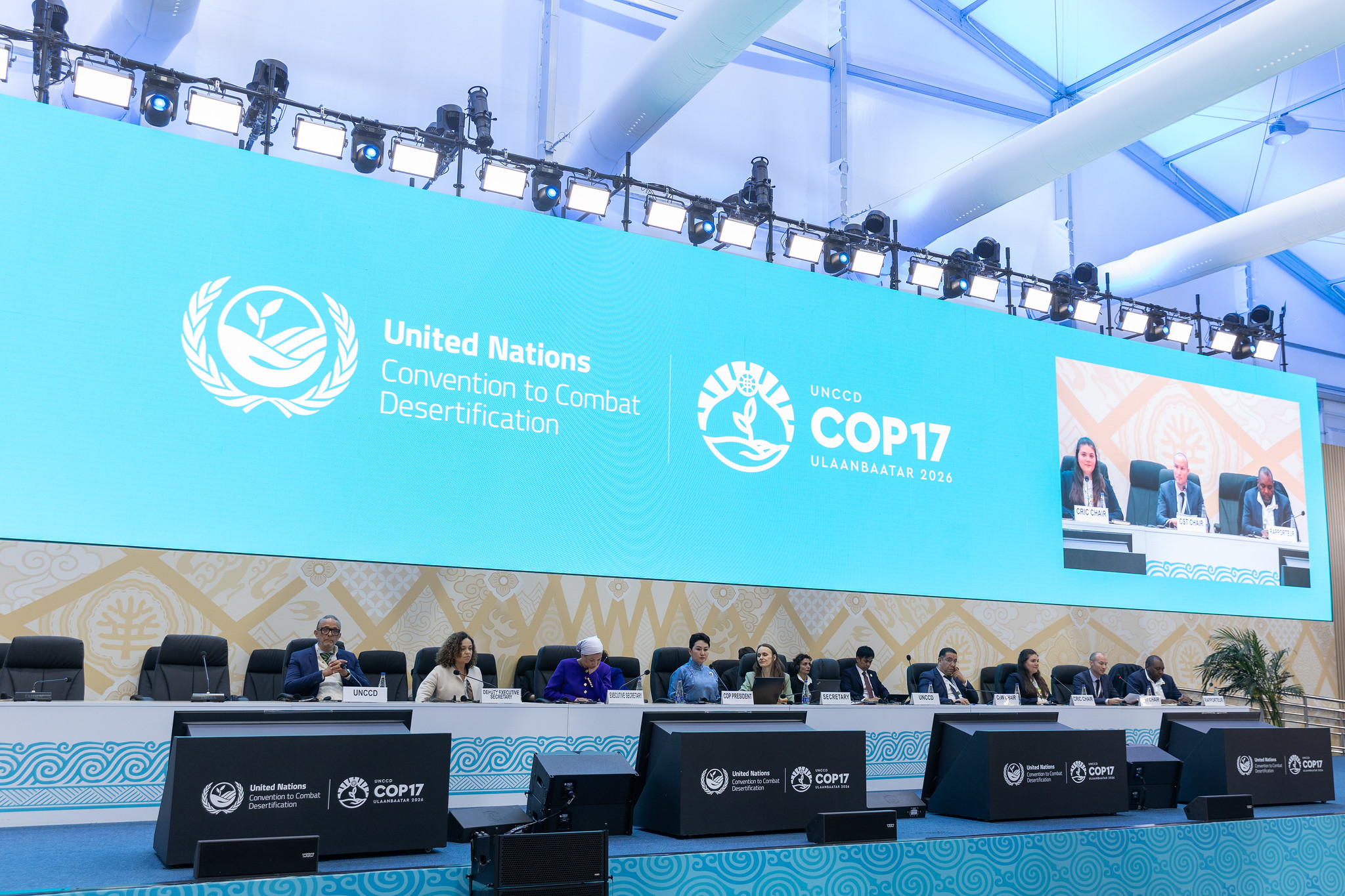
Today, up to 40 per cent of the world's land is degraded, affecting half of humanity and with dire consequences for our climate, biodiversity and people’s livelihoods. Droughts are becoming more frequent and severe, increasing by 29% since 2000 due to climate change and unsustainable land management. If current trends continue, restoring 1.5 billion hectares of land by 2030 will be necessary to achieve a land-degradation-neutral world.In a pivotal year of environmental negotiations, with major conferences focusing on biodiversity, climate change and desertification, the 16th Session of the Conference of the Parties (COP) to the United Nations Convention to Combat Desertification (UNCCD) represents a crucial milestone. Under the theme “Our Land. Our Future,” the Conference will host representatives of governments, civil society and leading experts to advance global efforts to combat land degradation, desertification and drought while promoting sustainable development. Coinciding with the 30th anniversary of UNCCD, COP16 will be the largest UN land conference to date, and the first UNCCD COP held in the Middle East and North Africa region, which knows first-hand the impacts of desertification, land degradation and drought.WHAT: 16th Session of the Conference of Parties to the UN Convention to Combat Desertification WHEN: 2 to13 December 2024WHERE: Boulevard Riyadh City, at Al Imam Saud Ibn Faysal Rd. Hittin, Riyadh, Kingdom of Saudi ArabiaPROGRAMME: https://www.unccd.int/official-documents/cop-16-riyadh-saudi-arabia-2024/agenda?date=2024-12-02PARTICIPANTS:Senior leaders from some 100 countriesSeveral former Heads of State who are members of the COP16 high-level advisory council (Colombia, Costa Rica, Finland, Senegal)Members of the Royal Family from Saudi Arabia and other countries UN Deputy Secretary-General and over 30 heads of UN entities and international organizationsPersonalities from the world of art and sports, including UNCCD Goodwill Ambassadors, award-winning musicians, filmmakers and athletesYouth leaders including UNCCD Land Heroes and youth entrepreneurs Private sector, civil society and Indigenous leadersUPCOMING KEY REPORTS1 December: Launch of the Special report on land by the Potsdam Institute for Climate Impact Research Join the Opening Press Conference on 2 December at 13:15 with: Deputy Secretary-General Amina J. MohammedUNCCD Executive Secretary Ibrahim ThiawIncoming COP16 Presidency, and Johan Rockström, Director, Potsdam Institute for Climate Impact Research (PIK)2 December: Launch of the Global Drought Atlas3 December: Launch of the Financial Needs Assessment for the Implementation of UNCCD 3 December: Launch of the Economics of Drought Resilience Report6 December: Launch of the Primer on Urban-Rural Linkages and Land9 December: Launch of the Global Aridity Trends ReportKEY FOCUS AREASCOP16 will address critical themes, including land degradation, drought resilience, and sustainable land management. The primary goals for this conference include: Accelerate restoration of degraded land by 2030 and beyondBoost resilience to intensifying droughts and sand and dust stormsRestore soil health and scale up nature-positive food productionSecure land rights and promote equity for sustainable land stewardshipEnsure that land continues to provide climate and biodiversity solutionsUnlock economic opportunities, including decent land-based jobs for youthTHEMATIC DAYSLand Day (4 December): Focus on the role of healthy land in addressing climate change, job creation and poverty alleviation, with emphasis on nature-based solutions and private sector engagementAgri-Food Systems Day (5 December): Highlighting sustainable farming practices for resilient crops, healthy soils and ecosystem protectionGovernance Day (6 December): Exploring inclusive land governance and policies to strengthen equitable land managementPeople’s Day (7 December): Emphasizing the involvement of youth, women and civil society in land-related decision-makingScience, Technology and Innovation Day (9 December): Aims to accelerate scientific advancements for land health and resilienceResilience Day (10 December): Focus on policies and technologies that foster resilience to climate changeFinance Day (11 December): Aims to showcase innovative financial mechanisms supporting land restoration and drought resilienceHIGH-LEVEL EVENTS Ministerial high-level dialoguesMinisterial dialogue on drought resilience: From Geneva to Riyadh and beyond: Enhancing global and national policy instruments for a proactive drought management approach (2 December, 15:00 - 17:00): Highlights the urgent need for innovative approaches to address the systemic impacts of droughtMinisterial dialogue on finance: Unlocking public and private finance for land restoration and drought resilience (3 December, 10:00 - 13:00): Addresses the critical need for increased investments to combat land degradation, desertification and droughtMinisterial dialogue on migration: Impacts of land degradation and drought on forced migration, security and prosperity (3 December, 14:00 - 17:00): Examines how sustainable land management and drought resilience can address the interconnected challenges of land degradation, forced migration and conflictBusiness for Land Forum (4 December 13:00 - 15:00)The Forum will bring together global leaders to drive private sector engagement, foster public-private partnerships and highlight business leadership in sustainable land use, restoration and resilience.Gender Caucus (4 December 10:00 - 13:00)The Gender Caucus promotes dialogue and showcases initiatives to advance gender equality, driving collaborative solutions to address desertification, land degradation and drought.Youth Forum (5-7 December) The three-day forum empowers young leaders, fosters knowledge exchange and mobilizes action to restore and protect lands for a sustainable future.Indigenous Peoples Forum (7 December, 10:00 - 13:00)The inaugural COP16 Forum will showcase Indigenous Peoples' role in land conservation, blending ancestral knowledge with global efforts to combat desertification.Sport4Land Champion announcement (7 December, Pavilion 1 Stage)Launched at the 2024 Paris Olympics, the UNCCD #Sport4Land campaign mobilizes athletes to champion land restoration, unveiling new ambassadors and sparking global dialogue on sports' role in restoration.Media accreditation and logisticsAccreditation for media representatives covering COP16 is now open. Journalists are encouraged to apply through the Online Registration System (ORS), the exclusive platform for obtaining accreditation and permissions. Further information for media is available at the COP16 media page.Information on visa and accommodation can be found at: UNCCD COP16 visa and accommodationsSocial media Follow: @UNCCD (Twitter/X, Instagram, LinkedIn, Facebook)Primary hashtag: #COP16RiyadhSecondary hashtags: #UNCCDCOP16, #OurLandOurFuture, #UNited4Land, #HerLand, #Sport4Land, #Youth4Land Key resources UNCCD COP16 Trello Board, including branding guidelines and key messagesUNCCD COP16 websiteHost country website COP16 conference app available in the Apple app store and Google PlayUN WebTV – live broadcast of key plenary sessions with live interpretation in all six UN languages.Press and media kitSocial media kit

The Earth Negotiations Bulletin (ENB) is providing comprehensive daily multimedia coverage of COP 16, including detailed reports, photographs and analyses of events and proceedings. The ENB is a balanced, timely and independent reporting service, covering the UN environmental and development negotiations. If is the flagship publication of the International Institute for Sustainable Development (IISD), a non-profit organization based in Canada. Many UN delegates, ministers and other governmental officials, NGOs, the business community, the academia, the. Media and UN staff who track environment and sustainable development issues consider the ENB coverage to be essential reading, respecting its impartial and comprehensive coverage.All ENB photos are free to use with attribution.

In the lead-up to UNCCD COP16, our new podcast series On the road to Riyadh: Conversation on land, people and the planet spotlights critical conversations on land health, climate resilience and sustainable solutions. Each episode will focus on the Action Agenda of the , bringing expert insights, compelling stories and actionable solutions to global audiences.The series will emphasize how healthy land is central to the well-being of the planet’s ecosystems, biodiversity and global economy. Episode 1: Land Day - The future of land conservation: Driving change through innovationJoin us for an insightful discussion on the importance of land restoration and the power of youth-led environmental initiatives. Episode 2: Governance Day - Understanding land governace and why it mattersJoin UNCCD Deputy Executive Secretary as she explores the role of governance in sustainable land management. From the empowerment of women and Indigenous Peoples to the role of sub-national governments, she highlights the key strategies and actions needed to reach the Land Degradation Neutrality goals. Episode 3: Science Day - Accelerating science and technology solutions for land resilienceJoin Barron Joseph Orr, UNCCD Chief Scientist as he explores the critical role of science in building land resilience through land restoration. Bridging the gap between science and policy is key to addressing land degradation and restoring land productivity. Main challenges include translating restoration ambitions into action, securing funding, using high-resolution data and building resilience to crises. Episode 4: Finance Day - Financing land restoration and drought resilienceJoin the insightful conversation between the CEO and Chair of the GEF, and theManaging Director of the UNCCD Global Mechanism Louise Baker, as they discuss the important role of finance in achieving land restoration and drought resilience goals and the paradigm shifts needed to address funding and action gaps in the Rio Conventions. Challenges in scaling up conservation efforts and the need for economic and institutional reforms require broader stakeholder engagement beyond environment ministries, increasing the role of local government involvement and financial support for the success of sustainable initiatives.
