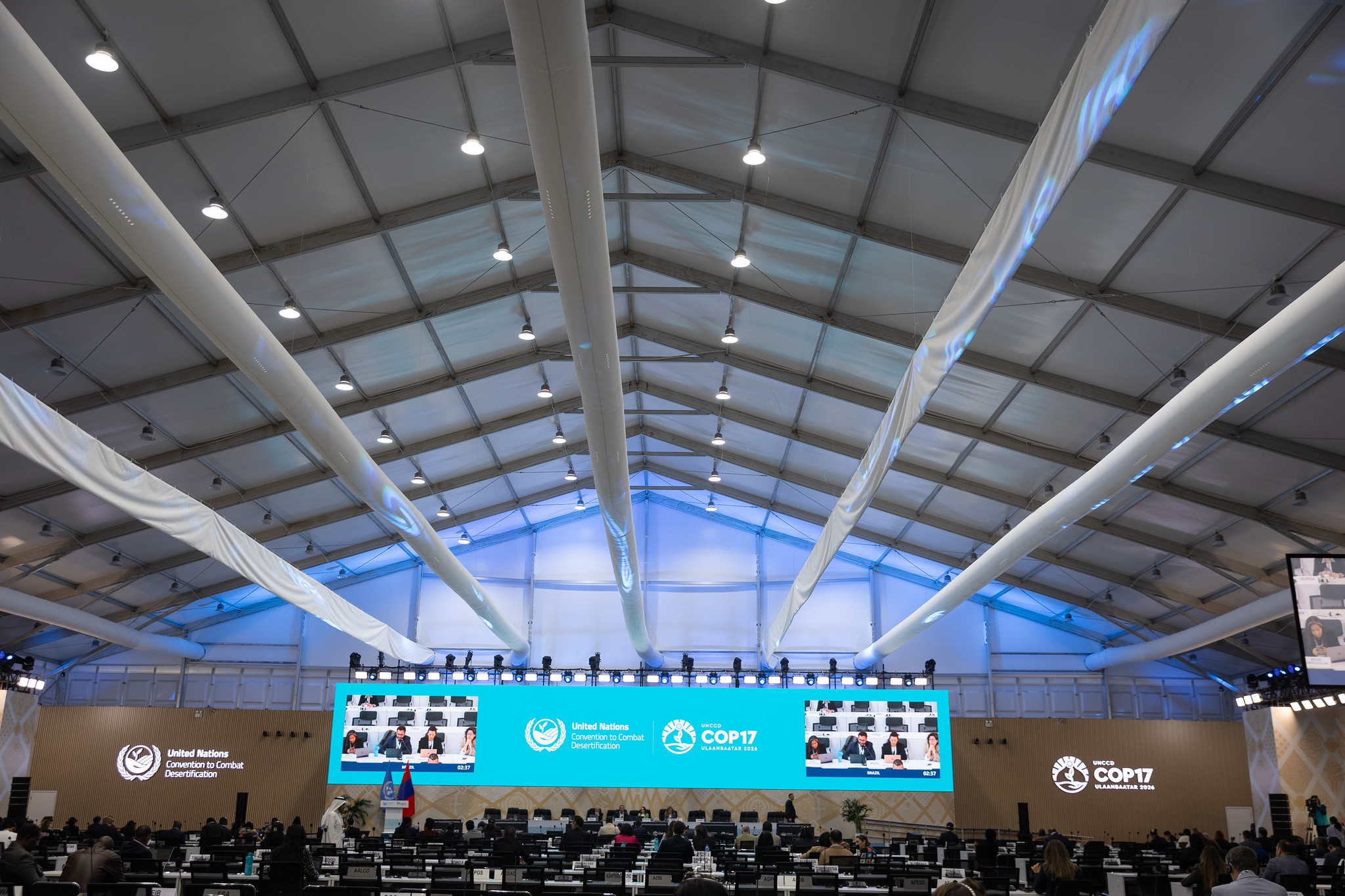
Saudi Arabia and UNCCD accelerate implementation of COP16 outcomes ahead of COP17
-
9 July 2026
-
Press release

Riyadh, Saudi Arabia, 9 July – The Kingdom of Saudi Arabia and the United Nations Convention to Combat Desertification (UNCCD) are advancing the landmark outcomes of the sixteenth session of the Conference of the Parties (COP16), held in Riyadh in December 2024. As preparations gather pace for COP17 in Ulaanbaatar, Mongolia (17–28 August 2026), the visit underscored the strong partnership between Saudi Arabia and UNCCD and the shared commitment to translating those outcomes into action on land restoration, drought resilience and sustainable development.
Implementing COP16 decisions and flagship initiatives was at the center of a high-level mission to the Kingdom from 5 to 9 July, during which UNCCD Executive Secretary Dr. Yasmine Fouad held strategic discussions with senior Saudi officials and regional partners — including H.E. Abdulrahman AlFadley, Minister of Environment, Water and Agriculture and President of COP16, and H.E. Adel Al-Jubeir, Minister of State for Foreign Affairs — on drought resilience, sustainable finance, private-sector engagement and regional cooperation, while also reviewing progress in delivering key COP16 commitments.
Discussions with H.E. Adel Al-Jubeir also focused on the growing links between land degradation, drought resilience, stability and security — an issue now firmly on the international agenda, including in the G7 Environment Ministers’ statement of April 2026.
The mission comes at a time when land degradation and drought are increasingly recognized not only as environmental challenges, but as systemic economic, social and security risks. Nearly 40 per cent of the world’s land is already degraded, affecting the natural resources that underpin almost half of global gross domestic product (GDP). The combined cost of land degradation and drought now exceeds USD 878 billion each year, while drought alone causes at least USD 300 billion in annual losses globally.
The discussions reflected Saudi Arabia’s continued leadership in elevating land restoration and drought resilience on the global agenda following the successful hosting of COP16.
“Land degradation and drought are no longer peripheral environmental concerns. They are increasingly shaping economies, food systems, water security, public finances and human security. What we recognized in Riyadh is that prevention must become the new global model — because reacting to crisis after it unfolds is no longer sustainable. The challenge now is to build the financial and institutional systems that can turn resilience into a long-term investment priority and help countries act before risk turns into disaster,” said Dr. Yasmine Fouad, Executive Secretary of UNCCD.
A key focus of the mission was accelerating progress on the Riyadh Global Drought Resilience Partnership (RGDRP), launched at COP16 as a flagship initiative to help countries shift from reactive crisis response to prevention, preparedness and long-term resilience.
The Partnership is designed to mobilize financing and technical support through three pillars: a Readiness Fund for national drought planning, an Investment Facility for large-scale resilience finance, and a Knowledge Bank to strengthen science, data and innovation.
As it moves into its next phase, UNCCD and the United Nations Development Programme (UNDP) are finalizing arrangements to establish a Multi-Partner Trust Fund ahead of COP17, helping translate commitments into action.
Political commitments are already translating into investment. The Islamic Development Bank (IsDB) and the OPEC Fund for International Development (OPEC Fund) have each pledged USD 1 billion, in addition to a broader Arab Coordination Group commitment of up to USD 10 billion by 2030 to support drought resilience and land restoration.
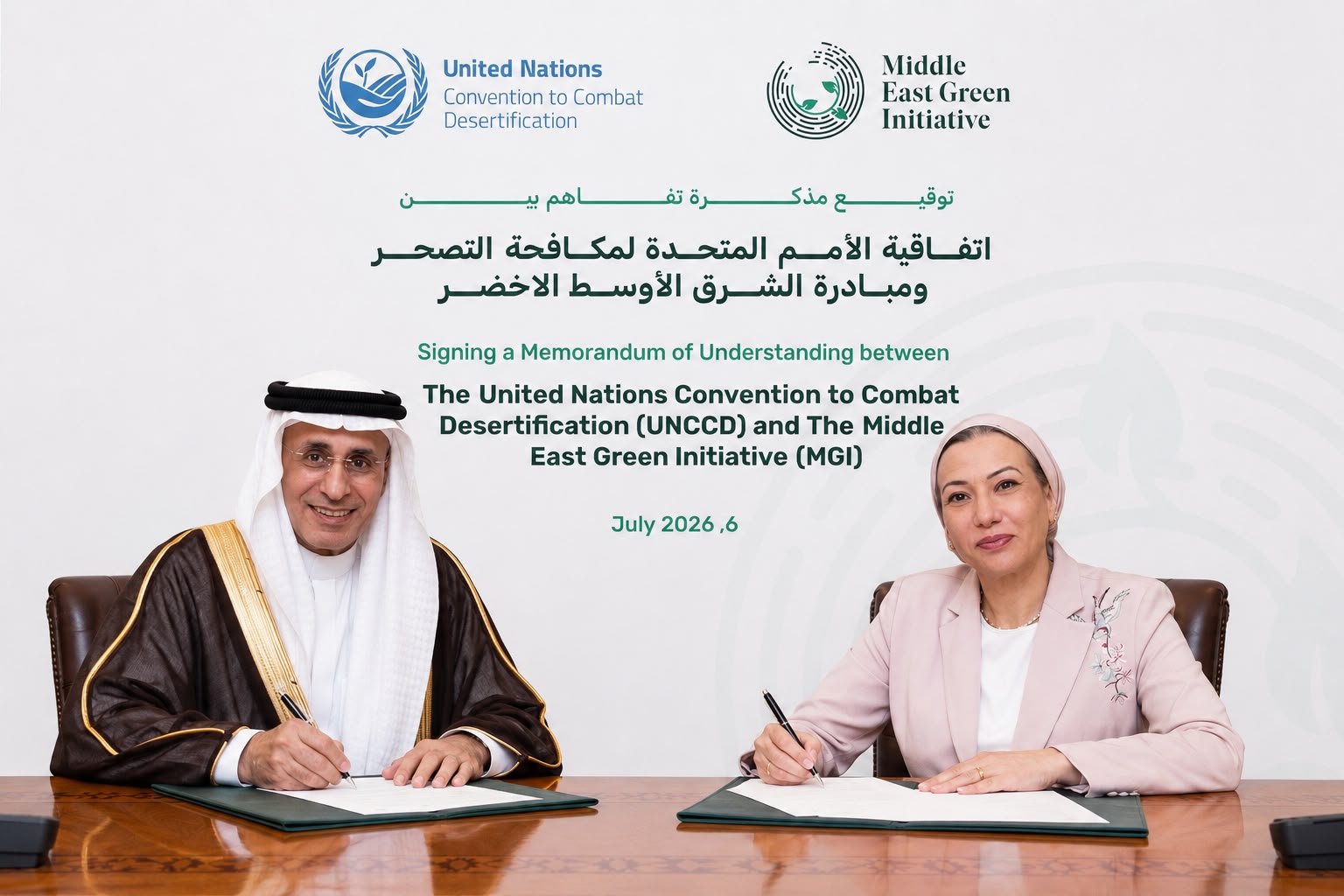
A major outcome of the mission was the signing of a Memorandum of Understanding between UNCCD and the Middle East Green Initiative (MEGI) — a regional initiative headquartered in Riyadh. Dr. Fouad and H.E. Ibrahim bin Mohammed Alturki, Secretary-General of the Middle East Green Initiative, signed the agreement to strengthen cooperation on land restoration, sustainable land management and drought resilience across the Middle East.
The Memorandum of Understanding reinforces a shared commitment to accelerating regional action and translating the outcomes of COP16 into concrete cooperation across the Middle East.
Building on the engagement of business leaders during COP16, discussions also focused on scaling private-sector investment in land restoration and drought resilience, including through stronger public-private cooperation and greater private-sector engagement through Business for Land (B4L), UNCCD’s platform for business action on land.
These efforts reflect growing recognition that land degradation and water scarcity are increasingly influencing inflation, food prices, public finances and investment decisions — reinforcing their role as strategic economic issues for governments and businesses alike.
UNCCD estimates that countries require USD 355 billion annually to address desertification, land degradation and drought, yet current investment stands at only USD 77 billion per year — leaving an annual financing gap of USD 278 billion. Private sector finance accounts for just 6 per cent of current flows, despite its growing exposure to land-related risks across agriculture, infrastructure, finance and supply chains.
“Hosting COP16 by KSA was intended to be a historical turning point in the global focus on the significant impacts posed by land degradation and drought and was never intended to be a single event. It marked the beginning of a long-term commitment to accelerate global action on land restoration and drought resilience. We will continue working closely with UNCCD and various international partners to ensure that the significant outcomes achieved in Riyadh translate into tangible results on the ground towards achieving global objectives pertaining to land neutrality and drought resilience” said Osama Ibrahim Faqeeha, Deputy Minister for Environment at the Ministry of Environment, Water and Agriculture (MEWA) of the Kingdom of Saudi Arabia.
With key foundations laid at COP16 in Riyadh, COP17 in Mongolia is expected to mark an important shift from political commitment to implementation — accelerating action on land restoration, drought resilience, sustainable food systems, rangelands and the financing needed to deliver them at scale.
For UNCCD and its partners, the challenge is no longer whether the world can afford to invest in land restoration and resilience — but whether it can afford not to.
With every dollar invested in sustainable land management generating between USD 7 and USD 30 in returns, the foundations established at COP16 in Riyadh, including the Riyadh Global Drought Resilience Partnership and the stronger engagement with the private sector through Business for Land are now moving into implementation. Together, they are helping build a new global financing architecture that reduces systemic risk, strengthens food and water security, unlocks investment and demonstrates that restoring land is not simply an environmental imperative, but one of the smartest investments countries can make for long-term prosperity and resilience.
Publications

Strong, sustainable, and resilient urban-rural linkages are central to efforts to combat land degradation, reduce out-migration, and achieve other sustainable development…