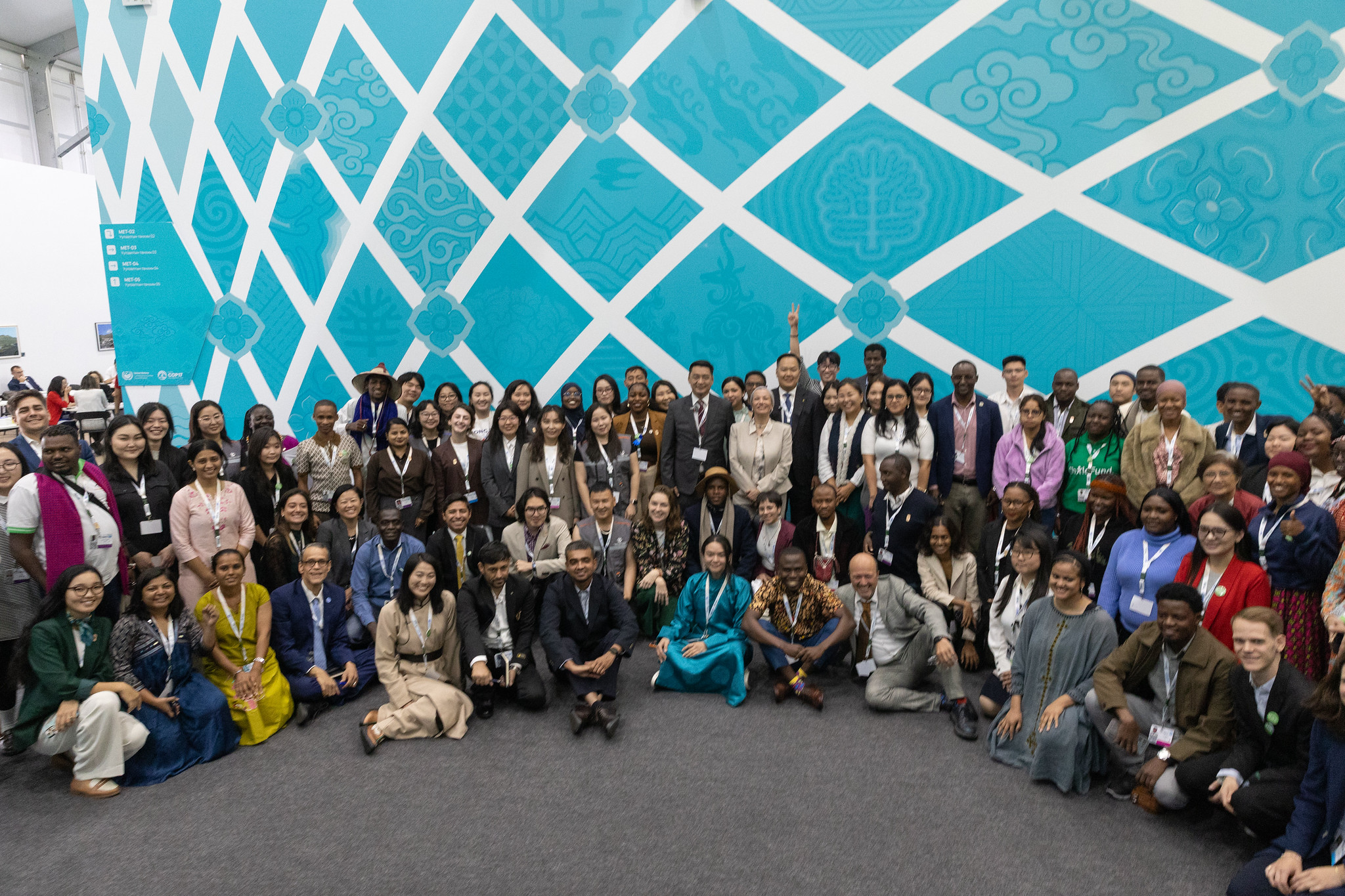
From desertification to recovery: Lessons from the Kubuqi Forum
-
18 September 2025
-
Story
-
Youth
-
Desertification

Once known as China’s “Sea of Death” for its shifting dunes and frequent sandstorms, the Kubuqi Desert has changed dramatically over the past three decades.
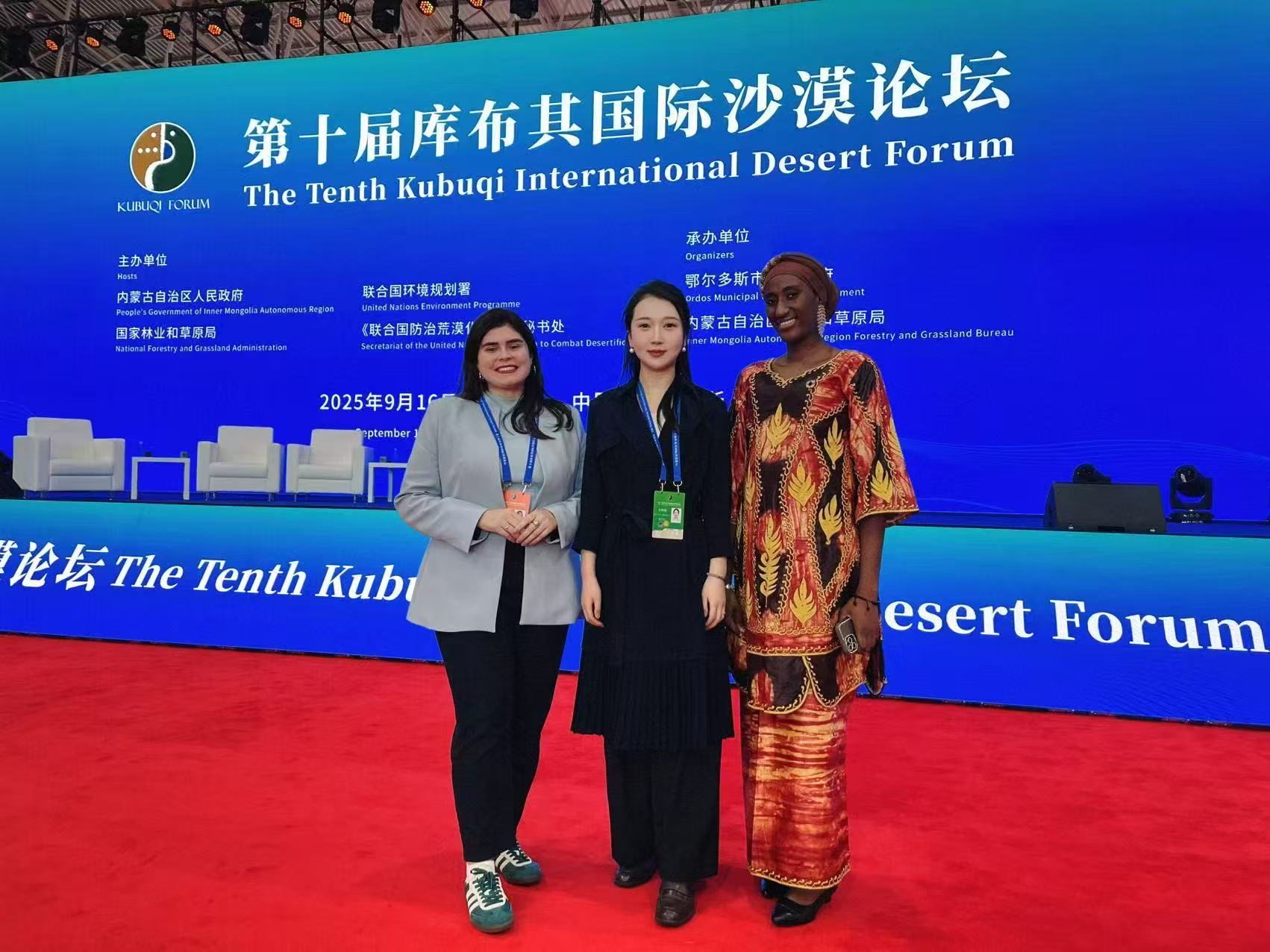
This week, that progress provided the backdrop for the 10th Kubuqi International Desert Forum in Ordos, Inner Mongolia. The gathering, co-organized by the UNCCD and the United Nations Environment Programme (UNEP), alongside China’s National Forestry and Grassland Administration and the Inner Mongolia Autonomous Regional Government, brought together international organizations, government officials, experts, scholars and entrepreneurs to exchange solutions for land restoration under the theme “Combat Desertification Scientifically and Promote Green Development.”
A global challenge that cannot wait
Across the globe, land degradation is accelerating worldwide. Today, 40 per cent of the world’s land is already degraded, directly affecting nearly half of humanity. Every year, at least 100 million hectares of healthy land are lost-an area the size of Egypt-driven by unsustainable land use and climate change. The economic impact is severe: nearly USD 900 billion is lost annually to desertification, land degradation and drought.
Droughts, already more frequent and intense, are now up by one third since 2000, causing more than USD 300 billion in losses each year. By 2050, three out of four people on Earth are expected to be affected. Yet solutions exist. UNCCD data shows that every dollar invested in land restoration can generate up to USD 27 in returns, strengthening food systems, creating jobs and helping communities withstand climate shocks.
From “Sea of Death” to productive land
Against this backdrop, the Kubuqi Desert shows what is possible when science, policy and community action come together. In recent years, restoration has expanded rapidly across the dunes. Forests and vegetation now cover areas that once produced only sand and dust. More than half a million hectares have been restored, reducing sandstorms, stabilizing soils and preventing huge volumes of sediment from flowing into the Yellow River.
Bringing renewable energy into restoration made a real difference. Solar farms established on degraded land not only generate clean power but also create conditions for vegetation to grow. This approach—known as “PV + Desertification Control”—has created new jobs, raised household incomes and demonstrated that tackling land degradation can also drive prosperity. In parts of Inner Mongolia, farmers now earn much of their income from forestry and fruit grown on once-barren land — proof that healthy ecosystems can support sustainable economies.
When we restore our land, we restore human dignity
In her video message to the Forum, UNCCD Executive Secretary Yasmine Fouad underlined that the lessons of Kubuqi extend far beyond China, showing how land restoration can transform both ecosystems and societies:
“The Kubuqi model teaches us a fundamental truth: When we restore our land, we restore human dignity. It means jobs, over one hundred thousand of them. It means new industries that sustain families. It means communities that no longer see the desert as an adversary but as a partner in their future. And this transformation was not the work of one sector alone. It was a collective work — of government, business, and communities standing shoulder to shoulder, working hand in hand.”
Shared lessons, shared future
The Forum was not only about Inner Mongolia. Delegates from regions severely affected by desertification, from Mongolia to the Sahel, shared their own efforts and highlighted how cooperation is essential. Mongolia’s forestry officials described their national campaign to plant one billion trees, while voices from Africa and Latin America pointed to the value of exchanging technologies and practices — from fire monitoring to sustainable pastoralism.
The Forum also featured voices from the UNCCD Land Heroes, which showcases young leaders advancing land restoration and sustainable livelihoods worldwide. Among them was Rokiatou Traoré, a Malian entrepreneur who founded Herou Alliance to empower women and youth through sustainable Moringa production. She highlighted the power of collective action: “China has proven to the world that, with political commitment and community engagement, we can turn a desert into an oasis. Beyond preserving our environment, growing trees can increase GDP and provide income for communities. Science and technology are our best allies to restore degraded land and improve our economies.”
Takudzwa Ashley Mlambo of Zimbabwe, Founder and Head of Agroforestry and Innovation at Forestry & Citrus Research (FACIR), where he leads The Greater Green Project, stressed the importance of technology: “The Forum has shown me innovative drone, satellite and IoT solutions for restoring degraded land, alongside models that integrate photovoltaic systems with plants and animals. If scaled to Sub-Saharan Africa, I believe we can achieve our Land Degradation Neutrality goals.”
Linking local success to global goals
For UNCCD, the experience in Kubuqi offers lessons with global relevance. Governments have pledged to restore one billion hectares of degraded land by 2030, with nearly half of these commitments made under the Convention’s framework. Meeting this goal will require mobilizing at least USD one billion per day over the next five years, but the gains in resilience, food security and livelihoods make it clear this investment is worth it.
Local communities, farmers and herders have played a strong role in restoration—from planting vegetation and leading cooperatives to running small businesses. Their efforts demonstrate how recovery of the land can also bring social and economic benefits.
As the Forum concludes, its message is clear: land can be restored, and when it is, both people and nature benefit.
Publications

Many of the world’s 1.2 billion youth (between 15-24 years) work, formally or informally, in food production - growing, harvesting, or processing. Yet young people are…