News & stories

Latest news & stories
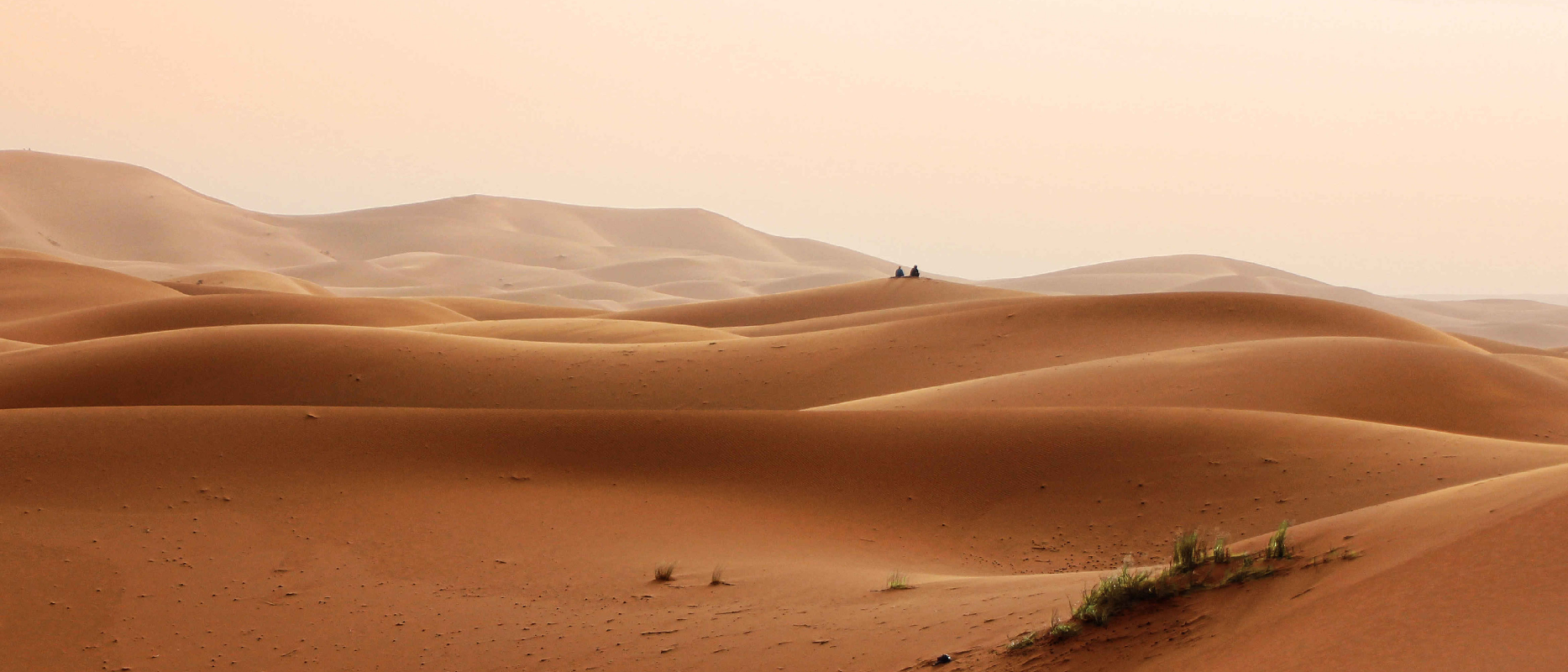
New UN data warns land is degrading faster than we can restore it Healthy land the size of Central Asia degraded since 2015 around the world UNCCD meets in Uzbekistan to review global progress towards ending land loss Samarkand, 13 November 2023 – At the opening of its first-ever meeting held in Central Asia, the UN Convention to Combat Desertification (UNCCD) unveils new data showing land degradation rapidly advancing in the region and around the world. Between 2015 and 2019, the world lost at least 100 million hectares of healthy and productive land each year. This adds up to 420 million hectares, or 4.2 million square kilometres, slightly over the combined area of five Central Asian nations: Kazakhstan, Kyrgyzstan, Tajikistan, Turkmenistan and Uzbekistan. These statistics underscore the need for urgent action, as escalating land degradation continues to destabilize markets, communities, and ecosystems around the globe. According to the latest UN data, over 20 per cent of the total land area in Central Asia is degraded, equivalent to roughly 80 million hectares, an area almost four times the size of Kyrgyzstan. This affects an estimated 30 per cent of the region’s combined population. The UNCCD Data Dashboard launch comes at a critical juncture as world leaders and experts are gathering in Samarkand, Uzbekistan, from 13-17 November 2023 for the 21st session of the UNCCD Committee for the Review of the Implementation of the Convention (CRIC 21). For the first time, an open Data Dashboard compiles national reporting figures from 126 countries, allowing users to explore the trends in their own regions and countries. UNCCD Executive Secretary Ibrahim Thiaw said: “The first-ever UNCCD Data Dashboard offers an eye-opening insight into rapid loss of healthy and productive land around the world, with dire consequences for billions of people. At the same time, we are seeing some ‘brightspots’—countries effectively tackling desertification, land degradation and drought. As we gather in Uzbekistan this week to review global progress towards ending land loss, the message is clear: land degradation demands immediate attention.” Land restoration ‘brightspots’ Despite a bleak global picture, there are examples of countries effectively tackling desertification, land degradation and drought. While Uzbekistan reported the highest proportion of degraded land in the Central Asia region, it also saw the largest decrease – from 30 per cent to 26 per cent – compared to 2015. A total of 3 million hectares of land in Uzbekistan have been degraded due to the drying of the Aral Sea. Between 2018-2022, Uzbekistan carried out saxaul planting on an area of 1.6 million ha to eliminate salt and dust emissions from the drained bottom of the Aral Sea. Kazakhstan increased irrigated lands by 40 per cent, expanding the total irrigated area to 2 million hectares. In Kyrgyzstan, some 120,000 hectares of pastures and forests are now under sustainable land management, including a pasture rotation system. Turkmenistan committed to restoring 160,000 hectares under its national ‘greening the desert’ initiative by 2025. Land Degradation Neutrality goal still within reach Although land degradation varies by region, UNCCD data warns that if current trends persist a staggering 1.5 billion hectares of land will need to be restored globally by 2030 to reach targets enshrined in the Sustainable Development Goals (SDGs). Barron Orr, UNCCD Chief Scientist, said: “Although global trends are going in the wrong direction, it is still possible to not only meet but exceed land degradation neutrality goals. This can be done by stopping further degradation while accelerating efforts on existing commitments to restore one billion hectares of land by 2030 with funding and action hand-in-hand.” Around the world, approximately USD$ 5 billion in bilateral and multilateral funding flowed into global efforts to combat desertification, land degradation and drought between 2016 and 2019. This helped 124 nations roll out a wide range of projects aimed at addressing these challenges. All Central Asian nations have joined the LDN target-setting programme under UNCCD, bringing the total number of participating countries to 131. Half of the LDN targets set by countries in Central Asia have already been achieved, with projects to deliver on the rest of the commitments currently underway. Notes to editors For interviews and enquires please contact: press@unccd.int and/or unccd@portland-communications.com To access the UNCCD’s Data Dashboard please click here: https://data.unccd.int/ For any enquires on data and methodology, please write to reporting@unccd.int. The data related to land degradation (i.e. SDG indicator 15.3.1) is compiled in global and aggregate form from 115 country reports and 52 country-estimates drawn from global data sources. For other indicators, the data is compiled in global and aggregate form "as received" from 126 Parties in their 2022 UNCCD national reports. Therefore, the facts present a partial estimate of progress at the global and regional level, in terms of the status and trends in these indicators/metrics, as not all Parties have reported all indicators. The information presented should in no way be interpreted as a comprehensive global or regional assessment of status and trends in the indicators/metrics. More information about the 21st session of the UNCCD Committee on the Review of the Implementation of the Convention (CRIC21): https://www.unccd.int/cric21 Accredited media representatives are invited to attend and report on CRIC21 and associated events. Field visits where journalists can see land restoration and drought resilience projects will take place immediately prior to CRIC21. Online registration for media representatives is available at the following link: www.unccd.int/cric-21-online-registration. About UNCCD The United Nations Convention to Combat Desertification (UNCCD) is the global vision and voice for land. We unite governments, scientists, policymakers, private sector and communities around a shared vision and global action to restore and manage the world’s land for the sustainability of humanity and the planet. Much more than an international treaty signed by 197 parties, UNCCD is a multilateral commitment to mitigating today’s impacts of land degradation and advancing tomorrow’s land stewardship in order to provide food, water, shelter and economic opportunity to all people in an equitable and inclusive manner.

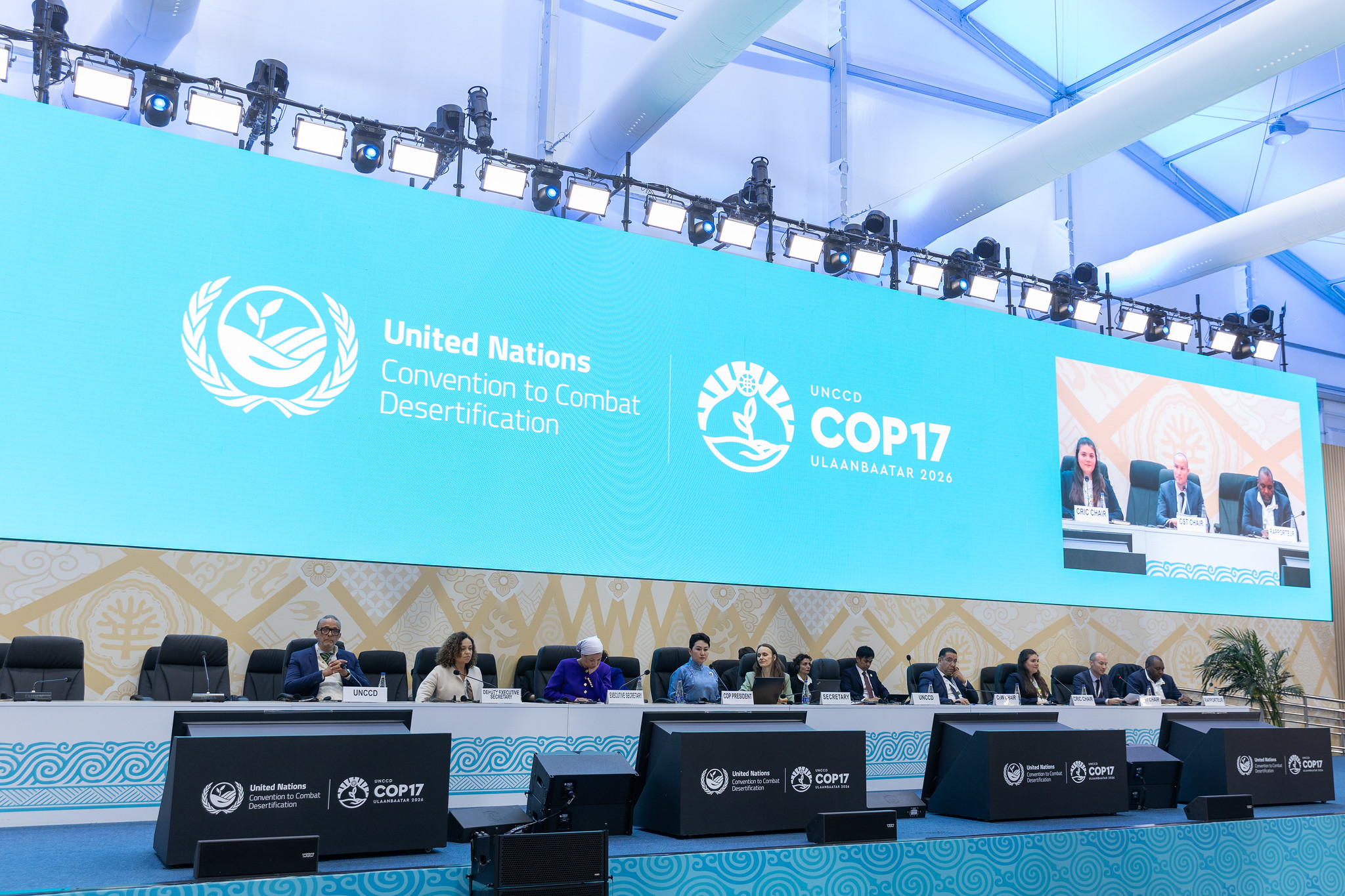
Prime Minister Abdulla Nigmatovich Aripov, Your Excellency Mr. Aziz Abdukhakimov, Minister of Ecology, Environmental Protection and Climate Change, Madame Biljana Kilibarda, Chair of the Committee of the Review of Implementation of the Convention (CRIC) Honorable Delegates, Representatives of International Organizations Representatives of Non-Governmental Organizations, Observers, Ladies and Gentlemen, What a pleasure to be back in beautiful Samarkand. I would like to thank the Government and the people of Uzbekistan for their hospitality and the legendary generosity. It is not by chance that Samarkand -- one of the oldest inhabited cities in Central Asia -- is inscribed in the prestigious UNESCO World Heritage list. Samarkand is distinguished for being the ‘Crossroads of cultures’. As there is no culture without nature, this city will also be, for the better part of the next ten days, one of the centers of the world. A center where the 197 Parties to the UN Convention dealing with Land and Drought are gathered to measure the pulse of the planet. Time to assess how much of our land we have degraded, how much of our economy we have destroyed, knowingly or unknowingly; willingly or unwillingly. Time to appreciate how sustainable -- or rather unsustainable -- our lifestyle is. Time to check how much of our children’s reserves and shares we are eating. How much of our grandchildren’s future we are jeopardizing, by over-harvesting and over-exploiting our natural capital. More often than not, we do this for greed. Not for absolute need. Being in Samarkand, we are reminded that civilizations before us left us with the food, the fiber, the water on which we all so much depend on! But being in Uzbekistan is also a reminder of how much we have destroyed nature, in the name of progress. In the name of development and in the quest of prosperity. We have inflicted the ugliest scars on the face of the Earth. One such environmental disaster is found here, in the Aral Sea. This once so large a freshwater body that we misnamed as sea, is now partially filled with sand dunes. A tragedy that unfolded in just one generation. I am very much looking forward to visiting the Aral area to also witness the Herculean tasks undertaken to mitigate the environmental risks associated with the diversion and over-harvesting of the water. Samarkand will go down in the annals of the Convention as the place where a crucial meeting was organized and served as a steppingstone between COP15 in Abidjan and COP16 in Riyadh. As we navigate through the five ambitious days ahead, your deliberations in Samarkand will be foundational for the success of the upcoming COP in Riyadh in December next year. From the agenda of CRIC 21, allow me to single out two items: the new dashboard on land degradation, thanks to your reports and data collected from 126 countries. For the first time in the history of the Convention, we have trends on both land loss and land remediation, as reported by our Parties. While this work is still to be perfected, the early indications give us chilling numbers: at least 100 million ha of land are degraded every year. We call upon all Parties to the Convention to contribute to the next report as this database can potentially serve as a world reference on land loss and land restoration. Additionally, we will hear from two intergovernmental working groups, namely the Group on the Mid-term review and the team working on Drought. Excellencies, Ladies and Gentlemen, As you know, issues of land degradation and drought resilience have gained an unprecedented momentum over the last few years. While much remains to be done, your work has never been as noticed as today. Not only in the media, but also in boardrooms and in the corridors of power. This is an indication of the growing global commitment and attention to the scourge of desertification, drought and land degradation. The world is coming to realize that these phenomena affect us all, rich and poor, though the poorest bear the brunt. But this increased awareness is coupled with a significant increase of workload from your Secretariat. Our personnel feel the need of doing more, and they are doing much more. But with much less. Over the last ten years, our budget has stagnated in euro numbers. In reality, by value terms, the budget has been drastically reduced considering the important rise in the cost of living. An analysis and a budget proposal will be made to the next COP. Finally, allow me to say how proud I am to have such a talented staff from the Secretariat and the Global Mechanism. Please join me in expressing my gratitude to all for their hard work. Ladies and gentlemen, We could not have a better host for this CRIC session. We could not be in better conditions to deliver a successful session. Your deliberations and guidance, in this magnificent hall, will -- by and large -- be the foundation upon which millions of people from around the world will have access to healthy land and live on a healthy planet. Your deliberations will shape the future of the unborn. What direction do you want to point them in? The direction of a healthy environment, as we have inherited from our ancestors; or the direction of a miserable life that, unless we change gears, we are likely to live to our offspring. The future is now. It is literally in our hands. Thank you.

Samarkand, Uzbekistan, 13 November, 2023 Leaders have made a promise to the world: to combat the terrible trend of transforming healthy land into desert; to revitalize areas humanity has pushed into degradation and decay; and to create a world that is land degradation neutral. Keeping these promises is vital for nature, and for communities. But we are moving in the wrong direction. Between 2015 and 2019, 100 million hectares were degraded every single year, adding up to an area twice the size of Greenland. If current trends continue, we will need to restore the health of a staggering 1.5 billion hectares of degraded land by 2030. We can and must turn this around. Around the world we see examples of land being given a new lease of life, including in Uzbekistan. And the world could surpass its neutrality target if it works together to halt new land degradation and accelerate restoration. To achieve this, we need governments, businesses and communities to work together to conserve natural areas, scale up sustainable food production, and develop green urban areas and supply chains. I urge all of you to use this intersessional meeting to step up ambition and action to help make that a reality. Together, let’s see degraded lands thrive once more.

Media Advisory 21st Committee to Review the Implementation of the Convention (CRIC21) meeting in Samarkand, Uzbekistan, 13-17 November 2023. Bonn/Samarkand, 09/11/2023 - The twenty-first session of the Committee for the Review of the Implementation of the Convention (CRIC 21) to the UN Convention to Combat Desertification (UNCCD) will be held in Samarkand, Uzbekistan from 13-17 November 2023. CRIC21 will bring together an estimated 500 delegates from 196 countries and the European Union, civil society, and academia to reflect on progress in delivering the Convention’s strategic objectives. It marks the first time UNCCD convenes one of its most significant meetings in Central Asia, since its establishment. This meeting comes at a critical juncture, as recent data launched by UNCCD shows that the world is losing nearly 100 million hectares of healthy and productive land every year. If current trends continue, 1.5 billion hectares of land will need to be restored by 2030 to achieve land degradation neutrality around the globe. But, halting additional degradation and accelerating existing commitments alone could surpass the neutrality target. UNCCD Executive Secretary Ibrahim Thiaw said: “Droughts, wildfires and heatwaves we have witnessed around the world are the symptoms of the deepening and interlinked climate and nature crises, with land at the heart of both. Since 2015, some 4 million square kilometres of healthy and productive lands have been lost—an area roughly the size of Central Asia. We must urgently stop further land degradation and restore at least 1 billion hectares to meet global land targets by 2030.” CRIC21 will be held at the Silk Road Samarkand Congress Centre. Parties will have the opportunity to review progress and provide recommendations towards achieving global targets to prevent and reverse land degradation, in line with the 2018-2030 UNCCD strategic and implementation frameworks. Among the highlights of the CRIC21 programme: Opening plenary on 13 November from 10:00-13:00 with introductory statements from the Chair of the CRIC, the UNCCD Executive Secretary and the representative of the Government of Uzbekistan. UNCCD Gender Caucus on 14 and 16 November from 13:00-15:00 will convene international experts to discuss women’s land rights as a prerequisite to the success of global land restoration and drought resilience efforts. A high-level political event on Sand and Dust Storms hosted by the government of Uzbekistan will be held on 15 November from 10:00-13:00. In recent years, sand and dust storms have increased in both frequency and severity in both Uzbekistan and surrounding countries. For the first time, more than 30 side events will be organized at CRIC21. These events provide the informal opportunity for parties and accredited observer organizations to exchange information and experiences on diverse issues related to the objectives of the Convention. Press briefings will be held throughout CRIC21 between 13:00-15:00 local time, including: 13 November: Focus on Central Asia: global and regional trends on desertification, land degradation and drought with UNCCD Chief Scientist, Dr Barron Orr, and Programme Officer, Science, Technology and Innovation Unit, Ms Olga Andreeva (TBC). 14 November: Her Land. Her Rights: global and regional efforts to advance women’s land rights and their engagement in land restoration and drought resilience efforts with UNCCD and regional experts (TBC). 15 November: Sand and Dust Storms: the latest data on this growing phenomenon with UNCCD and regional experts, as well as the outcomes of the high-level event hosted by the Government of Uzbekistan. 17 November: Closing press conference: an overview of the key outcomes of CRIC21 with Mr Ibrahim Thiaw, UNCCD Executive Secretary, Ms. Biljana Kilibarda, Chair of the CRIC, and Mr Aziz Abdukhakimov, Uzbek Minister of Ecology, Environmental Protection and Climate Change. Notes to Editors Accredited media representatives are invited to attend and report on CRIC21 and associated events. Field visits where journalists can see land restoration and drought resilience projects will take place immediately before and after CRIC21. Daily highlights of CRIC21 will be provided by the IISD Earth Negotiations Bulletin: https://enb.iisd.org/unccd-committee-review-implementation-convention-cric21 Side events schedule is available here: https://www.unccd.int/sites/default/files/2023-10/Side%20Events%20CRIC21.pdf Visual assets about CRIC21 and the UNCCD Data Dashboard are available here: https://trello.com/b/zq0kxtkK/unccd-cric21-samarkand-uzb-2023 Online registration for media representatives is available at the following link: www.unccd.int/cric-21-online-registration. To register, please provide the following documents: One recent passport-sized photograph A valid press card A copy (picture and signature pages) of your passport (for foreign journalists) or national identity card (for local applicants) A letter of introduction from the bureau chief or company sponsoring your travel to the session. For freelance journalists, a letter is required from the media organization assigning you to cover the conference A duly completed accreditation form Journalists who register online will be able to collect their accreditation at the Silk Road Samarkand Congress Center on presentation of a valid press card and an identity document. For more information on the regulations governing visa applications and the introduction of reporting material into Uzbekistan, please consult the following link: https://e-visa.gov.uz/main_ For inquiries about media accreditation or coverage of the event, please contact: press@unccd.int A dedicated press and media working space will be available at the conference venue. Additional information and media updates on the Convention and CRIC 21 will be available on the UNCCD website: https://www.unccd.int/cric21 About UNCCD The United Nations Convention to Combat Desertification (UNCCD) is the global vision and voice for land. We unite governments, scientists, policymakers, private sector and communities around a shared vision and global action to restore and manage the world’s land for the sustainability of humanity and the planet. Much more than an international treaty signed by 197 Parties, UNCCD is a multilateral commitment to mitigating today’s impacts of land degradation and advancing tomorrow’s land stewardship in order to provide food, water, shelter and economic opportunity to all people in an equitable and inclusive manner.

Abidjan, Beijing, Cairo, November 3, 2023 – For the first time ever, the Presidents of the last Conference of Parties (COP) of each of the three Rio Conventions have decided to join forces. With three weeks to go before the opening of COP28 in Dubai, the Presidents: Underlined the urgency of the situation and the inextricable links between climate change, desertification and loss of biodiversity; Called for a coordinated approach both at international and national levels to tackle these issues in a holistic way; Pleaded for more cooperation between the three COPs and their secretariats; And asked for urgent, concrete, measures to protect the world population, environment, lands and biodiversity to ensure a sustainable future for new generations. They did so in a historic joint declaration released today, signed by: Alain-Richard Donwahi, former Minister of Water and Forestry of the Republic of Côte d’Ivoire and President of the United Nations Convention to Combat Desertification’s COP15 (UNCCD) Sameh Shoukry, Minister of Foreign Affairs of Egypt and President of the United Nations Framework Convention on Climate Change’s COP27 (UNFCCC) Huang Runqiu, Minister of Ecology and Environment of the People’s Republic of China and President of the Convention on Biological Diversity’s COP15 (CBD) At the United Nations Conference on Environment and Development held in Rio in 1992, the international community decided to create three different conventions to fight climate change, halt desertification and prevent loss of biodiversity. However, as these three phenomena accelerate, the interconnections between them amplify, creating a vicious circle. Breaking this vicious circle requires a holistic vision and a coordinated approach. With this common declaration, the three Presidents hope to open a new chapter in the fight against climate change, desertification and biodiversity loss, one of coordinated efforts to face the urgency. About UNCCD’s COP15 The Conference of the Parties (COP) to the United Nations Convention to Combat Desertification (UNCCD) brings together leaders from the Convention's signatory countries, the private sector, NGOs and civil society. It aims to combat desertification and mitigate the effects of drought, promote sustainable land management, rehabilitate and restore degraded lands and ecosystems, mobilize financial resources, develop technologies to support affected countries, and strengthen international cooperation and partnerships to address these phenomena. Like the COP on biodiversity, the COP on desertification meets every two years. Its last major meeting was held in May 2022 in Abidjan. From the previous summit until the next held in Riyadh for December 2024, the COP on Desertification has been chaired by the Republic of Côte d'Ivoire, represented by Alain-Richard Donwahi. Media contacts: Emilie Villemin +33 6 81 11 68 06 COP15Desertification(at)apcoworldwide.com

As the UNCCD high-level meeting in Central Asia draws near, we welcome you to this discussion on why global and regional gatherings are an essential part of the UNCCD process. The twenty-first session of the Committee for the Review of the Implementation of the Convention (CRIC 21) in Samarkand is set to serve as a vital marker in the Convention’s ongoing efforts to accelerate progress on land restoration and drought resilience. By bringing together experts, leaders and delegates from 196 nations and the European Union, the meeting sets a major arena for the exchange of cutting-edge insights. This pooling of global expertise not only fosters productive solutions but also facilitates joint decision-making, ensuring a coordinated approach to pressing environmental challenges. CRIC21 will focus on strategic objectives ranging from sustainable land management and drought resilience to secure and equal land rights for women. The event will also provide a platform to discuss emergent crises exacerbated by climate change, such as sand and dust storms and wildfires. Taking place at the halfway point between the biannual Confrences of the Parties (COP) to UNCCD, the insights coming out of CRIC21 will aid in defining the next steps for all stakeholders, providing a clear and focused roadmap to UNCCD COP16, scheduled to take place in Riyadh, Saudi Arabia in 2024.
