News & stories


Latest news & stories
Bonn/Panama City, 3 December 2025 — Women across the world are already adapting to a changing landscape. They reorganize planting cycles, walk farther for water, protect crops against drought, care for elders and children during climate shocks, and sustain food systems rooted in increasingly fragile soils. Their daily work reflects a global reality: 40 percent of the planet’s land is now degraded, and droughts are 30 percent more frequent than they were twenty years ago. These experiences shaped discussions at the Committee for the Review of the Implementation of the Convention (CRIC), the annual meeting where countries assess progress under the United Nations Convention to Combat Desertification (UNCCD). Within this process, the Gender Caucus — created at the fifteenth session of the Conference of the Parties (COP15) in Abidjan and included in the official agenda for the first time this year — has become one of the most influential spaces for shaping gender-responsive land policy. Hindou Oumarou Ibrahim, Coordinator of the Association for Indigenous Women and Peoples of Chad (AFPAT)At CRIC23 in Panama, the Caucus brought attention to two urgent issues: the leadership and worldviews of Indigenous women in sustainable land management, and the gendered impacts of sand and dust storms (SDS), an environmental hazard intensified by degraded soils, dried lakebeds and shifting climate patterns. Land, knowledge and continuity Speakers from Panama, the Arctic, Africa, Latin America and Mongolia highlighted how women’s connection to land extends beyond daily responsibilities. It shapes cultural continuity, food security, and community stability. Yet despite this, women’s knowledge rarely guides national strategies on soil conservation or drought resilience. Panama’s Wounaan National Chief Aulina Ismare Opua described the direct consequences of environmental change on community life. “Women in our communities face the effects of changing soil, forest and water every day. We are managing the impacts, but we are not adequately included when policies are designed. That gap harms everyone,” she said. She also underscored that limited access to land, education and financing undermines Indigenous women’s ability to contribute fully to national strategies. “When women heal the land, the land heals the world,” she noted, calling for inclusion in national and international agendas. Aulina Ismare Opua, National Chief of the Wounaan Nation of PanamaHindou Oumarou Ibrahim, Coordinator of the Association for Indigenous Women and Peoples of Chad (AFPAT), emphasized that Indigenous women’s understanding of environmental change is rooted in generations of observation and practice. “Every map of our lands carries the memory of our mothers and grandmothers. Across Indigenous Peoples, women hold generations of ecological knowledge, yet too often that wisdom is treated as invisible. As climate change and land degradation accelerate, our knowledge is not a tradition of the past — it is a tool of resilience for the present and survival for the future, protecting both our communities and the Earth we all share,” she noted. Their interventions echo global evidence: Indigenous Peoples steward roughly one quarter of the world’s land, much of it highly biodiverse. Women play central roles in this stewardship, yet remain underrepresented in environmental ministries, land governance bodies and multilateral negotiations. Orkhon Battumur, Nomadic herder, Övörkhangai Province, Mongolia At the Gender Caucus, this expertise was brought directly into the policy conversation — from securing land rights under pressure to blending ancestral knowledge with scientific approaches and restoring landscapes degraded by erosion, drought or deforestation. Speakers from Mongolia underscored the realities faced by rural herder women, including the loss of livestock from extreme climate events and the absence of land tenure or access to credit, which restricts their economic independence. One herder’s message resonated strongly: “Soil is life, and our life is soil." These contributions are expected to shape gender-responsive recommendations emerging from the meeting. A growing threat with gendered consequences As discussions shifted toward climate-related risks, another reality came sharply into focus: the uneven impact of sand and dust storms. Sand and dust storms (SDS) are intensifying across many regions, affecting communities from North Africa and the Middle East to Asia, Oceania and parts of Europe. These storms now lift close to two billion tons of dust into the atmosphere each year, and at least a quarter of these events are intensified by unsustainable land use. Yanel Venado Jiménez, Gender and Youth Coordinator at the National Coordination of Indigenous Peoples of PanamaTheir impacts cut across sectors — agriculture, water security, transport, health — but they do not fall evenly. In rural and low-income communities, women are often exposed for longer periods through farming work, water collection and market activities. Indoors, dust settles in cooking and living areas, increasing respiratory risks. And when storms close schools, markets or harvests, the resulting care burden and income loss fall first on women. Throughout the Gender Caucus, participants pointed to one persistent gap: the lack of sex-disaggregated data. Without it, early-warning systems and preparedness plans overlook women’s vulnerabilities and the strategies they already use. Strengthening these data systems is expected to feature in the recommendations emerging from CRIC23. A shift in representation This year also marked an important step forward for women’s participation in the Convention’s processes. Through the Women Delegates Fund (WDF) — supported by GIZ’s global programme Women’s Empowerment for Resilient Rural Areas (WE4R) on behalf of the Federal Ministry for Economic Cooperation and Development — women from drought-affected and developing countries were able to participate fully in the CRIC23 sessions and receive targeted negotiation training in preparation for COP17. Aluki Kotierk, Chair of the United Nations Permanent Forum on Indigenous IssuesUNCCD data shows how much progress is still needed: women represented only 27 percent of delegates at COP15 and 33 percent at the last CRIC session. The WDF cohort brought expertise ranging from hydrology, forestry and agronomy to environmental policy and community leadership, enriching both the Gender Caucus and the broader deliberations. “Investing in women negotiators is investing in more inclusive, effective and durable land-use decisions. Their leadership strengthens not only the negotiation rooms, but the solutions implemented back home.” said GIZ's program lead Andreas Lange. Toward COP17: grounding policy in lived experience As countries prepare for COP17 in Mongolia, discussions at CRIC23 point to a clear conclusion: land degradation and drought cannot be addressed effectively without the perspectives of the women who manage land every day. Women’s knowledge - scientific, traditional and experiential - is essential for restoring rangelands, improving soil health, preparing for SDS and sustaining cultural continuity under environmental stress. Speakers also called for greater support for Indigenous girls’ education, access to technology and credit, and recognition of women’s unpaid domestic, agricultural and craft work — all critical elements for sustaining land stewardship across generations. The Gender Caucus underscored a simple but decisive message: policies to protect land must reflect the experience of the people who depend on it most - otherwise they risk addressing the crisis in name, but not in practice. CRIC23 Gender Caucus panel group photo

CRIC23 Examines Land Tenure and Launches the Economics of Rangelands ReportThe fourth day of CRIC23 turns to the policy foundations that determine whether land restoration succeeds, with discussions focused on strengthening land tenure systems, improving enabling conditions for sustainable land management, and reviewing new economic findings that will shape global thinking on dryland resilience ahead of COP17.Key eventEconomics of Rangelands – Key Findings Ahead of COP17Please note: Key findings and early messages from the upcoming Economics of Rangelands report will be made available to the media, highlighting the economic value of rangelands and the costs of their ongoing degradation. There will be no formal press briefing, but the following experts will be available for media interviews upon request:Mark Schauer, Project Lead (Co-Lead), Sector Programme Resilient Rural Areas, GIZDr. Barron Orr, UNCCD Chief ScientistAriuntuya Dorjsuren, Director General, International Cooperation Division, Ministry of Environment and Climate Change, MongoliaEnrique Michaud, Co-Chair, IYRP Global AllianceFor interview arrangements, please contact: press@unccd.intHost country event of notePanama Side Event: “The Nature Pledge Journey”When: 13:15–14:45Where: CARIBE 4Led by the Government of Panama, this session will present the country’s progress under the Panama Nature Pledge, including work to achieve LDN by 2030, restore priority hotspots, and integrate land, climate and biodiversity policies.This event may interest journalists following Panama’s national leadership and regional positioning during CRIC23.Additional Themes Covered Today How land tenure security supports land restoration and climate resilienceNational experiences in achieving LDN targetsEconomic and policy considerations emerging from dryland and rangelands assessmentsRegional cooperation, lessons and priorities on land governanceSide events organised by partners take place throughout the day.Full schedule: https://www.unccd.int/cric23/side-events

Loss of fertile land and severe drought put SIDS on the line as the planet warms The voice of SIDS gains prominence in the lead up to UNCCD COP17 in Mongolia The SIDS land area affected by at least six months of extreme drought per year soars to 17 per cent up from 2 per cent 60 years ago. Almost seven out of ten people in SIDS are now exposed to drought.SIDS must urgently harness sustainable agricultural practices to boost food and water security in the face of climate change.The UNCCD SIDS Forum addresses the SIDS’ unique challenges as the loss of fertile land and severe droughts threaten lives and livelihoods. Bonn/Panama City, 2 December 2025 – Every inch of land is vital for the survival of Small Islands Developing States (SIDS), which are facing growing impacts from harsher droughts and the loss of fertile soils according to an informationbrief launched during the 23rd session of the Committee for the Review of the Implementation of the Convention (CRIC 23) in Panama. Prepared by the United Nations Convention to Combat Desertification (UNCCD), the brief warns that the SIDS’ land area affected by at least six months of extreme drought per year has increased to 17 per cent in the 2014–2023 period, up from 2 per cent between 1961–1970. Meanwhile, urbanization, unsustainable agriculture and extractive industries are fueling the degradation of precious land in some of the smallest, more isolated and poorest territories on the planet, which are also some of the most vulnerable to climate change. SIDS are home to nearly 74 million people, around 1 per cent of the world’s population, but face unique social, economic, and environmental challenges: the loss of even tiny areas of productive land compromises their food, water and energy security; increases the transmission of infectious diseases; and undermines rural livelihoods, with women and girls being the hardest hit. Given the SIDS’ limited arable land and narrow resource base, every bit of land matters for the resilience of communities, economies and ecosystems; especially, in the face of climate-related hazards. UNCCD Deputy Executive Secretary Andrea Meza said: “Small Island Developing States remind us that taking care of our land is an existential matter. We must urgently transform our food systems and align our policies to harness land as the basis for sustainable development, as a matter of security, and as a climate and biodiversity solution. As the world sees more extreme weather and climate events, it is imperative we invest in healthy land to reduce the vulnerability of our communities in SIDS and beyond.” Growing challenges The brief summarizes information from recent assessments and scientific sources, including the UNCCD data dashboard, to outline the challenges and opportunities of SIDS in relation to land and drought. Globally, SIDS encompass 39 states and 18 territories across the Caribbean, the Pacific, and the Atlantic, Indian Ocean, and South China Sea (AIS). Food security: Food security in SIDS is challenged by the amount of arable land, costly food imports, and the triple burden of malnutrition, i.e., undernourishment, micronutrient deficiency, and obesity. In most SIDS, agricultural production is constrained by low soil fertility, high input costs, and exposure to droughts, cyclones, and salinization, which make them unable to meet domestic food demand. Land degradation compounds an already fragile scenario.Land degradation: Unsustainable land and water management are increasing drought vulnerability in SIDS. Many land degradation processes in SIDS have their roots in the legacies of colonialism —particularly, cash crop plantations and forest industries, which displaced indigenous land use practices and led to tenure insecurity.Drought and water scarcity: A growing concern, especially in poorer, smaller or more isolated SIDS like Haiti, Martinique, Comoros, Marshall Islands and Guam.Five SIDS are experiencing water scarcity (less than 1,000 m³ per person per year), and an additional three face absolute water scarcity (less than 500 m³ per person per year).Biodiversity: SIDS cover less than 0.5 per cent of the planet’s surface area, but are home to over 20 per cent of global biodiversity. Biodiversity loss reduces soil fertility, pollination, water cycling, and coastal protection. In turn, that undermines ecosystem productivity and resilience, as well as food security and livelihoods.Public policies and data: Local institutions tend to lack enough resources and experts to integrate nature-based solutions into land management efforts. Building and retaining technical expertise and accessing high-resolution land cover data is key to advance sustainable land management and resilience. Eight of the 20 countries that top the Human Flight and Brain Drain Index are SIDS: Jamaica, Haiti, Guyana, Grenada, Cabo Verde, Samoa, Micronesia and Fiji.Finance: Only USD 487 million of the total development finance provided to SIDS between 2016 and 2023 was related to desertification, land degradation, and drought. Even so, this funding was unevenly distributed among SIDS, with five countries (Papua New Guinea, Haiti, Dominican Republic, Solomon Islands, and Fiji) accounting for 65 per cent of the total. Land use governance Land use governance is a challenge for SIDS. In the Caribbean, for example, tenure insecurity rooted in colonial times discourages investments in sustainable land and water management. That contributes to a vicious cycle of environmental degradation and poverty. In the Pacific, many communities kept the rights to their ancestral territories, but are losing already limited arable land to unplanned urban growth. According to the brief, legal safeguards for traditional governance systems and involving communities in land-use planning and enforcement are key to halting the trend. “Spatial planning is a powerful tool: it helps protect healthy land, reduces conflict over limited resources, and strengthens resilience to drought and climate change,” said Fred Nicholas, Project Officer for the National Environment Service in the Cook Islands. “But its success depends on government agencies, traditional leaders, and communities working together to sustainably manage land, aquifers, and coastal areas through a true ridge-to-reef approach.” Cost-effective interventions SIDS depend heavily on healthy landscapes to support key economic sectors like agriculture, fisheries and tourism. Today, 26 out of the 39 SIDS that are country Parties to the UNCCD have engaged in the process of setting Land Degradation Neutrality (LDN) targets, including the Dominican Republic, Mauritius, Sao Tome and Principe and Papua New Guinea. This includes various approaches to protecting land and water resources and to building resilience in SIDS, such as: Integrated land use-planning: facilitates balanced management of limited land resources, while addressing the competing needs for housing, agriculture, nature conservation, and tourism.Indigenous farming and agroforestry practices: they are cost-effective ways to improve the SIDS’ food security, climate adaptation, and sustainable development. For example, SIDS in all regions have traditional practices that are more resilient to droughts, floods and storms than industrial monocultures. Dual land use systems like agroforestry, agrivoltaics, and urban farming can safeguard ecosystem services and connectivity while meeting the demand for food. Cooperative efforts SIDS have a unified voice in multilateral dialogues, such as climate change negotiations. The UNCCD SIDS Forum Workshop and side event demonstrate how SIDS are prioritizing land degradation and drought as part of their development agenda. Leaders at these meetings called for investments in land restoration, water and waste management, and underscored the need for integrated land-use planning as a matter of resilience and climate adaptation. “SIDS know first-hand the brutal impacts of climate-related disasters, like the devastation hurricane Melissa recently caused in Jamaica,” said Calvin James, former head of PILSM and now coordinator of the UNCCD SIDS Forum. “We must speed up land and drought action in our territories by exchanging good practices, sharing lessons learned, and raising awareness of our unique challenges and opportunities,” he explained. “We see the SIDS forum as a milestone towards COP17, where we hope that Parties formally recognize Small Island Developing States as a unified voice.” The forthcoming Global Land Outlook on SIDS, which is expected to be published ahead of UNCCD COP17 in Mongolia, will provide a more detailed analysis of the unique land challenges and opportunities for building resilience in SIDS. Notes to editors For inquiries and interview requests with the authors, please contact: press@unccd.int The information brief “Small Island Developing States: Multi-dimensional challenges require integrated approaches to build resilience” is available via the following link: Small Island Developing States: Multi-dimensional challenges require integrated approaches to build resilience | UNCCD Visual assets about CRIC23 and the UNCCD Data Dashboard are available here: https://trello.com/b/zq0kxtkK/unccd-cric23-panama-2025 Additional information and media updates on the Convention and CRIC 23 are available on the UNCCD website: https://www.unccd.int/cric23 About UNCCD The United Nations Convention to Combat Desertification (UNCCD) is the global vision and voice for land. We unite governments, scientists, policymakers, private sector and communities around a shared vision and global action to restore and manage the world’s land for the sustainability of humanity and the planet. Much more than an international treaty signed by 197 Parties, UNCCD is a multilateral commitment to mitigating today’s impacts of land degradation and advancing tomorrow’s land stewardship in order to provide food, water, shelter and economic opportunity to all people in an equitable and inclusive manner.

CRIC23 Highlights Gender Equality, Indigenous Leadership, and the Post-2030 Strategic FrameworkToday’s CRIC23 discussions focus on gender equality, Indigenous women’s leadership, and the Interim Report of the Intergovernmental Working Group on the Future Strategic Framework (IWG-FSF).Key event 10:00–13:00 | Field Visit to the Panama Canal (Miraflores Visitors Center)Journalists are invited to a field visit organized by the Panama Canal Authority (ACP) at the Miraflores Visitors Center. The visit will offer insights into how the ACP integrates sustainability and watershed protection into its long-term strategy to safeguard the Canal’s water resources.The programme includes:Welcome and transfer to Salón Río GrandePresentation: Sustainable Development Strategy of the Panama CanalRaúl Martínez, Manager for Socio-Environmental Sustainability (ACP)Testimony: Experience of coffee producer Jim Mariscal with ACP-supported projectsQ&A with ACP representatives and community partnersGuided visit to key viewpoints and facilities of the Panama CanalTransport departs at 10:00 from the Panama Convention Center.Return to hotel expected at 13:00.Other CRIC23 highlights — Gender Caucus sessionsTwo sessions of the UNCCD Gender Caucus will take place on 3 December at the Panama Convention Centre. Journalists with CRIC23 accreditation may attend.10:00–11:30 | Gender Caucus — Session 1Leadership and worldviews of Indigenous women for sustainable land managementThis session brings together Indigenous women leaders to discuss land governance, ancestral knowledge systems, and current land-related challenges.11:30–13:00 | Gender Caucus — Session 2Gender dimensions of sand and dust stormsThis session explores how sand and dust storms affect men and women differently, adaptation strategies, and data gaps that inform future policy guidance.Launch eventStrengthening the Capacities of Latin American and Caribbean Countries for Sustainable Land Management and Ecosystem Restoration within the Framework of the UNCCDWhen: 3 December 2025Time: 19:00 – 21:30Where: Hotel Aloft Panama, Vía Israel y Calle 76, San Francisco, Panama CityOrganized by: CAF – Development Bank of Latin America and the Caribbean -& UNCCDThis launch event presents a new CAF–UNCCD collaboration to strengthen the capacities of Latin American and Caribbean countries in sustainable land management and ecosystem restoration. As land degradation and drought intensify vulnerabilities across the region, the initiative supports countries in advancing effective land and water management while helping mobilize the financing needed to meet UNCCD objectives.
Excellencies, Distinguished Delegates, Ladies and Gentlemen, Dear Friends, Before we begin our work, allow me to reflect on where we stand. Just a few kilometers from here lies one of the world’s most important waterways, the Panama Canal. Today, water levels are at historic lows. Ships move more slowly. Transit is restricted. Costs rise. And the ripple effects extend far beyond Panama: from the Suez Canal to the Rhine, the world is watching. But this is not only a story about global navigation, it is a story about people. It is about food prices, water scarcity, disrupted value chains, and strained livelihoods. It reminds us that land, water, climate, and economies are deeply interconnected, and that when land and water fail, everything downstream feels the impact. This is the human reality I have witnessed in my first 100 days as Executive Secretary. These are the stories that come from you. “Healthy land and soils are the foundation of food, water, stability, and peace.” And I want to begin by expressing my deepest appreciation to all Parties for your confidence in my appointment as Executive Secretary of this important Convention. It is a profound responsibility. And I commit, clearly that I will serve all Parties equally, transparently, and with the utmost professionalism. And my thanks goes to my brother Ibrahim Thiaw for the legacy he left and which I have the pleasure to build upon. Over the next days, we gather not to negotiate, but to deliver. CRIC is where we measure progress, identify gaps, and accelerate solutions. Let me be clear: “CRIC is not a negotiation body, it is a platform for delivery.” I will ensure that the session remains constructive, and focused on implementation. All Party requests will be addressed under their appropriate agenda items. And I will work closely with the CRIC Chair, the COP16 Presidency, and the incoming COP17 Presidency to ensure continuity and coherence. One of the most important topics from here to COP17 is Drought. Drought is advancing faster than ever, affecting millions today and threatening billions tomorrow. Three in four people may face drought by 2050 unless we change course. From Egypt to Chile to the Sahel, the message is clear: “Drought is predictable, and if it’s predictable, it’s preventable.” Since COP16, we were able to advance some of the work on Drought the Presidency has advanced the Tafá’ul Process to help parties to find possible solutions to achieve a negotiation outcome at COP 17 The Secretariat is committed to support countries to shift from a fragmented crisis response to an integrated drought risk governance. We are: Strengthening early warning and anticipatory action Supporting drought-smart policy reforms Developing technical guidance Preparing the IDRO Observatory architecture to support evidence-based decision-making These efforts support Parties in developing national drought plans, aligning ministries, improving water governance, and protecting vulnerable communities before crisis strikes. I want to thank the COP16 Presidency and partners for launching the Global Drought Resilience Partnership (RGDRP). But a fundamental truth remains: “Drought without finance remains words on paper.” Which I would like to address today. This is why advancing the Drought Resilience Investment Facility (DRIF) which provides a practical roadmap to help countries identify pipelines of bankable drought-resilience projects, mobilize blendd finance, and scale nature-based solutions. We are also strengthening tools to support Parties in developing drought-smart investment plans through: DRIF national pilots RGDRP partner coordination Integration with IDRA and IDRO technical products Restoring land and investing in resilience makes economic sense: Each dollar invested in restoration yields up to 30 dollars in benefitsInvestments in drought resilience pay off tenfoldWe will continue working on land restoration. Yet today, only 6% of land restoration and drought finance comes from the private sector. Let me state clearly: “Only six percent of land restoration finance comes from the private sector, this must change.” We need public, private, and philanthropic capital working together to unlock resilience at scale. Rangelands sustain nearly half a billion people. As we prepare for COP17 in Mongolia and the International Year of Rangelands and Pastoralists: “Rangelands sustain hundreds of millions of people, yet remain undervalued and under threat.” This is the moment to elevate them. But the real story comes from the real people – we have focused on Indigenous Peoples’ Caucus and the Local Communities Caucus, who along with women, bear the greatest burden of the impacts of drought and land degradation. Tomorrow afternoon, a consultation will take place on the work Indigenous representatives have undertaken over recent months, inviting feedback from Parties and observers. We continue to mobilize resources to advance this important work. Everywhere I go, I meet the people who protect and restore land every day. Their message is simple: “You cannot protect land without protecting the people who care for it.” Women, youth, Indigenous custodians, farmers, and herders hold the knowledge and the courage needed to safeguard our soils and water. But without: -Secure land rightsAccess to financeOpportunities for youthand a fair share of benefitsOur restoration efforts will not succeed. People are at the heart of the UNCCD mission. More than three billion people are already affected by land degradation, human lives, not numbers. Excellencies, colleagues, friends, We meet at a pivotal moment, a moment of rising droughts, declining water, and pressure on land. But it is also a moment of solutions, science, and collective determination. The story of the Panama Canal reminds us of one truth: “What happens upstream on land shapes everything downstream.” Let us choose to shape it wisely. Let us choose resilience. Let us choose communities. Let us choose the land that sustains us all I thank you.

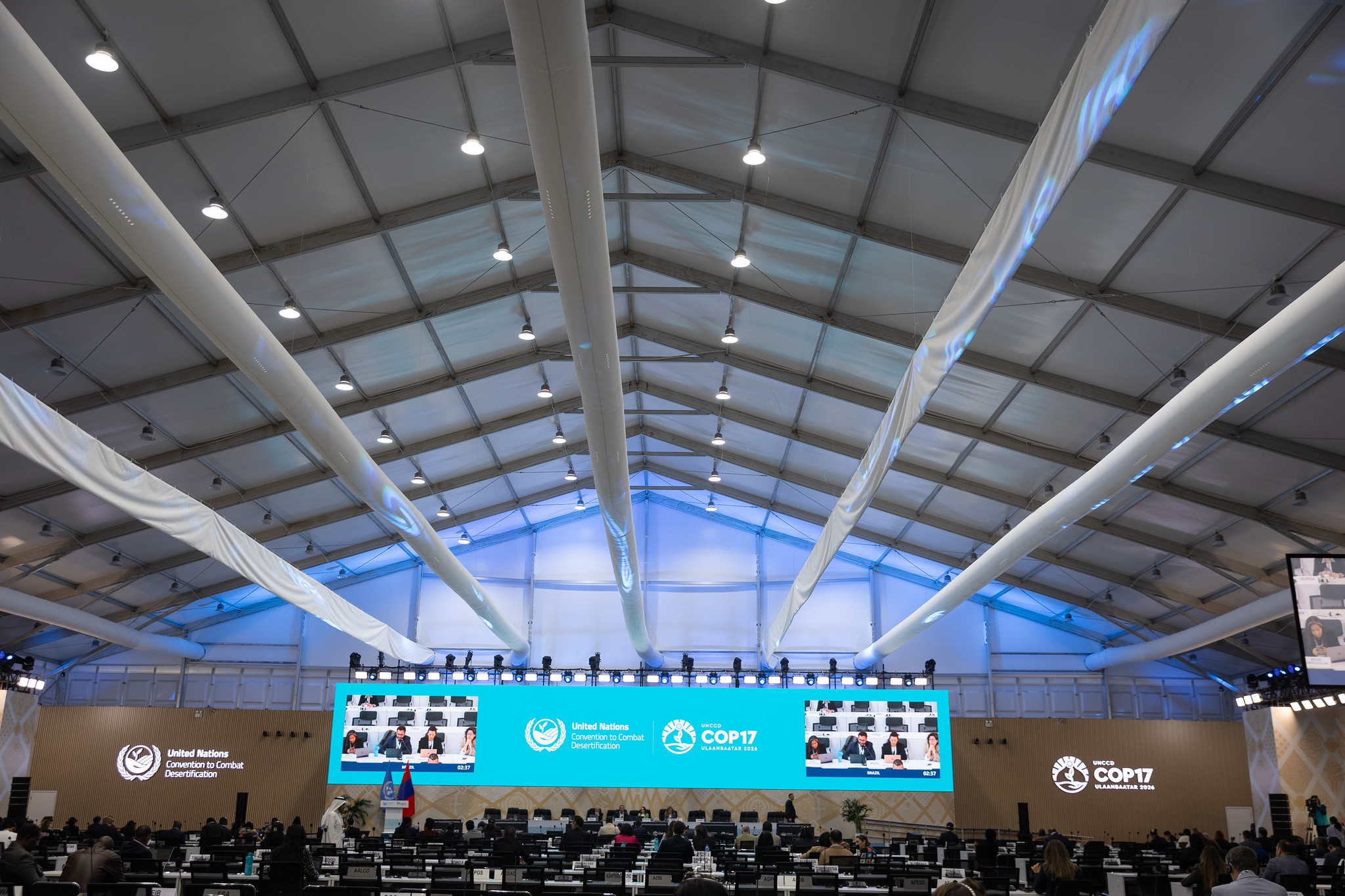
UNCCD's 197 Parties convene to assess progress on the road from Riyadh to UlaanbaatarPanama will restore 100,000 hectares by 2035 as part of a pioneering strategy to advance land, climate and biodiversity goalsPanama City, 1 December 2025 – Addressing global loss of fertile lands and escalating droughts will be the focus of the 23rd session of the Committee for the Review of the Implementation of the Convention (CRIC23), as 197 Parties to the United Nations Convention to Combat Desertification (UNCCD) convene in Panama this week.The meeting comes at a crucial moment. If current trends continue, land almost the size of South America (16 million square kilometres) will show continued degradation by 2050, just as the global demand for food, water and energy continues to soar. Meanwhile, two-thirds of the planet have become permanently drier in the last three decades, and the past two years have seen the most widespread and damaging droughts in recorded history. In Panama, drought disrupted traffic through the Canal, significantly impacting global trade.UNCCD Executive Secretary Yasmine Fouad said: “The resilience of our communities, economies and ecosystems depends on healthy land. Yet, we continue to degrade an area the size of Egypt every year, eroding the land’s ability to produce food, store water, support biodiversity and shield people from droughts, floods and sand and dust storms. Investing in sustainable land management, land restoration and nature-based solutions is not only an environmental necessity; it is a development imperative and a strategic investment in stability, prosperity and peace.”“CRIC23 is a key moment to assess our collective progress, strengthen the bridge between Riyadh and Ulaanbaatar, and recognize land and drought resilience as the red thread connecting the Rio Conventions. Together, we can accelerate the shift toward a more resilient, food-secure and nature-positive future.”From Riyadh to UlaanbaatarCRIC23 will review progress in implementing decisions taken at the 16th meeting of the Conference of the Parties (COP16) to UNCCD in Riyadh, Saudi Arabia in December 2024 and discuss the Convention’s post-2030 roadmap. H.E. Osama Faqeeha Deputy Minister of Environment, Water and Agriculture of the Kingdom of Saudi Arabia, UNCCD COP16 Presidency, said: “In Riyadh, world leaders established new priorities for land and drought action. One year on, this meeting is a crucial opportunity to accelerate the translation of COP16 decisions into concrete policies and practices and to advance the Convention's agenda. Sustainable land management and drought resilience cannot wait: we depend on them to ensure food, water and energy security, as the world will need to produce 50 per cent more food by 2050.”The meeting will hold thematic sessions on land tenure as the basis for investments in healthy land; discuss the growing threat of sand and dust storms; and host the second Gender Caucus to give a voice to women, who are disproportionately affected by land degradation and drought, while supporting the livelihoods of entire communities around the world.Parties will also engage with other key stakeholders including youth, Indigenous Peoples and local communities, and see the launch of new reports on Small Island Developing States and rangelands.In addition, the first of three informal and voluntary dialogues on drought resilience will be convened alongside CRIC23, building on the outcomes of COP16 and preparing for the resumption of negotiations at COP17. Led by the COP16 Presidency, the Tafa’ul Process is inspired by the Arabic word تَفَاؤُل (Tafa’ul), meaning constructive optimism and hopeful determination. CRIC23 recommendations will inform decision-making by the Convention’s 196 country Parties and the European Union ahead of the next UNCCD COP17, which will take place in Ulaanbaatar, Mongolia, in August 2026.Mr. Batmunkh Dondovdorj, Special Advisor to the Minister and Chairman of upcoming COP17 Presidency National Office,stressed that the road from Riyadh to Ulaanbaatar must be a road of hope for communities and ecosystems that have long been undervalued. COP17 will coincide with the International Year of Rangelands and Pastoralists, offering a unique political moment to highlight rangelands, which are disappearing faster than rainforests.“The meeting in Panama is crucial to set the basis for a successful COP17, which will bring to the fore the links between human wellbeing and healthy, productive and resilient landscapes,” said Dondovdorj. “That is particularly true for rangelands, which cover around half of the planet’s land area and are home to two billion people, but are often treated as empty, expendable spaces. For Mongolia—a country whose history, culture and economy are deeply rooted in pastoralism—this is not an abstract issue. It is about dignity, identity and opportunity for people who have been overlooked for far too long.”Panama's Nature PledgeToday, Panama highlighted the centrality of land in its Nature Pledge, a roadmap that unifies national efforts to tackle land degradation, biodiversity loss and climate change to leverage the synergies between the three Rio Conventions and advance all of their interconnected goals, faster.As part of its Nature Pledge, Panama plans to restore 100,000 hectares of degraded land by 2035. H.E. Juan Carlos Navarro, Minister of Environment of Panama, declared: “Nature is the backbone of the global economy. The Panama Nature Pledge shows our commitment to restoring critical watersheds, protecting forests, andincentivizing sustainable agricultural practices as a means to build the resilience of our economy and our communities. The Panama Natural Fund, in turn, guarantees long-term conservation actions across the territory. There is no time to lose: We must urgently take care of nature, so nature can continue taking care of us.” A signatory to UNCCD since 1996, Panama has committed to achieve Land Degradation Neutrality by 2030, identified 31 critical hotspots, and is advancing reforestation and Dry Corridor adaptation programmes — underlining its role as CRIC23 host. This year, Panama became the first country to host meetings of all three Rio Conventions in the same year. Notes to editorsFor inquiries and interview requests, please contact: press@unccd.intVisual assets about CRIC23 and the UNCCD Data Dashboard are available here: https://trello.com/b/zq0kxtkK/unccd-cric23-panama-2025Opportunities for mediaPress Briefings: 12:00–13:00 (local time)1 December: Opening press conferenceThe press conference will present the key expectations for CRIC23, highlight Panama’s leadership — including a reference to its Nature Pledge — and provide reflections from the UNCCD COP16 and COP17 Presidencies.Speakers:Juan Carlos Navarro, Minister of Environment of PanamaYasmine Fouad, UNCCD Executive SecretaryOsama Ibrahim Faqeeha, Deputy Minister of Environment, Water, and Agriculture for Environmental Affairs. KSABatbayar Shurenchuluun, State Secretary of the Ministry of Environment and Climate Change of Mongolia2 December: Launch of Brief on Small Island Developing States (SIDS)A new brief highlighting land and drought impacts and action in SIDS around the world.Speakers: Andrea Meza, UNCCD Deputy Executive Secretary Calvin James, UNCCD SIDS Forum Coordinator Fred Nicholas, Project Officer for the National Environment Service in the Cook Islands 4 December: Launch of report on the Economics of Rangelands Presentation of a new report on rangelands — vital for food security and climate stability but rapidly disappearing.Speakers: Mark Schauer, Project Lead (Co-Lead), German Agency for International Cooperation (GIZ) Dr. Barron Orr, Chief Scientist, UNCCDEnrique Michaud, Co-Chair of the IYRP Global Alliance.Ariuntuya Dorjsuren, Director General, International Cooperation Division, Ministry of Environment and Climate Change, and National Focal Point (NFP) of Mongolia December will also see the launch of the International Year of Rangelands and Pastoralists (IYRP), a milestone in the lead up to COP17 in Mongolia in August 2026.5 December – Closing Press Release (World Soil Day)Issued following the CRIC23 closing plenary and coinciding with World Soil Day. It will provide an overview of CRIC23 outcomes and their significance in the lead-up to UNCCD COP17.3 December – Press Trip: Journalists are invited to a field visit organized by the Panama Canal Authority (ACP) at the Miraflores Visitors Center. The visit will offer insights into how the ACP integrates sustainability and watershed protection into its long-term strategy to safeguard the Canal’s water resources.Additional information and media updates on the Convention and CRIC 23 are available on the UNCCD website: https://www.unccd.int/cric23About UNCCDThe United Nations Convention to Combat Desertification (UNCCD) is the global vision and voice for land. We unite governments, scientists, policymakers, private sector and communities around a shared vision and global action to restore and manage the world’s land for the sustainability of humanity and the planet. Much more than an international treaty signed by 197 Parties, UNCCD is a multilateral commitment to mitigating today’s impacts of land degradation and advancing tomorrow’s land stewardship in order to provide food, water, shelter and economic opportunity to all people in an equitable and inclusive manner.About CRIC23Representatives of 196 countries and the European Union are meeting in Panama from 1-5 December 2025 to review their efforts against desertification, land degradation and drought under the United Nations Convention to Combat Desertification (UNCCD) — one of the three Rio Conventions, alongside biodiversity and climate. The 23rd session of the Committee for the Review of the Implementation of the Convention (CRIC 23) to the UNCCD is convening some 500 participants from governments, civil society, and academia to assess progress in advancing the Convention’s objectives.
