Women who hold the land: Voices shaping a changing world
-
3 December 2025
-
Story
-
Gender
Bonn/Panama City, 3 December 2025 — Women across the world are already adapting to a changing landscape. They reorganize planting cycles, walk farther for water, protect crops against drought, care for elders and children during climate shocks, and sustain food systems rooted in increasingly fragile soils. Their daily work reflects a global reality: 40 percent of the planet’s land is now degraded, and droughts are 30 percent more frequent than they were twenty years ago.
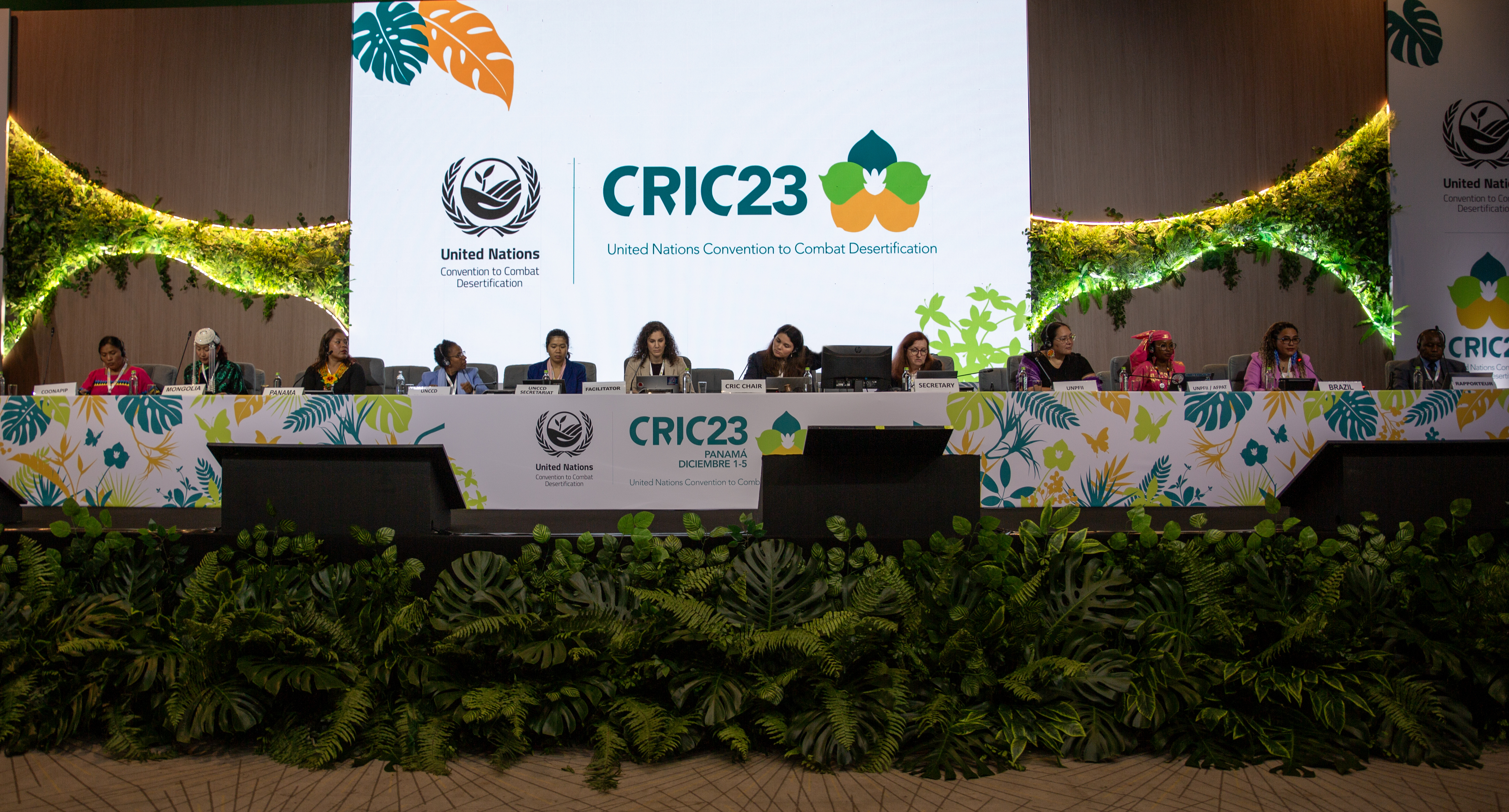
These experiences shaped discussions at the Committee for the Review of the Implementation of the Convention (CRIC), the annual meeting where countries assess progress under the United Nations Convention to Combat Desertification (UNCCD). Within this process, the Gender Caucus — created at the fifteenth session of the Conference of the Parties (COP15) in Abidjan and included in the official agenda for the first time this year — has become one of the most influential spaces for shaping gender-responsive land policy.
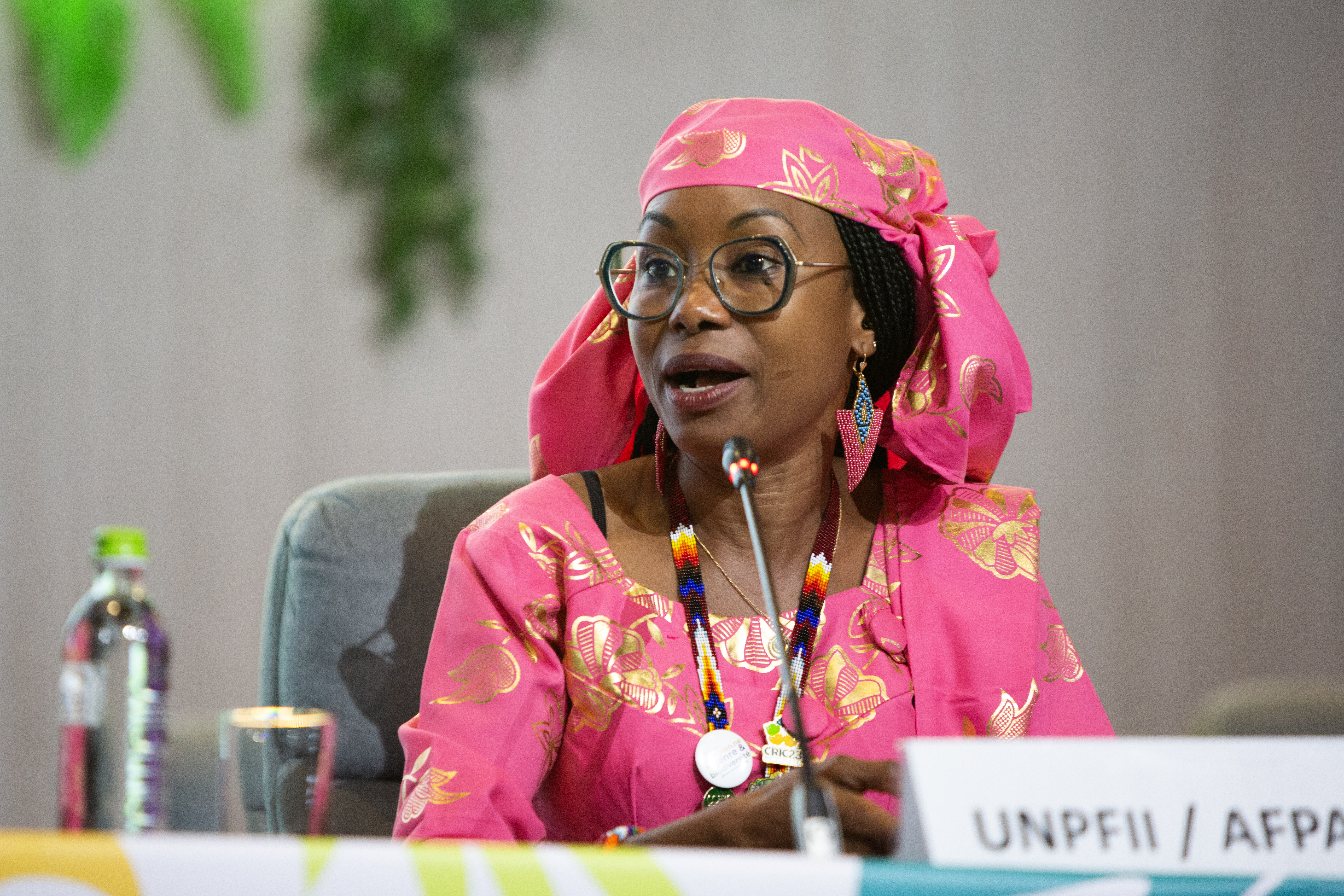
Hindou Oumarou Ibrahim, Coordinator of the Association for Indigenous Women and Peoples of Chad (AFPAT)
At CRIC23 in Panama, the Caucus brought attention to two urgent issues: the leadership and worldviews of Indigenous women in sustainable land management, and the gendered impacts of sand and dust storms (SDS), an environmental hazard intensified by degraded soils, dried lakebeds and shifting climate patterns.
Land, knowledge and continuity
Speakers from Panama, the Arctic, Africa, Latin America and Mongolia highlighted how women’s connection to land extends beyond daily responsibilities. It shapes cultural continuity, food security, and community stability. Yet despite this, women’s knowledge rarely guides national strategies on soil conservation or drought resilience.
Panama’s Wounaan National Chief Aulina Ismare Opua described the direct consequences of environmental change on community life. “Women in our communities face the effects of changing soil, forest and water every day. We are managing the impacts, but we are not adequately included when policies are designed. That gap harms everyone,” she said. She also underscored that limited access to land, education and financing undermines Indigenous women’s ability to contribute fully to national strategies. “When women heal the land, the land heals the world,” she noted, calling for inclusion in national and international agendas.

Aulina Ismare Opua, National Chief of the Wounaan Nation of Panama
Hindou Oumarou Ibrahim, Coordinator of the Association for Indigenous Women and Peoples of Chad (AFPAT), emphasized that Indigenous women’s understanding of environmental change is rooted in generations of observation and practice. “Every map of our lands carries the memory of our mothers and grandmothers. Across Indigenous Peoples, women hold generations of ecological knowledge, yet too often that wisdom is treated as invisible. As climate change and land degradation accelerate, our knowledge is not a tradition of the past — it is a tool of resilience for the present and survival for the future, protecting both our communities and the Earth we all share,” she noted.
Their interventions echo global evidence: Indigenous Peoples steward roughly one quarter of the world’s land, much of it highly biodiverse. Women play central roles in this stewardship, yet remain underrepresented in environmental ministries, land governance bodies and multilateral negotiations.
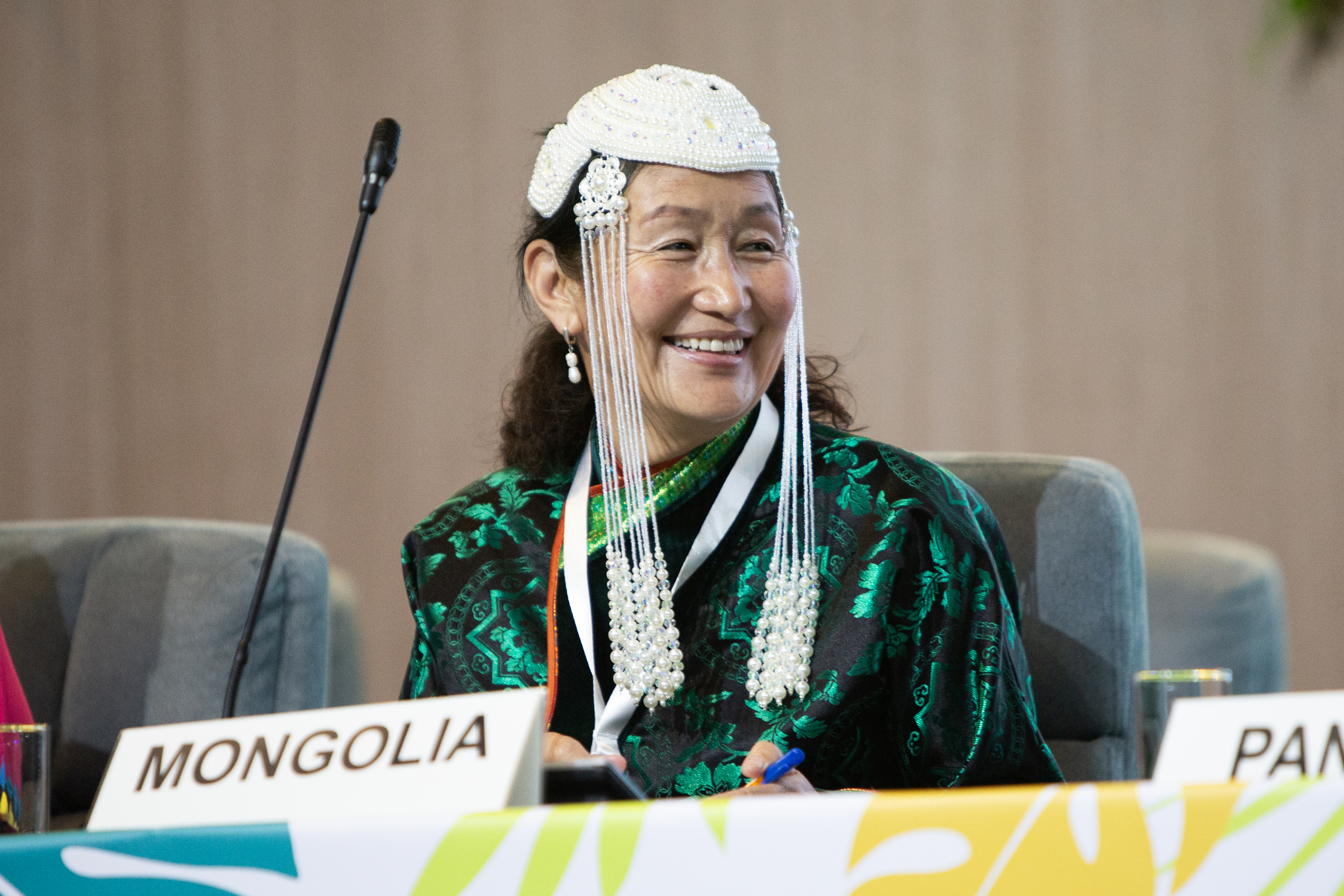
Orkhon Battumur, Nomadic herder, Övörkhangai Province, Mongolia
At the Gender Caucus, this expertise was brought directly into the policy conversation — from securing land rights under pressure to blending ancestral knowledge with scientific approaches and restoring landscapes degraded by erosion, drought or deforestation. Speakers from Mongolia underscored the realities faced by rural herder women, including the loss of livestock from extreme climate events and the absence of land tenure or access to credit, which restricts their economic independence. One herder’s message resonated strongly: “Soil is life, and our life is soil."
These contributions are expected to shape gender-responsive recommendations emerging from the meeting.
A growing threat with gendered consequences
As discussions shifted toward climate-related risks, another reality came sharply into focus: the uneven impact of sand and dust storms.
Sand and dust storms (SDS) are intensifying across many regions, affecting communities from North Africa and the Middle East to Asia, Oceania and parts of Europe. These storms now lift close to two billion tons of dust into the atmosphere each year, and at least a quarter of these events are intensified by unsustainable land use.
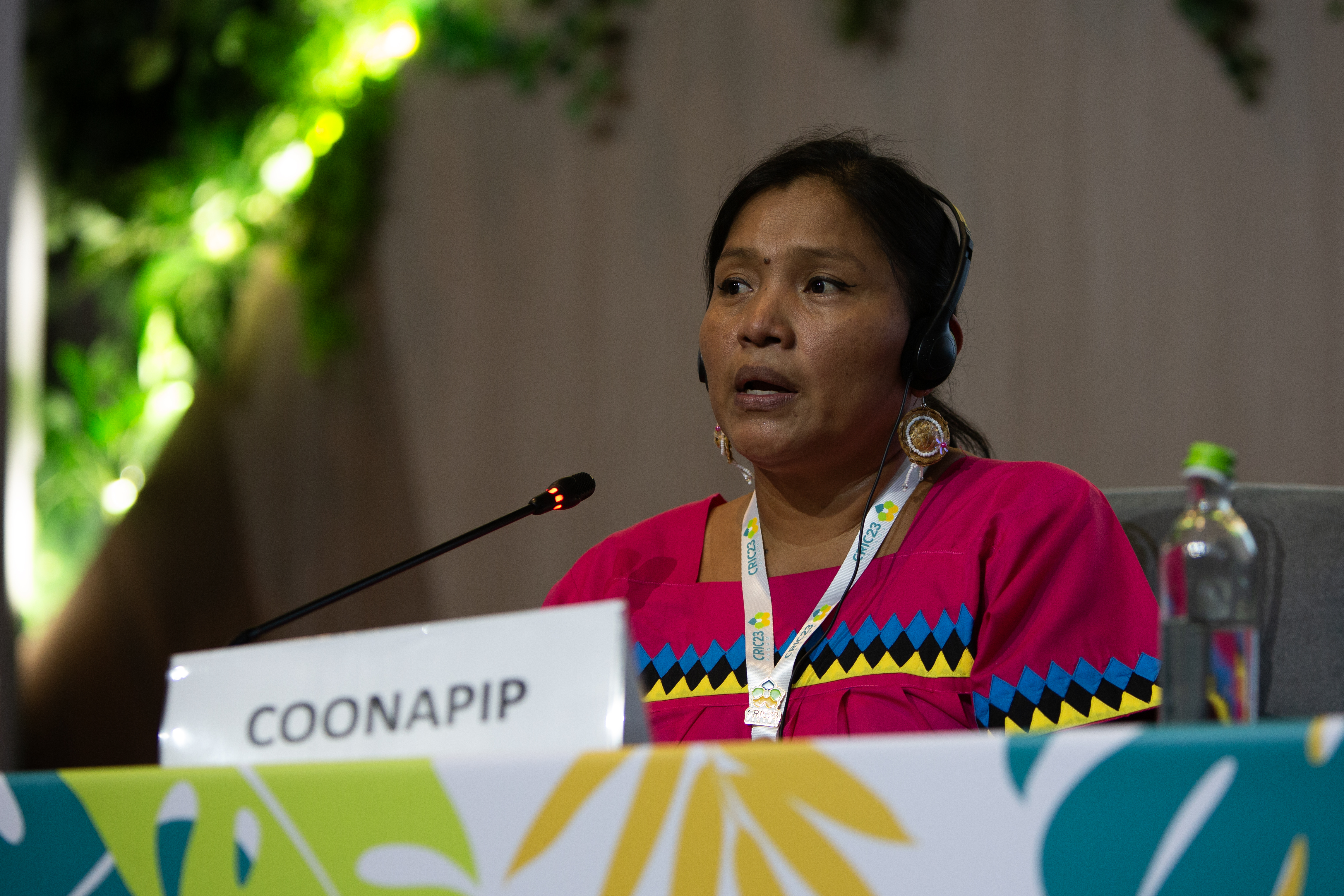
Yanel Venado Jiménez, Gender and Youth Coordinator at the National Coordination of Indigenous Peoples of Panama
Their impacts cut across sectors — agriculture, water security, transport, health — but they do not fall evenly. In rural and low-income communities, women are often exposed for longer periods through farming work, water collection and market activities. Indoors, dust settles in cooking and living areas, increasing respiratory risks. And when storms close schools, markets or harvests, the resulting care burden and income loss fall first on women.
Throughout the Gender Caucus, participants pointed to one persistent gap: the lack of sex-disaggregated data. Without it, early-warning systems and preparedness plans overlook women’s vulnerabilities and the strategies they already use. Strengthening these data systems is expected to feature in the recommendations emerging from CRIC23.
A shift in representation
This year also marked an important step forward for women’s participation in the Convention’s processes. Through the Women Delegates Fund (WDF) — supported by GIZ’s global programme Women’s Empowerment for Resilient Rural Areas (WE4R) on behalf of the Federal Ministry for Economic Cooperation and Development — women from drought-affected and developing countries were able to participate fully in the CRIC23 sessions and receive targeted negotiation training in preparation for COP17.
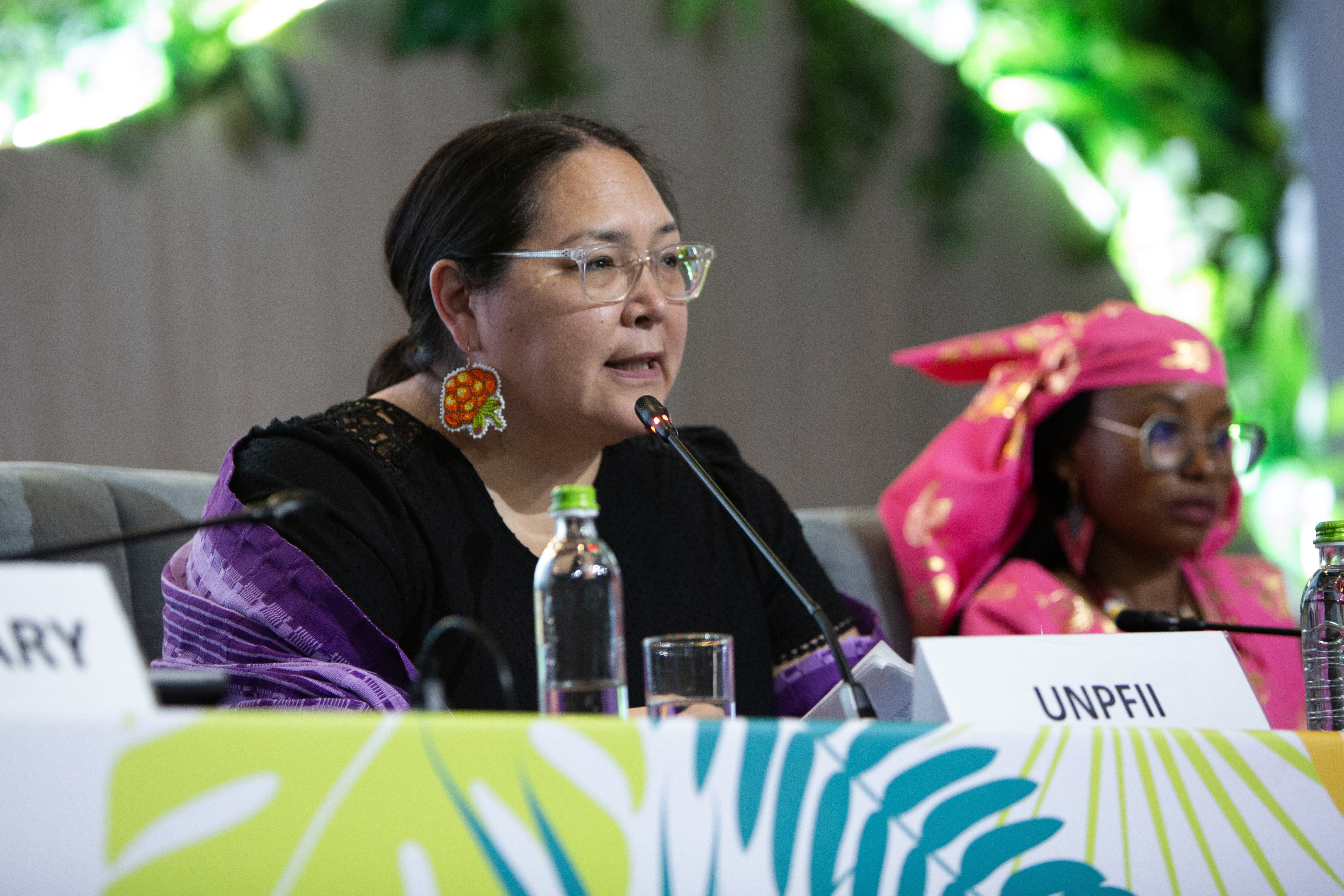
Aluki Kotierk, Chair of the United Nations Permanent Forum on Indigenous Issues
UNCCD data shows how much progress is still needed: women represented only 27 percent of delegates at COP15 and 33 percent at the last CRIC session. The WDF cohort brought expertise ranging from hydrology, forestry and agronomy to environmental policy and community leadership, enriching both the Gender Caucus and the broader deliberations.
“Investing in women negotiators is investing in more inclusive, effective and durable land-use decisions. Their leadership strengthens not only the negotiation rooms, but the solutions implemented back home.” said GIZ's program lead Andreas Lange.
Toward COP17: grounding policy in lived experience
As countries prepare for COP17 in Mongolia, discussions at CRIC23 point to a clear conclusion: land degradation and drought cannot be addressed effectively without the perspectives of the women who manage land every day. Women’s knowledge - scientific, traditional and experiential - is essential for restoring rangelands, improving soil health, preparing for SDS and sustaining cultural continuity under environmental stress. Speakers also called for greater support for Indigenous girls’ education, access to technology and credit, and recognition of women’s unpaid domestic, agricultural and craft work — all critical elements for sustaining land stewardship across generations.
The Gender Caucus underscored a simple but decisive message: policies to protect land must reflect the experience of the people who depend on it most - otherwise they risk addressing the crisis in name, but not in practice.
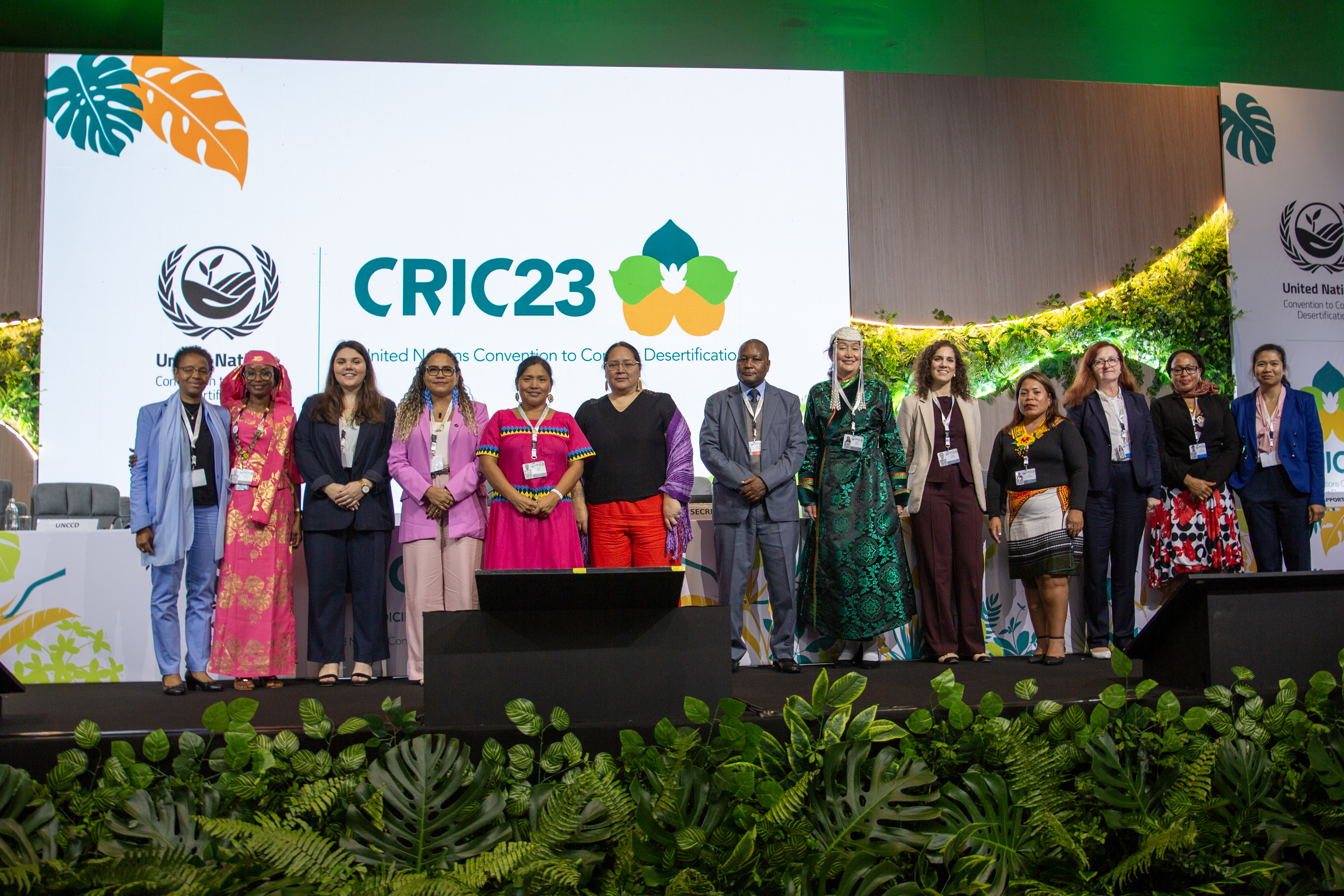
CRIC23 Gender Caucus panel group photo
Publications

The Changwon Initiative is helping bring the vision of Agenda 2030 — and a land degradation neutral world — within reach. Explore this publication to discover Changwon success…