News & stories

Latest



Land degradation and drought are fueling a hidden health crisis – but we still have time to act. When we speak of desertification or drought, we often think of dry rivers, cracked soil and failed harvests. But there is another, less visible toll - one that strikes deep into the lungs, hearts and daily lives of the world’s most vulnerable people. A new policy brief from the UNCCD reveals the far-reaching health impacts of land degradation and drought — and it delivers a stark message: the health of the planet and the health of people are inseparable. Around the world, land is deteriorating at an alarming pace. Between 2015 and 2019, more than 100 million hectares of productive land were lost each year. That’s an area roughly the size of Egypt — gone annually. This degradation doesn’t just threaten biodiversity and food production. It destabilizes communities, weakens immune systems and increases the spread of disease. The damage is particularly acute in regions like sub-Saharan Africa, Latin America and Southeast Asia, where fragile ecosystems support large and growing populations. As land dries out or is stripped of its fertility, the impact cascades: water becomes scarce, crops fail, dust storms multiply and health systems buckle under the strain. And the data is clear. In drylands — which already cover more than 40 per cent of the Earth’s surface — rates of malnutrition, respiratory illness and waterborne disease are rising. Children are particularly at risk. Malnutrition, stunting and underweight are now among the top drivers of childhood disease burden globally. In places like Zambia, droughts have pushed up food prices, leaving pregnant mothers undernourished and babies born weaker. In parts of South America, dust from degraded soil increases the risk of respiratory illness and exposure to infectious diseases. In Australia, prolonged drought has been linked to rising levels of anxiety, depression and rural suicide. This is not a coincidence. These are complex, systemic failures driven by the intertwined forces of environmental degradation and climate change. The UNCCD brief lays out how drought, land degradation and desertification — collectively referred to as DLDD — contribute to a spectrum of public health challenges, ranging from infectious diseases like cholera, malaria and even HIV, to chronic conditions such as asthma and cardiovascular disease. Poor air quality from wildfires and sandstorms, unsafe water due to reduced availability and contamination and disrupted food systems all contribute to rising illness and mortality. What’s more, DLDD increases the risk of emerging zoonotic diseases — illnesses transmitted from animals to humans — by disturbing ecosystems and bringing humans into closer contact with disease reservoirs. This is how Ebola spreads. This is how pandemics begin. It’s critical that we connect the dots: land degradation, desertification, and drought are not just environmental issues — they directly impact human health,” says Dr. Barron Joseph Orr, UNCCD Chief Scientist. “The good news is that by restoring land and managing drought proactively, we can reduce health risks, strengthen communities and improve lives."The solution, the brief argues, lies in breaking these dangerous feedback loops. This requires more than restoring land or investing in health. It demands a radical rethinking of how we govern the relationship between ecosystems and wellbeing. The UNCCD calls for integrated, cross-sectoral responses — ones that recognize land not as a passive backdrop to human life, but as a living, dynamic system on which health depends. That means reorienting land use planning, agricultural policies and environmental management to include health as a central concern. It means empowering communities with tools and knowledge to respond to climate threats. It means supporting women and girls, who often carry the greatest burdens — collecting water, caring for the sick, or suffering silently from the physical and mental toll of degraded environments. “We have to realize that human health is closely linked with the health of our land and our ecosystems. The quality of the food we produce from healthy soil is akin to a pharmacy. says Ibrahim Thiaw, Executive Secretary of the UNCCD. "This is a call to all sectors — from health to agriculture to finance — to come together and build resilience where it matters most: in our soil, in our systems, and in our communities.” The brief also emphasizes the need to implement the World Health Organization’s Global Action Plan on Climate Change and Health and to strengthen the One Health approach — which sees the health of people, animals and ecosystems as deeply interlinked. The benefits of action far outweigh the costs, the brief stresses. From reduced hospital admissions to increased agricultural resilience, the returns on investing in land-health synergy are profound. Time, however, is running short. As climate extremes intensify and drylands expand, more communities will be pushed beyond their coping capacity. Unless we act, the health consequences of inaction will grow — quietly, inexorably and with devastating effects. The UNCCD stands ready to support countries in this effort — by providing the data, guidance and partnerships needed to develop integrated responses, empower the most vulnerable and restore the health of the land so that people, too, can thrive. Because when the land gets sick, so do we.

On World Football Day, theUNCCDis proud to announce William Troost-Ekong, captain of Nigeria’s national football team and professional player for the Saudi Pro League Al-Kholood FC, as the latest Sport4Land Champion.

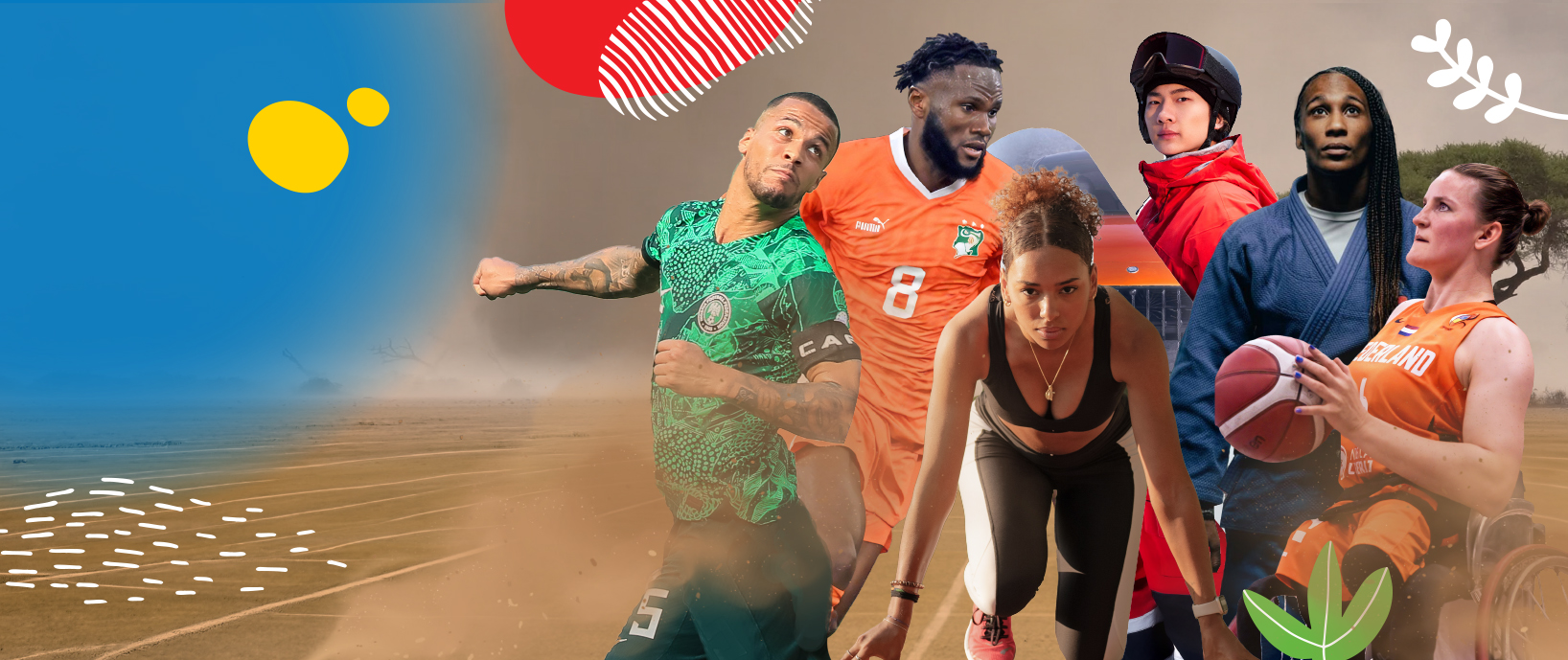
High-profile athletes Naomi Akakpo, Asmaa Niang, Jitske Visser and Franck Kessié unite in support of healthy land and drought resilience at UNCCD COP16Riyadh, Saudi Arabia, 7 December 2024 – The United Nations Convention to Combat Desertification (UNCCD) today unveiled its first-ever Sport4Land Champions at COP16, the largest United Nations land conference in the Middle East region to date. Launched at the Paris Olympics earlier this year, the Sport4Land campaign aims to leverage the universal appeal of sports to avert the global land crisis, marked by the loss of a staggering four football fields of productive land every second. The four Sport4Land Champions will join UNCCD, one of the three Rio Conventions alongside climate and biodiversity, in the urgent mission to restore degraded land and build resilience to drought, and to inspire communities worldwide to take collective action.Naomi Akakpo, Olympic hurdler from Togo emphasized the fundamental connection between land health, food security and human well-being. "Land is more than a resource—it is our foundation," she said. "When we restore degraded land, we restore life and opportunity for countless communities." Inspired by her motto, "Beyond Limits," Naomi’s advocacy embodies bold, innovative actions for land restoration.Asmaa Niang, six-time African judo champion from Morocco, drew parallels between the discipline required in her sport and the strategies needed to combat desertification. "Judo has taught me resilience and strategy," she explained. "These are the same tools we need to fight desertification. It’s not just a fight for land; it’s a fight for every family and community that depends on it." Leveraging her multicultural background and nomadic spirit, Asmaa works with the Yzza Slaoui Foundation to empower rural girls and women in Morocco’s regions most affected by desertification.Paralympic wheelchair basketball gold medalist Jitske Visser from the Netherlands underscored the disproportionate impact of land degradation and drought on marginalized populations. "People with disabilities are often excluded from environmental solutions, even though we’re among the most vulnerable to its effects," she said. "This campaign is about breaking down barriers, ensuring that no one is left behind, and demonstrating that inclusion is essential for success."Footballer Franck Kessié from Côte d’Ivoire, who is currently playing for Saudi Pro League club Al-Ahli, highlighted youth engagement in support of healthy land, noting that “Sport teaches us resilience, teamwork, and the power of unity. These are exactly the values we need to tackle the land crisis.”UNCCD Executive Secretary Ibrahim Thiaw said: "Congratulations to our new champions leading the fight against desertification, land degradation, drought and food insecurity. Your determination to raise awareness of these critical issues brings hope to countless communities, including youth and those most vulnerable, including people with disabilities."At the announcement event held at COP16, the newly appointed champions shared their personal journeys and reflected on how their sporting careers connect to the global fight against land degradation. According to UNCCD data, 100 million hectares – an area equivalent to the size of Egypt–become degraded every year. The impact jeopardizes the livelihoods of more than one billion young people in developing countries who depend on the land for their survival. Among those affected, people with disabilities–16% of the world's population–face unique challenges, from limited access to resources to exclusion from decision-making and recovery efforts. About Sport4LandSport4Land is a global campaign by the United Nations Convention to Combat Desertification (UNCCD) to unite the sports community in the fight against land degradation, desertification and drought. With climate change accelerating droughts, heatwaves, and land degradation, the impact is being felt not only on playing fields but also on the food we eat, the livelihoods we depend on, and the environment we share.Launched at the Paris Olympics 2024, the campaign engages sportsmen and women and fans worldwide to take action for land restoration. High-profile athletes like Asmaa Niang, Naomi Akakpo, Jitske Visser, and Franck Kessié will champion this initiative to highlight the critical connection between healthy land and thriving communities.

Ibrahim Thiaw, Executive Secretary of the United Nations Convention to Combat Desertification, discusses the environmental disaster that has occurred at the Aral Sea.

UNCCD launches ‘Global Drought Snapshot’ report at COP28 in collaboration with International Drought Resilience Alliance (IDRA) Recent drought-related data based on research in the past two years and compiled by the UN point to “an unprecedented emergency on a planetary scale, where the massive impacts of human-induced droughts are only starting to unfold.” According to the report, ‘Global Drought Snapshot,’ launched by the UN Convention to Combat Desertification (UNCCD) at the outset of COP28 climate talks in the UAE, few if any hazard claims more lives, causes more economic loss and affects more sectors of societies than drought. UNCCD is one of three Conventions originated at the 1992 Earth Summit in Rio de Janeiro. The other two address climate change (UNFCCC) and biodiversity (UN CBD). Says UNCCD Executive Secretary Ibrahim Thiaw: “Unlike other disasters that attract media attention, droughts happen silently, often going unnoticed and failing to provoke an immediate public and political response. This silent devastation perpetuates a cycle of neglect, leaving affected populations to bear the burden in isolation.” “The Global Drought Snapshot report speaks volumes about the urgency of this crisis and building global resilience to it. With the frequency and severity of drought events increasing, as reservoir levels dwindle and crop yields decline, as we continue to lose biological diversity and famines spread, transformational change is needed.” “We hope this publication serves as a wake-up call.” Drought data, selected highlights: 15–20%: Population of China facing more frequent moderate-to-severe droughts within this century (Yin et al., 2022) 80%: Expected increase in drought intensity in China by 2100 (Yin et al., 2022) 23 million: people deemed severely food insecure across the Horn of Africa in December 2022 (WFP, 2023) 5%: Area of the contiguous United States suffering severe to extreme drought (Palmer Drought Index) in May, 2023 (NOAA, 2023) 78: Years since drought conditions were as severe as they were in the La Plata basin of Brazil–Argentina in 2022, reducing crop production and affecting global crop markets (WMO, 2023a) 630,000 km2 (roughly the combined area of Italy and Poland): Extent of Europe impacted by drought in 2022 as it experienced its hottest summer and second warmest year on record, almost four times the average 167,000 km2 impacted between 2000 and 2022 (EEA, 2023) 500: years since Europe last experienced a drought as bad as in 2022 (World Economic Forum, 2022) 170 million: people expected to experience extreme drought if average global temperatures rise 3°C above pre-industrial levels, 50 million more than expected if warming is limited to 1.5°C (IPCC, 2022) Agriculture and forests 70%: Cereal crops damaged by drought in the Mediterranean, 2016–2018 33%: loss of grazing land in South Africa due to drought (Ruwanza et al., 2022) Double or triple: Expected forest losses in the Mediterranean region under 3°C warming compared to current risk (Rossi et al., 2023) 5: Consecutive rainfall season failures in the Horn of Africa, causing the region’s worst drought in 40 years (with Ethiopia, Kenya and Somalia particularly hard hit), contributing to reduced agricultural productivity, food insecurity and high food prices (WMO, 2023). 73,000 km2: average area of EU cropland (or ~5%) impacted by drought, 2000-2022, contributing to crop failures (EEA, 2023) $70 billion: Africa’s drought-related economic losses in the past 50 years (WMO, 2022). 44%: Expected drop in Argentina’s soybean production in 2023 relative to the last five years, the lowest harvest since 1988/89, contributing to an estimated 3% drop in Argentina’s GDP for 2023 (EU Science Hub, 2023) Water conditions 75%: Reduction of cargo capacity of some vessels on the Rhine due to low river levels in 2022, leading to severe delays to shipping arrivals and departures (World Economic Forum, 2022) 5 million: People in southern China affected by record-low water levels in the Yangtze River due to drought and prolonged heat (WMO, 2023a) 2,000: backlog of barges on the Mississippi River in late 2022 due to low water levels, causing $20 billion in supply chain disruptions and other economic damage (World Economic Forum, 2022) 2–5 times: Acceleration of long-term rates of groundwater-level decline and water-quality degradation in California's Central Valley basins over the past 30 years due to drought-induced pumpage (Levy et al., 2021) Social dimensions 85%: People affected by droughts who live in low- or middle-income countries (World Bank, 2023) 15 times: Greater likelihood of being killed by floods, droughts and storms in highly vulnerable regions relative to regions with very low vulnerability, 2010 to 2020 (IPCC, 2023) 1.2 million: people in the Central American Dry Corridor needing food aid after five years of drought, heatwaves and unpredictable rainfall (UNEP, 2022) Remedies Up to 25%: CO2 emissions that could be offset by nature-based solutions including land restoration (Pan et al., 2023) Almost 100%: Reduction in the conversion of global forests and natural land for agriculture if just half of animal products such as pork, chicken, beef and milk consumed today were replaced with sustainable alternatives (Carbon Brief, 2023) 20 to 50%: Potential reduction in water waste if conventional sprinkler systems were replaced by micro-irrigation (drip irrigation), which delivers water directly to plant roots (STEM Writer, 2022). 20%: EU’s land and sea areas to be made subject to restoration measures by 2030, with measures in place for all ecosystems in need of restoration by 2050 (European Council, 2023) $2 billion: investment by AFR100 in African organizations, businesses and government-led projects, announced this year with further anticipated investments of $15 billion to foster the restoration of 20 million hectares of land by 2026, generating an estimated $135 billion in benefits to around 40 million people. (Hess, 2021) 6: Riparian countries (Benin, Burkina Faso, Cote d’Ivoire, Ghana, Mali and Togo) participating in the Volta basin Flood and Drought management project, the first large-scale, transboundary implementation of Integrated Flood and Drought Management strategies, including an End-to-End Early Warning System for Flood Forecasting and Drought Prediction (Deltares, 2023) ~45%: global disaster-related losses that were insured in 2020, up from 40% in 1980-2018. However, disaster insurance cover remains very low in many developing countries (UNDRR, 2022) 50 km: the resolution of the water distribution maps thanks to a recently-developed method of combining satellite measurements with high-resolution meteorological data, an major improvement from the previous 300 kilometers resolution (Gerdener et al., 2023) The report was unveiled at a high-level event with the International Drought Resilience Alliance (IDRA) in Dubai (webcast at www.youtube.com/@THEUNCCD, 16:00 Dubai time / 12:00 GMT. It is part of UNCCD’s series of Land and Drought Dialogues at COP28: https://bit.ly/3Gh7GZd). Launched by the leaders of Spain and Senegal at COP27, IDRA is the first global coalition creating political momentum and mobilizing financial and technical resources for a drought-resilient future. Australia, Colombia, Italy and the Union of Comoros, together with the Commonwealth Secretariat and other major international organizations, are being announced at COP28 as IDRA’s latest members, bringing the Alliance’s total membership to 34 countries and 28 entities. Additional highlights from the report: Several findings in this report highlight land restoration, sustainable land management and nature positive agricultural practices as critical aspects of building global drought resilience. By adopting nature-positive farming techniques, such as drought-resistant crops, efficient irrigation methods, no-till and other soil conservation practices, farmers can reduce the impact of drought on their crops and incomes. Efficient water management is another key component of global drought resilience. This includes investing in sustainable water supply systems, conservation measures and the promotion of water-efficient technologies. Disaster preparedness and early warning systems are also essential for global drought resilience. Investing in meteorological monitoring, data collection and risk assessment tools can help respond quickly to drought emergencies and minimize impacts. Building global drought resilience requires international cooperation, knowledge sharing as well as environmental and social justice. “Several countries already experience climate-change-induced famine,” says the report. “Forced migration surges globally; violent water conflicts are on the rise; the ecological base that enables all life on earth is eroding more quickly than at any time in known human history.” “We have no alternative to moving forward in a way that respects the planet’s boundaries and the interdependencies of all forms of life. We need to reach binding global agreements for proactive measures that are to be taken by nations to curtail the spells of drought.” “The less space the developed human world occupies, the more natural hydrological cycles will stay intact. Restoring, rebuilding and revitalizing all those landscapes that we degraded and destroyed is the imperative of our time. Urban intensification, active family planning, and curbing rapid population growth are prerequisites for societal development that respects planetary boundaries.” About The United Nations Convention to Combat Desertification (UNCCD) is an international agreement on good land stewardship. It helps people, communities and countries create wealth, grow economies and secure enough food, clean water and energy by ensuring land users an enabling environment for sustainable land management. Through partnerships, the Convention’s 197 parties set up robust systems to manage drought promptly and effectively. Good land stewardship based on sound policy and science helps integrate and accelerate achievement of the Sustainable Development Goals, builds resilience to climate change and prevents biodiversity loss.

Ikki milliard tonna qum va chang og'irligi bo'yicha 350 ta Giza piramidalariga teng. har yili atmosferaga kirib keladi; BMTning Choʻllanish va qurgʻoqchilikka qarshi kurash Konvensiyasi ekspertlari muammoning 25% dan ortig'ini inson faoliyati bilan bog'laydi. Shimoliy va Markaziy Osiyodan Sahroi Kabirdan janubiy Afrikagacha vayronagarchiliklar keltirib chiqaradi; Natijada, inson salomatligiga salbiy ta’sir ko’rsatadi. Birlashgan Millatlar Tashkilotining Cho'llanishga qarshi kurash to'g'risidagi Konvensiyasiga (UNCCD) ma’lumotlariga ko'ra, qum va chang bo'ronlari hozirda dunyoning ba'zi joylarida "keskin" tez-tez uchraydigan muammo bo'lib, buning kamida 25% inson faoliyati bilan bog'liq. Siyosiy tavsiyalar bilan birga ushbu ogohlantirish Konvensiyani amalga oshirishdagi global yutuqlarni sarhisob qilish uchun O'zbekistonning Samarqand shahrida besh kunlik yig'ilish o'tkazilayotgan paytda e'lon qilindi. BMTning Choʻllanish va qurgʻoqchilikka qarshi kurash Konvensiyasi 1992-yilda Rio-de-Janeyroda bo'lib o'tgan Yer sammitida qabul qilingan uchta konvensiyadan biridir. Qolgan ikkitasi esa iqlim o'zgarishi (UNFCCC) va biologik xilma-xillik (UN CBD) Konvensiyalaridir. 13-17 noyabr kunlari (https://www.unccd.int/cric21) o‘tkaziladigan sessiyalar 15-noyabr kuni O‘zbekiston hukumati tomonidan mezbonlik qilinadigan qum va chang bo‘ronlarining sanoat, transport, suv, havo sifati va inson salomatligi va qishloq xo‘jaligiga ta’sirini bartaraf etish yo‘llariga bag‘ishlangan yuqori darajadagi sessiyani o‘z ichiga oladi. “Qum va changdan iborat qora bulutlar va kunni tunga aylantirayotgan tasvirlar – bu tabiatning eng qo'rqinchli tomoshalaridan biridir. Bu Shimoliy va Markaziy Osiyodan Sahroi Kabirdan janubiy Afrikagacha bo‘lgan hamma joyda vayronagarchiliklarga olib keladigan salbiy hodisadir”, - ta’kidlaydi BMTning Choʻllanish va qurgʻoqchilikka qarshi kurash Konvensiyasi Ijrochi kotibi Ibrohim Tiau. “Qum va chang bo'ronlari barqaror rivojlanishga erishish uchun katta qiyinchilik tug'diradi. Biroq, qum va chang bo'ronlari inson faoliyati orqali kuchayganidek, ular ham inson harakatlari orqali kamayishi mumkin”, - deya qo'shimcha qiladi Tiau. Qum va chang bo'ronlari mintaqaviy darajada keng tarqalgan va mavsumiy tabiat hodisasi bo'lsa-da, BMTning Choʻllanish va qurgʻoqchilikka qarshi kurash Konvensiyasi ekspertlarining fikriga ko'ra, muammo yer va suvni noto'g'ri boshqarish, qurg'oqchilik va iqlim o'zgarishi bilan yanada kuchaymoqda. Qum va chang bo’ronlarining intensivligi, kattaligi yoki davomiyligidagi o'zgarishlar yanada katta xavf tug’dirishi mumkin". Kuzatilayotgan salbiy ta'sirlar manbalari mintaqalaridan uzoqroqda bo'lgan holda, hozirda har yili atmosferaga taxminan 2 milliard tonna qum va chang kiradi, bu og'irligi bo'yicha Gizaning 350 ta Buyuk Piramidalariga teng. Ba'zi hududlarda o'tgan asrda cho'l changi ikki baravarga ko'paydi. “Qum va chang bo'ronlari tobora tez-tez va jiddiy tus olib, transchegaraviy ta'sirga ega bo'lib, atrof-muhit, iqlim, sog'liq, qishloq xo'jaligi, turmush sharoiti va odamlarning ijtimoiy-iqtisodiy farovonligiga ta'sir qiladi. Qum va chang bo'ronlari ta'sirining to'planishi inson salomatligi uchun sezilarli darajada bo'lishi mumkin", - deydi BMTning Oziq-ovqat va qishloq xo'jaligi tashkiloti (FAO) texnik xodimi, BMTning qum va chang bo'ronlariga qarshi kurash bo'yicha koalitsiyasi raisi Feras Ziadat. “Ba’zi hududlarda qum va chang bo'ronlari ekinlarga zarar yetkazadi, chorva mollariga ta’sir qiladi va tuproqning yuqori qatlamini yo‘q qiladi. Cho'kma joylarida atmosfera changi, ayniqsa mahalliy sanoat ifloslanishi bilan birgalikda, nafas olish kasalliklari kabi inson salomatligi muammolarini keltirib chiqarishi yoki yomonlashishi mumkin. Aloqa, elektr energiyasi ishlab chiqarish, transport va ta'minot zanjirlari ham past ko'rinish va changdan kelib chiqqan mexanik nosozliklar tufayli buzilishi mumkin. Birlashgan Millatlar Tashkilotining Qum va chang bo'ronlariga qarshi kurash bo'yicha koalitsiyasi, hozirda FAO raisligida 2019-yilda qum va chang bo’ronlari bilan kurashish bo'yicha global sa'y-harakatlarga rahbarlik qilish uchun tuzilgan.” Choʻllanish va qurgʻoqchilikka qarshi kurash Konvensiyasi, FAO va boshqa hamkorlar o'zlarining Qum va chang bo'ronlari to'plamida (https://www.unccd.int/land-and-life/sand-and-dust-storms/toolbox) qum va chang bo'ronlari bo’yicha ma'lumotlarini to'plash va baholash, monitoring va erta ogohlantirish, ta'sirni yumshatish va tayyorgarlik choralarini ko’rish, shuningdek, manbalarni xaritalash, milliy, mintaqaviy va global darajada antropogen manbalarni yumshatish borasidagi yondashuvlar va metodologiyalar bo'yicha ko'rsatmalar bilan bo’lishadilar.. Qum va chang bo’ronlar muhokamasi Choʻllanish va qurgʻoqchilikka qarshi kurash Konvensiyasi (CRIC 21) bajarilishini ko'rib chiqish qo'mitasining O'zbekistonda bo'lib o'tadigan bu yilgi yig'ilishining kun tartibining bir qismini va Konvensiyaning strategik maqsadlarini amalga oshirishdagi global taraqqiyotni tashkil etadi. Bu Birlashgan Millatlar Tashkiloti Komissiyasi tashkil etilganidan buyon birinchi marta Markaziy Osiyodagi eng muhim uchrashuvlaridan birini o’tqazdi. Yig‘ilish muhim pallaga to‘g‘ri keladi, chunki Choʻllanish va qurgʻoqchilikka qarshi kurash Konvensiyasi ning yangi ma’lumotlar platformasi (https://data.unccd.int/) orqali e’lon qilingan so‘nggi statistik ma’lumotlar shuni ko‘rsatadiki, dunyo har yili deyarli 1 million kvadrat kilometr sog‘lom va unumdor yerlarni yo‘qotmoqda – 4,2 million kvadrat kilometr: taxminan 2015-2019 yillar oralig'idagi Markaziy Osiyoning beshta davlati: Qozog'iston, Qirg'iziston, Tojikiston, Turkmaniston va O'zbekistonning umumiy maydoni. Uchrashuv davomida Choʻllanish va qurgʻoqchilikka qarshi kurash Konvensiyasi va FAO ekspertlari uchta hisobotni taqdim etishlari rejalashtirilmoqda: Qum va chang bo'ronlari. Qishloq xo'jaligida ta’sirni yumshatish, moslashish, siyosiy yondashuv va xavflarni boshqarish choralari bo'yicha qo'llanma. Eron Islom Respublikasi qishloq xoʻjaligida qum va chang boʻronlariga chidamlilikni oshirish boʻyicha investitsiyalar va harakatlarni oshirish uchun favqulodda vaziyatlarni rejalashtirish jarayoni va Ko’chmanchi jamiyatlar bilan qum va chang bo'roni bo'yicha favqulodda vaziyatlarni rejalashtirishga tayyorgarlik: Mo'g'uliston misolida CRIC 21 kun tartibining boshqa masalalari barqaror yer boshqaruvini rag'batlantirish, ayollar uchun adolatli yer huquqlarini ta'minlash, iqlim o'zgarishi va atrof-muhit degradatsiyasi natijasida kuchaygan qurg'oqchilik va o'rmon yong'inlariga qarshi kurashni o'z ichiga oladi. * * * * * Qo’shimcha ma’lumot: Qum va chang bo’ronlar Qum va chang bo'ronlari ko'plab mahalliy nomlar bilan tanilgan: sirokko, xabub, sariq chang, oq bo'ronlar yohud harmattan. Qum va chang bo'ronlari ham quruqlik, ham dengiz ekotizimlarini urug'lantirishi mumkin bo'lsa-da, ular inson salomatligi, tirikchilik va atrof-muhit uchun bir qator xavflarni keltirib chiqaradi. Qum va chang bo'ronlari hodisalari odatda past kenglikdagi quruq yerlarda va o'simlik qoplami siyrak yoki mavjud bo'lmagan nam joylarda yuzaga keladi. Qum va chang bo'ronlari boshqa muhitlarda, jumladan, nam mintaqalarda qishloq xo'jaligi va yuqori kengliklarda, o'ziga xos shamol va atmosfera sharoitlariga to'g'ri kelganda ham paydo bo'lishi mumkin. Qum va chang bo'ronlari minglab kilometrlardan ortiq hududlarga ta'sir ko'rsatishi mumkin. Yagona va izchil global va mintaqaviy choralar va yondashuvlar, ayniqsa qum va chang bo'ronlari manbalarni yumshatish, erta ogohlantirish tizimlari va monitoringni hal qilish uchun zarur. Qum va chang bo'ronlari odatda sezilarli iqtisodiy ta'sir ko'rsatadi: masalan, ular Quvaytdagi neft sektoriga yiliga taxminan 190 million AQSh dollari miqdorida zarar etkazgan bo'lsa, 2009 yilda bitta qum va chang bo'ron hodisasi Avstraliyada 229-243 million AQSh dollari miqdoridagi zararga olib keldi. Mineral changning asosiy global manbalari Shimoliy Afrika, Yaqin Sharq va Sharqiy Osiyo bo'ylab shimoliy yarim sharda joylashgan. Janubiy yarimsharda Avstraliya, Janubiy Amerika va Janubiy Afrika asosiy chang manbalari hisoblanadi. Markaziy Osiyoning 80% dan hududini choʻl va dashtlar egallaydi, ular iqlim oʻzgarishi va uzoq davom etayotgan qurgʻoqchilik bilan birgalikda qum va chang boʻronlarining asosiy tabiiy manbai hisoblanadi. Qurigan Orol dengizi tubi qum va chang bo'ronlarning asosiy manbai bo'lib, har yili 100 million tonnadan ortiq chang va zaharli tuzlarni chiqaradi, bu nafaqat yaqin atrofda, balki undan uzoqda yashaydigan insonlarning sog'lig'iga ta'sir qiladi va har yili 44 mln. AQSh dollari miqdorida yo'qotishlarni keltirib chiqaradi. Qum va chang bo'ronlarni tabiiy ofat xavfi sifatida tan olish Shimoliy-Sharqiy Osiyo, G'arbiy Osiyo va Shimoliy Amerikaning ba'zi qismlarida yuqori, ammo boshqa joylarda kamroq seziladi Qum va chang bo'ronlarini tabiiy ofat xavfi sifatida yetarlicha tan olinmasligi, ehtimol, (ko'p hollarda) bevosita insonlarning o'limi yoki alohida qum va chang bo'ronlari hodisalari natijasidagi jarohatlarning yo'qligi va ularning sog'lig'iga, iqtisodiy yoki boshqa uzoq muddatli ta'siri bo'yicha ma’lumotlarni yetarlicha mavjud emasligi bilan bog’liq bo’lishi mumkin. Qum va chang bo'ronlarini sog'liqqa ta’siri Qum va chang bo'ronlari sog'lig'i yomon bo'lgan insonlar hayoti uchun xavfli bo'lishi mumkin. Mayda chang zarralari yuqori troposfera darajalariga (balandligi bir necha kilometrgacha) ko'tariladi, bu erda shamol ularni uzoq masofalarga tarqatishi mumkin. Qum va chang bo'ronlarining sog'liqqa ta'siri o'nlab yillar davomida o'rganilib kelinmoqda, aksariyat tadqiqotlar Sharqiy Osiyo, Yevropa va Yaqin Sharqda o'tkazilgan. G'arbiy Afrikada ushbu tadqiqotlar o’tqazilmagan. Ushbu tadqiqotlarning alohida yo'nalishi qum va chang bo'ronlarini havo ifloslanishining o’zgarishiga qaratilgan. Atmosferadagi qum va changni kelib chiqish sababi va ta'siri, sog’liqqa ta'sir qilishi noaniq bo'lib qolmoqda va chuqur o'rganishni talab qiladi. Aytish mumkinki, sog’ligi zaif va xavf ostida bo'lgan vakillari, ayniqsa, ilgari yurak-o'pka kasalliklari, jumladan, bolalikdan astmasi bo'lganlar, chang bo'roni paytida o'lim yoki kasallanish darajasi yuqori bo'lishi mumkin. Qum va chang bo'ronlarining, shuningdek, ekinlarning nobud bo'lishi yoki hosildorlikning pasayishi, hayvonlarning nobud bo'lishi, sut va go'sht mahsulotlarini kam mahsuldorligi va infratuzilmaga zarar etkazish orqali qishloq xo'jaligi sektoriga katta xarajatlarni keltirib chiqarishi mumkin. Bir yillik ekinlar uchun nobud bo’lish holatlari ko'chatlar yoki ekinlarning qum ostida ko'milishi, o'simlik to'qimalarining yo'qolishi va qum bilan tozalash natijasida fotosintez faolligining pasayishi bilan bog'liq. Bu mintaqada hosilning to'liq yo'qolishiga yoki hosilning pasayishiga olib kelishi mumkin. Ba'zi ko'p yillik ekinlarga daraxt yoki ekinlarning shikastlanishi (masalan, beda/beda tojlari shikastlangani kabi) uzoq muddatli ta'sir ko'rsatishi mumkin. Ushbu masalani ba’zi bir ijobiy tomonlari ham mavjud. Qum va chang bo'ronlarining changida azot, fosfor va kaliy kabi tuproq uchun ozuqa moddalari, shuningdek, organik uglerod bo'lishi mumkin. Ba'zi hududlar quruqlikda, mineral va ozuqa moddalarining suvda, xususan, okean jismlarida to'planishidan foyda oladi va shamol ostidagi ekin yoki yaylov maydonlarini oziq moddalar bilan ta'minlashi mumkin. Biroq, bu cheklangan ba’zi bir foydali jihatlarni ta’siri etkazilgan zararlar ta’siri bilan taqqoslanganda ancha ahamiyatsizdir. Dunyo miqyosida asosiy mavjud bo’gan katta chang manbalari qurigan ko'llardir; mahalliy manbalarga muzliklarni yuvib tashlaydigan tekisliklar, vulqon kul zonalari va yaqinda shudgorlangan dalalar kiradi. Qum va chang bo'ronlarining tarmoqlararo va transmilliy ta'siri 17 Barqaror rivojlanish maqsadlaridan 11 tasiga bevosita ta'sir qiladi, ammo qum va chang bo'ronlarining xavf sifatida global tan olinishi qisman ularning murakkabligi va mavsumiy jami ta'siri, shuningdek cheklangan ma'lumotlar tufayli odatda past bo'ladi. Qum va chang bo'ronlarini ta'sirni baholash va ma'lumotlarn kamligi, samarali qarorlar qabul qilish va rejalashtirishga to'sqinlik qiladi. BMTning Choʻllanish va qurgʻoqchilikka qarshi kurash Konvensiyasi hukumatlarga yerni barqaror boshqarish amaliyotlarini kengaytirishga qaratilgan yondashuvlarni ishlab chiqishda va amalga oshirishda ilm-fanning eng so'nggi yutuqlarini aniqlash va ulardan foydalanishda yordam beradi. Markaziy Osiyo mintaqaviy ekologik markazi bilan hamkorlikda BMTning Choʻllanish va qurgʻoqchilikka qarshi kurash Konvensiyasi Markaziy Osiyodagi qurg'oqchilik va qum va chang bo'ronlari ta'sirida zaif bo'lgan mamlakatlarga milliy va mintaqaviy darajada xavflarni kamaytirish strategiyalarini ishlab chiqish va amalga oshirishda yordam beradi. BMTning Choʻllanish va qurgʻoqchilikka qarshi kurash Konvensiyasi mamlakatlarni ushbu ekologik ofatlarga tayyorlik va chidamlilikni oshirish uchun monitoring va erta ogohlantirish tizimiimlari bilan keng qamrovli xavflarni kamaytirish strategiyasini qabul qilishga undaydi. Eng zarur choralar quyidagilardan iboratdir Axborot almashish, qisqa va uzoq muddatli choralar, ko'plab manfaatdor tomonlarni jalb qilish va Qum va chang bo'ronlar haqida xabardorlikni oshirish orqali ko'p tarmoqli yondashuvni kuchaytirish. Tuproqlarni himoya qilish va o'simlik qoplamini ko'paytirish uchun tuproq va suvni boshqarish usullaridan foydalangan holda yerni qayta tiklash, bu manba maydonlarining ko'lami va zaifligini sezilarli darajada kamaytirish, qum va chang bo'ronlari hodisalarini ta’sirini kamaytirish. Ogohlantirishlar oʻz vaqtida va maqsadli tarzda berilishini taʼminlash uchun barcha manfaatdor tomonlar (jumladan, xavf ostida boʻlgan aholi vakillari) ishtirok etgan holda, erta ogohlantirish va monitoring, xavf haqidagi dolzarb bilimlarga asoslanish va tahmin qilish. Zaiflikni kamaytirish, chidamlilikni oshirish va qum va chang bo'ronlar hodisalariga o'z vaqtida samarali javob berishga tayyor bo'lish orqali salbiy ta'sirni yumshatish. * * * * *
