Stories
Latest

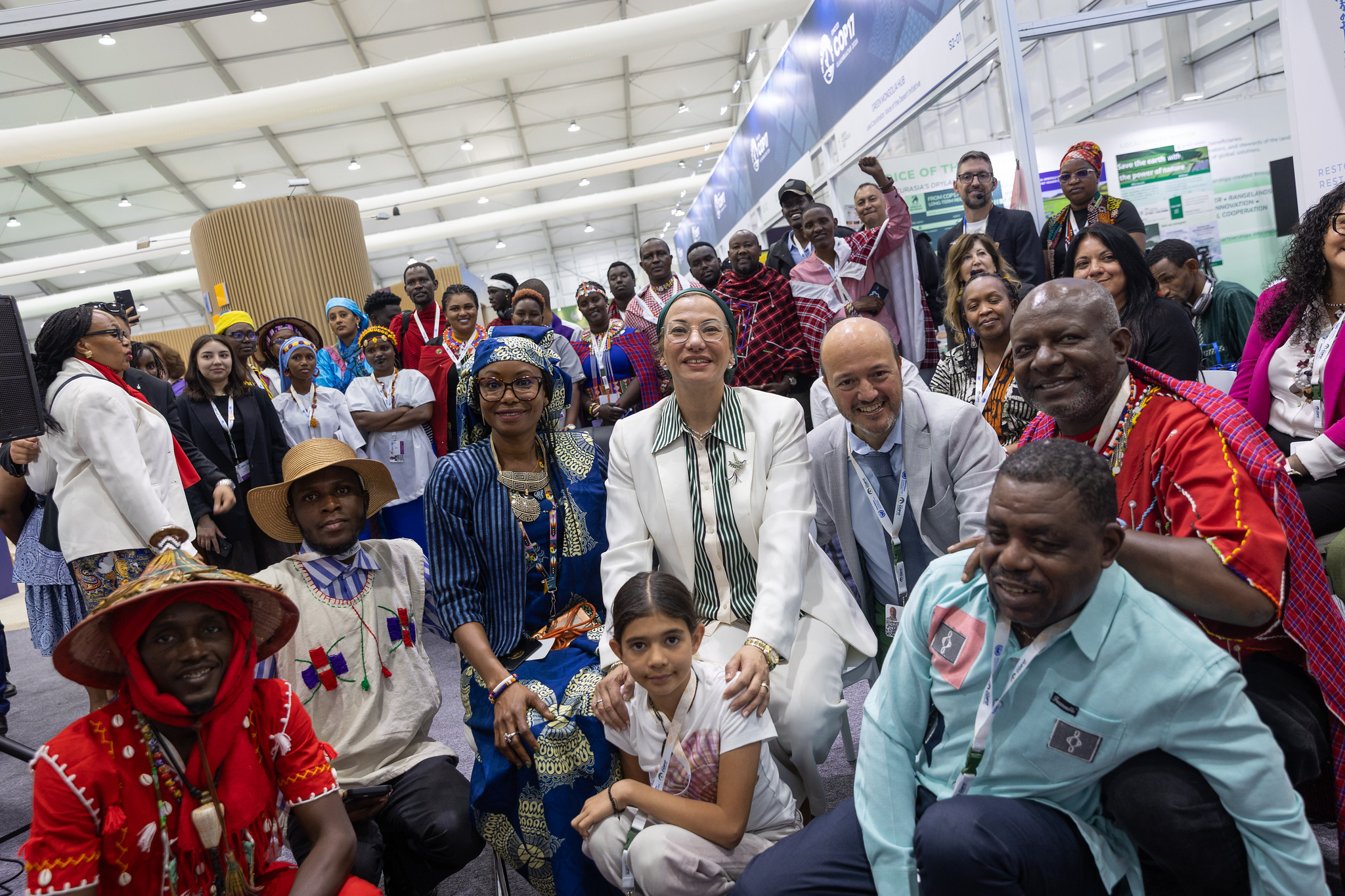
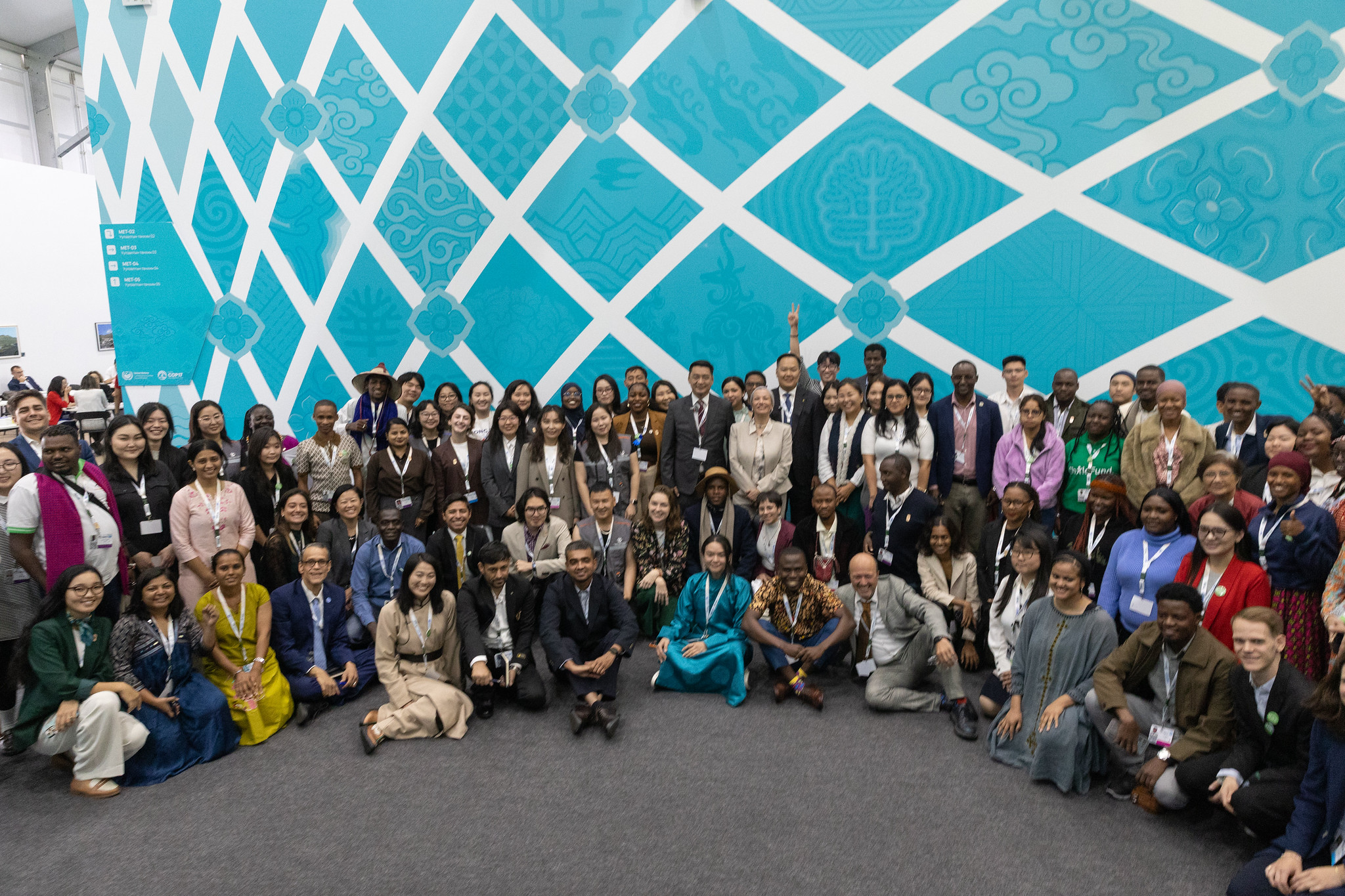

11 September 2017 – Hamburg, Germany/Ordos, China – The Future Policy Award (FPA) ceremony was held at the thirteenth session of the Conference of the Parties to the UNCCD in Ordos, Inner Mongolia (China). The international “Oscar for best policies” honours laws and practices that successfully combat desertification and land degradation. The FPA is awarded by the World Future Council (WFC) in cooperation with the United Nations Convention to Combat Desertification (UNCCD). Among the laureates are the Ethiopian Tigray region, Brazil and China. The ceremony was attended by 300 high-level guests and ministers from all over the world including H.E. Mr. Zhang Jianlong, Minister of State Forestry Administration of China, H.E. Ms. Bu Xiaolin, Governor of Inner Mongolia, as well as Tigray’s President H.E. Mr. Abay Weldu. The FPA aims to draw more attention to desertification and effective ways to combat it: In the last century, droughts cost more lives than any other weather-related catastrophe. Climate change intensifies the process of desertification. Actions to combat desertification, therefore, not only contribute to protecting the environment but can also provide social and political stability. Ethiopia’s Tigray region was granted the Gold Award. Using a unique combination of collective action, voluntary labour and the involvement of youth, the people of Tigray are restoring land on a massive scale. As a result, erosion has decreased significantly, groundwater levels are recharged, and the uptake of sustainable agricultural practices made a remarkable contribution to food self-sufficiency and economic growth. The Future Policy Award highlights the world’s best policies and laws that create the framework for better living conditions for current and future generations. The winning policies are introduced in short videos which are on our YouTube Channel. Further information on the winning policies may be obtained through our website as well as on futurepolicy.org. STATEMENTS:Monique Barbut, Under-Secretary-General of the United Nations and Executive Secretary of the United Nations Convention to Combat Desertification (UNCCD): “Drylands cover close to 40% of the Earth’s land surface. Hundreds of millions of people are directly threatened by land degradation and climate change is only going to intensify the problem. So far, this underestimated environmental disaster has received far too little attention. The Future Policy Award 2017 is turning the spotlight on the looming environmental challenge and effective responses. The seven Future Policy Awardees are all from affected countries, and demonstrate great environmental and political determination.” Jakob von Uexkull, Founder of the World Future Council (WFC): “Drylands are among the most conflict-prone regions in the world. Not tackling desertification and land degradation means accepting humanitarian disasters. But if we take up this challenge, so much is gained: By reversing desertification we can help build peace, food security and a safe future for millions of people.” H.E. Abay Weldu, President of Tigray State (Ethiopia) “I am delighted and honoured as head of the Regional Government of Tigray knowing that Tigray has won Gold Future Policy Award 2017. The people of Tigray demonstrate that all challenges can be overcome if the leadership is addressing the will, need and priority of the people. Tigray’s people have proved that development is possible without harming our mother Earth.” BACKGROUND The Future Policy Award is the only award which honours policies rather than people on an international level. Each year, the World Future Council chooses a topic for the Future Policy Award on which policy progress is particularly urgent. In 2017, in partnership with the United Nations Convention to Combat Desertification (UNCCD), laws and policies were evaluated that contribute to the protection of life and livelihoods in the drylands, and help achieve Sustainable Development Goal 15, target 3, to “combat desertification, restore degraded land and soil, including land affected by desertification, drought and floods, and strive to achieve a land degradation-neutral world.” More information: Read more about the winning policies and the award in our brochure Follow the 2017 Future Policy Award on Twitter with #FPA2017 For more information about the Future Policy Award, see here. MEDIA CONTACTS: Miriam Petersen Media & Communications Manager, World Future Council Tel: +49 40 307 09 14 19 (L), +49 1573 68 38 736 (M) │ E: miriam.petersen@worldfuturecouncil.org Wagaki Wischnewski Public Information and Media Officer, United Nations Convention to Combat Desertification Tel: +49 228 815 2820 │ E: wwischnewski@unccd.int The World Future Council The World Future Council brings the interests of future generations to the centre of policy-making. Its up to 50 eminent members from around the globe have already successfully promoted change. The Council addresses challenges to our common future and provides decision makers with effective policy solutions. In close cooperation with civil society actors, parliamentarians, governments, business and international organizations the World Future Council identifies “best policies” around the globe. The World Future Council is registered as a charitable foundation in Hamburg, Germany. www.worldfuturecouncil.org The United Nations Convention to Combat Desertification The United Nations Convention to Combat Desertification (UNCCD) is the only legally binding international agreement on land issues. The Convention promotes good land stewardship. Its 196 Parties aim, through partnerships, to implement the Convention and achieve the Sustainable Development Goals. The end goal is to protect our land, from over-use and drought, so it can continue to provide us all with food, water and energy. By sustainably managing land and striving to achieve land degradation neutrality, now and in the future, we will reduce the impact of climate change, avoid conflict over natural resources and help communities to thrive. www.unccd.int

6 September 2017 – Ordos, China – Zhang Jianlong, Minister of State Forestry Administration, China, this morning opened the first ever United Nations conferences of the Rio Conventions to be hosted in China. The thirteenth session of the United Nations Convention to Combat Desertification (UNCCD) is taking place from 6-16 September in Ordos, Inner Mongolia. The 196 country Parties attending the 13th session of their Conference are expected to agree on a 12-year Strategy to contain runaway land degradation that is threatening global food and water security. Ministers are expected to announce their targets for land restoration, to agree on measures to address the related emerging threats of forced migration, sand and dust storms, and to agree on actions to strengthen the resilience of communities to droughts. Globally, 169 countries are affected by desertification, with China accounting for the largest population and area affected. China’s target is to reduce by 50 percent all of its desertified areas by 2020, Zhang said. “A fire burns harder when we all add some tinder,” he said, urging countries to agree on a new strategic direction that will lead to ecological restoration. China has developed industrial models to combat desertification, and reported that “the area affected by desertification has declined for three inventory periods in a row, since 2004.” Only 20 years ago, Ordos, the city and burial place of Ghengis Khan was an empty desert. Today it is a green, modern city with a growing industrial base, and a global model of the economic potential of restoring and rehabilitating degraded land at scale. More than 2 billion hectares of productive land is degraded and more than 1.5 billion people are living off degraded land. Without joint action, the annual loss of 12 million hectares of productive land, on average, is expected to worsen in the face of increasing, frequent and recurrent severe droughts. Severe drought in 2017 led to what many claim is the largest humanitarian crisis since the end of the second world war, with more than 25 million people across four countries – Nigeria, Yemen, South Sudan, Somalia – facing starvation and famine. By restoring degraded land, countries would be better placed to respond to new, complex and interconnected challenges that are emerging, such as forced migration, food and water supply and the loss of livelihoods. Monique Barbut, UNCCD Executive Secretary, said the political, social and economic costs of land degradation are high, but expressed optimism and enthusiasm about the outcomes of the Conference. In under 2 years, since the adoption of the land degradation neutrality targeting under the Sustainable Development Goals, a seismic shift has taken place. “Today, 110 of the 169 countries that declared in 2013 that they are affected by land degradation or drought have expressed interest in recovering large areas of degraded over the next 12 years, under a special global initiative, the Land Degradation Neutrality Target Setting Programme,” she observed. During the two-week Conference, many countries are expected to announce their targets – the amount of the land they plan to restore or rehabilitate during the next 12-years. But Barbut said it is challenging for countries to make commitments to achieve this Sustainable Development Goal (SDG) target when there is no assured finance, and welcomed a private sector-led profit-making financing initiative under development that is designed to support the realization of the target. “Under the New Strategy, drought mitigation would, for the first time, become a strategic area of focus of the Convention,” Ms Barbut asserted. “We must be well prepared for the future, and national drought policies which are based on realistic vulnerability assessments and that have effective early warning systems and risk mitigation measures will be vital,” Barbut stressed. More than 70 ministers are expected to attend the Conference during the high-level segment, when most of the emerging issues will be addressed and country commitments of the targets will be announced. Photo by IISD/Francis Dejon For information contact: Wagaki Wischnewski, wwischnewski@unccd.int
The UNCCD Science-Policy Interface (SPI) has released the "Sustainable Land Management contribution to successful land-based climate change adaptation and mitigation" technical report and the accompanying "Sustainable Land Management for Climate and People" science-policy brief. The publication provides scientifically sound practical guidance for selecting SLM practices that help address DLDD, climate change adaptation and mitigation, and for creating an enabling environment for their large-scale implementation considering local realities. It targets a broad audience from scientists, policy makers, landowners, community stakeholders and enterprises. Read more: The UNCCD Science-Policy Interface Best practices on SLM technologies
The thirteen session of the Conference of the Parties (COP 13), the sixteenth session of the Committee for the Review of the Implementation of the Convention (CRIC16), and the thirteenth session of the Committee on Science and Technology (CST13) took place at Ordos International Convention and Exhibition Center, Ordos, Inner Mongolia, China from 6-16 September 2017.Read more:Find more information on COP13

Are you between the ages of 18 and 35 and like making short videos? Are you involved or interested in the combat of desertification, land degradation and drought? Then you MUST participate in the Video Competition for the Capacity Building Marketplace that will take place from September 4 to October 26 2017! In each of the three categories of the competition, you will have the chance to win monetary and other prizes and to be featured in cover stories on the front page of the Marketplace! The winners will be selected by the public at large through a vote. Register and send us your video between September 4th and October 1st 2017. For more information, please visit the Capacity Building Marketplace.
UNCCD joins the group of international observer organizations to the Green Climate Fund (GCF) – based on a recent GCF board decision. As a major source of climate finance, GCF offers many opportunities for UNCCD member countries to finance preparation and implementation of large scale transformative land-based climate action projects. The observer status enables UNCCD representatives to attend GCF board meetings and to contribute better to the orientation of climate finance to achieve land degradation neutrality. In the framework of COP 13, UNCCD and GCF are partnering to organize a training session on “How to access Green Climate Fund financing for land-based projects?” It will convey to UNCCD national focal points and land use practitioners the key messages and methodologies that can increase the volume of financing to achieve climate change mitigation and adaptation while combating desertification and land degradation. Links: Green Climate Fund Land and Climate Change Decision GCF board B.BM-2017/08