Stories
Latest
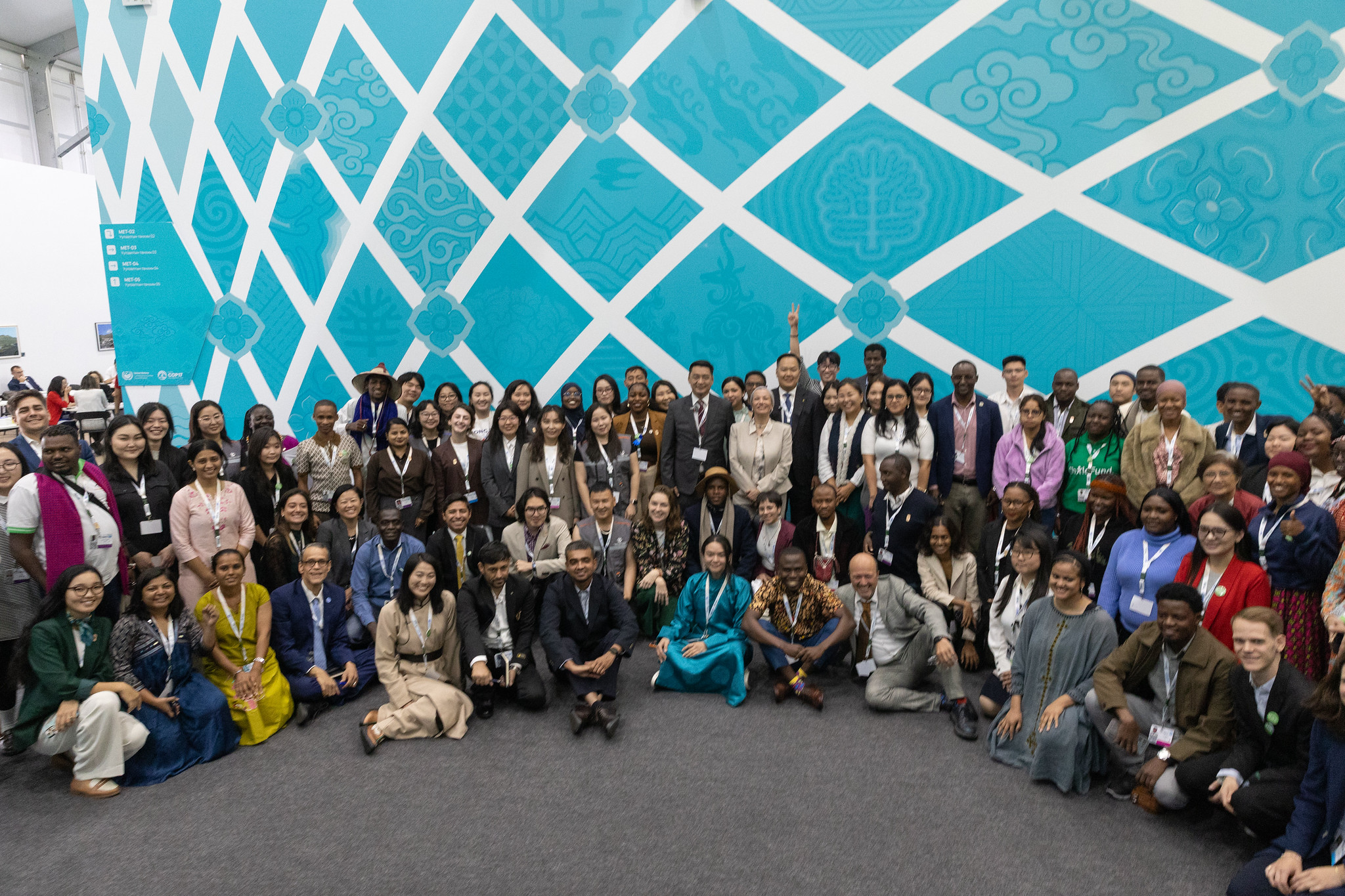



As the international cooperation to address the growing threat of drought projected to affect over ¾ of the world population by 2050 gains momentum, the recent workshop in Istanbul on building negotiation skills and developing action plans became a fitting tribute to the successes of the Ankara Initiative that supported capacity-building under the UNCCD for many years. In his message to the participants, UNCCD Executive Secretary Ibrahim Thiaw remarked that the support provided by the Government of Türkiye since 2016 resulted in key contributions to national policy recommendations on issues such as land tenure, gender equality and land degradation neutrality (LDN). As an arid and semi-arid country that made outstanding progress in land rehabilitation and restoration, Turkiye has been uniquely positioned to share its experience, providing a number of capacity-building and knowledge-sharing initiatives for UNCCD Parties working toward achieving LDN. The General Manager of Combating Desertification and Erosion Nurettin Taş presented a decision support system developed by Türkiye to realize the national LDN targets and confirmed the country’s commitment to sharing its expertise with other countries facing desertification, land degradation and drought. The practical part of the workshop for over 30 Parties from Africa and CEE included interactive trainings on building the knowledge base and developing an effective skill set for multilateral negotiations on drought resilience and LDN implementation, which will be an important asset for national delegates at the UNCCD CRIC21 in October 2023 and the COP16 in 2024.

Abidjan, Côte d'Ivoire - On the invitation of UNCCD COP15 President Alain Richard Donwahi, the members of the COP15 Bureau held their second meeting on 1 March 2023 in Abidjan. This meeting was an opportunity to take stock of what has been achieved since the first COP15 Bureau meeting in Bonn in October 2022 and identify the next steps in the lead up to UNCCD COP16 in 2024. In his opening remarks, COP15 President Donwahi congratulated stakeholders who are working to realize the commitments made at COP15 and pledged his support. “My focus this year will be on supporting the UNCCD Executive Secretary in the implementation of many regional initiatives that aim at fighting drought and land degradation such as the Great Green Wall Initiative, the Middle East Green Initiative and the International Drought Resilience Alliance, but also major projects within the five regional annexes, he said. UNCCD Executive Secretary Ibrahim Thiaw stressed that much progress has been made since the COP: “Our beating of the 'drought and land restoration' drums seem to be bearing fruit. Let's continue to work towards a sustainable future for all,” he said. Executive Secretary Thiaw also gave an update on the activities of the Secretariat and of the intersessional working groups, which are working to respond to the mandate given by UNCCD Parties at COP15. Already, 115 Parties have submitted their national reports, which will be considered at CRIC21 session, scheduled to take place in Samarkand (Uzbekistan) in October 2023. COP15 Bureau members expressed their satisfaction with the progress made and readiness to continue the fight to mitigate the effects of land degradation and drought together.

Land degradation is one of the key triggers of migration in Central Asia, confirms a new study released by UNCCD this month. In the region where drought and desertification cause annual losses of about USD 6 billion, the number of people who migrate each year in search of work amounts to 2.5–4.3 million, or 10-15% of the economically active population. The findings of the study became the focus of an online discussion hosted by the convention, inviting authors and contributors from Central Asia, representatives of partner organizations and over 100 virtual attendees who could contribute to the discussion via an online chat. Remarking on the timeliness of the new study, the UNCCD Chief of Global Policy Advocacy and Regional Cooperation Unit Miriam Medel García emphasized that the project has been requested by the countries of Central Asia – Kyrgyzstan, Kazakhstan, Tajikistan, Turkmenistan, and Uzbekistan – to aid in the implementation of the Convention and to demonstrate how measures addressing desertification, land degradation and drought (DLDD) can support more positive and organized migration flows. Expressing sincere appreciation for the support of the Russian Federation in financing the study, Ms. Medel remarked that its conclusions and policy recommendations, while specifically targeted in Central Asia, are also applicable to any country seeking to overcome the challenges of DLDD by creating safely nets for vulnerable rural populations through land-based green growth and sustainable value chains. Welcoming the study, the representative of the Ministry of Foreign Affairs of Russia Vladimir Uskov remarked on the key role of UNCCD as the leading international mechanism for addressing DLDD – the issue that affects the entire region and needs to be addressed at the regional level. He noted that the study helps better understand the complex relationships between many factors that contribute to land degradation, climate change and migration in Central Asia. He expressed hope that the study will also contribute to the work of the interregional group launched at UNCCD COP14 to facilitate the implementation of the Convention, and confirmed the willingness of the Russian Federation to further contribute support and scientific expertise. In their detailed presentations, the authors of the study called attention to land degradation as a “quiet” planetary crisis, whose effects are devastating and wide-spread. Using latest land degradation assessment tools authored by the UNCCD, they identified the main hot spots of land and water crises in the region. As climate change manifests itself through more frequent and prolonged droughts, combined with anthropogenic pressures, the resulting decrease in land productivity and loss of income leads to migration in search of livelihood. The study highlights that while the economies of both the source and receiving countries rely on migrant workers, the income of migrants remains highly vulnerable, as became evident during the COVID-19 pandemic. Moreover, money earned by migrants does not support future security – 98% of what migrants earn is spent on everyday expenses, with almost nothing into savings or investments, not to mention the practices of sustainable land use. Both representatives of the Central Asian countries and international organizations – IOM, FAO, UNDP and CAREC – that provided extensive inputs into the study, also stressed the need for further scientific collaboration for knowledge sharing on sustainable land management. The new study reveals that the widespread adoption of effective land use approaches that already exist across the region depends on creating financing opportunities for farmers and improving knowledge-sharing. Long-term investments are needed to fundamentally improve the state of agricultural land and to make agricultural work more attractive, particularly to youth, through development and implementation of sustainable land use models and land-based climate adaptation technologies that require advanced skills and higher levels of education. To ensure that the results of the study have a real impact, helping improve living standards and productivity in the agricultural sector while regulating migration, the authors proposed further research, where sustainable land management practices in the region would be assessed using a variety of efficiency indicators, such as the size of the restored land area, water and energy efficiency, social satisfaction, gender equity and improved living standards. The authors believe that the main criterion of resilience and effectiveness of each model of sustainable land use, especially under the conditions of climate change, should be the potential to achieve land degradation neutrality.

Gracing every continent of the Earth, wetlands are essential to the planet’s health, often compared to its vital organs, acting as arteries that carry water and as kidneys that filter harmful substances. Wetlands serve as the watchful sentinels of our wellbeing: they form protective barriers against tsunamis and sponge up the excess rainfall to reduce flood surges. During the dry season in arid climates, wetlands release the stored water which helps delay the onset of drought and reduce water shortages. They also store vast quantities of carbon, helping mitigate climate change. Home to some of the most diverse and fertile ecosystems, wetlands support livelihoods of 1 billion people. 40 percent of all plant and animal species live or breed in wetlands. World Wetlands Day is observed each year on 2 February to increase people’s understanding of the critical importance of wetlands and raise awareness of the urgent need to protect these fragile and threatened natural gems. “We at UNCCD are proud to join in this celebration and recognize the unique and valuable ecosystem services provided by wetlands. We are committed to doing our part to conserve and protect wetlands, and we are calling on all of you to join us in this vital cause,” said UNCCD Executive Secretary Ibrahim Thiaw. To date, nearly 90 percent of the world’s wetlands have been degraded or lost, with 35 percent in the last 50 years alone. That is why on this World Wetlands Day, UNCCD is joining the Ramsar Convention on Wetlands and other partners to highlight the examples of countries and communities making strides in wetland restoration. Indonesia: Creating green wildfire barriers Drained peatlands pose a high risk of fires that are devastating for people, nature and climate. In 2015, fires in Indonesia emitted more carbon dioxide a day than the entire US economy. More than half of these fires occurred in peatlands, causing an economic loss of US$ 16 billion. Rewetting and restoring peatlands can enhance drought resilience and lower the risk of wildfires. In the Sebangau National Park in Kalimantan, Indonesia — home to one-fifth of the world’s orangutan population — measures to restore the forests and rewet peatlands have helped prevent the spread of wildfires. Argentina: Rewilding jaguar habitats The Iberá wetlands in Argentina comprise the largest freshwater aquatic ecosystem in South America and are the focus of an ambitious rewilding endeavor across 7,000 square kilometers of northeast Argentina’s Corrientes Province. A jaguar reintroduction program started in 2015 first bore fruit in 2018 when two new wild jaguar cubs were born in the newly formed Iberá Park, the first in decades. Reintroductions of the red and green macaw started in 2015 with just 15 birds, and by 2020 they had successfully raised wild chicks for the first time in 150 years.352 353 Formerly extinct throughout Argentina, the return of this charismatic species – an important seed disperser for many plant species – is a further mark of the program’s success. Nigeria: Growing the Great Green Wall In Nigeria, the national Great Green Wall (GGW) program is being implemented across 11 frontline states, with a population of over 40 million people and comprising 43% of the country’s land. Nigeria is threatened by recurrent droughts, persistent land degradation, and encroaching desertification spreading across grasslands and wetlands. One of the key components of the national GGW program is the establishment of a contiguous 1,400-kilometer shelterbelt (windbreak) from Kebbi state in the northwest to Borno state in the northeast, to ward off Harmattan winds from the Sahara. Iran: Replenishing a biosphere reserve In Iran, a clear signal of vanishing wetlands is the increased frequency and intensity of dust storms, heralding the advance of desertification. The basin of Lake Urmia is home to 6.4 million people and 200 species of birds. Agricultural expansion and population growth over the past decades led to the over-exploitation of lake’s resources, causing land degradation. To remedy the situation, Iran has launched a sustainable management project for the lake, working with local communities. Engineering works have helped to unblock and un-silt the feeder rivers, and there has been a deliberate release of water from dams in the surrounding areas. China: Reviving Himalayan wildlife Situated at the headwaters of the Yellow River, the sedge-dominated peatlands in the Ruoergai plateau in China store water and supply it to downstream areas. They are also home to endemic and endangered Himalayan wildlife species. In the 1960-70s, these peatlands, which had been drained for agriculture, began to be badly damaged by overgrazing, with over 70 percent severely degraded as a result. A peatland restoration project implemented on almost 5,000 ha over six years included blocking the canals and cultivating vegetation to raise the water table. Rewetting targeted areas resulted in enhanced carbon sequestration and reduced emissions. Restored sites also recreated habitats for endemic amphibians and birds, while water stored in previously dry canals provides water for livestock, supporting local communities Belarus: Bringing peatlands back to life In Belarus, massive peat excavation resulted in about 300,000 ha drained to harvest peat deposits for fuel. Since 2018, a peatland restoration project, supported by UNCCD, is centered on around the application of rewetting techniques and improvements in monitoring, forecasting and early warning of peatland fires. Rewetting and re-naturalization of peatlands provides vast ecosystem benefits: the increased level of ground water reduces drought risks while preventing further mineralization of peats locks the soil carbon in the rewetted areas, removing it from the atmosphere. Rewetted peatlands also have a larger potential to sustain biodiversity and supply additional income-generating opportunities for local populations, such as cranberry harvesting. As emphasized by the UNCCD Executive Secretary Ibrahim Thiaw, successful wetland restoration requires a concerted effort from governments, civil society and the private sector. Investments in science for technology innovation, infrastructure for effective management and financial mechanisms for project implementation can turn the tide toward a better future for wetlands. Photo credit: @UNDP_Belarus

Land degradation, one of the world’s most pressing environmental problems affects 16.5 percent of the land in Central and Eastern Europe (CEE), according to the latest UNCCD baseline assessment; equivalent to one out of every eight acres or hectares of the land in the region. From 6 to 9 December 2022, Bosnia and Herzegovina, one of the countries in the region, hosted a workshop to consider actions to take to avoid, reduce and reverse the land degradation, and to increase the area to be restored. Most CEE countries, including Bosnia and Herzegovina, participate in the drought initiative that is helping countries to be better prepared for droughts and have set their targets for restoring degraded lands. However, more restoration commitments above the current 13.5 million hectares, or 5% of the total degraded area, are needed to to reverse the ecosystem degradation and loss forests, croplands, grasslands, and peatlands in the region. The Workshop explored how to restore 350 million hectares of land degraded landscapes. The workshop participants, drawn mostly from countries in Central and Eastern Europe, the UNCCD and agencies that the Global Environment Facility (GEF) finances to help countries to carry out the desired actions discussed a new GEF programming cycle, known as “Healthy planet, healthy soils,” which offers countries the possibility to deliver on their environmental and climate agendas. The Global Environmental Facility (GEF) is a financing instrument of the UNCCD and the largest environmental multi-donor trust fund. It contributes directly to the goals of the Convention through targeted financial and technical support to the countries which seek to meet the objectives of the UNCCD, and other international environmental agreements. Senad Oprašić, Head of Environmental Protection Department at Ministry of Foreign Trade and Economic Relations of Bosnia and Herzegovina, which hosted the workshop spoke about the importance of tackling environmental challenges with the help of existing climate financial mechanisms. Bosnia and Herzegovina committed to revitalize 100,000 hectares of abandoned land as a part of its LDN target-setting process, according to the Global Land Outlook’s second edition of the Central and Eastern European Thematic Report. Ms. Nadezda Dementieva and Ms. Munazza Jaleel Naqvi, on behalf of the UNCCD, stressed that investing in land restoration as a win-win solution for the environment, the economy and people to combat desertification, climate change and loss of biodiversity. They encouraged participants to work closely with the Global Mechanism of the UNCCD (GM), which assists countries to mobilize substantial resources to implement agreements under the Convention. The GM helps Parties to translate their voluntary LDN targets and national drought plans into concrete actions on the ground, including developing gender-responsive transformative projects and programmes that generate multiple benefits. The GM also drew attention to upcoming events relevant to the work under consideration, more specifically, the 21st session of the Committee for the Review of the Implementation of the Convention (CRIC21) that will take place in October 2023 in Uzbekistan and the 16th session of the Convention’s Conference of the Parties to be held in 2024 in Saudi Arabia.

Fertile soil is a vital resource of livelihoods, prosperity and human well-being for millions across the Central Asia region. At the same time, desertification, land degradation and drought (DLDD), spurred on by climate change, pose a growing threat to soil health across the region. Around 1/3 of the region's land area is degraded, one of the highest rates in the world, according to UNCCD data. In his World Soil Day message Executive Secretary Ibrahim Thiaw remarked that “soil is literally the foundation of human wellbeing on this planet. That’s why on World Soil Day we celebrate this precious and precarious layer of life-giving substance.” To highlight the urgency of preserving and restoring soil for a food-secure future, Kazakhstan, with the support of the FAO country office, marked this year’s World Soil Day by holding a yearly scientific conference with government representatives, scientists, journalists and industry on key issues of sustainable soil management. In his opening remarks, Baglhan Bekbauov, Vice Minister of Agriculture of the Republic of Kazakhstan, reflected that “Land resources are of exceptional importance for the livelihood, prosperity, well-being (…) and the way of life of both our contemporaries and our future generations.” In her presentation, the UNCCD RLO for CEE Nadezda Dementieva underscored the urgent need to combat land degradation, raising political momentum to activate the land restoration agenda at global, regional and national levels. She also presented the UNCCD´s flagship publication, the 2nd edition of the Global Land Outlook, which focuses on diverse pathways that countries and communities can adopt to reverse land degradation through fit-to-purpose land restoration agendas. Kazakhstan´s active engagement in the World Soil Day activities reflects the importance UNCCD places on combatting desertification across the entire region. Recognizing the key role of achieving a neutral balance of land degradation to slow down DLDD, five Central Asian countries – Kazakhstan, Kyrgyzstan, Tajikistan, Turkmenistan and Uzbekistan – have already joined the UNCCD Land Degradation Neutrality Programme, striving to reach no net loss of healthy and productive land. Uzbekistan also holds the distinction of being the first Central Asian country to host an official UNCCD conference, the 21st session of the UNCCD Committee for the Review of the Implementation of the Convention (CRIC21) in Samarkand from 9 to 13 October 2023.
