Stories
Latest

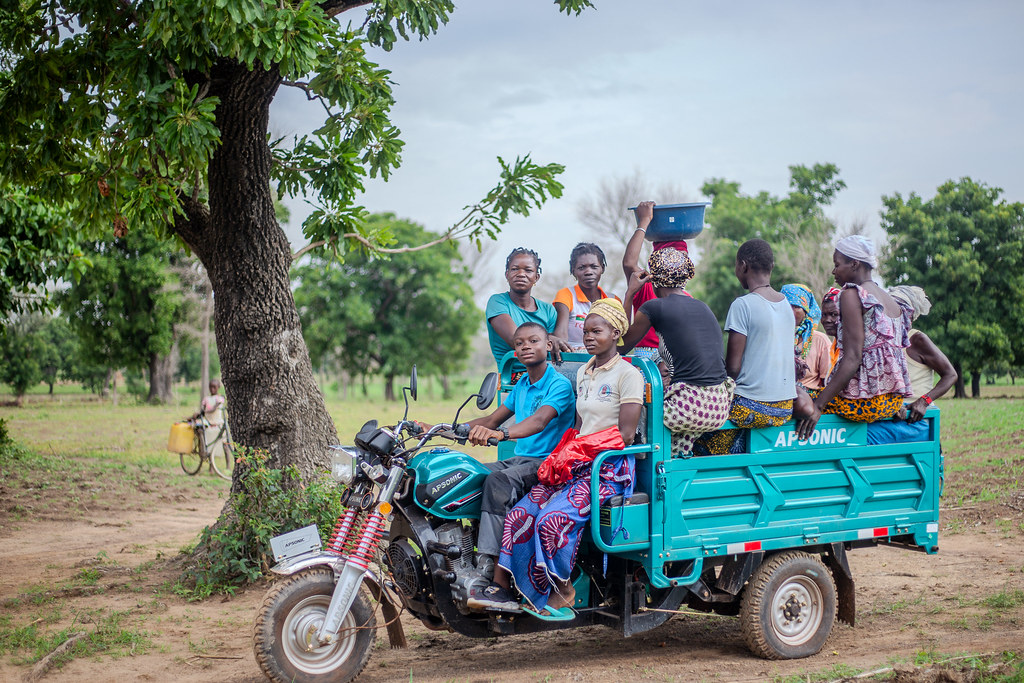
Enhancing knowledge on the differentiated impacts of land degradation, desertification and drought on women and men With a view to strengthening gender-related knowledge, the United Nations Convention to Combat Desertification (UNCCD) secretariat is currently conducting a "Study on the differentiated impacts of land degradation, desertification, and drought on women and men." The study aims to address the socio-economic dimensions of land degradation and desertification with a gender lens and document existing practices. In line with objective 4 of the UNCCD Gender Action Plan, this study will also contribute to developing a baseline on gender-related issues in land degradation and desertification. It builds on the efforts of the UNCCD Parties to produce gender-related knowledge and sex-disaggregated data on matters relevant to the Convention. The Secretariat seeks to collect cases studies and promising practices from Convention Parties, international organizations, civil society organizations (national and international), indigenous peoples’ organizations, academia, and other relevant actors on 5 different topics: Information and data on differentiated gender roles in the communities fighting land degradation, desertification, and drought. How women and men experience changes in environmental conditions, in particular land degradation, desertification, and drought. How land degradation affects women’s empowerment (including participation, economic empowerment, health, mobility, access to and use of resources, access to social services). How land degradation exacerbates the socio-economic vulnerability of specific groups of women. How gender is mainstreamed in national policies related to desertification and land degradation. Transformative actions taken by governments at the national level to ensure that women and men benefit equally from policies and programs addressing land degradation, desertification, and drought. Case studies submitted in English, French, or Spanish will be reviewed and collated, and the Secretariat may follow up to gather further information on individual projects or case studies. Case studies should be sent by 1 December 2021 to the following address: gender@unccd.int .You can also contact us at this address in case you have any questions. Download the questionnaire: PDF | WORD Read more: UNCCD Gender Action Plan Land tenure

The UNCCD, IUCN, WWF and ICRAF held a regional dialogue on 2 November 2021 for Asia-Pacific UNCCD country Parties on “Advancing global actions for native grassland and rangeland restoration.” This is the second in a regional dialogue series that began with the first one in July for Northern Mediterranean and Central and Eastern Europe. The main objective of the dialogue was to raise awareness on rangeland restoration, identify the challenges and opportunities in implementation and explore how national commitments to rangeland restoration can be strengthened through the UNCCD process. During the meeting, the participants shared the national status of rangelands and grasslands, current initiatives, policies and best practices as well as the challenges and opportunities their countries are facing. Among others, capacity building on data collection, knowledge sharing, monitoring systems, policy coordination and collaboration, land tenure and governance were highlighted in the discussion. This meeting built on the results from the multi-actor dialogue on rangeland restoration held in December 2020, organized by IUCN, WWF and UNCCD and the information provided the first Global Rangelands Atlas launched in May 2021. According to the Global Rangelands Atlas, rangelands that cover 54 per cent of global terrestrial surface, are home to billions of people and hold many economic, ecological, social and cultural values, and a wealth of biodiversity. However, they have been neglected, receiving much less attention, investment, and advocacy than other ecosystems. The conversation to recognize the importance of rangeland restoration will continue through upcoming regional dialogues and other activities to support the UN Decade on Ecosystem Restoration, the UNCCD COP15 in May 2022 and the International Year on Rangelands and Pastoralism in 2026.

A decade ago at the UNCCD COP10 in Changwon, two key ideas in the UNCCD process were rolled out: the “Changwon Initiative” and the global target of “zero net land degradation.” The initiative has been instrumental in materializing this new vision of a land-degradation neutral world and played a pivotal role in developing the Land Degradation Neutrality concept, supporting advocacy within the international community and ensuring its reflection in Sustainable Development Goals through SDG 15.3. The Changwon Initiative also supported national voluntary target setting processes to achieve Land Degradation Neutrality (LDN), leading to more than 100 countries’ participation. It has also contributed to the preparation of action-oriented projects and programmes to facilitate the implementation of LDN on the ground. Land-based solutions are among the most efficient and effective ways to safeguard nature and human beings: land restoration can be an important solution for mitigation and adaptation to climate change and biodiversity loss. Furthermore, it can contribute to job creation and food security. A land degradation-neutral world by 2030, which is the vision of the Changwon Initiative, can be an important stepping stone toward restoring balance with nature and realize the Sustainable Development Goals. As we celebrate the achievements of the Changwon Initiative over the past 10 years, there is a great expectation that the Initiative will continue to act as an accelerator in addressing land degradation neutrality and making a positive impact for a better future for people and the planet. Read more: The Changwon Initiative LDN target-setting programme Land and the SDGs

The final conference on the results of a Joint initiative to develop regional strategies to combat drought, sand and dust storms (SDS) in Central Asia took place on 21 October. Representatives of the UNCCD Secretariat, national institutions and CAREC, government representatives, experts, as well as regional and international partners gathered to discuss joint strategies for drought and SDS management. The drought that gripped the Central Asian countries last summer resulted in massive losses of livestock and crops, affecting local communities and economies. The risk of drought in the region is of particular concern because of its dependence on agriculture and shared water resources. Studies also show that global dust emissions have increased by 25-50 per cent since 1900 as a result of land use and climate change. "The strategies presented today advance the agenda on drought and SDS, consolidating common concerns and priorities. Since prolonged drought often triggers sand and dust storms, the SDS mitigation requires drought-smart solutions," said UNCCD Deputy Executive Secretary Tina Birmpili. The conference participants emphasized that achieving a neutral balance of land degradation to slow down desertification, land degradation and drought is an integral part of the initiative. To date, five Central Asian countries have joined the UNCCD Land Degradation Neutrality programme, striving to reach no net loss of healthy and productive land. At the end of the conference, the Central Asian countries reaffirmed their commitment to address drought and SDS and called on the international community to support the implementation of the proposed strategies. The outcomes of the initiative will be presented at the upcoming UNCCD COP 15 in May 2022. Read more: Regional approaches to combat drought, sand and dust storms in Central Asia About sand and dust storms

For centuries, we have used nature to live. As a result: Nearly one million species are at risk of extinction. Nearly three quarters of the Earth's ice-free land has been transformed to meet human demands for food, raw materials, and homes. If humans continue to emit greenhouse gases at current rates, global temperature will rise more than 1.5 degrees Celsius target within decades. Today, we need nature to survive. Protecting and restoring nature can help drive a green recovery and prevent future pandemics. Investing in nature-based solutions will allow us to build forward better, greener, healthier, stronger, and more sustainably. The three Rio Conventions on biodiversity, land and climate are joining forces to ensure that each and every one of us takes action in their own environment in order to change the course of the world to restore balance with nature. Learn more about the campaign at the Rio Conventions Pavillion website and follow it on social media: @UNCCD @UNBiodiversity @UNFCCC. Read more: Rio conventions Land and climate Land and biodiversity Solution brief: Restored Land, healthy people, green recovery

Two new guidance documents have been released today: a revised and upgraded version of Good Practice Guidance for Sustainable Development Goal (SDG) indicator 15.3.1 and new Good Practice Guidance for national reporting on UNCCD strategic objective 3.
