News & stories

Latest
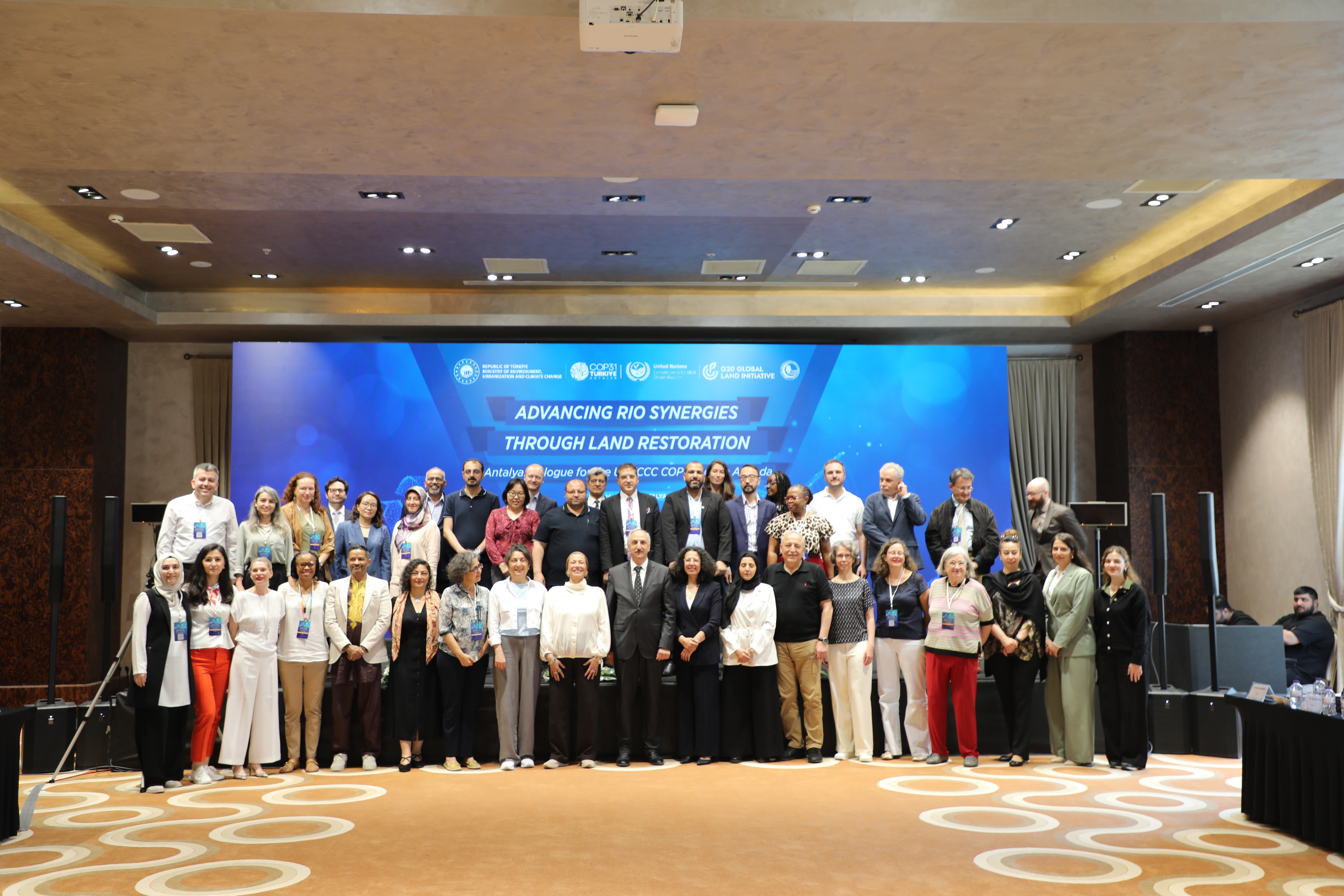
Drought does not arrive with sirens. It builds quietly—through drying soils, shrinking water supplies and wilting crops—until its impacts ripple across farms, cities and entire economies. By the time it is fully visible, the damage is often already widespread and costly, affecting everything from food and energy production to transportation and health.With droughts projected to affect three in four people worldwide by 2050, and three quarters of the world’s land already permanently drier due to unsustainable land management and climate change, how should countries act to prevent drought from escalating into crisis?Much like the Human Development Index reshaped how countries understand progress, the new Drought Resilience Index aims to provide a clear, shared benchmark to help governments manage drought risk and prevent irreversible impacts—including lost lives and shattered livelihoods.Now under development through the United Nations Convention to Combat Desertification (UNCCD), the International Drought Resilience Alliance (IDRA) and partners, the index is designed to give decision-makers a clearer picture of where vulnerabilities lie —helping them assess preparedness, create policies and act before drought turns into disaster.A three-day workshop recently hosted by the European Commission Joint Research Centre in Italy brought together a wide range of international partners—spanning multilateral, scientific, academic, technical, and government institutions—to fine-tune the tool, which is expected to launch as part of a broader AI-powered data visualization platform.We spoke with Edgar Gutiérrez-Espeleta, senior policy consultant at UNCCD advising on the development of the tool, to understand how the Drought Resilience Index works—and why it could reshape how countries prepare for a new drought era. From data overload to clarityThe Drought Resilience Index, part of the broader International Drought Resilience Observatory (IDRO), is designed to turn complex and fragmented data into simple scores that policymakers can use to make decisions. “Drought is one thing. Resilience to drought is another,” says Gutiérrez-Espeleta. “The aim is to help countries assess their capacity to anticipate, prepare for and adapt to drought, and to highlight where action is most needed so they can use limited resources effectively.”To capture this, the Drought Resilience Index is built around three dimensions: anticipation, preparation and adaptation. These reflect the full lifecycle of drought risk. Each dimension is assessed across four areas that shape resilience: the built environment; the natural environment, including soils, forests and wetlands; communities; and the economy —together offering a multidimensional picture of how well countries manage drought risk.Across each of these areas, experts identify one or two indicators to capture the most critical aspects of resilience, drawing on available, UN-vetted global datasets. These indicators are then standardised and combined into a composite score, enabling countries to assess their capacity to manage drought risk.For example, in anticipation, the health of ecosystems—such as forest cover or watershed integrity—can indicate how well the natural environment buffers drought impacts. In preparation, the efficiency and reach of water supply systems reflect the capacity of the built environment to conserve and distribute scarce resources. In adaptation, the share of livelihoods diversified beyond water-intensive activities shows how well the economy can withstand recurring drought conditions.“Low scores act as warning signals, pointing decision-makers to areas that require urgent attention,” explains Gutiérrez-Espeleta.Built through collaborationThe index is not being developed in isolation. It builds on years of work within the UNCCD’s Science-Policy Interface and has been shaped through consultations with top drought resilience experts from different regions, including the European Union’s Joint Research Centre, the US National Drought Monitor, the World Meteorological Organization and Yale Center for Ecosystems and Architecture.In the lead up to the 17th session of the Conference of the Parties to the UNCCD (UNCCD COP17), specialists are refining the selection of indicators, assessing available datasets and ensuring that the index is both scientifically robust and practical for policymakers.One of the key challenges is data availability. Not all countries have the same level of information, and some indicators may only exist for some parts of the world.“We are starting with the best data currently available and building from there,” Gutiérrez-Espeleta says. “As the index evolves, it will also help drive stronger and more comprehensive data collection, as has been the case with the Human Development Index.”A tool shaped by experienceThe idea for the Drought Resilience Index is rooted in experience. In 2015, as Costa Rica’s Minister of Environment, Gutiérrez-Espeleta faced a severe drought that demanded urgent, cross-sector decisions—but without a clear overview, it was difficult to prioritize action. That gap is what the Index is designed to fill. By bringing diverse data into a single framework that everybody can understand, it helps policymakers identify where systems are weakest and where action is most needed—offering, in his words, “a way to quickly see the big picture.”Rather than prescribing solutions, the Index works as a signal, highlighting where problems are most acute and pointing decision-makers towards the areas that require attention.The ambition is simple. When ministers see it at COP17, Gutiérrez-Espeleta hopes their reaction will be immediate: “This is what we needed.” From there, governments can mobilize resources and act—because while drought cannot be prevented, the vulnerability of people, economies and ecosystems can be greatly reduced.Photo : Participants at the IDRO Drought Resilience Index workshop hosted in Italy by the European Commission Joint Research Centre, including representatives of: Yale Center for Ecosystems and Architecture, National Center for Meteorology of the Kingdom of Saudi Arabia, World Meteorological Organization, United Nations Environment Programme, United Nations University Institute for Water, Environment and Health, Global Water Partnership, US National Drought Mitigation Center, NASA Goddard Space Flight Center, CIMA Research Foundation, Sahara and Sahel Observatory, CSIC-CEBAS, Ministry of Ecological Transition and Demographic Challenge of Spain, Ministry of Environment and Sustainable Development of Senegal, Center for Hydrometeorology and Remote Sensing, UK Centre for Ecology & Hydrology, Deltares, International Rice Research Institute, IGAD Climate Prediction and Applications Centre, University of Southern Queensland, UNEP-DHI Partnership, Tree Aid.

Las 197 Partes de la CNULD se reúnen para evaluar los avances en el camino de Riad a Ulán Bator Panamá restaurará 100.000 hectáreas para 2035 como parte de una estrategia pionera para promover los objetivos relacionados con la tierra, el clima y la biodiversidad Ciudad de Panamá, 1 de diciembre de 2025. La pérdida mundial de tierras fértiles y el aumento de las sequías serán el tema central de la 23.ª sesión del Comité de Examen de la Aplicación de la Convención (CRIC23), que reunirá esta semana en Panamá a las 197 Partes de la Convención de las Naciones Unidas de Lucha contra la Desertificación (CNULD). La reunión se celebra en un momento crucial. Si las tendencias actuales continúan, una superficie de tierras casi del tamaño de Sudamérica (16 millones de kilómetros cuadrados) estará en proceso de degradación para 2050, justo cuando la demanda mundial de alimentos, agua y energía sigue aumentando. Mientras tanto, dos tercios del planeta se han vuelto permanentemente más secos en las últimas tres décadas y, el planeta ha registrado sequías récord en los últimos dos años. En Panamá, la sequía interrumpió el tráfico a través del Canal, lo que afectó significativamente al comercio mundial. La secretaria ejecutiva de la CNULD, Yasmine Fouad, afirmó: “La resiliencia de nuestras comunidades, economías y ecosistemas depende de la salud de las tierras. Sin embargo, seguimos degradando cada año una superficie del tamaño de Egipto, erosionando la capacidad de las tierras para producir alimentos, almacenar agua, sustentar la biodiversidad y proteger a las personas de las sequías, las inundaciones y las tormentas de arena y polvo. Invertir en la gestión sostenible de la tierra, su restauración de la tierra y las solucionesbasadas en la naturaleza no es solo una necesidad medioambiental, sino también un imperativo para el desarrollo y una inversión estratégica en la estabilidad, la prosperidad y la paz”. “La CRIC23 es un momento clave para evaluar nuestro progreso colectivo, fortalecer el puente entre Riad y Ulán Bator y reconocer la resiliencia de las tierras y la sequía como elhilo conductor que conecta las Convenciones de Río. Juntos, podemos acelerar el cambio hacia un futuro más resiliente, con mayor seguridad alimentaria y en armonía con la naturaleza”. De Riad a Ulán Bator CRIC23 examinará los progresos realizados en la aplicación de las decisiones adoptadas en la 16.ªreunión de la Conferencia de las Partes (COP16) de la CNULD, celebrada en Riad (Arabia Saudita) en diciembre de 2024, y debatirá la hoja de ruta de la Convención para después de 2030. Osama Faqeeha, Viceministro de Medio Ambiente, Agua y Agricultura del Reino de Arabia Saudita y representante de la Presidencia de la COP16 de la CNULD, declaró: “La COP16 de la CNULD, celebrada en diciembre de 2024 en Riyadh, y que contó con unos 100.000 participantes, supuso un punto de inflexión en la toma de conciencia mundial sobre los impactos de la degradación de tierras y la sequía y la necesidad de enfrentarlas. De ello dependen la seguridad hídrica y alimentaria, la resiliencia al cambio climático, la biodiversidad y el bienestar de miles de millones de personas en todo el mundo”. La reunión celebrará sesiones temáticas sobre la tenencia de la tierra como base para las inversiones en tierras saludables; debatirá la creciente amenaza de las tormentas de arena y polvo; y acogerá la segunda reunión del Grupo de Género para dar voz a las mujeres, que se ven afectadas de manera desproporcionada por la degradación de la tierra y la sequía, al tiempo que apoyan los medios de vida de comunidades enteras en todo el mundo. Las Partes también colaborarán con otras partes interesadas clave, como los jóvenes, los pueblos indígenas y las comunidades locales, y asistirán a la presentación de nuevos informes sobre los pequeños Estados insulares en desarrollo y los pastizales. Además, se celebrará el primero de los tres diálogos informales y voluntarios sobre resiliencia a la sequía, para preparar la reanudación de las negociaciones sobre la materia en la COP 17. Dirigido por la Presidencia de la COP16, el Proceso Tafa'ul se inspira en la palabra árabe تَفَاؤُل (Tafa'ul), que significa optimismo constructivo y determinación esperanzada. Las recomendaciones de CRIC23 servirán de base para la toma de decisiones de los 196 países Partes en la Convención y la Unión Europea antes de la próxima COP17 de la CNULD, que tendrá lugar en Ulaanbaatar (Mongolia) en agosto de 2026. El Sr. Batmunkh Dondovdorj, asesor especial del ministro y presidente de la Oficina Nacional de la próxima Presidencia de la COP17, destacó que el camino de Riad a Ulán Bator debe ser un camino de esperanza para comunidades y ecosistemas que han sido infravalorados durante mucho tiempo. La COP17 coincidirá con el Año Internacional de los Pastizales y los Pastores, lo que ofrece una oportunidad política única para poner de relieve los pastizales, que están desapareciendo más rápidamente que las selvas tropicales. “La reunión de Panamá es crucial para sentar las bases del éxito de la COP17, que pondrá de relieve los vínculos entre el bienestar humano y los paisajes saludables, productivos y resilientes”, afirmó Dondovdorj. “Esto es especialmente cierto en el caso de los pastizales, que cubren alrededor de la mitad de la superficie terrestre del planeta y albergan a 2.000millones de personas, pero que a menudo son tratados como espacios vacíos y prescindibles. Para Mongolia, un país cuya historia, cultura y economía están profundamente arraigadas en el pastoreo, no se trata de una cuestión abstracta. Se trata de la dignidad, la identidad y las oportunidades de personas que han sido ignoradasdurante demasiado tiempo”. Pacto de Panamá con la Naturaleza Hoy, Panamá ha destacado la importancia de las tierras en su Compromiso con la Naturaleza, una hoja de ruta que unifica los esfuerzos nacionales para hacer frente a la degradación de la tierras, la pérdida de biodiversidad y el cambio climático, con el fin de aprovechar las sinergias entre las tres Convenciones de Río y avanzar más rápidamente en todos sus objetivos interrelacionados. Panamá tiene previsto restaurar 100.000 hectáreas de tierra degradada para 2035 como parte de su Compromiso con la Naturaleza, que ha presentado de forma oficial a la CNULD, El Excmo. Sr. Juan Carlos Navarro, Ministro de Medio Ambiente de Panamá, declaró: “La naturaleza es la columna vertebral de la economía mundial. El Pacto de Panamá con la Naturaleza demuestra nuestro compromiso con la restauración de cuencas hidrográficas críticas, la protección de bosques y el fomento de prácticas agrícolas sostenibles como medio para fortalecer la resiliencia de nuestra economía y nuestras comunidades. El Fondo Panamá Natural a su vez garantiza acciones de conservación en el territorio a largo plazo. No hay tiempo que perder: debemos cuidar urgentemente de la naturaleza para que ella pueda seguir cuidando de nosotros”. Panamá, signatario de la CNULD desde 1996, se ha comprometido a alcanzar la neutralidad en la degradación de las tierras para 2030, ha identificado 31 puntos críticos y está impulsando programas de reforestación y adaptación del Corredor Seco, lo que subraya su papel como anfitrión de la CRIC23. Este año, Panamá se ha convertido en el primer país en acoger las reuniones de las tres Convenciones de Río en el mismo año. Notas para los editores Para consultas y solicitudes de entrevistas, póngase en contacto con: press@unccd.int Los recursos visuales sobre la CRIC23 y el panel de datos de la CNULD están disponibles aquí: https://trello.com/b/zq0kxtkK/unccd-cric23-panama-2025 Oportunidades para los medios de comunicación Ruedas de prensa: 12:00-13:00 (hora local) 1 de diciembre: Conferencia de prensa inaugural En la conferencia de prensa se presentarán las principales expectativas para la CRIC23, se destacará el liderazgo de Panamá —incluida una referencia a su Compromiso con la Naturaleza— y se ofrecerán reflexiones de las presidencias de la COP16 y la COP17 de la CNULD. Ponentes: Juan Carlos Navarro, ministro de Medio Ambiente de Panamá Yasmine Fouad, secretaria ejecutiva de la CNULD Osama Ibrahim Faqeeha, viceministro de Medio Ambiente, Agua y Agricultura para Asuntos Ambientales. Arabia SauditaBatbayar Shurenchuluun, secretario de Estado del Ministerio de Medio Ambiente y Cambio Climático de Mongolia 2 de diciembre: Presentación del informe sobre los pequeños Estados insulares en desarrollo (PEID) Un nuevo informe que destaca los efectos de la sequía y el cambio climático en los SIDS de todo el mundo, así como las medidas adoptadas para combatirlos. Ponentes: Andrea Meza, vicesecretaria ejecutiva de la CNULD Calvin James, coordinador del Foro de los PEID de la CNULD Fred Nicholas, responsable de proyectos del Servicio Nacional de Medio Ambiente de las Islas Cook 4 de diciembre: Presentación del informe sobre la economía de los pastizales Presentación de un nuevo informe sobre los pastizales, fundamentales para la seguridad alimentaria y la estabilidad climática, pero en rápida desaparición. Ponentes: Mark Schauer, director del proyecto (codirector), Agencia Alemana de Cooperación Internacional (GIZ) Dr. Barron Orr, científico jefe, CNULD Enrique Michaud, copresidente de la Alianza Global del IYRP.Ariuntuya Dorjsuren, directora general de la División de Cooperación Internacional del Ministerio de Medio Ambiente y Cambio Climático y punto focal nacional (PFN) de Mongolia. En diciembre también se pondrá en marcha el Año Internacional de los Pastizales y los Pastores (IYRP), un hito en la preparación de la COP17 que se celebrará en Mongolia en agosto de 2026. 5 de diciembre: comunicado de prensa de clausura (Día Mundial del Suelo) Publicado tras la sesión plenaria de clausura del CRIC23 y coincidiendo con el Día Mundial del Suelo. Ofrecerá una visión general de los resultados del CRIC23 y su importancia en el período previo a la COP17 de la CNULD. 3 de diciembre – Viaje de prensa: Se invita a los periodistas a una visita de campo organizada por la Autoridad del Canal de Panamá (ACP) en el Centro de Visitantes de Miraflores. La visita ofrecerá información sobre cómo la ACP integra la sostenibilidad y la protección de las cuencas hidrográficas en su estrategia a largo plazo para salvaguardar los recursos hídricos del Canal. Para obtener más información y actualizaciones para los medios de comunicación sobre la Convención y el CRIC 23, visite el sitio web de la CNULD:https://www.unccd.int/cric23 Acerca de la CNULD La Convención de las Naciones Unidas de Lucha contra la Desertificación (CNULD) es la visión y la voz global para la tierra. Unimos a gobiernos, científicos, responsables políticos, el sector privado y las comunidades en torno a una visión compartida y una acción global para restaurar y gestionar la tierra del mundo en aras de la sostenibilidad de la humanidad y el planeta. Mucho más que un tratado internacional firmado por 197 Partes, la CNULD es un compromiso multilateral para mitigar los efectos actuales de la degradación de la tierra y promover la gestión responsable de la tierra en el futuro, con el fin de proporcionar alimentos, agua, refugio y oportunidades económicas a todas las personas de manera equitativa e inclusiva. Acerca de la CRIC23 Representantes de 196 países y de la Unión Europea se reúnen en Panamá del 1 al 5 de diciembre de 2025 para examinar sus esfuerzos contra la desertificación, la degradación de las tierras y la sequía en el marco de la Convención de las Naciones Unidas de Lucha contra la Desertificación (CNULD), una de las tres convenciones de Río, junto con la biodiversidad y el clima. La 23.ª sesión del Comité de Examen de la Aplicación de la Convención (CRIC 23) de la CNULD reunirá a unos 500 participantes de gobiernos, la sociedad civil y el mundo académico para evaluar los progresos realizados en la consecución de los objetivos de la Convención.

How Communities of Learning and Practice are speeding action in the face of a new drought era

Information on the COP 16 President’s Initiative on Drought Resilience

When Southern Africa experienced its third consecutive year of severe drought between 2015 and 2017, Bongani Simon Masuku — now Principal Secretary in Eswatini’s Ministry of Agriculture — saw firsthand how fragmented responses could deepen a crisis. As a longtime advocate for science-based policy and former Chair of the United Nations Convention to Combat Desertification (UNCCD) Committee on Science and Technology, Masuku recalls how the lack of coordination and shared learning left many countries struggling to respond effectively.Those hard lessons, nearly a decade old, laid the groundwork for more coordinated and inclusive approaches to drought management — culminating in a significant breakthrough at UNCCD COP16 in 2024.A turning point at COP16Officially launched at UNCCD COP16 in December 2024, the Communities of Learning and Practice on Drought Management (CLP) marked a step change in how countries approach drought.Supported under the Changwon Initiative, the CLP has grown into five regional and one global community: multilingual, interactive spaces for peer learning, co-creation and practical capacity-building.The CLP directly supports Land Degradation Neutrality (LDN) goals and offers a space where policymakers, scientists, youth leaders and local actors share strategies, challenges and successes.Why it mattersOnce seen as sporadic disasters, droughts are becoming a chronic threat. Since 2000, their frequency and intensity have risen by 29 per cent — and by 2050, three out of four people could face their impacts.Yet solutions often remain locked in silos, out of reach for those on the front lines. The CLP breaks those silos by enabling real-time collaboration and cross-regional exchange.Masuku emphasized the importance of reaching all decision-makers:“Knowledge is power. A platform for sharing information is a powerful tool — especially when it reaches those who might otherwise be left out. With the right knowledge, you can make the right decisions.”A living knowledge networkBuilding on earlier regional knowledge-sharing efforts, the CLP has grown rapidly since its launch in late 2024, bringing together over 300 members from across sectors and regions.It has held regional workshops and case clinics tackling both technical and policy challenges. Five global online exchanges have drawn 687 participants worldwide.The platform has published more than 300 multilingual resources — ranging from technical guides to policy briefs — and sparked new partnerships, helping countries co-create tools and strategies.The network is also turning the UNCCD Drought Toolbox into a dynamic, user-driven resource, shaped by field realities and continuous feedback.Voices of changeThe platform isn’t just for governments and experts. It’s opening doors for the next generation of land and climate leaders. Juliet Grace Luwedde, Global Coordinator of the UNCCD Youth Caucus, sees the CLP as an inclusive gateway:“It’s a great place for young people to start learning and connecting — people who can answer their questions and help them grow. No question is too small. It’s also a fantastic resource for young negotiators to build confidence and find their voice.”Tools that drive actionOne of the CLP’s most powerful features is its close link to the Drought Toolbox — a suite of tools for assessing risk, monitoring drought and designing early warning systems.Through the platform, these tools are made more user-friendly and widely accessible. Interactive offerings — from expert clinics and regional competitions to self-paced learning — ensure these tools lead to action, not just information.Looking aheadAs climate stress intensifies, the need for coordinated drought management is growing rapidly. The CLP is expanding to include more countries — particularly in drought-prone regions like the Sahel and the Horn of Africa — while adapting its tools to fit national priorities.Rooted in the spirit of the Changwon Initiative, the CLP fosters innovation, strengthens partnerships andscales solutions that bridge local realities with global goals. Continued collaboration is helping position it as a vital global hub — connecting knowledge, building capacity anddriving action where it’s needed most. A movement rooted in practiceThis is more than a platform. It’s a movement — one that turns collective knowledge into shared resilience. At its core is a simple but powerful idea: investing in people, not just policies, is what ensures no voice is left behind.Sustained support through the Changwon Initiative has helped make that idea real — enabling communities once excluded from critical discussions to take the lead. Today, they are not just included — they are equipped, connected and shaping global solutions from the center.Photo: © ILRI/Stevie Mann

How the Changwon Initiative helped build the UNCCD Drought ToolboxDrought is no longer a rare or distant event. It is becoming one of the most serious and far-reaching challenges of our time. Since 2000, droughts have become 29 percent more frequent and intense. By 2050, as much as three-quarters of the world’s population could be affected.For millions of people, this means more than just dry weather — it means failed harvests, shrinking water supplies, rising food prices and displacement from their homes and livelihoods.But drought, unlike sudden disasters, offers a unique opportunity: it gives us time. And when time is used wisely, it can turn risk into readiness.From crisis to preparedness: The birth of the Drought ToolboxFaced with the growing impact of drought, the United Nations Convention to Combat Desertification (UNCCD) recognized the need for a shift — from reacting to crises after they hit, to preparing before they begin. This led to the creation of the Drought Toolbox: a science-based, globally accessible platform that helps countries and communities assess, monitor and reduce drought risk.Designed as a practical support tool, the Toolbox brings together resources for developing national drought plans, identifying vulnerable areas, setting up early warning systems and learning from real-world examples of drought resilience. Behind this comprehensive platform lies a key driver: the Changwon Initiative.The Changwon Initiative: Turning vision into actionLaunched by the Korea Forest Service in partnership with the UNCCD, the Changwon Initiative was instrumental in transforming the Drought Toolbox from concept to reality. Through targeted funding and technical support, the Initiative helped bring together global experts, institutions and local stakeholders to co-create the platform.Workshops convened with its support became spaces for cross-sector collaboration. Government agencies, scientists and land managers worked side by side to align methodologies, share regional knowledge and design an interface that could speak to both policymakers and practitioners. The result was not just a digital tool, but a living, evolving resource for drought resilience.When Tools Reach People: Global Examples of ImpactAcross the world, the Drought Toolbox is helping countries move from crisis response to long-term resilience — with real results on the ground. In Costa Rica, it became the foundation for a national workshop that brought together ministries, improved coordination and led to drought strategies based on shared data and clear priorities. In Andhra Pradesh, India, local leaders used the Toolbox to identify the most drought-prone areas, translating data into practical action — from installing rainwater harvesting systems to planting drought-resistant crops and training farmers to monitor conditions themselves.In South Africa, the Toolbox supported the integration of early warning systems into land-use and agricultural planning, enabling farmers to adopt more sustainable practices and authorities to act on forecasts before droughts took their toll. Meanwhile, in Central Asia, countries facing similar climate pressures used the platform to harmonize monitoring efforts and coordinate their responses — showing how regional cooperation can strengthen resilience across borders.Collaboration is keyOne of the most important lessons from the Toolbox’s creation is that preparedness is not just technical — it’s collaborative. The platform draws from the expertise of partners such as the Food and Agriculture Organization of the United Nations (FAO), the World Meteorological Organization (WMO), the United Nations Environment Programme (UNEP) and the International Center for Agricultural Research in the Dry Areas (ICARDA), and grounds that knowledge in the real-life experiences of those facing drought on a daily basis.This spirit of collaboration also sparked the development of complementary tools like the Sand and Dust Storms (SDS) Toolbox, recognizing the interconnectedness of climate risks, land degradation and human health.A lasting legacyThe Changwon Initiative did more than fund a product. It helped shape a process that placed accessibility, usability and inclusivity at the heart of drought preparedness. Thanks to this investment, the Drought Toolbox has become a vital global asset — used by countries, institutions and communities to plan ahead and protect what matters most.As droughts grow more frequent and complex, the need for practical, integrated solutions becomes more urgent. The Drought Toolbox — born of international collaboration and local insight — shows us what’s possible when we choose to act before crisis hits.It is a reminder that while we cannot stop the rain from disappearing, we can prepare wisely for its absence — and that preparation begins not with fear, but with the right tools in the right hands.
