Stories
Latest
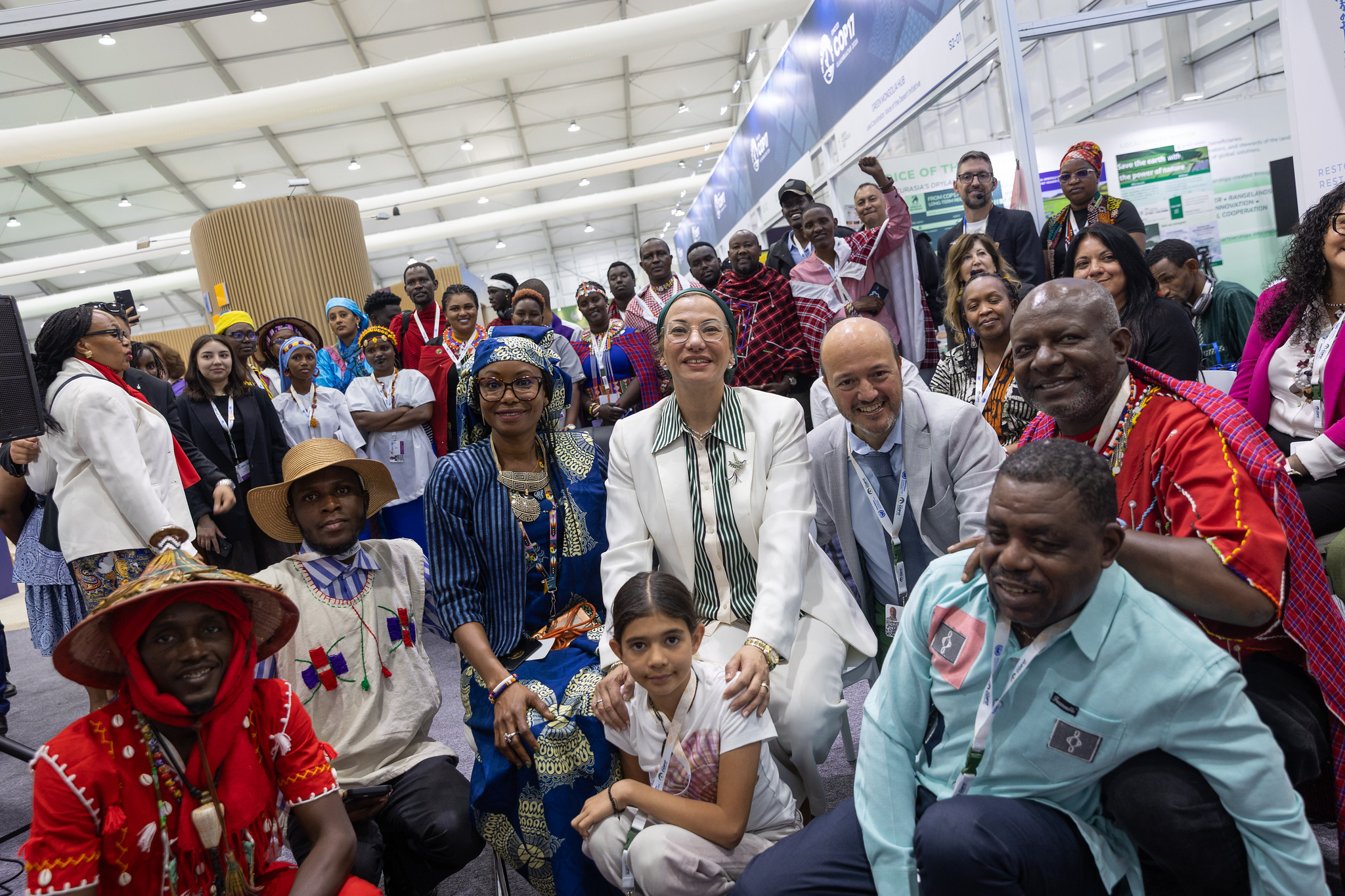
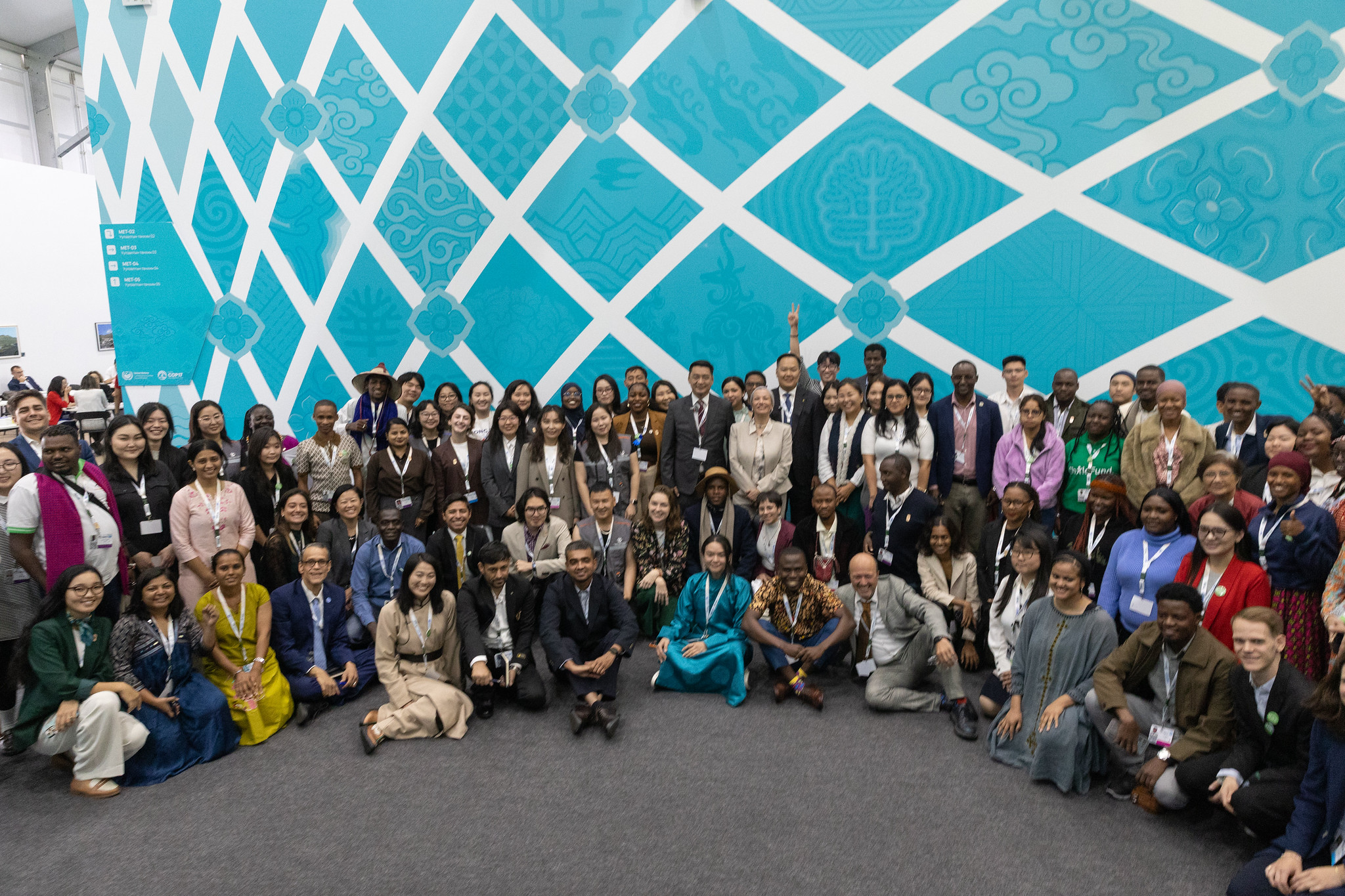
The United Nations Convention to Combat Desertification (UNCCD) is proud to celebrate a historic moment as its Executive Secretary, Dr. Yasmine Fouad, has been awarded the 2025 Nobel Sustainability Medal by the Nobel Sustainability Trust, one of the world’s most distinguished recognitions for leadership in sustainability.This honor reflects more than two decades of Dr. Fouad’s contributions to environmental governance, climate resilience, and community-centered development across Africa, the Arab region, and the world. It also underscores the growing international appreciation for the work of the UNCCD, as land restoration, drought resilience, and sustainable livelihoods become increasingly central to global environmental and development agendas.From the beginning of her career, Dr. Fouad has been driven by a simple but powerful belief: sustainability must begin with people. Her journey has taken her from scientific research in Egypt’s most vulnerable communities, to leading global negotiations, to shaping national environmental policy as Egypt’s Minister of Environment. Throughout this path, she has consistently emphasized that land is not only an ecological asset, but the foundation of human dignity, stability, and opportunity.Her leadership has always been shaped by her human story as much as her professional achievements. She often recalls a moment at the 2018 UN Biodiversity Conference when one of her sons walked into the negotiation hall, approached the podium, and placed his hands on the gavel as delegates applauded. It was, she says, a reminder that while leaders negotiate for agreements, children negotiate for their future. This intergenerational sense of responsibility continues to define her approach to sustainability and diplomacy.Today, the world faces unprecedented pressures on land and water. A quarter of the planet’s land is degraded, droughts are intensifying, and millions of people are losing the resources they depend on. Under Dr. Fouad’s leadership, UNCCD has strengthened its efforts to reverse these trends by elevating land restoration as a pathway to resilience, by advancing more inclusive approaches to drought preparedness, and by ensuring that the voices of women, youth, Indigenous Peoples, and rural communities shape global action.Her tenure has also ushered in renewed momentum toward key global milestones. The Tafa’ul Process, inspired by the spirit of constructive optimism, is guiding a fresh dialogue on drought resilience. The upcoming COP17 in Mongolia is expected to deepen commitments to land stewardship, particularly as the world observes the International Year of Rangelands and Pastoralists in 2026.As she accepted the award, Dr. Fouad dedicated it to the women who rebuild their communities in silence, to the young people who refuse to inherit despair, to the workers who transform scarcity into creativity, and to the families who choose hope every day. Her words capture the heart of the UNCCD’s mission: that sustainability is not purely technical work, but work grounded in humanity, in livelihoods, in cultural heritage, and in the right of every person to thrive on healthy, productive land.Her recognition arrives at a pivotal moment for global environmental action. As the world seeks solutions that are equitable, resilient, and just, Dr. Fouad’s leadership offers a model of diplomacy that is principled, compassionate, and grounded in real-world experience. Her story is a reminder that environmental stewardship is not solely about restoring ecosystems, but about restoring hope and opportunity for communities everywhere.UNCCD extends its warmest congratulations to Dr. Yasmine Fouad for this extraordinary achievement. The Convention looks forward to continuing its work under her guidance as it supports countries and communities in building a more resilient, humane, and sustainable future.

Jimmy Mariscal grew up in the hills of the Panama Canal Basin, where coffee bushes were simply part of daily life. His grandparents tended their caracolillo plants for home use, drying the cherries in the sun and brewing just enough for the family. Coffee was tradition, not livelihood ---a practice handed down quietly through generations. Today, Jimmy is one of thousands of small producers who have benefited from a long-term partnership between Basin communities and the Panama Canal Authority (ACP). Over two decades, this collaboration has helped farmers shift from traditional plots to climate-resilient agroforestry systems that protect biodiversity, stabilize soil, and conserve water resources. The Basin today is the result of decades of community-led stewardship and ACP support --a more resilient and sustainably managed landscape. This long-term partnership led Yasmine Fouad, Executive Secretary of the United Nations Convention to Combat Desertification (UNCCD), to the Panama Canal’s Miraflores Visitors Center on 3 December, during a field visit organized by ACP and the Ministry of Environment of Panama. There, she met Jimmy and the members of Cuencafé, a collective of small producers who grow and process high-quality, climate-resilient coffee. The visit provided a close look at how community-led stewardship supports rural livelihoods while protecting the freshwater system that sustains the Canal. Producers described how the transformation began. ACP understood early on that protecting the Canal’s water depended on the health of the surrounding land —and on the people who care for it. Without authority to enforce conservation, the institution built a model centered on support and incentives. Drawing inspiration from Costa Rica’s experience in rewarding farmers who protect forests, ACP adapted the idea to the Basin, offering producers practical support — from seedlings and technical advice to land titles and community councils that shape decisions. This steady, trust-based partnership strengthened over time. As Raúl Martínez, ACP’s Manager for Socio-Environmental Sustainability, explained: “When restoration helps families improve their livelihoods, it becomes a responsibility everyone shares — and the land stays protected.” Thanks to this incentive-based model - and especially to the introduction of coffee as a viable, high-value crop - farmers gained a reason to keep trees standing and invest in agroforestry systems that conserve soil and water. These choices ultimately made the Panama Canal Basin one of the least-deforested landscapes in the country today. Jimmy’s farm reflects that shift. Supported by community development activities and technical assistance, he introduced improved coffee varieties, planted shade trees, cared for his soil and refined drying and processing techniques. What once served only family needs has become a climate-smart system that supports both income generation and ecosystem health. As more families joined the effort, they formed Cuencafé, whose coffee now reaches Panama City markets. Their agroforestry systems help regulate water and buffer the Basin against intensifying drought — a contribution that matters in a country where 32 per cent of the land — 2.37 million hectares — is already degraded. During the visit, the Executive Secretary listened as producers described how shifting rainfall and rising temperatures have altered their work. She asked in detail about the challenges they now face - how rain has moved, how water scarcity affects planting, and how soils are changing. Farmers explained that years of land restoration -expanding forest cover, diversifying crops and protecting soils - have allowed them to retain water and maintain production, even as drought becomes more common. “What I see here is restoration that works because it begins with people,” said UNCCD Executive Secretary Yasmine Fouad. “When communities are trusted and supported as stewards of their land, they protect the soils that anchor the hillsides, the waters that feed the Canal, and the dignity of the families who rely on both. The impact extends far beyond individual farms — it strengthens the entire Basin and the generations that will inherit it.” Today, that transformation is visible across the basin. A practice once kept alive for household consumption now helps conserve water, sustain rural economies, and protect one of the most strategic landscapes in the country. What began as small plots of shade-grown coffee has grown into a model of community-driven climate resilience. As Panama hosts UNCCD CRIC23 — the Committee for the Review of the Implementation of the Convention, a moment when countries come together to reflect on how they care for their land — the Basin shows how restoration grounded in a long-term partnership, trust, and community leadership endures, restoring far more than land alone.

波恩/巴拿马城,2025年12月3日——在世界各地,女性正在积极适应不断变化的自然环境。她们调整种植周期、长途跋涉取水、在干旱中保护作物、在极端气候事件中照料老人与儿童,并维系着日益脆弱土地上的粮食系统。她们的日常劳作折射出一个全球现实:全世界40%的土地已退化,干旱发生频率较二十年前增加了30%。 这些经历构成了联合国防治荒漠化公约(UNCCD)履约审查委员会相关讨论的核心,其年度会议旨在评估各国在公约框架下的进展。在此进程中,于缔约方大会第十五届会议(COP15,阿比让)所设立的“性别核心小组”,将于今年首次被纳入正式议程,并已成为促进性别平等的土地政策领域最具影响力的平台之一。 在巴拿马举行的CRIC23会议上,性别核心小组聚焦两大紧迫议题:土著妇女在可持续土地管理中的领导力与世界观,以及沙尘暴(SDS)基于性别的差异化影响。沙尘暴是一种因土地退化、湖泊干涸和气候模式变化而加剧的环境危害。 土地、知识与传承 来自巴拿马、北极、非洲、拉丁美洲和蒙古的发言者强调,女性与土地的联系远超日常劳作的范畴。这种联系深刻塑造着文化传承、粮食安全和社区稳定。然而,尽管女性拥有如此关键的土地知识,她们的智慧却很少能真正被纳入国家的水土保持或抗旱战略。 巴拿马沃纳恩族(Wounaan)领袖奥利娜·伊斯马尔·奥普阿(Aulina Ismare Opua)描述了环境变化对社区生活的直接影响。“我们社区中的女性每天都面临着土壤、森林和水源变化的冲击。我们正在努力应对这些影响,但在政策制定过程中,我们却未被充分纳入考量,这损害了所有人的利益。”她表示。她还强调,获取土地、教育和资金的渠道有限,削弱了土著妇女为各国战略做出充分贡献的能力。她呼吁将她们纳入国家和国际议程,并指出: “当女性治愈土地时,土地也在治愈世界。” 乍得土著妇女和人民协会(AFPAT)协调员欣杜·奥马鲁·易卜拉欣(Hindou Oumarou Ibrahim)强调,土著女性对环境变化的理解根植于代代相传的观察和实践。“我们土地的每一张地图都承载着我们母亲和祖母的记忆。在所有土著民族中,女性掌握着世代相传的生态知识,然而这种智慧常常被视为无形。随着气候变化和土地退化加剧,我们的知识不是过去的传统——它是当下韧性的工具,也是未来生存的保障,既守护着我们的社区也保护着我们共同的地球。”她指出。 她们的声音与全球证据相呼应:土著人民守护着全球约四分之一的土地,其中大部分生物多样性极其丰富。女性在其中扮演着核心角色,但在环境部门、土地治理机构和多边谈判中仍然代表性不足。 在性别核心小组中,这些知识和经验被直接带入政策对话:从确保受威胁的土地权利,到融合祖先智慧与科学方法,再到恢复因侵蚀、干旱或森林砍伐而退化的环境。来自蒙古的发言者强调了乡村牧区女性所面临的现实困境:她们不仅因极端气候事件遭受牲畜损失,还缺乏土地使用权或信贷渠道,这些都制约着其经济独立性。一位牧民的箴言引发了强烈共鸣: “土壤即生命,我们的生命即土壤。” 这些贡献预计将影响本次会议中推动性别平等的相关建议。 沙尘暴:日益增长的威胁及其性别化影响 当讨论转向气候相关的风险时,另一现实凸显:沙尘暴的影响存在性别差异。 沙尘暴(SDS)在全球多地加剧,影响从北非、中东到亚洲、大洋洲及欧洲部分地区的社区。这些风暴每年向大气扬起近20亿吨沙尘,其中至少四分之一沙尘暴事件因不可持续的土地使用而愈演愈烈。 其影响波及农业、水安全、交通、健康等多个领域,但并非均匀分布。在农村和低收入社区,女性往往因农活、取水和市场活动而暴露在沙尘中的时间更长。在室内,灰尘沉积在烹饪和生活区域,这增加了呼吸系统风险。当沙尘暴导致学校停课、市场关闭或收成受损时,随之而来的照护负担和收入损失首先落在女性身上。 在整个性别核心小组讨论中,与会者反复指出了一个问题:缺乏分性别数据。没有这些数据,早期预警系统和备灾计划就会忽视女性的特定脆弱性以及她们已有的应对策略。加强这些数据系统预计将成为CRIC23会议的关键建议之一。 女性代表权的改变 今年,《公约》进程的女性参与方面也迈出了重要一步。通过“女性代表基金(WDF)” ,来自受干旱影响国家和发展中国家的女性得以充分地参与CRIC23会议,并接受专项谈判培训,为COP17做好准备。该基金项目的支持方为德国国际合作机构(GIZ)代表联邦经济合作与发展部所实施的“增强妇女赋能,构建韧性乡村(WE4R)”全球项目。 UNCCD数据显示进步空间依然巨大:女性代表在COP15中仅占27%,在最近一届CRIC中占33%。女性代表基金(WDF)资助代表的专业领域涵盖水文学、林业、农学、环境政策及社区领导力,既充实了性别核心小组,也有利于更广泛的会议讨论。 “支持女性谈判代表参会,就是投资于更包容、有效和可持续的土地使用决策。她们的领导力不仅增强了谈判厅内的讨论,也强化了在其本国落实的解决方案。”德国国际合作机构(GIZ)项目负责人安德烈亚斯·兰格(Andreas Lange)表示。 展望COP17:让政策扎根于实践经验 随着各国积极筹备即将于蒙古举行的COP17,CRIC23的讨论明确指向一个共识:若缺少每日管理土地的妇女的视角,土地退化和干旱问题将无法得到有效应对。她们的知识,无论是科学认知、传统智慧还是实践经验,对于恢复牧场、改善土壤健康、应对沙尘暴以及在环境压力下维系文化传承都至关重要。发言者们还呼吁加强对土著女性的教育支持、增加其获得技术与信贷的途径,并认可女性在家庭、农业和手工艺方面的无酬劳动——这些都是维系跨世代土地守护工作的关键要素。 性别核心小组强调了一个简单但具有决定性的信息:保护土地的政策必须反映最依赖土地的人们的经验。否则,它们就有可能在名义上应对危机,却不能在实践中解决问题。

As negotiators meet in Panama City for the 23rd session of the UNCCD Committee for the Review of the Implementation of the Convention (CRIC 23), they gather in a country that treats climate change, biodiversity loss and land degradation as interlinked challenges. The new Panama’s Nature Pledge is set to bring the next-generation climate promise, updated biodiversity strategy and Land Degradation Neutrality (LDN) strategy into a single national framework, also covering oceans and plastics. It shows how one country can align all three Rio Conventions and unlock finance to accelerate action. That same logic has been at the heart of the LDN Target Setting Programme (LDN TSP) for almost a decade. Since 2016, the programme has helped 131 countries commit to voluntary LDN targets, with 124 reporting their baselines and targets through the UNCCD, and collectively aiming to restore close to 600 million hectares of degraded lands. Restoration work done in the field by a volunteer groupA global shift from pledges to plans LDN stems from a simple idea: the world’s productive land base should at least remain stable and grow where possible. In less than ten years, the LDN TSP has given governments a common language and toolkit to map where degradation is happening, agree on measurable, time bound targets and identify measures that fit national realities. LDN TSP 2.0: More ambitious, more bankable If the first eight years of LDN TSP were about enabling countries to set and validate LDN targets based on best- available data, the second phase of this programme (LDN TSP 2.0) is about making those targets sharper and more actionable. Eighteen countries from every region are refining their voluntary commitments to achieve land degradation neutrality so they are more specific, time-bound, quantitative, spatially explicit, gender responsive and tied to land-use planning following a COP15 mandate. These priorities were clearly reflected in a recent global knowledge exchange webinar on LDN TSP 2.0, where 100 representatives of countries and partner agencies reviewed progress to date ahead of CRIC23. Integrated land use planning inception workshop May 2025 South Africa Photo : © Dr. Ernest Daemane, South African National ParksIn Sri Lanka, for example, updated LDN work is being used to align land-use decisions with national climate and biodiversity strategies and to prioritize the most vulnerable landscapes for action. In Central Asia, countries are using LDN targets to connect land restoration with drought resilience and more sustainable management of rangelands and drylands. In Argentina, new LDN targets seek to improve the sustainable management of their wetlands. This second phase also pushes governments to think like investors, by helping them identify priority landscapes, estimate costs and benefits and structure projects and programmes that can attract climate and development finance. Negotiations training for national focal points and a write-shop on development of large-scale investment programme for Pacific SIDS, Seoul, Korea 2023Why this matters for everyone, not just negotiators Up to 40 per cent of the planet’s land is already degraded, affecting billions of people. When land is degraded, harvests decline, food becomes more expensive, rural livelihoods weaken and people are forced to move. LDN helps reverse this pattern by restoring land, strengthening ecosystems and generating economic benefits that far outweigh the initial investments. The Rio synergies dividend Panama’s reference to its Nature Pledge during CRIC23 reinforces a clear message: climate, biodiversity and land are not three separate problems. Land is the common thread that allows us to materialize synergies. Country stories on the new Rio Conventions platform show how land restoration is becoming a practical link between climate, biodiversity and land agendas. Examples range from national work in Sri Lanka to regional initiatives in Central Asia, where managing land degradation is central to climate resilience and food security. In Uzbekistan, hectares of sturdy saxaul shrubs are planted as the first line of defense against desertification and sand and dust storms originating from the dried-up Aral seabedNigeria is updating its land targets in parallel with its National Net Zero Nature Positive plan (NZNP) ensuring that both processes reinforce each other. By aligning these efforts, countries can stretch limited public finance further and create stronger cases for private investment. From targets to transformative projects Ambitious targets need equally ambitious implementation plans. That is where Land Degradation Neutrality Transformative Projects and Programmes (LDN TPPs) come in. These are large-scale, country driven programmes that bundle individual projects into coherent packages aligned with national LDN priorities. Under the second phase of the programme, participating countries are defining TPPs through the Global Mechanism’s Partnership for Project Preparation to turn revised targets into concrete funding proposals. In Benin and the Central African Republic, work supported by the Sahara and Sahel Observatory is helping to define priority landscapes, integrate gender analysis and structure programmes for submission to climate and development funds. In Argentina, two strategic projects are being developed to strengthen integrated land-use planning and create synergies between the country’s updated land targets and its wetlands conservation goals under RAMSAR. At CRIC23 in Panama, the new phase of the LDN work is moving from technical workshops into the political spotlight. The Global Mechanism is presenting progress on revised targets, new tools and emerging project pipelines in plenary, while land degradation neutrality features throughout the week’s programme, from interactive discussions on resource mobilization to country-led side events. Landscape view of lush, green hills and farmland in Jimma, Ethiopia, highlighting the positive impact of sustainable agriculture and land restorationTracking progress – and the remaining gap Transparent data is essential to convince citizens, partners and investors that LDN commitments are a sound investment. Key UNCCD knowledge tools – notably the LDN targets tracking tool and the UNCCD Data Dashboard – allow users to see how much land is degrading or being restored and to follow progress towards voluntary LDN targets. New tools are also being developed to support the integration of LDN as a guiding principle for smarter and better-informed land use planning decisions that avoid future land degradation. “A decade of LDN target setting has proved that restoring land is not a luxury, it is basic infrastructure for our economies,” says Louise Baker, Managing Director of the UNCCD Global Mechanism. “If we invest now in LDN TSP 2.0, we are not just planting trees, we are stabilizing food systems, protecting biodiversity and creating new jobs where they are needed most.” In Panama this integrated vision becomes the highlight of the side event “Restoring Land, Building Sustainable Futures: Success Stories from the Changwon Initiative,” hosted by the Republic of Korea. It gives participants a front-row insight into how the Changwon Initiative has supported the development of the LDN Target Setting Programme and its second phase, strengthened science–policy linkages through the UNCCD Science-Policy Interface and invested in capacity building that helps countries move from pilot projects to nationwide implementation. Success stories – from local pilot sites to national-scale programmes – demonstrate how long-term, strategic donor engagement is enabling countries to translate land targets into concrete action on the ground. As Barron Orr, Chief Scientist of the UNCCD, put it: “Land Degradation Neutrality is about doing the right things in the right places at the right scale. The scientific guidance produced by the UNCCD Science-Policy Interface has helped countries pursue all of their economic, social and environmental objectives in an inclusive and integrated way — so that biodiversity is protected where it is highest, food is grown where soils are most productive and new development does not harm either. This approach places a strong foundation of healthy land underneath global efforts to achieve all the SDGs.” Amina, leader of a women’s collective in Jimma, Ethiopia, proudly standing in front of her community members engaged in agroforestry and land restoration activitiesWith the right support from development banks, climate and biodiversity funds, impact investors and philanthropy, LDN TSP 2.0 can enable countries to turn degraded hectares into thriving landscapes and resilient communities. As countries gear up for next year’s UNCCD COP17 that will mark ten years of this global effort, the focus shifts from targets agreed to real results delivered on the ground.

How Communities of Learning and Practice are speeding action in the face of a new drought era

This week at COP30 in Belém, Brazil – birthplace of the three Rio Conventions – land, climate and nature took center stage as governments and partners looked at how action on all three can move forward together for stronger impact and lasting results. A lineup of high-level events on ecosystem restoration, climate resilience and sustainable agriculture confirmed UNCCD as a key player in advancing Rio synergies, placing land at the cornerstone of humanity’s response to the triple planetary crisis. Synergies in the spotlight Participants stressed that climate change, biodiversity loss and land degradation are not separate challenges, but different symptoms of a single planetary crisis that needs to be tackled in an integrated way. By linking their mandates, the Rio Conventions aim to turn shared challenges into new opportunities and deliver solutions that benefit people, economies and ecosystems alike. UN Climate Change Executive Secretary Simon Stiell emphasized this shared direction, noting: “Climate change, biodiversity loss and land degradation are one interconnected crisis – and integrated action delivers the fastest, most durable results. New national climate and adaptation plans reflect this. They include biodiversity, ecosystems and nature-based solutions. Throughout this COP, the message has been clear: the Paris Agreement is working – but we must make it work faster, fairer, and at far greater scale.” UNCCD Deputy Executive Secretary Andrea Meza, CBD Executive Secretary Astrid Schomaker and UNFCCC Executive Secretary Simon Stiell at the COP30 venueThe Rio Conventions Presidencies, Parties and partners underlined how more coherent land and sea use planning, better aligned finance and shared monitoring systems can reduce duplication and increase impact on the ground. A joint statement by the Rio Convention Presidencies issued at Belém marks a key moment in aligning Rio Presidency initiatives on land restoration, sustainable resource management and ecosystem resilience. Land at the center At the high-level roundtable “Bridging Action Agenda from COP16 to COP30: Strengthening synergies across land, climate and nature”, the UNCCD COP16 and COP17 Presidencies warned that efforts to address climate change and biodiversity loss will fall short if land continues to be treated in isolation. The UNCCD COP16 Presidency highlighted the Riyadh Action Agenda as a practical attempt to bring land, the ocean and the atmosphere together in national planning and finance. Looking ahead to UNCCD COP17, Mongolia underscored that pathways to tackle climate change, biodiversity loss and land degradation are indivisible and must be embedded in national policies and plans. From Rio to Belém At the joint Rio Conventions’ side event “From Rio to Belém: Synergistic action for ecosystem restoration and climate resilience”, COP Presidencies, government, private sector and civil society leaders illustrated how this agenda is being translated into practice. UNCCD Deputy Executive Secretary Andrea Meza stressed that this is not about choosing between individual priorities, noting: “We are talking about a new development pathway that could operate within the planetary boundaries, and generating a model that can guarantee that we live in a prosperous society while at the same time protecting our most valuable asset — the living Earth.” UNCCD Deputy Executive Secretary Andrea MezaReflecting on the outcomes of COP30, CBD Executive Secretary Astrid Schomaker highlighted the joint resolve of the three conventions, noting: “At COP30 the Presidencies and Secretariats of the Rio Conventions joined forces to promote integrated action on climate, biodiversity and land. Synergies are the only way forward. The world needs to take bold steps for progress across the Rio Conventions’ interlinked objectives.” Finance for farmland Finance for land-based action was another prominent theme. COP30 saw the ministerial launch of the Resilient Agriculture Investment for net-Zero land degradation (RAIZ) accelerator, a Brazil-led initiative to mobilize public and private finance for restoring degraded farmland at scale. With over one billion hectares of farmland degraded worldwide, speakers stressed the urgency of investing in soil health, productivity and resilience. RAIZ offers a pathway to align climate action, food security and biodiversity protection, with countries in the lead and finance flowing to where it matters most. Building on Brazil’s experience in blending public and private capital for restoration through initiatives such as Green Way and EcoInvest, the accelerator will support governments to map degraded landscapes, identify investable solutions and design co-investment vehicles that de risk private finance and lower the cost of capital for farmers and rural communities. Hindou Oumaru Ibrahim, President and Coordinator, Association of Indigenous Women and Peoples of ChadSynergies from the ground up Peer learning on concrete national approaches to linking NDC targets on land degradation and desertification was the focus of an event organized by Türkiye in the margins of COP30. Brazil shared a three- pillar approach of aligning planning tools across sectors, mobilizing integrated financing and advancing nature based solutions with strong community involvement, while Panama shared plans to streamline work under multiple conventions through joint reporting mechanisms and its Nature Pledge – a roadmap that unifies national efforts to tackle land degradation, biodiversity loss and climate change. Azerbaijan emphasized science based, integrated work on water management, forest restoration and land rehabilitation, Colombia showed how outcomes from the Kunming–Montreal Global Biodiversity Framework are being implemented through community-driven projects that advance biodiversity, climate resilience and sustainable land use together and Mongolia presented priorities on desertification, land degradation, water–land interactions and nature based infrastructural solutions. Dialogues at Belém also brought to the forefront the importance of human rights-based approaches, Indigenous Peoples’ leadership and inclusive engagement with vulnerable communities, civil society and the private sector in maximizing synergies among multilateral environmental agreements. H.E .Osama Faqeeha, Deputy Minister of the Environment, Water and Agriculture of the Kingdom of Saudi Arabia, COP16 PresidencyNext stops on the journey The COP30 outcomes help anchor land at the heart of the Rio Conventions’ action agendas. The next stop will be UNCCD CRIC23 in Panama this December, where Parties will review progress on land-based solutions ahead of UNCCD COP17 in Mongolia in 2026. 2026 will be the next “Triple COP” year, and an opportunity for all three Rio conventions to align national commitments, showcase joint solutions and build the political momentum needed to turn Rio synergies into coordinated action on the ground. We invite you to visit rioconventions.org to learn more about current initiatives, integrated approaches and case studies on land, climate and nature synergies.
