News & stories

Latest



Land degradation and drought are fueling a hidden health crisis – but we still have time to act. When we speak of desertification or drought, we often think of dry rivers, cracked soil and failed harvests. But there is another, less visible toll - one that strikes deep into the lungs, hearts and daily lives of the world’s most vulnerable people. A new policy brief from the UNCCD reveals the far-reaching health impacts of land degradation and drought — and it delivers a stark message: the health of the planet and the health of people are inseparable. Around the world, land is deteriorating at an alarming pace. Between 2015 and 2019, more than 100 million hectares of productive land were lost each year. That’s an area roughly the size of Egypt — gone annually. This degradation doesn’t just threaten biodiversity and food production. It destabilizes communities, weakens immune systems and increases the spread of disease. The damage is particularly acute in regions like sub-Saharan Africa, Latin America and Southeast Asia, where fragile ecosystems support large and growing populations. As land dries out or is stripped of its fertility, the impact cascades: water becomes scarce, crops fail, dust storms multiply and health systems buckle under the strain. And the data is clear. In drylands — which already cover more than 40 per cent of the Earth’s surface — rates of malnutrition, respiratory illness and waterborne disease are rising. Children are particularly at risk. Malnutrition, stunting and underweight are now among the top drivers of childhood disease burden globally. In places like Zambia, droughts have pushed up food prices, leaving pregnant mothers undernourished and babies born weaker. In parts of South America, dust from degraded soil increases the risk of respiratory illness and exposure to infectious diseases. In Australia, prolonged drought has been linked to rising levels of anxiety, depression and rural suicide. This is not a coincidence. These are complex, systemic failures driven by the intertwined forces of environmental degradation and climate change. The UNCCD brief lays out how drought, land degradation and desertification — collectively referred to as DLDD — contribute to a spectrum of public health challenges, ranging from infectious diseases like cholera, malaria and even HIV, to chronic conditions such as asthma and cardiovascular disease. Poor air quality from wildfires and sandstorms, unsafe water due to reduced availability and contamination and disrupted food systems all contribute to rising illness and mortality. What’s more, DLDD increases the risk of emerging zoonotic diseases — illnesses transmitted from animals to humans — by disturbing ecosystems and bringing humans into closer contact with disease reservoirs. This is how Ebola spreads. This is how pandemics begin. It’s critical that we connect the dots: land degradation, desertification, and drought are not just environmental issues — they directly impact human health,” says Dr. Barron Joseph Orr, UNCCD Chief Scientist. “The good news is that by restoring land and managing drought proactively, we can reduce health risks, strengthen communities and improve lives."The solution, the brief argues, lies in breaking these dangerous feedback loops. This requires more than restoring land or investing in health. It demands a radical rethinking of how we govern the relationship between ecosystems and wellbeing. The UNCCD calls for integrated, cross-sectoral responses — ones that recognize land not as a passive backdrop to human life, but as a living, dynamic system on which health depends. That means reorienting land use planning, agricultural policies and environmental management to include health as a central concern. It means empowering communities with tools and knowledge to respond to climate threats. It means supporting women and girls, who often carry the greatest burdens — collecting water, caring for the sick, or suffering silently from the physical and mental toll of degraded environments. “We have to realize that human health is closely linked with the health of our land and our ecosystems. The quality of the food we produce from healthy soil is akin to a pharmacy. says Ibrahim Thiaw, Executive Secretary of the UNCCD. "This is a call to all sectors — from health to agriculture to finance — to come together and build resilience where it matters most: in our soil, in our systems, and in our communities.” The brief also emphasizes the need to implement the World Health Organization’s Global Action Plan on Climate Change and Health and to strengthen the One Health approach — which sees the health of people, animals and ecosystems as deeply interlinked. The benefits of action far outweigh the costs, the brief stresses. From reduced hospital admissions to increased agricultural resilience, the returns on investing in land-health synergy are profound. Time, however, is running short. As climate extremes intensify and drylands expand, more communities will be pushed beyond their coping capacity. Unless we act, the health consequences of inaction will grow — quietly, inexorably and with devastating effects. The UNCCD stands ready to support countries in this effort — by providing the data, guidance and partnerships needed to develop integrated responses, empower the most vulnerable and restore the health of the land so that people, too, can thrive. Because when the land gets sick, so do we.

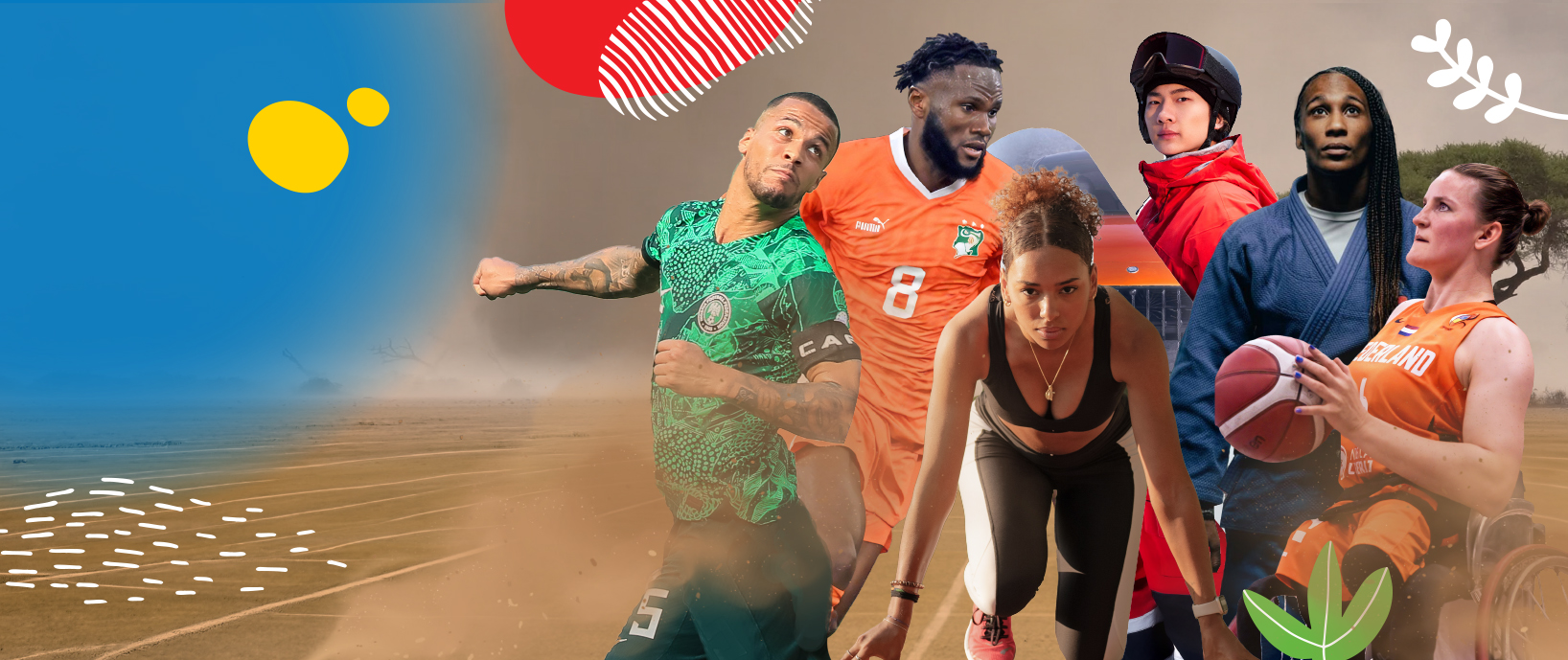
اتفاقية الأمم المتحدة لمكافحة التصحر ترحب بنجم كرة القدم الدولي وقائد المنتخب الوطني النيجيري ضمن فريقها من الرياضيين الموحدين من أجل الأرضبون – ٢٥ مايو ٢٠٢٥ – بمناسبة يوم كرة القدم العالمي، تفخر اتفاقية الأمم المتحدة لمكافحة التصحر (UNCCD) بالإعلان عن تعيين ويليام تروست - إيكونغ، قائد المنتخب الوطني النيجيري لكرة القدم واللاعب المحترف في نادي الخلود السعودي، كأحدث بطل لـ "الرياضة من أجل الأرض". وينضم بذلك إلى حركة متنامية من الرياضيين البارزين الذين التزموا باستخدام قوة الرياضة لرفع الوعي واتخاذ إجراءات ملموسة لمكافحة التصحر وتدهور الأراضي والجفاف. يُصبح تروست-إيكونغ البطل الخامس لـ "الرياضة من أجل الأرض"، حيث ينضم إلى بطلة الجودو المغربية أسماء نيانغ، ومنافسة القفز بالحواجز الأولمبية من توغو نعومي أكاكبو، وبطلة كرة السلة على الكراسي المتحركة الهولندية جيتسكي فيسر، وقائد المنتخب الوطني لكرة القدم من ساحل العاج فرانك كيسيي – وهي مجموعة متنوعة من قادة الرياضة الذين يدافعون عن أراضٍ صحية تُعيلنا جميعًا. معًا، يشكلون جبهة موحدة من أجل استعادة الأراضي ومواجهة تغير المناخ والتنمية المستدامة. كبطل لـ "الرياضة من أجل الأرض"، سيستخدم تروست-إيكونغ نفوذه لتعزيز مبادرات استعادة الأراضي في إفريقيا وحول العالم. من خلال التواصل المجتمعي وإشراك الشباب والمبادرات عالية التأثير، يهدف إلى إلهام العمل العاجل لاستعادة الأراضي المتدهورة وحماية سبل عيش الملايين الذين يعتمدون عليها. "كل ثانية، يفقد العالم ما يعادل أربعة ملاعب كرة قدم من الأراضي الصحية"، قال تروست-إيكونغ. "أريد استخدام منصتي لزيادة الوعي بتأثير التصحر في إفريقيا – والحلول لعكس هذا الاتجاه. أنا متحمس بشكل خاص لتعزيز التعاون بين المملكة العربية السعودية وإفريقيا، بما في ذلك بلدي الأم نيجيريا. هدفي هو تمكين المجتمعات بالأدوات والمعرفة التي يحتاجونها لاستعادة أراضيهم وضمان مستقبل أفضل. حان الوقت لجيل جديد من القادة ليتقدم ويبني إرثًا من التغيير." من خلال مؤسسة تروست-إيكونغ، التي أُسست عام ٢٠٢٤، سيدعم استعادة الأراضي والوعي البيئي عبر تعزيز المبادرات المحلية والتعليم ومشاريع التنمية المجتمعية. سيعمل مباشرةً لدعم مشروع "السور الأخضر العظيم"، المبادرة الرائدة بقيادة إفريقيا والتي تهدف إلى استعادة ١٠٠ مليون هكتار من الأراضي المتدهورة، وعزل ٢٥٠ مليون طن من الكربون، وخلق ١٠ ملايين فرصة عمل خضراء بحلول عام ٢٠٣٠. قال إبراهيم ثياو، الأمين التنفيذي لاتفاقية الأمم المتحدة لمكافحة التصحر: "ويليام تروست-إيكونغ يجسد روح 'الرياضة من أجل الأرض – فهو عازم، ذو رؤية، ومتأصل في مجتمعه. قيادته داخل الملعب وخارجه ستساعد في تسليط الضوء على الحاجة الملحة لاستعادة الأراضي – ليس فقط في إفريقيا، ولكن حول العالم. نحن فخورون بترحيبه ضمن فريق أبطال (الرياضة من أجل الأرض)." وأضاف ثياو: "من خلال ربط اللغة العالمية لكرة القدم بالتحدي العالمي المتمثل في تدهور الأراضي، تحول (الرياضة من أجل الأرض) الشغف إلى فعل – وتسجل الأهداف ليس فقط في الملعب، ولكن من أجل مستقبل أراضينا ومجتمعاتنا." في أول مشاركة له كبطل لـ (الرياضة من أجل الأرض)، سيستضيف تروست-إيكونغ مباراة كرة قدم خيرية في لاغوس يوم ٢٢ يونيو ٢٠٢٥ بالتزامن مع يوم مكافحة التصحر والجفاف لهذا العام تحت شعار "استعد الأرض. استثمر الفرص." سيجمع الحدث الرياضيين والجماهير وأفراد المجتمع في احتفال بقوة الرياضة لتوحيد الجهود ودفع التغيير الملموس من أجل الأرض. لمزيد من المعلومات، يرجى التواصل مع: مكتب الصحافة في اتفاقية الأمم المتحدة لمكافحة التصحر press@unccd.int https://www.unccd.int/our-work/campaigns/sport4land عن اتفاقية الأمم المتحدة لمكافحة التصحر (UNCCD) اتفاقية الأمم المتحدة لمكافحة التصحر (UNCCD) هي الرؤية والصوت العالمي للأرض. نحن نوحد الحكومات والعلماء وصناع السياسات والقطاع الخاص والمجتمعات حول رؤية مشتركة وعمل عالمي لاستعادة وإدارة أراضي العالم من أجل استدامة البشرية والكوكب. أكثر من مجرد معاهدة دولية وقعتها 197 دولة، تُعد UNCCD التزامًا متعدد الأطراف لتخفيف آثار تدهور الأراضي اليوم وتعزيز رعاية الأرض غدًا لتوفير الغذاء والماء والمأوى والفرص الاقتصادية لجميع الناس بطريقة عادلة وشاملة. عن حملة "الرياضة من أجل الأرض" https://www.unccd.int/our-work/campaigns/sport4land الرياضة من أجل الأرض هي حملة عالمية أطلقتها اتفاقية الأمم المتحدة لمكافحة التصحر (UNCCD) لتوحيد المجتمع الرياضي في مكافحة تدهور الأراضي والتصحر والجفاف. مع تسارع تغير المناخ وزيادة موجات الجفاف وارتفاع درجات الحرارة وتدهور الأراضي، أصبح التأثير محسوسًا ليس فقط في الملاعب، ولكن أيضًا في الطعام الذي نأكله وسبل العيش التي نعتمد عليها والبيئة التي نشاركها. أُطلقت الحملة خلال أولمبياد باريس ٢٠٢٤، وتشرك الرياضيين والرياضيات والجماهير حول العالم لاتخاذ إجراءات لاستعادة الأراضي. كأبطال لـ "الرياضة من أجل الأرض"، يروج الرياضيون البارزون للارتباط الحاسم بين الأراضي الصحية والمجتمعات المزدهرة.

الرياض، المملكة العربية السعودية، 7 ديسمبر 2024 – كشفت اليوم اتفاقية الأمم المتحدة لمكافحة التصحر عن أبطالها الأوائل في حملة الرياضة من أجل الأرض #Sport4Land خلال مؤتمر الأطراف السادس عشر، وهو أكبر مؤتمر للأمم المتحدة بشأن الأرض يعقد في منطقة الشرق الأوسط حتى الآن. وقد تم في وقت سابق من هذا العام تدشين حملة الرياضة من أجل الأرض في دورة الألعاب الأولمبية في باريس بهدف الاستفادة من الجاذبية العالمية للرياضة لتجنب أزمة الأراضي العالمية، والتي تتمثل في فقدان ما يقارب مساحة أربعة ملاعب كرة قدم من الأراضي المنتجة كل ثانية. والأبطال الاربعة المشاركون في حملة الرياضة من أجل الأرض سينضمون إلى اتفاقية الأمم المتحدة لمكافحة التصحر - وهي إحدى اتفاقيات ريو الثلاث إلى جانب المناخ والتنوع البيولوجي - في المهمة العاجلة لإعادة إصلاح الأراضي المتدهورة وبناء القدرة على الصمود في مواجهة الجفاف، وحث وإلهام المجتمعات في جميع أنحاء العالم لاتخاذ إجراءات جماعية.نعومي أكاكبو، بطلة سباقات الحواجز الأولمبية من توجو أكدت على الارتباط الأساسي بين صحة الأرض، والأمن الغذائي ورفاهية الإنسان. وقالت "الأرض هي أكثر من مجرد مورد، بل هي أساسنا". "عندما نستعيد خصوبة الأراضي المتدهورة، فإننا نستعيد الحياة والفرص لعدد لا يحصى من المجتمعات." والمناصرة التي تقدمها نعومي لهذه القضية تجسد إجراءات جريئة ومبتكرة لإعادة خصوبة الأراضي وهي مستوحاة من شعار "تخطي الحدود" الذي تتبناه.أسماء نيانج، من المغرب وهي بطلة أفريقيا في رياضة الجودو ست مرات، لفتت النظر إلى أوجه التشابه بين الانضباط المطلوب في رياضتها والإستراتيجيات اللازمة لمكافحة التصحر. وأوضحت قائلة "لقد علمني الجودو المرونة والإستراتيجية". "هذه هي نفس الأدوات التي نحتاجها لمحاربة التصحر. إنها ليست مجرد معركة من أجل الأرض؛ بل هي معركة من أجل كل أسرة ومجتمع يعتمد عليها". تعمل أسماء، مستفيدة من خلفيتها المتعددة الثقافات وروحها البدوية، مع مؤسسة يزة السلاوي لتمكين الفتيات والنساء الريفيات في المناطق الأكثر تضررًا من التصحر في المغرب.جيتسكي فيسر الهولندية الفائزة بالميدالية الذهبية في كرة السلة على الكراسي المتحركة في الألعاب البارالمبية أكدت على التأثير غير المتناسب لتدهور الأراضي والجفاف على السكان المهمشين. وأضافت أن "الأشخاص ذوي الإعاقة غالبًا ما يتم استبعادهم من الحلول البيئية، على الرغم من أننا من بين الفئات الأكثر عرضة لتأثيراتها". "تهدف هذه الحملة إلى إزالة الحواجز، وضمان عدم تخلف أي شخص عن الركب، وإظهار أن الإدماج ضروري للنجاح."لاعب كرة القدم فرانك كيسي من كوت ديفوار، الذي يلعب حاليًا لفريق الأهلي في الدوري السعودي للمحترفين، سلط الضوء على مشاركة الشباب في دعم صحة الأرض، مشيرًا إلى أن "الرياضة تعلمنا المرونة، والعمل الجماعي، وقوة الوحدة. وهذه هي القيم التي نحتاجها بالضبط لمعالجة أزمة الأراضي".إبراهيم ثياو، الأمين التنفيذي لاتفاقية الأمم المتحدة لمكافحة التصحر قال: "تهانينا لأبطالنا الجدد الذين يقودون المعركة ضد التصحر، وتدهور الأراضي، والجفاف وانعدام الأمن الغذائي. إن تصميمكم على رفع مستوى الوعي بهذه القضايا الحرجة يجلب الأمل لعدد لا يحصى من المجتمعات، بما في ذلك الشباب والفئات المعرضة للتأثر أكثر من غيرها، ويتضمن ذلك الأشخاص ذوي الإعاقة.في حفل الإعلان الذي أقيم في مؤتمر الأطراف السادس عشر، قام الأبطال الذين تم الإعلان عنهم مؤخرًا في هذه الحملة بالحديث عن رحلاتهم الشخصية وتأملوا في أوجه الشبه أو الارتباط بين حياتهم الرياضية والنضال العالمي ضد تدهور الأراضي. وبحسب بيانات اتفاقية الأمم المتحدة لمكافحة التصحر، فإن 100 مليون هكتار ـ وهي مساحة تعادل مساحة مصر ـ تتدهور كل عام. ويهدد هذا التأثير سبل عيش أكثر من مليار شاب في البلدان النامية الذين يعتمدون على الأرض من أجل بقائهم. ومن بين هؤلاء المتضررين، يواجه الأشخاص ذوو الإعاقة ــ الذين يشكلون 16% من سكان العالم ــ تحديات فريدة، بدءًا من محدودية الوصول إلى الموارد إلى الاستبعاد من عملية صنع القرار وجهود التعافي. نبذة عن حملة الرياضة من أجل الأرض (Sport4Land)حملة الرياضة من أجل الأرض (Sport4Land) هي حملة عالمية أطلقتها اتفاقية الأمم المتحدة لمكافحة التصحر (UNCCD) بهدف توحيد المجتمع الرياضي في مكافحة تدهور الأراضي، والتصحر والجفاف. فمع تسارع نوبات الجفاف، وموجات الحر، وتدهور الأراضي بسبب تغير المناخ، فإن التأثير لا يقتصر على ملاعب الرياضة فحسب، بل يمتد أيضاً إلى الغذاء الذي نتناوله، وسبل العيش التي نعتمد عليها، والبيئة التي نتقاسمها.تم إطلاق الحملة في دورة الألعاب الأولمبية في باريس 2024، بهدف إشراك الرياضيين والرياضيات والمشجعين في جميع أنحاء العالم في اتخاذ إجراءات لاستعادة خصوبة الأراضي. وسوف يقود رياضيون بارزون مثل أسماء نيانج، وناعومي أكاكبو، وجيتسكي فيسر، وفرانك كيسي هذه المبادرة لتسليط الضوء على الصلة بالغة الأهمية بين الأرض الصحية والمجتمعات المزدهرة.الموقع الإلكتروني:https://www.unccd.int/our-work/campaigns/sport4land

Ibrahim Thiaw, Executive Secretary of the United Nations Convention to Combat Desertification, discusses the environmental disaster that has occurred at the Aral Sea.

UNCCD launches ‘Global Drought Snapshot’ report at COP28 in collaboration with International Drought Resilience Alliance (IDRA) Recent drought-related data based on research in the past two years and compiled by the UN point to “an unprecedented emergency on a planetary scale, where the massive impacts of human-induced droughts are only starting to unfold.” According to the report, ‘Global Drought Snapshot,’ launched by the UN Convention to Combat Desertification (UNCCD) at the outset of COP28 climate talks in the UAE, few if any hazard claims more lives, causes more economic loss and affects more sectors of societies than drought. UNCCD is one of three Conventions originated at the 1992 Earth Summit in Rio de Janeiro. The other two address climate change (UNFCCC) and biodiversity (UN CBD). Says UNCCD Executive Secretary Ibrahim Thiaw: “Unlike other disasters that attract media attention, droughts happen silently, often going unnoticed and failing to provoke an immediate public and political response. This silent devastation perpetuates a cycle of neglect, leaving affected populations to bear the burden in isolation.” “The Global Drought Snapshot report speaks volumes about the urgency of this crisis and building global resilience to it. With the frequency and severity of drought events increasing, as reservoir levels dwindle and crop yields decline, as we continue to lose biological diversity and famines spread, transformational change is needed.” “We hope this publication serves as a wake-up call.” Drought data, selected highlights: 15–20%: Population of China facing more frequent moderate-to-severe droughts within this century (Yin et al., 2022) 80%: Expected increase in drought intensity in China by 2100 (Yin et al., 2022) 23 million: people deemed severely food insecure across the Horn of Africa in December 2022 (WFP, 2023) 5%: Area of the contiguous United States suffering severe to extreme drought (Palmer Drought Index) in May, 2023 (NOAA, 2023) 78: Years since drought conditions were as severe as they were in the La Plata basin of Brazil–Argentina in 2022, reducing crop production and affecting global crop markets (WMO, 2023a) 630,000 km2 (roughly the combined area of Italy and Poland): Extent of Europe impacted by drought in 2022 as it experienced its hottest summer and second warmest year on record, almost four times the average 167,000 km2 impacted between 2000 and 2022 (EEA, 2023) 500: years since Europe last experienced a drought as bad as in 2022 (World Economic Forum, 2022) 170 million: people expected to experience extreme drought if average global temperatures rise 3°C above pre-industrial levels, 50 million more than expected if warming is limited to 1.5°C (IPCC, 2022) Agriculture and forests 70%: Cereal crops damaged by drought in the Mediterranean, 2016–2018 33%: loss of grazing land in South Africa due to drought (Ruwanza et al., 2022) Double or triple: Expected forest losses in the Mediterranean region under 3°C warming compared to current risk (Rossi et al., 2023) 5: Consecutive rainfall season failures in the Horn of Africa, causing the region’s worst drought in 40 years (with Ethiopia, Kenya and Somalia particularly hard hit), contributing to reduced agricultural productivity, food insecurity and high food prices (WMO, 2023). 73,000 km2: average area of EU cropland (or ~5%) impacted by drought, 2000-2022, contributing to crop failures (EEA, 2023) $70 billion: Africa’s drought-related economic losses in the past 50 years (WMO, 2022). 44%: Expected drop in Argentina’s soybean production in 2023 relative to the last five years, the lowest harvest since 1988/89, contributing to an estimated 3% drop in Argentina’s GDP for 2023 (EU Science Hub, 2023) Water conditions 75%: Reduction of cargo capacity of some vessels on the Rhine due to low river levels in 2022, leading to severe delays to shipping arrivals and departures (World Economic Forum, 2022) 5 million: People in southern China affected by record-low water levels in the Yangtze River due to drought and prolonged heat (WMO, 2023a) 2,000: backlog of barges on the Mississippi River in late 2022 due to low water levels, causing $20 billion in supply chain disruptions and other economic damage (World Economic Forum, 2022) 2–5 times: Acceleration of long-term rates of groundwater-level decline and water-quality degradation in California's Central Valley basins over the past 30 years due to drought-induced pumpage (Levy et al., 2021) Social dimensions 85%: People affected by droughts who live in low- or middle-income countries (World Bank, 2023) 15 times: Greater likelihood of being killed by floods, droughts and storms in highly vulnerable regions relative to regions with very low vulnerability, 2010 to 2020 (IPCC, 2023) 1.2 million: people in the Central American Dry Corridor needing food aid after five years of drought, heatwaves and unpredictable rainfall (UNEP, 2022) Remedies Up to 25%: CO2 emissions that could be offset by nature-based solutions including land restoration (Pan et al., 2023) Almost 100%: Reduction in the conversion of global forests and natural land for agriculture if just half of animal products such as pork, chicken, beef and milk consumed today were replaced with sustainable alternatives (Carbon Brief, 2023) 20 to 50%: Potential reduction in water waste if conventional sprinkler systems were replaced by micro-irrigation (drip irrigation), which delivers water directly to plant roots (STEM Writer, 2022). 20%: EU’s land and sea areas to be made subject to restoration measures by 2030, with measures in place for all ecosystems in need of restoration by 2050 (European Council, 2023) $2 billion: investment by AFR100 in African organizations, businesses and government-led projects, announced this year with further anticipated investments of $15 billion to foster the restoration of 20 million hectares of land by 2026, generating an estimated $135 billion in benefits to around 40 million people. (Hess, 2021) 6: Riparian countries (Benin, Burkina Faso, Cote d’Ivoire, Ghana, Mali and Togo) participating in the Volta basin Flood and Drought management project, the first large-scale, transboundary implementation of Integrated Flood and Drought Management strategies, including an End-to-End Early Warning System for Flood Forecasting and Drought Prediction (Deltares, 2023) ~45%: global disaster-related losses that were insured in 2020, up from 40% in 1980-2018. However, disaster insurance cover remains very low in many developing countries (UNDRR, 2022) 50 km: the resolution of the water distribution maps thanks to a recently-developed method of combining satellite measurements with high-resolution meteorological data, an major improvement from the previous 300 kilometers resolution (Gerdener et al., 2023) The report was unveiled at a high-level event with the International Drought Resilience Alliance (IDRA) in Dubai (webcast at www.youtube.com/@THEUNCCD, 16:00 Dubai time / 12:00 GMT. It is part of UNCCD’s series of Land and Drought Dialogues at COP28: https://bit.ly/3Gh7GZd). Launched by the leaders of Spain and Senegal at COP27, IDRA is the first global coalition creating political momentum and mobilizing financial and technical resources for a drought-resilient future. Australia, Colombia, Italy and the Union of Comoros, together with the Commonwealth Secretariat and other major international organizations, are being announced at COP28 as IDRA’s latest members, bringing the Alliance’s total membership to 34 countries and 28 entities. Additional highlights from the report: Several findings in this report highlight land restoration, sustainable land management and nature positive agricultural practices as critical aspects of building global drought resilience. By adopting nature-positive farming techniques, such as drought-resistant crops, efficient irrigation methods, no-till and other soil conservation practices, farmers can reduce the impact of drought on their crops and incomes. Efficient water management is another key component of global drought resilience. This includes investing in sustainable water supply systems, conservation measures and the promotion of water-efficient technologies. Disaster preparedness and early warning systems are also essential for global drought resilience. Investing in meteorological monitoring, data collection and risk assessment tools can help respond quickly to drought emergencies and minimize impacts. Building global drought resilience requires international cooperation, knowledge sharing as well as environmental and social justice. “Several countries already experience climate-change-induced famine,” says the report. “Forced migration surges globally; violent water conflicts are on the rise; the ecological base that enables all life on earth is eroding more quickly than at any time in known human history.” “We have no alternative to moving forward in a way that respects the planet’s boundaries and the interdependencies of all forms of life. We need to reach binding global agreements for proactive measures that are to be taken by nations to curtail the spells of drought.” “The less space the developed human world occupies, the more natural hydrological cycles will stay intact. Restoring, rebuilding and revitalizing all those landscapes that we degraded and destroyed is the imperative of our time. Urban intensification, active family planning, and curbing rapid population growth are prerequisites for societal development that respects planetary boundaries.” About The United Nations Convention to Combat Desertification (UNCCD) is an international agreement on good land stewardship. It helps people, communities and countries create wealth, grow economies and secure enough food, clean water and energy by ensuring land users an enabling environment for sustainable land management. Through partnerships, the Convention’s 197 parties set up robust systems to manage drought promptly and effectively. Good land stewardship based on sound policy and science helps integrate and accelerate achievement of the Sustainable Development Goals, builds resilience to climate change and prevents biodiversity loss.

Two billion tons of sand and dust, equal in weight to 350 Great Pyramids of Giza, enter the atmosphere every year; UNCCD experts attribute over 25% of the problem to human activities Wreaks havoc from Northern and Central Asia to sub-Saharan Africa; Health impacts poorly understood Sand and dust storms are an underappreciated problem now “dramatically” more frequent in some places worldwide, with at least 25% of the phenomenon attributed to human activities, according to the UN Convention to Combat Desertification (UNCCD). Accompanied by policy recommendations, the warning comes as a five-day meeting takes place in Samarkand, Uzbekistan to take stock of global progress in the Convention’s implementation. The UNCCD is one of three Conventions originated at the 1992 Earth Summit in Rio de Janeiro. The other two address climate change (UNFCCC) and biodiversity (UN CBD). The meeting, 13-17 November (https://www.unccd.int/cric21), includes a high-level session on 15 November hosted by the Government of Uzbekistan on ways to address the impacts of sand and dust storms on global agriculture, industry, transportation, water and air quality, and human health. Says Ibrahim Thiaw, UNCCD’s Executive Secretary: “The sight of rolling dark clouds of sand and dust engulfing everything in their path and turning day into night is one of nature’s most intimidating spectacles. It is a costly phenomenon that wreaks havoc everywhere from Northern and Central Asia to sub-Saharan Africa.” “Sand and dust storms present a formidable challenge to achieving sustainable development. However, just as sand and dust storms are exacerbated by human activities, they can also be reduced through human actions,” adds Thiaw. While sand and dust storms (SDS) are a regionally common and seasonal natural phenomenon, the problem is exacerbated by poor land and water management, droughts, and climate change, according to UNCCD experts. And fluctuations in their intensity, magnitude, or duration “can make SDS unpredictable and dangerous.” With impacts far beyond the source regions, an estimated 2 billion tons of sand and dust now enters the atmosphere every year, an amount equal in weight to 350 Great Pyramids of Giza. In some areas, desert dust doubled in the last century. “Sand and dust storms (SDS) have become increasingly frequent and severe having substantial transboundary impacts, affecting various aspects of the environment, climate, health, agriculture, livelihoods and the socioeconomic well-being of individuals. The accumulation of impacts from sand and dust storms can be significant,” says Feras Ziadat, Technical Officer at the Food and Agriculture Organization of the UN (FAO), Chair of the UN Coalition on Combating Sand and Dust Storms. “In source areas, they damage crops, affect livestock, and strip topsoil. In depositional areas atmospheric dust, especially in combination with local industrial pollution, can cause or worsen human health problems such as respiratory diseases. Communications, power generation, transport, and supply chains can also be disrupted by low visibility and dust-induced mechanical failures. The United Nations Coalition on Combating Sand and Dust Storms, currently chaired by FAO, was created in 2019 to lead global efforts to tackle SDS.” In their Sand and Dust Storms Compendium and accompanying SDS Toolbox (https://www.unccd.int/land-and-life/sand-and-dust-storms/toolbox), UNCCD, FAO and partners offer guidance on approaches and methodologies for collecting and assessing SDS data, monitoring and early warning, impact mitigation and preparedness, and source mapping and anthropogenic source mitigation at sub-national, national, regional and global levels. The SDS discussion forms part of the agenda of this year’s meeting in Uzbekistan of the UNCCD’s Committee for the Review of the Implementation of the Convention (CRIC 21) and global progress in delivering the Convention’s strategic objectives. It marks the first time since its establishment that UNCCD has convened one of its most significant meetings in Central Asia. The meeting comes at a critical juncture, as recent statistics published via UNCCD’s new data dashboard (https://data.unccd.int/) shows the world now losing nearly 1 million square kilometers of healthy and productive land every year – some 4.2 million square kilometers between 2015-2019, or roughly the combined area of five Central Asian nations: Kazakhstan, Kyrgyzstan, Tajikistan, Turkmenistan and Uzbekistan. During the meeting (at 18:00 local time / 13:00 GMT, Tuesday 14 November) UNCCD and FAO experts will launch three reports: Sand and dust storms. A guide to mitigation, adaptation, policy and risk management measures in agriculture Contingency planning process for catalysing investments and actions to enhance resilience against sand and dust storms in agriculture in the Islamic Republic of Iran and Preparing for sand and dust storm contingency planning with herding communities: a case study on Mongolia Other items on the CRIC 21 agenda include promoting sustainable land management, ensuring fair land rights for women, and tackling droughts and wildfires exacerbated by climate change and environmental degradation. * * * * * Background: Sand and dust storms Sand and dust storms (SDS) are known by many local names: the sirocco, haboob, yellow dust, white storms, or the harmattan. While SDS can fertilize both land and marine ecosystems, they also present a range of hazards to human health, livelihoods and the environment. SDS events typically originate in low-latitude drylands and sub-humid areas where vegetation cover is sparse or absent. They can also occur in other environments, including agricultural and high-latitude areas in humid regions, when specific wind and atmospheric conditions coincide. SDS events can have substantial transboundary impacts, over thousands of kilometers. Unified and coherent global and regional policy responses are needed, especially to address source mitigation, early warning systems, and monitoring. SDS often have significant economic impacts: for example, they cost the oil sector in Kuwait an estimated US$ 190 million annually, while a single SDS event in 2009 resulted in damage estimated at US$ 229 - 243 million in Australia. The major global sources of mineral dust are in the northern hemisphere across North Africa, the Middle East and East Asia. In the southern hemisphere, Australia, South America and Southern Africa are the main dust sources. More than 80% of Central Asia is covered by deserts and steppes which, coupled with climate change and lasting droughts, represent a major natural source of sand and dust storms. The dried-up Aral Sea is a major source of SDS, emitting more than 100 million tons of dust and poisonous salts every year, impacting the health not just of the people living in the vicinity, but far beyond and generating annual losses of US$ 44 million. Recognition of SDS as a disaster risk appears to be high in North-East Asia, parts of West Asia and North America but less prominent elsewhere. Low recognition of SDS as a disaster risk is likely due to the lack (in many cases) of significant immediate direct human fatalities or injuries from individual SDS events, and limited consolidated documentation on their long-term health, economic or other impacts. SDS and health SDS can be life-threatening for individuals with adverse health conditions. Fine dust particles are carried to high tropospheric levels (up to a few kilometres high) where winds can transport them over long distances. The health implications of SDS have been under increased investigation for decades, with most studies conducted in East Asia, Europe and the Middle East. There has been a lack of studies in West Africa. A particular focus of this research has been SDS modification of air pollution. The cause-and-effect between sand and dust in the atmosphere and health outcomes remains unclear and requires more extensive study. What can be said is that at-risk members of a population, especially those with pre-existing cardiopulmonary issues, including childhood asthma, may have a higher mortality or morbidity rate during a dust storm. SDS can also impose major costs on the agricultural sector through crop destruction or reduced yield, animal death or lower yields of milk or meat, and damage to infrastructure. For annual crops, losses are due to burial of seedlings or crops under sand deposits, loss of plant tissue and reduced photosynthetic activity as a result of sandblasting. This can lead to complete crop loss in a region or reduced yield. There may also be a longer-term effect on some perennial crops due to tree or crop damage (such as lucerne/alfalfa crowns being damaged). On a positive note, SDS dust can contain soil nutrients such as nitrogen, phosphorus and potassium, as well as organic carbon. Some places benefit from this nutrient deposition on land, and mineral and nutrient deposition on water, particularly ocean bodies. When deposited, these can provide nutrients to downwind crop or pasture areas. These limited benefits, however, are far outweighed by the harms done. Globally, the main large dust sources are dried lakes; local sources include glacial outwash plains, volcanic ash zones and recently plowed fields. The multi-faceted, cross-sectoral and transnational impacts of SDS directly affect 11 of the 17 Sustainable Development Goals yet global recognition of SDS as a hazard is generally low due in part to the complexity and seasonally cumulative impact of SDS, coupled with limited data. Insufficient information and impact assessments hinder effective decision-making and planning to effectively address SDS sources and impacts. UNCCD helps governments create policies to promote the scaling-up of sustainable land management practices and to find and use the latest science to develop and implement effective mitigation policies. Working with The Regional Environmental Centre for Central Asia, UNCCD assists countries vulnerable to drought and sand and dust storms in Central Asia to develop and implement risk reduction strategies at national and regional level. UNCCD encourages countries to adopt a comprehensive risk reduction strategy with monitoring and early warning systems to improve preparedness and resilience to these environmental disasters. Among the measures most needed are A multi-sectoral approach bolstered by information-sharing, short- and long-term interventions, engaging multiple stakeholders, and raising awareness of SDS. Land restoration, using soil and water management practices to protect soils and increase vegetative cover, which have been shown to significantly reduce the extent and vulnerability of source areas, and reduce the intensity of typical SDS events. Early warning and monitoring, building on up-to-date risk knowledge, and forecasting, with all stakeholders (including at-risk populations) participating to ensure that warnings are provided in a timely and targeted manner Impact mitigation, through preparedness to reduce vulnerability, increase resilience, and enables a timely, effective response to SDS events * * * * * About The United Nations Convention to Combat Desertification (UNCCD) is an international agreement on good land stewardship. It helps people, communities and countries create wealth, grow economies and secure enough food, clean water and energy by ensuring land users an enabling environment for sustainable land management. Through partnerships, the Convention’s 197 parties set up robust systems to manage drought promptly and effectively. Good land stewardship based on sound policy and science helps integrate and accelerate achievement of the Sustainable Development Goals, builds resilience to climate change and prevents biodiversity loss. The UNCCD Secretariat led the creation of the SDS Compendium document in collaboration with the UNCCD Science-Policy Interface (SPI), the World Meteorological Organization (WMO), the World Health Organization (WHO), the UN Environment Programme (UNEP), UN Women, the Food and Agriculture Organization of the UN (FAO), the UN Development Programme (UNDP), the UN Office for Disaster Risk Reduction (UNDRR), and external experts and partners.
