News & stories

Latest news & stories
Drought resilience is not only about knowing when and where drought will occur. It is about understanding how well societies, economies, ecosystems and institutions can anticipate, prepare for and adapt to its impacts —and where action can make them better able to withstand the next shock.“We have become very good at observing drought. But we are still, in many ways, data-rich and decision-poor,” said UNCCD Chief Scientist Barron Orr at the launch. The challenge, he stressed, is to turn increasingly sophisticated drought information into actionable intelligence.”During the UNCCD COP17, the launch of Phase II (version Beta) of the International Drought Resilience Observatory (IDRO) brought together governments, scientists and international partners to address the challenge of how to turn growing knowledge about drought into stronger resilience.The launch introduced the Drought Resilience Index (DRI) to help countries assess their capacity to anticipate, prepare for and adapt to drought. By bringing together evidence across environmental, social, infrastructure and economic dimensions, the Index aims to show where resilience is weakest and where action and investment could make the greatest difference. The new tool has been developed under the International Drought Resilience Alliance (IDRA), with UNCCD and in collaboration with the Yale Center for Environment and Architecture and partner institutions from around the world. Now in beta, IDRO has been financed by Spain, which co-chairs IDRA with Senegal, and the European Union.From measuring drought to measuring resilience“As we are seeing from Europe to the Horn of Africa to the Panama Canal, drought does not stay where its starts,” said UNCCD Deputy Executive Secretary Andrea Meza, who noted that “its impacts cut across economies and ecosystems and persist over time. A drought affecting crops or water supplies in one place can disrupt energy, transport, supply chains and livelihoods far beyond where it began making it essential to manage drought risk in a cross-cutting manner and at all levels of governance”, she said.Meza added: “The same drought does not necessarily have the same impacts everywhere. Its consequences depend on the capacity of communities, economies and ecosystems to absorb the impact, adapt and recover. Resilience is about reducing that vulnerability, and IDRO can help us understand where it lies.”Meza placed IDRO within a broader global architecture for drought resilience, alongside IDRA, the Drought Resilience Investment Facility (DRIF) and the Riyadh Global Drought Resilience Partnership (RGDRP).Making resilience gaps visibleEdgar Gutiérrez, IDRO Senior Policy Advisor and former Minister of Environment and Energy of Costa Rica, described the Drought Resilience Index as “a practical decision compass —showing not only where drought risk exists, but where resilience is weakest, what dimension needs attention, and where action and investment can have the greatest preventive impact.”IDRO aids Users to explore how countries perform across three dimensions —Anticipate, Prepare and Adapt— and across four domains: the Natural Environment, Built Environment, People and Community, and Economy. Interactive maps, country profiles, underlying indicators and data sources, case studies and an AI-enabled function that helps interpret search results allow users to explore the evidence behind the Index.“A report is a snapshot, frozen at the time of publication”, said Anna Dyson, Founding Director of the Yale Center for Environment and Architecture (CEA). “IDRO turns the Drought Resilience Index into a practical tool, allowing users to go beyond a single score to understand what is driving resilience, identify priorities and support better-informed decisions.”María Jesús Rodríguez de Sancho, Director General for Forest Policy and Desertification Control at Spain’s Ministry for the Ecological Transition and the Demographic Challenge (MITECO), noted: “It is our hope that IDRO may contribute to bridge the gap between knowledge and action, by bringing together scientific evidence, local experience and policy-relevant information in a single platform.” Spain, which co-chairs IDRA with Senegal, has contributed one of IDRO’s in-depth case studies, alongside Australia, Brazil, Mongolia, Peru, Saudi Arabia, Senegal and the United States. Together, the case studies bring country experience into the platform, translating data and evidence into practical lessons that can be adapted to other contexts.Scientific and international partnersSenegal’s role as IDRA co-chair was also reflected in the launch, with Aliou Gory Diouf, Minister of Environment and Ecological Transition, highlighting the importance of international cooperation in strengthening drought resilience.The launch also brought together scientific and technical partners behind IDRO. Andrea Toreti, Senior Scientist and Head of the Copernicus EMS Drought Observatory at the European Commission’s Joint Research Centre,highlighted the need for drought intelligence to evolve alongside advances in science and technology. Valentin Aich, senior Water and Climate specialist with the Global Water Partnership and World Meteorological Organization, emphasized the importance of translating resilience assessments into practical support for decision-makers, while Hind Wildman, Co-founder of Yale CEA, highlighted the value of making complex information accessible to different audiences.Ina Marčiulionytė, Ambassador and Head of Delegation of the European Union to Mongolia, also underscored the importance of strengthening resilience through cooperation and better evidence. With Phase II, IDRO aims to support earlier, more targeted action, helping countries reduce the vulnerability for communities, economies and ecosystems.

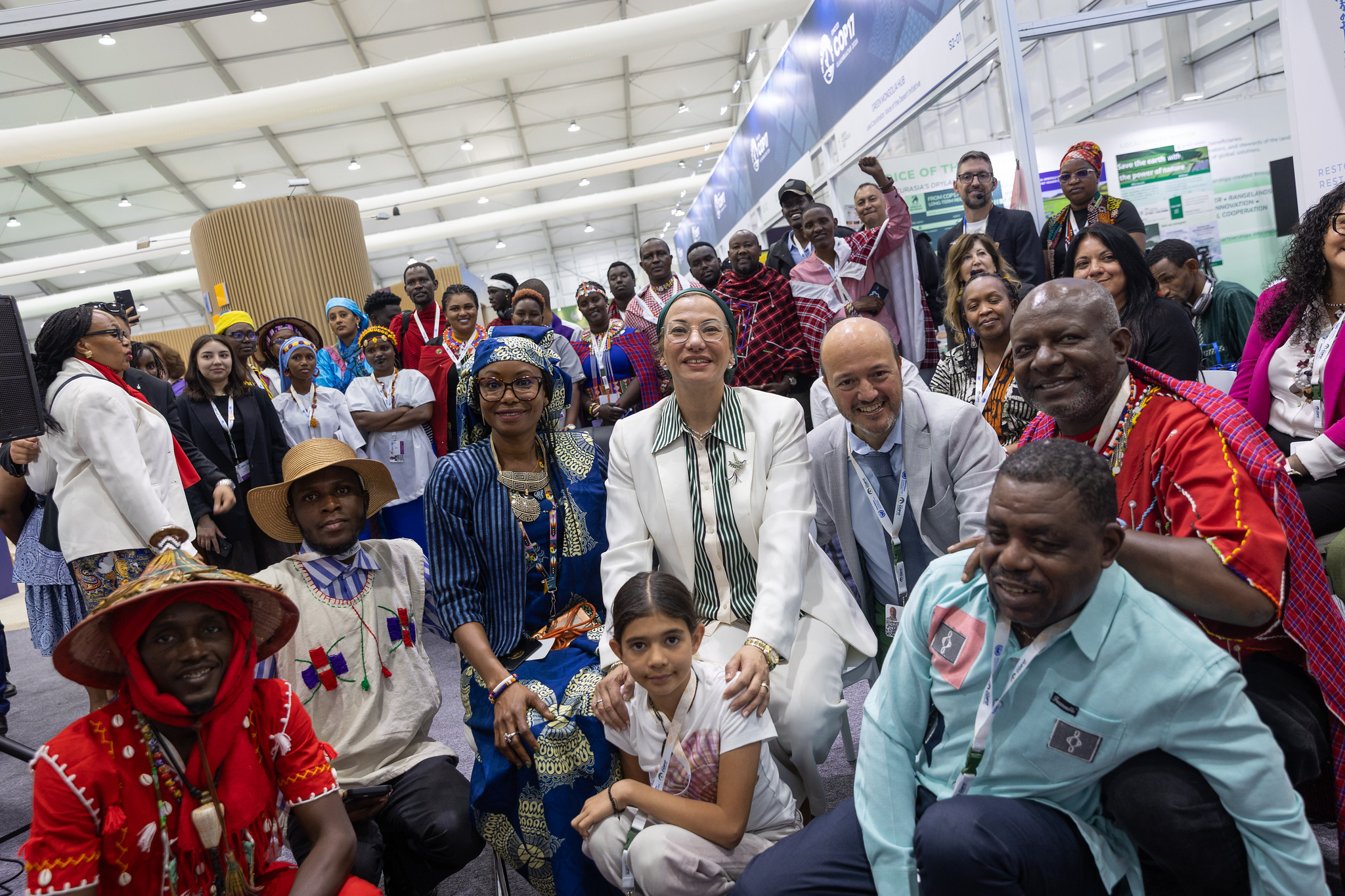
Land is often discussed at global conferences in hectares, targets and indicators. For the people who live from the land, it is also home, livelihood, culture, memory and identity. At UNCCD COP17, held in Ulaanbaatar in August, that reality was evident in discussions on land tenure, rangelands, science and knowledge, finance and implementation. Across them, one practical issue kept surfacing: how to bring the knowledge of people who manage the land into decisions on its use, assessment and restoration. Throughout COP17, the role of Indigenous Peoples as well as local communities in restoring and sustainably managing land featured prominently in formal discussions. Parties and observers emphasized the value of bringing Indigenous knowledge together with science and of strengthening land rights and tenure security. Representative of civil society organizations and Indigenous Peoples also called for community-generated data to inform reporting and for communities to be engaged as partners in implementation and decision-making. Some of those priorities were reflected in the final decisions. On land tenure, Parties encouraged inclusive and participatory dialogue from local to national level, drawing on all forms of available knowledge, and recognized customary and communal rights of access to natural resources. The decision on rangelands recognized pastoralists as critical stewards, acknowledged mobility as an adaptation and resilience strategy and called for knowledge accumulated by pastoralists to inform efforts to close knowledge and data gaps. The specific agenda item on civil society participation, however, was not considered at COP17 and will return at COP18. Outside the negotiating rooms, practitioners and Indigenous participants brought these questions down to the level of everyday experience. Maedeh Salimi of Iran, a programme director at the Center for Sustainable Development and Environment (CENESTA), works with pastoralists, smallholder farmers and fishing communities. She described land as far more than a source of income. A community’s culture, food system, social structure and future are tied to its territory, she said. Indigenous Peoples as well as local communities therefore need a direct role in decisions affecting those territories as rights-holders. Several voices at COP17 stressed that useful evidence does not come from formal science alone. Ecologist Ermias Betemariam of the Nairobi-based Landscape Alliance says young scientists need to learn not only from books but also from communities, farmers and pastoralists — to “read landscapes and people” alongside scientific literature. Tai Pelli, a Borican Taíno from Puerto Rico with the United Confederation of Taíno Peoples, put the same point more directly. “We cannot make Indigenous knowledge secondary or inferior to what modern science has,” she said. “I think that if we work together, we can make a huge difference.” One example of that collaboration came from South Africa. At a DryNet event on community-driven rangeland management, participants presented restoration work where grazing plans are co-designed with communities rather than delivered to them. Farmers implement the plans with locally recruited eco-rangers, including young people and women, while restoration is linked to training, market access and livelihoods. The experience demonstrated that technical interventions are only part of the equation: restoration is more likely to last when communities have ownership, functioning local institutions and economic opportunities tied to the land. UNCCD Executive Secretary Yasmine Fouad speaks at the opening of the COP17 Indigenous Peoples' PavilionAt an event on Indigenous data and resilient territories, participants explored what people on the ground can add to information gathered from above. Satellite data can show that something has changed; communities can often explain what that change means and why it happened. Indigenous representatives and practitioners working in the Amazon, the Congo Basin and West Africa described monitoring systems that combine satellite imagery, GPS, drones and mapping with knowledge built up over generations. In the Peruvian Amazon, Indigenous monitors collect territorial data to identify threats and guide conservation and restoration. Pastoralist groups carried many of these priorities into a collective declaration. The Ulaanbaatar Declaration, adopted by pastoralist and Indigenous peoples at the Global Pastoralist Gathering ahead of COP17 and presented during the COP’s open dialogue, describes pastoralists as rights-holders, knowledge holders and solution providers. It calls for recognition of mobility and customary governance, free, prior and informed consent, meaningful participation, direct access to finance and the need to recognize pastoralist knowledge systems alongside scientific knowledge. For Erjen Khamaganova, a Buryat-Mongol representative of the World Union of Indigenous Spiritual Practitioners at COP17 and a founding member of its Elders Council, knowledge of the land is also inseparable from responsibility. Frameworks and finance cannot deliver implementation without real engagement at community level, she said. Her own vision of land is rooted in ancestral ideas of two-way responsibility between people and Mother Earth — a relationship in which caring for land is an obligation upheld across generations. The question of knowledge and stewardship ultimately leads to another: who has a voice in the work of the Convention. During COP17, the UNCCD Indigenous Peoples Caucus, the Local Communities Caucus, Civil Society Organizations Panel, Youth Caucus and Gender Caucus came together to call for meaningful participation in UNCCD decision-making and for their role to be fully reflected in the Convention’s work. “We are here to offer solutions that are born from our close relationship with nature and with the land,” said Jennifer Tauli Corpuz of the Indigenous Peoples' Caucus. While COP17 did not resolve every question around participation, it marked the first formal meetings of the Indigenous Peoples Caucus and Local Communities Caucus and brought together the largest representation of Indigenous Peoples in the history of a UNCCD COP. Parties took note with appreciation of the declarations of Indigenous Peoples, the youth the local communities and the Mayors and included them in the COP17 proceedings. They did the same with the declaration by civil society organizations and summaries of the two civil society open dialogues. The land tenure decision also asks the secretariat to support the convening of all four UNCCD caucuses as a way to enrich discussions on land tenure and implementation. The participation debate remains unfinished, but the programme for COP18 puts civil society participation back on the agenda and provides for the caucuses to convene again when Parties meet in Egypt in 2028. Photo : © UNCCD/Kiara Worth

محفظة تمويل بقيمة 1.3 مليار دولار لاستعادة الأراضي وتعزيز القدرة على الصمود في مواجهة الجفاف في 23 دولة، تتصدرها المراعي بمحفظة تبلغ قيمتها 1.2 مليار دولار موزعة على 45 مشروعًا. التقدم نحو تحقيق الحياد في تدهور الأراضي (LDN)، حيث قدمت البرازيل هدفاً طوعياً جديداً لعام 2030 يتضمن 17 هدفاً فرعياً، فيما حققت آسيا الوسطى بالفعل نصف أهدافها المتعلقة بالحياد في تدهور الأراضي. اقتربت الشراكة العالمية للصمود أمام الجفاف في الرياض، التي أطلقتها المملكة العربية السعودية خلال مؤتمر الأطراف السادس عشر (COP16)، من مرحلة التنفيذ الفعلي في أولانباتار، مع تقدم العمل على صندوق مشترك مقترح لدعم نحو 70 دولة معرضة للمخاطر. أطلقت اتفاقية الأمم المتحدة لمكافحة التصحر ولوكسمبورغ مرفق الاستثمار في القدرة على الصمود في مواجهة الجفاف، الذي يهدف إلى حشد ما يصل إلى 400 مليون دولار من رؤوس الأموال العامة والخاصة. أولانباتار، منغوليا، 28 آب/أغسطس 2026 – اختُتمت اليوم في أولانباتار، منغوليا، الدورة السابعة عشرة لمؤتمر الأطراف (COP17) في اتفاقية الأمم المتحدة لمكافحة التصحر، بعد أسبوعين من المفاوضات بشأن سبل مواجهة تدهور الأراضي والتصحر والجفاف. ومن خلال مساري المفاوضات وأجندة العمل، جمع مؤتمر أولانباتار بين مجموعة من العناصر الأساسية للتنفيذ، تشمل التوجيه السياسي، والعلم، والتمويل، والمشروعات الجاهزة للاستثمار، والشراكات، وتعزيز مشاركة الأشخاص الذين يديرون أراضي العالم ويرعونها. ووضع اجتماع الأطراف الـ197 في اتفاقية الأمم المتحدة لمكافحة التصحر المراعي العالمية في صميم الأجندة الدولية للأراضي. وتغطي المراعي 54 في المئة من مساحة اليابسة على كوكب الأرض، ويعتمد عليها نحو ملياري شخص، فيما يتولى نحو 500 مليون راعٍ رعاية هذه النظم البيئية وإدارتها. وخلال السنة الدولية للمراعي والرعاة، أُطلقت في أولانباتار المبادرة الرئيسية بشأن المراعي، التي تجمع 1.2 مليار دولار موزعة على 45 مشروعًا، في أكبر عملية حشد منفردة للمراعي في تاريخ الاتفاقية. وبالتوازي مع المفاوضات، شهد مؤتمر الأطراف السابع عشر (COP17) سلسلة من المبادرات والالتزامات المالية الهادفة إلى تسريع العمل في مجال استعادة الأراضي وتعزيز القدرة على الصمود في مواجهة الجفاف. وأعلنت حكومات ومصارف تنمية وصناديق وشركات عن محفظة تمويل بقيمة 1.3 مليار دولار في 23 دولة عبر خمس قارات، تضم مشروعات في مراحل مختلفة من التطوير. ويشمل ذلك 644.5 مليون دولار تم تحديدها كتمويل جديد، منها 216.4 مليون دولار مؤكدة بالفعل وتتجه نحو التنفيذ. وقالت ياسمين فؤاد، الأمينة التنفيذية لاتفاقية الأمم المتحدة لمكافحة التصحر: "أتينا إلى أولانباتار ونحن نقول إن مؤتمر الأطراف السابع عشر (COP17) يجب أن يكون مؤتمرًا للتنفيذ. ونغادر اليوم وقد أصبح لدينا المزيد من عناصر المنظومة اللازمة لتحقيق ذلك: مقررات سياسية، وعلم أقوى، وآليات تمويل مبتكرة، ومحافظ من المشروعات الاستثمارية، وشراكات قادرة على توسيع نطاق الحلول. "لكن أولانباتار لن يُحكم عليها بما أُعلن عنه داخل هذا المؤتمر. بل سيُقاس إرثها بما سيحدث بعده: هل أصبحت الدول أكثر استعدادًا للجفاف؟ هل تتم استعادة الأراضي المتدهورة والمراعي؟ هل يصل التمويل إلى المشروعات القابلة للتنفيذ؟ وهل يلمس الأشخاص الذين يديرون الأراضي فرقًا حقيقيًا في حياتهم؟" وقالت معالي باتسيتسيغ باتمونخ، وزيرة خارجية منغوليا ورئيسة مؤتمر الأطراف السابع عشر (COP17): "بصفتها البلد المضيف ورئيسة الدورة السابعة عشرة لمؤتمر الأطراف في اتفاقية الأمم المتحدة لمكافحة التصحر، عملت منغوليا على ضمان أجواء تتسم بالانفتاح والشفافية والشمول والتوافق خلال المناقشات، وسعت إلى تقريب مواقف الأطراف بهدف تحقيق نتائج ملموسة. "وفي إطار السنة الدولية للمراعي والرعاة، أظهرت منغوليا للعالم أن المراعي تمثل نظامًا بيئيًا ذا أهمية استراتيجية، يربط بين الغذاء والبيئة والاقتصاد والتنوع البيولوجي وسبل عيش الرعاة. "وخلال رئاستها للدورة السابعة عشرة لمؤتمر الأطراف في اتفاقية الأمم المتحدة لمكافحة التصحر، استرشدت منغوليا بمبدأ: من الوعود إلى التنفيذ، ومن المناقشات إلى العمل الفعلي." وقال معالي تسيند سانداغ-أوتشير، وزير البيئة وتغير المناخ في منغوليا ورئيس اللجنة الوطنية لتنظيم مؤتمر الأطراف السابع عشر (COP17): "نجحت منغوليا في استضافة الدورة السابعة عشرة لمؤتمر الأطراف (COP17) في اتفاقية الأمم المتحدة لمكافحة التصحر، وجمعت دول العالم لدفع حلول عملية لمواجهة التصحر وتدهور الأراضي والجفاف. وكان من أبرز نتائج المؤتمر بالنسبة لمنغوليا الحصول على دعم الأطراف والمنظمات الدولية والقطاع الخاص والمجتمع المدني "لخطة السهوب"، التي تمثل أرث رئيسي لمؤتمر الأطراف السابع عشر .(COP17) "وفي إطار خطة السهوب، أطلقت حكومة منغوليا رسميًا ثلاث مبادرات دولية: المبادرة الرئيسية بشأن المراعي، ومبادرة الترابط بين المياه والأراضي، ومبادرة الحلول القائمة على الطبيعة من أجل البنية التحتية المستدامة. وقد أتاحت هذه المبادرات فرصًا جديدة لتطوير المشروعات، وتعزيز التعاون الدولي، وحشد الاستثمارات في هذه المجالات ذات الأولوية. "وعلى الرغم من اختتام مؤتمر الأطراف السابع عشر (COP17) اليوم، فإن عملنا لا ينتهي هنا. وأولويتنا المقبلة هي تحويل المقررات المعتمدة، والشراكات التي أُقيمت، والالتزامات الاستثمارية التي تم تأمينها خلال المؤتمر إلى إجراءات ملموسة، وضمان أن تحقق المبادرات التي انطلقت من سهوب منغوليا نتائج قابلة للقياس." من الالتزامات إلى التنفيذ انعقد المؤتمر في ظل واقع عالمي مقلق. إذ يعاني ما يصل إلى 40 في المئة من أراضي العالم من التدهور، فيما التزمت الدول باستعادة أكثر من مليار هكتار بحلول عام 2030. ولدى أكثر من 70 دولة اليوم خطط وطنية للجفاف، مقارنة بثلاث دول فقط في عام 2013، لكن التمويل والتنفيذ لا يزالان دون المستوى المطلوب لمواكبة حجم التحدي وسرعته. وفي هذا السياق، دعت الأطراف إلى حشد المزيد من الموارد المالية، وتعزيز بناء القدرات والتعاون التقني لدعم الإدارة الاستباقية للجفاف، ولا سيما في البلدان الأفريقية، مع عدم إغفال البلدان النامية الأخرى المتضررة. وقدمت في أولانباتار مجموعة مهمة من الأدلة الجديدة التي أبرزت تكلفة عدم التحرك، وفي المقابل الفوائد التي يمكن تحقيقها من الاستثمار في الأراضي السليمة. وتناولت تقارير جديدة الجدوى الاقتصادية لاستعادة المراعي العالمية، والآثار البشرية والاقتصادية المتزايدة للجفاف، والتحديات الخاصة التي تواجه الدول الجزرية الصغيرة النامية وآسيا الوسطى، وأهمية الاستثمار في صحة التربة. وأظهرت النتائج أن 18.8مليون هكتار من الأراضي متدهورة في الدول الجزرية الصغيرة النامية، بينما يعاني أكثر من 80 مليون هكتار في آسيا الوسطى، أي أكثر من ربع مساحة المنطقة، من التدهور، مما يؤثر على 24 مليون شخص. وفي الوقت نفسه، اعتمدت الدول الخمس في آسيا الوسطى أهدافًا طوعية لتحقيق الحياد في تدهور الأراضي، وقد تحقق بالفعل نصف هذه الأهداف. وأظهرت التقارير مجتمعة كيف يؤثر تدهور الأراضي والجفاف في الأمن الغذائي والمائي وسبل العيش والاقتصادات في مناطق مختلفة من العالم، كما أبرزت الجدوى الاقتصادية للوقاية والإدارة المستدامة للأراضي واستعادتها. وبالتوازي مع هذه الأدلة الجديدة، قدمت البرازيل التزامًا وطنيًا مهمًا من خلال هدفها الطوعي لتحقيق الحياد في تدهور الأراضي بحلول عام 2030، والذي يتضمن 17 هدفًا فرعيًا مرتبطًا بالسياسات والخطط والبرامج الوطنية. ويتضمن الهدف استعادة أو إعادة تأهيل أكثر من 163 ألف كيلومتر مربع، من خلال وسائل تشمل استعادة الغطاء النباتي الأصلي ونظم الحراجة الزراعية، فيما تغطي تدابير تهدف إلى منع التدهور من خلال الحفظ والإدارة المستدامة للأراضي 3.51مليون كيلومتر مربع إضافية. وتغطي الأهداف الفرعية السبعة عشر مجتمعة نحو 3.67 مليون كيلومتر مربع. ويدعم هذا الالتزام جهود البرازيل لتحقيق الهدف 15.3 من أهداف التنمية المستدامة من خلال تجنب تدهور الأراضي والحد منه وعكس مساره، بالتوازي مع تعزيز الأمن الغذائي والمائي والتنوع البيولوجي والقدرة على الصمود في مواجهة تغير المناخ. منظومة عالمية جديدة لتعزيز القدرة على الصمود في مواجهة الجفاف بعد مفاوضات مكثفة، قررت الأطراف مواصلة المناقشات خلال مؤتمر الأطراف الثامن عشر (COP18)، والبناء على التقدم المحرز في مؤتمري الأطراف السادس عشر والسابع عشر، بهدف اعتماد قرار بشأن الإدارة الاستباقية للجفاف على جميع المستويات. كما قررت الأطراف أن يظل الجفاف بندًا مستقلًا على جدول أعمال مؤتمر الأطراف الثامن عشر (COP18) وكل دورة عادية تليه. وتقدمت الشراكة العالمية للصمود أمام الجفاف في الرياض، التي أُنشئت خلال مؤتمر الأطراف السادس عشر (COP16)، نحو مرحلة التنفيذ في أولانباتار. وشهد الاجتماع الأول لشركاء الشراكة إحراز تقدم في العمل على إنشاء صندوق مشترك مقترح يهدف إلى مساعدة نحو 70 دولة منخفضة ومتوسطة الدخل من الشريحة الدنيا، من خلال بناء القدرات، وتطوير برامج جاهزة للاستثمار، وتوفير التمويل لتعزيز القدرة على الصمود في مواجهة الجفاف. كما شهد مؤتمر الأطراف السابع عشر (COP17) إطلاق مرفق الاستثمار في القدرة على الصمود في مواجهة الجفاف (DRIF)، وهو أول منصة تمويل تحفيزية عالمية مخصصة لهذا المجال. وقد طورت اتفاقية الأمم المتحدة لمكافحة التصحر ولوكسمبورغ المرفق بصورة مشتركة، بدعم من التحالف الدولي للقدرة على الصمود في مواجهة الجفاف، ويهدف إلى حشد ما يصل إلى 400 مليون دولار من رؤوس الأموال العامة والخاصة للاستثمار في الأمن المائي والزراعة المستدامة والحلول القائمة على الطبيعة واستعادة الأراضي. كما ستستكشف أول شراكة استراتيجية للمرفق مع مرفق البيئة العالمية فرص جذب التمويل الخاص والخيري. وشهدت المرحلة الثانية من المرصد الدولي للقدرة على الصمود في مواجهة الجفاف تقديم أول مؤشر عالمي للقدرة على الصمود في مواجهة الجفاف، وهو أداة جديدة تتيح للدول تقييم قدرتها على استباق الجفاف والاستعداد له والتكيف معه، وتساعدها على توجيه السياسات والاستثمارات بصورة أكثر فاعلية. تمويل الأراضي يتقدم على الأجندة سعى مؤتمر الأطراف السابع عشر (COP17) أيضًا إلى تقليص الفجوة بين الالتزامات العالمية المتعلقة بالأراضي والتمويل المتاح لتنفيذها. وتشير التقديرات إلى الحاجة إلى 355 مليار دولار سنويًا حتى عام 2030 للوفاء بالالتزامات العالمية المتعلقة باستعادة الأراضي، مقارنة بنحو77 مليار دولار من الاستثمارات الحالية، بما يترك فجوة تمويل سنوية قدرها 278 مليار دولار. ولا يمثل التمويل الخاص سوى نحو ستة في المئة من إجمالي الاستثمار العالمي في استعادة الأراضي. وأعلنت حكومات ومصارف تنمية وصناديق وشركات عن محفظة تمويل بقيمة 1.3 مليار دولار لاستعادة الأراضي وتعزيز القدرة على الصمود في مواجهة الجفاف في 23 دولة عبر خمس قارات، وتشمل مشروعات في مراحل مختلفة من التطوير. ومن إجمالي هذه المحفظة، تم تحديد 644.5 مليون دولار كتمويل جديد، منها 216.4 مليون دولار مؤكدة بالفعل وتتجه نحو مرحلة التنفيذ. وتشمل المحفظة استعادة المراعي والنظم البيئية، وتعزيز القدرة على الصمود في مواجهة الجفاف، والتكيف بقيادة المجتمعات المحلية. كما ركزت المناقشات في أولانباتار على معالجة العوائق التي أدت إلى انخفاض الاستثمار في الأراضي، بما في ذلك كيفية جعل الأراضي وصحة التربة والقدرة على الصمود في مواجهة الجفاف أكثر وضوحًا وقابلية للتتبع ضمن فئات تمويل الطبيعة القائمة. وناقش المشاركون كذلك التوسع في استخدام الضمانات، ورأس المال المخصص لتحمل الخسائر الأولى، والتأمين، ومرافق إعداد المشروعات، بهدف تحويل خطط الاستعادة إلى مشروعات جاهزة للاستثمار. وأطلقت منغوليا، البلد المضيف، أول مركز وطني لـمبادرة الأعمال من أجل الأرض (Business4Land – B4L)، إلى جانب مبادئ للتمويل المستدام، وتصنيف وطني أخضر، وهدف لرفع الإقراض الأخضر إلى 10 في المئة بحلول عام 2030. وتبعتها روسيا بإطلاق مركز وطني مماثل، فيما تحركت لوكسمبورغ لإنشاء مؤسسة الأعمال من أجل الأرض، ودعمت ألمانيا فريق خبراء التمويل لمبادرة الأعمال من أجل الأرض. المراعي: من نظم بيئية مهمشة إلى أصول اقتصادية استضافت منغوليا مؤتمر الأطراف السابع عشر (COP17) خلال السنة الدولية للمراعي والرعاة، ومنح المؤتمر أهمية خاصة للمراعي والأشخاص الذين يديرونها. وأقرت الأطراف بالدور الأساسي للرعاة في رعاية النظم البيئية للمراعي وإدارتها، مع التأكيد على أهمية التنقل عبر الحدود، وقيمة المعارف والخبرات التي راكمتها المجتمعات الرعوية. وعلى الرغم من أهميتها العالمية، لا تزال المراعي تحظى باهتمام محدود في السياسات والاستثمار. فهي تضم نحو ثلث المناطق الرئيسية للتنوع البيولوجي في العالم، ومع ذلك لا تظهر في الخطط الوطنية للمناخ سوى في 24 دولة، مقارنة بـ 181 دولة بالنسبة للغابات. وقدّر تحليل اقتصادي جديد عُرض في أولانباتار أن المراعي توفر خدمات للنظم البيئية تتراوح قيمتها بين 21 و47 تريليون دولار سنويًا، أي ما يصل إلى ما يقارب نصف الناتج المحلي الإجمالي العالمي، من خلال فوائد تشمل إنتاج الغذاء والمياه وتخزين الكربون والتنوع البيولوجي. وعادة ما تحقق استعادة المراعي عائدًا يتراوح بين أربعة وستة دولارات مقابل كل دولار يُستثمر، ويمكن أن يرتفع إلى 36 دولارًا عند احتساب المنافع العامة الأوسع، مثل إمدادات المياه. وتهدف المبادرة الرئيسية بشأن المراعي التي أُعلن عنها خلال مؤتمر الأطراف السابع عشر (COP17) إلى تحويل هذه الجدوى الاقتصادية إلى استثمارات فعلية، من خلال جمع مشروعات تدعم الإدارة المستدامة للمراعي واستعادتها وسبل عيش المجتمعات الرعوية. ويدعم مرفق البيئة العالمية تنسيق المبادرة من خلال استثمار بقيمة 3.3 مليون دولار في مشروع إرث مؤتمر الأطراف السابع عشر (COP17) لاتفاقية الأمم المتحدة لمكافحة التصحر. كما وافق المرفق خلال السنوات الأربع الماضية على أكثر من 50 مشروعًا بقيمة تتجاوز 300 مليون دولار تعود بالنفع على المراعي والمجتمعات الرعوية. الشعوب الأصلية والمجتمعات المحلية تعقد أول اجتماعات تجمعاتها خلال مؤتمر الأطراف السابع عشر (COP17) شهد المؤتمر أول اجتماعات رسمية لتجمع الشعوب الأصلية وتجمع المجتمعات المحلية في إطار اتفاقية الأمم المتحدة لمكافحة التصحر، بعد قرار الأطراف خلال مؤتمر الأطراف السادس عشر (COP16) في الرياض إنشاء التجمعين وتوفير مساحات مخصصة لعرض وجهات نظرهما وأولوياتهما ضمن عمل الاتفاقية. كما شهد المؤتمر أكبر تمثيل للشعوب الأصلية في تاريخ مؤتمرات الأطراف لاتفاقية الأمم المتحدة لمكافحة التصحر. وسلطت فعالية خاصة رفيعة المستوى خلال يوم الأرض والشعوب الضوء على الشعوب الأصلية بوصفها أصحاب حقوق، وحاملي معارف، وشركاء في التنفيذ، مع التركيز على نظم المعارف الأصلية، والحوكمة العرفية، والرعي المستدام، والإدارة المسؤولة للأراضي، والوصول المباشر إلى التمويل لدعم العمل الذي تقوده الشعوب الأصلية. وطوال مؤتمر الأطراف السابع عشر (COP17)، دعا ممثلو الشعوب الأصلية والرعاة والمجتمعات المحلية إلى تعزيز الحقوق المتعلقة بالأراضي والتنقل، وزيادة فرص الوصول المباشر إلى التمويل، وضمان المشاركة الفاعلة في صنع القرار، والاعتراف بالمعارف الأصلية والتقليدية في جهود استعادة الأراضي وتعزيز القدرة على الصمود في مواجهة الجفاف. كما سلطت المناقشات الضوء على دور النساء والشباب في القيادة، بما في ذلك الدعوات إلى الاستثمار في الشباب بوصفهم قادة في استعادة الأراضي، وتعزيز مشاركتهم في العمل المتعلق بالأراضي والجفاف. من منغوليا إلى مصر من المتوقع أن تُعقد الدورة المقبلة لمؤتمر الأطراف في اتفاقية الأمم المتحدة لمكافحة التصحر، مؤتمر الأطراف الثامن عشر (COP18)، في مصر عام 2028، لمواصلة البناء على الزخم الذي تحقق في أولانباتار. وفي إطار الاستعداد للمرحلة المقبلة، أكدت مصر أهمية تعزيز التعاون ودعم النهج المتكاملة في التعامل مع تدهور الأراضي وتغير المناخ وفقدان التنوع البيولوجي، بما يعزز الأمن الغذائي والمائي والقدرة على الصمود. وسيشكل مؤتمر الأطراف الثامن عشر (COP18) المحطة الرئيسية التالية أمام الدول لتقييم التقدم المحرز في استعادة الأراضي وتعزيز القدرة على الصمود في مواجهة الجفاف، والبناء على ما تحقق في أولانباتار. -انتهى- ملاحظات للمحررين للاستفسارات الإعلامية وطلبات المقابلات: المكتب الصحفي لاتفاقية الأمم المتحدة لمكافحة التصحر: press@unccd.int مقررات مؤتمر الأطراف السابع عشر (COP17) متاحة هنا: https://www.unccd.int/cop17/official-documents نبذة عن اتفاقية الأمم المتحدة لمكافحة التصحر اتفاقية الأمم المتحدة لمكافحة التصحر هي الرؤية والصوت العالمي للأراضي. وتجمع الاتفاقية الحكومات والعلماء وصانعي السياسات والقطاع الخاص والمجتمعات حول رؤية مشتركة وعمل عالمي يهدف إلى استعادة أراضي العالم وإدارتها على نحو مستدام بما يخدم الإنسان والكوكب. ولا تقتصر الاتفاقية على كونها معاهدة دولية تضم 197 طرفًا، بل تمثل التزامًا متعدد الأطراف للحد من آثار تدهور الأراضي اليوم وتعزيز الإدارة المسؤولة للأراضي في المستقبل، بما يضمن توفير الغذاء والمياه والمأوى والفرص الاقتصادية لجميع الناس على نحو عادل وشامل.

Closing DayOn Friday, 28 August, delegates gather as the seventeenth session of the Conference of the Parties (COP17) to the United Nations Convention to Combat Desertification concludes with the adoption of final decisions and reports, bringing the two-week conference to a close.KEY EVENTS FOR MEDIACOP17 Closing Press ConferenceWhen: 17:00Where: Press Conference RoomSpeakers:Yasmine Fouad (UNCCD Executive Secretary)Battsetseg Batmunkh (COP17 President and Minister of Foreign Affairs of Mongolia)Journalists are invited to attend the final press conference, where leadership present the main outcomes and reflections on COP17, outlining key decisions adopted by the Parties at the close of the session.Side EventsSide events throughout the day will cover rangelands and pastoralism, finance, drought resilience, land tenure, healthy soils and the land-water nexus.Journalists are encouraged to consult the official COP17 programme for the full schedule and latest updates : https://www.unccd.int/cop17/programmeMEDIA RESOURCESCOP17 programmeUNCCD COP17 websiteHost country websiteUNCCD Action Dome websiteUN WebTV – Live broadcast of key plenary sessions with live interpretation in all six UN languagesUNCCD COP17 Visual Assets and Branding ResourcesEarth Negotiations Bulletin – daily coverage, photographs and analysisFor media enquiries and interview requests: UNCCD Press Office: press@unccd.int

The proposed voluntary country-led Rio Synergies Group for Action would help countries translate climate, biodiversity and land priorities into more coherent planning, investment and implementation, while reducing duplication and reporting burdens.Ulaanbaatar, 27 August 2026 – In a push to transform political momentum into practical action, Ministers, current and incoming Rio Convention COP Presidencies, the Executive Secretaries of the three Rio Conventions, international organizations and financial institutions on 26 August at UNCCD COP17 held a High-Level Dialogue on strengthening cooperation across the climate, biodiversity and land degradation issues.The event launched the COP31 Presidency Process, led by Türkiye, towards a proposed Rio Synergies Group for Action. The proposed Action group is intended to support a voluntary, country led implementation by connecting existing national priorities across climate, biodiversity and land with existing partnerships, technical expertise, implementation, knowledge-sharing, capacity-building and financing opportunities.The aim is not to create another parallel structure, but to help countries connect the pieces they already have, national plans, science, projects, finance and partnerships, and make them work together more effectively on the ground.Several countries, including Australia, Ireland, Japan, Maldives and Sierra Leone, and the heads of the UN entities supported the idea, emphasizing the multiple benefits of such a group to countries. A coordinated and integrated approach brings efficiency, cost-savings, reduces the planning and reporting burdens on countries and will help countries to respond practically to environmental challenges that communities experience as multiple, not single crises.It can also help countries identify programmes and investments capable of delivering simultaneously for land restoration, climate resilience, biodiversity and development, rather than financing each agenda in isolation.The High-level Dialogue, “From Ambition to Action: Delivering Rio Convention Synergies across the Triple COP Year,” is the first high-level opportunity during the 2026 Triple COP Year to consider how political momentum for Rio Convention synergies can be translated into practical, country-led implementation.Convened by the Presidencies of UNCCD COP17, incoming CBD COP17 and incoming UNFCCC COP31, the Dialogue underscored the continuity of political leadership across the 2026 Triple COP Year, beginning with UNCCD COP17 in Ulaanbaatar, continuing in October to COP17 of the Biodiversity Convention under the Presidency of Armenia in Yerevan, and culminating with UNFCCC COP31 in November under the Presidency of Türkiye in Antalya.The process offers interested countries and partners an opportunity to contribute to the co-development of the proposed voluntary, country-led Group, with a view to its formal launch at UNFCCC COP31 in Antalya.Speakers explained why stronger synergy among the Convention’s matters now more than ever, proposed some guiding principles for such an Action Group and explained the multiple benefits to be gained through synergy. Dr. Yasmine Fouad, UNCCD Executive Secretary said: “Rio synergies need to deliver in three areas: stronger national policy coherence with less bureaucratic burden for countries, tangible action on the ground and greater engagement of the private sector to mobilize investment. The real test is whether we can connect national priorities to integrated programmes, programmes to finance, and finance to implementation that delivers multiple benefits for people and landscapes. We do not need another layer of process. We need the systems we already have to work together more effectively and at scale”Ms. Fatma Varank, Türkiye Deputy Minister of Environment, Urbanization and Climate Change of the Republic of Türkiye, who represented the incoming UNFCCC COP31 Presidency at the Dialogue, emphasized the need for coherence and efficiency in implementing agreements, and the importance of dialogue in building momentum for synergy towards COP31.Synergy, she said, does not equal merging mandates, rather, it achieves greater scale, coherence, efficiency, reduced duplication and yields multiple benefits.Mr. Andrew Berryman, Deputy Head of Mission, Embassy of Australia in Mongolia, representing UNFCCC COP31 Presidency of Negotiations said a voluntary, country-led and practical Rio Synergies Group for Action could strengthen coordination across institutions, including through leveraging existing mechanisms and delivering more with less.Mr. Andranik Grigoryan, Government of Armenia representing the incoming Presidency of CBD COP17, said one of the lessons emerging from the global report reviewing progress in the implementation of the Kunming Montreal global biodiversity framework is the need for cooperation, integrated and coordinated action among stakeholders. The draft report is currently undergoing peer review and will be launched at CBD COP17.Integrating action among the three Conventions at the national level, he said, can reduce institutional and regulatory burdens and enhance the process, for instance, by sharing science, capacity building on several agendas, and in finance, through shared solutions.Astrid Schomaker, Executive Secretary of the Convention on Biological Diversity, said the study shows 80 percent of biodiversity delivers for climate, but only 22 percent of climate finance delivers for biodiversity, and that a re-set is needed in how we approach the mandates to help countries to align plans, reduce the reporting burden and avoid leaving people behind.H.E. Mr. Shigeharu Aoyama, Japan’s State Minister of the Environment, said synergy should minimize trade-offs, while maximizing co-benefits, and highlighted the results of an Asia-Pacific synergies report: advancing synergistic solutions to the triple planetary crisis and the SDGs whose more than 104 case studies on synergy demonstrate the benefits of shared knowledge and tangible action on the ground.Citing the same study, Inger Andersen, United Nations Environment Program Executive Director, reported that significant financial savings of up to 24 percent, equivalent to 6.4 billion United States dollars could be achieved by 2050. Synergy would be especially useful in developing plans on the ground and in reporting by the Conventions, she said. H.E. Mr. Timmy Dooley, Ireland’s Minister of State at the Department of Agriculture, Food and the Marine and at the Department of Climate, Environment and Energy, said implementation should be interconnected, particularly with regards to national priorities, implementation partners, and connecting ambition with finance. H.E. Ali Shareef, Minister of Climate Change, Environment and Energy of the Republic of Maldives said integration is “not a convenience” but borne of “necessity” for Small Island States (SIDs), and called for a dialogue on synergy that can close the gap SIDs encounter, for instance in indicators that are calibrated individually, and in the case of UNCCD, action that is limited to arid, semi-arid and dry sub-humid zones. Simon Stiell, Executive Secretary of the United Nations Framework Convention on Climate Change, called for alignment between the politics and the realities and practicalities of the Conventions. He urged Parties to be very practical and to reduce the burden of reporting on countries. Supporting the idea of an Action Group, Samed Ağırbaş, Climate High-Level Champion of the COP31 Presidency said there is no need for another parallel system. Rather, implementation that connects solutions is what is needed.H.E. Ms. Ruth Davis OBE, United Kingdom Special Representative for Nature, stressed the need for practical progress – synergistic solutions – because people experience the land, biodiversity and climate change challenges as multiple crises, not as single crisis.The outgoing Presidencies of UNCCD COP16, the Kingdom of Saudi Arabia, and UNFCCC COP30, Brazil, highlighted their past contributions to the Belém process and statement on the Rio Conventions and praised the progress and momentum building up towards COP31 in Türkiye.Türkiye formally endorsed the Belém Joint Statement on the Rio Conventions, becoming the final incoming Rio Convention COP Presidency to join the shared political commitment.Media contact:Wagaki WischnewskiCommunications Officer/UNCCD G20 Global Land InitiativeM: +49 (0)173 268 7593/+976 99207536email: wwischnewski@unccd.int

Ulaanbaatar, Mongolia, 26 August 2026 (UNCCD) - From remote islands to large steppes, land resources are under increasing pressure from poor management, overexploitation and drought exacerbated by climate change, UN experts warn. The Global Land Outlook (GLO) reports on Small Island Developing States (SIDS) and on Central Asia, launched today by the United Nations Convention to Combat Desertification (UNCCD), document a serious decline in the health and productivity of land and water resources across more than 50 countries and territories, undermining their long-term sustainable development and in some cases threatening their very survival. More importantly, both reports offer a transformative vision for reversing this decline and boosting the resilience of communities living in these unique geographic contexts.SIDS offer scalable solutions for managing their most precious asset—landComprising 39 states and 18 territories, SIDS are home to around 74 million people in the Caribbean, Pacific, Atlantic and Indian Oceans, as well as the South China Sea. These diverse nations and territories also boast some of the world’s most extraordinary natural assets, cultural heritage and traditional ecological knowledge. Some18.8 million hectares of land — equivalent to 16.5% of SIDS’ total land area — is degraded to varying extents, slightly above the global average, intensifying competition over scarce natural resources.The inherent attributes of SIDS — their small size, geographic isolation, tight ecological connectivity and community stewardship — make them ideal incubators of innovation for the implementation of integrated land and water management approaches that account for the close linkages between terrestrial and marine ecosystems. These approaches also have the potential to generate nature-positive, economic development models that can be scaled up from islands to continents.Central Asia, an epicentre of degradation, is halfway towards meeting 2030 land targetsCentral Asia, a region once celebrated for its sweeping steppes and fertile oases, is now one of the world’s epicentres of land degradation. Over 80 million hectares – more than a quarter of the region – are already degraded, affecting nearly 30% of the population – 24 million people living across five Central Asian nations of Kazakhstan, Kyrgyzstan, Tajikistan, Turkmenistan and Uzbekistan.The GLO Central Asia Thematic Report takes stock of the current situation. “All five Central Asian states have embraced National Voluntary Land Degradation Neutrality (LDN) Targets under Sustainable Development Goal (SDG) 15.3, and half of these targets are already met. This is not a moment of triumph – it is the end of denial. LDN has moved from theory into practice, now embedded in national green economy strategies, agricultural development plans, and climate adaptation policies”, states the report.The countries of Central Asia maintain broad international partnerships, with regional and interregional cooperation, strongly supported by the Convention, serving as an important platform for collaboration with governments, international organizations, development finance institutions, and private-sector investors to advance sustainable land management and strengthen climate resilience. “Despite very different geographies and challenges, both SIDS and Central Asian countries show that vulnerability does not have to mean inevitability. SIDS can become laboratories for integrated land and water solutions that connect ecosystems, communities and development, while Central Asia is demonstrating how land degradation neutrality can move from targets into national policy and practice. The priority now is to accelerate that progress — by investing in land stewardship, strengthening regional and international cooperation, and ensuring that people and ecosystems remain at the centre of development decisions,” says UNCCD Executive Secretary Yasmine Fouad.These two GLO reports were released during the seventeenth session of the Conference of the Parties (COP17) to the UNCCD underway in Ulaanbaatar, Mongolia. Representatives of 196 countries and the European Union are gathered for negotiations on future policy directions for land restoration and drought resilience. UNCCD is the first of the three Rio Conventions COPs convening this year, ahead of the biodiversity COP in Armenia in October and the climate COP in Türkiye in November.For more information:UNCCD Press Office: press@unccd.intNotes to EditorsThe full reports can be accessed online at: GLO Small Island Developing States thematic reportGLO Central Asia thematic reportReports by the numbers:SIDSDespite covering less than 0.5 per cent of the world's total surface area, SIDS are home to over 20% of the world’s biodiversity, with 9.5 times more endemic species richness than mainland areas.18.8 million hectares — or 16.5% of the total land area of all SIDS — were reported as degraded.43% of the total land area of SIDS, were affected by drought, of which 3% experienced severe drought and 6% extreme drought. The total area affected by extreme drought rose by 30% across all SIDS.Over 70% of SIDS face a risk of water shortages, a figure which rises to 91% in low-lying SIDS.An estimated 16.3 million people face severe food insecurity across SIDS, with 11.5 million being undernourished.SIDS receive only around USD 2 billion in public adaptation finance per year — approximately 0.2% of total global climate finance. They will require at least USD 11.7 billion annually for adaptation purposes — nearly six times the current level of funding.Between 2016 and 2023, an average of around USD 487 million per year in development finance to SIDS targeted efforts to combat desertification, land degradation and drought.Central AsiaOver 80 million hectares – more than a quarter of the region, an area approximately four times the size of Kyrgyzstan – are already degraded.Every year, Central Asia loses between USD 2 and 6 billion to land degradation.Central Asia is heating at twice the global average. The glaciers – once the “water towers” of the region – have shrunk by 30% in just fifty years. About UNCCD The United Nations Convention to Combat Desertification (UNCCD) is the global vision and voice for land. We unite governments, scientists, policymakers, private sector and communities around a shared vision and global action to restore and manage the world’s land for the sustainability of humanity and the planet. Much more than an international treaty signed by 197 Parties, UNCCD is a multilateral commitment to mitigating today’s impacts of land degradation and advancing tomorrow’s land stewardship in order to provide food, water, shelter and economic opportunity to all people in an equitable and inclusive manner.
