News & stories


Latest news & stories
By Yasmine Fouad, UNCCD Executive SecretaryThe global energy transition is often portrayed as a challenging, complex, costly and urgent necessity. But this perspective fails to capture the full picture. What if this monumental transformation offers one of the greatest opportunities of our time to restore our planet? This is an opportunity both to change how we power our world and to restore the land itself, addressing the interconnected crises of climate change, biodiversity loss and food insecurity at their source. A bucket-wheel excavator, one of the world's largest land vehicles, looms against the sky at the Hambach open-pit mine. This machine symbolizes the large-scale extraction of lignite coal that has shaped the region for generations. I witnessed this firsthand in Eschweiler, Germany, this week. For generations, this region was defined by the massive machinery of the Hambach open pit mine, which spans 85 square kilometers (about the area of Manhattan) and plunges 400 meters (about half the height of the Burj Khalifa, the tallest building in the world) deep. With a delegation of parliamentarians from around the world for our Global Changemaker Academy, I visited this former mine site. Through a meticulous, multi-decade effort, the landscape is being transformed into what I can only describe as a "friendly land": an ecosystem reborn from an industrial scar that is teeming with new life. The vast pit is destined to become Germany's second-largest lake after 2029. UNCCD Executive Secretary Yasmine Fouad joined the global delegation of parliamentarians from the Global Changemaker Academy, who were welcomed by the deputy mayor of Eschweiler at City Hall (Stadt Eschweiler Rathaus). What is happening in Eschweiler is powerful and tangible, going beyond a "good story." It is a prime example of what can happen when investment, technology, law and community dialogue converge. But Eschweiler's story is a complex narrative of a just transition that acknowledges the decades of community displacement and environmental degradation that preceded it. The most important lesson from this visit is not found in the soil or the newly planted trees. It is found in the law. The remarkable restoration we have seen did not happen by virtue of corporate goodwill alone. It was the direct result of a robust, forward-thinking legislative framework: Germany's Federal Mining Act. The law shows the principle that those who profit from extracting resources are responsible for restoring the land afterward. It requires companies to submit detailed, science-based reclamation plans for approval before any earth is moved. This legal framework designs the end from the beginning. The successful restoration of the land was achieved because the law required it, setting ambitious standards and ensuring the land was returned to the people in a healthy, productive and ecologically diverse state. UNCCD Executive Secretary Yasmine Fouad This is the critical framework we must bring from Eschweiler to the rest of the world. For the parliamentarians who joined me, this was the primary takeaway. While the specific restoration techniques or financial scale of this "Rolls Royce" project may not be replicable everywhere, the principle of strong, enforceable policies is universal. As lawmakers, they are the architects of this change. For three decades, the international community has addressed our planet's greatest challenges through three related agreements stemming from the Rio Earth Summit. Too often, these agreements tended to be pursued in relative isolation. Eschweiler shows us, in contrast, that on-the-ground action creates the constructive collaboration we need. Here, land restoration is the unifying, practical action that allows us to address climate change, biodiversity loss and desertification all at once. The restored Inde River flows through a lush, green landscape that was once an open pit mine. Wind turbines in the background represent the successful integration of a revived ecosystem and a clean energy future. Healthy soil and thriving ecosystems act as powerful carbon sinks, absorbing vast amounts of CO2 from the atmosphere. Restored lands become our best defense against climate shocks. They act like natural sponges, absorbing floodwaters and keeping moisture during droughts. At the same time, restoration is the engine of biodiversity's return. By rebuilding healthy soil and restoring water cycles, we lay the foundation for life. Reintroducing native plants sets the stage for the return of pollinators, insects, birds and mammals, transforming a barren landscape into a complex, resilient web of life. My journey from Eschweiler starts locally but will go globally. This first field visit as Executive Secretary served as a clear statement of intent. I am here for the land. Seeing this restoration firsthand alongside these dedicated lawmakers reinforces my conviction. My message to them and to leaders everywhere is this: "The UNCCD stands ready to be your partner on the ground. We will come to your countries, walk your landscapes and work with you to craft the people-centric policies that will bring your land back to life." The Blausteinsee, a popular recreational lake formed from an old open pit mine, features a visible power plant in the distance. Its transformation from an industrial scar to a community hub for nature and leisure exemplifies the ultimate vision of restoration.

As the planet continues to warm, harsher droughts, extreme heat and erratic rainfall are eroding the food security and livelihoods of millions – especially the smallholder farmers who produce one third of the world’s food. Over the past three decades, disasters have caused US$3.8 trillion in crop and livestock losses globally. But in regions like Africa, only three per cent of family farmers have agricultural insurance, leaving millions exposed to shocks. Meanwhile, land degradation and drought are pushing rural communities deeper into poverty, jeopardizing the ability to feed a growing world population. One way to address the challenge is reducing insurance premiums for farmers who manage the land sustainably, as explained by a new report commissioned by UNCCD and funded by the International Drought Resilience Alliance (IDRA) This innovative model leverages mobile and satellite technologies, behavioral science and systems thinking to provide financial protection while promoting sustainable land use. The report, called ‘Securing Land and Livelihoods: Insurance for Drought Resilience,’ shows the practical and economic benefits of the model through case studies from Ethiopia, Kenya, Malawi and the Horn of Africa. To put it in practice, authors recommend building public-private partnerships, establishing pilot projects and embedding these solutions into national development plans and climate risk strategies. This integrated model reflects UNCCD’s commitment to solutions that align land management, insurance innovation and resilience-building for the communities most affected by land degradation and drought. A pilot project is underway in Namibia, with progress to be shared at UNCCD CRIC23 this December, and the project findings to be presented at a dedicated insurance event during UNCCD COP16 in 2026.

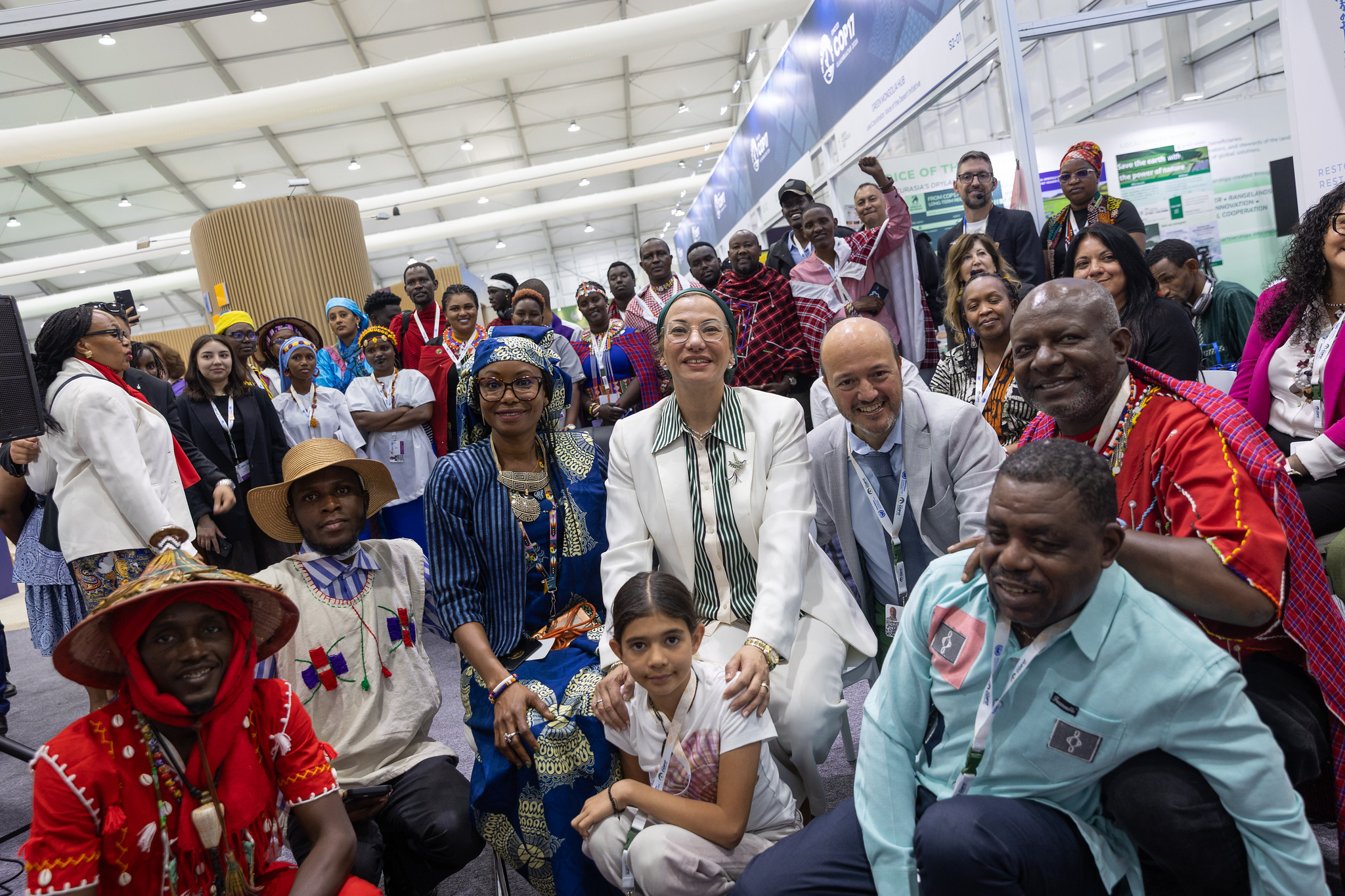
Civil society is on the frontline of the land challenge — and they are essential partners for the UNCCD. From farmers’ associations to women’s cooperatives and youth networks, civil society organizations (CSOs) bring local realities to the global stage. The CSOs amplify the lived reality that land degradation is not only an environmental issue but as a direct challenge to livelihoods, food security and the future of our communities. Today, nearly 1,200 are accredited to the UNCCD and their engagement supported and coordinated through the UNCCD CSO Panel. This structure ensures that voices from local communities are heard in international negotiations, connecting grassroots experience with global policymaking on the future of our land.At the heart of the Convention’s work is Land Degradation Neutrality (LDN) — the global commitment to balance the amount of healthy and productive land with the land being degraded. The goal is simple but urgent: by 2030, reduce degradation, restore what has been lost and make sure there is no net loss of healthy, productive land. To turn this ambition into action, the Global Environment Facility (GEF) launched the Medium Size Project “Strengthening Civil Society Role in Achieving Land Degradation Neutrality (CS4LDN).” Backed by two million USD in funding, this three-year initiative is implemented by the International Union for Conservation of Nature (IUCN) and executed by Both ENDS on behalf of the Drynet network, with IUCN also serving as co-executor. The project is carried out in close partnership with the UNCCD CSO Panel, the UNCCD Secretariat and other global stakeholders. Through CS4LDN, civil society organizations are better positioned to influence LDN policy and practice — linking community-driven initiatives with international decision-making. The project focuses on two main areas: Influencing LDN – raising the visibility and policy impact of CSOs in LDN efforts. This includes building skills in advocacy and communication, promoting local initiatives and supporting CSO participation in global forums such as UNCCD COP and CRIC events.Leveraging LDN – Improving CSO access to funding by strengthening fundraising skills and building connections with donors. Activities range from training and donor roundtables to a study on funding barriers, with special focus on challenges faced by CSOs in the Global South. CS4LDN follows a collaborative, cross-learning approach. Webinars, mentorships and workshops strengthen CSO capacity, while knowledge is shared through an online platform, newsletters and storytelling. A strong focus is placed on amplifying voices from youth- and women-led initiatives. The project is guided by a Project Management Unit (Both ENDS and IUCN) and a Steering Committee that includes the Drynet Board, IUCN, the UNCCD CSO Panel and the UNCCD Secretariat. It will also support CSO consultations and participation in major gatherings, including UNCCD CRIC23 in Panama this December as well as Désertif’actions and UNCCD COP17 in 2026. Photo: © IISD/ENB Anastasia Rodopoulou

Mongolia has unveiled the official logo for the 17th session of the Conference of the Parties (COP17) to the United Nations Convention to Combat Desertification (UNCCD), taking place in Ulaanbaatar from 17 to 28 August 2026. The emblem blends deep cultural symbolism with a call to global action, reflecting UNCCD’s mission to unite nations in finding solutions to desertification, land degradation and drought. The unveiling of the logo marks the beginning of one-year countdown to UNCCD COP17. More than a visual identity, it is an invitation to join hands in planting seeds of unity, resilience and shared trust — so that lands once degraded may flourish again. At the top of the logo, radiating sunrays recall the eternal expanse of the sky — a life-giving force in Mongolian cosmology — which echoes the Sustainable Development Goals and represents the solutions to environmental challenges faced by humanity. The rays flow into the silhouette of a traditional Mongolian ger (yurt), crowned with a toono — the circular opening through which the sky enters the home. This symbol of harmony between people and nature echoes the timeless wisdom of nomadic life and the belief that the earth is both homeland and heritage. Beneath, an open hand cradles the Earth with gentle strength, a gesture of stewardship and protection, while from the palm a green sprout emerges — a sign of resilience, renewal and the promise of a restored world. Together, these elements express COP17’s central message: that our collective efforts, diverse knowledge and shared responsibility can transform the challenges of land degradation into opportunities. With over 75 per cent of its land affected by degradation, Mongolia has made land restoration a national priority through initiatives such as the “Billions of Trees” movement, the “White Gold” rural development programme and the “Food Revolution” agri-soil campaign. Hosting UNCCD COP17 will provide a platform to share these experiences while catalyzing global cooperation to address the interlinked crises of land degradation, climate change and biodiversity loss. UNCCD COP17 will bring together delegates from 197 Parties, academia, civil society and private sector to advance drought resilience and land restoration goals. The conference aligns with the UN International Year of Rangelands and Pastoralists (IYRP 2026), an initiative championed by Mongolia to highlight sustainable rangeland management and the needs of over one billion people who depend directly on these ecosystems.

The secretariat of the United Nations Convention to Combat Desertification (UNCCD) presents its compliments to the Parties and Observer States to the Convention and has the honour to inform that the twenty-third session of the Committee for the Review of the Implementation of the Convention (CRIC 23) to the UNCCD will take place at the Panama Convention Center, in Panama City, Panama from 1 to 5 December 2025. Consultations of affected country Parties of the Convention’s regional implementation annexes for Africa, Asia, Latin America and the Caribbean, Northern Mediterranean and Central and Eastern Europe in preparation for CRIC 23 will be convened on 30 November 2025, at the Panama Convention Center. Further information on the regional consultations will be shared in a separate communication. In due consideration of the above, the secretariat of UNCCD has the honour to invite your Government to participate in CRIC 23. The provisional agenda (ICCD/CRIC(23)/1) and the pre-session documentation will be made available on the UNCCD website in due time. In line with decision 13/COP16, at CRIC 23, Parties will review the effective implementation of the Convention at national, subregional and regional levels. To this end, updates on the implementation of voluntary land degradation neutrality targets and related implementation efforts and the ensured follow-up on policy frameworks identified by the Conference of the Parties at its sixteenth session will be presented at CRIC23. The status of development and promotion of activities for targeted capacity-building to further the implementation of the Convention will be also considered by the session. A report on the status of improving the procedures for communication of information as well as the quality and formats of reports to be submitted to the Conference of the Parties as mandated by decision 4/COP16, will be also presented at CRIC23. The Intergovernmental Working Group on Future Strategic Framework of the Convention will present its interim report for consultation to Parties, intergovernmental organizations and regional groups at CRIC23. Also, in line with decision 20/COP.16 OP8, the CRIC23 will consider priorities for science–policy guidance with the aim of enabling Parties to provide initiative to and feedback on the work of the Science-Policy Interface, with particular attention to contributing to the content of each flagship report. Distribution: To Parties and Observer States through their Diplomatic Missions accredited to the Federal Republic of Germany, National Focal Points and Permanent Missions accredited to UNOG.Through its decision 25/COP.16 the Parties requested that Gender Caucus be convened as part of the official programme of work of the CRIC23 as a vehicle for identifying bottlenecks in the implementation of the Gender Action Plan and for sharing best practices in advancing gender equality and women’s and girls’ empowerment, and encouraging the participation and engagement of women and girls from Indigenous Peoples, local communities, youth and civil society organizations. In accordance with requests made by Parties, the session will facilitate interactive exchanges among Parties and their development partners on topics selected by the Bureau of the CRIC. In order to assist delegations in preparing for the conference, a document entitled “Information for participants” (ICCD/CRIC(23)/INF.1) is made available on the UNCCD website. As per past practice, CRIC 23 will be a paperless session. Accordingly, official documents of the session and its daily journal will not be printed and distributed. All such documents will be made available on the UNCCD website and app. The secretariat would be grateful if your Government would kindly nominate the representative(s) who will attend CRIC 23. Online registration will be available from 15 September 2025 at the following link. For more information on the online registration, please refer to the document “Information for participants” (ICCD/CRIC(21)/INF.1). The secretariat would like to kindly recall that participants are responsible for getting their own visas, hotel reservations and any type of health or other insurance they may need. Participants requiring visas must apply online by filling-up the visa application form at https://lara.migracion.gob.pa and uploading a scanned copy of a facial photo and their passport bio-data page. A quick guide with step-by-step instructions on how to apply will be published on the UNCCD CRIC 23 webpage as soon as possible.The secretariat of the United Nations Convention to Combat Desertification avails itself of the opportunity to renew to the Parties and Observer States to the Convention the assurances of its highest consideration.

Imperative to ‘bend the curve’ of land degradation by reducing food waste, unlocking sustainable ocean-based food potential and restoring half of degraded lands by 2050 In Nature, 21 leading scientists today prescribe ways to use food systems to halt and reverse land degradation, underlining that doing so must become a top global priority to mitigate climate change and stop biodiversity loss. The article breaks new ground by quantifying the impact by 2050 of reducing food waste by 75 per cent and maximising sustainable ocean-based food production, measures that alone could spare an area larger than Africa. According to the paper: “Food systems have not yet been fully incorporated into intergovernmental agreements, nor do they receive sufficient focus in current strategies to address land degradation. Rapid, integrated reforms focused on global food systems, however, can move land health from crisis to recovery and secure a healthier, more stable planet for all.” The authors underline especially the importance of halting food waste and sustainably managing lands, and suggest an ambitious but achievable target of 50 per cent land restoration for 2050 (currently 30 per cent by 2030). And, they emphasize, the measures outlined would enormously co-benefit the climate, biodiversity, and global health. Says lead author Fernando T. Maestre of the King Abdullah University of Science and Technology (KAUST), Saudi Arabia: “This paper presents a bold, integrated set of actions to tackle land degradation, biodiversity loss, and climate change together, as well as a clear pathway for implementing them by 2050.” “By transforming food systems, restoring degraded land, harnessing the potential of sustainable seafood, and fostering cooperation across nations and sectors, we can ‘bend the curve’ and reverse land degradation while advancing towards goals of the UN Convention to Combat Desertification and other global agreements.” Adds co-author Barron J. Orr, UNCCD’s Chief Scientist: “Once soils lose fertility, water tables deplete, and biodiversity is lost, restoring the land becomes exponentially more expensive. Ongoing rates of land degradation contribute to a cascade of mounting global challenges, including food and water insecurity, forced relocation and population migration, social unrest, and economic inequality.” “Land degradation isn’t just a rural issue, it affects the food on all our plates, the air we breathe, and the stability of the world we live in. This isn’t about saving the environment, it’s about securing our shared future.” Key recommendations: 1. Restoring 50 per cent of degraded land through sustainable land management practices would correspond to the restoration of 3 Mkm² of cropland and 10 Mkm² of non-cropland, a total of 13 Mkm². Land restoration must involve the people who live on and manage the land — especially Indigenous Peoples, smallholder farmers, women, and other vulnerable people and communities, the article says. To support them, the authors recommend: Support for small farmers: Most of the world’s food is grown by small and family farms. The paper calls for shifting agricultural subsidies from large-scale industrial farms toward sustainable smallholders, incentivizing good land stewardship among the world’s 608 million farms, and fostering their access to technology, secure land rights, and fair marketsLand-based taxes or tariffs: To reward sustainable farming and penalize pollutersEnvironmental labeling: So consumers can make informed, planet-friendly food choicesBetter data and reporting: To track emissions and land use impacts 2. Reduce food waste by 75 per cent: An estimated 56.5 Mkm² of agricultural land (cropland and rangelands) are used to produce food, and roughly 33 per cent of all food produced is wasted (14 per cent lost post harvest at farms; 19 per cent at the retail, food service and household stages). Reducing food waste by 75 per cent, therefore, could spare roughly 13.4 Mkm² of land. The authors highlight key measures to remedy this, including: Policies to prevent overproduction and spoilageBan food industry rules that reject “ugly” produceEncourage food donations and discounted sales of near-expiry productsEducation campaigns to reduce household wasteSupport small farmers in developing countries to improve storage and transport They note new legislation in Spain requiring stores to donate or sell surplus food, restaurants to offer take-home containers, and all actors across the food supply chain to implement formal food waste reduction plans. 3. Integrate land and marine food systems: Red meat produced in unsustainable ways consumes large amounts of land, water, and feed, and emits significant greenhouse gases. Seafood and seaweed are sustainable, nutritious alternatives. Seaweed, for example, needs no freshwater and absorbs atmospheric carbon. Responsible aquaculture—focusing on low-impact species like mussels and seaweed-derived products—can reduce pressure on land. The authors recommend: Replacing 70 per cent of unsustainably produced red meat to sustainably sourced seafood, such as wild or farmed fish and mollusks. Doing so would spare 17.1 Mkm² of land currently used for pasture and livestock feedUsing sustainably sourced seaweed-derived products as a vegetable substitute—replacing just 10 per cent of global vegetable intake with seaweed-derived products could free up over 0.4 Mkm² of cropland. These changes are especially relevant for wealthier countries with high meat consumption. In some poorer regions, animal products remain crucial for nutrition. Total land spared by food system-related measures 2 and 3: ~30.9 Mkm², an area roughly equal to Africa. The combination of land restoration, food waste reduction,, and dietary shifts, therefore, would spare or restore roughly 43.8 Mkm² in 30 years (2020-2050). The proposed measures combined would also Contribute to emission reduction efforts by mitigating roughly 13 Gt of CO2-equivalent per year through 2050.Co-benefit biodiversity by improving habitat quality and ecosystem functioning, and avoiding the conversion of remaining natural ecosystems to cropland, and Help the world community achieve its commitments in several international agreements, including the three Rio Conventions (climate, biodiversity and desertification), the Sustainable Development Goals and others Coordinated action among the Rio Conventions The authors call for the UN’s three Rio conventions– UNCCD, CBD and UNFCCC–to unite around shared land and food system goals and encourage the exchange of state-of-the-art knowledge, track progress and streamline science into more effective policies, all to accelerate action on the ground. Land and food systems play a key role in advancing towards the goals and targets of the three conventions and the Sustainable Development Goals, they say. The authors call on Parties to all three Rio conventions to promote multilateral actions on land and food systems in a coordinated and collaborative manner. UNCCD’s 197 Parties, at their most recent Conference of Parties (COP16) in Riyadh, Saudi Arabia, have already adopted a decision on avoiding, reducing and reversing land and soil degradation of agricultural lands. Additional comments “Land is more than soil and space. It harbors biodiversity, cycles water, stores carbon, and regulates climate. It gives us food, sustains life, and holds deep roots of ancestry and knowledge. Today, over one-third of Earth’s land is used to grow food - feeding a global population of more than 8 billion people. Yet today, modern farming practices, deforestation, and overuse are degrading soil, polluting water, and destroying vital ecosystems. Food production alone drives nearly 20 per cent of global emissions of greenhouse gases. We need to act. To secure a thriving future - and protect land - we must reimagine how we farm, how we live, and how we relate to nature - and to each other. It’s time for land stewardship: to care for the land as a living ally, no longer as a resource to exploit.” Co-author Elisabeth Huber-Sannwald, Professor, Instituto Potosino de Investigación Científica y Tecnológiva, San Luis Potosí, Mexico “Land degradation is a key factor in forced migration and conflict over resources. Regions that rely heavily on agriculture for livelihoods, especially smallholder farmers, who feed much of the world, are particularly vulnerable. These pressures could destabilize entire regions and amplify global risks.” C0-author Dolors Armenteras, Professor of Landscape Ecology – Universidad Nacional de Colombia, Bogotá “Integrating land and marine food systems is fundamental to achieve food security, enable the restoration of degraded land and maintain healthy populations” Co-author Carlos M. Duarte, Professor of Marine Science, KAUST ****** By the numbers 56 per cent: Projected increase in food production needed by 2050 if we stay on our current path 34 per cent: Portion of Earth’s ice-free land already used for food production, headed to 42 per cent by 2050 21 per cent: Share of global greenhouse gas emissions produced by food systems 80 per cent: Proportion of deforestation driven by food production 70 per cent: Amount of freshwater consumption that goes to agriculture 33 per cent: Fraction of global food that currently goes to waste US$1 trillion: Estimated annual value of food lost or wasted globally 75 per cent: Ambitious target for global food waste reduction by 2050 50 per cent: Proposed portion of degraded land to be restored by 2050 using sustainable land management US $278 billion: Annual funding gap to achieve UNCCD land restoration goals 608 million: Number of farms on the planet 90 per cent: Percentage of all farms under 2 hectares 35 per cent: Share of the world’s food produced by small farms 6.5 billion tons: Potential biomass yield using 650 million hectares of ocean for seaweed farming 17.5 million km²: Estimated cropland area saved if humanity adopts the proposed Rio+ diet (less unsustainably produced red meat, more sustainably sourced seafood and seaweed-derived food products) 166 million: Number of people who could avoid micronutrient deficiencies with more aquatic foods in their diet ******* Bending the curve of land degradation to achieve global environmental goals: https://doi.org/10.1038/s41586-025-09365-5 Authors Fernando T. Maestre – King Abdullah University of Science and Technology, Saudi Arabia (Lead author)Emilio Guirado – King Abdullah University of Science and Technology, Saudi ArabiaDolors Armenteras – Universidad Nacional de Colombia, Bogotá, ColombiaHylke E. Beck – King Abdullah University of Science and Technology, Saudi ArabiaMashael bint Saud AlShalan – Aeon Collective, Riyadh, Saudi ArabiaNoura bint Turki Al-Saud – Aeon Collective, Riyadh, Saudi ArabiaRalph Chami – Blue Green Future LLC, Washington D.C., USABojie Fu – Key Laboratory of Regional and Urban Ecology, Chinese Academy of Sciences & University of Chinese Academy of Sciences, Beijing, ChinaHelene Gichenje – Independent Consultant, Nairobi, KenyaElisabeth Huber-Sannwald – Instituto Potosino de Investigación Científica y Tecnológica, San Luis Potosí, MexicoChinwe Ifejika Speranza – Institute of Geography, University of Bern, SwitzerlandJaime Martínez-Valderrama – Estación Experimental de Zonas Áridas, CSIC, Almería, SpainMatthew F. McCabe – King Abdullah University of Science and Technology, Saudi ArabiaBarron J. Orr – United Nations Convention to Combat Desertification, Bonn, GermanyTing Tang – King Abdullah University of Science and Technology, Saudi ArabiaGraciela Metternicht – Western Sydney University, AustraliaMichael Miess – King Abdullah University of Science and Technology, Saudi ArabiaJames F. Reynolds – Nicholas School of the Environment and Department of Biology, Duke University, USALindsay C. Stringer – University of York, UKYoshihide Wada – King Abdullah University of Science and Technology, Saudi ArabiaCarlos M. Duarte – King Abdullah University of Science and Technology, Saudi Arabia ******* About KAUST Established in 2009, King Abdullah University of Science and Technology (KAUST) is a graduate research university devoted to finding solutions for some of the most pressing scientific and technological challenges in the world as well as Saudi Arabia in the areas of food and health, water, energy, environment and the digital domain. KAUST is a curiosity-driven, interdisciplinary university. It brings together the best minds from around the world to advance research. More than 120 different nationalities live, work and study on campus. KAUST is also a catalyst for innovation, economic development and social prosperity, with research resulting in novel patents and products, enterprising startups, regional and global initiatives, and collaboration with other academic institutions, industries and Saudi agencies. About UNCCD The United Nations Convention to Combat Desertification (UNCCD) is an international agreement on good land stewardship. It helps create wealth, grow economies and secure food, clean water and energy by enabling sustainable land management. The Convention’s 197 parties establish partnerships and robust systems to manage drought promptly and effectively. Good land stewardship based on sound policy and science helps integrate and accelerate achievement of the Sustainable Development Goals, builds resilience to climate change and prevents biodiversity loss. The 16th session of UNCCD’s Conference of the Parties (COP16) was held in Riyadh, Saudi Arabia in December 2024. Mongolia will host UNCCD COP17 in Ulaanbaatar from 17-28 August 2026, a major event coinciding with the UN’s International Year of Rangelands and Pastoralists. Delegates from UNCCD Parties, heads of state, ministers, representatives from international organizations, scientific communities, civil society, and the private sector will convene to accelerate action against desertification, land degradation and drought.
