The land's second act: A blueprint for healing our planet
-
5 September 2025
-
Statement
-
Land Degradation Neutrality

By Yasmine Fouad, UNCCD Executive Secretary
The global energy transition is often portrayed as a challenging, complex, costly and urgent necessity. But this perspective fails to capture the full picture. What if this monumental transformation offers one of the greatest opportunities of our time to restore our planet? This is an opportunity both to change how we power our world and to restore the land itself, addressing the interconnected crises of climate change, biodiversity loss and food insecurity at their source.
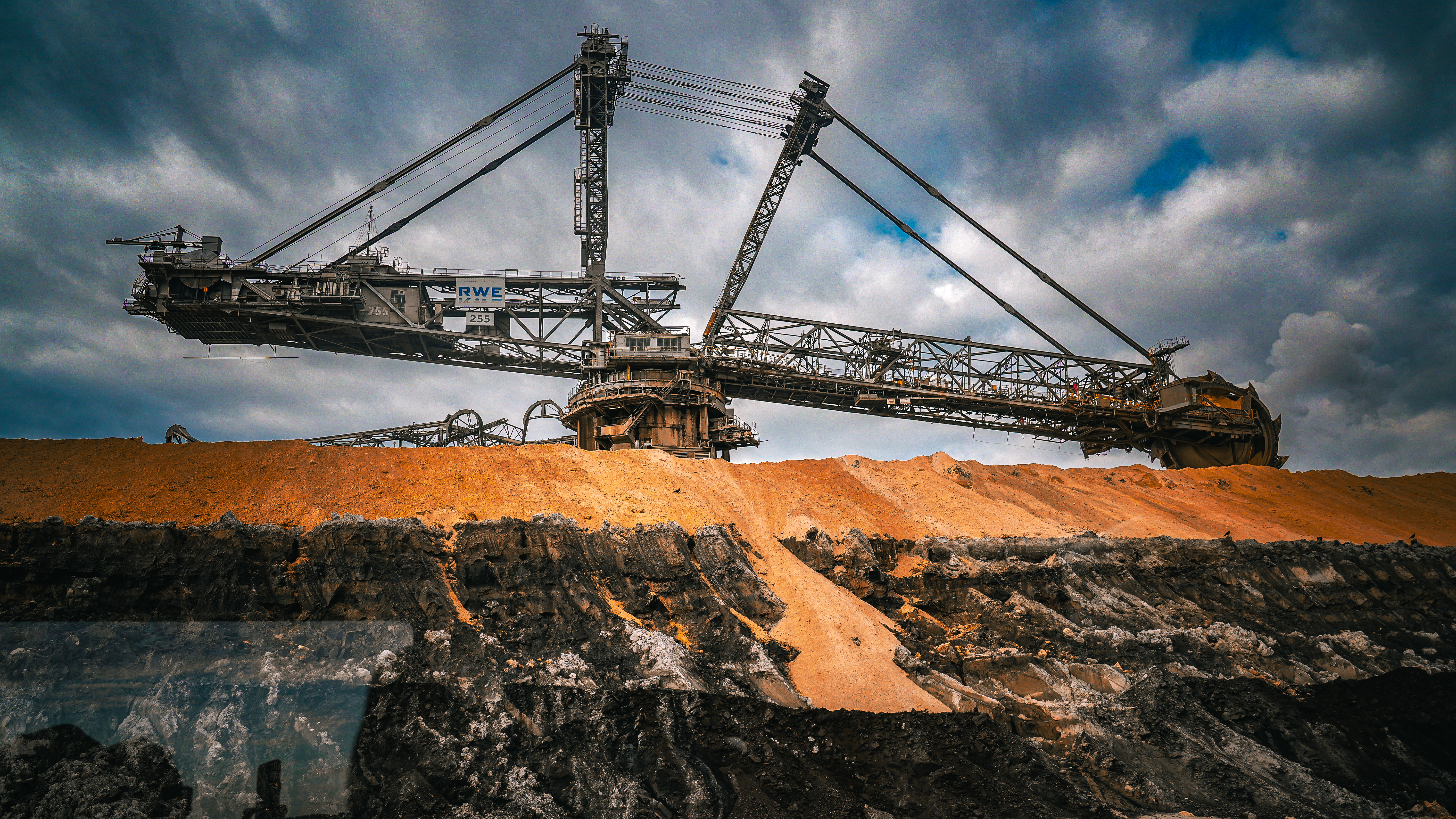
A bucket-wheel excavator, one of the world's largest land vehicles, looms against the sky at the Hambach open-pit mine. This machine symbolizes the large-scale extraction of lignite coal that has shaped the region for generations.
I witnessed this firsthand in Eschweiler, Germany, this week. For generations, this region was defined by the massive machinery of the Hambach open pit mine, which spans 85 square kilometers (about the area of Manhattan) and plunges 400 meters (about half the height of the Burj Khalifa, the tallest building in the world) deep. With a delegation of parliamentarians from around the world for our Global Changemaker Academy, I visited this former mine site. Through a meticulous, multi-decade effort, the landscape is being transformed into what I can only describe as a "friendly land": an ecosystem reborn from an industrial scar that is teeming with new life. The vast pit is destined to become Germany's second-largest lake after 2029.
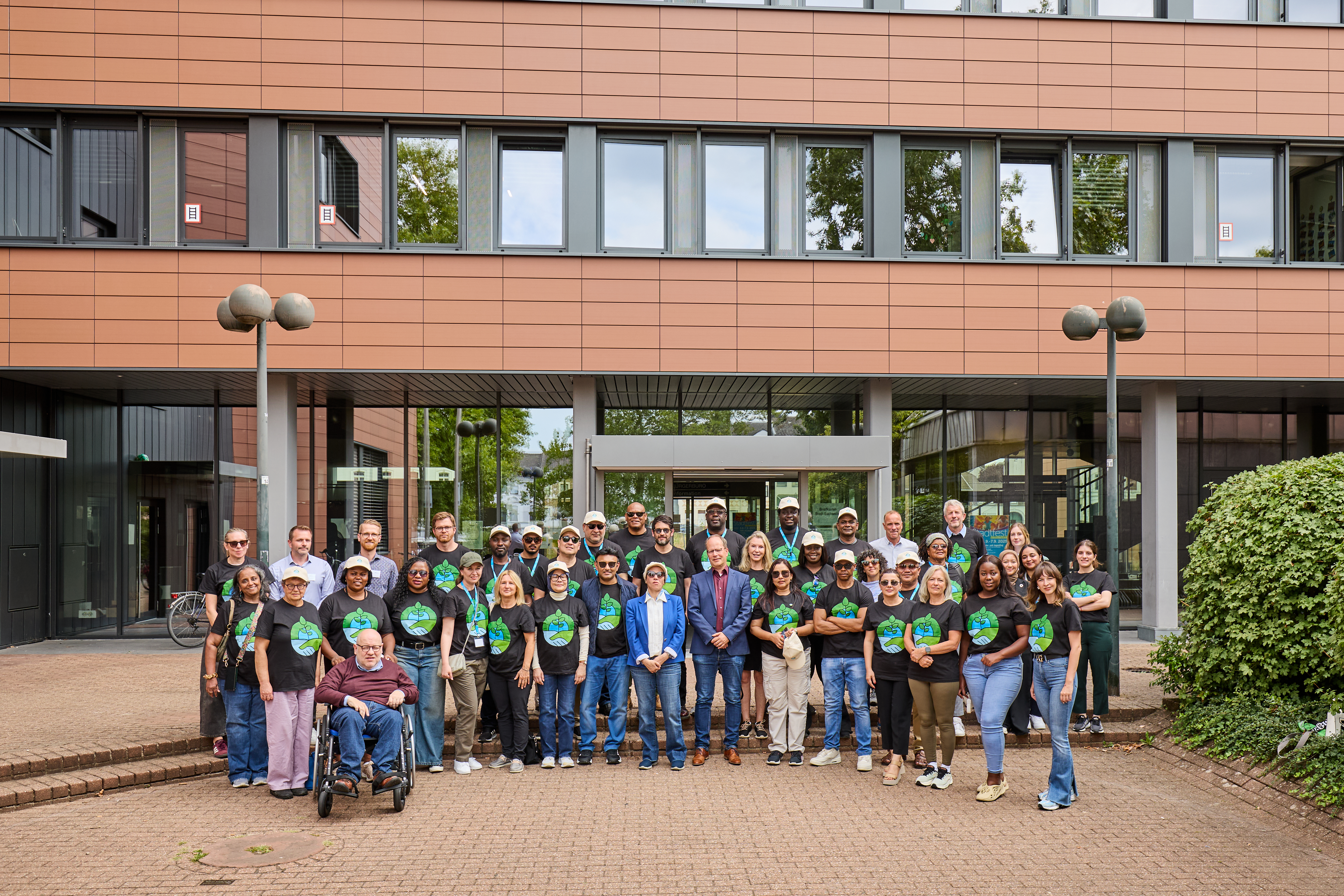
UNCCD Executive Secretary Yasmine Fouad joined the global delegation of parliamentarians from the Global Changemaker Academy, who were welcomed by the deputy mayor of Eschweiler at City Hall (Stadt Eschweiler Rathaus).
What is happening in Eschweiler is powerful and tangible, going beyond a "good story." It is a prime example of what can happen when investment, technology, law and community dialogue converge. But Eschweiler's story is a complex narrative of a just transition that acknowledges the decades of community displacement and environmental degradation that preceded it. The most important lesson from this visit is not found in the soil or the newly planted trees. It is found in the law.
The remarkable restoration we have seen did not happen by virtue of corporate goodwill alone. It was the direct result of a robust, forward-thinking legislative framework: Germany's Federal Mining Act. The law shows the principle that those who profit from extracting resources are responsible for restoring the land afterward. It requires companies to submit detailed, science-based reclamation plans for approval before any earth is moved. This legal framework designs the end from the beginning. The successful restoration of the land was achieved because the law required it, setting ambitious standards and ensuring the land was returned to the people in a healthy, productive and ecologically diverse state.

UNCCD Executive Secretary Yasmine Fouad
This is the critical framework we must bring from Eschweiler to the rest of the world. For the parliamentarians who joined me, this was the primary takeaway. While the specific restoration techniques or financial scale of this "Rolls Royce" project may not be replicable everywhere, the principle of strong, enforceable policies is universal. As lawmakers, they are the architects of this change.
For three decades, the international community has addressed our planet's greatest challenges through three related agreements stemming from the Rio Earth Summit. Too often, these agreements tended to be pursued in relative isolation. Eschweiler shows us, in contrast, that on-the-ground action creates the constructive collaboration we need. Here, land restoration is the unifying, practical action that allows us to address climate change, biodiversity loss and desertification all at once.
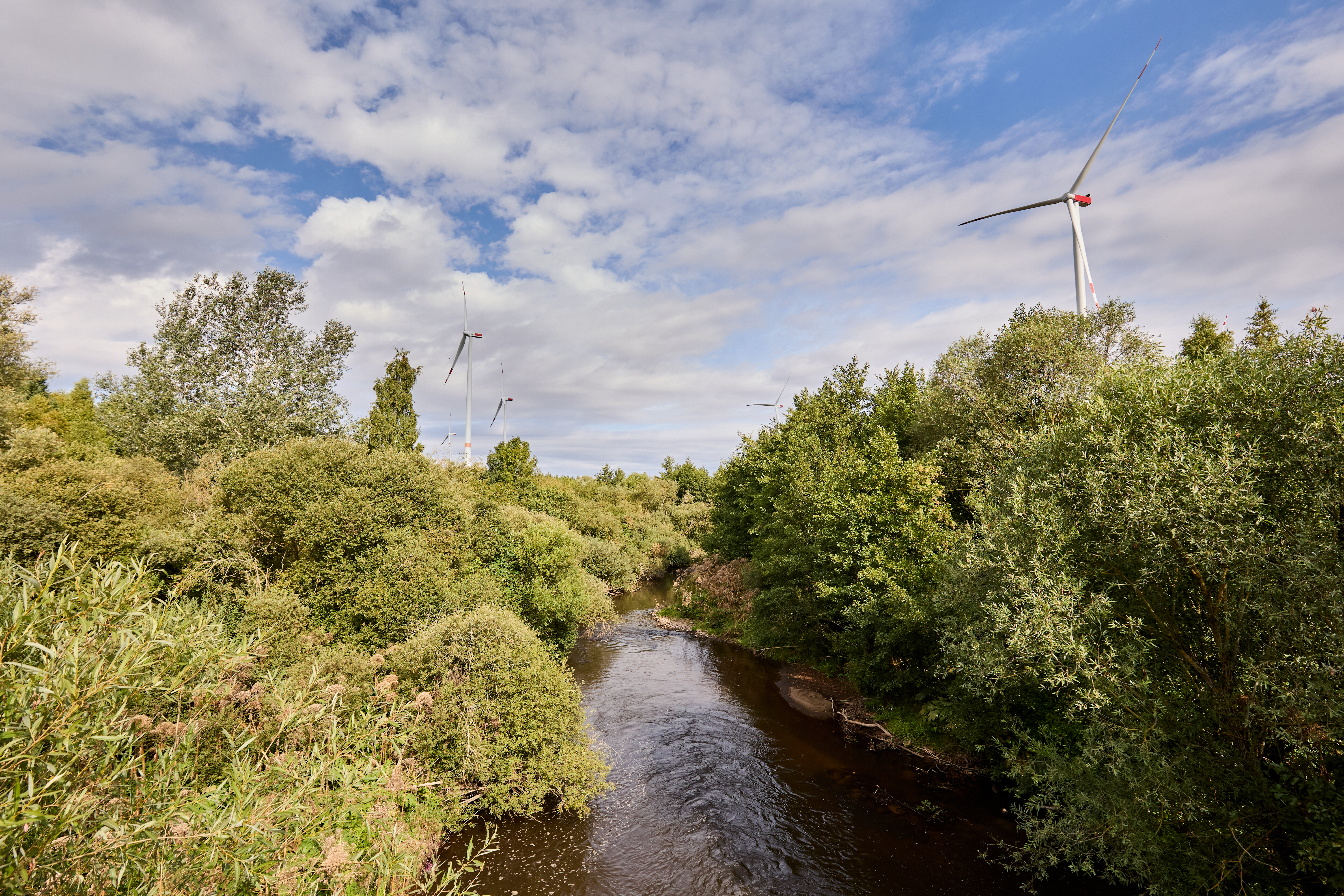
The restored Inde River flows through a lush, green landscape that was once an open pit mine. Wind turbines in the background represent the successful integration of a revived ecosystem and a clean energy future.
Healthy soil and thriving ecosystems act as powerful carbon sinks, absorbing vast amounts of CO2 from the atmosphere. Restored lands become our best defense against climate shocks. They act like natural sponges, absorbing floodwaters and keeping moisture during droughts. At the same time, restoration is the engine of biodiversity's return. By rebuilding healthy soil and restoring water cycles, we lay the foundation for life. Reintroducing native plants sets the stage for the return of pollinators, insects, birds and mammals, transforming a barren landscape into a complex, resilient web of life.
My journey from Eschweiler starts locally but will go globally. This first field visit as Executive Secretary served as a clear statement of intent. I am here for the land. Seeing this restoration firsthand alongside these dedicated lawmakers reinforces my conviction. My message to them and to leaders everywhere is this: "The UNCCD stands ready to be your partner on the ground. We will come to your countries, walk your landscapes and work with you to craft the people-centric policies that will bring your land back to life."
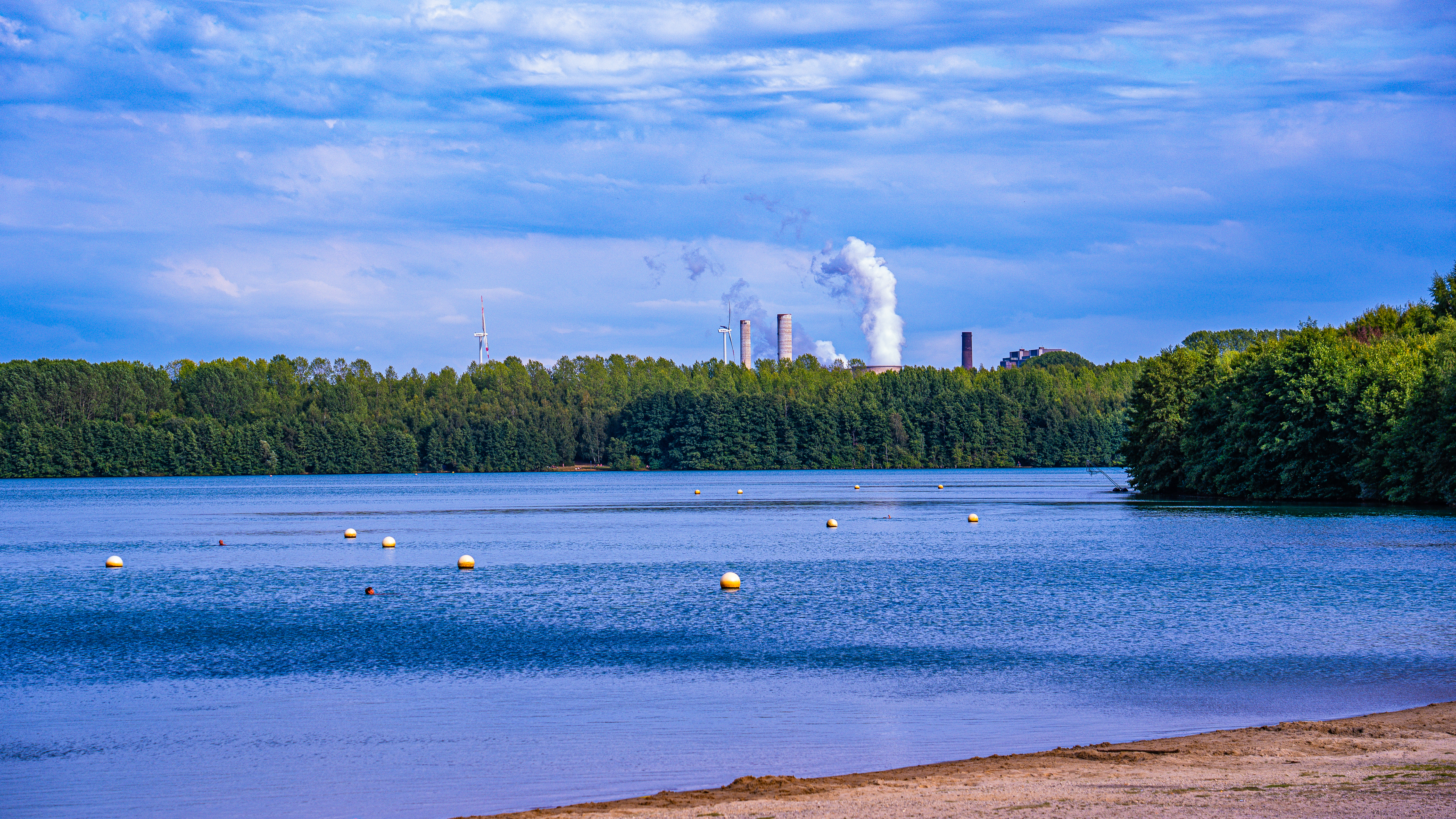
The Blausteinsee, a popular recreational lake formed from an old open pit mine, features a visible power plant in the distance. Its transformation from an industrial scar to a community hub for nature and leisure exemplifies the ultimate vision of restoration.