Stories
Latest


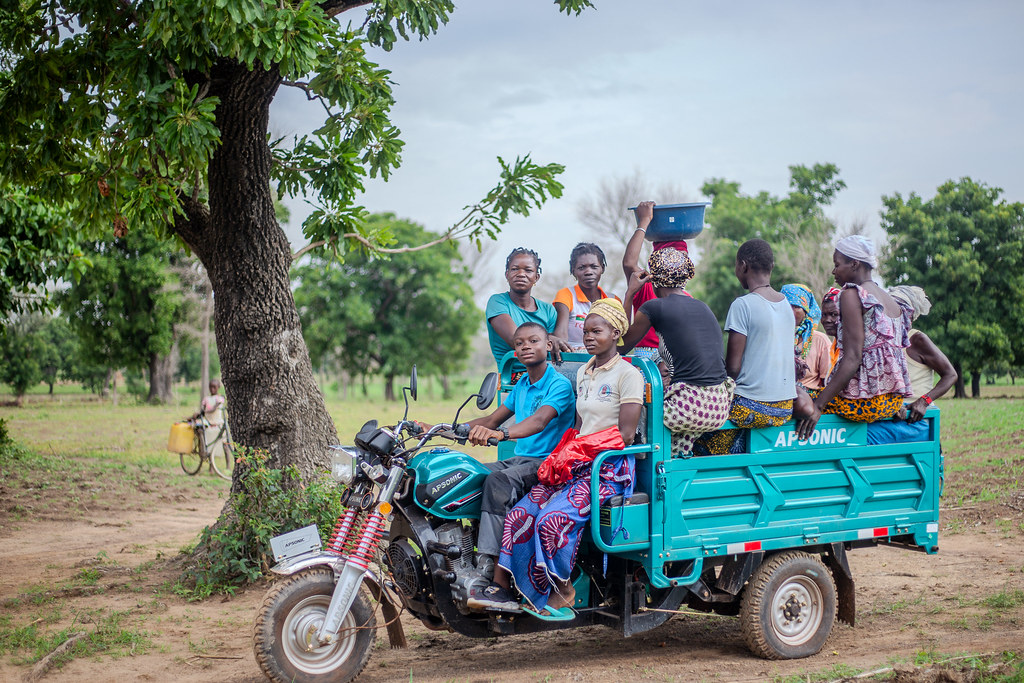

The UNCCD’s Virtual Reality (VR) film, Growing a World Wonder, has been awarded ‘Best Documentary’ at the Screen4All 360 Film Festival in Paris. An international Jury, headed by the actress Julie Gayet, selected the film from a final shortlist of 18 other submissions and hundreds of original entries. The film, which first premiered to world leaders at COP21 in Paris last year, focuses on the Great Green Wall – an African-led initiative which aims to restore vast swathes of degraded land across the Sahel and drastically improve the living conditions of millions of people. The initiative, which was launched in 2007 by the African Union, now boasts the involvement of more than 20 African countries supported by an array of international development partners including the UNCCD. Told through the eyes of an 8 year-old girl called Binta, the VR Film follows the progress of a community in Senegal – one of many thousands of villages across the Sahel who are implementing the project. It explores the challenges they face and shows how the Wall is already transforming their lives for the better – growing a lasting response to the encroaching threats of climate change, migration, food security and mass unemployment. 'We are delighted to win this award, which we hope will boost publicity and help gain new activists in advancing the fight against deadly desertification,’ said Ms Monique Barbut, UNCCD Executive Secretary. ‘Our ambition was to find a radical new way of transporting people from across the globe to the frontline of one of this century’s most urgent challenges. Through the 'Growing a world wonder' VR experience, people everywhere can witness first hand Africa’s Great Green Wall – an extraordinary movement that is changing millions of lives, helping to turn desperation and despair into the hope of a brighter future'. Director, Richard Nockles, further explained, ‘We travelled to Koyli Alpha village in Senegal, home of the Fulani people, to hear their stories and share them with the world. To tell the story, we used drones, zip wires and steadicam shots that had never been tried before in documentary VR format. The technology puts you at ground level, exploring this unique environment, with sights and sounds wherever you look.’ The award comes at a time when public awareness about the Great Green Wall is soaring. Earlier this summer, footage from the VR film was shown at the Opening Ceremony of the Rio Olympics, as part of the Dame Judi Dench narrated film on environmental conservation to a televised audience of 1 billion people. In early October, the global media giant, Sky, selected the film for the high-profile launch of their new app catapulting the Great Green Wall into the public mainstream alongside other content by major brands on topics ranging from Formula One, Star Wars, David Beckham, Disney's The Jungle Book and the Tour Du France. The growing public momentum promises to attract new investment opportunities that benefit communities across the Sahel. It also raises the prospect that one day the Great Green Wall will stand as the largest living structure on Earth – an enduring legacy for future generations. Watch the film and learn more about the initiative

As follow-up to the decisions taken by the 12th session of the UNCCD Conference of Parties (COP 12), the UNCCD Secretariat and Global Mechanism, with support of international partners, launched the LDN Target Setting Programme (LDN TSP). Building on the LDN Pilot Project, the Programme aims at enabling country Parties to define national LDN baselines, set voluntary LDN targets and identify associated measures to achieve them. Following the interest expressed by the 14 pilot countries to participate in the LDN TSP, a workshop for UNCCD National Focal Points from these countries was held in Nairobi, Kenya, on 15 October 2015. The workshop was organized by the Global Mechanism and the Secretariat of the UNCCD with support of other partners, and was held back to back with the 15th session of the Committee for the Review of the Implementation of the Convention (CRIC 15). Read more: Download the workshop report The LDN Target Setting Programme
The fifteenth session of the Committee of the Review of Implementation of the UN Convention to Combat Desertification (CRIC 15) concluded last October 19 in Nairobi, Kenya. Three issues are deemed particularly important to move forward with Land Degradation Neutrality (LDN). First, a very successful interactive session on the voluntary national LDN target setting exercise was conducted. More than 40 speakers embraced the ground covered after the decisions of COP 12, including the work done by the UNCCD Science Policy Interface in developing the LDN conceptual framework, the 17 international partners supporting the LDN target setting exercise and how far it has come. Overall, the CRIC interactive discussions left a flavor of a growing appetite for LDN and setting national targets as a real game changer for the implementation of the Convention. The discussion reinforced an echoing voice of the benefits of LDN as pursuing coherence to very well developed planning through the neutrality approach; LDN as a sine qua non of the Sustainable Development Goals; LDN as a cornerstone for food security, poverty eradication and resilience to climate change; and LDN as a catalyzer for synergistic opportunities between the 3 Rio Conventions. Second, 102 countries already committed to set voluntary national LDN targets, shared their experiences and started to pave the road for implementation. Two workshops that preceded the CRIC session set the tone for very fruitful following discussions by bringing together the group of pioneer countries and the increasing number of new countries embarking on the journey of LDN targets setting. After two days of workshops from 14 to 15 October, representatives of participating countries had a broad picture of how to move forward for LDN implementation and identified concrete action paths to tap into the increasing financing opportunities that LDN is already bringing, including the private sector. Third, increasing finance opportunities. The 2030 Agenda for Sustainable Development, the Addis Ababa Action Agenda and the Paris Agreement are reshaping the financing landscape for development. During CRIC discussions, countries and partners welcomed these new windows of opportunity for scaling up finance to support the implementation of the Convention, including through the Global Environment Facility (GEF) and the Green Climate Fund (GCF) as well as the catalytic role of the private sector. After the productive CRIC deliberations, opportunities ahead can be summarized in two areas of work: 1) Deliver results through transformative projects and, 2) leverage finance and finding new and innovative ways to mobilize resources at the scale required to achieve LDN. Development partners, governments, private sector, civil society and the UNCCD Secretariat and Global Mechanism are ready to step up their efforts to make of the LDN targets a transformational paradigm shift. Let’s be bold and keep working together! Related links: Video: Mr. Markus Repnik, Global Mechanism UNCCD: CRIC 15 Financing the implementation of the UNCCD Video: Mr. Markus Repnik, Global Mechanism UNCCD CRIC 15 LDN LDN Target Setting Exercise Interactive Session Video: Mr. Barron Orr SPI Intervention CRIC 15 LDN Target Setting Video: Mr. Edmund Barrow IUCN Intervention CRIC 15 LDN Target Setting Video: Mr. Kebede Yimam Dawd Ethiopia Intervention CRIC 15 LDN Target Setting Video: Mr. Ulrich Apel GEF Intervention CRIC 15 LDN Target Setting Video: Ms. Anne Juepner UNDP Intervention CRIC 15 LDN Target Setting Video: Ms. Dominga Polanco, Dominican Republic - Intervention CRIC 15 LDN Target Setting Exercise Interactive Session
The fifteenth session of the Committee of the Review of Implementation of the UN Convention to Combat Desertification (CRIC 15) concluded last October 19 in Nairobi, Kenya. Three issues are deemed particularly important to move forward with Land Degradation Neutrality (LDN). First, a very successful interactive session on the voluntary national LDN target setting exercise was conducted. More than 40 speakers embraced the ground covered after the decisions of COP 12, including the work done by the UNCCD Science Policy Interface in developing the LDN conceptual framework, the 17 international partners supporting the LDN target setting exercise and how far it has come. Overall, the CRIC interactive discussions left a flavor of a growing appetite for LDN and setting national targets as a real game changer for the implementation of the Convention. The discussion reinforced an echoing voice of the benefits of LDN as pursuing coherence to very well developed planning through the neutrality approach; LDN as a sine qua non of the Sustainable Development Goals; LDN as a cornerstone for food security, poverty eradication and resilience to climate change; and LDN as a catalyzer for synergistic opportunities between the 3 Rio Conventions. Second, 102 countries already committed to set voluntary national LDN targets, shared their experiences and started to pave the road for implementation. Two workshops that preceded the CRIC session set the tone for very fruitful following discussions by bringing together the group of pioneer countries and the increasing number of new countries embarking on the journey of LDN targets setting. After two days of workshops from 14 to 15 October, representatives of participating countries had a broad picture of how to move forward for LDN implementation and identified concrete action paths to tap into the increasing financing opportunities that LDN is already bringing, including the private sector. Third, increasing finance opportunities. The 2030 Agenda for Sustainable Development, the Addis Ababa Action Agenda and the Paris Agreement are reshaping the financing landscape for development. During CRIC discussions, countries and partners welcomed these new windows of opportunity for scaling up finance to support the implementation of the Convention, including through the Global Environment Facility (GEF) and the Green Climate Fund (GCF) as well as the catalytic role of the private sector. After the productive CRIC deliberations, opportunities ahead can be summarized in two areas of work: 1) Deliver results through transformative projects and, 2) leverage finance and finding new and innovative ways to mobilize resources at the scale required to achieve LDN. Development partners, governments, private sector, civil society and the UNCCD Secretariat and Global Mechanism are ready to step up their efforts to make of the LDN targets a transformational paradigm shift. Let’s be bold and keep working together!
2 billion hectares of productive land are degraded worldwide while a further 12 million hectares are degraded every year. This has severe consequences for the livelihoods of land users, both at social and environmental levels. Stopping land degradation is critical in mitigating climate change: soil is the second largest carbon sink after the ocean, but degraded land stores much less carbon. Sustainably managed land plays a crucial role in helping the world address other global sustainability issues, e.g. food security, poverty, gender equality, water availability, and biodiversity. Not enough capital is currently channeled into land-based projects that contribute to sustainable land management (SLM) and/or land restoration, particularly in developing countries. The private sector has a big role to play: public and philanthropic financing is not sufficient to support the amount of SLM and restoration investments required. For this reason, Decision 3/COP12 mandated the Global Mechanism to assist in the creation of an independent Land Degradation Neutrality (LDN) fund to be made available for the full realization of LDN initiatives. The LDN Fund is being designed as a public private partnership (PPP) for blended finance to be invested in sustainable land management (SLM) and land restoration projects worldwide, within a strict environmental and social safeguard framework. The LDN Fund Environmental and Social Standards (ESS) define the framework upon which all projects that will be financed by the Fund must adhere to. Once finalized, the ESS will be integrated into all aspects of the LDN Fund’s project investment cycle, and become part of the LDN Fund’s overall risk management and due diligence approach to ensure the responsible handling of social and environmental risk. In particular, the ESS will be integrated into the investment policy of the LDN, and the Fund Manager will have responsibility for conducting a detailed E&S assessment of each project before investment. Other Fund governance bodies will support and regulate the Fund Manager’s work on E&S issues. Committees will be established to have a consultative role on E&S, providing advice and expertise when required. Other Fund governance bodies, responsible for the establishment of the investment guideline (e.g. Board of Directors), will be responsible for the supervision of the Fund Manager to ensure compliance with the ESS, and has the authority to request an investigation from a third party consultant to verify that the Fund is in compliance. The document has been drafted by Mirova, an affiliate of Natixis Investment Managers dedicated to responsible investing, on the basis of expert advice commissioned by the UNCCD Global Mechanism, and has been reviewed by the LDN Fund Advisory Group. The consultation process on this document has started on Monday 17 October 2016 and closed on Monday 7 November 2016. We would like to sincerely thank everyone who has submitted their input and feedback. Best regards, LDN Fund Project Team
The fifteenth session of the Committee for the Review of the Implementation of the Convention (CRIC 15) concluded on 20 October with great strides to refine the direction of the Convention’s strategic future. At the closing of the session, the UNCCD Executive Secretary Monique Barbut expressed hope that the Convention could find solutions for the ecosystems affected by land degradation and deliver services to those affected by it. She also expressed hope that most Parties will have LDN targets and make those ambitions a reality. Further, she reiterated the importance of the coming months for addressing synergies among the Rio Conventions as the other sister conventions, namely, United Nations Framework Convention on Climate Change (UNFCCC) and the Convention on Biological Diversity (CBD) will organize their Conference of the Parties in Marrakesh and Cancun respectively. In the closing statement, CRIC 15 Chair Raymond Baptiste (Grenada), asked parties to reflect one question. Can we truly achieve LDN on a global scale if the remaining countries were to set voluntary national targets? He said he raised the question in light of the issue of national sovereignty. He said this would be his last CRIC session as he would soon be retiring, but noted that his exit does not mark an end to his commitment to the work of the Convention. He urged delegates to hasten the delivery of the outputs. Each of the regional groups made its closing remarks, and Türkiye, which holds the COP 12 Presidency, said the enthusiasm shown to take the Convention to a new level and to succeed was inspiring. The UNCCD turns its energy for the next COP, which will be organized in Ordos, China, next year. At the next COP, the Parties will decide on the Strategic Framework that will guide action under the Convention from 2018-2030. Press release CRIC15 webpage ENB coverage on CRIC15 Homepage carousel photo: ENB/IISD