Stories
Latest
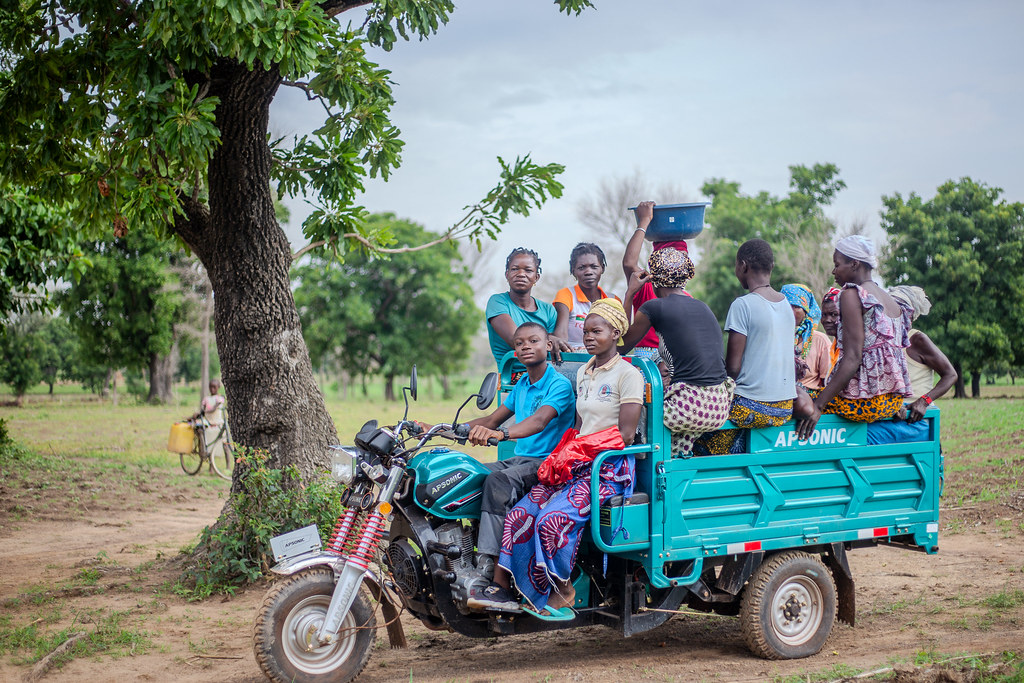
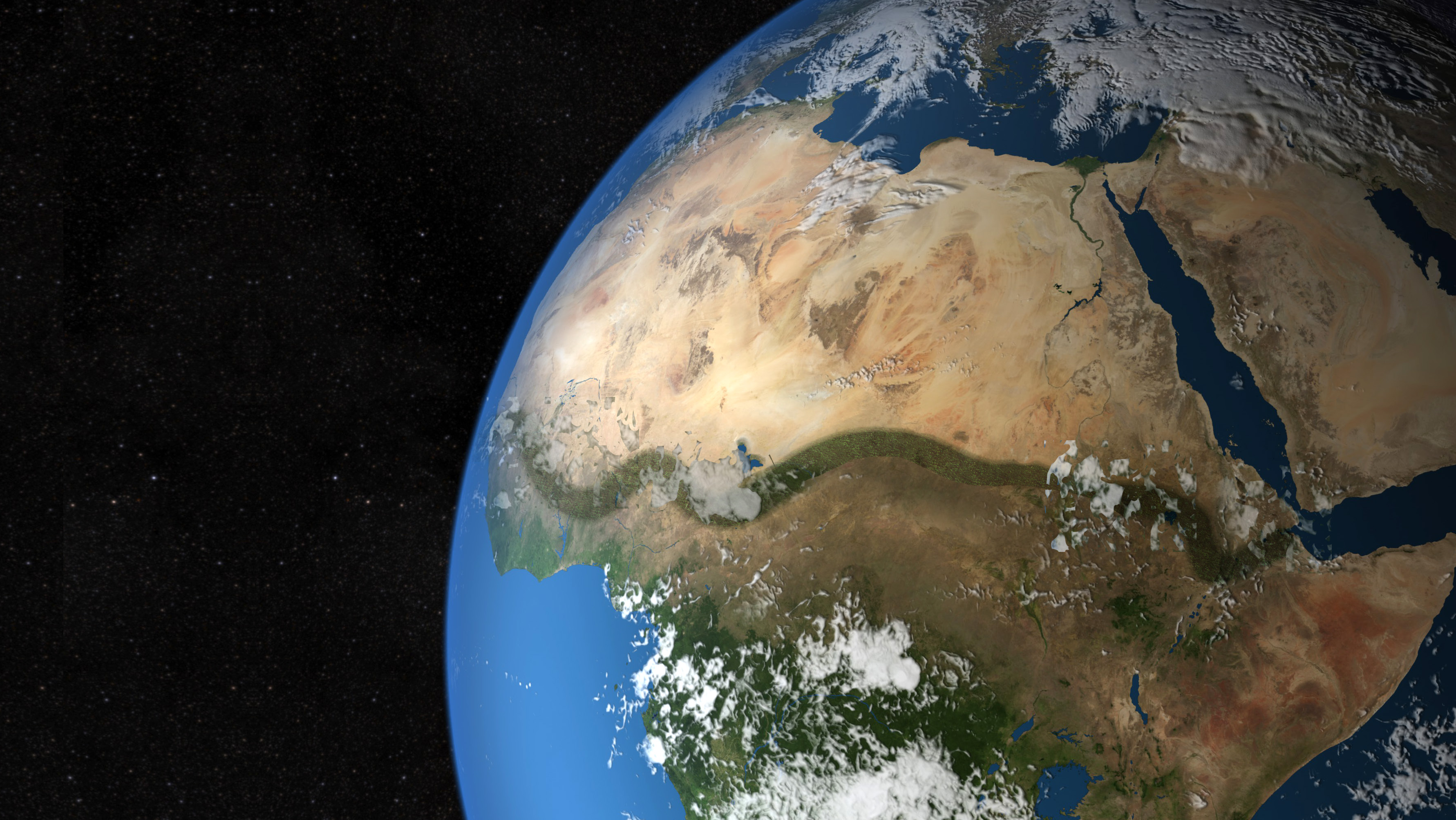
The Global Mechanism has showcased its groundbreaking Virtual Reality (VR) experience on Africa’s Great Green Wall, at an international symposium organized to coincide with the first global report on the State of the World’s Plants. The landmark event, organized by the Royal Botanical Gardens of Kew, was opened by Lord Gardiner of the UK Parliament on 11 May 2016, in London. The State of the World’s Plants report provides for the first time a baseline assessment of our current knowledge on the diversity of plants on earth, the global threats these plants currently face, and the policies dealing with them. Kew’s State of the World’s Plants will set an important standard from which we can annually track trends in biodiversity for years to come. The VR experience, ‘Growing a world wonder’, formed a key focus for the event showing international policymakers, scientific experts and parliamentarians, the impact plants can have on people’s lives in tackling the urgent challenges facing humanity, including food security and climate change. The film itself, which is shot in 360 degrees using high-powered drones, focuses on the story of an 8 year old girl called Binta, whose community in Northern Senegal are transforming their future prospects through the implementation of the project. Speaking at the event, the Global Mechanism’s Camilla Nordheim-Larsen, highlighted that ‘The Great Green Wall is a compelling example of the impact that plants can have on people’s lives, where communities in one of the world’s poorest regions - the Sahel - live off what the land produces for their every day survival’. Kew has been actively involved in the Great Green Wall for the past few years, with a specific responsibility in selecting many of the drought resistant species grown along the wall, particularly those with an economic use for local communities. As a public institution with 2 million visitors a year from around the globe, the UNCCD and Kew are expanding their partnership with a series of upcoming events this summer to educate the general public about the Great Green Wall including through pioneering Virtual Reality. Related links: Virtual Reality film Partners: ROYAL BOTANICAL GARDENS OF KEW

In order to achieve LDN by 2030, there is a need to mobilize large amounts of financial resources for land rehabilitation and degradation avoidance. Public resources alone will not be sufficient. Attracting private sector financing will be crucial. The UNCCD Global Mechanism is collaborating with specialized experts and advisors to develop the LDN Fund. Mirova, an affiliate of Natixis Investment Managers dedicated to responsible investing, has been selected as the Fund structuring partner. Since the inception of the LDN Fund project, the UNCCD has been pursuing a collaborative approach with leading non-governmental and public international institutions whose knowledge and experience contribute to the development and refinement of the Fund. The Global Mechanism and Mirova are assisted by an Advisory Group drawn from senior members of the Fund’s main stakeholders. It actively contributes to the Fund’s development and structuring process by advising on key issues, such as the environmental and social performance standards. Hosted by WWF International, the first meeting of the Advisory Group took place on 29 April 2016 in Gland, Switzerland. The meeting gave important recommendations on several emerging features of the LDN Fund, which are intended to facilitate progress in its development going forward. The meeting discussed four main topics: LDN Background and market study LDN Fund overview, governance and emerging pipeline Technical Assistance Facilities Environmental & Social Safeguards, Performance Standards and Eligibility Criteria Following the AG meeting, the structuring of the Fund will continue, in parallel with the development of the initial project pipeline. It is envisioned that the LDN Fund will be launched by the end of 2016. Read more: The LDN Fund
Over the past few months, the Global Mechanism of the UNCCD has been working with the global branding agency, venture three, to promote the local and global benefits of the Great Green Wall to a worldwide audience. The Great Green Wall – an epic ambition to restore the productivity of an 8000km stretch of land across 12 African countries – is all about collaboration, so we wanted to open up our brief to as many minds as possible. At the end of last year, venture three and the UNCCD invited final year students at the London College of Communication to help us ‘Make the Great Green Wall famous’ in whatever creative ways they thought could boost mass awareness of the initiative. Ten of the best ideas were recently showcased at an exhibition at venture three’s studio in London, three of which were shortlisted by a panel including the UNCCD Executive Secretary, Monique Barbut, for potential further development. These included: Sumi Khan’s beautifully simplistic The Hourglass, which symbolizes Africa’s Great Green Wall fighting back against the threat of desertification:“Within the hourglass, sand acts as the Sahara desert, the tree represents hope for the future of Africa, while the seeping sand symbolizes the passing of time.”The installation also features a gift box, which includes a mini hourglass that can be used as a key chain, figurine or necklace, as well as a 3ml vial of fragranced oil made only from plants & trees. Beth Johnson’s playful idea to create a reality TV series positioning the Great Green Wall as The World’s Biggest Gardening Project: “Unfortunately, people have become wary of social/political/environmental campaigns and often assume that they are donation-motivated. This campaign positions the GGW as a creative phenomenon through a subversive strategy, undercutting the cynicism some may feel with a more conventional approach.’ Christopher Ong’s Explore your new wonder of the world - a vision of creating an educational exhibition focusing on the benefits of the Great Green Wall targeting 5-8 year olds at a high profile tourist venue - London’s Science Museum:“As the Great Green Wall is a long-term project, its completion will ultimately be seen by the next generation… By planting seeds of information in these young minds, we’ll create gatekeepers of the Great Green Wall – making the new wonder of the world famous and memorable.’’ Speaking at the event, Monique Barbut, Executive Secretary of the UNCCD highlighted underscored how “The Great Green Wall could be the biggest human endeavor of all time. But to realize this African dream, we need public opinion to wake up quickly – young creative minds […] can help play a huge part in achieving this.” The UNCCD will be offering internships to the shortlisted students with a view to giving them an opportunity to develop their creative ideas further. Related links: News piece on the LCC event in the Creative Review Vimeo featuring UNCCD’s Monique Barbut at the exhibition Great Green Wall Virtual Reality film
Two key projects spearheaded by the UNCCD/GM in addressing desertification: the Land Degradation Neutrality (LDN) Fund; and the Great Green Wall for the Sahara and the Sahel Initiative (GGWSSI), were discussed during the meeting on the implementation of the Paris Agreement on Climate Change held between the Minister of Ecology, Sustainable Development and Energy of France and President of COP21, Ségolène Royal, Christiana Figueres, Executive Secretary of the UN Framework Convention on Climate Change (UNFCCC) and Monique Barbut, Executive Secretary of the United Nations Convention to Combat Desertification (UNCCD), held in Bonn on 22 February 2016. Discussions with the Executive Secretary of the UNCCD centred on two key projects spearheaded by the UNCCD/GM in addressing desertification The restoration of land and creation of 5 000 jobs in the countries of the Great Green Wall for the Sahara and the Sahel; and The LDN Fund and the financial support received from the French Government in the amount of EUR 400 000 for the development phase. The Land Degradation Neutrality (LDN) Fund The vision of the LDN fund is to make a substantial contribution to avoiding land degradation and financing rehabilitation of 12 million hectares of degraded land a year. The Fund is anchored on the SDG 15.3 target that aims to achieve a land degradation-neutral world by the year 2030. The Fund intends to finance bankable projects, developed on the basis of successful pilots with the potential for scaling up. Initially, the Fund will focus on existing initiatives involving like-minded players in order to significantly increase the scale and impact of global efforts deployed towards the achievement of SDGs. Over time, the Fund will help to structure and finance new initiatives worldwide. During the Paris COP held in December 2015, the Global Mechanism announced the partnership formed with Mirova, and the support expressed by Caisse des Dépôts Group and European Investment Bank. Both approve this ambitious initiative and have committed to accompany the structuring phase. The first semester of 2016 is dedicated to the analysis of investment cases, refinement of the Fund structure, identification of investment schemes and securing public financing and anchor investors. The fundraising phase is expected to commence during the second half of 2016. It is envisioned that the LDN Fund will become operational in late 2016. Related links: Press Release:Application de la COP21 : déplacement de Ségolène Royal à Bonn pour définir le calendrier et les priorités en 2016 (98.04 KB)
5 December 2015, Paris – More than USD 300 billion are needed per year to restore the world’s degraded land in order to achieve a new Sustainable Development Goal (SDG) target by 2030, according to a new publication by the Food and Agriculture Organization (FAO) and the Global Mechanism of the United Nations Convention to Combat Desertification (GM). The joint discussion paper, Sustainable financing for forest and landscape restoration: opportunities, challenges, and the way forward, was launched today at the Global Landscapes Forum in Paris during a session on "Investing in integrated landscapes to achieve the Sustainable Development Goals". Currently, the world’s degraded land amounts to 2 billion hectares, which is equal to an area the size of South America. Each year an additional 12 million hectares of land are degraded, while 7.6 million hectares of forest are converted to other uses or lost through natural causes. “The degradation of the world’s land and forests is a serious threat to the livelihoods and food security of millions of people who depend on them, and there is an urgent need to invest in forest and landscape restoration to bring a significant portion of that degraded land back to a productive state,” said Douglas McGuire, Coordinator of the Forest and Landscape Restoration Mechanism hosted by the Forestry Department of FAO. Funding falls short of global commitments Countries have already made ambitious commitments to forest and landscape restoration, including under Goal 15 of the recently adopted Sustainable Development Goals (SDGs), which sets a target (15.3) to achieve land degradation neutrality by 2030. In addition, some countries had previously pledged to restore 150 million hectares by 2020 in the framework of the 2011 Bonn Challenge, and 350 million hectares by 2030 under the 2014 New York Declaration on Forests. However, mobilization of funds is one of the chief constraints to achieving these global targets. The USD 300 billion a year needed for SDG target 15.3 aside, the Bonn Challenge is estimated to require USD 36 billion a year, and the New York Declaration USD 49 billion a year. “One of the main barriers is insufficient awareness of financing opportunities and investors’ lack of understanding of forest and landscape restoration,” said Markus Repnik, Managing Director of the GM. Key questions addressed at the Global Landscape Forum session on ‘’Investing in integrated landscapes to achieve the Sustainable Development Goals’’ The GLF is one of the largest events held on the sidelines of the 21st Conference of the Parties to the United Nations Framework Convention on Climate Change (UNFCCC). The session on ‘’Investing in integrated landscapes to achieve the Sustainable Development Goals’’, at which the publication was launched, addressed a number of key questions on forest and landscape restoration financing, including: How are investments coordinated within integrated landscape initiatives? How can investors better engage with landscape stakeholders? How can these models be scaled-up and applied in the implementation of SDGs? The joint FAO-GM discussion paper addresses these issues by providing an overview of existing funding sources and financial instruments that could be adapted specifically for forest and landscape restoration purposes both at the local, national, regional and global levels. The Landscapes for People, Food and Nature Initiative launched a complementary publication at the same discussion forum entitled “Scaling up investment & finance for integrated landscape management: Challenges and innovations”. Innovative financing solutions proposed in the publication launched in Paris The FAO-GM discussion paper sets out key messages on financing for forest and landscape restoration for governments, development banks, international agencies, environmental funds, NGOs and private companies. It also proposes innovative and non-traditional ideas such as crowdfunding and green bank cards. “With both governments and development agencies facing increasing funding shortages, long-term financing solutions may rely on private-sector investors – businesses and individuals – whether in the framework of corporate social responsibility or as investors looking for a mix of social and financial returns,” said Ludwig Liagre of the GM. The joint publication also identifies ways to create an enabling environment for sound investments in forest and landscape restoration and proposes recommendations for building and strengthening financial alliances. A joint FAO-GM public policy brief and infographic with key messages on sustainable financing for forest and landscape restoration included in this publication were launched in October 2015 at the Forests and Landscape Forum - organized by the GM, FAO, and LPFN, among other partners- during the 12th Conference of the Parties to the UNCCD in Ankara, Türkiye. Related links: Discussion Paper on 'Sustainable financing for Forest and Landscape Restoration: opportunities, challenges, and the way forward' Infographic on Sustainable financing for forest and landscape restoration: key messages Policy brief on ‘’Sustainable financing for forest and landscape restoration: the role of public policy makers’’ FAO’s Forest and Landscape Restoration Mechanism Landscapes for People, Food and Nature publication

The United Nations Convention to Combat Desertification (UNCCD), through its operational arm - the Global Mechanism – together with Mirova, an affiliate of Natixis Investment Managers dedicated to responsible investing, have signed an agreement to structure the first global fund dedicated to achieving Land Degradation Neutrality - the LDN Fund. French Caisse des Depôts is supporting the initiative. The Global Mechanism and Mirova are pleased to announce the signature of a Memorandum of Understanding with the objective of structuring the Land Degradation Neutrality Fund. The LDN Fund aims at creating a new investment territory: land rehabilitation and avoided degradation. The LDN Fund will be launched in December 2016. Achieving LDN is one of the year 2030 targets (target 15.3) of the Sustainable Development Goals (SDG). LDN refers to a state whereby the amount of healthy and productive land resources necessary to support ecosystem services in a given community or country, or globally, remains at least stable. In October, the Parties to the UNCCD agreed to set up voluntary national targets to support the realization of the LDN target on a global level. The concept of an LDN Fund emerged in 2014 following consultations among institutions that were engaged in the identification of sustainable solutions to the challenge of land degradation. The Global Mechanism presented the first concept at the World Investment Forum in Geneva in October 2014. The fund should provide a coordination platform for blended finance and is expected to be set up as a Public-Private Partnership among institutional investors, impact investors, development finance institutions and donors committed to supporting LDN. It should be structured as a privately managed layered fund intending to generate returns for investors in line with their respective risk/return profiles. The Global Mechanism and Mirova are joining forces to turn the project into reality. Text from the joint press release issued by Mirova and the Global Mechanism of the UNCCD in Paris on 3 December 2015. Related links: Land Degradation Neutrality Fund Brochure (English) (1 MB) Land Degradation Neutrality Fund Brochure (French) (1021.15 KB) Land Degradation Neutrality Fund Brochure (Spanish) (1.13 MB) Download the Press Release (English) (470.14 KB) Download the Press Release (French) (397.38 KB) For more information: Simone Quatrini The Global Mechanism Tel. +49 228 815 2860 squatrini (at) unccd.int