Stories
Latest
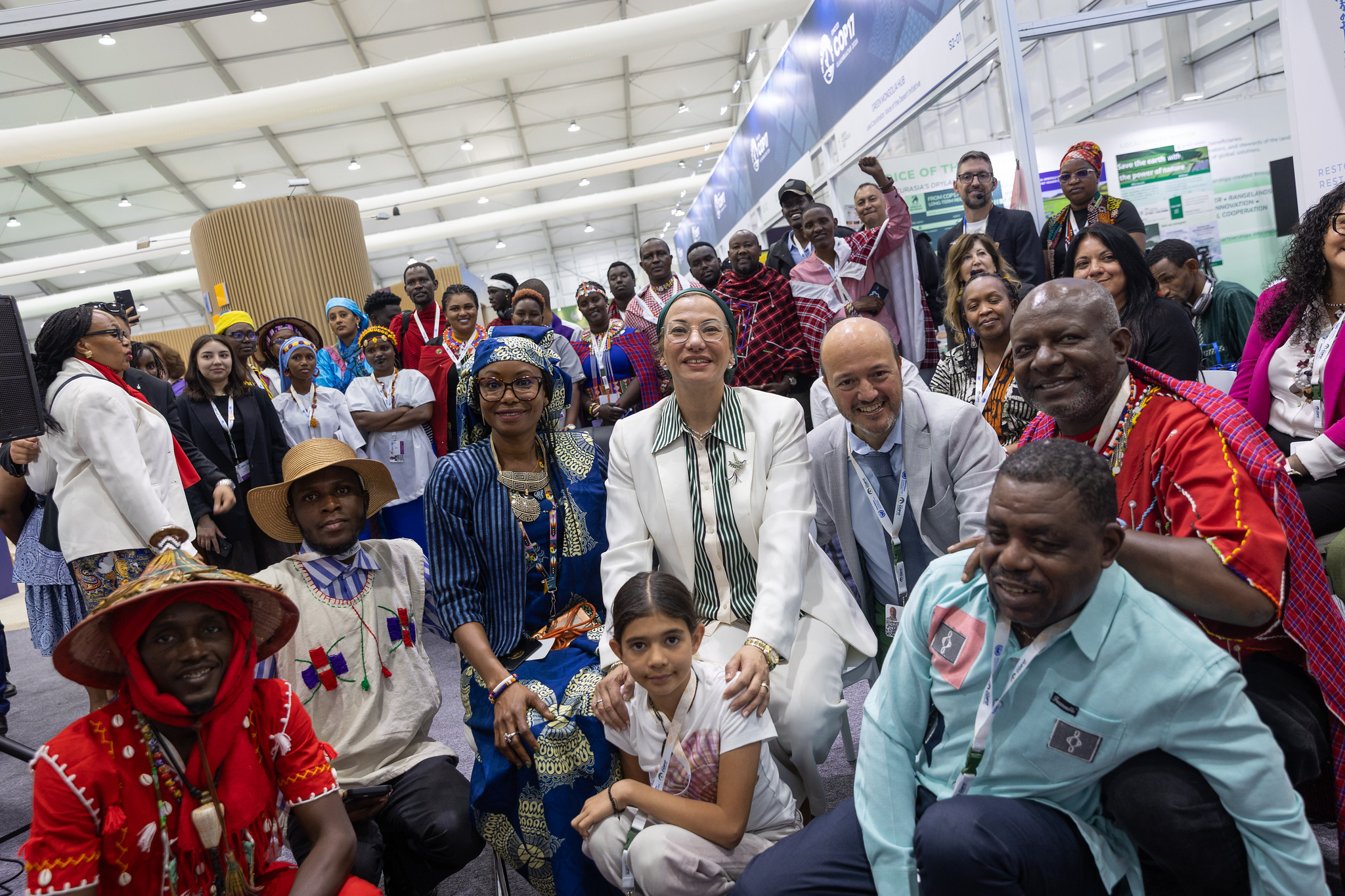
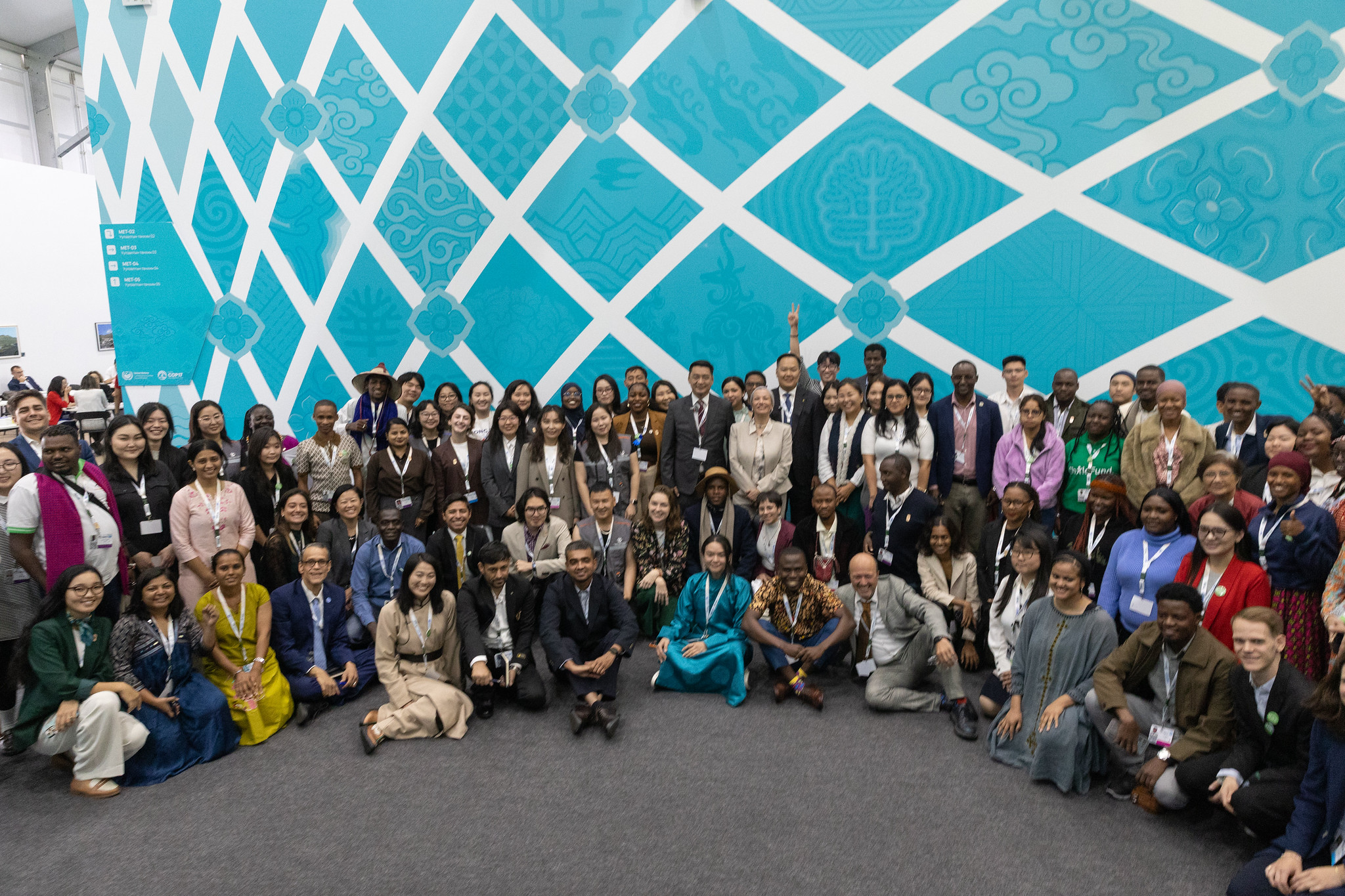


At the World Economic Forum in Davos, the United Nations Convention to Combat Desertification officially launched the Business4Land (B4L) Champions’ Council, a high-level coalition of global business leaders committed to restoring land and building drought resilience at scale. The launch, co-hosted with InTent, brought together Champions and partners for a dynamic discussion on accelerating private sector action for sustainable land management.Bringing together 10 visionary leaders across diverse regions and industries, including food, fashion and insurance, the B4L Champions’ Council will serve as a high-profile advocacy platform under UNCCD’s flagship B4L Initiative. Its mission is to mobilize corporate action to restore 1.5 billion hectares of degraded land by 2030, while inspiring other companies to adopt land-positive and regenerative business models that deliver both environmental and economic impact. The inaugural B4L Champions are:Bayanjargal Byambasaikhan, Vice Chair, Business Council of MongoliaBenedikt Bösel, Founder, Gut & BöselBirgit Cameron, Co-Founder, Patagonia Provisions and CEO, B. Cameron ConsultingDavid Canassa, Executive Director, Reservas VotorantimAlexandre Capelli, Group Environmental Deputy Director, LVMHMathieu Dondain, Managing Director, NexiraLorenzo Fattibene, Global Business Transformation Leader & Global Sustainable Insurance Leader, EYJulie Greene, Chief Sustainability Officer, Olam AgriAdrienne de Malleray, Co-Founder, Genesis Soil HealthMaria Luiza de Oliveira Pinto e Paiva, Executive Vice-President of Sustainability, Communication and Brand, Suzano“The B4L Champions’ Council reflects a pivotal shift in how we address land degradation: by placing the private sector at the forefront of sustainable land management and people at the heart of the process. Restoring land is not just a government priority, it is a global economic necessity,” said Dr. Yasmine Fouad, Executive Secretary of UNCCD at the launch event in Davos.The Kingdom of Saudi Arabia, represented at the launch by Deputy Minister of Environment and Advisor to the COP16 Presidency, Dr. Osama Ibrahim Faqeeha, serves as the inaugural Chair of the B4L Champions’ Council. “Land restoration is a smart investment in our collective future. With the launch of the Business4Land Champions’ Council, we are creating a platform where private sector leaders can commit, collaborate, and catalyze real-world impact,” he said. “Every business is a land champion.” The Chair role will integrate the Council’s work into UNCCD COP processes and align business leadership with national and global commitments on land restoration and drought resilience. The COP17 Presidency of Mongolia, represented by the Deputy Minister of Environment Mr. Munkhtamir Batbayar, will assume the Chair in August 2026, continuing this leadership through the next year and beyond.“The Champions’ Council is not symbolic, it is designed to lead private-sector action on land restoration and drought resilience. From Mongolia’s perspective, we want business engagement to shift in three ways: from commitments to measurable land outcomes, from isolated pilots to investable pipelines, and from ‘do no harm’ to land-positive value creation. Engaging with our Steppe Action Agenda, the Council can drive collective leadership that moves markets, influences peers, and creates a race to the top on land stewardship,” stated Deputy Minister Batbayar.“We want to bring companies the finance and technology needed to speed up land restoration and sustain livelihoods for people,” said Mr. Bayanjargal Byambasaikhan, Vice Chair, Business Council of Mongolia.As the world looks toward UNCCD COP17 in Mongolia, the B4L Champions’ Council marks a key milestone in placing land at the center of business strategies. With resources and priorities stretched across multiple global challenges, it is more essential than ever that companies invest in regenerative, land-positive solutions to secure a sustainable future for people, nature, and economies.

Restoring land is no longer a question of knowing what to do. Countries across regions and income levels have identified interventions where land is degrading and how drought risks can be reduced. What now determines whether these plans deliver real impact is their financing. “We have reached a point where the challenge is not a lack of commitment or solutions,” said Yasmine Fouad, Executive Secretary of the United Nations Convention to Combat Desertification (UNCCD). “The challenge is whether our financial systems are able to support the scale of transformation that land restoration and drought resilience require.” Meeting global land restoration and drought resilience targets will require around USD 355 billion per year between 2025 and 2030 – far more than is currently being invested. As long as land is not considered a strategic asset, rather than treated as a secondary environmental concern, this gap will persist. Why existing financing approaches fall short Today’s financial systems are not designed for the scale, timeframes, or risk profiles that land restoration demands. Public budgets in many countries are under pressure, shaped by competing development priorities and raising sovereign debt levels that result in limited fiscal space. Responsibilities for land, water, agriculture and climate are often split across institutions, complicating coordinated investment. Private investment has so far played a limited role. While interest in sustainability is growing, land restoration often involves longer time horizons and higher perceived risks. Without mechanisms to share risk, capital continues to flow elsewhere – even as UNCCD works to mobilize companies and investors through its Business4Land (B4L) platform, including the launch of the B4L Champions’ Council in 2026. The result is a persistent mismatch: the economic costs of land degradation continue to accumulate across food systems, water security and national economies, while investment remains far below what is required. Closing this gap requires a shift in investment logic – recognizing land restoration as core economic activity, not a side project. “Investing in land is one of the smartest investments available today,” Fouad said. “It reduces risk, strengthens resilience and delivers returns that far exceed the cost.” For development banks and public financiers, this means positioning land restoration not as a niche environmental issue, but as a strategic asset class – one that underpins food security, climate resilience and long-term stability. Turning finance into delivery In many countries, fiscal policies continue to favour land-degrading activities, while restoration remains underfunded. Redirecting incentives – by reforming subsidies and aligning taxation and public spending with sustainable land management – can change the economics of land use, making restoration financially viable rather than marginal. Aligning agriculture, water, climate and economic strategies is critical to making financing more effective and durable. When policies pull in different directions, investment fails to deliver lasting results. Mobilizing private investment at scale will also depend on reducing risk. Strategic use of public and concessional finance can absorb early risks, unlocking private capital at a scale that public budgets alone cannot reach. International cooperation remains essential, particularly for countries facing the largest restoration and drought resilience needs. When used strategically, public finance can mobilize additional resources while delivering benefits that extend beyond national borders. The cost of inaction The economic consequences of inaction are already visible. Land degradation, desertification and drought already cost the global economy close to USD 900 billion each year, through lost productivity, soil depletion, drought damage and carbon emissions. By contrast, scaling up investment in land restoration and drought resilience could generate USD 1.8 trillion in annual benefits- an estimated eight-to-one return on investment. These gains go beyond economics, strengthening food security, reducing vulnerability and supporting more resilient societies. Every year of delay increases the economic, social and environmental costs. From COP16 momentum to COP17 delivery Financing was central to discussions at the sixteenth session of the Conference of the Parties to the UNCCD (COP16), which mobilized political attention, launched new partnerships and secured more than USD 12 billion in pledges for drought resilience. COP16 showed that political momentum exists. The challenge now is whether financing systems can convert that momentum into delivery. Attention is now shifting to COP17 in Ulaanbaatar, Mongolia. With the International Year of Rangelands and Pastoralists in 2026 approaching, the focus will increasingly turn to implementation. Rangelands alone cover more than half of the Earth’s land surface and support the livelihoods of over one billion people, yet remain among the most underfinanced ecosystems globally. For the UNCCD, the road to COP17 is about ensuring that financing frameworks are designed to deliver -capable of translating ambition into measurable impact on the ground. A defining moment The plans are in place. The solutions are known. The ambition is clear. What will define the coming decade is whether financial systems evolve to match that ambition – recognizing land as a strategic investment and financing it accordingly. “If we align finance with the value of land,” Fouad said, “we can restore ecosystems, strengthen resilience and secure a future that delivers for both people and planet.”

Across one of the world’s most biodiverse regions, countries are confronting rising land degradation and accelerating efforts to build resilience. In Panama, the relationship between land and water is visible in every direction. Forested hillsides feed rivers that sustain communities, ecosystems, and one of the world’s most strategic waterways. The country’s geography is a reminder of something Latin America and the Caribbean know well: when land thrives, resilience follows — and when land is under pressure, the effects ripple outward across economies, societies and borders. This truth is shared across the 33 countries that make up the region. Stretching from the drylands of northern Mexico to the rainforests of the Amazon and the island nations of the Caribbean, Latin America and the Caribbean hold extraordinary natural wealth — yet they are also experiencing some of the fastest environmental changes in the world. According to the latest assessments of the UNCCD, 394 million hectares — nearly one-fifth of the reported land area — are already degraded. In some subregions, scientific estimates rise as high as 40 per cent. In Panama alone, more than 32 per cent of land shows signs of degradation. These pressures take many forms. In the Dry Corridor, shifting rainfall patterns affect crops and even navigation routes. In the Amazon basin, record dry seasons have strained rivers essential for food, hydropower, and transport. In the La Plata basin, prolonged drought has influenced global commodity prices. Forest fires — once sporadic — now burn more frequently in several countries. For small islands with limited freshwater reserves, water scarcity is becoming increasingly acute. Yet the region is also defined by determination and creativity. Communities are restoring degraded hillsides, reviving agroforestry, protecting watersheds, and strengthening early-warning systems.Their work reflects what UNCCD Executive Secretary Yasmine Fouad described as the foundation of resilience: “Healthy land and soils are the foundation of food, water, stability and peace.” This commitment is visible in daily life — in how farmers adapt to shifting rainfall, in the stewardship of Indigenous guardians, in the recovery of forests and rangelands, and in local initiatives that protect water sources. Together, these efforts form a mosaic of resilience, from mountain landscapes to coastal plains. Where regional realities meet global dialogue These shared realities — the challenges and the solutions — also informed recent exchanges in Panama City, held alongside the 23rd session of the Committee for the Review of the Implementation of the Convention (CRIC23). While not a negotiation forum, CRIC23 provided a moment for countries to reflect on common concerns and contribute to a broader conversation about land and resilience. The lived experience of the region mirrors its environmental pressures: farmers adapting to new seasonal patterns, Indigenous custodians restoring landscapes with ancestral knowledge, and governments developing strategies to manage droughts that reshape entire sectors. At the same time, new opportunities are emerging — from nature-based solutions to integrated fire management and long-term drought planning. Amid these exchanges, Brazil offered a clear call for coordinated regional and global action. Edel Moraes, National Secretary for Traditional Peoples, Local Communities and Sustainable Rural Development at the Ministry of the Environment of Brazil, stressed that: “Land degradation and rising drought risks demand urgent, coordinated action. Protecting soils, restoring ecosystems, and strengthening drought-resilient territories are essential for food security and rural prosperity. Brazil highlights the leadership of women, Indigenous Peoples and local communities, whose knowledge and stewardship are central to successful restoration and sustainable land management. We also call for stronger synergies among the Rio Conventions — UNCCD, UNFCCC and CBD — to reduce fragmentation, align support, and expand access to predictable finance for developing countries. Brazil remains committed to advancing integrated solutions that deliver real benefits on the ground and support a just, inclusive and sustainable transition.” Governments are already putting in place strong frameworks for land restoration and drought preparedness. The next step is mobilizing investment at the scale required. As in many regions, financial constraints limit the ability to direct sustained funding toward land and water systems. Expanding access to diverse financing — public, private, and community-based — will be essential to unlocking the region’s full potential. Panama’s leadership in land, water and climate action Panama illustrates how deeply land, water and economic stability are interconnected. Its forests and watersheds sustain biodiversity, local livelihoods, and a Canal that carries 6 per cent of global trade. Few countries show more clearly how environmental stewardship supports national and global economies. The country’s Nature Pledge brings together land, biodiversity, and climate action in a single strategic vision. It demonstrates how nature-based solutions can serve communities while advancing national development goals and the objectives of all three Rio Conventions. And since the relocation of the UNCCD regional office to Panama City in early 2024, cooperation among Latin American and Caribbean nations has deepened, strengthening the region’s ability to accelerate collective action. A region shaping the path to COP17 The perspectives surfaced in Panama will help inform the region’s contribution to the 17th session of the Conference of the Parties (COP17) to the UNCCD, taking place in Ulaanbaatar from 17 to 28 August 2026. Drought resilience, rangelands, Indigenous leadership and restoration finance will be central themes — and Latin America and the Caribbean, marked by both vulnerability and immense restoration potential, will play a decisive role. A shared message emerged strongly: land restoration begins with people. As the UNCCD Executive Secretary emphasized: “You cannot protect land without protecting the people who care for it — the women, youth, Indigenous custodians, farmers and herders. If we want healthier land, we must strengthen the rights, resources and opportunities of the communities who depend on it.” Her message resonated in Panama, reinforcing the region’s recognition that resilient landscapes are rooted in resilient communities. Looking forward A common direction is taking shape: restoring land, strengthening drought resilience and placing communities at the center of action. From the Amazon to the Andes, from the Dry Corridor to the Caribbean Sea, Latin America and the Caribbean are working toward a future where healthy land supports thriving communities — and where regional leadership helps guide global action toward COP17 and beyond.

The United Nations Convention to Combat Desertification (UNCCD) is proud to celebrate a historic moment as its Executive Secretary, Dr. Yasmine Fouad, has been awarded the 2025 Nobel Sustainability Medal by the Nobel Sustainability Trust, one of the world’s most distinguished recognitions for leadership in sustainability.This honor reflects more than two decades of Dr. Fouad’s contributions to environmental governance, climate resilience, and community-centered development across Africa, the Arab region, and the world. It also underscores the growing international appreciation for the work of the UNCCD, as land restoration, drought resilience, and sustainable livelihoods become increasingly central to global environmental and development agendas.From the beginning of her career, Dr. Fouad has been driven by a simple but powerful belief: sustainability must begin with people. Her journey has taken her from scientific research in Egypt’s most vulnerable communities, to leading global negotiations, to shaping national environmental policy as Egypt’s Minister of Environment. Throughout this path, she has consistently emphasized that land is not only an ecological asset, but the foundation of human dignity, stability, and opportunity.Her leadership has always been shaped by her human story as much as her professional achievements. She often recalls a moment at the 2018 UN Biodiversity Conference when one of her sons walked into the negotiation hall, approached the podium, and placed his hands on the gavel as delegates applauded. It was, she says, a reminder that while leaders negotiate for agreements, children negotiate for their future. This intergenerational sense of responsibility continues to define her approach to sustainability and diplomacy.Today, the world faces unprecedented pressures on land and water. A quarter of the planet’s land is degraded, droughts are intensifying, and millions of people are losing the resources they depend on. Under Dr. Fouad’s leadership, UNCCD has strengthened its efforts to reverse these trends by elevating land restoration as a pathway to resilience, by advancing more inclusive approaches to drought preparedness, and by ensuring that the voices of women, youth, Indigenous Peoples, and rural communities shape global action.Her tenure has also ushered in renewed momentum toward key global milestones. The Tafa’ul Process, inspired by the spirit of constructive optimism, is guiding a fresh dialogue on drought resilience. The upcoming COP17 in Mongolia is expected to deepen commitments to land stewardship, particularly as the world observes the International Year of Rangelands and Pastoralists in 2026.As she accepted the award, Dr. Fouad dedicated it to the women who rebuild their communities in silence, to the young people who refuse to inherit despair, to the workers who transform scarcity into creativity, and to the families who choose hope every day. Her words capture the heart of the UNCCD’s mission: that sustainability is not purely technical work, but work grounded in humanity, in livelihoods, in cultural heritage, and in the right of every person to thrive on healthy, productive land.Her recognition arrives at a pivotal moment for global environmental action. As the world seeks solutions that are equitable, resilient, and just, Dr. Fouad’s leadership offers a model of diplomacy that is principled, compassionate, and grounded in real-world experience. Her story is a reminder that environmental stewardship is not solely about restoring ecosystems, but about restoring hope and opportunity for communities everywhere.UNCCD extends its warmest congratulations to Dr. Yasmine Fouad for this extraordinary achievement. The Convention looks forward to continuing its work under her guidance as it supports countries and communities in building a more resilient, humane, and sustainable future.

Jimmy Mariscal grew up in the hills of the Panama Canal Basin, where coffee bushes were simply part of daily life. His grandparents tended their caracolillo plants for home use, drying the cherries in the sun and brewing just enough for the family. Coffee was tradition, not livelihood ---a practice handed down quietly through generations. Today, Jimmy is one of thousands of small producers who have benefited from a long-term partnership between Basin communities and the Panama Canal Authority (ACP). Over two decades, this collaboration has helped farmers shift from traditional plots to climate-resilient agroforestry systems that protect biodiversity, stabilize soil, and conserve water resources. The Basin today is the result of decades of community-led stewardship and ACP support --a more resilient and sustainably managed landscape. This long-term partnership led Yasmine Fouad, Executive Secretary of the United Nations Convention to Combat Desertification (UNCCD), to the Panama Canal’s Miraflores Visitors Center on 3 December, during a field visit organized by ACP and the Ministry of Environment of Panama. There, she met Jimmy and the members of Cuencafé, a collective of small producers who grow and process high-quality, climate-resilient coffee. The visit provided a close look at how community-led stewardship supports rural livelihoods while protecting the freshwater system that sustains the Canal. Producers described how the transformation began. ACP understood early on that protecting the Canal’s water depended on the health of the surrounding land —and on the people who care for it. Without authority to enforce conservation, the institution built a model centered on support and incentives. Drawing inspiration from Costa Rica’s experience in rewarding farmers who protect forests, ACP adapted the idea to the Basin, offering producers practical support — from seedlings and technical advice to land titles and community councils that shape decisions. This steady, trust-based partnership strengthened over time. As Raúl Martínez, ACP’s Manager for Socio-Environmental Sustainability, explained: “When restoration helps families improve their livelihoods, it becomes a responsibility everyone shares — and the land stays protected.” Thanks to this incentive-based model - and especially to the introduction of coffee as a viable, high-value crop - farmers gained a reason to keep trees standing and invest in agroforestry systems that conserve soil and water. These choices ultimately made the Panama Canal Basin one of the least-deforested landscapes in the country today. Jimmy’s farm reflects that shift. Supported by community development activities and technical assistance, he introduced improved coffee varieties, planted shade trees, cared for his soil and refined drying and processing techniques. What once served only family needs has become a climate-smart system that supports both income generation and ecosystem health. As more families joined the effort, they formed Cuencafé, whose coffee now reaches Panama City markets. Their agroforestry systems help regulate water and buffer the Basin against intensifying drought — a contribution that matters in a country where 32 per cent of the land — 2.37 million hectares — is already degraded. During the visit, the Executive Secretary listened as producers described how shifting rainfall and rising temperatures have altered their work. She asked in detail about the challenges they now face - how rain has moved, how water scarcity affects planting, and how soils are changing. Farmers explained that years of land restoration -expanding forest cover, diversifying crops and protecting soils - have allowed them to retain water and maintain production, even as drought becomes more common. “What I see here is restoration that works because it begins with people,” said UNCCD Executive Secretary Yasmine Fouad. “When communities are trusted and supported as stewards of their land, they protect the soils that anchor the hillsides, the waters that feed the Canal, and the dignity of the families who rely on both. The impact extends far beyond individual farms — it strengthens the entire Basin and the generations that will inherit it.” Today, that transformation is visible across the basin. A practice once kept alive for household consumption now helps conserve water, sustain rural economies, and protect one of the most strategic landscapes in the country. What began as small plots of shade-grown coffee has grown into a model of community-driven climate resilience. As Panama hosts UNCCD CRIC23 — the Committee for the Review of the Implementation of the Convention, a moment when countries come together to reflect on how they care for their land — the Basin shows how restoration grounded in a long-term partnership, trust, and community leadership endures, restoring far more than land alone.

Bonn/Panama, 3 décembre 2025 – Partout dans le monde, les femmes s’adaptent déjà à un paysage en pleine transformation. Elles réorganisent les cycles de plantation, parcourent de plus longues distances pour l’eau, protègent les cultures contre la sécheresse, prennent soin des personnes âgées et des enfants lors de phénomènes climatiques extrêmes, et maintiennent des systèmes alimentaires reposant sur des sols de plus en plus fragiles. Leur travail quotidien reflète une réalité mondiale : 40 % des terres de la planète sont désormais dégradées et les sécheresses sont 30 % plus fréquentes qu’il y a vingt ans. Ces expériences ont alimenté les discussions du Comité chargé de l’examen de la mise en œuvre de la Convention (CRIC), la réunion annuelle où les pays évaluent les progrès accomplis dans le cadre de la Convention des Nations Unies sur la lutte contre la désertification (CNULCD). Dans ce processus, le Caucus Genre — créé lors de la quinzième session de la Conférence des Parties (COP15) à Abidjan et inscrit à l’agenda officiel pour la première fois cette année — s’est imposé comme l’un des espaces les plus influents pour façonner des politiques foncières sensibles au genre. Au CRIC23 à Panama, le Caucus a attiré l’attention sur deux enjeux urgents : le leadership et les visions du monde des femmes autochtones dans la gestion durable des terres, ainsi que les impacts genrés des tempêtes de sable et de poussière (SDS), un risque environnemental aggravé par la dégradation des sols, l’assèchement des lacs et les changements climatiques. Terre, savoirs et continuité Les intervenants venus du Panama, de l’Arctique, d’Afrique, d’Amérique latine et de Mongolie ont souligné que le lien des femmes à la terre dépasse largement les responsabilités quotidiennes. Il façonne la continuité culturelle, la sécurité alimentaire et la stabilité des communautés. Pourtant, malgré cela, les connaissances des femmes guident rarement les stratégies nationales de conservation des sols ou de résilience à la sécheresse. La Cheffe nationale Wounaan du Panama, Aulina Ismare Opua, a décrit les conséquences directes du changement environnemental sur la vie communautaire. « Les femmes de nos communautés sont confrontées chaque jour aux effets de l’évolution des sols, des forêts et de l’eau. Nous gérons ces impacts, mais nous ne sommes pas suffisamment incluses lorsque les politiques sont élaborées. Ce manque nuit à tout le monde », a-t-elle déclaré. Elle a également souligné que l’accès limité à la terre, à l’éducation et au financement compromet la capacité des femmes autochtones à contribuer pleinement aux stratégies nationales. « Lorsque les femmes guérissent la terre, la terre guérit le monde », a-t-elle indiqué, appelant à une inclusion accrue dans les agendas nationaux et internationaux. Hindou Oumarou Ibrahim, Coordinatrice de l’Association des femmes peules autochtones du Tchad (AFPAT), a souligné que la compréhension qu’ont les femmes autochtones des changements environnementaux s’enracine dans des générations d’observation et de pratiques. « Chaque carte de nos terres porte la mémoire de nos mères et de nos grands-mères. Chez les peuples autochtones, les femmes détiennent des générations de savoirs écologiques, pourtant ces connaissances sont trop souvent invisibilisées. Alors que les changements climatiques et la dégradation des terres s’accélèrent, nos savoirs ne sont pas des traditions du passé — ce sont des outils de résilience pour le présent et de survie pour l’avenir, protégeant à la fois nos communautés et la Terre que nous partageons », a-t-elle expliqué. Leurs témoignages font écho aux données mondiales : les peuples autochtones gèrent environ un quart des terres de la planète, dont une grande partie est très riche en biodiversité. Les femmes jouent un rôle central dans cette gestion, tout en demeurant sous-représentées dans les ministères de l’environnement, les instances foncières et les négociations multilatérales. Au sein du Caucus Genre, cette expertise a été directement intégrée au débat politique — de la sécurisation des droits fonciers menacés, à la combinaison des savoirs ancestraux et scientifiques, en passant par la restauration de paysages dégradés par l’érosion, la sécheresse ou la déforestation. Les intervenantes de Mongolie ont mis en avant les réalités auxquelles sont confrontées les femmes éleveuses rurales, notamment la perte de bétail due aux phénomènes climatiques extrêmes et l’absence de droits fonciers ou d’accès au crédit, qui limitent leur autonomie économique. Le message d’une éleveuse a particulièrement résonné : « Le sol, c’est la vie — et notre vie dépend du sol. » Ces contributions devraient orienter les recommandations sensibles au genre issues de la réunion. Une menace croissante aux conséquences genrées Lorsque les discussions se sont tournées vers les risques climatiques, une autre réalité est apparue avec netteté : l’impact disproportionné des tempêtes de sable et de poussière. Les SDS s’intensifient dans de nombreuses régions, affectant des communautés d’Afrique du Nord, du Moyen-Orient, d’Asie, d’Océanie et même d’Europe. Ces tempêtes soulèvent près de deux milliards de tonnes de poussière dans l’atmosphère chaque année, et au moins un quart de ces événements sont exacerbés par des pratiques d’utilisation des terres non durables. Leurs impacts touchent de multiples secteurs — agriculture, sécurité hydrique, transports, santé — mais ne sont pas répartis équitablement. Dans les communautés rurales et à faible revenu, les femmes sont souvent exposées plus longtemps en raison du travail agricole, de la collecte d’eau et des activités de marché. À l’intérieur des foyers, la poussière s’accumule dans les espaces de cuisine et de vie, augmentant les risques respiratoires. Et lorsque les tempêtes entraînent la fermeture des écoles, des marchés ou des récoltes, la charge de soins et la perte de revenus reposent d’abord sur les femmes. Tout au long du Caucus Genre, les participants ont mis en avant une lacune persistante : l’absence de données ventilées par sexe. Sans ces données, les systèmes d’alerte rapide et les plans de préparation négligent les vulnérabilités des femmes et les stratégies qu’elles utilisent déjà. Le renforcement de ces systèmes d’information devrait figurer parmi les recommandations issues du CRIC23. Une évolution dans la représentation Cette année marque également une avancée importante pour la participation des femmes aux processus de la Convention. Grâce au Fonds pour les femmes déléguées (WDF) — soutenu par le programme mondial de la GIZ « Renforcement du pouvoir d’agir des femmes pour des zones rurales résilientes » (WE4R), financé par le ministère fédéral allemand de la Coopération économique et du Développement — des femmes provenant de pays touchés par la sécheresse et de pays en développement ont pu participer pleinement aux sessions du CRIC23 et bénéficier d’une formation ciblée en négociation en préparation de la COP17. Les données de la CNULCD montrent l’ampleur des progrès encore nécessaires : les femmes ne représentaient que 27 % des délégués à la COP15 et 33 % lors de la dernière session du CRIC. Le groupe du WDF a apporté une expertise allant de l’hydrologie, la foresterie et l’agronomie aux politiques environnementales et au leadership communautaire, enrichissant à la fois le Caucus Genre et les discussions plus larges. « Investir dans les femmes négociatrices, c’est investir dans des décisions foncières plus inclusives, efficaces et durables. Leur leadership renforce non seulement les salles de négociation, mais aussi les solutions mises en œuvre dans leurs pays», a déclaré Andreas Lange, responsable du programme de la GIZ. COP17 : ancrer les politiques dans l’expérience vécue À l’approche de la COP17 en Mongolie, les discussions du CRIC23 convergent vers une conclusion claire : la dégradation des terres et la sécheresse ne peuvent être efficacement combattues sans les perspectives des femmes qui gèrent la terre au quotidien. Leurs savoirs — scientifiques, traditionnels et expérientiels- sont essentiels pour restaurer les parcours pastoraux, améliorer la santé des sols, se préparer aux SDS et préserver la continuité culturelle face aux pressions environnementales. Les intervenantes ont également appelé à un soutien accru à l’éducation des filles autochtones, à un meilleur accès à la technologie et au crédit, ainsi qu’à la reconnaissance du travail domestique, agricole et artisanal non rémunéré des femmes — autant d’éléments essentiels pour maintenir la gestion durable des terres à travers les générations. Le Caucus Genre a souligné un message simple mais décisif : les politiques de protection des terres doivent refléter l’expérience de celles et ceux qui en dépendent le plus — faute de quoi elles risquent de répondre à la crise en apparence, mais pas en pratique.
