News & stories

Latest news & stories
The UNCCD Data Dashboard is the first global tool to monitor land degradation based on information reported by countries. Its latest update makes it easier to see how countries are responding to the crisis by bringing together, in one platform, the voluntary Land Degradation Neutrality (LDN) targets and actions submitted by governments. Until now, this information was scattered across many various reports.With support from the European Commission, the UNCCD secretariat created a system to gather and manage national commitments, including a map showing geospatial data from 2022 reports. The new public update means anyone can now search, filter and download this data to see what countries are doing to stop and reverse land degradation.The Dashboard’s first release showed just how severe the crisis is: every year between 2015 and 2019, the world lost at least 100 million hectares of healthy land — roughly the size of Egypt. But the Dashboard also shows success stories: Botswana cut land degradation by more than half, while the Dominican Republic restored vast areas of farmland and watersheds.The new section on LDN targets adds to other UNCCD tools such as the Drought Toolbox, which helps countries to design drought policies and resilience strategies, and the Sand and Dust Storms Toolbox, which identifies storm sources, assess risks and design mitigation measures.By providing a clear, accessible overview of global progress, the updated Data Dashboard will support informed decision-making and facilitate more targeted discussions at CRIC 23 in Panama this December and at COP 17 in Mongolia next year, where parties will review implementation, raise ambition and shape the next phase of collective action. It will also strengthen collaboration and foster greater synergies with partners such as the Convention on Biological Diversity and the UN Framework Convention on Climate Change.Together, these tools and processes aim to accelerate global efforts toward restoring 1.5 billion hectares of degraded land by 2030 — a goal still within reach if countries act swiftly and work together.

When Southern Africa experienced its third consecutive year of severe drought between 2015 and 2017, Bongani Simon Masuku — now Principal Secretary in Eswatini’s Ministry of Agriculture — saw firsthand how fragmented responses could deepen a crisis. As a longtime advocate for science-based policy and former Chair of the United Nations Convention to Combat Desertification (UNCCD) Committee on Science and Technology, Masuku recalls how the lack of coordination and shared learning left many countries struggling to respond effectively.Those hard lessons, nearly a decade old, laid the groundwork for more coordinated and inclusive approaches to drought management — culminating in a significant breakthrough at UNCCD COP16 in 2024.A turning point at COP16Officially launched at UNCCD COP16 in December 2024, the Communities of Learning and Practice on Drought Management (CLP) marked a step change in how countries approach drought.Supported under the Changwon Initiative, the CLP has grown into five regional and one global community: multilingual, interactive spaces for peer learning, co-creation and practical capacity-building.The CLP directly supports Land Degradation Neutrality (LDN) goals and offers a space where policymakers, scientists, youth leaders and local actors share strategies, challenges and successes.Why it mattersOnce seen as sporadic disasters, droughts are becoming a chronic threat. Since 2000, their frequency and intensity have risen by 29 per cent — and by 2050, three out of four people could face their impacts.Yet solutions often remain locked in silos, out of reach for those on the front lines. The CLP breaks those silos by enabling real-time collaboration and cross-regional exchange.Masuku emphasized the importance of reaching all decision-makers:“Knowledge is power. A platform for sharing information is a powerful tool — especially when it reaches those who might otherwise be left out. With the right knowledge, you can make the right decisions.”A living knowledge networkBuilding on earlier regional knowledge-sharing efforts, the CLP has grown rapidly since its launch in late 2024, bringing together over 300 members from across sectors and regions.It has held regional workshops and case clinics tackling both technical and policy challenges. Five global online exchanges have drawn 687 participants worldwide.The platform has published more than 300 multilingual resources — ranging from technical guides to policy briefs — and sparked new partnerships, helping countries co-create tools and strategies.The network is also turning the UNCCD Drought Toolbox into a dynamic, user-driven resource, shaped by field realities and continuous feedback.Voices of changeThe platform isn’t just for governments and experts. It’s opening doors for the next generation of land and climate leaders. Juliet Grace Luwedde, Global Coordinator of the UNCCD Youth Caucus, sees the CLP as an inclusive gateway:“It’s a great place for young people to start learning and connecting — people who can answer their questions and help them grow. No question is too small. It’s also a fantastic resource for young negotiators to build confidence and find their voice.”Tools that drive actionOne of the CLP’s most powerful features is its close link to the Drought Toolbox — a suite of tools for assessing risk, monitoring drought and designing early warning systems.Through the platform, these tools are made more user-friendly and widely accessible. Interactive offerings — from expert clinics and regional competitions to self-paced learning — ensure these tools lead to action, not just information.Looking aheadAs climate stress intensifies, the need for coordinated drought management is growing rapidly. The CLP is expanding to include more countries — particularly in drought-prone regions like the Sahel and the Horn of Africa — while adapting its tools to fit national priorities.Rooted in the spirit of the Changwon Initiative, the CLP fosters innovation, strengthens partnerships andscales solutions that bridge local realities with global goals. Continued collaboration is helping position it as a vital global hub — connecting knowledge, building capacity anddriving action where it’s needed most. A movement rooted in practiceThis is more than a platform. It’s a movement — one that turns collective knowledge into shared resilience. At its core is a simple but powerful idea: investing in people, not just policies, is what ensures no voice is left behind.Sustained support through the Changwon Initiative has helped make that idea real — enabling communities once excluded from critical discussions to take the lead. Today, they are not just included — they are equipped, connected and shaping global solutions from the center.Photo: © ILRI/Stevie Mann

The United Nations Convention to Combat Desertification (UNCCD), through its Global Mechanism (GM), is inviting qualified alternative asset managers to express their interest in partnering to co-develop and promote the Drought Resilience Investment Facility (DRIF). The DRIF presents a new chapter in international cooperation on drought resilience with public leadership and private investment joining forces to protect livelihoods, restore land and secure water for future generations. The selected partner will ultimately serve as the Fund Manager, helping to establish and lead this innovative global financing vehicle.About the Drought Resilience Investment Facility DRIF is a flagship blended finance facility being developed under the Innovative Finance Pillar of the International Drought Resilience Alliance (IDRA) and designed to mobilize public and private capital for large-scale, drought-resilient investments in vulnerable countries. DRIF will invest in revenue-generating drought-resilient infrastructure spanning three sectors: water infrastructure, agriculture-related infrastructure and nature-based solutions (green infrastructure). A dedicated Technical Assistance Facility (TAF) will operate alongside the investment fund to help originate and prepare a pipeline of bankable projects and to support post-investment capacity building.The DRIF will be housed within the Luxembourg Earth Impact Fund (LEIF) and operate under a regulated framework, such as Luxembourg Part II SICAV, where the Management Company plays a crucial role.Role of the Fund ManagerThe Partner’s responsibilities will span three phases and will be implemented in close coordination with the GM and relevant governance bodies:Phase 1: Implement and Finance – Legal structuring and acting as an anchor investorPhase 2: Manage – Full fund management servicesPhase 3: Promote – Promoter servicesApplication RequirementsTo be considered for pre-qualification, interested firms must demonstrate strong institutional capacity and a proven track record in impact and blended finance. Eligible applicants should meet the following criteria:Authorized to act as a qualified alternative asset manager with an excellent international reputationDemonstrated familiarity with impact investment management and ability to operate in emerging markets (LMIC and UMIC).Experience working with specialized investment advisors, DFIs, donor agencies and PPP structuresProven experience in financial structuring (senior debt, quasi-equity), complex blended vehicles and Venture Capital (VC) strategiesRobust and dedicated team with relevant track record and network; willingness to manage or coordinate a TAF is an assetConfirmed interest in the DRIF concept and capacity to act as Fund Manager and Fund promoterSubmission detailsApplications shall be submitted in English via email to drif@unccd.int by 14 November 2025 and structured as follows:Letter of expression of interest, including the name and address of the applicant firm, contact person and details (email and phone)Brief presentation of the firm (maximum three pages) describing legal form, ownership, Assets under management (AUM) and relevant capabilitiesOverview of fund management experience and references relevant to DRIF and blended finance (maximum three pages)Initial comments (maximum two pages) on Phase 1-3 scope, fund structure within LEIF and approach to specialized advisorsShortlisted candidates will be informed and invited to submit full proposals in accordance with the RFP schedule (indicative: 14 November 2025)Additional informationFor full details, consult the call for expression of interest for the provision of fund management and promoter services. We look forward to receiving applications from dynamic, committed asset managers who are ready to play a meaningful role in advancing global drought resilience.

In Kyrgyzstan, where steep mountains and deep valleys define both the landscape and daily life, land degradation and drought are no longer distant threats — they’re reshaping everyday reality. These slow-onset crises erode not just soil and biodiversity, but the livelihoods and resilience of rural communities whose well-being depends on healthy land.Today, nearly 1.9 million people — or 35.5 per cent of the population — are directly exposed to land degradation. In 2019 alone, 1.83 million hectares of land were classified as degraded, accounting for nearly one-tenth of Kyrgyzstan’s total land area.While many countries face similar threats, Kyrgyzstan’s high-altitude terrain and dependence on pastoralism make it particularly vulnerable. In recent years, climate variability has intensified pressure on natural resources, disrupting crop yields, altering grazing patterns and straining water supplies across rural areas.Between 2018 and 2021, the Greening Drylands Partnership (GDP) launched a major effort to restore Kyrgyzstan’s fragile landscapes. It aimed to breathe new life into degraded ecosystems, protect biodiversity and help communities adapt to a changing climate. But with mounting deforestation, shrinking grasslands and escalating climate impacts, the challenge proved anything but simple.The Changwon Initiative: A driving force for land restorationThe Changwon Initiative — a flagship programme of the Korea Forest Service and the UNCCD — helped turn restoration from vision to reality. It became a regional catalyst for action, supporting land restoration not only in Kyrgyzstan, but also across Eastern Europe and Central Asia, including Kazakhstan, Tajikistan, Belarus, Armenia and Mongolia.In Kyrgyzstan, the Changwon Initiative aligned restoration efforts with national environmental goals and long-term sustainability. It ensured that recovery initiatives were not isolated projects, but part of a broader, coordinated vision for change. By bringing together governments, non-governmental organizations and international partners, it laid the groundwork for meaningful, lasting action on the ground.Planting the seeds of changeFrom 2019 to 2022, one of the most impactful efforts under this partnership was a community-focused reforestation project supporting rural and forestry nurseries. The aim was both simple and ambitious: to plant trees, raise awareness and build skills that would last well beyond the project’s end.Four nurseries were established in the Chui and Talas regions, covering a total of eight hectares. They became home to a range of fruit and ornamental trees — not just to green the land, but to promote sustainable farming and land use.Farmers and forestry workers received practical training in nursery management, pest control and pruning — blending scientific techniques with local traditions.The project didn’t stop with adults. Twenty-four school-based nurseries were also created, inviting the next generation to become caretakers of the land. Young people across Kyrgyzstan engaged directly with their environment, taking part in reforestation — one sapling at a time.To expand impact beyond the project sites, a national UNCCD information center helped disseminate tools and insights across the country, while roundtables shaped new policy recommendations for sustainable land management.Tools for long-term restorationThe project went beyond planting trees. It provided communities with the tools to understand and protect their environment long after the initial phase ended. Risk assessment maps identified areas most vulnerable to land degradation. Restoration activities were aligned with national policies and embedded in the broader Land Degradation Neutrality (LDN) framework.Most importantly, people were placed at the center — not just involved but empowered. From farmers to students, local communities became stewards of their own recovery.While these efforts planted the seeds of progress, scaling up to achieve nationwide transformation is the next frontier. Moving beyond pilot projects will require sustained investment, stronger institutions and continued commitment from both governments and civil society. Sharing lessons regionally — from Mongolia to Belarus — will be key to ensuring success beyond borders.In countries like Belarus, restoration projects are already entering their second phase. Kyrgyzstan now stands ready to do the same — the foundation is solid, the knowledge is growing and community engagement is real. What’s needed next is a renewed investment in people, supportive policies and the natural systems that sustain life.A growing legacyWith support from the Changwon Initiative, Kyrgyzstan has taken meaningful steps toward restoring its land — and its future. Skills have been strengthened, forests are returning and a new understanding is taking root: land restoration is not only possible, but essential.Through strong partnerships and a shared commitment, Kyrgyzstan is proving that degraded land can recover — and that when the land heals, so do the communities that depend on it. Healthier ecosystems, more resilient livelihoods and a renewed bond between people and nature — this isn’t just an ideal. It’s a future already beginning to take shape.

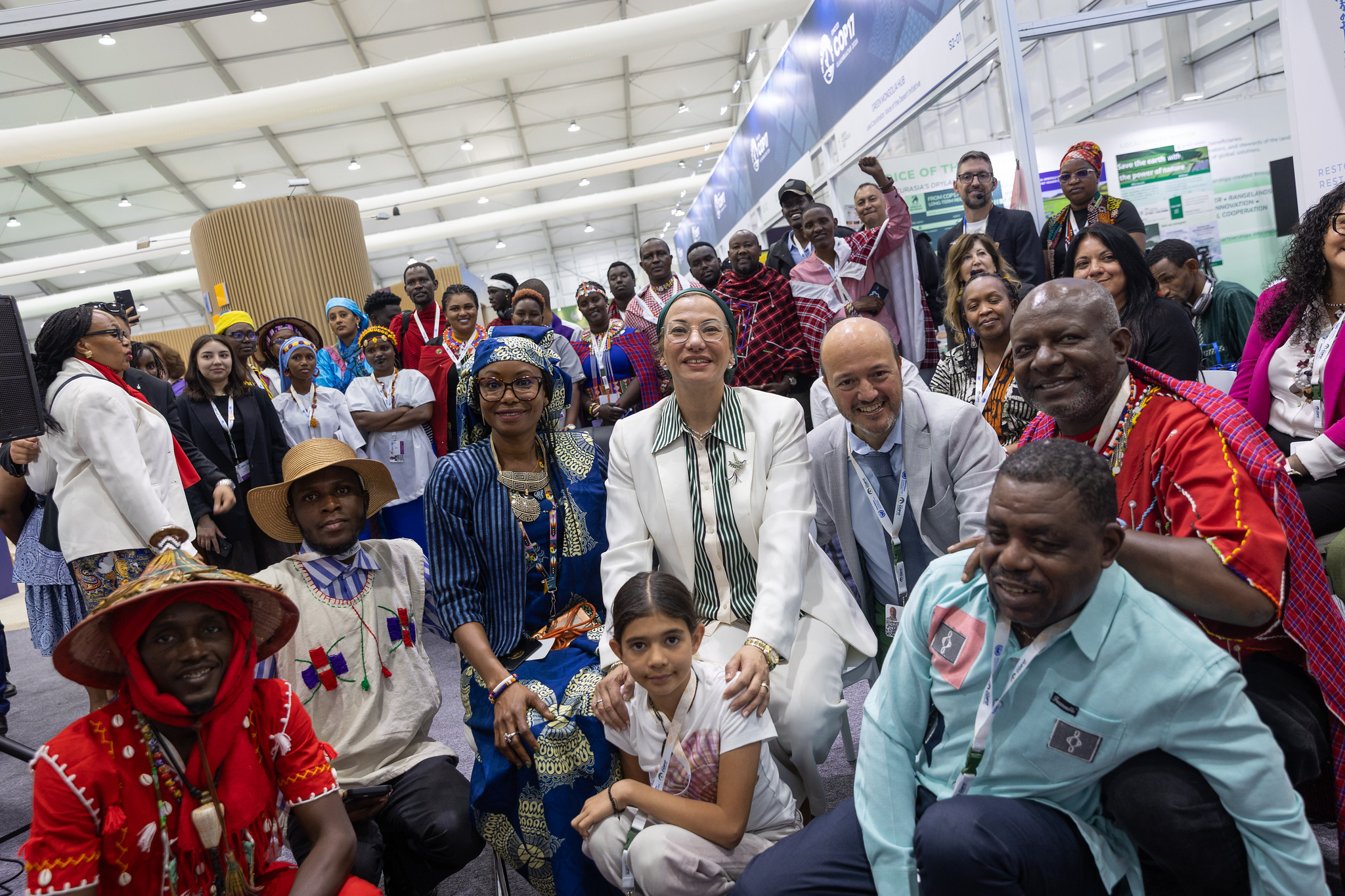
Depuis des siècles, la vie des populations est liée à la terre et à l'eau : les éleveurs dépendent des pâturages et des parcours, les agriculteurs comptent sur le débit des rivières pour irriguer leurs champs. Ces paysages ont modelé les cultures, les moyens de subsistance et les traditions à travers le monde. Mais aujourd'hui, les pressions d’origine humaine - changement climatique, dégradation des terres et sécheresse - détruisent en quelques années seulement ce que les communautés ont construit et protégé pendant des siècles. À l'échelle mondiale, jusqu'à 40 % des terres sont dégradées, mettant en danger près de la moitié de l'humanité. Les sécheresses, à elles seules, affectent déjà plus de 1,8 milliard de personnes dans le monde, excerçcant une pression sans précédent sur les systèmes hydriques. . Ensemble, ces pressions menacent non seulement les écosystèmes et la biodiversité, mais aussi la sécurité alimentaire, l'approvisionnement en eau et la stabilité du climat. Lors du Forum mondial de l'alimentation 2025 (10-17 octobre) à Rome, la Convention des Nations Unies sur la Lutte Contre la Désertification (CNULCD) s'est jointe à l'Organisation des Nations Unies pour l'alimentation et l'agriculture (FAO) pour organiser deux dialogues porteurs d’un message commun : la santé des terres et la gestion durable de l'eau doivent aller de pair. La session conjointe sur les peuples autochtones et les parcours a souligné l’importance des droits fonciers et de la valeur culturelle de ces écosystèmes. Lors du Dialogue de Rome sur l'eau 2025, dirigé par la FAO, les communautés ont partagé leurs expériences sur la restauration des sols et la protection de l'eau afin d’assurer les récoltes et aider les familles à faire face au changement climatique. En marge du Forum, la FAO et la CNULD ont renouvelé leur partenariat afin de renforcer leur coopération en matière de gestion durable des terres, des sols et de l'eau. Le protocole d'accord, signé le 15 octobre par le Directeur général de la FAO, M. QU Dongyu, et la Secrétaire exécutive de la CNULCD, Dr. Yasmine Fouad, établit un cadre commun pour éviter, réduire et inverser la dégradation des terres et des sols, renforcer la résilience face à la sécheresse et promouvoir des solutions intégrées associant la restauration des terres, la transformation des systèmes agroalimentaires et l'action climatique. Ce partenariat sera mis en œuvre dans le cadre d'un plan d'action conjoint FAO-CNULCD, qui mobilisera l'expertise des réseaux institutionnels et s'alignera sur les priorités des deux organisations. Le plan d'action se concentrera sur trois axes principaux : soutenir le dialogue politique et le renforcement des capacités pour lutter contre la dégradation des terres, renforcer la résilience face à la sécheresse et promouvoir des approches fondées sur les données et le partage des connaissances. Les gardiens des pâturages / parcours de la planète Les pâturages couvrent plus de la moitié de la surface de la Terre et abritent un tiers des zones de biodiversité les plus riches au monde. Ils assurent les moyens de subsistance à 500 millions de personnes et stockent près d'un tiers du carbone terrestre, ce qui les rend essentiels à la stabilité du climat et au patrimoine culturel. Pourtant, les pratiques non durables et le changement climatique poussent nombre de ces écosystèmes vers des seuils critiques. Pour celles et ceux qui en dépendent, cette réalité se vit au quotidien. Les éleveurs parcourent des distances toujours plus longues à la recherche de pâturages. Les savoirs ancestraux, transmis de génération en génération, sont aujourd'hui menacés. Les femmes sont souvent les premières à ressentir les effets : elles doivent marcher plus loin pour trouver de l'eau et du combustible, et étirer les maigres récoltes pour nourrir leurs enfants. Pourtant, ces mêmes communautés sont également à l'avant-garde des solutions. Les femmes revitalisent les sols et protègent les semences. Les peuples autochtones préservent la gouvernance coutumière et les savoirs ancestraux. Les communautés locales s'efforcent de maintenir leurs moyens de subsistance au sein de leurs propres familles. Les jeunes apportent innovations pour créer des ponts entre tradition et technologie. Leur engagement montre que la restauration des pâturages est non seulement possible, mais qu'elle offre également de vastes possibilités de récompenses pour tous. « La protection des terres autochtones n'est pas une option, c'est une question de survie, de dignité et de justice », a déclaré Yasmine Fouad, Secrétaire Exécutive de la CNULCD. « Les peuples autochtones et les éleveurs sont des partenaires indispensables dans nos efforts mondiaux. » S'appuyant sur la dynamique créée par la 16e session de la Conférence des Parties à la CNULCD (COP16) à Riyad, où les pays ont adopté la première décision mondiale sur les pâturages et les éleveurs et ont créé un caucus des peuples autochtones, les participants réunis à Rome ont appelé à un renforcement des droits fonciers, à la reconnaissance des gouvernances coutumières et à la pleine participation des communautés autochtones à l'élaboration des politiques publiques. Ils ont souligné que la restauration des parcours ne visait pas seulement à protéger les moyens de subsistance, mais aussi à absorber le carbone, à protéger les communautés contre les chocs climatiques et à sauvegarder la biodiversité. L'eau comme culture, mémoire et survie Le Dialogue de Rome sur l'eau 2025, le forum phare de la FAO sur l'eau et l'agriculture, a fait écho à cette urgence. Les sécheresses sont aujourd'hui un tiers plus fréquentes qu'en 2000 et coûtent déjà à plus de 300 milliards de dollars américains par an à l'économie mondiale dans de multiples secteurs. Combinées, la dégradation des terres et les sécheresses représentent une perte annuelle de près de 900 milliards de dollars américains. Si les tendances actuelles se poursuivent, trois personnes sur quatre dans le monde pourraient être confrontées à la sécheresse d'ici 2050. Mais l'eau n'est pas seulement une ressource économique. Elle est aussi culture, mémoire et survie. Lorsque les rivières s'assèchent ou que les deltas deviennent salés, les communautés perdent non seulement leurs récoltes, mais aussi leurs histoires, leurs chants et leurs modes de vie. Des terres et des systèmes hydrique sains nourrissent les familles, régulent le climat et préservent la biodiversité. Les protéger signifie défendre à la fois les moyens de subsistance et la capacité de la planète à soutenir la vie. Lors du Dialogue, la FAO, la CNULCD et plus de 80 partenaires ont présenté des solutions mises en œuvre depuis des décennies, allant de l'irrigation et de la réduction des risques de catastrophe à l'agriculture régénérative, en passant par la restauration des zones humides et le pâturage durable. Les données montrent que chaque dollar investi rapporte entre 7 et 30 dollars en termes de moyens de subsistance, de résilience climatique, d'alimentation et d'écosystèmes. « L'eau, c'est la vie. Mais l'eau, c'est aussi la terre, la nourriture et la paix », a fait remarquer Yasmine Fouad, de la CNULCD. « Les systèmes alimentaires ne peuvent être résilients sans des systèmes hydriques résilients. Et les systèmes hydriquesne peuvent l‘être sans des terres en bonne santé. » Message de Rome À l'issue des deux dialogues, les thèmes de la terre et de l'eau ont été tissés ensemble pour former un message clé : les crises ne peuvent être résolues isolément. Restaurer les parcours et sécuriser les systèmes hydriques sont les deux faces d'une même pièce, essentielles pour l'alimentation, le climat et la paix. Comme l'a résumé Yasmine Fouad, secrétaire exécutive de la CNULCD, « la gestion durable de l'eau et des pâturages pour garantir la sécurité alimentaire : une action avec un double résultat. La communauté internationale agira de concert lors de la COP 17 de la CNULCD ». Les réunions ont également souligné l'importance de l'inclusion. Les femmes, les peuples autochtones et les jeunes ne sont pas seulement parmi les plus touchés, ils sont également à l'avant-garde des solutions. Des éleveurs qui restaurent les prairies au Sahel aux jeunes innovateurs qui conçoivent des outils adaptés au climat, en passant par les femmes qui préservent les semences et le patrimoine, leur leadership est déjà en train de façonner l'avenir. À l'approche de la COP 17 de la CNULCD en Mongolie et de l'Année internationale des pâturages et des éleveurs, le message de Rome est clair : les outils et les connaissances existent. Ce qu'il faut maintenant, c'est la volonté politique de les développer à plus grande échelle, pour protéger à la fois les systèmes naturels qui soutiennent la vie et les cultures qui lui donnent tout son sens.

The UNCCD is pleased to announce that the new version of the Performance Review and Assessment of Implementation System (PRAIS), launched in August 2025, is ready for the upcoming 2026 UNCCD national reporting process. In summary, PRAIS has been streamlined and enhanced through key innovations such as a country overview dashboard, expanded user roles to support teamwork, peer-to-peer chat, improved validation tools, flexible data sourcing and clearer delineation of reporting obligations to enhance the user experience. These updates are in response to requests made by Parties. Tentative reporting deadlines Tentative deadlines for submission of national reports are set as follows: November 2026 for Strategic Objective (SO) 1 and February 2027 for the remaining SOs. The CRIC Bureau in consultation with the Executive Secretary will monitor progress and may adjust this timeline, if necessary. Technical support for Parties In line with decision 2/COP.16, partner regional institutions will provide technical support to Parties during the reporting process, including the International Research Center of Big Data for Sustainable Development Goals (CBAS), the Joint Research Centre of the European Commission (JRC), the National Center for Vegetation Cover Development and Combating Desertification (NCVC), the Partnership Initiative on Sustainable Land Management (PISLM), the Regional Centre for Mapping of Resources for Development (RCMRD) and the Sahara and Sahel Observatory (OSS). Additional partnerships are being explored and consultants will fill any remaining support gaps. A phased approach Although the launch of PRAIS marks the beginning of the 2026 UNCCD reporting process, capacity-building and support services will be rolled out in phases, depending on the availability of funding. The phased approach is outlined below: Phase 1 (ongoing): PRAIS launch with supporting documentation and online help desk (https://support.unccd.int); Phase 2 (December 2025): Training of Trainers in Panama for regional institutions and consultants; Phase 3 (January – April 2026): Regional in-person training for national focal points and reporting officers; Phase 4 (February - March 2026): Release of e-learning video tutorials; Phase 5 (January 2026 – February 2027): Ongoing technical backstopping and quality assurance of national reports before final submission. Following the conclusion of national reporting, the CRIC will review and analyze the submitted information at its twenty-fifth session. In view of the phases mentioned above, Parties are encouraged to finalize arrangements and begin utilizing enabling environment funds made available by the Global Environment Facility at national level so that stakeholders can be notified and prompted to start collecting necessary data and information for integration into PRAIS. Reporting team preparation To begin preparations, Parties are encouraged to assemble their reporting teams under the leadership of the designated reporting officer. Each team member should have a separate PRAIS account, log into https://reporting.unccd.int and familiarize themselves with the system functions and reporting forms and review the supporting documentation. Unless formally communicated otherwise, the UNCCD secretariat will consider that the national reporting officer from the 2022 reporting process remains in place for the 2026 reporting round. If a change is needed, the National Focal Point should submit either their own expression of interest or the contact details of the nominated individual to the secretariat via email at reporting@unccd.int. Supporting documents to assist with reporting include: Available now: Addendum to the Good Practice Guidance on SDG Indicator 15.3.1 (advanced unedited version) UNCCD Reporting Manual (updated for the 2026 reporting process and available in all UN languages) Updated PRAIS 4 User Manual Coming soon: Updated e-learning video tutorials (in all UN languages) Good Practice Guidance for National Reporting on Strategic Objective 5 For any questions regarding the reporting process or modalities, please contact the technical team via the help desk or write directly to reporting@unccd.int.
